Archives 2025

Shardeum Partners with Humanode to Bring Human-Centric Digital Identity to Web3

Dec 20: Shardeum has announced a partnership with Humanode to introduce biometric-based digital identity into its ecosystem, addressing one of Web3’s most persistent challenges: distinguishing real people from bots and fake accounts.

Blockchains are highly effective at verifying wallets, but they struggle to identify the humans behind them. This gap has left dApps exposed, leading to bot-driven airdrop farming, low-quality participation in campaigns, and governance systems vulnerable to manipulation. By integrating Humanode’s Biomapper, Shardeum enables applications to verify unique, real humans without compromising user privacy.

Shardeum Partners with Humanode

The integration allows developers to build human-aware smart contracts and dApps on Shardeum unlocking fairer airdrops, higher-quality quests, bot-resistant incentives, and more trustworthy community participation. Biometric verification is handled off-chain, with only privacy-preserving cryptographic proofs shared on-chain, ensuring that no raw biometric data is ever exposed.

Nischal Shetty, CoFounder, Shardeum said, “For Web3 to mature, it needs to recognize people, not just wallets. When humans and bots are treated the same, incentives get gamed, communities lose trust, and participation becomes superficial. By working with Humanode, we’re giving developers on Shardeum the ability to design applications around real human participation where fairness, intent, and meaningful engagement matter more than automation or scale.”

Humanode’s Biomapper is currently integrated at the application level on Shardeum, enabling builders to start experimenting with human-verified experiences today. Native SHM support is planned in a future update, further streamlining how identity and value flow across the ecosystem.

Together, Shardeum and Humanode are laying the groundwork for a more human-centric Web3 one where applications are designed around real people, not automated wallets, and where fairness, trust, and meaningful participation can scale alongside decentralization. This partnership marks a step toward ecosystems where incentives reward intent, governance reflects genuine voices, and on-chain activity represents real human engagement.

Developers and ecosystem teams can begin exploring human-verified use cases on Shardeum today by integrating Biomapper into their applications.

Minimally Invasive Surgery Removes Pituitary Tumor for 39-Year-Old at Manipal Hospital Kharadi

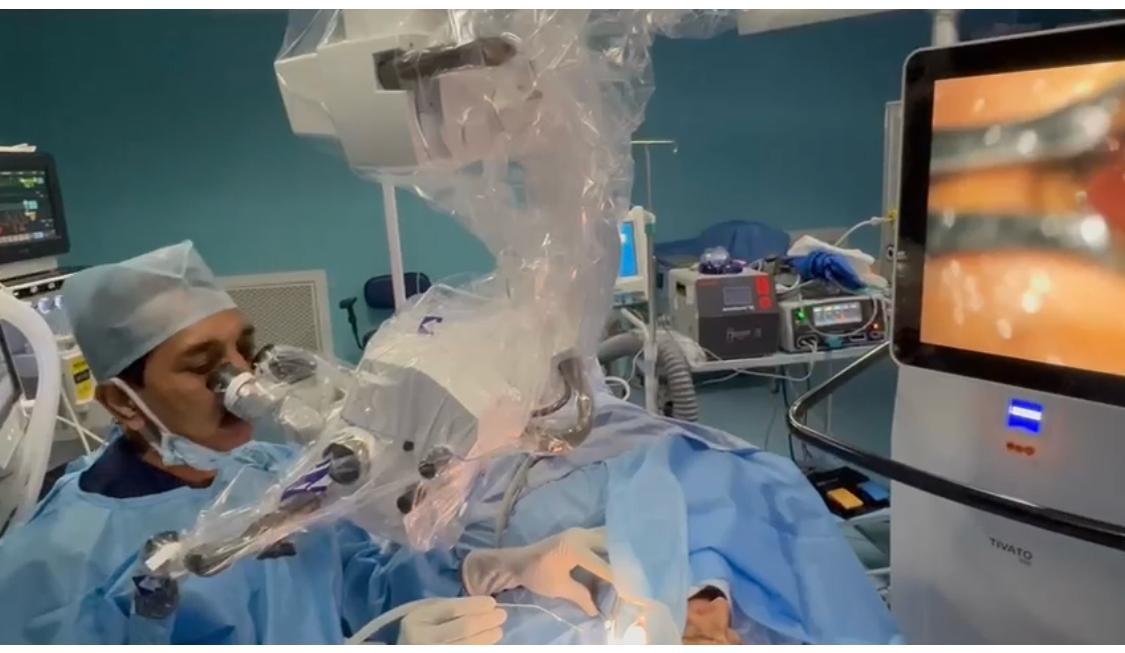
Pune,  Dec 19: Doctors at Manipal Hospital, Kharadi successfully used the advanced minimally invasive endoscopic endonasal transsphenoidal  technique to remove a difficult skull base tumour -pituitary macroadenoma. Patient was experiencing severe headaches and progressive vision loss in both eyes and consulted multiple eye specialists but her vision continued to deteriorate. Eventually she was referred to Dr. Sachin Patil, Neurosurgeon, Manipal Hospital, Kharadi. A thorough examination and a 3 Tesla MRI of the brain revealed a massive, non-functioning pituitary tumor pushing on both optic nerves in the center and base of the brain. After the surgery, there were early indications of eyesight restoration and symptom reduction.

Speaking about the case, Dr. Sachin Patil, Consultant  Neurosurgery, Manipal Hospital Kharadi, said;

 “In the past, craniotomies, or open brain surgeries, were commonly performed to remove such tumors. In this case, our multidisciplinary team carried out the excision using the EETS technique, involving neuronavigational and high-definition endoscopic cameras to safely access and remove the tumor through the nasal cavity without making external incisions. We were able to remove  almost entire tumor with minimal damage to the surrounding healthy tissue due to the endoscopic technique, which led to a quicker recovery time and a significantly higher quality of life for our patient.”

Mr. Parameswar Das, Hospital Director, Manipal Hospital Kharadi, Pune said;

 Cases like these showcase our dedication in delivering advanced and less invasive treatments that improve patient outcomes. The EETS procedure offers significant advantages such as reduced blood loss, shorter hospital stay, and a lower likelihood of reoperation compared to traditional methods. The patient’s successful recovery and positive initial progress underscore our commitment to cutting-edge, patient-centred care.

The procedure was led by a multidisciplinary team at Manipal Hospital, Kharadi, comprising Neurosurgeon Dr. Sachin Patil and Otolaryngologist Dr. Vijay Sharma.

10 Manufacturing Skills Every Industrial Worker Must Have in 2026

By Dr Nipun Sharma, CEO, TeamLease Degree Apprenticeship

India’s manufacturing sector is evolving toward a human-centric and resilient model where advanced technologies work alongside skilled workers rather than replace them. As automation, robotics, AI dashboards, and digital systems become integral to shop-floor operations, the demand for workers who can operate modern equipment, interpret data, ensure quality, maintain safety, and make informed decisions has grown significantly. Developing these skills is essential for staying adaptable, productive, and industry-ready in 2026 and beyond.

1- Machine Operation Skills

Machine operation today involves more than running equipment. Workers must understand how automated machines, CNC systems, and collaborative tools function alongside human inputs. This includes setting parameters, making real-time adjustments, and recognising when human intervention is required. Effective machine operation depends on a worker’s ability to apply experience and judgment while working with intelligent systems designed to support human control.

2-Quality Control and Inspection

Quality assurance increasingly combines sensor-based systems with human observation. Workers must follow inspection standards, use gauges and testing tools, and interpret quality indicators generated by machines. Human attention to detail remains essential for detecting subtle defects, understanding context, and ensuring consistent output across changing production conditions.

3- Safety and Compliance 

As robots and automated equipment operate closer to people, safety requires deeper awareness and discipline. Workers must understand safe operating zones, emergency stop systems, lockout-tagout procedures, and correct interaction with robotic tools. Safety is no longer limited to rule-following; it depends on responsible behaviour and awareness in shared human–machine environments.

4-Digital and Technical Literacy

Workers must be comfortable using digital interfaces such as machine HMIs, IoT sensors, and AI-driven dashboards that provide real-time insights into production, quality, and equipment health. Understanding alerts, performance trends, and recommendations generated by AI systems enables workers to make informed decisions, prioritise actions, and intervene effectively when required. Digital literacy ensures technology enhances human judgment rather than replacing it.

5-Preventive Maintenance Basics

Instead of relying only on reactive repairs, workers are expected to support preventive maintenance by observing machine behaviour and responding to early warning signs. This includes recognising abnormal sounds, vibrations, temperature changes, or performance deviations indicated by systems or experience. Human oversight complements predictive tools, helping maintain reliability and reduce unexpected downtime.

6- Lean Manufacturing Practices

Lean manufacturing continues to play a critical role, with a stronger emphasis on human involvement. Workers must understand practices such as 5S (Sort, Set in Order, Shine, Standardise, Sustain), waste reduction, and process optimisation. Their on-ground experience helps identify inefficiencies and implement improvements that improve productivity, safety, and workflow stability.

7- Communication and Teamwork

As production systems become more integrated, clear communication across roles is essential. Workers must share information effectively with supervisors, engineers, maintenance teams, and quality personnel. Strong teamwork ensures that human decisions align with machine operations, enabling faster problem-solving and smoother coordination across shifts and departments.

8. Crisis handling & management

Disruptions such as system failures, safety incidents, or unexpected process deviations require workers to act decisively. Understanding escalation protocols, emergency procedures, and individual responsibilities allows workers to respond calmly and effectively. Human decision-making plays a crucial role when automated systems flag issues but require human judgment to resolve them.

9. Ergonomics & Safe Body Mechanics 

Ergonomics and safe body mechanics play an important role in maintaining worker health and efficiency on the shop floor. Proper lifting techniques, such as using leg strength, keeping the body aligned, and avoiding sudden strain, help reduce the risk of injury. Maintaining correct posture during machine operation, inspections, and monitoring tasks supports comfort and long-term physical well-being. Workstation safety includes appropriate work heights, organised layouts, and tools positioned to match natural body movements. These practices enable workers to perform their tasks safely and consistently over time.

10.  Process Discipline and Time Management

Following standard operating procedures and managing time effectively are essential to maintaining consistency and safety. Workers must balance flexibility with discipline to meet production targets while coordinating with automated workflows. Strong process adherence ensures that human inputs strengthen structured systems rather than disrupt them.

As manufacturing  shifts toward smarter, safer, and more digital environments, workers who develop these essential skills will be in high demand. Mastery of machine operation, AI-enabled digital tools, quality monitoring, safety protocols, and effective teamwork will create a workforce capable of navigating complex, technology-driven production environments. Those who invest in upskilling today will not only stay relevant but also play a vital role in driving India’s manufacturing growth and innovation in 2026 and beyond.

Global Patients Turn to Hyderabad for Advanced ENT Care at CARE Hospitals

Hyderabad,  Dec 19: CARE Hospitals, Banjara Hills, Hyderabad, has successfully treated two highly complex ENT cases involving international patients from Australia and the United States, reinforcing its position as a preferred global destination for advanced ENT and facial plastic surgeries. Both patients were treated under the expert care of Dr. N. Vishnu Swaroop Reddy, MS (ENT), FRCS (Edinburgh), FRCS (Ireland), DLORCS (England), Clinical Director, Head of the Dept. & Chief Consultant ENT, Facial Plastic Surgeon and Cochlear Implant Surgeon, CARE Hospitals, Banjara Hills.
Renowned ENT surgeon Dr Vishnu Swaroop Reddy
These cases highlight not only surgical excellence but also the growing global trust in Indian healthcare for managing failed and high-risk ENT conditions with precision and long-term outcomes.
First patient A 35-year-old cybersecurity professional from Brisbane, Australia, approached CARE Hospitals, Banjara Hills, after two failed nasal surgeries in his home country left him with a severe saddle-nose deformity and chronic breathing difficulty. Clinical assessment revealed complete loss of internal nasal support. Dr. N. Vishnu Swaroop Reddy performed a complex rib cartilage reconstruction for his nose, using the patient’s own tissue, restoring both structure and function. The surgery was completed within 48 hours of consultation to suit the patient’s limited stay. Post-surgery, he experienced dramatic improvement in breathing and appearance, and returned to Australia relieved and satisfied with the outcome.
Second Patient, A 30-year-old professional from New York, USA, suffering from significant bilateral hearing loss, sought care at CARE Hospitals after a failed Right ear surgery in California left him dependent, struggling to hear using hearing aids and was very dissatisfied using hearing aids. Diagnosed with bilateral otosclerosis, he first underwent untouched left-ear stapedotomy under local anaesthesia, regaining normal hearing instantly on the operating table. Encouraged by the result, Dr. Vishnu Swaroop Reddy later performed a technically challenging revision stapedotomy surgery on the previously failed right ear in the USA, successfully restoring hearing in the right ear also. Revision stapedotomy is one of the most challenging Surgery for any Otologist (Micro Ear Surgeon) in this world. The patient regained normal hearing in both ears and returning happily to the US without the need for hearing aids, marking a complete turnaround in his quality of life.
Reflecting on the significance of these cases, Dr. N. Vishnu Swaroop Reddy, said, “I have worked in England for over a decade and received advanced surgical training across the UK, USA, Germany, France (Paris), Austria, and Australia. However, the sheer volume and diversity of complex cases we encounter in India is truly unparalleled.
Due to our vast population, Indian surgeons gain an exceptional depth of clinical exposure, which is difficult to match even in many developed countries. This experience equips us to confidently manage the most challenging cases from anywhere in the world, with precision and consistently reliable outcomes.”
Biju Nair, Zonal Chief Operating Officer, CARE Hospitals, stated;
“The trust these patients placed in us, some after years of struggle, reinforces the responsibility we carry as a flagship hospital. Under Dr. Vishnu Swaroop Reddy’s exemplary leadership, CARE Banjara Hills is becoming a preferred destination for complex ENT surgeries, attracting patients from across the state and around the world. This is the direction in which we will continue to grow.”

SolarWinds’ Rohit Shukla on India’s Shift from AI Pilots to Observability-Led, Agentic Operations

Rohit_Shukla_Headshot_SolarWinds_2000x3000

By:-Rohit Shukla, Senior Sales Director, India & SAARC, SolarWinds

2025 Wrap-up

In 2025, India moved from rapid digital adoption to sustained, large-scale execution. With an estimated 70% of firms eager to use Generative AI for automation, and the emergence of agentic AI, the focus decisively shifted from proofs-of-concept to real-world impact. AI-driven automation, hybrid cloud maturity, and always-on digital services became the norm, significantly increasing system complexity and the demand for real-time visibility across IT environments.

This acceleration made one thing clear: digital innovation without observability is unsustainable. As technology stacks became more distributed, spanning cloud, edge, SaaS, and on-premises, traditional monitoring approaches could no longer keep pace. Without deep observability, teams faced blind spots across dependencies, slower root-cause analysis, rising operational costs, and increased risk to service availability and customer trust. In an always-on economy, even minor disruptions could cascade rapidly, impacting business outcomes.

The launch of the SolarWinds AI agent showed customers how deeply embedded intelligence can move from manual firefighting to guided workflows across complex, hybrid environments. The real breakthrough lies in combining telemetry and business context so agents can sequence actions and hand off to humans only when judgment is truly required.

As India continues to set the pace for global digital adoption, SolarWinds remains committed to supporting this momentum with solutions that bring clarity, stability, and trust to increasingly complex IT ecosystems.”

2026 Predictions

“As we look ahead to 2026, Indian enterprises will rethink how they balance investments between AI and human talent. As AI solutions become more complex and costly, organizations are also contending with a shortfall of more than a million skilled technology professionals in India. This is driving a growing recognition that tools alone are not enough. Successful AI and agentic adoption will depend on deep human expertise through subject matter experts who understand how applications, databases and infrastructure connect to deliver reliable end-user experiences.

India is quickly emerging as one of the fastest‑scaling markets, with over 50% organizations planning to implement Agentic AI by 2026 and digital‑native enterprises moving from pilots to enterprise-wide deployments. Looking ahead, enterprise-wide autonomous workflows will become standard in areas such as incident response and change management, where policies, data quality, and integration boundaries are clearly defined. At SolarWinds, we are committed to enabling this next era of autonomous operations by empowering organizations with secure observability, ITSM, and Agentic AI for measurable business impact.

The real differentiator for Indian organizations will be how effectively they integrate agentic AI with observability and human judgment, rather than deploying AI in isolation. Intelligence is moving beyond post-incident alerts toward proactive, self-directed decision-making, positioning agentic AI as a foundational element of operational and architectural strategy.”

Bridging the Career Guidance Gap for Higher Education Students in Small Towns

For many higher education students in India’s small towns, completing a degree does not always translate into career clarity. Limited exposure to organised career pathways, lack of mentorship, and financial constraints often leave students uncertain about their next steps, particularly those from unorganised and underserved backgrounds. As a result, the demand for structured career guidance and skill development support is steadily growing across Tier 2, Tier 3, and Tier 4 cities.

WhatsApp Image 2025-12-19 at 1.00.21 PM

In response, career-focused initiatives are increasingly targeting higher education students with programmes that combine counselling, competitive exam preparation, and skill-based learning. These efforts aim to bridge the gap between academic education and employability by helping students align their interests and strengths with real-world career opportunities.

Scholarship programmes introduced across smaller towns are also playing a significant role in addressing affordability challenges. By easing financial pressure, such initiatives allow meritorious students to access quality guidance and training that might otherwise remain out of reach. In states like Punjab and Himachal Pradesh, collaborations with government bodies have further expanded access, creating pathways for students from unorganised sectors to transition into structured and sustainable careers.

Highlighting the importance of early and informed career decision-making, Neeraj Kansal, Founder and CEO of Crack Academy, said,

“Students from smaller towns often have the talent and ambition, but not the exposure or direction needed to make confident career choices. By providing counselling, skill development, and financial support, we can help them move towards stable and rewarding career paths.”

Beyond financial assistance, regular workshops, mentorship sessions, and accessible learning models are helping first-generation learners and aspiring professionals gain confidence and awareness of emerging career options. Such exposure is proving critical in helping students navigate new-age roles and evolving industry demands.

As these initiatives continue to expand their reach, they are quietly reshaping how higher education students in India’s smaller towns approach career planning—turning uncertainty into clarity and aspiration into achievable progress.

Relaxo Footwear Launches “BUY & FLY” Winter Campaign with EaseMyTrip

New Delhi, Dec 19: Relaxo Footwears Ltd, India’s largest quality footwear manufacturer has announced “BUY & FLY” an exciting Winter Campaign in partnership with EaseMyTrip, one of India’s leading online travel-tech platforms.The campaign is aimed to bring      together everyday shopping and the joy of travel at the peak of the holiday season. Running from 15th December 2025 to 18th January 2026, the “BUY & FLY” Winter Campaign will be live across 413 Relaxo Exclusive Brand Outlets, offering customers a chance to walk in for footwear and walk out with travel rewards.

The campaign is built around a simple but compelling promise of “Walk with Relaxo, Fly with EaseMyTrip.” or as positioned in Hindi, “Chale Relaxo Ke Saath, Ude EaseMyTrip Ke Saath.” to appeal to buyers. Customers who shop for INR 1,499 or above will receive an assured EaseMyTrip voucher of worth INR 3000,  unlocking instant value on future travel. Customers just need to copy the coupon code given on their invoice and claim it on EaseMyTrip website. Along with this, shoppers will enter a pool of exciting rewards, including weekly holiday vouchers and a Jackpot Couple Trip to Goa, making every purchase a potential gateway to a well-deserved break. The EaseMyTrip voucher is redeemable exclusively on the platform until April 20, 2026.

This collaboration arrives at a perfect moment. With December and January being the height of India’s travel season, the partnership combines Relaxo’s strong retail presence with EaseMyTrip’s reputation as a trusted travel platform. The result is a consumer experience that feels modern, aspirational, and deeply rewarding.

Speaking on the launch of the campaign, Mr. Aakash Koparkar, Vice President  Retail Business,  Relaxo Footwears Ltd., said,

“Customers today seek value, delight and experiences they can hold on to. The ‘BUY & FLY’ campaign brings exactly that spirit to our winter season. By joining hands with EaseMyTrip, we are turning everyday shopping into an opportunity to explore new destinations. It is our way of thanking customers for choosing Relaxo and giving them something memorable in return.”

Commenting on the partnership, Rikant Pittie, CEO & Co-Founder of EaseMyTrip, said,

“For most families, the holiday season is that time of the year when they step away and experience something new together. At EaseMyTrip, we want to make that experience easier, more accessible and more rewarding. Partnering with Relaxo allows us to extend this promise beyond the travel ecosystem and into everyday retail.”

With assured vouchers, weekly rewards, and a dream holiday up for grabs, the “BUY & FLY” initiative is expected to drive strong footfall and build festive cheer across all participating stores. More importantly, it positions Relaxo as a consumer-first brand that continues to innovate, surprise, and upscale the shopping experience.

Adani Launches Skill Development Centre in Gangavaram to Empower Women and Communities

Visakhapatnam, Dec 19:Adani Gangavaram Port, in collaboration with Adani Foundation, inaugurated the Adani Skill Development Centre at Gangavaram as part of its Corporate Social Responsibility  initiatives. The Skill Development Centre is designed to provide structured training programs and practical exposure to help youth and women in local communities gain industry-relevant skills and improve livelihood opportunities.

Adani Launches Skill Development Centre in Gangavaram to Empower Women and Communities

The inauguration ceremony was graced by senior leadership from Adani Gangavaram Port Limited and Adani Foundation, along with village leaders, community representatives, trainers, and enthusiastic students. Their presence reaffirmed the Adani Group’s strong commitment towards inclusive growth and community development.

The Adani Skill Development Centre will offer structured training, practical exposure, and continuous support to trainees, aligning with the Skill India Mission and Adani Group’s vision of nation-building. The centre focuses on creating employable talent while fostering inclusive growth and sustainable development in the region.

Speaking on the occasion Adani Gangavaram Port Management said,that the Adani Skill Development Centre is a catalyst for empowering women and youth by providing industry-relevant skills that build confidence, enable financial independence and support sustainable livelihoods. Adani Foundation’s commitment to skill training initiatives that foster empowerment and long-term socio-economic growth. We thank the local community and educational partners for their ongoing trust and support. This initiative is one of the many ways we continue to strengthen our bond with the local community and work towards inclusive development.

Times Network’s India Economic Conclave 2025 Day 1: Charting India’s Strategy Amid Shifting Geoeconomics

Chennai, Dec 19: Leaders from government, industry, and global economic institutions convened today at Times Network’s 11th India Economic Conclave (IEC 2025) at Taj Palace, New Delhi, for the first day of the two-day flagship event. The conclave, themed “Navigating Geoeconomics,” provided a premier platform to examine India’s growth, strategic autonomy, and global positioning in an increasingly multipolar world.

left to right - Vineet Jain , MD, The Times Group with Nitin Gadkari, Minister of Road, Transport and Highways, GOI

Day 1 featured high-impact sessions and panel discussions covering economic resilience, trade and capital flows, infrastructure and manufacturing, digital and services-led growth, and emerging priorities including AI, cybersecurity, climate transition, mobility, and defence preparedness. 

Mr. Vineet Jain, Managing Director, The Times Group, said,

“We meet at a moment when the global order is undergoing rapid calibration. Economic power blocs are shifting, tariff battles are redefining trade flows, technological supremacy is the new currency of influence, and energy geopolitics is reshaping alliances across continents. Our latest GDP numbers reaffirm India as the world’s fastest-growing major economy. This year’s theme, Navigating Geoeconomics, could not be more timely. The world is entering an era where economics and geopolitics are inseparable. The strategic importance of Supply chains, critical minerals, energy security, digital sovereignty, and trade alliances is now on par with military decisions. Nations that can integrate economic foresight with geopolitical acumen will define the next global chapter. India is unquestionably one of those nations. India’s moment is not approaching, it is here. As we look forward to 2047– 100 years of our independence—we stand at the threshold of a historic transformation. The mission is clear and unwavering:  To make India a fully developed, globally influential nation by the time we mark 100 years of freedom. Economically robust, strategically secure, technologically sovereign, environmentally responsible and globally respected.”

Nirmala Sitharaman, Minister of Finance and Corporate Affairs, highlighted India’s growth story, its ability to navigate global economic challenges, and the government’s focus on strengthening small businesses. Navigating geoeconomics while remaining a bright spot of fast and steady growth and sustaining that level of growth year after year — is something the people of India are achieving. I believe each one of us, including political parties & critics, should recognise this,” the finance minister said. She also underlined the government’s policy thrust under Prime Minister Narendra Modi, particularly towards micro, small and medium enterprises. “Our government, under Prime Minister Modi, has placed a strong focus on MSMEs,” Sitharaman said, pointing to the sector’s role in job creation, manufacturing and exports.

“Globally, it is now very clear that trade is neither fair nor free,” Sitharaman said, underlining how tariffs and non-tariff barriers are increasingly being deployed as strategic tools rather than economic correctives. “Tariffs have been weaponised globally. India’s intention was never to weaponize tariffs. We have safeguarded our industries,” the finance minister said, stressing that New Delhi’s approach has been calibrated and aimed at protecting domestic manufacturing and jobs rather than exerting pressure on trading partners. 

She cautioned that the evolving environment leaves little room for complacency. “Trade is being weaponised through tariffs and other measures, and India will have to negotiate its way carefully,” Sitharaman noted, signalling that diplomacy and strategic negotiations will be critical as global supply chains fragment and economic nationalism rises. Sitharaman also placed India’s current challenges in a longer historical context. “Nearly 25% of global trade once emanated from India. That is the kind of period we should be aiming to return to,” she said, pointing to the government’s ambition to restore India’s prominence in global commerce despite today’s headwinds.

At the same event, Nitin Gadkari, Minister of Road Transport and Highways, mentioned,

“The government no longer faces resource constraints in building highways and transport networks, citing successful road monetisation and innovative financing models. Today, in my experience, we don’t have any resources problem because the way in which we are monetising the road and developing different type of models, DOT, hybrid NUT, NVID, and DOT, there is no problem about resources because the traffic density is very high,” he said.

Highlighting the impact of infrastructure on exports and GDP growth, Gadkari pointed to a sharp reduction in India’s logistics costs. He said, “India’s logistics cost earlier stood at around 16% to GDP, significantly higher than China’s 8% and the 12% average of the US and European countries.”

“In India, previously it was 16%. But the latest study from IIM Bangalore and IIT Kanpur and IIT Chennai, the report indicates that our logistic cost in the road is reduced by 6%. So now from 16 to 10, and the report was three, four months before. So today I’m confident that this logistic cost is a single digit at 9%,” he said.

The minister said lower logistics costs could boost India’s exports by nearly 1.5%, contributing to economic growth and employment generation. “This will not only create wealth but also create more jobs,” he added.

Emphasising the broader impact of road infrastructure, Gadkari said improved highways are transforming multiple sectors. “So by making good roads, not only we are developing trade, business, and industry, but we are developing tourism, and we are also developing good agriculture also. So these are the effects which are very important for the development of our country,” he said.

During her session, Gita Gopinath, Professor of Economics at Harvard University and former Deputy Managing Director of the IMF, said that”with oil prices hovering around $60 per barrel, India has an opportunity to diversify its energy partnerships beyond Russia and recalibrate relations with the United States. “From an economic perspective, this trade-off is not a bad one for India.” 

On the ongoing tariff tensions between the US and China, Gopinath said she does not expect further escalation from Washington. “I don’t think the US will raise tariffs further against China, as it remains dependent on China for rare earth elements, which has become a significant deterrent,” she said.

Discussing how India can capitalise on shifts in global supply chains, Gopinath pointed to improvements in the country’s digital and physical infrastructure, while stressing the need for complementary reforms. She highlighted land acquisition as a major constraint. “It remains very complicated and difficult to acquire land in India. This limits how quickly infrastructure can be built and restricts growth,” she said.

Other distinguished speakers included V Vaidyanathan, MD & CEO, IDFC FIRST Bank, on navigating geoeconomics; Gita Gopinath, Professor of Economics, Harvard University & Former Deputy MD, IMF, on navigating geoeconomics; Mr. Vijay Kiran Anand, CEO – Invest UP, on Uttar Pradesh as an Investment Destination; David Tait, CEO, World Gold Council, on Navigating Volatility – The Golden Opportunity; Patrik Antoni, CEO, IKEA INDIA, on How to Ride the Consumption Wave; and Sridhar Vembu, Co-Founder & Chief Scientist, Zoho Corporation, on IT innovation amongst others. 

IEC 2025 is presented by IDFC FIRST Bank, with strategic support from Amrita Vishwa Vidyapeetham (Knowledge Partner), World Gold Council (Gold Investment Partner), Radico (Celebration Partner), Axis Max Life Insurance (Insurance Partner), Adani (Associate Partner), Government of Uttar Pradesh (Growth Partner), and NBCC (Infrastructure Partner).

As Day 1 concludes, the conclave has already set a strong platform for robust dialogue on policy strategy, sector-level priorities, and technological innovation. Day 2 will further explore mobility, cyber readiness, AI regulation, workforce strategy, and India’s roadmap for economic leadership and global influence.

Sri Sathya Sai Institute and Siemens Healthineers Partner to Advance Cardiac Care Research

Bengaluru, Dec 19:- Sri Sathya Sai Institute of Higher Medical Sciences and Siemens Healthineers have entered a strategic clinical research collaboration titled, ‘Collaborative Clinical Research in Echocardiography.’ It brings together SSSIHMS’s commitment to free medical care and the leadership of Siemens Healthineers in cutting-edge ultrasound and cardiovascular imaging.

(L-R)SSSIHMS-Dr DC Sundaresh(Director)_Siemens Healthineers-Chaitanya Mehrotra(Head-Ultrasound,Asia Pacific),Kalavathi GV(Head-Global Development Cente

This effort will explore key research areas, which includes advancing 2D and 4D echocardiography capabilities, enhancing quantitative imaging and automated measurements, optimizing workflows and usability, and evaluating imaging performance across diverse patient groups to ensure consistent, high-quality diagnostic outcomes. The collaboration is designed to improve early detection and accurate assessment of cardiac diseases and supports the hospital’s mission to provide high-quality, compassionate healthcare free of cost.

Dr. DC Sundaresh, director of SSSIHMS said;

“This collaboration aligns strongly with SSSIHMS’s mission of combining clinical excellence with compassionate service. By working closely with Siemens Healthineers on advanced echocardiographic research, we aim to generate meaningful clinical evidence that enhances early diagnosis, improves outcomes, and expands access to high-quality cardiac care for all, especially in resource-constrained settings.”

Kalavathi GV, executive director (India) and head of global Development Center, Siemens Healthineers said, “Expanding access to care is central to our purpose. This clinical research will help understand the region-specific customer challenges and support in developing AI-powered solutions which will improve workflows and enable increased access to cardiac care.”

Chaitanya Mehrotra, head of ultrasound  Asia Pacific region, Siemens Healthineers added;

“We believe that innovation must serve humanity. Our collaboration with SSSIHMS reflects our commitment to expanding access to high-quality cardiac care. Together, we are pushing the boundaries of echocardiography ensuring that innovation and compassion go hand in hand, while accelerating patient-focused R&D and clinical studies.”

This initiative builds on SSSIHMS’s long-standing association with Siemens Healthineers. The hospital has already integrated Siemens Healthineers technology to deliver advanced, high-precision cardiac and neurovascular interventions.

Sri Sathya Sai Institute of Higher Medical Sciences was founded in 2001 by Bhagawan Sri Sathya Sai Baba in Whitefield, Bengaluru. SSSIHMS is a premier 333-bedded tertiary care hospital established on the unique philosophy of providing world-class medical and surgical care completely free of cost to all patients, without distinction of caste, creed, religion, nationality, or economic status. This institution represents the fourth healthcare initiative of the Sri Sathya Sai Central Trust, created to deliver the best in high-quality healthcare to the poorest of the poor, rooted in compassion and service. The hospital specializes in advanced cardiac sciences and neurosciences, offering comprehensive services including preventive cardiology, interventional cardiology, cardiac surgery, electrophysiology, pediatric cardiology, neurology, neurosurgery, general medicine, general surgery, obstetrics and gynecology, pediatrics, ENT, orthopedics, ophthalmology, and allied specialties. Over the past 25 years of SSSIHMS and 50 years of SSSGH  the hospitals have provided free medical services with a very conservative valuation estimated at approximately INR 4500 crores, impacting the lives of over 60 lakh patients from across India and beyond. Through its unwavering commitment to service, clinical excellence, and ethical medical practice, SSSIHMS stands as a globally recognized model of compassionate, value-based healthcare.

Siemens Healthineers pioneers breakthroughs in healthcare. For everyone. Everywhere. Sustainably. The company is a global provider of healthcare equipment, solutions and services, with activities in more than 180 countries and direct representation in more than 70. The group comprises Siemens Healthineers AG, listed as SHL in Frankfurt, Germany, and its subsidiaries. As a leading medical technology company, Siemens Healthineers is committed to improving access to healthcare for underserved communities worldwide and is striving to overcome the most threatening diseases. The company is principally active in the areas of imaging, diagnostics, cancer care and minimally invasive therapies, augmented by digital technology and artificial intelligence. In fiscal 2025, which ended on September 30, 2025, Siemens Healthineers had approximately 74,000 employees worldwide and generated revenue of around €23.4 billion. Further information is available at siemens-healthineers.com.