Archives 2025

“Never a Better Time to be in India”: Kumar Mangalam Birla and Amitabh Bachchan Celebrate the ‘Era of India’ on KBC

New Delhi, Dec 30:  In a powerful exchange on the sets of Kaun Banega Crorepati (KBC), Mr Kumar Mangalam Birla, Chairman of the Aditya Birla Group, and megastar Amitabh Bachchan discussed India’s burgeoning global influence. Reflecting on the nation’s rapid economic ascent, Mr Birla told Mr Bachchan that we are currently living in the “era of India” (Bharat ka yug), marking a historic shift in the global order.

The conversation provided a roadmap for understanding India’s current momentum through the lens of one of its most prominent industrial leaders. 

  1. Surpassing Global Giants: The Japan Comparison

Mr Birla shared a personal reflection on how far the nation has come, noting that at the start of his career, he would not have believed that India would one day become a larger economy than Japan. He highlighted that India is now the fastest-growing large economy in the world, a feat he described as being so rapid that it is difficult to even fully estimate its scale. 

  1. The “Trump Card”:ABillion-Strong Workforce

Central to Mr Birla’s optimism is India’s demographic dividend. He identified the nation’s youth as its greatest “trump card,” pointing out that within the next five years, India will have a working population of one billion people. This massive human resource, he argued, makes this the absolute best time for young people to be in India.

  1. The “IndiaGrowth Model”: Values Meet Progress

Mr Birla explained that India’s success is not just about numbers, but about the “India Growth Model”. This model is unique because it involves achieving rapid economic expansion while simultaneously preserving the country’s rich culture and values. Amitabh Bachchan echoed this sentiment, noting that the Birla family itself serves as a prime example of a legacy built on a foundation of centuries-old knowledge and values.

Mr Birla concluded with a resounding message for the audience: “There has never been a better time to be young, to be an Indian, and to be in India”. 

Family Moments and Personal Anecdotes

The episode offered rare glimpses into the Birla family’s personal dynamics. Mr Birla’s youngest daughter Advaitesha revealed that despite his demanding schedule, her father called her five times a day when she was studying abroad, showing his protective nature. They bond over painting and sometimes paint together. His son shared that whether at home or in office, Mr Birla checks on him 3-4 times daily and messages every evening at 7pm asking if he’s eaten properly.

His wife Neerja jokingly complained about his tendency not to listen and having to repeat things multiple times – a relatable domestic moment that drew laughter from the audience.

At his daughter’s request, Mr Birla sang a few lines from a classic song, showcasing an artistic side rarely seen in public. Ananya also shared that she and her father bond over music. 

Other Notable Moments

Mr Birla shared that he prepared intensely for a few days before the appearance, admitting he was nervous about making mistakes in front of Amitabh Bachchan, whom he described as a “father figure.”

He revealed a childhood memory of visiting Bachchan’s film set in Kashmir in 1978-79 when he was 10-11 years old, during the shooting of Natwar Lal – coming full circle decades later on the KBC set.
Whistling Woods International–IIM Mumbai Form High-Impact Advisory Board for MBA in Media & Entertainment

Bengaluru, Dec 30:- Whistling Woods International & Indian Institute of Management Mumbai  proudly announces the formation of a prestigious Advisory Board for its upcoming MBA in Media & Entertainment.

Comprising distinguished industry leaders, the Advisory Board represents a wide spectrum of stalwarts from India’s M&E industry covering all areas from Cinema, Sports, TV, OTT, Animation, Games, Music, Events, Media & Communication. This powerhouse collective will guide the programme’s curriculum development, industry integration, and strategic direction – ensuring it stays at the cutting edge of industry trends and global best practices.

Meghna Ghai Puri, President, Whistling Woods International, delightfully commented on the formation of the advisory board, “We are honoured to have assembled an Advisory Board of such exceptional calibre and diversity. These industry titans represent the very best of Indian media and entertainment. Their collective insights will be instrumental in shaping a world-class MBA programme that prepares the next generation of leaders for this dynamic sector.”

Prof Manoj Tiwari, Director of IIM Mumbai added;

“The Advisory Board’s composition reflects the comprehensive nature of the MBA in Media & Entertainment programme. With leaders from every major vertical, students will gain unparalleled exposure to real-world challenges, emerging opportunities, and best practices across the media and entertainment landscape.”

Advisory Board Members

Shashikanth Someshwar, CEO, Weber Shandwick

Ashish Saksena, COO, BookMyShow

Apoorva Mehta, CEO, Dharma Productions

Ajit Andhare, COO, Producer, Viacom18 Studios

Ashish Pherwani, Partner – Media & Entertainment, Ernst & Young

Ashish Kulkarni, Founder, Punnaryug Artvision

Atul Churamani, MD, Turnkey Music and Publishing Private Limited

Akshat Rathee, Co-Founder, Nodwin Gaming

Dinesh Vijan, Founder, Maddock Films

Devraj Sanyal, Chairman & CEO India SA, SVP Strategy, Africa, M. East & Asia, Universal Music Group

Gaurav Gandhi, VP, Amazon Prime Video – APAC & ANZ

Keitan Yadav, COO, Red Chillies VFX

Manvendra Shukul, CEO, Lakshya Digital, India Head – Keywords Studios

Nitish Mittersain, CEO & MD, Nazara Technologies

Prashant Khanna, Head – Sports & Live Experiences Production Technology & Services, JioStar

Rajiv Chilaka, Founder & MD, Green Gold Animation PVT LTD

Rajan Navani, Chairman & MD, Jetline Group of Companies & CEO, Jetsynthesys

Roshan Abbas, Founder, Kommune India

Sameer Nair, MD, Applause Entertainment

Samit Garg, Co- Founder & MD, E Factor Experiences

Vinit Karnik, MD, WPP Media

The newly formed Advisory Board will meet regularly to provide strategic guidance, facilitate industry collaborations, mentor students, and ensure that the programme remains responsive to the rapidly evolving media and entertainment industry.

AI in 2026 to Shift from Conversations to Action-Driven Enterprise Intelligence

By:-  Anand Mahurkar, CEO Findability Sciences

“In 2026, the biggest shift will be from ‘AI that talks’ to ‘AI that does.’ Enterprises will move beyond chatbots and pilots into agentic systems that can reason over company knowledge, orchestrate workflows, and execute decisions with human guardrails. The winners will be organizations that treat findability of data as a strategic asset unifying structured data, documents, emails, and domain expertise into a governed knowledge layer that AI can reliably retrieve, cite, and act on.

We’ll also see a clear split between generic models and domain-specific intelligence. Smaller, specialized models fine-tuned on proprietary data and reinforced with knowledge graphs and hybrid search will outperform bigger models on accuracy, cost, and compliance. Multimodal AI will become mainstream, turning images, audio, and video into searchable, actionable knowledge, while real-time analytics will drive next-best actions in sales, service, and operations.

In India especially, the next wave will be enterprise AI in vernacular and sector-specific contexts like sugar manufacturing, co-operative sector, agriculture, manufacturing, legal where ROI is tied to speed, precision, and governance, not novelty. The workforce impact will be ‘human + AI’ teams, with copilots embedded in everyday tools and measurable productivity gains.

Finally, trust will be the currency of adoption. With stricter regulation, deeper scrutiny of data privacy, and rising expectations for transparency, leaders will invest in AI governance, observability, and explainability as seriously as they invest in model performance. The most valuable AI in 2026 won’t be the most impressive demo, it will be the most dependable system delivering measurable outcomes at scale.”

Airtel Expands Entertainment Offerings with Exclusive Launch of Airtel Cartoon Network Classics

Bangalore, Dec 30: Bharti Airtel, one of India’s leading telecommunications service providers, today announced the launch of the “Airtel Cartoon Network Classics” an exclusive value-added service available on Airtel Digital TV in collaboration with Warner Bros. Discovery. The new channel brings together some of the most iconic animated franchises from Cartoon Network, creating a dedicated destination for timeless storytelling and family-friendly entertainment.

Airtel Cartoon Network Classics brings back a beloved lineup of timeless favorites such as Tom and Jerry, The Flintstones, Looney Tunes, Scooby Doo, Johnny Bravo and several other classics. Curated for audiences who grew up with these much loved and timeless shows, the channel will also allow families to introduce new generations to the animated stories that became part of the cultural zeitgeist of the ’90s and 2000s while continuing to resonate today.

Commenting on the launch, Pushpinder Singh Gujral, DTH-Business Head, Airtel said, “Airtel Cartoon Network Classics adds a unique entertainment layer to our portfolio and offers customers a chance to reconnect with iconic stories and characters that are loved even today. We are pleased to make this channel available to all our DTH & IPTV users and look forward to bringing more such experiences to our customers.”

Available on Channel 445 in both English and Hindi, the ad-free channel can be accessed across connected set-top boxes such as Xstream and IPTV, as well as non-connected HD and SD boxes, enabling uninterrupted viewing without the need for any additional equipment.

Talking about the collaboration, Arjun Nohwar, Managing Director, South Asia, Warner Bros. Discovery said, “Cartoon Network Classics celebrates the enduring legacy of characters and stories that have entertained audiences worldwide for generations. At Warner Bros. Discovery, our focus is on keeping these stories accessible and relevant for today’s audiences. Through our collaboration with Airtel, we are pleased to bring these iconic favourites to Indian screens in a new and accessible format, enabling fans to reconnect with cherished childhood memories while introducing a new generation to the original cartoons that helped shape global pop culture.”

The collaboration with Warner Bros. Discovery adds to Airtel’s increasing array of value-added entertainment services, underscoring its commitment to providing high-quality, distinctive, and family-friendly content. By introducing Cartoon Network Classics as an exclusive offering, Airtel is expanding its content leadership and deepening interaction with viewers of all ages.

Customers can activate Airtel Cartoon Network Classics through set-top box, missed call, through the Airtel Thanks app. With multiple easy-to-use options, subscribers can begin enjoying their favorite classic cartoons within seconds, without any complex steps or waiting times.

NABARD organizes Telangana Cooperative Conclave 2025

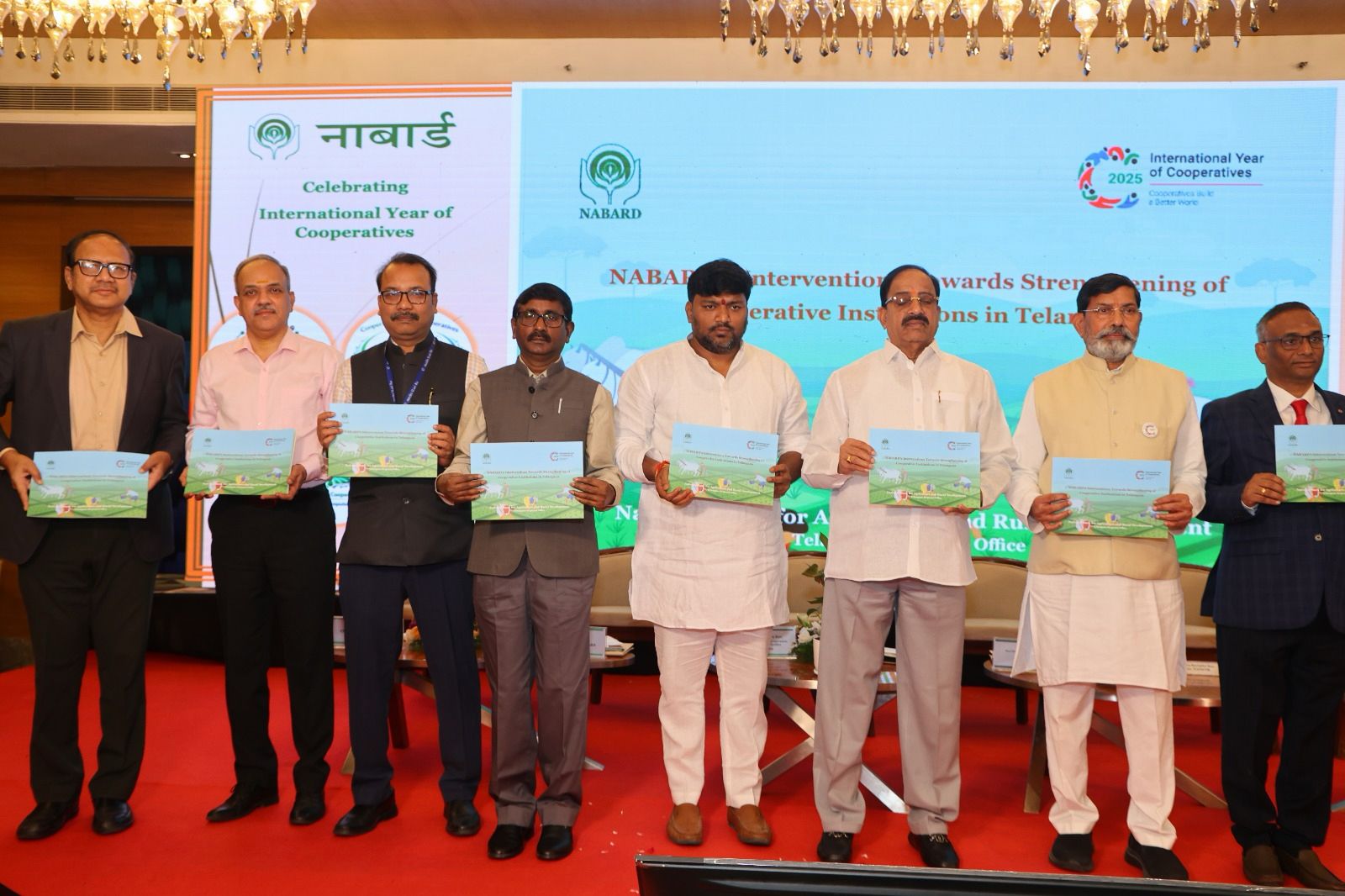
Hyderabad, Dec 30:- As part of celebration of International Year of Cooperatives, NABARD’s Telangana Regional Office organized Telangana Cooperative Conclave 2025 on 29 December 2025 in Hyderabad.

Pic 4

Shri Tummala Nageswara Rao, Minister for Agriculture, Co-operation, Marketing, Textiles and Handloom, Government of Telangana, was the Chief Guest. 

Shri Tummala Nageswara Rao, Minister, in his address said that it is an honour for him to be the part of the Cooperative Conclave as part of the International Year of Cooperatives.  He said that this is an initiative that places rural transformation at the very centre of our growth story.  He dwelt upon the various initiatives the Government of Telangana is taking up.  He said that with the Rice output at 189 lakh tonnes, Telangana stood as India’s second-largest rice producer in the country.  He further said that the year 2025, declared as the International Year of Cooperatives, underscores the vital role of cooperatives in promoting inclusive and sustainable development.  The Cooperative Principles aim at ‘One for all, All for one’ and that Cooperatives are people-centered and not capital-centred.  He appreciated the role of NABARD during the last decade which undertook a comprehensive set of interventions to build strong, resilient and future-ready cooperative institutions in Telangana.  He particularly praised the initiative of transformation of PACS into Multi-Service Centres  and setting up of Sahakara Sarathi Private Limited to facilitate technology and operational support.  He also congratulated NABARD for organising this ‘Sahakara Varotsavaalu’ and bringing together various types of Co-operative institutions from Telengana to convey the strong message of bringing about rural prosperity through Co-operation.

Shri Konduri Ravinder Rao, Chairman, NAFSCOB, speaking on the occasion, exhorted farmers to work with actions and implement best practices learnt from successful societies.  He emphasized the need for focus on inland fisheries.

During the Conclave, a Tripartite Agreement among NABARD, Telangana State Cooperative Apex Bank and 24X7 Moneyworks Consulting Private Limited was signed which will pave way for issuance of eKCC that enables farmers to apply for loans through digital platform.

Eleven best-performing PACS from Telangana have been felicitated at the hands of Hon’ble Agriculture Minister during the Conclave.

Cheques amounting to INR 15 lakh each were presented to 12 PACS as FPOs towards assistance by National Cooperative Development Corporation  during the Conclave.  Further, micro ATMs were also distributed by NABARD to VIJAYA Dairy Cooperatives from nine Districts of Telangana.

The Hon’ble Agriculture Minister has also released a booklet on NABARD’s Intervention towards Institution Building of Cooperatives of Telangana in last decade.

A presentation was made by Shri S Manikumar, CGM, NABARD, Mumbai, on Sahakara Sarathi Private Limited titled ‘Technology and Digital Transformation and way ahead for Rural Cooperative Banks”

Three Panel Discussions also were arranged on ‘Strengthening of Cooperatives especially PACS through Technology adoption, diversification into non-credit activities and forming new MPACS in potential areas’; ‘Promoting Dairy Cooperatives in Telangana Way Forward’; and ‘Promoting Fisheries Cooperatives in Telangana Way Forward”.

The fire side chat on Promoting Fisheries Co-operatives focussed on Innovative models, marketing linkage with Institutions, requirement of share capital & credit linkage with PACS.

Prominent among the dignitaries who attended the Conclave include Shri Chinmoy Kumar, Regional Director, Reserve Bank of India, Hyderabad; Shri Y K Rao, Managing Director, Telangana Cooperative Apex Bank, delegates from DCCBs, FPOs, PACS, Farmer organizations.

The Conclave concluded with Vote of Thanks by Shri Samrat Mukherjee, General Manager, NABARD, Telangana Regional Office.

Freyr Energy Launches India’s First Intelligent Self-Cleaning Solar Technology and Advanced Hybrid Systems

Dec 30: Freyr Energy, India’s leading residential solar solutions providers, announced the launch of India’s first intelligent self-cleaning solar systems and next-generation hybrid solar solutions. These new offerings solve two of the biggest problems faced by home solar users—dust on solar panels and frequent power cuts.

Dust can reduce solar power generation by up to 30% if panels are not cleaned regularly. The company’s groundbreaking Intelligent Self-Cleaning Solar System employs advanced sensor-based technology with water-efficient cleaning mechanisms that automatically maintain optimal panel efficiency. This first-of-its-kind innovation in India boosts energy production while eliminating manual maintenance requirements and reducing water consumption by 90% compared to traditional cleaning methods. For several home owners across India where dust levels are high, this technology transforms solar from a maintenance-intensive investment to a truly hassle-free energy solution.

Complementing this innovation, Freyr Energy’s next-generation Hybrid Solar Systems seamlessly integrate on-grid functionality with battery storage, ensuring uninterrupted power supply even during grid failures. These systems enable intelligent energy management, allowing users to store surplus power for peak demand periods while significantly reducing electricity bills and grid dependency.

“States such as Uttar Pradesh, Madhya Pradesh, Maharashtra, Telangana, Andhra Pradesh and Kerala represent a pivotal market in India’s solar revolution,” said Saurabh Marda, Co-Founder and Managing Director, Freyr Energy. “Freyr Energy’s intelligent self-cleaning technology is a game-changer in the face of a deepening crisis, shaped by dust-heavy streets, and weather patterns that trap pollutants. Combined with our hybrid systems, we’re not just solving existing challenges—we’re making solar more accessible and profitable than ever before. With a payback period of just 3-4 years, a stronger policy push and awareness about government subsidies in the country, there has never been a better time to go solar in these states.”

Residents switching to solar can benefit from combined central and state government subsidies. While Uttar Pradesh provides subsidy up to ₹1 lakh – the highest in the country, Madhya Pradesh offers a substantial subsidy up to ₹78,000. In addition to the central government’s PM Surya Ghar Yojana subsidies, the Kerala government is supporting residents through state-led assistance for net metering arrangements under the Soura programme making solar adoption more affordable than ever. This substantial financial support across states, coupled with Freyr Energy’s innovative technology, ensures a rapid payback period of just 3-4 years and free electricity for the next 20+ years.

Freyr Energy has emerged as the leading solar provider in the Telugu states, recording the highest number of installations across the region.

With over 12,500 installations nationwide and 120+ MW of installed capacity, Freyr Energy is strategically positioned to support Uttar Pradesh, Madhya Pradesh, Maharashtra, Kerala, Telangana and Andhra Pradesh’s renewable energy ambitions and contribute to India’s target of 500 GW renewable capacity by 2030.

The company has already witnessed significant traction across its several operational cities in Uttar Pradesh (Lucknow, Kanpur, Prayagraj, and Varanasi), Madhya Pradesh (Jabalpur, Indore, Bhopal, Sagar,Ujjain,Katni,Rewa,Satna,Gwalior), Maharashtra(Nagpur, Pune, Nashik, Aurangabad, Solapur), Kerala (Trivandrum, Cochin, Calicut, Alappuzha, Thrissur, Palakkad), Telangana (Hyderabad, Khammam, Nizamabad, Karimnagar, Mahbubnagar, Warangal, Nalgonda, Sangareddy) and Andhra Pradesh (Vishakapatnam, Rajahmundry, Bhimavaram, Kakinada, Eluru, Srikakulam, Ongole, Nellore, Kurnool, Chittor, Kadapa, Vijayawada, Tirupati, Vizianagaram) —with demand for rooftop and hybrid solar systems surging, driven by increasing electricity costs, dust-related maintenance concerns, and Freyr Energy’s comprehensive after-sales support backed by flexible financing options through leading financial institutions. Freyr has 10 solar experience centres empowering 7 lack customers across India.

Pune & PCMC Housing Markets – 2025 and 2026

Akash Pharande

By Akash Pharande, Managing Director – Pharande Spaces

The Pune residential real estate market in 2025 tells a mixed story, as below the city’s strong fundamentals was a lot of stress. The city went from a period of rapid growth to a more stable, selective market, with affordability and changing buyer demographics becoming more defining characteristics in the year.

The Highs: Strong registration in the face of uncertainty

At first glance, 2025 saw many transactions. Pune had its best property registration run in four years, with over 1.70 lakh transactions from January to November, only slightly higher than in the same time period in 2024. The holiday season was critical because in September alone, registrations jumped by over 22% from the previous year. By November, the city had been going strong with over 14,200 registrations.

But despite the overall strength, there was a big decline in actual unit sales. According to property consultants ANAROCK, Pune’s housing sales for the whole year of 2025 fell 20% from 81,090 units in 2024 to 65,135 units. This was the second-largest drop among major cities, after Mumbai’s 18% drop.

This difference between registration volumes and unit sales shows what really happened – the market moved more towards luxury, with higher-value transactions making up most of registrations. Buyers in Pune’s affordable segment either put off buying or got off the market for now. For a market which was once defined by rational, affordable housing prices, this is worrisome.

Central Pune and PCMC

Central Pune, which includes PMC, PCMC, and Haveli Taluka in terms of municipal boundaries, remained the city’s real estate engine and contributed over 60% of all housing transactions in 2025. This is mainly due to this corridor’s proximity to the city’s IT job hubs and well-established social infrastructure.

Pimpri Chinchwad Municipal Corporation (PCMC) specifically benefited from micro-market tailwinds. Prices in the area rose over 10% in Q1 2025 compared to Q1 2024. This increase was slightly faster than Pune Municipal Corporation (PMC)’s 8.7% growth, which was driven by new corridors in Moshi, Punawale, and Wakad.
The rental yields of PCMC remained powerful, and Ravet currently had the highest annual returns of 4.3% among emerging zones, which is much higher than Mumbai’s 2.5% benchmark.

This rental performance continues to pull yield-focused investors who see PCMC as the right bet to earn excellent risk-adjusted returns. Properties in Ravet and Nigdi are currently priced in the Rs. 6,500–9,000 per square foot range, making them attractive for first-time and mid-range end-users who cannot afford western corridors like Baner (priced between Rs. 9,000–13,000/sqft) and Kharadi (Rs. 9,500–14,500/sqft).

Property prices

The Lows: High Property Prices = More Unsold Inventory

In 2025, there was a significant decline in affordability in Pune. To illustrate – a 60 lakh flat that cost 40 lakh in 2020 now costs Rs. 12,000–18,000 more per month in EMI, even with small rate cuts.

Sales in the under-Rs. 50 lakh range fell sharply, with some areas seeing drops of 5–30% year-on-year. The problem of unsold inventory got worse – by the middle of 2025, Pune had more than 75,000 unsold units, and the inventory overhang was well over 10 months (the longest since 2020). By the end of the year, there were over 77,800 units lying unsold in the primary market.

This excess supply has tied up developer capital and threatens to impact pricing negatively in 2026.

Sectoral & Geopolitical Challenges

Even though India’s economy was mostly protected from global commodity shocks and financial instability, 2025 was still a tough year for sectors that depend on jobs. The technology industry, which is Pune’s main source of demand, saw significant layoffs and hiring freezes, especially in the second and third quarters.
Geopolitical tensions affected supply chains and investor sentiment, and tariff uncertainties unsettled NRI investment flows. It is worth noting that NRI demand has historically helped Pune’s real estate market – and its overall economy – during downturns.

The combined effect resulted in homebuyers becoming increasingly hesitant in the middle segment, which is precisely where most developers had concentrated their supply. Luxury did well, but it still accounts for less than 20% of Pune’s annual housing sales. In other words, 80% of the market requires stronger demand signals in 2026.

2026 Outlook: Good for End-users, Neutral for Investors

All leading real estate consultants agree that the housing industry’s future currently looks more like stabilisation than recovery. Prices are expected to rise at a slower rate of 5–10% per year. This is healthy by historical standards of inflation, but it also means that in most areas, investors will not see the kind of 10-15% appreciation seen from 2020 to 2024.

This is not a bad thing. It will help increase affordability as people’s salaries and investment growth catch up with housing prices, something that has been overdue for the last 2–3 years. However, if slower price increases become the norm in 2026 and possibly beyond, there will be exceptions. Infrastructure delivery will be the major differentiator for areas and projects.

For example, the delayed completion of the Pune Metro Phase 1 is expected to happen in mid-to-late 2026. This can cause prices in 500-meter corridors to go up by 15–20%. The Ring Road will open up areas on the outskirts, so impacted areas will see prices appreciate by 20–25% as redevelopment nodes form at important intersections. Likewise, the Purandar Airport project will transform the southern corridor of Pune.

As of the end of 2025, affordability is definitely still a problem in Pune. The market movement towards the mid-premium and luxury housing segments is driving many buyers either to the outskirts or off the market. Developers need to change the supply mix in their projects and make sure that “price discovery” remains rational and aligned with actual demand.

Alpex Solar Secures INR 65 Cr MSEDCL Order Under PM-KUSUM Scheme

New Delhi, Dec 29:- Alpex Solar Ltd  a leading manufacturer of high-precision solar PV modules and solar systems announced that it has secured a significant order valued at Rs 65 crore from Maharashtra State Electricity Distribution Company Limited  for the supply of off-grid DC Solar Photovoltaic Water Pumping Systems .

The order has been awarded under the Government of India’s flagship “Magel Tyala Saur Krushi Pump” Yojana / PM-KUSUM B Scheme, a key initiative aimed at promoting clean energy adoption in agriculture while reducing dependence on conventional power sources. Under this contract, Alpex Solar will supply solar water pumping systems across various districts of Maharashtra, with execution scheduled within 60 days as per the Letter of Empanelment.

This project marks an important milestone for Alpex Solar and further strengthens its position in India’s rapidly expanding solar pump and decentralised renewable energy market. Solar-powered irrigation systems are increasingly being recognised as a critical enabler for sustainable agriculture, offering farmers reliable daytime power, lowering input costs and reducing carbon emissions.

Mr. Ashwani Sehgal, Managing Director, Alpex Solar Ltd., said,

“the order reflects continued confidence in Alpex Solar’s proven capabilities in manufacturing, engineering and timely execution of large-scale solar solutions. Our continued success in government-led renewable energy programmes underscores the trust placed in Alpex Solar’s technology, quality standards and operational expertise.”

Alpex Solar Limited operates across the renewable energy value chain, with interests spanning solar PV module manufacturing, solar EPC projects, solar water pumps, RESCO-based solar electricity solutions and international trading. The company continues to expand its footprint across India, aligned with the national agenda of clean energy transition and energy security.

The latest order is expected to contribute meaningfully to Alpex Solar’s order book and reinforces its growth momentum in the solar infrastructure segment.

BLR Airport Records 13% YoY Growth as Coriander Season Concludes

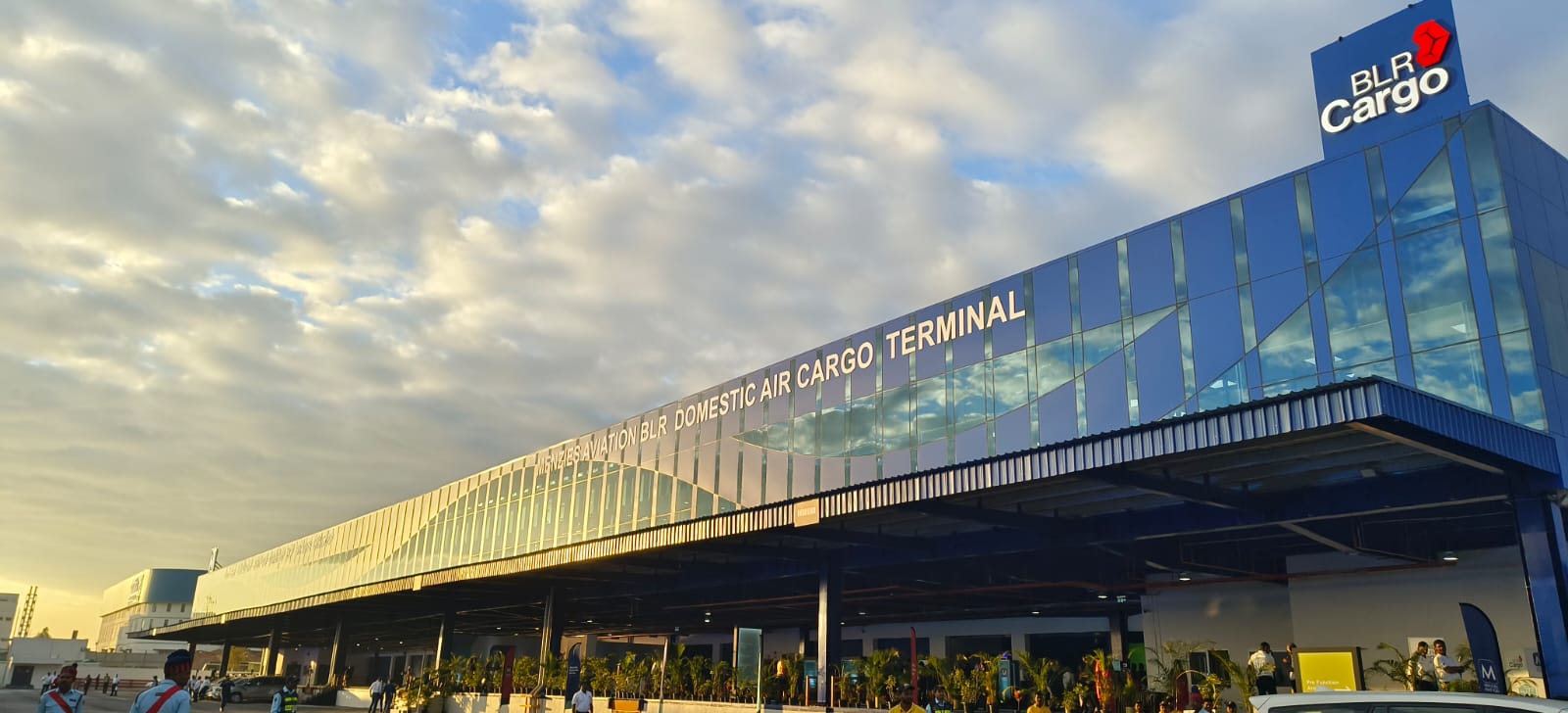
Bengaluru, Dec 29:- As India’s domestic agri trade continues to strengthen, Bengaluru has emerged as a key consolidation and distribution hub for time-sensitive perishables. Within this broader momentum, Kempegowda International Airport Bengaluru  has seen consistent growth in handling fresh produce, supported by expanding domestic connectivity and rising demand across consumption centers. During the June November 2025 season, BLR Airport managed 5,904 metric tonnes of coriander, reflecting a 13% year-on-year growth.

Domestic Cargo Terminal

The season saw steady coriander movement across 22 domestic destinations, indicating sustained demand and changing trade dynamics. Shipments to Northern and Central markets grew notably, with Lucknow  Varanasi  and Jaipur  recording significant volume increases.

From a destination perspective, Kolkata  accounted for the highest share of coriander traffic, followed by Delhi  Bagdogra  Ranchi  and Patna  indicating sustained demand across Eastern and Northern consumption centres.

In response to emerging demand patterns and expanding domestic corridors, BLR Airport facilitated coriander movements to five additional destinations  Agartala  Agra  Nagpur  Amritsar and Port Blair  thereby broadening distribution reach for traders and supply-chain stakeholders.

Overall, the season’s Agri-cargo volumes reflect evolving demand patterns and expanding domestic linkages, while reinforcing BLR Airport’s role in facilitating efficient, scalable agri-cargo operations to support India’s growing agricultural trade.

Aster Medcity Performs South India’s First AR-Guided Total Knee Replacement

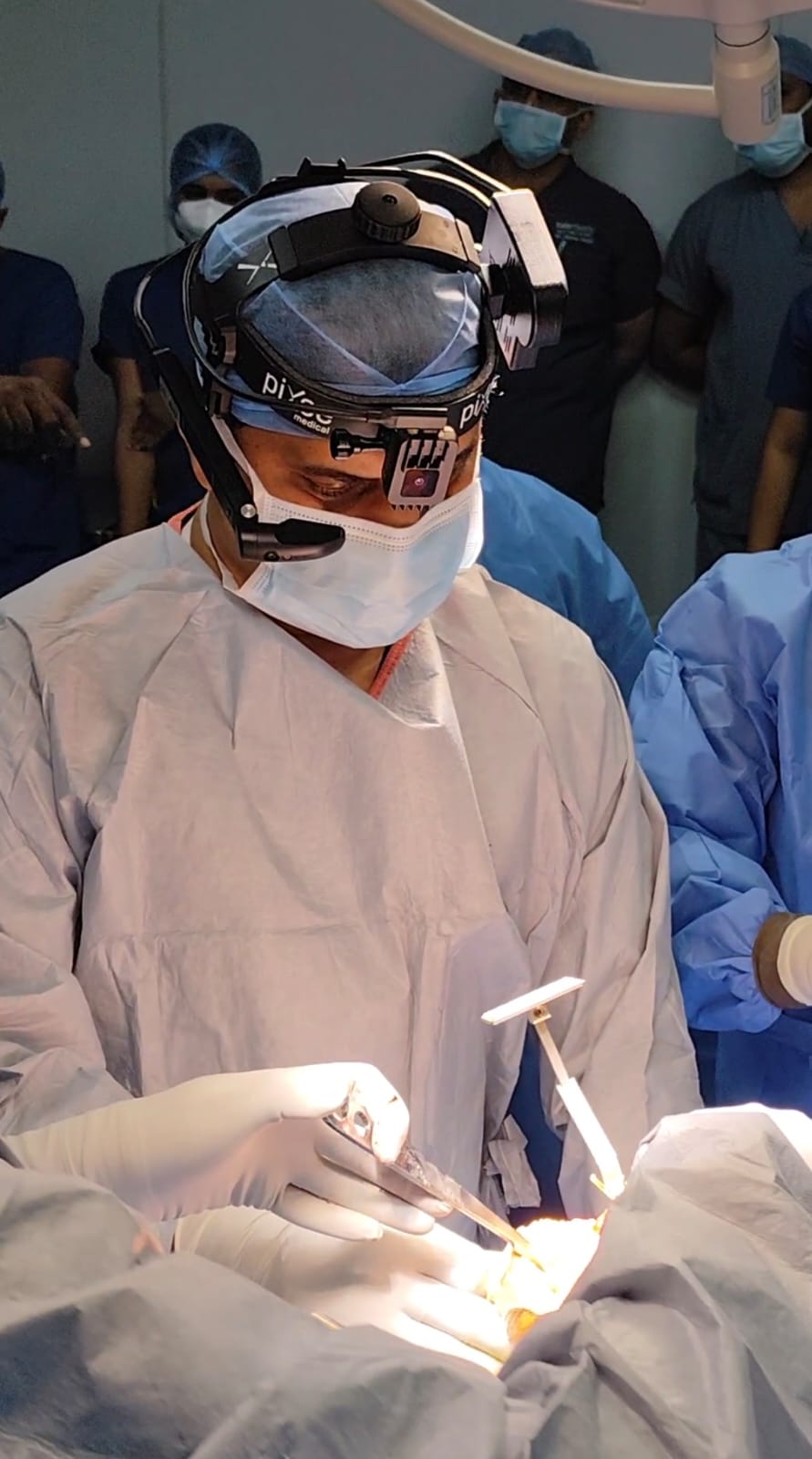
Kochi,  Dec 29:- Aster Medcity has successfully performed South India’s first Total Knee Replacement  using Augmented Reality  technology, marking a significant milestone in the adoption of next-generation surgical innovation in the region.

Dr. Vijayamohan, Lead Consultant Orthopaedic Surgeon at Aster Medcity perfoming South India’s first Total Knee Replacement (TKR) using Augmented Reality (AR) technology

The landmark procedure was carried out on a 57-year-old male patient from Cherthala by a surgical team led by Dr. Vijayamohan, Lead Consultant Orthopaedic Surgeon at Aster Medcity.

The AR-assisted TKR combines advanced digital visualization with real-time surgical navigation, enabling enhanced precision in implant positioning, alignment, and soft-tissue balancing. By superimposing critical anatomical data directly into the surgeon’s field of view, the technology enhances accuracy while preserving the surgeon’s clinical judgment and expertise. This approach minimizes intraoperative bone and tissue manipulation, reduces variability, and promotes safer surgical outcomes.

Commenting on the achievement, Dr. Vijayamohan said;

“This milestone represents a major step forward in patient-centric knee replacement surgery. Augmented Reality allows us to visualise complex knee anatomy with unprecedented clarity during the procedure, improving accuracy, functional outcomes, and potentially accelerating patient recovery.”

The patient demonstrated a rapid post-operative recovery with encouraging early outcomes, including improved joint mobility and reduced discomfort. This success highlights the benefits of integrating the expertise of skilled surgeons with advanced AR and AI-driven technologies. Orthopaedic experts believe that AR-assisted joint replacement could redefine surgical standards by reducing human error and enhancing long-term implant survivorship.

Dr. Nalanda Jayadev, CEO, Aster Medcity, added;

“This achievement reflects our commitment to bringing world-class medical technology to our patients. We are proud to support innovations that continue to raise the benchmark of surgical excellence.”

With this pioneering procedure, Aster Medcity reinforces its leadership in advanced joint replacement surgery and its dedication to delivering cutting-edge, evidence-based care to patients across South India.

Photo Captions:

  1. Dr. Vijayamohan, Lead Consultant Orthopaedic Surgeon at Aster Medcity, performing South India’s first Augmented Reality (AR)-guided Total Knee Replacement.

  2. Dr. Vijayamohan, Lead Consultant Orthopaedic Surgeon, Aster Medcity.