Archives 2025

NTPC, EDF to Collaborate on Pumped Storage, Hydro Projects & RE Opportunities

NTPC, EDF to Collaborate on Pumped Storage, Hydro Projects & RE Opportunities

New Delhi, 25 February 2025: NTPC Limited, a Maharatna company of India, and EDF India Private Limited, owned by Électricité de France SA, a French multinational electric utility company owned by the Government of France, have signed a non-binding Term Sheet and collaborated to develop (including construction), own, operate and maintain pumped storage project(s) and/or any other hydropower project(s) or Hydro Project(s) bundled with other Renewable Energy projects and explore opportunities in distribution business.

The agreement was signed by Mr. Federico D’Amico, CEO (EDF India) and Shri J C Kakoti, GM-Hydro Engineering (NTPC) in the presence of Shri Gurdeep Singh, CMD (NTPC), and Mr Luc Rémont, Chairman and CEO (EDF France). The MOU signing ceremony was graced by Shri Pankaj Agarwal, Secretary (Ministry of Power, GOI). Mr. Patrick Charignon, Executive Vice President, APAC (EDF), Shri Goutam Deb, RED-Hydro (NTPC), Ms Sangeeta Kaushik, ED-Corporate Planning (NTPC) and senior officials from NTPC and EDF were also present on the occasion.

After the signing of the term sheet on 23rd February 2025, during Elecrama 2025, NTPC and EDF propose to form a JVC with 50: 50 Partnership after requisite approval from the Government of India.

This JVC will undertake such Project(s) on its own and/or may create JV and Subsidiaries (“Project SPV”) for undertaking such Project(s) within India and neighboring countries. Considering their domain expertise and resources, both NTPC & EDF are poised to contribute significantly to India’s renewable energy landscape, driving innovation and fostering environmental stewardship, and will leverage its expertise for tailormade offers, driving the decarbonization and global performance of electrical systems.

NTPC Ltd. is India’s largest integrated power utility, contributing one-fourth of India’s power requirements, and has an installed capacity of over 77 GW, with an additional capacity of 29.5 GW under construction, including 9.6 GW of renewable energy capacity. The company is committed to achieving 60 GW of renewable energy capacity by 2032.

With a diverse portfolio of thermal, hydro, solar, and wind power plants, NTPC is dedicated to delivering reliable, affordable, and sustainable electricity to the nation. The company is committed to adopting best practices, fostering innovation, and embracing clean energy technologies for a greener future.

Kala for Vidya RCB Empowering these children through education

Kala for Vidya,

Bangalore February 2025: The Rotary Club of Bangalore, is proud to Announce The Inauguration of “Kala for Vidya,” an annual art exhibition cum sale. This esteemed event, initiated in 2005, aims to support the education of underprivileged children at Rotary Bangalore Vidyalaya (RBV).

The news me of this year’s Exhibition is “Ephemeral Permanence, Stories of Nature.” it promises to be a spectacular showcase of art, featuring renowned artists from across India, alongside emerging talent. The event will present a diverse range of art forms, from traditional to contemporary.

Through their works, the artists will delve into the fleeting moments of beauty, the delicate balance of life, and the enduring power of nature.

The Rotary Club of Bangalore has been dedicated to providing quality education, free uniforms, food, and books to 540 children from underprivileged backgrounds at RBV. “Kala for Vidya” is a testament to the club’s commitment to Empowering these deserving children through education.

We invite art enthusiasts and supporters of education to join us in this noble endeavor. Together, let us paint a brighter future for these children.

EventDetails:

Date: March 1st and 2nd 2025 Time: 10.00 AM to 6.00 PM

Venue: ITC Windsor Manor Bengaluru

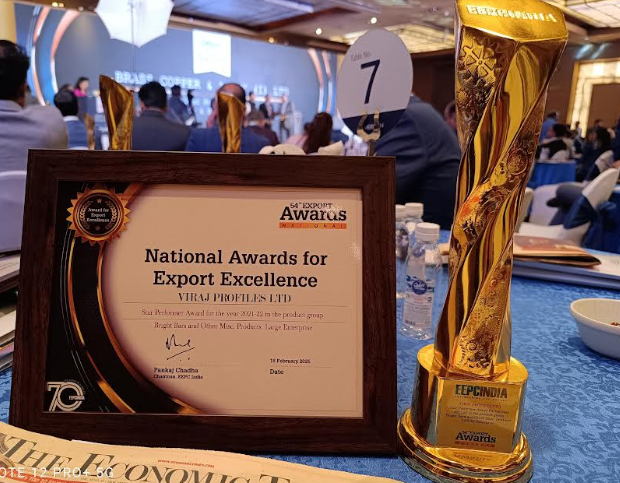
Viraj Profiles Recognized with EEPC National Award for Outstanding Export Performance 2021-22

viraj

Viraj Profiles Pvt. Ltd., a global leader in stainless steel long products, has been conferred with the National Award for Export Excellence for 2021-22 in the Bright Bar and Miscellaneous product group, Large Enterprise category. Exporting its products to more than 90 countries across the globe, the esteemed award by EEPC India is an acknowledgment to Viraj Profiles’ outstanding export success and commitment to India’s economic development.

The esteemed award recognizes Viraj Profiles’ strong global presence and diverse product portfolio and showcasing it as a Make in India brand that is dedicated to delivering high-quality stainless steel products to customers worldwide. Viraj Profiles has earlier been a recipient of the SEEPZ-SEZ HIGHEST EXPORTER Award among EOU’s in 2010.

The Managing Director of Viraj Profiles, Rakesh Chauhan, spoke about the company’s proud moment, saying, “We dedicate this award to our customers, partners, and employees who have supported us in our journey to excellence.”

The National Award for Export Excellence is a prestigious accolade bestowed by the Government of India to recognize outstanding export performance by engineering goods companies. The award recognizes exporters who have triumphed in the face of a variety of worldwide market challenges.

ABP Network’s Ideas of India 2025 Opens with a Rousing Start

Pico Iyer, Author & Journalist

Mumbai, 25 February 2025: As India navigates global disruptions while striving to achieve its growth objectives on the path to its centennial milestone as an independent nation in 2047, ABP Network, the country’s leading multi-language news network, launched the fourth edition of ABP Network’s Ideas of India 2025 in Mumbai today. The summit opened with a magnificent start, focusing on the global movement toward ‘Humanity’s Next Frontier’, and witnessed the convergence of inspiring ideas from the foremost icons leading the charge to make our nation a ‘force for good’.

In the much-anticipated session, ‘The Earth Flame Searching for Inner Peace’, celebrated Indian author, journalist, and travel writer, Pico Iyer, recounted his life in a catholic hermitage after a fire incident burned down his family home in California.

“The very night I lost everything when my house burned down, I realized I still had the most important things.” Pico Iyer remarked, adding, “I also realized I don’t need 90% of things I accumulated; I can live more minimally.”

Elaborating his learnings from his life at the hermitage, Pico Iyer, said, “Humanity’s last frontier is humanity’s first frontier which is what kind of invisible clarity and calm can we find to make our peace with AI and the other accelerating technologies,”

Elaborating on the importance of stillness in our lives, Pico, highlighted, “This is an idea of India, and it is also an idea from India, because for millennia it is India which has been telling the rest of the world how much we gain by sitting still.”

Referring to observations from His Holiness the Dalai Lama, Pico Iyer remarked, “We can use the most modern technologies by bringing to them the most ancient principles and values.

“The world is accelerating at a furious pace. Humans are never meant to live at a pace determined by machines.” Pico Iyer observes further adding to the conversation, “We are caught in a vicious cycle whereby we are caught in such a hurry that we can’t see what kind of hurry we are in. We ought to do something quite dramatic to cut through to the self-perpetuating predicament.”

Responding to whether the silence he experiences at Benedictine monastery can be compared with the Indian practice of Vipassana, Pico Iyer, explains, “The silence there is similar there to Vipassana, although it’s not as a guided practice. The place I go to has no formal practice, no leaders, no rules, and is essentially free.”

“There’s more substance in silence than in answer to any question”, Pico Iyer said elaborating on his experience. He further added, “Silence is God’s language, everything else is poor translation.”

Referring to his new book, ‘In Aflame: Learning from Silence’, Pico Iyer observes, “Solitude is the gateway to the community. The sentences I hear there [in the hermitage] remain within me for a longer time than what it would on the streets of Mumbai.”

Referring to life during the pandemic, Pico Iyer observed, “COVID-19 forced us into retreat – sifting the trivial from the essential.”

Responding to the impact of AI in modern lives, Pico Iyer said, “I sense that as long as we can keep surprising ourselves, we will be ahead of AI”

Renowned for works such as The Art of Stillness, Autumn Light, The Half-Known Life: In Search of Paradise, The Open Road, and others, Pico Iyer’s perceptive words set a strong, introspective foundation for the day-long intellectual discourse.

The ABP Network’s Ideas of India 2025, centered on the theme ‘Humanity’s Next Frontier’, will convene thought leaders and innovators to explore the challenges and opportunities in India’s ascendance in a rapidly changing world. In the face of climate change, geopolitical conflicts, and technological advancements like AI, the summit delved into India’s role as both an ancient civilization and a demographic powerhouse in shaping the future. The two-day summit brings together a confluence of ideas from global thought leaders, intellectuals, and change-makers, covering transformative possibilities in science, medicine, social contracts, and global leadership, with experts from diverse fields offering bold visions of a better, more sustainable world for all.

Kia Syros crosses 20,000 bookings

Mumbai, February 25, 2025: Kia India, a leading mass-premium carmaker of the country, has made an impressive start to the year with the launch of its highly anticipated Syros SUV. The Syros have already started challenging its peers and have received over 20,163 bookings, reflecting an overwhelming customer response.

Syros also witnessed the customers preference towards the petrol-powered engine with 67% of the total bookings, the remaining 33% customers opted for the diesel engines. The premium appeal of the Syros is evident in the booking preferences, with 46% of buyers inclined towards owning the top variants. Glacier White Pearl emerged as the most preferred colour with 32% bookings followed by Aurora Black Pearl and Frost Blue with 26% and 20% respectively.

kia syros

The pre-booking for the Syros began on January 3, 2025, and the SUV was officially launched on February 1, 2025, at an attractive price range of INR 8.99 lakh to INR 16.99 lakh (ex-showroom) with ADAS features are available at an additional cost of INR 80,000 over and above the price of the top trim.

The Syros is designed to meet the needs of the modern, tech-savvy urban driver, blending versatility with cutting-edge technology. Its bold exterior design, premium, lounge-like interior, and advanced features set a new benchmark in the segment, establishing Syros as a game-changer in the sub-compact SUV category.

Hardeep Singh Brar, Sr. Vice President & National Head Sales & Marketing, said, “We are truly delighted by the exceptional response to the Syros in such a short period. Syros launch was a defining moment in our Kia India journey, underscoring our commitment to redefining automotive excellence. With its cutting-edge technology, bold design, and pioneering features, the Syros represents our relentless pursuit of innovation and customer satisfaction. The significant preference for our HTX & above trims is a testament to the discerning taste of Indian customers, who increasingly seek sophistication, advanced technology, and unparalleled comfort. We are confident that Syros will not only set new benchmarks for the industry but will also become a disruptor in the sub-compact SUV segment.”

Innovative Features and Technology

Kia Syros introduces a range of innovative technologies, including a segment-first Over-the-Air (OTA) software update system. This feature allows automatic updates to 16 vehicle controllers without requiring a dealership visit—typically found in luxury vehicles.

The Syros is equipped with the latest Kia Connect 2.0 system, offering more than 80 features that provide seamless connectivity and intelligent vehicle management. In addition, Kia introduced Kia Connect Diagnosis (KCD), allowing users to remotely assess their vehicle’s health, and Kia Advanced Total Care (KATC), which proactively alerts customers of maintenance needs such as tyre replacements and service reminders for a hassle-free ownership experience.

Safety remains a top priority for 18% of customers opting for HTX+(O) ADAS equipped variant which boast a 20-item Hi-Standard Safety package, featuring 16 autonomous Level-2 ADAS (Advanced Driver Assistance Systems). Other premium features include a 76.2 cm (30”) Trinity Panoramic Display panel, dual-pane panoramic sunroof, 64-color ambient lighting, and first-in-segment rear seat recline, slide, and ventilation. The flexible boot space can also be adjusted as per need, offering enhanced practicality.

Premium Appeal and Customer Demand

Bookings are for higher-end trims, highlighting the strong demand for premium variants. This is a clear indication of the growing preference among Indian consumers for advanced features and high-tech offerings, positioning the Syros as a premium choice for discerning customers.

Innovative Ownership Programs

Kia India is also introducing a range of ownership programs to enhance the customer experience and ensure peace of mind. The My Convenience Secure add-on offers coverage for selected wear-and-tear parts, while the My Convenience program provides tailored maintenance packages based on individual care needs. For more comprehensive protection, My Convenience Plus combines maintenance, extended warranty, and roadside assistance.

Canada Shuts Out International Students—Is This the End of the Dream

By Ms. Ritika Gupta, CEO, Aaera Consultants

In a shocking turn, the Canadian government has laid down new rules limiting the number of international students entering the country. For ages, it has been a guiding light for thousands of aspiring students across the world who wish to pursue higher education and explore career opportunities overseas. But with the latest immigration clampdown, a new question arises: Is this the end of the dreams for many who saw Canada as their gateway to success?

What are these new restrictions?

Canada has declared a significant cutback on student visa approvals. These policies include a limitation on student permits, which would imply fewer international students entering than in previous years.

Some of these policies include:

  •  Limitations on student permissions: limiting the number of new international students allowed, significantly reducing intake numbers as compared to previous years.
  •  Stricter financial requirements, ensure students have enough funds to support themselves independently.
  •  The post-graduation work permit crackdowns present challenges for students’ transition into the workforce after graduation. Available work permits are limited to graduates from specific accredited programs, leaving students attending smaller or private institutions at a disadvantage.
  •  Provincial control over student permits, allows provinces to determine how many students they will admit each year, potentially leading to major discrepancies in availability between regions.
  •  Limits on dependents, restricting international students from bringing family members with them unless they are enrolled in specific advanced degree programs, such as master’s or doctoral studies.
  •  Tighter study-to-work transitions, make it difficult for students to switch from study permits to work permits or permanent residency pathways while still in Canada.

Reason behind this

While international students contribute crucially to the Canadian economy by pouring billions of dollars into it each year, the government argues that they have fundamentally caused a mismatch between housing demand and supply, engaged in gouging tuition fees, and overloaded social services. With soaring rental prices in cities such as Toronto and Vancouver, Residents are frustrated over affordability issues, with some landlords favoring international students because they can pay higher rents.

Impact on students

Many students spend long years preparing for their Canadian education only to see their dreams come apart under the new policies. Some had the offer for admission and have already paid the tuition, but are now muddled as to where to go from here. For students holding onto post-graduation work permits to enable them to settle in Canada, they are now in a rock and hard place.
Those already in Canada are under immense pressure as some might have to leave the country earlier than expected due to stricter permit rules. These sudden policy changes have placed students under pressure financially, as they may not get jobs that pay them enough for their education.

Global Impact
Countries such as Australia, the UK, and Germany, present the same educational benefits and, because of this, may become more attractive options. These countries are already taking advantage of Canada’s policy shift, fostering more flexible student visa schemes and easier pathways to gain permanent residency.

From a previously high standing of one of the world’s friendliest student destinations, Canada is about to endanger this hard-earned top prospect. This could cause severe financial damage to universities and colleges that largely depend on international student fees. Funding cuts owing to low enrollment might cascade into everything from research to hiring new faculty or infrastructure renovations.

The Future of International Education in Canada

That brings us back to the issue: Is this temporary, or is the door permanently shut on international students in Canada? If the government fails to implement a balanced approach, it will undoubtedly lose all enormous talents to other nations, harming its economy and global standing.

These voices, including universities, student groups, and policymakers, need to move together to create solutions that meet both housing and education concerns without alienating international students. A few such ideas may include better regulation of student housing, improved oversight for private colleges, and setting policies that would support both domestic and international student communities.

ACC and Adani Foundation Empower 28,000 Rural Lives through Women-Led Initiative Worth Rs 612 Cr

Ahmedabad, 25 February 2025: ACC, the cement and building materials company of the diversified Adani Portfolio, along with the Adani Foundation, continues to drive social impact through the ‘Meri Sangini Meri Margdarshika’ (MSMM) programme. Implemented across 17 ACC locations, the women-led initiative has connected rural community members to more than 20 government welfare, insurance, financial schemes and entitlements, unlocking a total value of Rs. 612 crore. MSMM facilitators are all trained local women volunteers, called ‘Sanginis’.

By simplifying bureaucratic processes, MSMM has helped beneficiaries access schemes related to healthcare, education, financial inclusion, and livelihoods — boosting household incomes and social security. So far in FY’25, the programme has linked 28,000 beneficiaries to government schemes across Karnataka, Jharkhand, Chhattisgarh, Madhya Pradesh, Odisha, and others.

MSMM has so far unlocked total value of Rs. 612 crore in government benefits during the fiscal, with Rs. 3.51 crore directly transferred into the beneficiaries’ bank accounts, driving financial inclusion. Communities located around ACC’s Kudithini, Wadi, Sindri, and Madukkarai plants have received higher benefits amongst all the covered locations including Bargarh, Chanda, Chaibasa, Damodar, Gagal, Jamul, Kymore, Lakheri, Thondebhavi, Tikaria, Chilhati, and Salaibanwa.

Beneficiaries have gained access to eligible welfare schemes including Ayushman Cards, e-Shram Cards, Crop Insurance, Pradhan Mantri Jan Arogya Yojana, Pradhan Mantri Suraksha Bima Yojana, Pradhan Mantri Jivan Jyoti Bima Yojana, Pradhan Mantri Street Vendors Atmnirbhar Nidhi, and others, significantly improving their financial security and livelihoods. Overall, MSMM has unlocked a value of 885 times the invested amount, underscoring its efficiency in driving social transformation.

ACC and the Adani Foundation’s commitment to inclusive growth and empowerment of women as changemakers is reflected through initiatives including MSMM, enabling maximum benefits from government schemes for thousands of underserved families in rural communities.

Sustainable Crop Residue Management Workshop Encourages Collaborative Efforts for Environmental Impact

workshop

S M Sehgal Foundation organized an Inter-Stakeholder Knowledge Exchange Workshop to mobilize collective action for sustainable crop residue management (CRM) at Gurugram, Haryana. The event brought together key stakeholders including policymakers, researchers, agriculture experts, industry representatives, and farmers to deliberate on innovative solutions for reducing crop residue burning and promoting sustainable alternatives.

 The workshop aimed to enhance collaboration among diverse stakeholders, share best practices, and explore sustainable solutions to address the challenges of crop residue management. Key focus areas of the workshop included the following:

 1. Promoting Sustainable Agricultural Practices: Encouraging the adoption of sustainable CRM practices to reduce air pollution and enhance soil health.
2. Facilitating Knowledge Exchange: Providing a platform to share innovative technologies and best practices that can improve crop productivity and offer alternatives to residue burning.
3. Sharing Community Experiences and Insights: Highlighting community experiences to foster collective learning and guide future interventions that are sustainable and impactful.

 Senior officials from the Ministry of Agriculture and Farmer Welfare, Indian Council of Agriculture Research (ICAR), Indian Agriculture Research Institute (IARI), agriculture universities like Punjab Agriculture University, industry experts from CII, The Nature Conservancy, Energy Harvest Charitable Trust, and Center for Science and Environment actively participated, emphasizing the need for a multi-stakeholder approach. Experts discussed successful case studies on innovative CRM models which have the potential to reduce burning incidents significantly.

 Special Guest, Dr. Suresh Kumar Chaudhari, Director General, Fertilizer Association of India (FAI) shared, “Collective action and willingness can be the only way to address this issue. Lots of efforts are being made in this direction, and it needs a collective view and approach by several players, including the farmers.”

 During the workshop, the farming community members shared their experiences highlighting the importance of awareness on CRM, access to cost-effective farm machinery, and the significance of crop diversification. The knowledge exchange provided valuable experiential insights, highlighting both the challenges and opportunities from an inter-stakeholder perspective.

 Speaking at the event, Nishant Gupta, Social & Environmental Impact Advisor, Walmart.org, mentioned, “Sustainable crop residue management is critical for environmental protection, soil health and air quality improvement. Collaborative efforts are essential to scale up solutions that are both economically viable and ecologically sustainable.”

 Anjali Makhija, Trustee and CEO, S M Sehgal Foundation, said, “The workshop has been a vital platform for sharing innovative solutions and aligning stakeholders toward a common goal. The topical discussions will lead to convergence of efforts in this regard and pave the way for collaborative action.”

Bharat Tex 2025 – Revolutionizing Fashion, Sustainability, and Innovation

Bharat Tex 2025, India’s largest global textile event, was successfully organized from February 14 to 17, 2025, at Bharat Mandapam, New Delhi. The event spanned 2.2 million square feet and featured over 5,000 exhibitors, providing a comprehensive showcase of India’s textile ecosystem. More than 1,20,000 trade visitors, from 120+ countries including global CEOs, policymakers, and industry leaders, attended the event.

Bharat Tex 2025 served as a platform to accelerate the government’s “Farm to Fibre, Fabric, Fashion, and Foreign Markets” vision. India’s textile exports have already reached ₹3 lakh crore, and the goal is to triple this to ₹9 lakh crore by 2030 by strengthening domestic manufacturing and expanding global reach. The event demonstrated India’s leadership in the textile sector and its commitment to innovation, sustainability, and global collaboration.

Defining Achievements of Bharat Tex 2025

India’s Textile Industry: A Key Driver of Economic Growth
India is the sixth-largest exporter of textiles globally, contributing 8.21% to the country’s total exports in 2023-24. The sector holds a 4.5% share in global trade, with the United States and European Union accounting for 47% of India’s textile and apparel exports.

From an employment perspective, the textile industry provides direct employment to over 45 million people and supports the livelihoods of over 100 million individuals indirectly, including a large proportion of women and rural workers. It aligns with key government initiatives such as Make in India, Skill India, Women Empowerment, and Rural Youth Employment, reinforcing its role in inclusive economic development.

The government’s focus on increasing textile manufacturing, modernizing infrastructure, fostering innovation, and upgrading technology has strengthened India’s position as a global textile hub. Bharat Tex 2025 provided a platform to showcase these advancements while promoting sustainable and high-value textile production.

Supportive Policy Framework
Vested by forward-thinking government initiatives, the Indian textile sector is set to spin a remarkable tale of innovation, fortitude, and economic flourishing in the years to come. With the support of proactive policies, the industry is primed to unleash creative potential, demonstrate resilience, drive economic growth, etc.

1. Prime Minister Mega Integrated Textile Region and Apparel (PM MITRA) Parks

Scheme

Creating an Integrated Textiles Value Chain

7 mega textile parks with an expected investment of USD 10 Bn are being set up with world-class infrastructure, plug-and-play facilities, and an integrated ecosystem.

2. Production Linked Incentive (PLI) Scheme
Boosting manufacturing of MMF fabrics, Apparel & Technical Textiles

Production Linked Incentive (PLI) Scheme with approved incentives of INR 10,683 crore (~USD 1 Bn) to promote the production of MMF Apparel, MMF Fabrics and Products of Technical Textiles

3. Samarth
Building Capacity, addressing skill gaps in the textile value chain
The scheme is a demand-driven and placement-oriented program across the textile value chain. In addition, various States have their own skilling/training support schemes.

4. National Technical Education, Training
Promoting Technical Textiles – towards USD 300 Bn by 2047
National Mission to support and promote Research, Innovation and Development, Education Training, Skill Development, and Market Development in Technical Textiles

5. Liberal State Policies
Generous support & incentives by State Governments / Union Territories – Capital support, wage and skilling incentives, power and water support
To boost the textile industry, the Ministry of Textiles, in the 10th Empowered Programme Committee (EPC) meeting, approved four Start-Ups under the ‘Grant for Research & Entrepreneurship across Aspiring Innovators in Technical Textiles (GREAT)’ scheme, granting each INR 50 Lakhs for innovations in Medical, Industrial, and Protective Textiles. Additionally, three educational institutes, including IIT Indore and NIT Patna, received INR 6.5 Crores to introduce specialized courses in Geotextiles, Geosynthetics, and Sports Textiles, aiming to strengthen technical expertise in the sector. Further, 12 Skill Development Courses in Medical, Protective, Mobile, and Agriculture Textiles, developed by SITRA, NITRA, and SASMIRA, were approved to provide industry-focused training across the textile value chain.

Global Textiles redefined from India to the World

Bharat Tex 2025 is where India’s rich textile heritage meets modern innovation, setting the stage for global textile leadership. As the world’s youngest and largest global textile show, it’s a platform for forging partnerships and driving economic growth.
It serves as a premier platform for industry leaders, manufacturers, exporters, and innovators, bringing together key stakeholders from across the textile sector. The event facilitates collaboration among manufacturers, exporters, and importers, providing them with an opportunity to showcase their expertise, cutting-edge innovations, and latest collections to a global audience.

Focused Zones for Focused Business

Intelligent Manufacturing

Intelligent manufacturing is revolutionizing the textile industry by integrating advanced technologies and data-driven approaches to improve efficiency, quality, and innovation. This transformation leverages automation, artificial intelligence (AI), the Internet of Things (IoT), and advanced analytics to modernize traditional textile production processes.

Technical Textile

Technical textiles are revolutionizing the textile industry in India by offering innovative solutions across various sectors. These specialized fabrics are designed for specific performance attributes and applications, ranging from automotive and aerospace to healthcare and construction. With a growing emphasis on technology and research, India is positioning itself as a global leader in this field, leveraging its strong textile heritage and advanced manufacturing capabilities.

Home Textile

India’s home textile sector is known for its rich traditions and craftsmanship, with various regions specializing in unique textile techniques and patterns. Gujarat is renowned for its vibrant and intricate embroidery, while Kashmir is famous for its luxurious woolen shawls and rugs. This diversity reflects India’s extensive heritage and expertise in textile production.

Fabrics

India is one of the world’s largest producers and exporters of fabrics, catering to both domestic and international markets. The sector is characterized by a mix of large-scale industrial manufacturing and small-scale artisanal production, reflecting a vibrant tapestry of innovation and tradition. Major fabric hubs in the country include Gujarat, Tamil Nadu, Punjab, and West Bengal, each known for its unique textile specialties.

Apparel & Fashion
In India, the apparel and fashion industry is a major economic driver, contributing significantly to GDP and employment. The country is renowned for its rich heritage in textiles and traditional craftsmanship, including intricate handloom fabrics, embroidery, and dyeing techniques. India’s apparel sector is characterized by a vibrant blend of traditional and contemporary styles, catering to diverse consumer preferences both domestically and internationally.

Handloom
India’s handloom sector is renowned for its variety of textiles, including intricate saris, shawls, scarves, and other woven items. Each region of India boasts distinct handloom traditions and techniques. For example, the Banarasi silk from Varanasi, the Kanjeevaram silk from Tamil Nadu, and the Jamdani from West Bengal are highly esteemed for their quality and craftsmanship. These textiles often feature elaborate patterns, vibrant colors, and traditional motifs, making them highly sought after both domestically and internationally.

Handicrafts & Carpets

The handicraft and carpets sector in India is a vibrant and culturally significant component of the country’s artisan economy, renowned for its rich heritage and exceptional craftsmanship. This sector encompasses a wide range of products, from intricate handcrafted textiles and decorative artifacts to exquisite hand-knotted carpets. Each region in India contributes its unique traditions and techniques, resulting in a diverse array of products that reflect the country’s artistic diversity.
A key attraction of the event was “Indie Haat,” held from February 12 to 18, 2025, at the National Crafts Museum and Hastkala Academy, New Delhi. It showcased over 80 different types of handcrafted and handwoven products, created by 85 artisans and weavers from various states. Indie Haat underscored India’s vast handloom and handicraft traditions, aligning with the government’s vision of promoting rural artisans.

Breathing Threads: Fashion Show at Bharat Tex 2025
The office of the Development Commissioner for Handlooms, Ministry of Textiles, Government of India organized a fashion event titled “Breathing Threads” to feel the pulse of craftsmanship, honor a living legacy, and witness the timeless elegance of Indian handlooms in modern silhouettes.

The beauty of handloom and the brand’s mission aligns with sustainability and a zero-waste strategy, reflecting the living habits of Indian villages. The event attracted international buyers and key stakeholders, reinforcing India’s potential in sustainable fashion and craftsmanship.

Bharat Tex 2024: A Landmark Event

Bharat Tex 2024 set the stage for India’s emergence as a global textile powerhouse, bringing together 3,500+ exhibitors, 3,000+ overseas buyers, and over 1,00,000 visitors from across the world. Covering an expansive 2 lakh sq. meters, Bharat Tex 2024 featured 50+ knowledge sessions, fostering discussions on global trade, innovation, and industry transformation.

The event played a pivotal role in reinforcing India’s position as a key player in the global textile supply chain. Its success laid a strong foundation for Bharat Tex 2025, which scaled new heights in exhibitor participation, international collaboration, and industry impact.

Weaving Tomorrow: India’s Textile Revolution

Embodied in a vibrant tapestry of timeless craftsmanship and pioneering innovation, the Indian textile industry stands at the threshold of a resplendent future. With each passing year, it continues to evolve—leveraging cutting-edge technology, embracing sustainability, and setting global trends.

As it forges ahead, the industry is not only preserving its rich heritage but also redefining excellence through research-driven advancements and digital integration. With a strong commitment to sustainability and a vision for global leadership, India’s textile sector is poised to shape the future of fashion, technical textiles, and intelligent manufacturing, reinforcing its position as a key driver of economic growth and innovation on the world stage.

HDFC Life Introduces Click 2 Achieve Par Advantage: A Pathway to Achieving Life’s Goals

Bengaluru, February 25, 2025: HDFC Life, one of India’s leading life insurers, has launched its latest product HDFC Life Click 2 Achieve Par Advantage. This participating product has been designed keeping in mind milestones associated with the different life stages of an individual. As one continues to save for their growing aspirations/goals, it is observed that there is a preference for early liquidity (for short term needs), flexibility and financial security for the future.

HDFC Life Click 2 Achieve Par Advantage comes with following key features:

  • Policy Continuance Benefit (PCB) – Through this option, future premiums are waived in case of death of the Life Assured. The Death Benefit is paid out as a lump sum immediately and also the future benefits under the plan continue for the nominee or survivor.
  • Choice of Death Benefit Multiple – This option enables one to choose a customised Death Benefit Multiple – 5x, 7x or 11x – as per their need.
  • Paid Up Addition – Through this option, one can convert partial or the entire cash bonus payable into Paid-Up Additions which can be encashed anytime during the term of the policy.

Customers can choose any combination from the above options as per their future needs.

Along with life insurance cover for financial security of the family, the plan also offers:

Additional Life Coverage – One can choose to cover one’s spouse

Tax benefits – As applicable for an individual, based on prevailing tax laws

Life insurance is a necessity for every working individual with financial responsibilities. HDFC Life has been an innovator in the life insurance space offering customisable products that meet the ever-evolving needs of Indian consumers. The Company offers a robust digital platform that provides multiple servicing options to customers as per their convenience. HDFC Life’s commitment to customers is reflected in its consistently high claim settlement ratio, which was 99.50% for FY24.

Speaking on the product launch, Aneesh Khanna – Head Products & Segments, HDFC Life, commented, “We, at HDFC Life, believe that life insurance products need to be designed to fit the specific needs of every individual, depending on their age, life stage, current income and future plans. Every individual dreams of a financially secure future for their loved ones and also of achieving goals such as buying a home, sending their children for higher education to a prestigious institute, etc. These dreams need long-term planning with an instrument that offers flexibility, liquidity and financial security. HDFC Life Click 2 Achieve Par Advantage has been designed to offer a solution to individuals who endeavour to create a better future and protect their dreams against uncertainties with a financial safety net.”