Archives 2025

Jaipur Music Stage 2025 begins with a spirited celebration of music

Jaipur Music Stage,

The annual Jaipur Music Stage, showcasing electrifying music each evening at the Jaipur Literature Festival, kicked off on January 30th, with much aplomb at Hotel Clarks Amer, Jaipur. The 3-day music festival, being held alongside the iconic sumptuous feast of books, literature & ideas, is a perfect conclusion to the events of each day.

The festival opened with a tribute to two historic poets of India: the 13th-14th century Sufi Amir Khusrau and the 14th-15th-century mystic poet Kabir Das. This evening showcased their timeless legacies through evocative performances.

The Amir Khusrau Project by Abhijit Pohankar, renowned for his expertise in Indian classical fusion and the keyboard, celebrated the sublime verses of Khusrau through their performance. Dastaan LIVE, an ensemble celebrated for its fusion of poetry, folk, and rock, brought Kabir’s poetic wisdom to life through the set Kabira Khada Bazaar Mein.

“We at Dastaan LIVE are so glad to bring Kabir’s message of love and unity in such times to Jaipur with our show Kabira Khada Bazaar Mein, which reinterprets the music of the play by the same name and was directed by M.K. Raina. Working with Teamwork Arts is always a great experience, and we appreciate the work that they put in to push the art and culture scene in the country,” said Anirban Ghosh, founder of Dastaan LIVE.

The much-awaited performances from Day 1 brought back the magic of live music to a stage that has seen some of the greatest offerings from India and around the world in its previous editions.

Pre-Budget Expectations 2025 by Experts

Pradeep Aggarwal, Founder & Chairman, Signature Global (India) Ltd.

“As we approach the upcoming budget, the real estate sector is optimistic about reforms that can act as growth catalysts and enhance operational efficiency. Revising the current tax exemption limit on housing loans to ₹5 lakhs, in line with rising property prices and construction costs, could provide significant relief to homebuyers. This step would directly support millions of aspiring homeowners and boost demand across the sector.
Equally transformative would-be granting industry status to real estate, a move capable of invigorating over 200 allied sectors. Such recognition would foster job creation, enable skill development, and amplify economic activity, further solidifying the sector’s position as a cornerstone of India’s economy. Similarly, the formulation of the CLSS scheme and the creation of affordable housing zones, akin to SEZs, could provide targeted incentives and address critical demand-supply gaps.

To further support homebuyers, waivers of stamp duty and GST for first-time homebuyers would offer much-needed financial relief. Strategic reforms, such as adjustments to GST input tax credit regulations, could reduce developers’ tax burdens, potentially stabilizing property prices and making housing more accessible. Introducing a ₹5 lakh subsidy for housing loans up to ₹1 crore would also provide crucial financial support to urban and semi-urban homebuyers.

Broadening the definition of affordable housing to include properties priced up to ₹1 crore would align with evolving market dynamics and strengthen the government’s vision of ‘housing-for-all.’ These measures, if implemented, could unlock tremendous potential, propelling the sector toward sustainable growth while contributing significantly to the nation’s development goals. The real estate industry is poised to play a defining role in India’s journey toward ‘Viksit Bharat 2047.”

Vineet Nanda, Director Sales & Marketing, Krisumi Corporation

Budget 2025 must strike the right balance between fiscal prudence and economic stimulus to sustain India’s growth momentum. A key priority should be boosting consumption by rationalizing income tax rates, ensuring that more disposable income reaches the hands of consumers, thereby driving demand across multiple sectors. At the same time, the budget must take a bold, growth-driven approach with a strong emphasis on capital expenditure, particularly in infrastructure development. Investments in roads, highways, and transport networks will not only enhance connectivity but also generate employment and attract further private investments.

Equally crucial is the focus on digital infrastructure, as a well-connected, technology-driven economy is essential for India’s competitiveness on the global stage. Strengthening high-speed internet access, expanding data centers, and promoting digital inclusion will empower businesses and individuals alike. Furthermore, green technology must be a core pillar of the budget strategy. Increased investments in renewable energy, electric mobility, and sustainable urban development will pave the way for a cleaner, more resilient economy while aligning India with global climate goals.

A well-crafted budget that prioritizes infrastructure expansion, technological advancement, and sustainability—while ensuring fiscal stability—will not only fuel short-term economic activity but also position India for long-term prosperity. This is the time to make decisive investments that strengthen India’s global standing and create a future-ready economy

Sahil Agarwal, CEO, Nimbus Group

“The upcoming budget holds significant importance as it will be the first full-year budget of the Modi 3.0 government. We anticipate major announcements aimed at benefiting the real estate and infrastructure sectors, which are critical growth engines for the economy and support numerous allied industries.

One key area of focus should be the rationalization of taxes and duties levied on homebuyers, which in many states exceed 12% of a property’s value. In the previous budget, the finance minister urged state governments to address this issue, but significant progress has yet to be made. We hope this budget includes provisions to streamline these charges and provide much-needed relief to homebuyers. Additionally, we urge the government to revisit the long-term capital gains (LTCG) tax on real estate and consider providing relief in this area.

Steps toward GST reforms for the real estate sector are also necessary to make it a more attractive investment option. Furthermore, increasing the tax deduction limit under Section 24(b) for home loan interest, currently capped at ₹2 lakh per annum, to at least ₹5 lakh would provide substantial financial relief. This is particularly relevant for homebuyers in metropolitan cities, where high property prices necessitate large home loans. Such a move could boost demand and promote homeownership.”

Udit Jain, Director, One Group

“Over the past few years, the prices of land and construction materials have risen sharply, not only in metropolitan cities but across the country. This, coupled with sustained demand, has significantly driven up property prices, making homeownership increasingly challenging for many. As a result, the real estate sector, particularly the housing segment, requires robust government support to make home buying more affordable for aspiring buyers.

Government intervention through targeted incentives could help alleviate the financial burden on homebuyers. One crucial area to address in the upcoming budget is the enhancement of the income tax deduction limit on home loan interest under Section 24(b), which has remained unchanged for over a decade. Increasing this limit would provide much-needed relief, particularly for buyers in high-cost urban markets.

Another key measure is the extension and expansion of the Credit Linked Subsidy Scheme (CLSS). The government should consider raising the property price threshold for affordable housing eligibility, enabling more middle-income families to benefit from this scheme. Such an adjustment would not only boost demand but also encourage developers to focus on affordable housing projects, a segment currently experiencing a downturn in supply.

Additionally, rationalizing stamp duty rates, especially in Tier-II and Tier-III cities, could significantly stimulate housing demand among mid-income and low-income groups. High stamp duty rates often act as a barrier for homebuyers, and reducing them could make homeownership more accessible in these emerging markets.”

Pavan Choudary, Chairman, Medical Technology Association of India

 “The high customs duty regime significantly increases the cost of medical devices, which undermines the government’s efforts to make affordable healthcare accessible to the masses through initiatives like Ayushman Bharat (PMJAY). Hence, we urge the government to consider reducing customs duty rates for products where domestic alternatives are not yet readily available”.

D. S. Negi, CEO, Rajiv Gandhi Cancer Institute & Research Centre 

 Budget 2025 is just around the corner, the cancer care sector has the potential to achieve significant reforms that ensure accessibility, affordability, and quality for all.
A key highlight of the previous Budget for the sector was the inclusion of the HPV vaccine, which safeguards against cervical cancer, helping protect future generations from one of the most preventable cancers. Including these vaccines in the National Immunization Program can ensure every child receives them automatically, much like the polio vaccine. With door-to-door services and widespread access, this initiative could drastically reduce the incidence of cervical cancer.
India has also made remarkable advancements with the launch of its first indigenously developed CAR T-cell therapy for cancer under the ‘Make in India’ initiative, hailed as a major breakthrough. Similarly, the first telesurgery in cancer care, performed by the Rajiv Gandhi Cancer Institute & Research Centre, has set a new benchmark in remote oncology treatment.
To build on these successes, the budget must prioritize digital health solutions such as telesurgery, electronic health records (EHRs), and AI-driven diagnostic tools to improve healthcare delivery. There should also be a strong focus on enhancing nationwide cancer screening programs and providing access to cutting-edge treatments like immunotherapy and personalized medicine.
Increasing healthcare spending to 2.5% of GDP, along with robust policy measures, is essential for creating a resilient healthcare system. Comprehensive support for cancer survivors—through rehabilitation, mental health services, and survivorship programs—will further improve their quality of life. High import duties on medical equipment, reaching up to 36%, significantly increase treatment costs, particularly for mid-sized operators and smaller cities. The Budget should provide relief from these duties to enable more hospitals acquire high-end equipment, making treatments more affordable and accessible.
Supporting primary healthcare centres is essential to ensure quality care and allow tertiary hospitals to focus on specialized treatments. Equipping tertiary government hospitals with advanced infrastructure is crucial to address the growing cancer burden, along with targeted policies for various cancer types, including rare ones.
By addressing these priorities, Budget 2025 can lead the way to a future where cancer care is accessible, innovative, and largely preventable.

Subbu Venkatachalam, Head of Marketing, Carborundum Universal Limited 

Over the last few years, India has successfully navigated geopolitical dynamics. We have been instrumental in shaping strategic security dialogues in the region. Through a strong focus on self-reliance, we have cemented our position as a global defence manufacturing hub and improved our internal security posture. 2025 as the ‘Year of Reforms’ in Defence will take us further closer to our ambition of Atmanirbharta.

With the current allocation towards defence expenditure still below the Standing Committee on Defence’s recommendation of 3%, we have ample scope to augment spending for key priorities. My wishlist from this year’s defence budget announcement would be:

  • Significant allocation towards capital outlay: This will allow domestic companies to bring more innovative technologies into the sector and enable military modernisation at scale.

  • Incentives for domestic production: Expanding domestic production capacity and innovation capabilities is critical to adopting a dynamic military stance while strengthening export potential. This will also encourage domestic players to invest in cutting-edge manufacturing technologies, adhering keenly to globally benchmarked standards. This will promote greater reliability and responsibility in products and platforms.

  • Provision to intensify R&D efforts: R&D is a key pillar to attaining self-reliance. Giving a boost to R&D, especially in advanced materials and futuristic technologies, will not only ensure the sector a key advantage but also give a fillip to exports. Increasing budgetary spends on R&D to 15% from the current 5%, as recently suggested by DRDO Chairman Dr. Samir V. Kamat, will help efficiently evolve defence technologies. This will significantly benefit India, especially in the area of co-developing next-generation aero engine capabilities.

  • Allocation towards dedicated facilities for R&D, testing, and certification: This will help accelerate development lifecycles, bring down costs, and give impetus to research and innovation in strategic new-age nanomaterials.

Establishment of CoEs in research-led institutions: Investment towards developing the research wings at top-tier institutions will bring in innovation at a faster pace. This will help address a wide range of on-ground challenges, ultimately ensuring the highest standards of safety and protection for our soldier

TN Auto/Cab Drivers Aim for No. 1 Customer Service with Namma Yatri

Chennai, Feb 1st, 2025: Auto and cab drivers in Tamil Nadu are committing to becoming India’s No. 1 in customer service and fair pricing, ensuring a seamless and safe travel experience for passengers across Tamil Nadu. With the adoption of Namma Yatri’s open model, customer ratings and service data will be openly available, enabling drivers and the entire community to collaborate and improve service quality metrics.

Tamil Nadu’s strong legacy of government-backed, people-first initiatives is now extending to urban mobility with Namma Yatra’s open model. Inspired by Aavin’s success in the dairy sector—where producers receive fair compensation while consumers enjoy quality and affordability—this initiative empowers driver cooperatives to take ownership of service quality, reliability, and fair pricing.

Through collaboration with key stakeholders, including the government, media, and influencers, Namma Yatri is committed to educating, empowering, and motivating drivers to become better service providers. This model ensures a win-win ecosystem where drivers earn fair wages and passengers benefit from affordable, high-quality transport.

During the event, presidents of various driver associations took the Aathi Choodi Pledge of “Aram Seiya Virumbhu” with “Namma Mission, Customer Satisfaction.” They also signed an agreement with Namma Yatri to uphold professionalism, reliability, and fair pricing, ensuring that passengers aren’t overcharged. The platform’s open data approach fosters trust and accountability, reinforcing its commitment to a customer-first experience.

When drivers transition to Namma Yatri, they enjoy 100% of their earnings while passengers benefit from fair and transparent fares. This shift directly addresses concerns over high commissions on other ride-hailing platforms, which have impacted driver incomes and increased costs for customers.

Happy drivers deliver happy service to customers. With an outstanding 4.8+ user rating, Namma Yatri operates on the government-backed ONDC network, ensuring a service-first approach to city mobility. Together with its family of apps, Namma Yatri has facilitated over 7.7 crore trips across India, enabling drivers to collectively earn ₹1,240 crore, empowering them with financial independence and a better future.

The initiative will collaborate with the government towards building a driver-empowered and people-centric mobility ecosystem. Safety measures are being strengthened through partnerships with government departments and community organizations, ensuring a safe and seamless travel experience. With collaboration from all stakeholders, Namma Yatri aims to set a new benchmark for sustainable and customer-friendly transportation in Tamil Nadu.

Club Mahindra Expands Its Footprint in Uttarakhand with the Launch of Club Mahindra Patkote, Jim Corbett

CM logo

Chandigarh, 1st February 2025: Club Mahindra, the flagship brand of Mahindra Holidays & Resorts India Limited (MHRIL), has unveiled its latest property, Club Mahindra Patkote Jim Corbett, nestled in the misty hills of Kumaon, this serene sanctuary is a haven for nature enthusiasts. Surrounded by scenic trails, dense forests, vibrant wildlife, hidden treasures, and the melodious calls of birds, it offers an idyllic escape into nature.

The Club Mahindra Patkote Resort spans 4.7 acres and features 72 well-appointed rooms, providing a range of thoughtfully curated experiences for guests. From an inviting swimming pool and exquisite dining options to engaging indoor activities and a rejuvenating spa, the resort ensures a perfect blend of adventure and relaxation, making every stay memorable.

Conveniently accessible via Pantnagar and Bareilly Airports and Kathgodam and Ramnagar Railway Stations, the resort serves as an easily reachable retreat for travelers seeking tranquillity. The ideal time to visit is between November and February when the region’s serene beauty is at its peak.

Bookings for Club Mahindra Patkote Jim Corbett are now open on Club Mahindra’s website and app.

Commenting on the launch, Manoj Bhat, Managing Director & Chief Executive Officer, Mahindra Holidays & Resorts India Ltd, said, “Uttarakhand has always been a cherished destination for nature lovers. With our strong presence in the state through resorts in Mussoorie, Almora, and Kanatal, the launch of Club Mahindra Patkote further reinforces our commitment to providing exceptional retreats in some of India’s most pristine and picturesque locations. This addition reflects our vision of delivering unparalleled vacation ownership experiences that seamlessly combine comfort, culture, and nature.”

Ashirwad Saxena Bags Bronze Medal at the Ongoing 38th National Games

Hyderabad, February 1, 2025….Hyderabad promising bicyclist Ashirwad Saxena of Telangana State Cycling Association won the Bronze Medal in 120 km Mass Start Road Race in the 38th National Games held at Uttarakhand. He finished his race in 02:48:39.029

Aashirwad Saxena is an international cyclist from Hyderabad. He is one of the members of the Indian contingent. He performed well in this race as a Road rider. He is the most promising professional bicyclist from Hyderabad and won many championships at various levels in the past

Ashirwad Saxena wins Bronze Medal in 38th National Gamesh

Telangana Cycling Association and Sports Authority of Telangana Committee members congratulated him on his remarkable performance and winning Bronze medal

Sri Malla Reddy, President of Telangana Cycling Association and Secretary Telangana Olympic Association and B. Vijaykanth Rao, General Secretary, Maxwell Trevor, Chairman, CFI Athlet4e Committee and K. Dattatreya Organising Secretary appreciated him for his best performance.

The 38th National Games are being hosted in Dehradun, Uttarakhand during its Silver Jubilee year and are held in 11 cities across 8 districts of Uttarakhand till 14th February. 36 states and one union territory are participate in the National Games. Around 10,000 athletes are competing for medals across 32 disciplines in the Games.

Indian Bank Observes Swachhata Pakhwada 2025 with Cleanliness and Sustainability Initiatives

Chennai, February 1, 2025 – Indian Bank aligning with the national mission of achieving Swachh Bharat, undertook Pan-India cleanliness and sustainability initiatives, during the ongoing Swachhata Pakhwada (16th-31st January 2025).

At its Corporate Office in Chennai, a Swachhata Pledge was administered by Shri Binod Kumar, MD & CEO, along with the Executive Directors and senior officials, reinforcing the Bank’s commitment to hygiene and sustainability. This was followed by a signature campaign – ‘Say No to Single-Use Plastic’.

Bank organized a cleanliness and plantation drive today at Chennai, in addition to organizing a walkathon along with logging on 19.01.2025. These initiatives are directed towards spreading the message of Swachata among the general public.

At the field level, employees across branches actively took the pledge and participated in the cleanliness drives, contributing to a cleaner and greener environment.

Step into a New Era of Wellness and Aesthetics with Envi Aesthetics

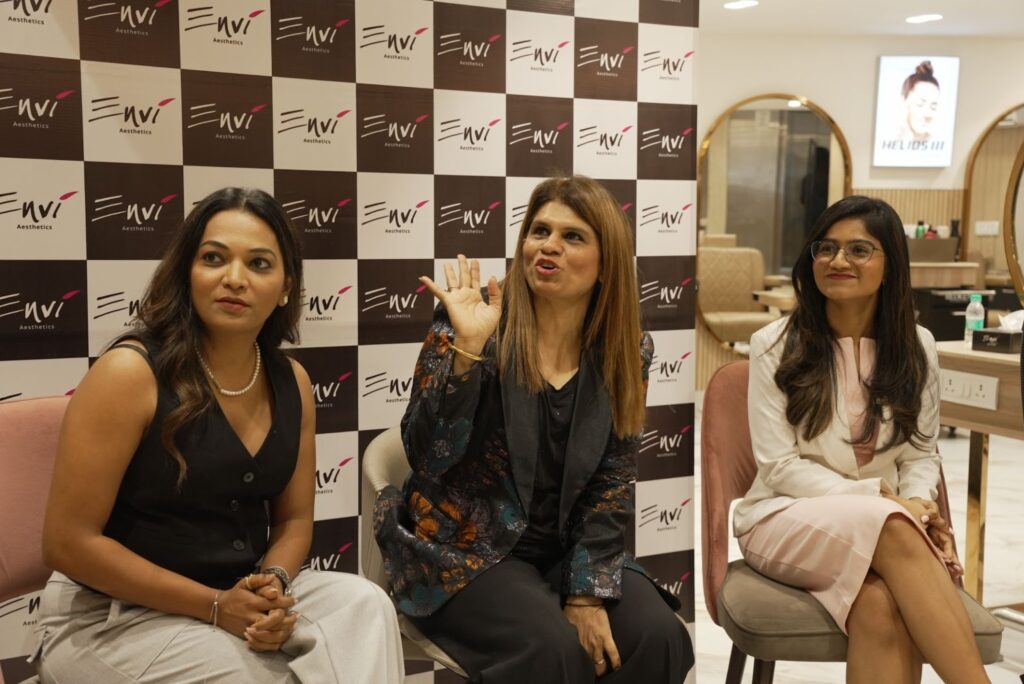
National, January 2025 – Envi Aesthetics, the newest and most innovative addition to the Envi Salon recently held an exclusive event that offered a glimpse into the future of aesthetics. The event was filled with insightful discussions and showcased the latest advancements in the world of aesthetics and beauty, with panelists such as Renu Kant, founder of Envi Salons, Dr. Vijaya Salunkhe, Brand Manager & Cosmetologist and Dr. Prachi Bodkhe, an esteemed dermatologist at Envi Aesthetics, sharing their expert insights and experiences.

The highlight of Envi Aesthetics was the IV drip therapy, which revolutionizes wellness by delivering essential nutrients directly into the bloodstream for faster absorption and maximum effectiveness. This cutting – edge treatment was demonstrated through a personalized Glutathione & Vitamin C infusion that was administered by MD Dermatologist Dr. Prachi Bodkhe, offering a firsthand experience of its powerful benefits.

envi

The IV drip, carefully tailored to the individual’s needs and was expertly administered in a comfortable and relaxing setting where aesthetics meet pampering. The IV infusion process was smooth and painless, with the nutrients working at a cellular level to boost immunity, enhance skin radiance, and promote detoxification. The Glutathione infusion is an infusion that helps brighten and rejuvenates the skin and fight oxidative stress, while Vitamin C supports collagen production and overall skin health.

Other than this, Envi Aesthetics also ensured that before each infusion, a comprehensive medical history was taken to ensure suitability, guaranteeing both safety and effectiveness for every individual. Every step of the process from consultation to infusion was conducted with utmost sanitization and medical precision.

Beyond skin rejuvenation, Envi Aesthetics offers a range of IV therapy formulations to cater to diverse wellness needs, such as:

  • Multivitamin Drips – For overall energy and wellness
  • Hangover Recovery Drips – To rehydrate and detoxify
  • Hairfall Drips – Enriched with biotin and essential nutrients to support healthy hair growth

Envi Aesthetics also offers a range of advanced treatments tailored to address various skincare and beauty concerns. Some of them include Anti-pigmentation, an advanced procedure that reduces pigmentation, dark spots, and uneven skin tone. It is a fusion of medical-grade peels, laser therapy, and targeted serums for radiant skin. The next one is Acne and Scar management, which provides a multi-step treatment approach, from medical facials to chemical peels and laser therapy. It also comprises scar revision techniques, including micro-needling, PRP therapy, and fractional lasers. Another advanced treatment is the Hair Fall Solutions & Hair Restoration, an Expert treatment to combat hair thinning and loss using a blend of nutritional therapy, PRP, threads and mesotherapy. Envi Aesthetics also offers Laser hair reduction with world class technology using FDA-approved to ensure long-lasting smoothness with minimal discomfort. Lastly, they also provide advanced Anti-aging treatments that enhance youthfulness with HIFU, Botox & fillers for wrinkle reduction, and thread lifts.

Indian Navy Partners with Vivekanand Education Society Trust to Empower Naval Civilians

1st February 2025, Mumbai – The Indian Navy and Vivekanand Education Society (VES) Trust signed an MoU at VES Business School, Mumbai on 28 Jan 2025 to support Naval Civilians and their families. The MoU was signed by Cmde Saurabh Agrawal, Commodore (CP), and Mr Suresh Malkani, President of VES Trust, in esteemed presence of RAdm Aditya Hara, ACOP (AC), Officers from HQWNC and Naval Dockyard, Mumbai along with distinguished functionaries and faculty members of VES.

vsc

The initiative ensures reserved seats and fee concessions in VES institutions, along with structured certification programs for Naval Civilians to formally recognize their technical and managerial expertise. Additionally, the partnership will provide tailored courses and foster joint research in collaboration with VES.

IIM Sambalpur Hosts IMPeC 2025 on Digitalization, Entrepreneurship & Sustainability

IIM Sambalpur

National, 1st February 2025; IIM Sambalpur, one of the premier management institutions, hosted the much-awaited annual flagship conference titled, “International Management Perspectives Conference (IMPeC) 2025” with the theme “Digitalization, Entrepreneurship and Sustainability” at its campus. Aligning with the vision of the Viksit Bharat@47 – Transforming the nation’s future, IIM Sambalpur through IMPeC 2025 served as a platform for thought leadership and knowledge exchange researchers, eminent academicians, research scholars, and students to exchange ideas and to communicate and discuss research findings leading to new advances in Management Science. While reinforcing the country’s commitment towards digitalization, sustainability, and entrepreneurship, the three-day conference aims to shape the future of management education, research, and policy-making in the nation by facilitating high-quality research that specifically addresses emerging topics in these areas. Moreover, the event also created opportunities for participants to disseminate research ideas and explore possible scholarly collaborations and networking. More than 500 papers were presented during the conference both online and offline.

Keshav Rao, Director (Personnel), Mahanadi Coalfields Limited graced the occasion as the Chief Guest while Pankaj K Verma, Chief Sustainability Officer, Adani Green Energy was present as the keynote speaker, Praveen Kumar Verma, CEO, TATA Power Western Odisha Ltd and Prof. Mrinal Chatterjee, Regional Director, IIMCwere present as the guests of honor; and during the inauguration ceremony. Prof Mahadeo Jaiswal, Director, IIM Sambalpur, along with Dr. Arvind Sahay, Director, MDI Gurgaon; Dr. Shreepad Karmalkar, Director, IIT Bhubaneswar and Dr. Pawan Kumar Singh, Director, IIM Tiruchirappalli were present in the panel discussions.

Prof Mahadeo Jaiswal, Director, IIM Sambalpur, said, As AI rewrites the definition of intelligence, foundational principles of theory and the research. Should we place our trust in the models or should we trust the vast ocean of data? Business and innovation are positioned at the cusp of a paradigm curve, with the next 75 years witnessing the rise of agile startups over the corporate giants. As technology assumes more intellectual properties, humanity has to lose not its essence, but rather is challenged to mold change rather than adapt to it.”

Prof Jaiswal further shared, “At IIM Sambalpur, we are at the forefront of five strategic initiatives of national importance, and we keep working on gender diversity and the empowerment of women. Moreover, we are working towards the positioning of local cities as global economic hubs, reimagining educational methodologies, fostering global academic and industry collaborations, and defining ‘Brand India’ as a force in the global knowledge economy. This is aligned with the vision for Viksit Bharat 2047- the vision for growth that is both inclusive and sustainable, while exerting intellectual leadership on the world stage. We look to shape a future where India becomes a leader in academia, industry, and socio-economic development through interdisciplinary research, policy-driven engagement, and innovation.”

Shri Keshav Rao, Director (Personnel), Mahanadi Coalfields Limited, said, “Digitalization, entrepreneurship, and sustainability are the cornerstones of India’s economic and societal transformation. Our nation’s progress in digital innovation has positioned it as a global leader in financial technology, while the entrepreneurial ecosystem continues to drive groundbreaking innovations and wealth creation. However, sustainability remains a critical challenge that requires a careful balance between industrial growth and environmental responsibility.” He further added, “Institutions like IIM Sambalpur play a pivotal role in fostering intellectual discourse, industry-academia collaboration, and policy-driven solutions to address these transformative challenges. By integrating technology, entrepreneurship, and sustainable business practices, we can shape an inclusive and resilient future for India, contributing to the broader vision of Viksit Bharat 2047.
During the panel discussions, Prof Mahadeo Jaiswal, Director, IIM Sambalpur, along with Dr. Arvind Sahay, Director, MDI Gurgaon; Dr. Shreepad Karmalkar, Director, IIT Bhubaneswar and Dr. Pawan Kumar Singh, Director, IIM Tiruchirappalli explored the critical role of management institutions in shaping future leaders centered around the theme “B-School Leaders’ Dilemma: Where Should the Emphasis be in the Context of Digitalization, Entrepreneurship, and Sustainability?”. In the broader vision of Viksit Bharat 2047, the key requirement is skilled human capital, where academia can significantly contribute by nurturing capable managers and leaders to spearhead these three transformative themes.
The conference also featured various plenary sessions, panel discussions, and paper presentations across various domains including Challenges and opportunities in the future of work, Strategies for climate resilience and stakeholder engagement, Leveraging India’s demographic dividend for economic growth and guiding scholars on publishing and academic research excellence.

A special JMP Workshop on Statistical Discovery was also conducted by Dr. Muralidhara Anandamurthy, Head – Global Academic Ambassador, JMP (SAS).

The even witnessed participation from IITs, IIMs, regional colleges, and international institutions across online and offline modes. Among IITs, four institutions, including IIT Indore, IIT Roorkee, IIT Kharagpur, and IIT Bombay, participated online, while three, including IIT Dhanbad, IIT Roorkee, and IIT Delhi, took part offline. Similarly, four IIMs—Indore, Nagpur, Sambalpur, and Raipur—joined online, while IIM Sambalpur, IIM Sirmaur, IIM Calcutta, and IIM Ranchi participated offline. Regional colleges had significant involvement, with 119 participating online and 129 offline. Internationally, three institutions, including researchers from Bremen (Germany), Twilio (USA), and Fatima College of Health Sciences (UAE), contributed online, while the Ministry of Manpower (Indonesia) participated offline.

Skill India Digital Hub Now Available in Marathi, Says Devendra Fadnavis

Pune (Maharashtra): In order to foster an inclusive and robust skilling ecosystem in Maharashtra, Honourable Chief Minister Shri Devendra Fadanvis unveiled Skill India Digital Hub (SIDH) platform in Marathi language on occasion of Vishwa Marathi Sammelan 2025 at Fergusson College in Pune on Friday.

Shri Fadnavis, along with Deputy Chief Ministers Shri Eknath Shinde and Shri Ajit Pawar, launched the Marathi version of SIDH which will enable professionals, students, and researchers to engage more effectively with valuable content, ensuring wider knowledge dissemination across Maharashtra.

devendra

By breaking language barriers, this initiative fosters linguistic inclusivity and empowers citizens with essential information in their mother tongue, as envisioned in NEP 2020. The platform will assist youth in skilling themselves in over 7000 skill courses that includes Industry 4.0 courses, Artificial Intelligence, Machine Learning and Drone technology to name a few.

Shri Uday Samant, Minister of Marathi Language of Maharashtra, Shri Shrirang Barne, Member of Lok Sabha, Smt Neelam Gorhe, Member of Maharashtra Legislative Council, Sri Siddharth Shirole, Member of Maharashtra Legislative Assembly, Shri Bapusaheb Pathare, Member of Legislative Assembly, along with Shri Ved Mani Tiwari, CEO of NSDC and MD NSDC International and other eminent dignitaries from various fields graced the occasion.

Shri Ved Mani Tiwari, CEO of NSDC, was felicitated by the Hon’ble Minister Shri Uday Samant, for his instrumental role in shaping SIDH into a pioneering initiative that is transforming knowledge accessibility. Shri Tiwari has been at the forefront of driving innovation, integrating technology with education, and ensuring that skill development reaches every corner of the nation. His relentless efforts have positioned SIDH as a model for linguistic inclusivity and empowerment.

Speaking at the ceremony and reinforcing the central government’s commitment to skilling and digital empowerment, Shri Tiwari said, “SIDH has nationally recorded more than 1.26 crore registrations in over a year. It is offering thousands of skilling courses, and with the unveiling of the Marathi version, NSDC is showcasing the utility of the platform to empower millions of Marathi-speaking youth and help them unlock their career prospects.”

In terms of registrations, Maharashtra is among the top five states in the country while in terms of user traffic, at 30 per cent nationally, it stands next to Uttar Pradesh. With the unveiling of the Marathi version, the popularity and registration of the skilling courses and the platform will further go up. Marathi is among the 23 languages in which the platform can be accessed.

The most popular courses in the state include, web design, cybersecurity, kisan drone operator. Over 43,000 female users have enrolled in various online courses, with over 80 per cent being under the age of 30. The top sectors attracting enrolment from the state include IT-ITeS, entrepreneurship, and electronics among others.

People learn more effectively in their native language, so the Ministry of Skill Development and Entrepreneurship, along with NSDC, has been working to offer skilling courses in local languages to maximize results.

“With the unveiling of the Marathi version of SIDH, we are trying to ensure that language is never a barrier to skilling. It aligns with vision of National Education Policy (NEP) 2020, which emphasises the importance of regional language communication in education and skill development. We are enabling the youth of Maharashtra and the global Marathi community to seamlessly integrate into India’s employment and digital skilling ecosystem.” Shri Tiwari said, underscoring the significance of regional inclusivity and digital transformation.

SIDH is a comprehensive digital platform that has been developed to access skilling opportunities, career guidance, and opportunities both in India and abroad. Maharashtra is the largest economy in India, so the demand for a skilled workforce would be maximum.

With the aim of making the state a USD 1 trillion economy by 2028, a district-wise Skill Gap Analysis Report was conducted in the state in 2023 by the Skills, Employment, Entrepreneurship & Innovation Department (SEEID).

The survey engaged with over 1500 industries and over 200,000 trainees across the state to understand skill gaps in traditional and new-age sectors and identified electronics, automotive, agriculture, BFSI, and IT/ITeS among the sectors for immediate intervention.

The 2023 survey also conducted a language proficiency of the labour force, and found that majority of the staffs in the sample, laid huge emphasis on the proficiency of Marathi language. Over 95 percent of industry respondents expected the workforce to know Marathi, while over 83 percent Hindi.

Maharashtra being a hub for industry and commerce, this initiative will provide young aspirants with the necessary resources to upgrade their skills and integrate into the workforce efficiently.