

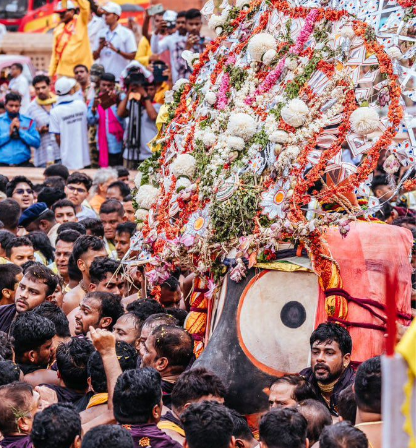
The Rath Yatra of Lord Jagannath in Puri is one of the most spiritually powerful and visually enchanting festivals in the world. At the centre of this grand celebration is the sacred Tahia—the beautifully crafted ceremonial crown worn by Lord Jagannath, Lord Balabhadra, and Devi Subhadra as they embark on their annual journey from the Jagannath Temple.
The Tahia is far more than an ornament. It is a divine symbol representing the living presence of the Holy Trinity as they step out of their sanctum to bless devotees. During the Pahandi procession, when the deities are carried from the temple to their chariots, the sight of the Tahias gently swaying creates a deeply emotional and devotional atmosphere.
A sacred craft rooted in tradition
Each Tahia is prepared through a centuries-old tradition using natural and eco-friendly materials. Artisans and servitors carefully construct the framework using bamboo, cane, banana stems, cork, cloth, and sacred threads. This structure is then adorned with fresh flowers, aromatic leaves, basil, scutch grass, and seasonal blooms, giving the crown its vibrant and divine appearance.
Temple painters known as Chitrakara servitors add final touches using organic colours, ensuring that each crown reflects both artistic beauty and ritual purity. The decorations are completed just before the ceremonies to preserve freshness and spiritual sanctity.
Ritual importance in Rath Yatra
The Tahia plays a key role across multiple rituals of the Rath Yatra cycle, including Snana Purnima, Pahandi, Rath Yatra, Bahuda Yatra, and Niladribije. Different sets of Tahias are prepared for different stages, ensuring continuity of tradition and ritual precision.
During the Pahandi procession alone, multiple Tahias are used as the deities are carefully carried from the sanctum to the chariots and later during their return journey. The rhythmic movement of the crowns is considered a divine expression of the Lord’s presence among devotees.
Spiritual meaning and cultural significance
The Tahia represents the breaking of boundaries between the divine and the human world. It symbolizes Lord Jagannath’s willingness to come out of the temple and connect directly with devotees, making the divine more accessible and personal.
For devotees, witnessing the Holy Trinity adorned with Tahias is an emotionally uplifting experience believed to bring blessings and spiritual fulfillment. The crowns are seen as a bridge between tradition, devotion, and living heritage.
Living heritage of Puri’s temple tradition
Around 14 artisans and servitors are traditionally involved in preparing the Tahias each year, preserving a sacred craft passed down through generations. Temple-linked institutions and mutts continue to support this heritage, ensuring that the tradition remains intact in its original form.
Despite evolving times, the making of Tahias remains deeply rooted in ritual discipline, devotion, and cultural continuity.
In essence, the Tahia is not just a crown—it is a sacred expression of devotion, artistry, and divine presence that brings the Rath Yatra of Puri to life in its most iconic form.

