

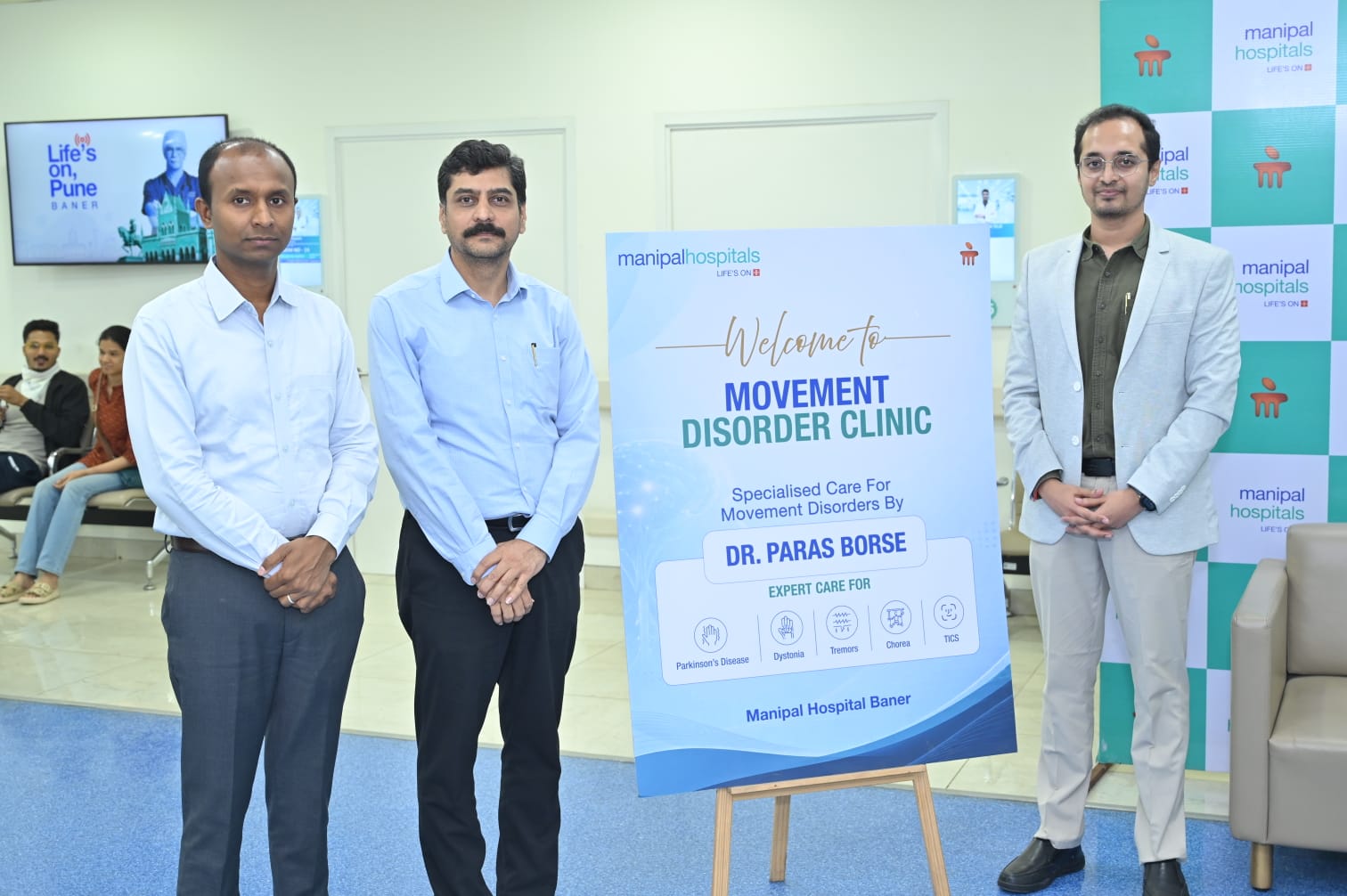
Pune, September 29, 2026: Manipal Hospital, Baner has launched a specialised Movement Disorder Clinic to provide focused care for patients with Parkinson’s disease, dystonia, tremors, chorea and tics. The clinic brings together neurological assessment, medical management and rehabilitation support based on the individual needs of patients.
As part of the launch, Dr. Paras Borse, MBBS, MD – General Medicine, DM – Neurology, Movement Disorders Specialist, conducted a health talk on Parkinson’s disease and movement disorders. The session focused on recognising early symptoms, the importance of timely diagnosis and available treatment options.
Symptoms such as tremors, stiffness, changes in walking and slowing down of routine activities can sometimes be mistaken for normal ageing. However, persistent changes may indicate an underlying neurological condition and require appropriate evaluation.
Speaking on the launch, Dr. Paras Borse, Consultant Neurologist and Movement Disorders Specialist, Manipal Hospital, Baner, said, “Movement-related symptoms can have different causes, and it is important to understand the underlying condition before deciding on treatment. Early assessment can help in planning appropriate care and managing symptoms effectively. With the right combination of medication, therapy and rehabilitation, many patients can continue to remain active and independent.”
Depending on the condition, treatment may include medication, physiotherapy, exercise, speech therapy and rehabilitation. For selected patients whose symptoms remain difficult to control despite medication, advanced treatment options such as Deep Brain Stimulation (DBS) may also be considered following detailed evaluation.
Dr. Borse added, “Movement disorders require long-term care and regular follow-up. Treatment needs to be individualised, with advanced therapies considered only when clinically appropriate.”

