

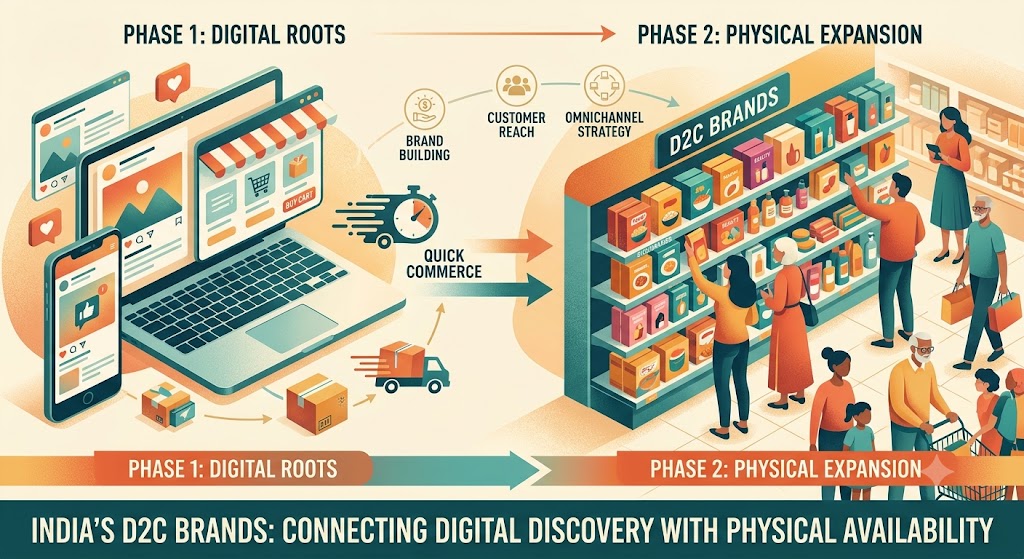
India’s direct-to-consumer (D2C) brands are entering a new phase of growth, moving beyond their digital-first roots and increasingly exploring physical retail. After building strong customer bases through websites, social media, marketplaces and quick-commerce platforms, these brands are now looking at supermarkets, neighbourhood stores and other offline channels to expand their reach.
The shift comes as competition in online commerce continues to intensify. For several years, digital platforms offered D2C companies a relatively easy way to reach consumers without building extensive distribution networks. Quick commerce took this model further, making speed and convenience important parts of the shopping experience.
However, the growing number of brands competing for online visibility has made customer acquisition more challenging. Rising marketing expenses, promotional activity and platform-related costs are encouraging companies to examine a wider mix of sales channels.
Physical retail offers a different kind of opportunity. A product placed on a supermarket shelf can reach shoppers who may never have searched for it online. Packaging, product displays and in-store discovery can also help emerging brands build familiarity and credibility.
This is particularly relevant for categories such as food and beverages, beauty, personal care, fashion and lifestyle products, where consumers may prefer to see or experience a product before buying it.
The move offline does not mean D2C brands are abandoning quick commerce or e-commerce. Instead, many are adopting an omnichannel approach in which different platforms serve different purposes. Quick commerce can provide convenience, marketplaces can offer scale, while physical stores can improve visibility and accessibility.
Smaller cities and towns are also becoming an important part of this strategy. Offline distribution can help brands reach consumers beyond major urban centres and build stronger local presence.
As the D2C sector matures, the focus is gradually shifting from rapid online customer acquisition to sustainable growth. The next phase may therefore belong to brands that can successfully connect digital discovery with physical availability, creating a seamless journey from the phone screen to the store shelf.

