

KOLKATA, 17 October 2026
Sonarpur Arohi, a mountaineering club from West Bengal, has summited four mountains during its Chang Chenmo Expedition 2026 in eastern Ladakh. The team climbed Chang Chenmo Kangri, which stands at 6,536 metres, via a new route and recorded first ascents of three previously unclimbed peaks.
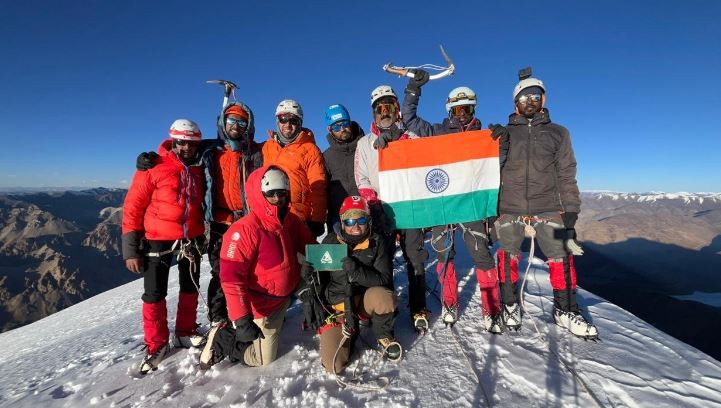
The expedition began on 25 August and tested the climbers with extreme cold, difficult terrain, water shortages and logistical challenges. The team completed all four ascents without fixed ropes or high-altitude porter support, relying on its technical skills, careful planning and teamwork in alpine style.
Veteran Himalayan mountaineer Rudra Prasad Halder led the expedition, while Satyarup Siddhanta served as deputy leader. Satyarup Siddhanta became the first Indian and, at the time, the youngest person in the world to climb both the Seven Summits and the Seven Volcanic Summits. He has also summited Mount Everest and skied 111 kilometres to the South Pole while pulling a 50-kilogram sled and has some first ascents in his crown like gupt parvat and monto massif. He is also known for the historic ascent of Mt Brammah and Mt Kenya.
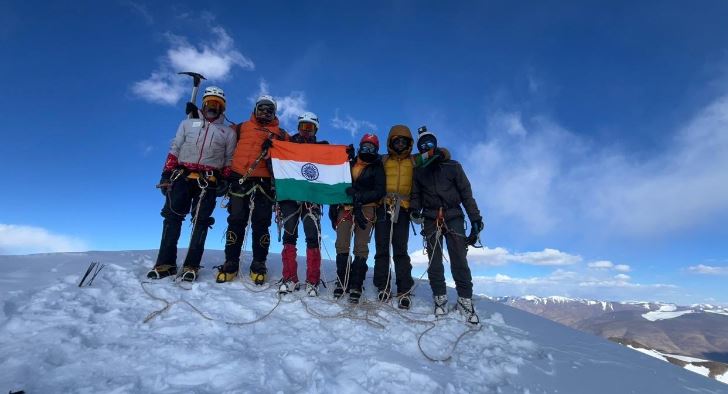
“This expedition tested our technical abilities, endurance and teamwork. Climbing in such a remote region without fixed ropes required careful planning and trust in one another. Each summit was a collective achievement,” Satyarup Siddhanta said.
Rudra Prasad Halder has climbed major Himalayan peaks, including Mount Everest, Kanchenjunga and Indrasan. He has also led exploratory expeditions to previously unclimbed Himalayan peaks, drawing on his experience in route planning and high-altitude mountaineering to guide the team.
“Our objective was to explore challenging mountain terrain and achieve our climbing goals through a self-supported approach. Despite having to change our route, face extreme cold and deal with water shortages, the team remained focused. Completing four ascents, including three first ascents, is a proud moment for Sonarpur Arohi,” Rudra Prasad Halder said.
The team summited Chang Chenmo Kangri on 11 September via a new route. It also made first ascents of three peaks measuring approximately 6,400 metres, 6,420 metres and 6,274 metres on 9, 16 and 20 September, respectively.
During an attempt to climb another peak, eight climbers spent several hours exposed on a glacier at around 5,900 metres in temperatures of approximately minus 30 degrees Celsius. They eventually abandoned the attempt and returned safely to Camp 1.
Anindya Mukherjee, mentor and member of the expedition, said the experience reinforced the importance of sound judgement, adaptability and self-reliance in high-altitude mountaineering.
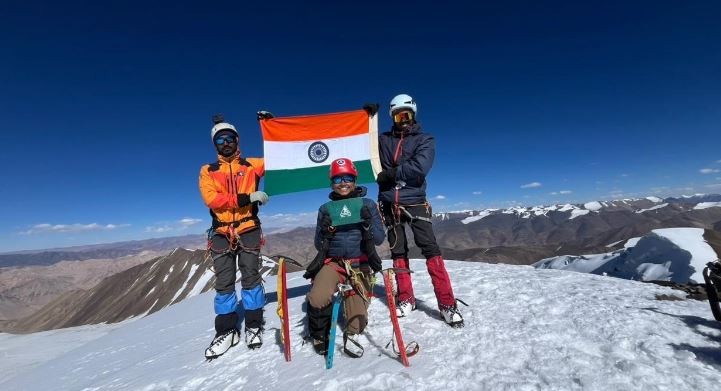
“Mountaineering demands patience, sound judgement and the ability to adapt when conditions change. The challenges we faced in Chang Chenmo reinforced the importance of teamwork and self-reliance. Reaching these summits together was a memorable experience for the entire team,” Anindya Mukherjee said.
Sonarpur Arohi has proposed naming the three newly climbed peaks Mount Edmund Hillary, Mount Tenzing Norgay and Netaji Subhas Parvat. The names would honour Sir Edmund Hillary, Tenzing Norgay and freedom fighter Netaji Subhas Chandra Bose.
The club has received consent for the proposed names from Peter Hillary, son of Sir Edmund Hillary; Jamling Tenzing Norgay, son of Tenzing Norgay; and representatives of the Netaji Research Bureau. The proposed names remain subject to the relevant official recognition process.
By summiting four peaks, making three first ascents and opening a new route to Chang Chenmo Kangri, Sonarpur Arohi has strengthened its record of exploration and high-altitude mountaineering in eastern Ladakh.
The expedition team comprised Rudra Prasad Halder (leader), Satyarup Siddhanta (deputy leader), Anindya Mukherjee (mentor), Naitik Nilay Naskar, Debasish Majumder, Dipashree Pal, Tuhin Bhattacharya, Wrik Roy, Aparesh Sannigrahi, Malay Purkait, Rahul Halder, Ratan Acharya, Yasmina Khan and Niranjan Pal. The team included two female climbers and brought together experienced mountaineers and emerging talent. Naitik Nilay Naskar and Debasish Majumder played key roles in route exploration.
The expedition was conducted in self-supported alpine style, without Sherpa assistance, fixed ropes or high-altitude porter support, highlighting the team’s technical expertise, self-reliance and collective determination.

