

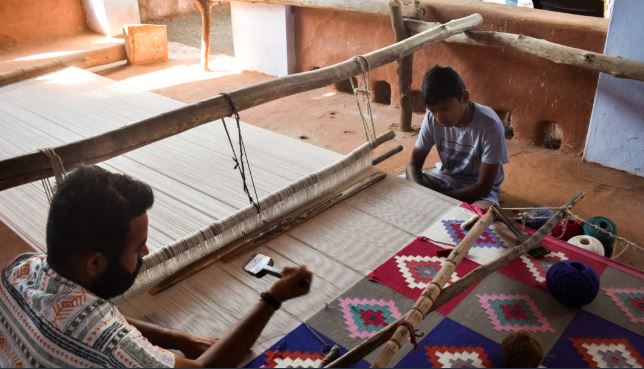
Pic Credit: Pexel
India’s handloom industry is looking to international markets for its next phase of growth, as demand for distinctive designs, traditional craftsmanship and quality textiles creates fresh opportunities for Indian businesses. Expanding exports could help weaving communities reach new customers, strengthen small enterprises and generate employment across rural India.
The sector supports approximately 35 lakh weavers and allied workers, with women accounting for more than 72% of the workforce. Despite its contribution to employment and the textile economy, many artisans continue to face challenges related to market access, limited working capital, inconsistent orders and low bargaining power.
India’s handloom product exports reached approximately ₹1,359 crore in FY2025–26, compared with ₹1,201 crore in FY2024–25, according to the figures available for the sector. This growth highlights the potential to increase overseas sales, although long-term success will depend on how effectively producers connect with international buyers and convert demand into sustainable income.
India’s Handloom Exports Create Opportunities for Small Businesses
India’s handloom industry offers a wide range of products, from sarees, scarves and apparel to bed linen, curtains and decorative textiles. Its regional weaving traditions provide a competitive advantage for businesses seeking to offer products with distinctive designs and cultural identity.
For exporters, international markets present an opportunity to diversify revenue beyond domestic retail. Overseas demand can also create business for yarn suppliers, designers, packaging companies, logistics providers and other enterprises connected to the textile supply chain.
However, expanding exports requires more than increasing production. International buyers expect consistent quality, competitive pricing, reliable delivery and clear product information. Small producers must also understand market-specific requirements and manage the costs associated with shipping, documentation and distribution.
Businesses that invest in product development, quality control and dependable order fulfilment will be better positioned to establish long-term relationships with overseas retailers.
Digital Commerce Helps Indian Weavers Reach Global Customers
Digital platforms are creating new opportunities for handloom producers to showcase their products beyond local markets. Online marketplaces, social commerce and direct-to-consumer websites allow artisans, cooperatives and small businesses to connect with customers without depending entirely on traditional distribution networks.
Detailed product descriptions, professional photographs and information about weaving techniques can help buyers understand the value of handcrafted textiles. Digital platforms also provide useful insights into customer preferences, popular designs and pricing trends.
These insights can help producers plan inventory, reduce unsold stock and respond more quickly to changing demand. Direct selling may also improve control over branding and customer relationships, although profitability depends on marketing, shipping and other operating costs.
For smaller enterprises, access to digital training, shared selling platforms and export partnerships will be important in making international commerce more practical and affordable.
Sustainable Indian Textiles Offer a Competitive Advantage
Changing consumer preferences are creating opportunities for Indian handloom businesses to differentiate their products through craftsmanship, durability and transparent sourcing.
Handwoven textiles can appeal to buyers looking for distinctive alternatives to mass-produced designs. Regional patterns, specialised techniques and skilled workmanship provide businesses with ways to build stronger product identities.
Clear information about materials, sourcing and manufacturing can further strengthen customer confidence. However, sustainability claims must be supported by evidence, as handwoven products are not automatically organic or environmentally harmless.
By focusing on quality, authentic design and responsible production practices, exporters can target customers who value craftsmanship rather than making price the sole basis of competition.
Technology Brings Traditional Craftsmanship Closer to Modern Markets
Technology is helping handloom businesses improve product development, marketing and inventory planning. Digital catalogues and customer analytics can make it easier to understand demand, while artificial intelligence-assisted trend analysis may help identify emerging preferences for colours, patterns and textile categories.
Design intelligence initiatives such as VisioNXT reflect efforts to connect India’s textile heritage with contemporary market insights.
For small producers, these tools can support better decisions about new collections and reduce some of the uncertainty involved in developing products for unfamiliar markets. The objective is to complement traditional expertise with useful market information while preserving the regional identity of handloom products.
GI Recognition Can Strengthen the Value of Indian Handloom Products
Geographical Indication (GI) recognition can help eligible handloom products establish a stronger connection with their place of origin and traditional production methods. In international markets, this distinction can help customers identify authentic regional products and understand what makes them different from mass-produced imitations.
For businesses, GI recognition can support product differentiation and strengthen marketing. However, recognition alone does not guarantee higher sales or better earnings for artisans. Consistent quality, effective promotion and access to reliable buyers remain essential.
Combining authentic product identification with strong distribution networks can help weaving communities protect their reputation and improve the commercial visibility of their work.
Access to Finance and Fair Payments Remain Major Challenges
Despite the export opportunities, many handloom enterprises operate with limited financial resources. Producers often need to purchase yarn, pay workers and complete orders before receiving payment from buyers. Limited access to working capital can prevent small businesses from accepting larger orders or investing in improved equipment.
Delayed payments and dependence on intermediaries can also reduce the financial benefits reaching individual weavers.
Affordable credit, business training, shared facilities and export guidance can help address these challenges. Stronger partnerships among artisans, cooperatives, designers and exporters can create more dependable orders and improve coordination throughout the supply chain.
Ensuring that artisans receive fair compensation will be critical to making export growth meaningful for the communities that sustain the industry.
Export Diversification Can Support Long-Term Business Growth
India’s handloom exporters serve several international markets, including the United States, the United Kingdom, France, Spain and the United Arab Emirates. These destinations offer opportunities across apparel, accessories, home furnishings and decorative textiles.
Expanding into additional markets can help businesses reduce dependence on a limited number of buyers or countries. However, each destination requires careful assessment of consumer preferences, pricing, product standards and delivery expectations.
Trade exhibitions, export facilitation services and partnerships with overseas retailers can help small businesses build relationships with potential customers. Diversification can also encourage producers to develop products suited to different market segments and reduce exposure to changing demand in individual markets.
India’s Handloom Industry Needs a Stronger Business Ecosystem
The future of India’s handloom industry will depend on its ability to combine traditional skills with modern business practices. Digital commerce, export development, product innovation and authentic regional branding can help producers access new markets, but these opportunities must be supported by reliable logistics, affordable finance and consistent quality.
For small enterprises, stronger market connections can create additional revenue and encourage investment. For weaving communities, dependable orders and fairer payments can support livelihoods and preserve specialised skills.
India’s handloom industry has the potential to become more competitive in international markets while retaining the craftsmanship that distinguishes its products. The real measure of progress will be whether rising exports translate into stronger small businesses, better incomes for artisans and sustainable opportunities for future generations.

