

Fashion retail is changing as social media becomes an increasingly important place for consumers to discover products, explore new trends and make purchases. Platforms once used mainly for promotion are now influencing the entire shopping journey, helping customers move from seeing an outfit online to buying it with just a few clicks.
This shift is creating new opportunities for fashion brands, independent designers, online sellers and small businesses. Short videos, creator recommendations, live shopping sessions and personalised product suggestions are changing how brands connect with customers and generate sales.
For retailers, social commerce offers a way to reach buyers without depending entirely on physical stores or traditional e-commerce websites. However, turning online attention into consistent sales requires more than attractive content. Product quality, pricing, customer trust, delivery and after-sales service remain essential to long-term success.
Social Media Becomes a New Storefront for Fashion Brands
Consumers increasingly discover clothing, footwear, accessories and beauty trends while browsing social media. A video showing how to style an outfit or a creator reviewing a new collection can influence purchasing decisions before shoppers visit a brand’s website.
This has changed the role of social platforms in fashion retail. Instead of using them only to advertise products, businesses can use social content to showcase collections, answer customer questions and direct buyers towards checkout.
For smaller brands, this creates an opportunity to reach specific audiences without investing heavily in traditional advertising. Independent designers and homegrown labels can build visibility by sharing styling ideas, demonstrating product details and engaging directly with potential customers.
However, attention does not always translate into purchases. Brands need content that is relevant to their audience, clear product information and a simple buying process to convert interest into revenue.
Influencers and Customer Reviews Shape Buying Decisions
Fashion is a visual and highly personal category, making recommendations an important part of the shopping experience. Consumers often look to creators, stylists and other buyers for ideas about how clothes fit, how fabrics look and whether products offer value for money.
Micro-influencers can be particularly useful for brands targeting specific communities or fashion interests. Their content may feel more relatable to audiences than conventional advertising, especially when reviews include practical information about sizing, comfort and quality.
Customer-generated photographs and videos can also help shoppers make more informed decisions. For businesses, encouraging genuine feedback can build credibility and provide useful insight into customer expectations.
At the same time, brands must be transparent about paid promotions and avoid misleading product claims. Trust takes time to establish, and exaggerated endorsements can damage customer relationships.
Live Shopping Brings Product Demonstrations to Customers
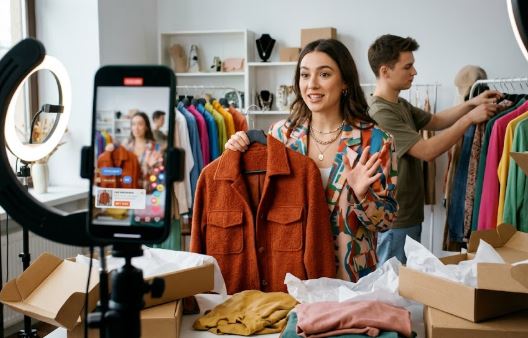
Live shopping combines entertainment, product demonstrations and real-time interaction. During a live session, sellers or creators can present clothing, explain fabric quality, demonstrate styling options and answer questions about sizes and availability.
This format can help address some of the limitations of online fashion shopping, where customers cannot physically examine a garment before purchasing it.
For retailers, live sessions can provide a direct way to launch collections, promote seasonal offers and interact with customers. They may also help businesses understand which products attract the most interest.
However, results depend on the quality of the presentation, the relevance of the products and the audience’s willingness to buy. Retailers must also ensure that stock levels, payment systems and delivery arrangements can handle orders generated during promotional events.
AI and Personalisation Improve the Shopping Experience
Artificial intelligence is creating new ways for fashion retailers to understand customer preferences and recommend relevant products. Shopping platforms can use browsing patterns, purchase history and product interactions to personalise recommendations and promotional messages.
For customers, this can make it easier to find clothing that matches their style, budget or needs. For retailers, better recommendations can support customer engagement, repeat purchases and more efficient marketing.
AI tools can also help businesses identify emerging trends by analysing product searches, customer feedback and online conversations. These insights may inform decisions about colours, designs and inventory.
However, technology cannot eliminate the risks of predicting fashion demand. Trends can change quickly, and businesses that overestimate demand may be left with unsold stock. Retailers need to combine digital insights with practical judgement and careful inventory planning.
Virtual Try-Ons Address Online Fashion Challenges
One of the biggest difficulties in online fashion shopping is uncertainty about fit, size and appearance. Customers may receive products that look different from what they expected, leading to returns and additional costs for retailers.
Virtual try-on tools, augmented reality and digital fitting solutions aim to make product selection easier. Depending on the technology, customers may be able to visualise accessories, see how an item looks or receive size recommendations.
For businesses, these tools could help improve buying confidence and reduce avoidable returns. However, their effectiveness depends on accurate product data, realistic visualisation and the quality of the technology.
Retailers must also provide clear sizing charts, accurate photographs and straightforward return policies. Digital tools work best when they support reliable product information rather than replace it.
Social Commerce Creates Opportunities for Small Fashion Businesses
Social commerce can help small fashion labels, local boutiques and independent sellers reach customers beyond their immediate neighbourhoods. A business can showcase products, communicate with buyers and promote new collections without operating an extensive physical retail network.
This can be particularly useful for businesses selling regional clothing, handcrafted accessories, customised outfits and niche fashion products.
However, growth brings operational challenges. Sellers must manage inventory, payment processing, packaging, shipping, customer enquiries and returns. A successful promotional campaign can create problems if a business cannot fulfil orders on time.
Small retailers therefore need dependable suppliers, clear stock management and transparent delivery information. As sales increase, investment in customer service and fulfilment becomes just as important as social media promotion.
Sustainability and Resale Expand Fashion Retail Opportunities
Social commerce is also creating new ways to promote second-hand clothing, vintage fashion and products designed for longer use. Digital communities can connect buyers and sellers interested in pre-owned garments, helping extend the useful life of clothing.
For businesses, resale and circular fashion can open additional revenue opportunities while responding to customers seeking more affordable or distinctive products.
However, sustainability claims must be supported by actual business practices. Clear descriptions of product condition, materials and sourcing can help customers make informed decisions.
Retailers must also consider the logistics of resale, including product inspection, authentication where relevant, packaging and returns. A credible approach can help businesses build trust in a market where buyers may be concerned about quality and authenticity.
Trust, Privacy and Delivery Remain Major Challenges
Despite its growth potential, social commerce faces several practical challenges. Customers may hesitate to purchase from unfamiliar sellers, particularly when product information is incomplete or payment arrangements appear unreliable.
Retailers need to provide secure payment options, accessible customer support and clear policies covering returns, refunds and delivery. Protecting customer information and handling data responsibly are equally important.
There is also a risk of depending too heavily on a single social platform. Changes to algorithms, advertising costs or platform policies can affect how many people see a brand’s content.
Fashion businesses can reduce this dependence by building their own websites, maintaining customer relationships and developing more than one sales channel.
The Future of Fashion Retail
Social commerce is changing how fashion brands attract customers, present products and generate sales. Influencer recommendations, live shopping, personalised discovery and virtual try-on tools are creating new ways to connect digital engagement with purchasing decisions.
For businesses, the opportunity lies in using these tools to improve the customer experience while maintaining strong fundamentals such as product quality, competitive pricing, reliable delivery and transparent communication.
Smaller fashion brands may benefit from lower barriers to reaching customers, while established retailers can use social platforms to strengthen their online presence and develop closer relationships with shoppers.
Ultimately, the future of fashion retail will not depend on social media visibility alone. Businesses that combine engaging content with trustworthy service, efficient operations and a clear understanding of their customers will be better positioned to turn online attention into sustainable growth.

