

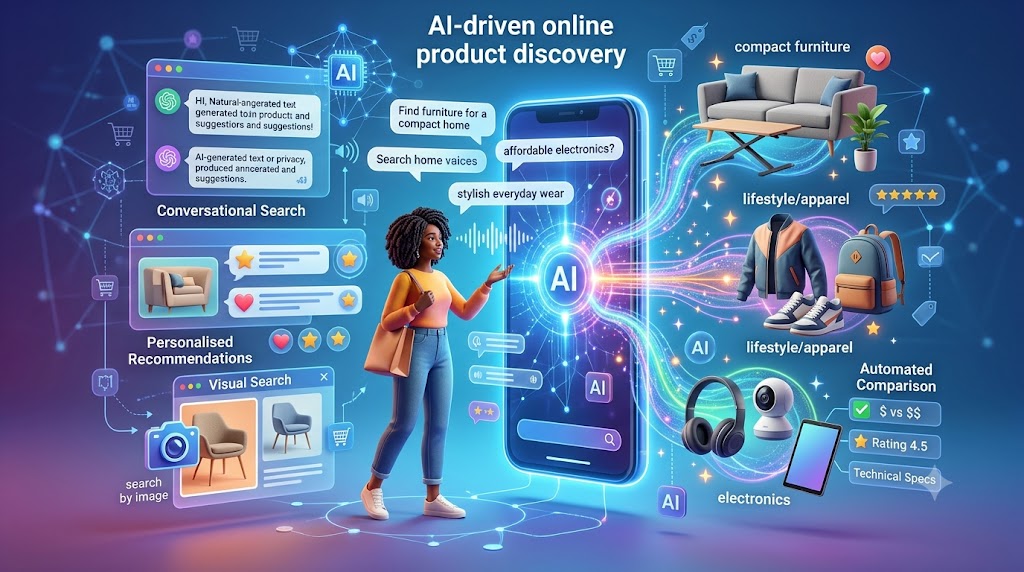
The way consumers discover products online is changing rapidly. Instead of spending hours browsing multiple websites, comparing lengthy product lists and searching through customer reviews, shoppers can increasingly use artificial intelligence to find options that match their preferences, budgets and specific needs. This shift is making AI in online product discovery an important development for e-commerce businesses, retailers and brands looking to reach customers in a more personalised way.
AI-powered tools can interpret natural-language questions, recommend relevant products, summarise product information and help shoppers narrow down their choices. Whether someone is looking for affordable electronics, everyday clothing or furniture for a compact home, these tools can make product research more convenient and targeted.
For businesses, this transformation goes beyond technology. It is changing how products gain visibility, how customers evaluate brands and how purchasing decisions are made. Companies that provide accurate information, communicate their value clearly and understand changing consumer expectations can strengthen their digital presence and create new opportunities for growth.
Conversational Search Makes Product Discovery Easier
Traditional online searches often require shoppers to enter specific keywords and apply several filters to find suitable products. AI-powered conversational search offers a more natural alternative, allowing users to describe what they need in everyday language.
A shopper can explain a budget, preferred features, intended use or personal requirements and receive suggestions based on those details. This approach can reduce the effort involved in researching unfamiliar products and make it easier to compare alternatives.
For businesses, conversational search increases the importance of informative product pages. Clear descriptions, accurate specifications, transparent pricing and practical details help consumers understand whether a product meets their needs.
Retailers that focus on answering genuine customer questions can improve the usefulness of their online content. Although no particular format guarantees an AI recommendation, providing relevant and trustworthy information helps both customers and digital platforms understand the product more effectively.
Personalised Recommendations Are Influencing Buying Decisions
Personalisation has become an important part of the online shopping experience. AI-powered recommendation systems can use signals such as browsing activity, previous purchases and stated preferences to suggest products that may be relevant to individual shoppers.
For consumers, this can make large online catalogues easier to navigate. Instead of repeatedly searching through unrelated listings, they may discover products that better match their interests, preferred styles or purchasing requirements.
For retailers, relevant recommendations can encourage product exploration, support repeat purchases and introduce customers to complementary items. They can also help businesses make better use of their existing product catalogues by presenting suitable products to audiences who may be interested in them.
However, personalisation must remain useful rather than intrusive. Irrelevant recommendations and excessive tracking can weaken customer trust. Businesses need to balance commercial objectives with privacy, transparency and a positive shopping experience.
AI Is Making Product Comparisons More Efficient
Comparing products is often a major part of the purchasing journey, particularly when consumers must evaluate several features, prices and specifications. AI tools can help simplify this process by organising product information, highlighting differences and summarising the advantages and limitations of available options.
This can be particularly helpful when shoppers are comparing electronics, household appliances, furniture or other products where technical details influence the final decision.
For businesses, the shift creates a clear need for accurate and consistent product information. Missing specifications, outdated prices or vague descriptions can make it harder for consumers to evaluate an offering confidently.
AI-generated comparisons are not always complete or accurate, however. Product availability, warranty conditions and prices can change, while automated summaries may overlook important details. Consumers should verify essential information before purchasing, and retailers should regularly update their product listings.
Visual Search Is Opening New Ways to Discover Products
Consumers do not always know the right keywords to describe what they want. Sometimes, they have a photograph of a product, a design they like or an image that captures a particular style.
AI-powered visual search helps shoppers explore products using images rather than relying exclusively on text. The technology can identify visual similarities in features such as colour, shape, pattern and design, making it particularly useful for fashion, home décor, furniture and lifestyle products.
Retailers can benefit by maintaining high-quality product photographs, providing accurate image descriptions and organising catalogues with clear product attributes. These improvements can make products easier to discover through visual search and other digital shopping tools.
When visual search is combined with conversational recommendations, shoppers can refine their choices further by adding preferences such as budget, size, material or intended use. This creates a more flexible shopping experience and gives businesses additional ways to connect their products with potential buyers.
What AI-Driven Product Discovery Means for Small Businesses
The growing role of AI in online product discovery presents opportunities for small retailers and emerging brands. Businesses no longer need to rely entirely on broad advertising campaigns to attract attention; they can also focus on reaching consumers searching for specific products, features or solutions.
A small brand selling specialised home accessories, for example, can make its products easier to understand by clearly explaining their materials, dimensions, uses and distinguishing features. Such information helps shoppers assess whether the product meets their needs.
Businesses should strengthen their digital foundations by maintaining accurate product details, updating prices and availability, collecting genuine customer reviews and ensuring consistency across their websites and online marketplaces. Structured product data can also help compatible platforms interpret important product attributes.
AI recommendations are not guaranteed to favour smaller brands, and visibility depends on each platform’s systems and selection criteria. Nevertheless, clear information and a well-maintained online presence can improve the chances of reaching relevant customers.
Building Customer Trust in an AI-Driven Marketplace
As AI becomes more involved in shopping decisions, trust will remain essential. Consumers need confidence that product descriptions are accurate, recommendations are relevant and their personal information is handled responsibly.
Businesses should avoid exaggerated claims, regularly review published information and make pricing, delivery terms and return policies easy to understand. They should also pay attention to how their products are represented across digital platforms and correct misleading information when possible.
Consumers, meanwhile, should treat AI-generated recommendations as a starting point rather than a substitute for judgement. Checking product specifications, comparing prices and reviewing reliable customer feedback remain important parts of an informed purchasing decision.
Companies that combine technological innovation with transparent communication and dependable service will be better placed to build lasting customer relationships.
Conclusion
AI in online product discovery is changing how consumers move from identifying a need to choosing a product. Conversational search, personalised recommendations, visual discovery and automated comparisons are making it easier to navigate extensive online catalogues and evaluate relevant options.
For businesses, this shift means that digital visibility increasingly depends on more than attracting clicks. Clear product information, accurate data, customer trust and a strong understanding of consumer needs are becoming central to effective online selling.
As shopping technology continues to evolve, retailers that combine AI-driven insights with quality products and reliable customer service can improve the way they reach and engage buyers. The long-term opportunity lies not simply in using AI to recommend more products, but in helping consumers make better-informed decisions while building a more relevant, transparent and competitive digital marketplace.
