

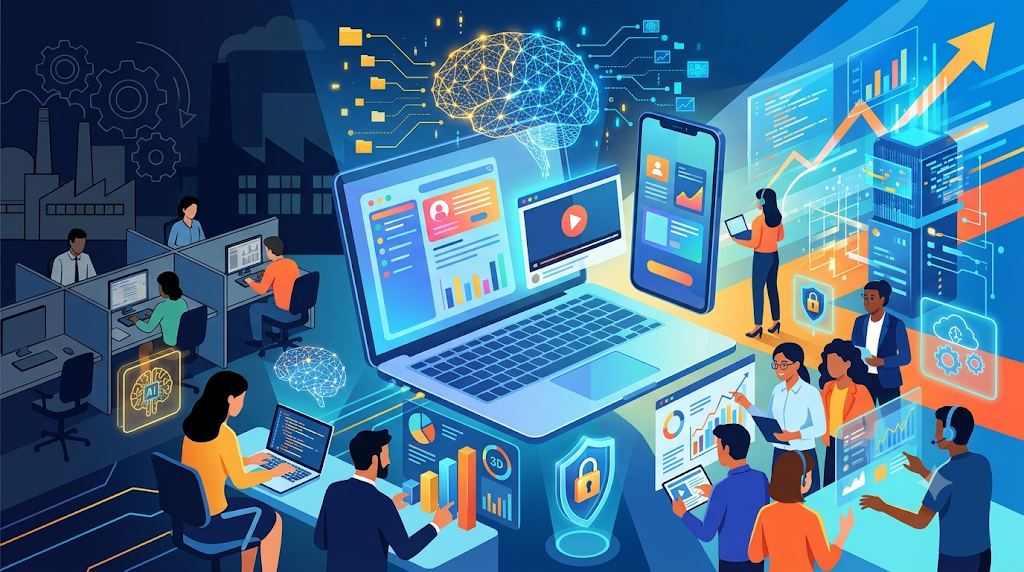
The growing use of artificial intelligence, automation and digital technologies is changing the skills businesses need to remain competitive. As job roles evolve, companies are looking for employees who can adapt quickly, understand new technologies and apply their knowledge to real business challenges. This is increasing the importance of online learning and job-ready skills in today’s employment market.
For students and working professionals, education is no longer limited to earning a degree or completing a qualification. There is a growing need to keep learning, update technical knowledge and develop practical abilities throughout a career. Online learning is helping meet this demand by making professional training more flexible and accessible.
For businesses, it also offers a practical way to develop employee skills, address workforce gaps and prepare teams for changing industry requirements.
Why Businesses Are Giving More Importance to Online Learning
Technology is changing the way companies operate, from customer service and marketing to finance, manufacturing and logistics. Employees are increasingly expected to work with digital tools, understand business data and adapt to new systems.
Traditional training methods may not always provide the speed and flexibility businesses require. Online learning allows employees to access courses, training materials and practical lessons without regularly leaving their workplace.
Companies can use online programmes to train teams in new software, improve communication skills and introduce employees to emerging technologies. This can help reduce training disruptions while allowing employees to learn alongside their regular responsibilities.
Practical Skills Are Becoming More Important Than Ever
Employers are increasingly interested in what candidates can actually do with their knowledge. Academic qualifications remain valuable, but practical experience and the ability to solve workplace problems are also important.
This is encouraging online education providers to include real-world projects, case studies, assignments and practical exercises in their programmes.
For example, a learner studying digital marketing may develop a campaign strategy, while someone taking a data analytics course may work with business data to identify trends. These activities help learners understand how their knowledge can be used in professional situations.
For employers, candidates with relevant practical skills may require less initial training and can adjust more easily to specific job responsibilities.
AI Is Changing the Online Learning Experience
Artificial intelligence is creating new possibilities for online education. AI-powered platforms can help learners identify knowledge gaps, receive personalised recommendations and practise difficult topics at their own pace.
These tools can also support teachers and trainers by helping them prepare learning materials, provide feedback and monitor student progress.
At the same time, AI is creating demand for new skills across industries. Professionals are increasingly expected to understand generative AI tools, use them responsibly and recognise where human judgement is still necessary.
Education providers that combine technology with expert guidance and practical training can play an important role in preparing learners for these changing expectations.
Job-Ready Skills That Businesses Need
As industries become more technology-driven, employers are looking for a combination of technical and human skills. Some important areas include:
-
Artificial intelligence and generative AI: Understanding AI tools, writing effective prompts and applying AI to everyday business tasks.
-
Data analytics: Using data to identify trends, understand customer behaviour and support business decisions.
-
Cybersecurity: Developing the knowledge needed to protect business systems, digital information and customer data.
-
Cloud computing and DevOps: Understanding modern digital infrastructure and software development processes.
-
Communication and teamwork: Working effectively with colleagues, customers and business partners.
-
Critical thinking and problem-solving: Making informed decisions and responding to workplace challenges.
-
Adaptability: Learning new tools and adjusting to changing business requirements.
A combination of technical knowledge and strong communication skills can help employees contribute more effectively to business performance.
Online Learning Is Expanding Opportunities in India
India’s growing digital education ecosystem is giving students and working professionals more ways to access skill-based training. Online programmes allow learners to study from different locations and explore subjects that may not be easily available through nearby institutions.
This is particularly useful for working professionals who want to improve their skills without leaving their jobs. Fresh graduates can also use online courses to develop practical knowledge and prepare for employment.
For education companies, this demand is creating opportunities to offer specialised courses, professional certifications, industry-focused training and corporate learning programmes.
However, learners should carefully check the quality of a course before enrolling. Course content, faculty experience, practical assignments, recognised accreditation and industry relevance all matter. Completing an online course does not guarantee employment; learners must be able to demonstrate the skills they have gained.
A Growing Market for Education and Corporate Training
The demand for job-ready skills is creating new business opportunities for online education platforms, training institutes and technology companies.
Education providers can develop short-term courses in areas such as AI, data analytics, cybersecurity and digital marketing. They can also work with companies to design training programmes that address specific workforce requirements.
Businesses, meanwhile, can use online learning to strengthen their existing teams rather than relying only on external recruitment. Training employees in new technologies and processes can help companies respond to changing requirements while making better use of their current workforce.
Partnerships between educational institutions and employers can further improve the connection between course content and actual workplace needs.
Building a Workforce Ready for the Future
Online learning is becoming an important part of workforce development as businesses face changing technology and skill requirements. Its flexibility and wider accessibility are helping individuals continue learning while giving companies more options to train their employees.
However, the real value of online education lies in the quality of skills it develops. Courses must reflect industry needs, provide practical experience and help learners apply their knowledge with confidence.
For businesses, investing in employee development can support productivity, innovation and long-term growth. For individuals, continuous learning can create new career opportunities and improve professional confidence. As the demand for skilled workers continues to evolve, online learning will remain an important part of preparing people and businesses for the future of work.
