

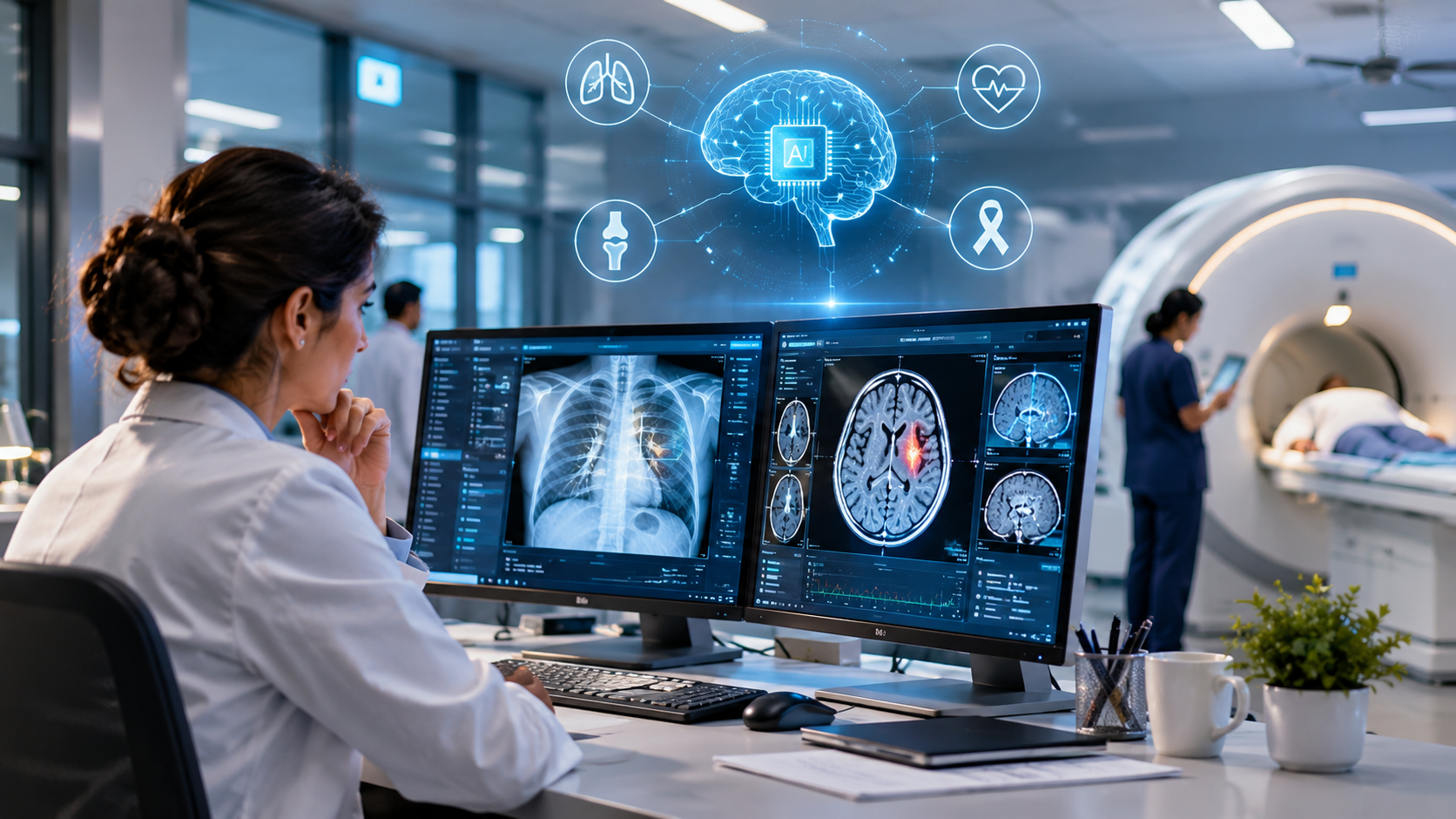
Nov 13: Artificial intelligence in medical imaging refers to the use of computer algorithms to examine medical images such as X-rays, CT scans, MRI scans, mammograms and ultrasound images. These systems are trained using large collections of medical images to recognise patterns, identify abnormalities and highlight areas that may require further investigation.
For example, an AI system can analyse a chest X-ray and flag a possible lung nodule, signs of pneumonia or other abnormalities for a radiologist to review. Similarly, AI can examine brain scans to help identify signs of a stroke or assess mammograms for suspicious changes that could indicate breast cancer.
Traditional medical imaging depends heavily on specialists manually reviewing each scan. AI introduces an additional layer of analysis by processing images rapidly and consistently. It can highlight potential problems, prioritise urgent cases and support clinicians in interpreting complex scans. The final diagnosis and treatment decisions, however, remain the responsibility of qualified healthcare professionals.
Why Medical Imaging and AI Need to Work Together
Medical imaging produces valuable information about a patient’s health, but its effectiveness depends on how quickly and accurately that information is interpreted. This is where AI and medical imaging complement each other.
Imaging technology captures the information, while AI helps analyse it. Together, they can create a more efficient diagnostic pathway, from the moment a scan is performed to the point when a clinician makes a decision.
The need for this combination is becoming increasingly important in the UK. The NHS is dealing with rising demand for diagnostic tests, pressure on hospital resources and a shortage of specialist radiologists. The Royal College of Radiologists’ 2025 workforce census reported a 30% shortfall in clinical radiology consultants across the UK and forecast a 28% shortfall by 2030 if current trends continue.
This gap makes it difficult for hospitals to keep pace with the growing number of scans requiring specialist interpretation. AI can help by taking on selected repetitive tasks, identifying cases that need urgent attention and supporting radiologists in managing their workloads.
Why Intelligent Diagnostics Are Needed in the UK Today
The pressure on diagnostic services is reflected in NHS performance data. NHS England’s 2024/25 annual performance report stated that 81.6% of patients received a diagnostic test within six weeks in March 2025, below the 95% ambition. The NHS carried out an average of 2.4 million diagnostic tests every month during 2024/25, an 8% increase on the previous year.
These figures demonstrate the scale of demand facing the healthcare system. Delays in interpreting scans can affect the next stages of care, including specialist referrals, treatment planning and surgery.
AI-supported diagnostics could help the NHS address these pressures in several ways:
- Faster reporting: AI can rapidly analyse images and highlight potential abnormalities, helping clinicians review scans more efficiently.
- Prioritising urgent cases: Suspected strokes, serious injuries and possible cancers can be flagged for earlier clinical review.
- Improved productivity: Automation of selected routine tasks can give radiologists more time to focus on complex cases and patient care.
- Earlier detection: Identifying suspicious changes at an earlier stage can help clinicians arrange further investigations and treatment sooner.
- Better use of resources: More efficient imaging workflows can help hospitals manage equipment, staff time and diagnostic capacity.
The objective is not simply to make scans faster, but to improve the entire process of diagnosis and patient care.
Other Applications of AI in Healthcare
Although radiology is one of the most established areas for medical AI, intelligent diagnostics have applications across several healthcare specialities.
- Cancer detection and screening: AI can support the analysis of mammograms, chest X-rays and CT scans to identify suspicious findings. In breast cancer screening, it may help clinicians examine large volumes of images and identify cases requiring further assessment.
- Stroke diagnosis: AI can analyse brain CT scans and help identify signs of bleeding or blocked blood vessels. Faster identification can support time-sensitive treatment decisions.
- Cardiology: AI can assist in analysing cardiac imaging, identifying structural abnormalities and supporting the assessment of heart conditions.
- Neurology: Brain MRI analysis can help clinicians assess tumours, neurological disorders and changes associated with diseases such as multiple sclerosis.
- Emergency medicine: AI can help flag possible fractures, internal bleeding and other urgent findings, supporting faster clinical assessment.
- Pathology and laboratory diagnostics: Beyond imaging, AI can analyse digital pathology slides, recognise patterns in tissue samples and support the identification of abnormalities.
- Preventive and personalised healthcare: By combining imaging findings with relevant clinical information, AI may help doctors assess individual risks, monitor disease progression and make more informed treatment plans.
These applications show that AI’s potential extends beyond individual scans. It can support a wider shift towards earlier diagnosis, more personalised treatment and preventive healthcare.
How the UK Is Already Moving Towards AI-Enabled Diagnostics
AI in medical imaging is no longer just a future possibility for the NHS. The UK government has already invested in technologies designed to support diagnostic services.
In April 2025, the Department of Health and Social Care told Parliament that the NHS AI Health and Care Awards had provided £113 million to support 86 AI technologies. These technologies had been deployed in 40% of acute NHS trusts in England and hundreds of primary care networks across the UK.
The government also highlighted the use of AI in stroke services across 100% of stroke units in England, where the technology supports doctors in analysing brain scans and making treatment decisions.
Another important initiative is the £21 million AI Diagnostic Fund, which supports the introduction of AI tools for chest X-rays and CT scans to improve lung cancer diagnosis. In June 2026, the government announced a further £20 million to expand proven AI-powered X-ray technology to every NHS trust in England by 2029. It reported that more than four million patients had already received a faster lung cancer diagnosis or an all-clear through these tools.
These developments demonstrate that the UK is moving from testing AI solutions towards wider implementation across its healthcare system.
Business Opportunities and the Future of Healthcare Technology
The expansion of AI in medical imaging is also creating opportunities for the UK’s healthcare and technology industries. Demand is growing for companies that develop diagnostic software, medical imaging platforms, data management systems and AI-powered clinical tools.
Technology providers can work with NHS trusts, private hospitals, universities and research institutions to develop and implement solutions that address specific clinical needs.
There are also opportunities for investment in medical technology, healthcare data infrastructure, cybersecurity, specialist training and digital health services. As AI adoption expands, businesses that can demonstrate reliable clinical performance, patient safety and measurable efficiency improvements are likely to play an important role.
However, successful adoption requires more than purchasing software. AI systems must integrate with existing hospital systems, work across different imaging equipment and be evaluated in real clinical settings. In the UK, AI software intended for medical purposes may be regulated as a medical device by the Medicines and Healthcare products Regulatory Agency (MHRA). Clinical safety, transparency, data protection and ongoing performance monitoring must therefore remain central to implementation.
What This Development Could Mean for India
The progress of AI-enabled medical imaging in the UK could also create important opportunities for India. The country faces its own healthcare challenges, including unequal access to specialist services, shortages of radiologists and differences in diagnostic infrastructure between urban and rural areas.
A 2026 review published in the medical literature on AI in Indian radiology estimated that India has approximately 25,000–30,000 radiologists serving a population of around 1.44 billion. It highlighted the concentration of specialists in major cities and the need to improve access to diagnostic services in underserved areas. These estimates underline the potential value of technologies that can support clinicians and extend diagnostic capacity.
AI-assisted imaging could help Indian hospitals and diagnostic centres identify conditions such as tuberculosis, lung disease, cancer and stroke more efficiently. It could also support remote healthcare services by helping specialists review scans from smaller towns and rural locations.
There are opportunities for India beyond domestic healthcare delivery:
- Technology development: Indian health-tech companies can develop AI imaging tools for both domestic and international markets.
- Research collaboration: Partnerships between Indian and UK universities, hospitals and technology companies can support clinical research and innovation.
- Healthcare workforce development: Training programmes can help radiologists, doctors and technicians develop skills in AI-assisted diagnostics.
- Medical technology exports: Indian companies can build solutions for international healthcare providers, creating opportunities in software, research and digital health services.
- Improved rural access: AI-supported diagnostic services could help extend specialist expertise to locations where radiologists are less readily available.
However, AI systems developed using UK patient data cannot automatically be assumed to perform equally well in India. Differences in disease patterns, patient populations, imaging equipment and clinical settings make local testing and validation essential. Collaboration should therefore focus on developing solutions that are suitable for each country’s healthcare needs.
Challenges That Must Be Addressed
Despite its potential, AI in medical imaging comes with important challenges. Incorrect results, biased training data and limited transparency can affect clinical decisions. Poor integration with hospital systems may also create additional work rather than reduce it.
Patient privacy and data security are particularly important because medical images contain sensitive personal information. Healthcare organisations must ensure that patient data is handled responsibly and that AI systems meet relevant regulatory and clinical safety requirements.
Most importantly, AI should support rather than replace medical professionals. Radiologists bring clinical judgement, experience and an understanding of individual patient circumstances that technology cannot fully replicate. Human oversight must remain part of the diagnostic process.
Conclusion: Towards a Smarter Healthcare Future
AI in medical imaging has the potential to transform healthcare in the UK by enabling faster diagnosis, reducing pressure on NHS staff and improving patient care. Looking ahead, advances in predictive analytics and personalised medicine could make healthcare more proactive and efficient.
As the UK Government’s 10-Year Health Plan for England states, “In the NHS of 2035, AI is each health professional’s trusted assistant.”
For India, this progress offers opportunities for research collaboration, healthcare innovation and improved access to diagnostics. Ultimately, the future of healthcare will depend on how effectively AI and medical professionals work together to deliver faster, safer and more accessible care.
