

Koraput, Nov 24 (UDN): Hidden beneath the dense green canopy of Odisha’s Gupteswar forest, rare orchids hold a story that goes far beyond their delicate flowers. For generations, these lesser-known plants have been part of the traditional healing practices of local tribal communities, reflecting an intimate relationship between indigenous knowledge and the natural world.
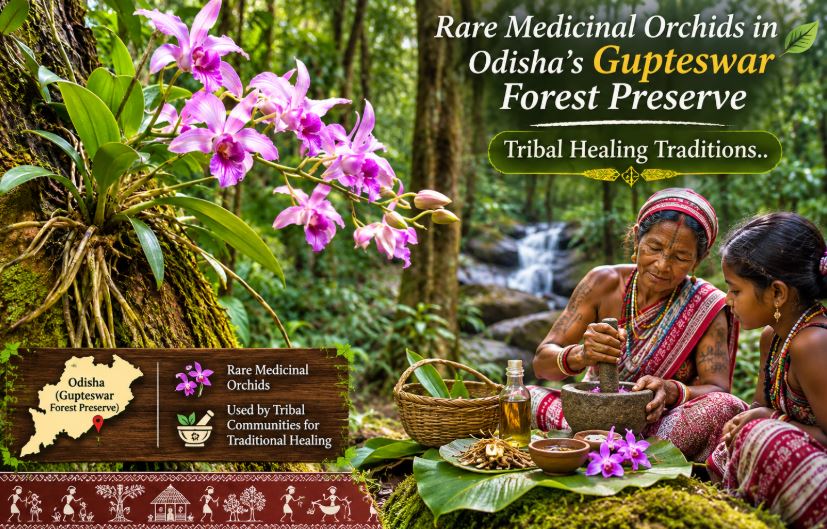
Representational Image
In the forest landscape of Koraput district, orchids are not simply botanical treasures. Their roots and leaves have traditionally been used by local communities for various medicinal purposes, with knowledge of their uses passed down through generations.
This connection between people and plants represents an important part of the region’s indigenous heritage, where forests have long served as sources of food, shelter and traditional remedies.
A Living Repository of Indigenous Knowledge
For tribal communities living in and around the Gupteswar forest, traditional knowledge of medicinal plants has evolved through generations of observation and experience.
Certain orchid species are valued for their roots and leaves, which have been traditionally incorporated into local healing practices. Such knowledge, often shared orally within families and communities, reflects an understanding of the surrounding ecosystem that has developed over decades.
However, much of this traditional wisdom remains undocumented. As a result, the medicinal uses of several forest plants, including rare orchids, risk becoming less familiar to younger generations.
Recognising and recording this knowledge, with the consent and participation of indigenous communities, could play an important role in safeguarding this cultural heritage.
Habitat Loss Poses a Growing Threat
Despite their ecological and cultural importance, rare orchids in the Gupteswar forest face growing environmental challenges.
Forest degradation, habitat disturbance and changing climatic conditions could affect the delicate ecosystems on which these plants depend. Orchids are particularly sensitive to changes in their surroundings, including moisture levels, temperature and the availability of suitable host trees and growing surfaces.
The loss of natural habitats could therefore have consequences beyond biodiversity. It may also weaken the connection between indigenous communities and the plant resources that have supported their traditional practices.
Conservation Must Protect Both Nature and Knowledge
Protecting the rare orchids of Gupteswar requires more than safeguarding individual plant species. It calls for the conservation of their natural habitats and recognition of the communities whose knowledge has helped preserve their significance.
Community-led conservation, scientific documentation and collaboration between researchers, forest authorities and tribal knowledge holders could help strengthen these efforts.
Equally important is ensuring that indigenous communities retain control over how their traditional knowledge is documented and shared, with appropriate recognition and benefits.
The orchids of Gupteswar may be small and often hidden from view, but their importance extends across biodiversity, culture and traditional knowledge.
As environmental pressures continue to reshape forest ecosystems, protecting these rare plants is also about safeguarding a generations-old relationship between Odisha’s tribal communities and the forests they call home.
