

The healthcare industry in the United States is experiencing a major digital transformation. Technology is changing how patients access medical services, how doctors diagnose diseases, and how hospitals manage healthcare operations. Digital health platforms, artificial intelligence (AI), telemedicine, electronic health records (EHRs), and remote patient monitoring are making healthcare more accessible, efficient, and patient-focused.
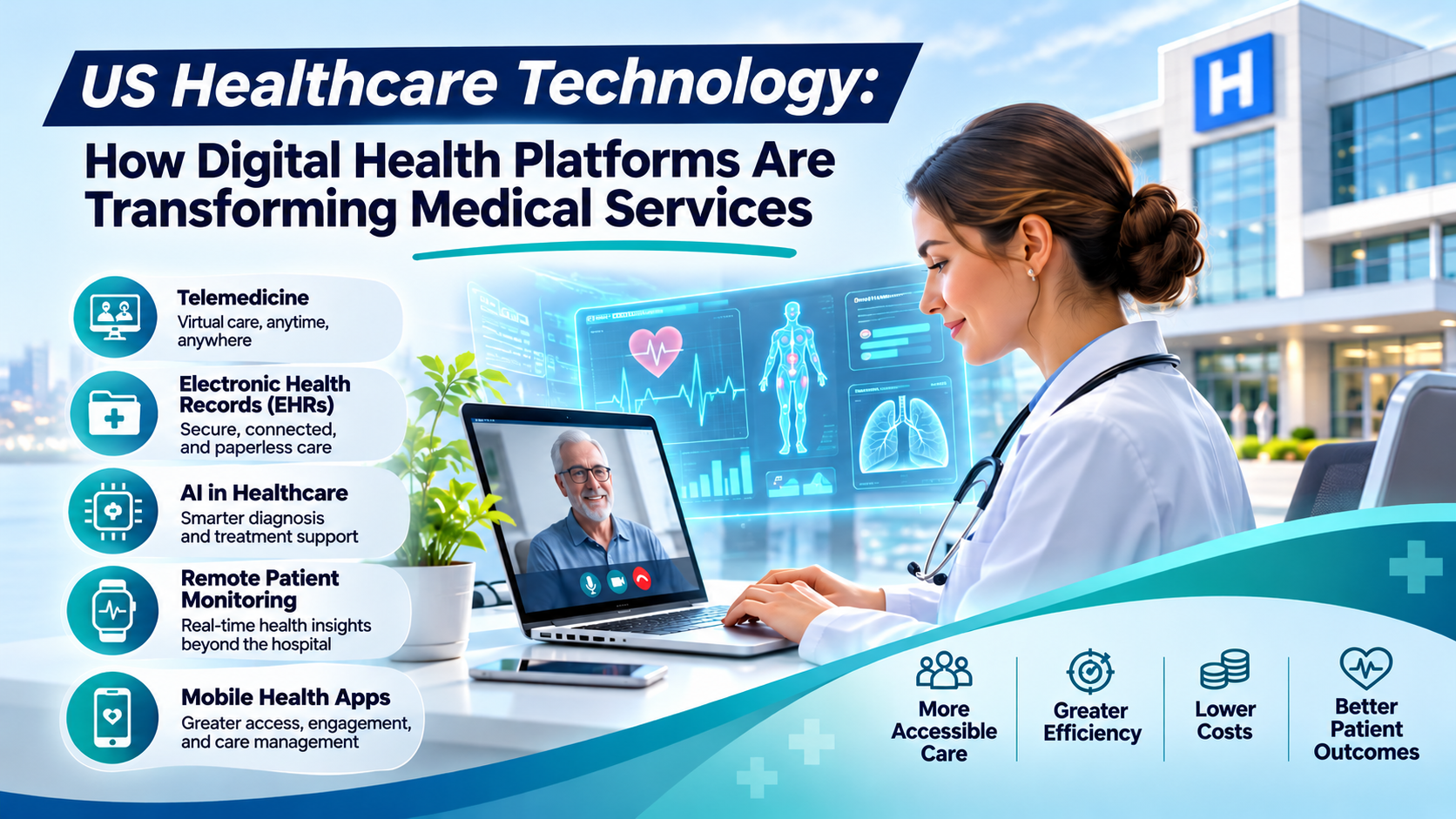
As healthcare demands continue to grow, digital solutions are helping medical organizations improve patient experiences, streamline clinical workflows, and deliver more personalized care. These innovations are not simply modernizing traditional healthcare systems; they are reshaping the future of medical services across the United States.
The Growing Role of Digital Health Platforms in US Healthcare
Digital health platforms have become an essential part of the modern US healthcare system. These platforms connect patients, doctors, hospitals, pharmacies, laboratories, and insurance providers through integrated digital solutions.
Patients can now schedule appointments, access medical records, receive prescriptions, communicate with healthcare professionals, and manage their health through websites and mobile applications.
Healthcare organizations also benefit from centralized platforms that simplify administrative processes, improve communication, and support better clinical decision-making.
By connecting different healthcare services in one digital environment, these platforms help create a more coordinated and convenient healthcare experience.
Telemedicine: Making Healthcare More Accessible
Telemedicine is one of the most significant developments in US healthcare technology. It allows patients to consult doctors through video calls, phone consultations, and secure messaging without visiting hospitals or clinics physically.
This technology is particularly beneficial for people living in rural communities, individuals with mobility challenges, and patients who require regular medical consultations.
Key benefits of telemedicine include:
-
Convenient access to doctors and specialists.
-
Reduced travel time and transportation expenses.
-
Faster medical consultations and follow-ups.
-
Improved access to mental healthcare services.
-
Better continuity of care for patients with chronic conditions.
Telemedicine is helping healthcare providers reach more patients while making medical services more flexible and accessible.
Artificial Intelligence Is Improving Medical Decision-Making
Artificial intelligence is transforming healthcare by helping medical professionals analyze complex medical information, identify potential health risks, and improve diagnostic processes.
AI-powered healthcare platforms can analyze medical images, patient histories, laboratory reports, and other clinical information to support healthcare professionals.
Some important applications of AI in healthcare include:
-
Disease Detection: AI tools can help identify patterns associated with diseases such as cancer and cardiovascular conditions.
-
Predictive Analytics: Healthcare organizations can identify potential health risks and support early intervention.
-
Clinical Decision Support: AI-powered systems provide relevant information that assists doctors in making informed decisions.
-
Administrative Automation: AI can help automate documentation, appointment scheduling, and repetitive administrative tasks.
-
Personalized Treatment: Data-driven insights can help healthcare professionals develop treatment plans based on individual patient needs.
Although AI offers significant opportunities, medical professionals must maintain appropriate clinical oversight to ensure patient safety and accuracy.
Electronic Health Records Are Improving Patient Data Management
Electronic Health Records (EHRs) have become a fundamental component of digital healthcare infrastructure in the United States.
Traditional paper-based medical records can create difficulties in storing, accessing, and sharing patient information. EHR systems address these challenges by maintaining patient information in secure digital formats.
Doctors and authorized healthcare professionals can access important medical information, including:
-
Patient medical histories.
-
Previous diagnoses and treatments.
-
Prescription and medication records.
-
Laboratory test results.
-
Medical imaging reports.
-
Allergies and clinical notes.
EHR platforms improve coordination between healthcare providers and help reduce unnecessary duplication of medical tests.
Interoperability standards, including Fast Healthcare Interoperability Resources (FHIR), are also helping healthcare systems exchange patient information more effectively.
Remote Patient Monitoring and Wearable Healthcare Technology
Remote Patient Monitoring (RPM) is changing how healthcare professionals manage patients outside traditional clinical settings.
Connected medical devices and wearable technologies allow healthcare providers to monitor important health indicators remotely.
Examples include:
-
Smartwatches that track heart rate and physical activity.
-
Digital blood pressure monitors.
-
Continuous glucose monitoring devices.
-
Connected weight scales.
-
Wearable devices that monitor sleep patterns.
These technologies are especially useful for patients managing chronic conditions such as diabetes, hypertension, and heart disease.
Remote monitoring can help doctors identify concerning changes in patient health, encourage preventive care, and provide timely medical guidance.
It also allows patients to participate more actively in managing their health.
Mobile Health Applications Are Empowering Patients
Mobile health applications are making healthcare services available directly through smartphones and other connected devices.
Patients can use healthcare apps to book appointments, receive medication reminders, track fitness activities, access test reports, and communicate with medical professionals.
Many applications also provide personalized health information and educational resources that encourage healthier lifestyles.
For healthcare providers, mobile applications offer additional opportunities to improve patient engagement and maintain communication between appointments.
As smartphone adoption continues to grow, mobile health technology is becoming an important part of the overall patient experience.
Cloud Computing and Healthcare Data Integration
Cloud computing is helping hospitals, clinics, and healthcare organizations manage large volumes of medical information more efficiently.
Cloud-based healthcare platforms allow authorized users to access information securely from different locations, supporting collaboration between medical teams and healthcare facilities.
Major advantages include:
-
Flexible data storage and management.
-
Improved collaboration between healthcare providers.
-
Easier integration with digital healthcare applications.
-
Scalable infrastructure for growing healthcare organizations.
-
Better access to information across healthcare networks.
However, healthcare organizations must implement strong security measures, access controls, encryption, and backup systems to protect sensitive patient information.
Data Security and Patient Privacy in Digital Healthcare
As healthcare organizations increasingly depend on digital platforms, protecting patient information has become a major priority.
Medical records contain highly sensitive personal information, making healthcare systems potential targets for cyberattacks, data breaches, and unauthorized access.
In the United States, the Health Insurance Portability and Accountability Act (HIPAA) establishes important privacy and security requirements for covered healthcare organizations and their business associates.
Healthcare technology providers should prioritize:
-
Strong data encryption.
-
Multi-factor authentication.
-
Secure cloud infrastructure.
-
Regular security assessments.
-
Role-based access controls.
-
Employee cybersecurity training.
-
Proper data backup and recovery procedures.
Building patient trust requires healthcare organizations to treat data privacy and cybersecurity as essential parts of digital transformation.
Key Challenges in Digital Healthcare Adoption
Despite the advantages of healthcare technology, several challenges continue to affect digital adoption across the United States.
High Implementation Costs: Developing and maintaining advanced healthcare platforms can require significant financial investment.
Data Integration Issues: Different healthcare systems may use incompatible technologies, making information exchange difficult.
Cybersecurity Risks: Healthcare organizations must continuously protect sensitive medical information from evolving cyber threats.
Digital Literacy: Some patients may struggle to use online healthcare services, particularly older adults and individuals with limited technical experience.
Regulatory Compliance: Digital healthcare providers must understand applicable healthcare regulations, privacy requirements, and technology standards.
Technology Accessibility: Not every patient has reliable internet access or suitable digital devices.
Addressing these challenges will be essential to ensuring that digital healthcare benefits patients across different communities and income levels.
The Future of Digital Health Platforms in the United States
The future of US healthcare will increasingly depend on connected digital platforms, intelligent automation, and patient-centered technology.
Several emerging developments are expected to influence the industry:
-
Greater integration of AI into clinical and administrative workflows.
-
More advanced remote patient monitoring solutions.
-
Expansion of virtual healthcare services.
-
Increased use of interoperable health information systems.
-
Growth of personalized and preventive healthcare.
-
Wider adoption of connected medical devices.
-
Improved digital experiences through integrated patient platforms.
Healthcare organizations will increasingly focus on building connected digital ecosystems rather than relying on isolated software applications.
These developments could help healthcare providers improve coordination, support earlier interventions, and deliver more convenient medical services.
Conclusion
Digital health platforms are transforming the US healthcare industry by making medical services more accessible, connected, efficient, and patient-focused. From telemedicine and artificial intelligence to electronic health records and remote patient monitoring, technology is creating new opportunities to improve healthcare delivery.
Although challenges related to cybersecurity, data privacy, interoperability, and implementation costs remain, continued innovation and responsible technology adoption can help overcome these barriers.
As the healthcare industry moves forward, digital health platforms will play an increasingly important role in connecting patients with healthcare professionals, supporting better clinical decisions, and building a more efficient and accessible healthcare system.
