Colliers Insights on How AI is shaping India’s Real Estate

AI is no longer emerging, it is getting firmly embedded across industries, reshaping economies, and redefining how businesses operate. The Indian AI market, estimated at around USD 10 billion, is however at a nascent stage and holds tremendous potential to transform economic sectors including real estate. In fact, AI is set to redefine the future of Indian real estate across every stage of the property lifecycle, starting from design & planning to sales & facility management services.

Design phases will increasingly rely on hyper realistic AI driven simulations, generative 3D models, and predictive cost engines that reduce errors and project bottlenecks. In the planning phase, AI will enhance efficiencies through project scheduling, resource allocation, and real time monitoring to prevent delays. Construction sites will operate like interconnected ecosystems where AI guided drones, vision based safety systems and predictive analytics will continuously monitor progress, anticipate risks and self optimize workflows. Within sales, customized property discovery, curated market insights, automated valuations, immersive virtual tours, and predictive investment modelling will transform real estate transactions. Property management will evolve with heightened adoption of smart environments powered by sensor networks, adaptive lighting, intelligent access systems and AI driven assistants that proactively respond to usage patterns. Overall, PropTech and AI are poised to significantly transform Indian real estate over the course of next few decades, ushering in transparency, efficiency and future-readiness.

Asia’s Protein Buyers Still Trail Global Best Practice — But Momentum is Building, New ARE Benchmark Finds

SINGAPORE, Feb 20 - Asia’s largest food retailers, manufacturers, restaurant chains, and hospitality groups remain behind international better practice on sustainable and responsible protein sourcing, but progress is accelerating across the region, according to The Asian Protein Buyers 100: An Assessment of Responsible and Sustainable Sourcing released today by Asia Research & Engagement (ARE)

The APB100 is a benchmark based on investor-backed priorities – assessing how 100 of Asia’s largest listed protein-buying companies — headquartered or operating across Hong Kong, India, Indonesia, Japan, Mainland China, Malaysia, Philippines, Singapore, South Korea, Taiwan, Thailand and Vietnam — manage environmental, social, and governance risks embedded in meat, dairy, poultry, and seafood supply chains. Collectively, the companies assessed represent more than USD500 billion in market capitalisation and sit at the choke point of Asia’s protein system, where procurement decisions shape production standards, risk management and food-system outcomes. 

The companies assessed include some of Asia’s most recognisable food and retail groups. These include China Mengniu Dairy, Yili Group, Yonghui and Yum China (Mainland China); AEON, Seven & I Holdings, Meiji, Nissin and NH Foods (Japan); CJ CheilJedang, Lotte and E-Mart (South Korea); Charoen Pokphand Foods and Thai Union (Thailand); Jollibee, Century Pacific Food and San Miguel Food & Beverage (Philippines); Vinamilk (Vietnam); and Hindustan Lever, Nestle India, Jubilant, Devyani, DMart, Westlife Foodworld (McDonald’s India) (India), among others. 

Scores are improving, but the baseline remains low 

Now in its second edition, the benchmark shows clear momentum since 2023 — but also highlights that most companies remain at an early stage of credible implementation. 

The average overall score increased from 9% in 2023 to 16% in 2025, with around 80% of companies improving year-on-year. More than half of comparable companies moved up at least one performance tier. 

However, no company reached the top two performance tiers, underscoring a persistent gap between sustainability commitments and on-the-ground execution. 

A growing group of leaders is emerging 

The number of companies in the leading Tier 3 group more than doubled from 10 in 2023 to 26 in 2025, while the lowest-scoring group halved from 44 to 21 companies. 

Progress, however, remains uneven and concentrated among a subset of early movers and sustainability themes, while a significant minority of companies continues to disclose little or nothing across several material risk areas. 

Climate, labour, and waste are moving fastest 

Companies performed strongest on Water & Waste, Labour , and Climate Change, reflecting wider uptake of international disclosure frameworks and growing expectations around supply-chain due diligence. 

Climate and labour show the fastest improvement since 2023, driven by emerging regulatory pressure and investor scrutiny, particularly around Scope 3 emissions and labour standards in supply chains. 

Governance and protein diversification remain critical gaps 

Several material risk areas continue to show weak performance. Governance in relation to protein sustainability, remains the lowest-scoring theme, averaging just 4.5%, with most companies scoring zero. Few have board-approved protein sustainability strategies, capital allocation plans, or accountability mechanisms. 

Protein diversification also remains underdeveloped at 7.4%, indicating that most companies have yet to articulate how they will shift product portfolios toward truly low carbon plant proteins at scale. 

Disclosures on deforestation and biodiversity, animal welfare, and antimicrobial resistance (AMR) also remain thin and rarely quantified. The intersection of climate and deforestation is still not being duly harnessed. Similarly, policies and procurement practices that strengthen animal welfare and enable antibiotic reduction remain a low point, with average animal welfare performance at just 14.1% and only one company aligned with recognised higher-welfare standards or independently certified disclosure. 

Why this matters: Asia is the decisive region for global protein systems 

Compared with innovative international peers, many of Asia’s protein buyers remain behind on deforestation-free sourcing, antibiotic stewardship, higher-welfare policies and procurement, plant-protein targets and science-based climate transition planning. 

However, Asia now represents the most important opportunity for global leadership in responsible protein systems. And with less than five years to implement meaningful change towards various 2030 United Nations and related targets, the vision of a more responsible and sustainable food system is at risk. 

“Asia is the world’s fastest-growing protein market, which means what happens here will determine the future of global food systems,” said Kate Blaszak, ARE Director, Protein Transition. “ThisAPB100 shows that disclosure and awareness are improving and aims to trigger a shift from Policy to Practice. With a realm of better practice examples in the report to also assist companies, the next phase must focus on full supply-chain coverage, measurable targets, and annual progress with board-level accountability.” 

DEE Development Engineers secures Letter of Intent exceeding USD 40 million for international HRSG piping supply

Mumbai, Feb 20th: DEE Development Engineers Limited , a leading provider of advanced piping and fabrication solutions, has received a Letter of Intent (LOI) from one of the largest international OEM conglomerates in the power sector, headquartered in the United States. The LOI covers the supply of Heat Recovery Steam Generator (HRSG) piping for 16 units, with an aggregate order value exceeding USD 40 million, and is valid through February 18, 2027.

Commenting on the development, K.L. Bansal, Chairman and Managing Director of DEE Development Engineers Limited, stated, “This Letter of Intent from a major international power sector OEM is a significant recognition of our capabilities in delivering complex, high-specification process piping solutions. HRSG piping is a technically demanding product area, and an order of this scale from a global conglomerate reflects the confidence that international customers place in our engineering, manufacturing, and delivery standards. We remain focused on executing this engagement with the precision and reliability that our customers expect, and on building long-term supply relationships across global energy infrastructure programmes.”

The LOI marks DDEL’s continued traction in international markets and reiterates its positioning as a supplier of choice for large-scale energy infrastructure projects globally. HRSG piping systems, which are integral to combined-cycle power plant operations, require exacting fabrication standards, and the scope of 16 units reflects the depth of engagement with the customer. The company remains focused on mobilising its manufacturing capabilities to execute within the stipulated timeline and on meeting the technical and quality requirements of this international programme.

New Delhi AI Impact Summit 2026 | Echo the Humanoid Robot Enhances Delegate Experience at Shangri-La Eros

Quote — by General Manager – Abhishek Sadhoo:

“Shangri-La Eros New Delhi is privileged to host and welcome the distinguished delegates of the India AI Impact Summit 2026. Nestled in the vibrant heart of the capital city, Shangri-La Eros New Delhi is prepared to exemplify the genuine essence of Shangri-La hospitality, one that is warm, caring, and always strives to create unforgettable memories for our valued guests. Through our exceptional service, exquisite amenities, and a commitment to fostering enduring memories, the hotel is prepared to welcome our valued delegates and play a pivotal role in shaping this landmark occasion in Delhi.

An incredible culinary adventure awaits at Shangri-La Eros, New Delhi. Guests are invited to savour the taste of Italy’s finest at Sorrento, where award-winning Italian cuisine comes to life, serving authentic flavors of Cantonese cuisine at Shang Palace, its 39th establishment of Shangri-La’s renowned restaurant brand. Tamra is the epitome of the “world on your platter” concept where Shangri-La showcases wellness cuisine amongst other regional Indian specialties. Adding a distinctive cultural dimension to the stay experience, Tamra also presents a specially curated exploration of Kashmiri cuisine, offering guests an opportunity to experience one of India’s most nuanced and celebrated culinary traditions. Thoughtfully crafted by chefs deeply rooted in the cuisine, this showcase brings forward authentic flavours, techniques, and narratives that reflect the rich cultural heritage of the region offering international delegates a genuine taste of India’s culinary diversity. Mister Chai, a classic tea lounge presents a delightful fusion of tradition and modernity, where the classic Indian chai is reimagined with a contemporary twist. We look forward to enabling conversations that matter, within an environment defined by warmth, discretion, and attentive hospitality.”

“Shangri-La Eros New Delhi is honoured to welcome the distinguished delegates of the India AI Impact Summit 2026. Situated in the heart of the capital, our hotel offers a setting where innovation and refined hospitality come together to inspire meaningful dialogue and collaboration. With world-class event spaces, exceptional dining and our heartfelt service, we are proud to support conversations shaping the future of technology and its impact on society. It is a privilege to play a role in hosting this landmark gathering in New Delhi.

Enhancing the arrival experience is Echo, our indigenously developed AI-powered humanoid robot, stationed in the lobby. With her friendly, human-like presence and expressive LED face, Echo greets guests, responds to voice queries and offers intuitive wayfinding, creating a seamless and engaging first point of contact. Equipped with ultrasonic sensors and programmable movement, Echo operates safely within the lobby environment. This thoughtful integration of technology reflects the forward-looking spirit of the summit and our commitment to innovation-led guest experiences.”

Additionally, the robot has been stationed especially for the AI Summit.

Judge India Solutions Plans Strategic Hiring Drive to Boost U.S. Staffing

Noida, Feb 20 : Judge India Solutions, a leading IT solutions company and the India arm of The Judge Group, today announced an active strategic hiring drive to expand its U.S. staffing team, reinforcing its role as a critical growth engine for the company’s global talent solutions business.

As part of this expansion, Judge India Solutions plans to onboard specialized recruiters across high-impact domains, including Information Technology, Engineering, Healthcare, Aerospace, and Banking, Financial Services, & Insurance (BFSI). The initiative is aligned with rising demand from U.S. enterprises for high-quality, domain-specific talent and reflects the company’s continued investment in building scalable, future-ready staffing capabilities.

On this announcement, Mr. Abhishek Agarwal, President – Judge India & Global Delivery at The Judge Group, said,

“Demand for specialized talent in the U.S. market is accelerating across multiple industries. This strategic hiring drive strengthens our ability to deliver speed, precision, and expertise to our clients, while reinforcing India’s role as a center of excellence for global staffing operations.

The company supports over 10,000 placements each year, partnering with many of the world’s most respected corporations, including 60 Fortune 100 companies. With over five decades of experience, Judge has evolved into a global organization with more than 30 offices across the United States, Canada, Europe, and India.

Established in 2016, Judge India Solutions serves as The Judge Group’s Center of Excellence (CoE) for technology-led innovation and talent delivery. The organization employs over 300 professionals across Noida, Bangalore, and Hyderabad, supporting global clients through technology, staffing, and consulting solutions.

This expansion underscores Judge India Solution’s growing importance in The Judge Group’s global delivery model, particularly in supporting U.S. staffing operations with specialised recruitment expertise, advanced sourcing strategies, and technology-enabled processes.

MIT xPRO Equips Leaders to Move From AI Vision to Measurable Business Value

New Delhi, Feb 20: As artificial intelligence shifts from experimentation to enterprise-wide transformation, organizations are discovering that technology alone does not guarantee results. According to research by PwC, AI-exposed industries have experienced revenue per employee growth three times faster than others (27% vs 9%), while professionals with AI skills command a 56% wage premium. Yet, despite this momentum, 56% of companies report no measurable financial benefit from AI investments to date — highlighting a widening gap between ambition and execution.

Addressing this critical challenge, MIT xPRO’s advanced professional programs are empowering leaders to operationalize AI at scale by integrating strategy, data, and productization into sustainable business impact.

Bridging the Execution Gap

As organizations move beyond pilots and proof-of-concept experiments, the need for strategic alignment, decision-grade analytics, and production-ready AI products has become paramount. MIT xPRO’s portfolio of professional programs is designed to help leaders translate AI investments into enterprise-level value creation.

1. Lead With Strategic Clarity

Advanced Program in Technology Leadership and Innovation (TLIP)

AI initiatives often falter due to fragmented leadership and lack of cohesive strategy. The Advanced Program in Technology Leadership and Innovation equips senior executives to transform emerging technologies into enterprise-wide roadmaps aligned with measurable outcomes.

Participants gain:

  • Executive ownership of AI-driven strategy
  • Systems thinking for cross-functional execution
  • Balanced innovation portfolio design
  • Responsible technology governance frameworks
  • Hands-on experience through immersive simulations and capstone projects

Ideal for: CXOs, VPs, founders, and senior leaders

Duration: 9 months

2. Turn Data Into Decisions

Post Graduate Program in Data Science and AI (DSAI)

In many organizations, analytics efforts remain confined to dashboards and models. The DSAI program focuses on embedding AI into core business decisions — from pricing and risk optimization to operational efficiency and forecasting.

Key outcomes include:

  • Decision-oriented analytics frameworks
  • Mathematical and AI-driven optimization capabilities
  • Explainable and trustworthy AI foundations
  • Hands-on experience with 25+ industry tools and libraries
  • Capstone projects solving real-world business problems

Ideal for: Data professionals, analytics leaders, and tech managers

Duration: 9 months

3. Ship Products, Not Pilots

Building AI Products and Services (AIP)

Moving from concept to production remains one of the biggest hurdles in AI adoption. The AIP program equips teams with structured methodologies to design, validate, and launch AI-driven products that deliver tangible value.

Participants learn to:

  • Apply a structured four-stage AI design framework
  • Develop compelling business cases and risk assessments
  • Select appropriate AI approaches — ML, deep learning, or generative AI — based on strategic fit
  • Integrate human-centric design and adoption principles
  • Explore emerging trends including agentic AI and Retrieval-Augmented Generation (RAG)

Ideal for: Technical product managers, engineers, UX leaders, and founders

Duration: 12 weeks

A Unified Approach to AI Transformation

Operationalizing AI is not solely a technical challenge — it is an organizational transformation imperative. Strategic clarity, data fluency, and product execution must work in tandem to unlock measurable value.

With AI adoption accelerating globally and organizations with deep AI integration seeing disproportionate competitive advantages, MIT xPRO’s complementary programs provide a structured pathway from experimentation to execution.

By combining rigorous academic foundations with applied, real-world learning, MIT xPRO continues to empower leaders to move decisively from AI vision to sustained business value.

Prego at Westin Gurgaon Brings Italy to the Table with New Sunday Brunches

The Westin Gurgaon, New Delhi invites guests to slow down their weekends with the launch of Sunday Brunches at Prego, a refined Italian dining experience curated by Expat Chef Davide Di Domenico. Designed as an elegant yet leisurely escape, the brunch brings together soulful Italian flavours, artisanal craftsmanship, and the comforting warmth of a true Italian table.

Hosted every Sunday from 11:30 AM to 3:30 PM, the brunch celebrates Italy’s timeless culinary traditions where meals are unhurried, conversations linger, and indulgence is embraced without guilt. At the heart of the experience is Chef Davide’s passion for authentic Italian cooking, drawing from regional classics, handcrafted pastas, and wood-fired favourites.

Sunday Brunch at Prego

Every Sunday

Time : 11:30 AM – 3:30 PM

Venue : Prego, The Westin Gurgaon, New Delhi

Kolkata Centre For Creativity Presents Karigari 5.0

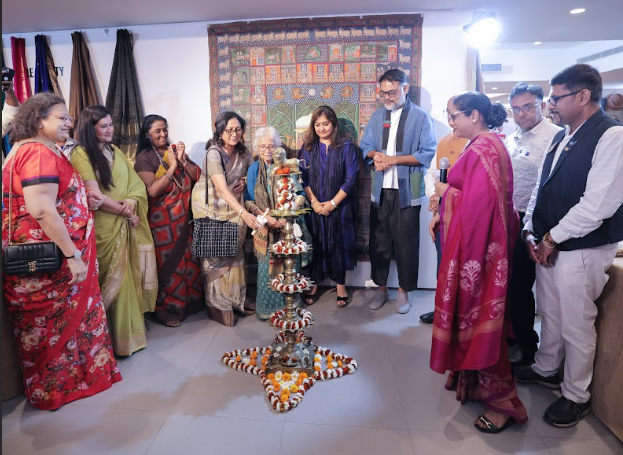
Kolkata, Feb 20th:  Kolkata Centre for Creativity presents Karigari 5.0, a four-day art market celebrating India’s diverse folk arts, crafts, and textile traditions, scheduled from 19 to 22 February 202611:30 AM to 8:00 PM, at the KCC 4th Floor. Open to all, the initiative continues KCC’s ongoing commitment to preserving and promoting the country’s rich handmade heritage while creating meaningful platforms for artisans.

Karigari 5.0 brings together master craftspeople and emerging makers from across India, showcasing an expansive range of handmade textiles, paintings, pottery, metalwork, and indigenous crafts. National Award–winning artisans share space with new-generation practitioners, offering visitors a rare opportunity to experience the depth, diversity, and craftsmanship embedded in India’s living traditions.

Designed as a direct artisan-to-consumer platform, the art market encourages fair trade, sustainable practices, and the continued transmission of traditional skills across generations. By enabling direct engagement between creators and audiences, Karigari fosters dialogue, appreciation, and stronger economic support for craft communities.

More than an art market, Karigari 5.0 is envisioned as a cultural meeting ground, where heritage, design, and contemporary curiosity converge. The initiative reflects KCC’s larger vision of nurturing India’s artistic ecosystems, strengthening craft-based livelihoods, and ensuring that traditional knowledge continues to thrive in a modern cultural landscape.

Thermography helps leading bike fitter find optimal cyclist position

One of the most advanced bike-fitting studios worldwide is tapping into the benefit of Flir thermal imaging technology to push the boundaries of sports science and biomechanics at all levels of cycling.


Located in Antwerp, Belgium, Bikefit Van Staeyen uses Flir-generated infrared images to visualize body heat and pressure distribution in real time, subsequently optimizing rider position and bike set up.

Bikefit Van Staeyen offers professional bike fitting based on more than 20 years of experience in cycling. Founded by brothers Kevin and Michael Van Staeyen (a former professional road racing cyclist), the business has built its success on extensive expertise in sports science, biomechanics and cycling. What started as a passion for precision and performance evolved into one of the world’s most advanced bike-fitting studios.

The principal differentiator of Bikefit Van Staeyen is its dual-expert approach: every bike fit is performed by both brothers working together, merging technical analysis and professional cycling experience with medical understanding.

“This synergy allows us to identify patterns and dysfunctions far beyond what conventional systems can capture,” explains Kevin.

Real-time insight

Central to the process is the use of advanced thermal imaging technology from Flir, which provides a real-time view into physiological asymmetries, pressure distribution, and underlying muscular imbalances. 


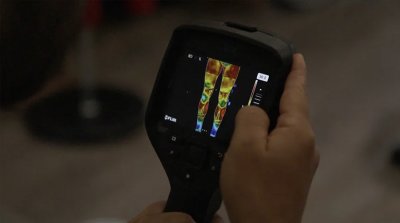
“We use a Flir infrared camera to study a heat map of a rider pedaling to optimize body position and bike set up,” says Kevin. “By combining thermography with motion tracking, force analysis, and EMG [electromyographic] data, we can see what others can only guess: how the rider’s body reacts, compensates, and adapts under load. We’ve named our thermography application ‘Lava.flow’, a process that allows us to understand and optimize injury-prone areas, muscle activation, and pressure points in a completely new way.”

Bikefit Van Staeyen initially used a Flir E76 thermal imaging camera but has since migrated to the newer E96. The E96 is Flir’s first pistol-grip camera with 640 × 480 thermal resolution, allowing users to survey targets safely and quickly. This advanced sensor offers complete coverage of near and distant targets through a range of lens options. In addition, Flir Ignite provides the automatic uploading of E96 images directly from the camera to the cloud for easy, secure storage and sharing.

As pioneers in thermal analysis for cycling applications, Bikefit Van Staeyen works in close collaboration with Thermal Focus, a Flir Platinum Partner and stockist of the largest selection of Flir infrared cameras in the Benelux (Belgium, Netherlands, Luxemburg) region.

Temperature in focus

The hot spots and cold spots identified by Flir thermal cameras serve as direct indicators of how a cyclist’s body functions on the bike. An excessive temperature increase in certain areas can indicate overexertion, friction, or poor posture. 


Using the Flir E96, Bikefit Van Staeyen can: detect hot spots and elevated pressure zones on the saddle, shoes, or handlebars; identify asymmetric muscle loading and unbalanced activation patterns; analyze vascular restrictions that may lead to numbness or reduced performance; and detect thermal irregularities that could indicate overload.

With this in-depth thermal analysis, the brothers are able to identify a range of issues that prompt adjustments for the optimal riding experience. For instance, asymmetric heat distribution around the kneecap points to a possible biomechanical problem, while too much heat in the ball of the foot typically means incorrect positioning of the cleat position. Similarly, increased temperature in the lower back could be the result of a compensatory mechanism or incorrect saddle adjustment.

“While traditional bike fits are often based on observation and feel, we use objective, data-driven measurements from the Flir thermal camera,” reveals Kevin. “Our Lava.flow process gives us unique, real-time insight into how a rider’s body responds while cycling. By way of example, we recently helped a cyclist experiencing unexplained knee pain during rides. Using our Flir infrared imaging technology, we observed excessive heat accumulation in the tibia [tibialis anterior muscle]. Thanks to the Flir imaging of this increased heat and our leg length software, we discovered that this leg was structurally shorter and that the rider had to pull the pedal excessively upward when cycling, resulting in knee pain.”

All levels of cyclist

Cyclists turning to Bikefit Van Staeyen for assistance range from dedicated amateurs to World Tour professionals. They trust the company for the same reason: attention to detail. From saddle pressure to neural load; from crank dynamics to thermal asymmetry – no variable is left unexplored. The company is also pioneering the bike-fit domain at university level, a first in Europe, by collaborating with the University of Antwerp to integrate data-driven approaches.

“We want to serve as the fundamental partner and reference point for thermal camera technology within the sport of cycling,” concludes Kevin. “Our ambition is to help shape the future of performance diagnostics, not just for our own athletes, but as a knowledge and technology hub for teams and riders worldwide. With our expertise and experience we can demonstrate the immense potential of thermography in biomechanical and performance analysis.”

UK Education Hub Launched at British Council to Advance India–UK Vision 2035

Kolkata, Feb 20 : Advancing the education objectives of the India–UK Vision 2035, David Lammy, UK Deputy Prime Minister inaugurated the UK Education Hub at the British Council, the UK’s international organisation for educational opportunities and cultural exchange, in the presence of Lindy Cameron OB CBE, British High Commissioner to India, Alison Barrett MBE, Country Director India, British Council, Prof. Eloise Philips, the Academic Provost of the Southampton University Delhi, and dignitaries from India and UK, including Sir Steve Smith, the UK’s Champion for International Education.

The British Council, with over 78 years leading education cooperation between the UK and India, has established the UK Education HUB to help deliver this shared vision – enabling engagement, collaboration, and alignment to India’s National Education Policy and the UK International Education Strategy through a single, structured platform.

UK Deputy Prime Minister David Lammy said:

“To build a better future, we must invest in the next generation who will shape it and expanding access to education will create lasting change.

“By bringing together governments, universities and institutions, the UK Education Hub in New Delhi will forge deeper partnerships with India – sharing expertise, sparking innovation and growing our economies. This demonstrates our shared ambition of turning the UK-India Vision 2035 into a reality.

“Delivering quality education today will change the world of tomorrow – empowering new ranks of entrepreneurs, scientists and leaders who will transform our shared future.”

The Hub will manage the Annual Ministerial India-UK Education Dialogue and support achievement of the education objectives of India-UK Vision 2035. It will act as a platform for structured engagement between UK universities, Indian government ministries, regulators, and sector bodies ensuring smooth two-way transfer of information and a stronger partnership between the education sectors of the two nations.

Looking ahead

The UK Education Hub will:

  • support delivery of the Annual Ministerial India-UK Education Dialogue
  • coordinate requests for information and support for all UK universities seeking to engage in India
  • create and manage the UK Universities in India Members Programme
  • support progress on mutual recognition of qualifications
  • provide continued support for inward and outward education and skills missions between the two countries.

By creating a single, coordinated interface for engagement, the UK Education Hub reinforces India and the UK’s shared ambition to deepen collaboration in education, research, and skills development, strengthening people-to-people ties and supporting inclusive, sustainable growth.