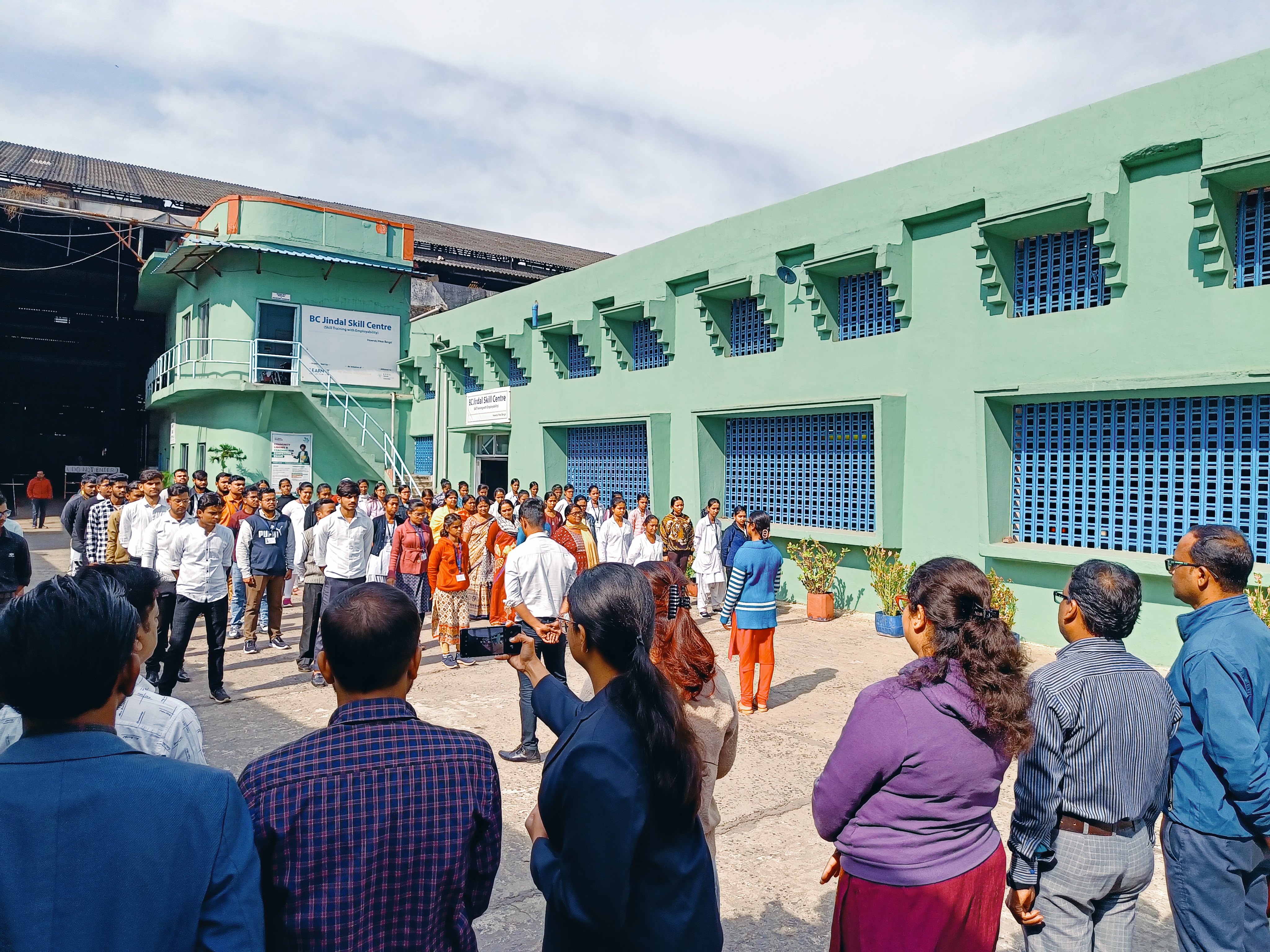
BC Jindal Foundation’s Skill Centre Strengthens Employability of Youth and Women Through Industry-Relevant Training in Howrah

Feb 20th: The BC Jindal Foundation, the social arm of India’s leading business conglomerate, the BC Jindal Group, is empowering youth and women in Howrah by imparting high-demand skill training, boosting their employability, and building sustainable livelihoods. As part of this initiative, the foundation is committed to improving participants’ socio-economic conditions through assured placement opportunities. 

The BC Jindal Group, led by Shyam Sunder Jindal, Promoter BC Jindal Group, through its foundation’s initiative “BC Jindal Skill Centre, Belur, Howrah”, aims to train 1,000+ candidates from marginalized and deprived communities annually across nine vocational trades of 5 sectors (Healthcare, Hospitality, Apparel, IT, and Industrial Tech) that include Industrial Electrician, Multi Skill Technician, Sewing Machine Operator, Domestic Data Entry Operator, Child Caretaker, Housekeeping, Food and Beverages Services, Phlebotomy Technician, and General Duty Assistant. 

Through this initiative, the foundation plans to ensure more than 70% placement across batches, promote women’s participation, and create a skilled workforce aligned with local and regional industry needs while simultaneously supporting long-term economic self-reliance. 

“The BC Jindal Foundation remains committed to creating value for people, society, and the environment through strategically designed social impact programs. Our Howrah skill centre aims to provide industry-relevant, short-term vocational skill training across high-demand trades to youth and women from underserved communities who lack access to quality skill training aligned with industry requirements. Through such initiatives, we will continue to work towards bridging the skill gap by providing structured vocational training and placement support, to achieve socio-economic growth,” said the spokesperson of BC Jindal Foundation. 

The foundation’s skill centre is working toward achieving the Sustainable Development Goals of ‘Quality Education’ of SDG 4 to ensure students acquire quality knowledge, ‘Decent Work and Economic Growth’ of SDG 8, which focuses on skilled youths, better employment and ‘Gender Equality’ of SDG 5 by empowers women and ensuring equal access to economic resources, skills, and opportunities. In addition, the initiative also aims to realize SDG 10 (Reduced Inequalities) by creating a skilled workforce, which is essential for technological advancement and industrial development, and offering skills training for vulnerable groups (disabilities, indigenous peoples) that promotes inclusivity. 

“Our centre has the capacity to train 1,000+ candidates annually and facilitates placement for nearly 70% candidates in relevant trades. After receiving an encouraging response, we plan to scale the program by expanding trade offerings, strengthening industry partnerships, and increasing training capacity,” added the spokesperson. 

The BC Jindal Foundation has planned a Rs 40 crore investment for various CSR projects across India during FY26. Through this, the foundation plans to focus on improving healthcare, skill development, animal welfare, and nutrition by expanding its ongoing initiatives and introducing new projects under its CSR program. The BC Jindal Group plans to intensify its CSR operations in the states of Delhi, West Bengal, Haryana, and Maharashtra, among others. 

Founded in 1952 by Shri B.C. Jindalthe BC Jindal Group, led by Shyam Sunder Jindal, Promoter, BC Jindal Group, is one of India’s leading conglomerates and is engaged in a diverse portfolio of businesses that includes packaging films, energy & steel products.

TATA.ev Accelerates EV Adoption with New Punch.ev

Chandigarh, Feb 20: In a decisive step towards accelerating EV mainstreaming, TATA.ev, India’s leading provider of zero emission personal mobility solutions, today launched the new avatar of its popular Punch.ev, ushering in the next wave of mass EV adoption in India. Designed to democratize entry level electric mobility, the new Punch.ev brings together everything customers seek in not just their first electric car but also their first household car, by holistically addressing the key barriers limiting EV ownership—affordability, range confidence, charging convenience, and battery assurance; thereby solving the full equation for mainstream EV adoption at scale.

Launched at an attractive introductory price of just INR 9.69 lakh the new Punch.ev brings EV ownership to near on‑road price parity with ICE offerings in the entry‑level small‑car segment

TATA.ev is also offering the option of BaaS, starting at INR 6.49 lakh with a Battery EMI of INR 2.6 / km, enabling an alternative financing option for customers.

Launching the new Punch.ev, Shailesh Chandra, Managing Director, Tata Motors Passenger Vehicle Ltd. and Tata Passenger Electric Mobility Ltd., said,

“The new Punch.ev, makes electric mobility truly accessible, practical and worry free for every household. With a real-world range of ~355 km, fast charging capability, a lifetime HV battery warranty and a highly accessible price point, it resolves the core concerns that have thus far held customers back from choosing an entry level EV as their primary car. By bringing together everything customers seek in their preferred car for both daily and long-distance travel, the new Punch.ev marks a significant leap forward in the democratization of electric mobility in India.”

Beyond Limits

Built on the advanced acti.ev architecture, the new Punch.ev takes pure EVs to the next level. Having pioneered the subcompact SUV category while retaining its spot as one of India’s most loved SUVs, the Punch in its EV avatar is an undeniable choice for a wide spectrum of buyers.

Addressing Range Anxiety with longer real-world range and a larger battery pack

With a larger 40 kWh LFP prismatic cell battery pack delivering a higher and more meaningful real-world C75 range ~355 km and ARAI certified (P1+P2) range 468 kms, the new Punch.ev is ideal for everyday city use and short intercity trips, with reduced need for frequent charging stops. Additionally, the new Punch.ev will also be offered with a new 30kWh battery pack option. With these two options combined, the new Punch.ev enables a seamless transition for customers from ICE to electric, delivering superior drive quality, lower running and maintenance costs, and uncompromised every day or long distance travel on a single charge.

Faster charging, more driving:

With fast charging support, the battery can quickly charge from 20% to 80% in just 26 minutes. Furthermore, it easily tops up the battery with 135 Km of real-world range in just 15 minutes, roughly the time of a quick tea or coffee break on long drives

Lifetime Battery Warranty covering unlimited km:

The new Punch.ev comes with a Lifetime HV Battery Warranty covering unlimited KM, providing long-term coverage on the most critical EV components, giving first time owner customers added reassurance during ownership.

Rapidly Expanding Charging Ecosystem:

TATA.ev’s charging network covers over 2.3 lakh charging points across 1,500 cities through home, community and partners’ public charging. TATA.ev has aggregated over 30,000 public chargers in collaboration with over 30 charge point operators. Customers can check for the real time availability/status of active chargers via IRA.ev app for seamless navigation and end to end payments. TATA.ev monitors the reliability of public chargers and has curated a ‘.ev Verified’ charger network, comprising of 2,500+ fast, secure and highly reliable charging points across 500 cities and towns. Elevating the charging experience to world class levels, TATA.ev has established India’s largest superfast charging network- 450+ charging points across 130+ Mega Charging Hubs on 80 highways- this footprint will expand to 800 charging points by FY26.

Blue Machines AI and Cartesia partner to bring India-Resident, Low-Latency Voice AI solutions to Indian Enterprises

Bengaluru, Feb 20: Blue Machines AI and Cartesia today announced a strategic partnership to deliver India-first conversational AI solutions for Indian enterprises, with an initial focus on regulated sectors such as BFSI and healthcare.

As Indian enterprises shift from pilots to production-scale conversational AI, two priorities have become clear: the need for natural multilingual voice experiences that reflect India’s linguistic diversity and India-resident processing aligned with regulatory expectations. Together, Blue Machines and Cartesia deliver enterprise-grade intelligent voice agents that seamlessly understand intent, execute complex workflows, integrate with existing systems, and respond naturally with ultra-low latency across regional languages. By uniting state-of-the-art voice technology with advanced real-time orchestration capabilities – the partnership enables organizations to deploy scalable, context-aware voice solutions that drive operational efficiency and enhanced customer experiences.

India-resident data processing ensures compliance with regulatory, governance, and auditability requirements – critical for enterprises operating in highly regulated sectors. Multilingual capabilities spanning Tamil, Telugu, Kannada, and Marathi enable enterprises to deliver culturally relevant and hyper localized interactions across customer care, onboarding, and collections workflows.

The partnership enables enterprises to deploy multichannel voice agents across telephony and digital platforms. Real-time speech generation and intelligent workflow execution minimize response times, enhance operational efficiency, and maintain consistent brand voice quality – even during high-volume interactions. Through this collaboration, customers gain access to Cartesia’s full suite of enterprise-grade offerings, including flexibility with on-premise or cloud-hosted deployment options. The companies have developed a jointly tested deployment architecture tailored for regulated environments, with attention to latency management, audio handling, interruption control, fallback behaviour, and operational governance. The solution emphasises production readiness, monitoring, and observability to ensure reliability at enterprise scale.

Blue Machines’ Voice AI stack manages the end-to-end call lifecycle – from telephony connectivity and real-time audio streaming to dialogue orchestration and integrations with CRM, banking systems, messaging platforms, and internal APIs. Cartesia’s conversational AI model infrastructure is the first to enable ultra-low-latency speech processing for Indian languages, hyper-realistic voice generation, and streaming responses that allow smooth conversational flow, even during interruptions.

Select Examples of Enterprise Applications and Measured Results

BFSI – Multilingual collections and service: Banks can reduce collections operating costs by up to 45% while improving promise-to-pay conversion by 15-25% by deploying a collections voice agent. The agent engages customers in their preferred language, retrieves EMI and account details from backend systems, and provides immediate payment pathways – all within an India-resident processing environment that ensures regulatory compliance and eliminates manual follow-ups.

Healthcare – Appointment management and follow-ups:

Hospital networks can cut no-show rates by 25-40% and achieve 30-50% faster appointment confirmations by automating appointment confirmations, rescheduling, and patient reminders through low-latency, natural voice interactions. This frees staff to focus on high-value care delivery while maintaining governance standards for data processing of confidential patient information.

Enterprise customer support – High-volume inbound queries

Telecom and utility providers can increase Tier 1 query automation rates by 60-80% and drive down call center costs by 30-50% while boosting CSAT scores. This is achieved by deploying voice agents that authenticate customers, execute workflows in real time, and resolve billing queries, service requests, and plan changes in regional languages.

Arjun Desai, Co-Founder of Cartesia, said,

“Enterprises expect voice experiences that are fast, natural, and expressive, without compromising on control and reliability. Sonic 3 delivers ultra low latency, human quality speech across the top 9 Indic languages. We power millions of daily voice interactions for global customers including ServiceNow, Gupshup, and Magicbricks. We are thrilled to partner with Blue Machines and double down on our commitment to the Indian market through our new Bangalore office. As voice becomes the primary interface for Indian enterprises and consumers, we look forward to building that future alongside daring and innovative partners.”

Nirmit Parikh, Founder and CEO of Blue Machines AI, added,

“For Indian enterprises, compliance and regional language support are foundational. This partnership enables organisations to deploy India-resident, multilingual Voice AI workflows with the performance, governance, and scale required for regulated industries.”

Looking ahead, the companies plan to expand support for additional Indian languages, introduce new enterprise workflows, and closely partner on evaluation and model improvements. The collaboration aims to improve customer satisfaction, increase deployment speed, and deliver measurable business impact for enterprises adopting Voice AI.

Faster same & next-day deliveries as Unicommerce’s Shipway onboards ElasticRun

Mumbai, Feb 20th: Shipway, the shipping and logistics SaaS platform of Unicommerce has onboarded ElasticRun, to strengthen same-day and next-day delivery capabilities for e-commerce and D2C brands, enabling faster deliveries across metropolitans and tier-1 cities.

Rising expectations around fulfilment speed

Same-day and next-day fulfilment – once restricted to select quick-commerce use cases, is now becoming a broader requirement across brand websites, marketplaces, and hybrid retail models. Delivery timelines for everyday categories such as FMCG, personal care, fashion, and are increasingly shaping purchase decisions and overall customer experience. The Shipway-ElasticRun integration is designed to address this shift at scale.

Quicker reach across six cities

The integration combines Shipway’s logistics technology with ElasticRun’s locally operated delivery network, allowing brands to deliver faster last-mile deliveries without setting up their own hyperlocal infrastructure.

Brands using Shipway’s platform can now deliver faster across 6 cities including Delhi, Mumbai, Bengaluru, Hyderabad, Pune and Kolkata while accessing real-time tracking, issue management, and performance insights. Those operating through a mix of warehouses, dark stores, and local hubs can also reduce logistics costs through Shipway’s smart routing. For ElasticRun, the integration opens access to Shipway’s ecosystem of digital-first brands and sellers, helping expand adoption of its delivery network and increase shipment volumes.

The current rollout covers intra-city hyperlocal movements across the six cities. Going forward, the integration is expected to support faster inter-city movements as well, enabling brands to serve cross-city demand with greater speed and efficiency while expanding use cases beyond last-mile into broader fulfilment flows.

Sandeep Deshmukh, Co-Founder & CEO, ElasticRun said, “At ElasticRun, we operate as a technology-first, speed-led fulfilment partner, using AI-driven intelligence to enable faster, more reliable same-day and next-day deliveries at scale. Our integrated platform leverages AI for smarter inventory placement, routing, and last-mile execution across the country. Partnering with Shipway allows us to extend these capabilities to more digital-first brands, helping them meet rising consumer expectations for speed without the complexity of building their own infrastructure.”

Kapil Makhija, MD & CEO of Unicommerce, added, “As everyday-use categories such as FMCG, personal care, fashion, and essentials become a growing part of India’s retail and e-commerce market, consumer expectations around faster deliveries are increasing. With ElasticRun’s hyperlocal network integrated with Shipway, brands are better placed to meet these needs.”

Designed to support diverse fulfilment needs, Shipway enables standard parcel deliveries, hyperlocal shipments, time-bound movements, and B2B logistics through a wide courier network and automation-led orchestration. As brands look to balance speed, cost, and reliability, such integrations are expected to play a larger role in shaping next-gen fulfilment strategies across India.

Indian, Regional & Global Partners Launch Initiatives to Combat Extreme Heat in South Asia

Mumbai ,Feb 20 :At Mumbai Climate Week, the WHO-WMO Climate and Health Joint Programme, The Rockefeller Foundation, and Wellcome announced two new integrated initiatives to protect South Asians from extreme heat a rapidly escalating threat to human health and economic stability in the subcontinent.

The two new initiatives, funded by The Rockefeller Foundation and Wellcome, will strengthen South Asia’s ability to detect, prepare for, and respond to extreme heat and other weather- and climate-related health impacts.

The South Asia Climate–Health Desk, established as part of the WHO–WMO Climate and Health Joint Programme and implemented with the Indian Institute of Tropical Meteorology (IITM), India Meteorological Department (IMD), and other partners will improve how climate and weather information is translated into action to protect health.

Complementing this work, the South Asia Scientific Research Consortium, supported through a Rockefeller Foundation grant to the Indian Institute of Science Education and Research (IISER) Pune, will deepen the region’s scientific understanding of how heat affects different populations. These projects are the first two components of a broader, more ambitious regional strategy to address extreme heat risks to health. As part of a growing suite of Joint Programme initiatives, including regional activities of the Global Heat Health Information Network, these are first steps of coordinated science-driven efforts to protect communities, with more updates on the broader rollout coming soon.

“Extreme heat is a growing risk for lives and livelihoods in South Asia,”

said Dr. Mrutyunjay Mohapatra, IMD’s Director General of Meteorology and Permanent Representative of India to WMO.

“IMD welcomes this partnership with IITM under the South Asia Climate-Health Desk, which will strengthen the science-to-services pathway, improve early warning support for health, and help decision-makers act in time to protect communities during severe heat events.”

UN Secretary-General António Guterres has called for urgent global action to address the growing risk of extreme heat worldwide, which takes a heavy toll on health in South Asia – the world’s most populated region. According to WMO, Asia is warming nearly twice as fast as the global average, intensifying extreme weather and placing growing pressure on lives and livelihoods, health systems, economies, and ecosystems across the region, putting the most vulnerable and exposed communities at critical risk.

In India and Pakistan, pre-monsoon temperatures regularly rise above 50°C, and heat-related mortality in the region today exceeds 200,000 deaths per year. At the same time, extreme heat undermines economic stability and productivity. In 2024 alone, heat exposure in India led to 247 billion potential labor hours lost – reducing labor capacity and leading to an estimated 194 billion loss in income, according to the Lancet Countdown.

“Few regions feel the impacts of extreme heat as sharply as South Asia, and I welcome the clear determination to respond. We all know that every death primarily due to excess heat can be prevented and heat health action plans are saving lives,” said Professor Celeste Saulo, Secretary-General of the World Meteorological Organization. “By uniting science, government leadership and support, and community action, countries here are proving that this challenge can be met.”

Addressing extreme heat requires coordinated, transdisciplinary action. This integrated effort equips governments, public services, communities, and health systems with the actionable knowledge they need to prevent avoidable illness and save lives. The two coalition initiatives include:

1.South Asia Climate–Health Desk: Led by IITM in partnership with IMD, this new unit will help meteorological institutions and health partners in South Asia work closely together to develop more robust decision support tools, such as early warning and risk assessments. Representing one of the first units to be launched as part of the Joint Programme spanning Research and Development (R&D) and operational domains in climate and health, it will strengthen the ability of a wide range of stakeholders to co-develop, validate, and share health‑relevant and fit-for-purpose weather and climate information, so communities, health authorities, and health services can build resilience and act quickly before and during dangerous heat events and other climate-related health risks including disease outbreaks.

2.South Asia Scientific Research Consortium: Led by IISER Pune, this consortium of research institutions, including MS Swaminathan Research Foundation and IITM, will deepen understanding of how heat affects people across South Asia—depending on where they live, the work they do, and the different conditions they face. By developing tailored heat‑risk thresholds, this consortium aims to ultimately strengthen heat action planning, early warning systems, and preparedness efforts, helping communities and institutions better adapt to rising temperatures in one of the world’s most heat-vulnerable regions.

This announcement is the first in a series of rollouts planned in 2026, highlighting work being carried out in the region. The Rockefeller Foundation and Wellcome’s US $11.5 million investment in the WHO-WMO Climate and Health Joint Programme aims to expand climate‑informed health action in vulnerable regions. The two philanthropies committed the funds to pioneer new models of science-driven collaboration between health partners and meteorological departments, aiming to bridge a gap that often leaves health systems without critical climate information that can protect communities and save lives.

Through the establishment of these initiatives, South Asia is leading the way in implementing this integrated climate and health approach that connects research, climate monitoring and forecasting, and health responses to protect people from the health risks of climate variability and change.

“After a decade of punishing and increasingly deadly heatwaves across India and the wider South Asia region, it’s clear that business‑as‑usual public health approaches are no longer enough. Protecting India’s most vulnerable communities requires rethinking how we deliver care and invest in the solutions frontline providers and patients urgently need today,” said Dr. Naveen Rao, Senior Vice President of Health at The Rockefeller Foundation. “Through our support to the Joint Programme, we aim to help turn cutting‑edge science into real‑world impact, helping India and the region build a resilient, climate‑ready health system fit for the 21st century.”

“Rising temperatures due to climate change are a public health threat, endangering people’s lives and livelihoods throughout the world. In South Asia, extreme heat is hitting communities hard – in particular children, pregnant people, older people, outdoor workers and those communities with the least resources to respond,” said Dr. Alan Dangour, Director of Climate and Health at Wellcome. “We need to invest in science-led solutions that both cut emissions and build resilience, with public health at the core of decision-making. Wellcome is proud to work with partners and communities across South Asia to develop the evidence, tools and solutions that will ultimately improve health and save lives.”

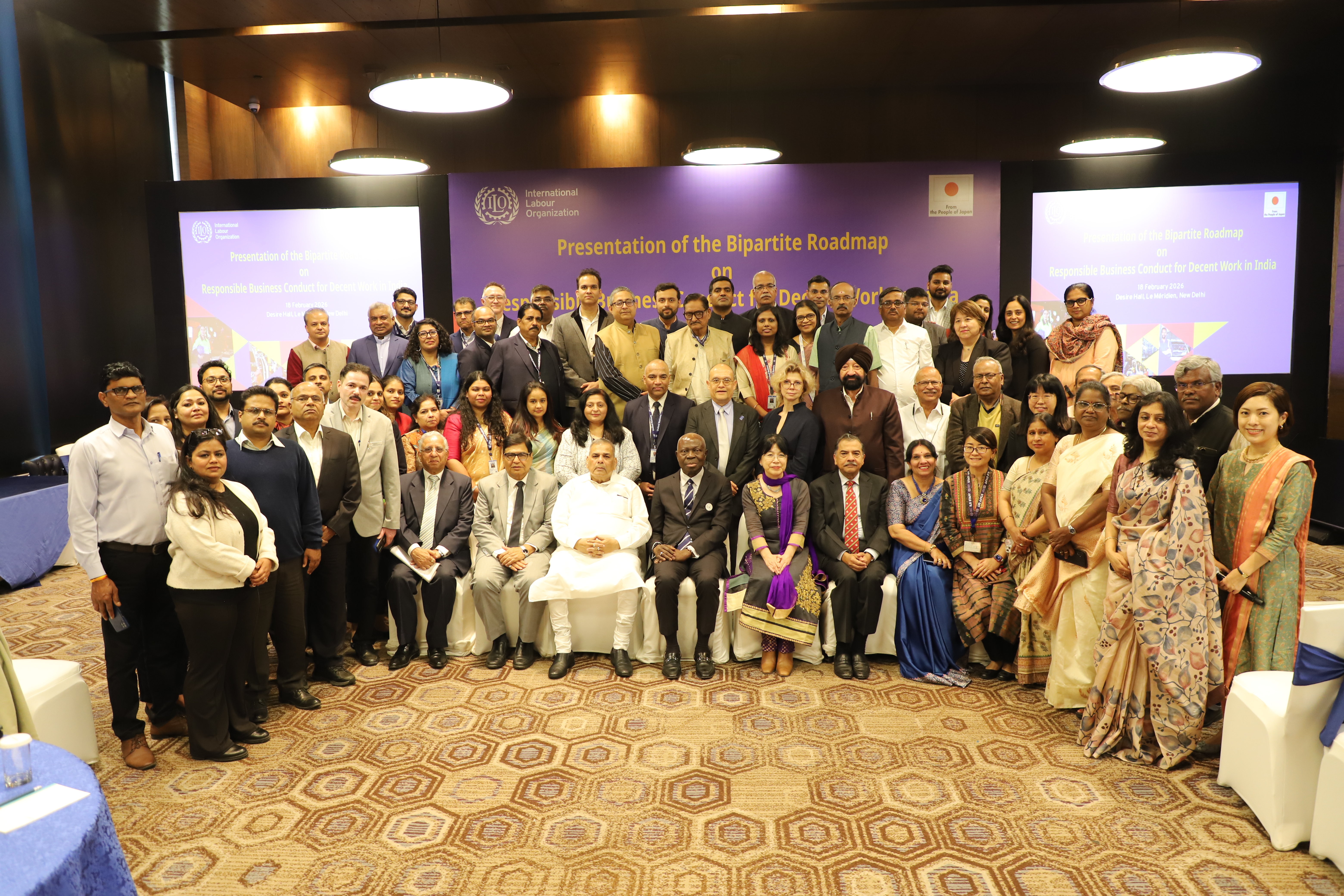
India’s Employers and Workers Present Bipartite Roadmap to Advance Responsible Business Conduct

New Delhi, Feb 20th: Employers’ and workers’ organizations in India marked a significant milestone in advancing Responsible Business Conduct (RBC) for decent work with the presentation of a Bipartite Roadmap, in the presence of International Labour Organization (ILO) Director-General, Gilbert F. Houngbo. 

The Bipartite Roadmap is the outcome of a structured year-long process of engagement between employers’ and workers’ organizations. It outlines shared priorities and joint actions to promote RBC across enterprises, including MSMEs, with a focus on fair employment practices, occupational safety and health, non-discrimination, social protection, green and digital transitions and strengthened social dialogue mechanisms, among others. 

The event saw representatives of employers and workers jointly present the roadmap, highlighting the importance of collaboration in advancing decent work, strengthening industrial relations and aligning national frameworks with international labour standards. 

ILO Director-General Gilbert F. Houngbo said: “The steps taken here in India contribute to the global movement by demonstrating how dialogue between employers and workers can identify shared priorities and translate them into practical cooperation”. 

He added,”Responsible Business Conduct for decent work contributes to respecting and enabling the core labour rights at work, strengthening industrial relations and meaningful social dialogue, and supporting sustainable development and inclusive growth. This aligns closely with the vision of the Global Coalition for Social Justice.” 

The event, held at Le Méridien, New Delhi, underscored the shared commitment of social partners to strengthen labour standards, foster social dialogue and promote sustainable and responsible business practices across enterprises and their supply chains. The roadmap highlights how employers’ and workers’ organizations will engage in capacity-building initiatives, dialogues and policy advocacy to operationalise RBC principles and enhance workplace cooperation. 

Michiko Miyamoto, Director of the Decent Work Team for South Asia and Country Office for India, ILO, said: “This roadmap marks the beginning of a journey built on joint prioritization and collaboration between employers’ and workers’ organizations and reflects the trust that they have built through sustained dialogue. It provides a practical framework for joint action. Through this bipartite cooperation on Responsible Business Conduct for decent work, India has showcased how dialogue can enable collaborative solutions to complex challenges and encourage businesses to engage in responsible business practices.” 

The roadmap was developed under the ILO programme “Building Responsible Value Chains in Asia through the Promotion of Decent Work in Business Operations”, supported by the Government of Japan. Key milestones included consultations with trade unions and employer organizations in 2025, leading to the development of a roadmap for action based on common priorities. The joint roadmap was launched on 29 January 2026. Six employers’ organizations and six workers’ organizations have already committed to taking action under the roadmap, with more expected to join this collaborative initiative.

Circle Awards shine spotlight on business partners driving long-term growth

Ras Al Khaimah, Feb 20: Circle Awards 2026 placed long-term partnership at the centre of recognition, honouring the individuals and organisations whose sustained contribution continues to shape the business community at Ras Al Khaimah Economic Zone (RAKEZ). As a flagship annual celebration, the Circle is rooted in the principles of consistency, credibility, and shared standards, standing as a symbol of enduring collaboration and meaningful growth across the economic zone.

The event recognises partners whose performance, integrity, and long-term commitment directly influence the economic zone’s growth trajectory, going beyond short-term targets to deliver lasting value to investors.

The 2026 edition of the awards reflected on key achievements recorded across the RAKEZ community in 2025, a year that delivered record-breaking results in both company formation and visa issuance, further reinforcing the economic zone’s position as one of the most sought-after business destinations in the UAE. The event also looked ahead to the year to come, signalling priorities and initiatives that will shape the next phase of growth across the RAKEZ ecosystem.

Close to 300 service providers and agents were recognised across a wide range of categories, including Compliance, Growth, Long-Lasting Contribution, Loyalty, Newcomer, Partner of the Year, Service & Renewal, Value Creation, and Volume Performance.

Today, RAKEZ is home to nearly 40,000 active companies and is supported by an international network of more than 1,200 active agents, reflecting the scale and global reach of its business community.

Commenting on the occasion, RAKEZ Group CEO Ramy Jallad said: “Circle Awards is designed to recognise partners whose contribution extends beyond short-term results. At RAKEZ, progress is built on consistency and credibility, and on partners who uphold the standards that investors expect. Through their professionalism, integrity, and market relationships, our partners play a vital role in strengthening confidence in the RAKEZ ecosystem. As we look ahead, it is these enduring relationships that will continue to shape our growth and direction.”

Stressing on the significance of the event, RAKEZ Chief Commercial Officer Anas Hijjawi, said, “Circle Awards represent more than recognition; they reflect the strength of the relationships we build and nurture throughout the year. Our partners are instrumental in translating RAKEZ’s value proposition into tangible results in the market. By working closely with our agent network and service providers, we ensure that investors experience consistency, responsiveness, and clarity at every touchpoint. This success is a shared achievement.”

The event also underscored RAKEZ’s focus on enabling sustainable commercial outcomes, with shared insights on strengthening investor engagement, improving cash flow performance, accelerating sales cycles, and introducing enhanced rewards aimed at supporting long-term business growth. Looking ahead to 2026, the economic zone’s objective is to further empower its partners by helping them maximise revenue opportunities, increase transaction volumes, and deliver higher levels of customer satisfaction across every stage of the investor journey.

Circle Awards reflect RAKEZ’s commitment to recognising partners who contribute to the ecosystem’s long-term resilience, credibility, and continued growth.

​ULI India launches its Education Portfolio to bridge industry-academia gap in the built environment

Feb 20: The Urban Land Institute India (ULI India), the India chapter of the global non-profit and the oldest, largest network of cross-disciplinary land use experts, has announced the launch of its Education portfolio – strategic initiatives designed to bridge the gap between academia, industry, and the future of urban development. Globally, ULI plays an important role in the education sector: bringing academia and industry together to produce strong graduates who are prepared to meet demands of the industry. For this, ULI has developed education focussed products like the ULI Hines Student Competition, Case Studies, Internships, Mentorship, UrbanPlan and on-demand learning courses on its Knowledge Finder.

As urban centers in India grapple with rapid population growth, environmental concerns, and the pressing need for sustainable infrastructure, ULI India recognizes the critical importance of preparing young leaders to tackle these challenges. In the Indian context, the planned educational initiatives seek to foster collaboration between leading educational institutions, industry professionals, and corporate partners, thereby empowering the next generation of urban leaders – urban planners, architects, designers and entrepreneurs, by equipping them with the knowledge and skills needed to build sustainable, inclusive cities across India and globally.

ULI India’s Education portfolio is spearheaded by Education Co-Chairs, Chhavi Lal, Principal at Perkins Eastman, and Manas Rath, Founder of LEAP Cities and Mumbai Donut CoLAB, and supported by the organisation’s National Executive Committee. Their leadership ensures that ULI India’s educational initiatives are aligned with global best practices and respond to India’s unique urban challenges.

The organisation is already in discussions with leading institutions in key urban centers like Mumbai, Delhi, Bangalore, Pune, Hyderabad, and Chennai. These cities, which represent key hubs for urban growth in India, will serve as focal points for ULI India’s efforts to nurture the next generation of urban professionals.

Speaking on behalf of the ULI India leadership, Education Co-Chair, Manas Rath, said,

“The Education portfolio aims to create a network of professionals capable of addressing India’s urban challenges, from decarbonization and housing attainability to sustainable urban design”, with Chhavi Lal adding, “Through our initiatives, we aim to build capacity at all levels, from students to professionals to government, to strengthen local capability while drawing on global perspectives.”

In the build up to the ULI India Annual Conference 2026 on 26th Feb 2026 in Mumbai, ULI India will host a full-day education program, featuring UrbanPlan and a closed door Education Roundtable on 24th February 2026 with senior representatives from top institutions, including RICS School of Built Environment, Amity University, CEPT University, Sir JJ College of Architecture, NICMAR, and ULI members and practitioners in attendance. The conversation will focus on practical pathways to strengthen industry-academia collaboration, including internships, case-based learning, curriculum relevance, and improving student readiness for professional practice.

Manasvini Hariharan, Executive Director of ULI India, said,

“Education is the mission priority we have chosen to focus on because that is where the capability gap is most visible. India needs stronger platforms for knowledge exchange, practical training, and leadership development to meet the scale and complexity of its urban transition.”

The conference will also present a Projects Showcase featuring 12 transformative urban projects from across the country, with ULI’s Founding Partners and Annual Sponsors leading from the front, demonstrating the best practices in design, sustainability, and urban impact. These projects will serve as a significant resource for students, educators, and professionals, providing real-world insights into the future of India’s cities.

Tourism Western Australia unveils second iteration of Walking On A Dream

Feb 20: Tourism Western Australia unveiled the second iteration of ‘Walking On A Dream’, its immersive global tourism brand that celebrates the state’s spellbinding landscapes, vibrant culture and creative talent.

 The campaign captures WA as a place where vast deserts glow beneath endless skies, coral reefs shimmer in turquoise seas, and ancient landscapes tell stories that stretch back millennia.

 Filmed across iconic locations, including Ningaloo Reef, Margaret River, Rottnest Island, Perth, and the ancient beauty of Mirima National Park in the Kimberley, the cinematic series brings WA’s dreamlike spirit to life through five 30-second destination vignettes and a 60-second film.

 \At its heart is the reimagining of Empire of The Sun’s hit song Walking On A Dream, overseen by WA–raised frontman Luke Steele, and performed by the West Australian Symphony Orchestra (WASO) Aboriginal artist and Karajarri man Billy-Jo Shoveller.

 “Walking On A Dream has always been about a sense of wonder and escape,” said Steele. Working with Billy-Jo and WASO to create this new version was magical—it feels like WA itself, magical and otherworldly.”

Billy-Jo Shoveller said the collaboration was deeply personal and reflects his passion for sharing the Kimberley’s spirit with the world.

“I’m proud to be part of this campaign as a Karajarri man, working with Luke Steele on ‘Walking On A Dream’ gave me a chance to bring some of my culture and connection to Country into the project— WA is a special place, and it feels good to help show that to people everywhere.”

 Starring Nyikina man Nelson Baker and emerging actor Angelica Blazeska, both of whom are Western Australian Academy of Performing Arts alumni, the films blurs the line between reality and reverie, celebrating Western Australia as a place where culture, creativity and nature are deeply connected.

Developed alongside Traditional Owners and WA’s Aboriginal tourism sector, the campaign celebrates culture, Country and connection. The campaign rolls out from February 2026 across key global markets.

 First launched by Tourism WA in 2022, Walking on A Dream has played a key role in driving Western Australia’s tourism recovery, with WA welcoming just over one million international visitors in the year ending October 2025, surpassing the previous record of 996,000 international visitors set in 2019.

Crude Oil Caught Between Political Deadline and Tight Spare Capacity

Oil markets are currently moving within a repricing framework to keep pace with geopolitical risks. Setting a time window of 10 to 15 days to reach an agreement on the Iranian nuclear program has created what can be described as a time-compressed risk window, which is an important point from a pricing and price-action perspective. The market is not dealing only with the probability of escalation and its continuation, but with a timeline that could shift the scene from political pressure to a field development within a relatively short period, especially given that military assets are already present in the Gulf. This time factor in itself justifies the move in prices to their highest in several months.

Price action indicates that Brent crude is not moving in a vacuum. It shows a transition since the January low near 60 dollars, where we see a sequence of higher highs and higher lows, reflecting a shift in investor behavior from selling rallies to buying dips. The return of price to test the 71 to 72 dollar range, a supply zone that previously formed a ceiling, suggests that consolidation below it is characterised by relatively lower volatility compared to prior rejection waves, pointing to an absorption of available demand. A break of this area would reflect a shift from a temporary risk premium to a broader repricing of the range, and the path toward 80 dollars per barrel appears to be a realistic target should geopolitical tensions evolve further.

The fundamental angle is more complex as the Gulf region represents around one third of global crude supply, a high geographic concentration of risk. A broad disruption could affect flows exceeding 15 million barrels per day in a severe scenario. On the other hand, data has shown Saudi exports declining to around 7 million barrels per day, a relatively low level compared to previous periods, implying available spare capacity to compensate for supply shortages.

Logistically, Saudi Arabia possesses important elements of flexibility. Ras Tanura port is capable of handling around 6 million barrels per day, and the East–West pipeline transports approximately 5 million barrels per day to Red Sea ports, reducing reliance on the Strait of Hormuz. Yanbu facilities also provide additional export alternatives. However, this flexibility remains within a normal operating framework. In the event of military escalation or a direct threat to routes, insurance risks and shipping costs could become independent pressure factors in their own right, potentially amplifying costs.

As for the world’s ability to absorb a major supply shock, the picture is less reassuring. Strategic reserves held by International Energy Agency countries are estimated at around 1.5 billion barrels but the actual daily draw capacity ranges between 4 and 6 million barrels only. If we assume a disruption exceeding 15 million barrels per day in a worst-case scenario, the theoretical gap between the shock and compensation capacity could reach roughly 9 to 11 million barrels per day before accounting for any spare production capacity. Even the US strategic reserve, at about 380 million barrels, provides relatively limited time coverage in the event of a severe disruption.

Therefore, the market is not currently pricing in a major supply outage, but it recognises that the margin of safety is not wide. The current risk premium reflects a mix of the political time factor, the geographic concentration of supply and the limited effective ability for rapid compensation. In the coming days, the price path will remain contingent on whether tensions shift from negotiated pressure to a material event affecting global oil flows.