Oil Futures Surge Again Following Trump’s Maneuver to Cap Prices

by Samer Hasn, Senior Market Analyst at XS.com

WTI crude oil futures rose more than 4% today, while Brent futures increased by 3.5% after both benchmarks fell over 10% yesterday.

Today’s spike in oil prices probably shows that the market has dismissed President Trump’s recent statements as a strategic move to control energy costs. Even though the President claims there are productive negotiations underway, the reality remains the same: Tehran officially denies any talks, and the core issues of the conflict, including the blockade of the Strait of Hormuz, continue uninterrupted.

President Trump announced a five-day delay on U.S. military strikes against Iranian energy infrastructure following “productive” talks with Iran. In a post on Truth Social, he described the conversations as positive and indicated he had instructed the Pentagon to postpone the strikes, contingent on the success of ongoing discussions.

However, Iranian and Arab officials expressed skepticism about the chances of success for Trump’s diplomatic push, saying it appeared to be an attempt to dampen oil prices, which fell sharply after the president said there was progress in the talks, according to the Wall Street Journal.

Arab officials said they have been talking separately with both sides, but that Iran has set a high bar for ending hostilities that is preventing discussions from gaining traction, according to the Journal.

Iran’s Foreign Ministry earlier denied talks with the U.S., IRIB reported. “Yes, there are initiatives from regional countries to reduce tensions, and our response to all of them is clear: We are not the party that started this war, and all these requests should be referred to Washington.”

President Trump seems unable to find a viable way out of the conflict (assuming he wants to) without achieving a key strategic goal. Whether it’s failing to weaken Iranian missile capabilities, falling short of regime change, or struggling to reopen the Strait of Hormuz, which stayed open before the war, the administration has lacked a clear victory. As a result, the most straightforward approach has been to try market manipulation, aiming to artificially lower oil prices despite little progress on the ground. On the other hand, the Iranian side doesn’t want to end the war before ensuring that it will never happen again, especially during Trump’s term.

Recognizing that the operational situation remains unchanged despite President Trump’s claims, market participants are shifting their focus to the growing risks posed by the next phase of the conflict. Specifically, the potential for broader targeting of regional energy infrastructure poses a threat that could take years to resolve and could keep oil and gas prices high for longer. For instance, recent Iranian strikes on the Ras Laffan complex have already incapacitated 17% of Qatar’s liquefied natural gas export capacity, resulting in an estimated $20 billion in annual revenue losses and creating a long-term supply vacuum for European and Asian markets.

In the absence of a tangible shift in the military landscape, the prevailing market trend is unlikely to reverse. President Trump’s statements currently serve only to delay the inevitable realization of the war’s impact, further distorting natural market mechanisms. While the only factor capable of reversing the upward price trajectory may be the manifestation of the conflict’s broader economic consequences, specifically heightened fears of stagnating global growth or a looming recession.

Today’s S&P Global Flash PMI surveys may provide the first definitive signals regarding the impact of surging energy costs on corporate sentiment and industrial outlooks. Should the data reveal a significant negative surprise or a sharp spike in business pessimism, oil prices could encounter their first authentic and crucial bearish headwind.

AWL Agri Business strengthens flour portfolio, adds ‘Fortune Atta with Multigrains’ for health-conscious households

New Delhi, Mar 24: AWL Agri Business, one of India’s leading integrated agri-business companies, continues to strengthen its presence in the value-added foods segment with the launch of Fortune Atta with Multigrains. Following the successful foray into premium flour market with Fortune Premium Sharbati Atta, it has now expanded into the fast-growing multigrain atta category to cater to consumers seeking healthier everyday staples without altering tradition.

AWL Agri Business strengthens flour portfolio, adds ‘Fortune Atta with Multigrains’ for health-conscious households

 The multigrain atta segment is witnessing strong growth as urban and semi-urban consumers increasingly move beyond conventional chakki atta to nutritionally enhanced alternatives. With higher margins and growing relevance among health-conscious families, the category represents a strategic growth opportunity for AWL Agri Business’ flour portfolio.

Fortune with Multigrains Atta combines the goodness of eight carefully selected grains, including soy, chana, wheat, maize, fenugreek, oats, barley and psyllium husk, offering a balanced nutritional profile. The product, high in protein, fibre and iron, also contains beta-glucan, a known prebiotic that supports gut health. Designed for daily consumption, it enables consumers to add multiple health benefits to regular meals such as rotis, without compromising on taste or texture.

Commenting on the launch, Mukesh Mishra, Joint President, Sales & Marketing from AWL Agri Business said,

“At Fortune, consumer preferences are always at the heart of everything we do. With Fortune Chakki Fresh Atta already ranked No. 2 in India, we have built a strong foundation of trust and quality in the category. As Indian consumers become increasingly conscious about the nutritional quality of everyday foods, ‘Fortune Atta with Multigrains’, will help us to bridge the gap between health and habit by offering a nutritionally superior atta that fits seamlessly into the Indian kitchen. This launch marks an important step in strengthening our premium and value-added flour portfolio and will give an added boost to the category. Known for consistently matching evolving consumer preferences, we are confident that this product will strongly appeal to today’s discerning, health-conscious consumers.”

The product is currently available in a 5-kg consumer pack across leading quick commerce and e-commerce platforms, including Blinkit, Zepto, Amazon and Flipkart in select cities. AWL Agri Business plans to rapidly expand availability across key urban markets such as Delhi, Mumbai, and Bengaluru with a plan to expand to other major cities across India as well. Subsequently, AWL plans to expand distribution through general trade and modern trade channels over the coming months.

As part of its integrated launch strategy, the brand will roll out a new digital video commercial (DVC), supported by social media amplification and influencer collaborations across health and food creators. The campaign aims to drive awareness, encourage trials and build repeat consumption, while positioning ‘Fortune Atta with Multigrains’ as a credible and preferred choice in the premium value-added flour segment.

With this launch, Fortune continues to evolve its flour portfolio in line with changing consumer preferences, reinforcing its commitment to delivering trusted, high-quality food solutions that combine nutrition, taste and everyday convenience.

India’s Heritage Sites Attract Film Shoots and Foreign Tourists, Boosting Eco-Tourism Growth

India’s iconic heritage monuments are emerging as popular destinations for film shootings and international tourism, reflecting a growing blend of culture, cinema, and sustainable travel promotion across the country.

Among the most prominent examples is the UNESCO World Heritage Site Qutub Minar, which has recently witnessed a rise in film shoots, documentary productions, and visual storytelling projects. The monument’s architectural grandeur and historical significance continue to attract filmmakers seeking authentic backdrops for cinema and digital content.

India’s Heritage Sites Attract Film Shoots and Foreign Tourists, Boosting Eco-Tourism Growth

Pic Credit: Pexel

Tourism officials report that increased media exposure and cinematic visibility of heritage sites have contributed to a steady rise in foreign tourist arrivals. International visitors are showing greater interest in India’s cultural landmarks, history, and architectural heritage, with sites like Qutub Minar becoming key attractions in travel itineraries.

Experts say this growing trend is not only boosting tourism but also strengthening India’s cultural and eco-tourism ecosystem. By promoting responsible tourism practices, authorities aim to ensure that heritage conservation goes hand in hand with visitor engagement and economic development.

The government and tourism bodies have been encouraging controlled film shootings at protected monuments under strict guidelines to ensure that heritage structures are not damaged. These initiatives are designed to balance creative use of historical sites with long-term preservation.

Tourism stakeholders believe that film shoots play a major role in global destination branding. When Indian monuments appear in films, documentaries, or digital media, they generate international curiosity and encourage more foreign travelers to explore these destinations in person.

Alongside cultural tourism, eco-tourism efforts are also being strengthened. Sustainable travel practices such as regulated visitor flow, improved cleanliness standards, and awareness campaigns are being implemented at major heritage sites to reduce environmental impact.

Officials note that this integrated approach—combining heritage conservation, film tourism, and eco-friendly travel—supports local employment, boosts small businesses, and enhances India’s global tourism profile.

With rising international interest and increasing creative use of historical sites, India’s heritage monuments are evolving into dynamic cultural spaces that connect history, cinema, and sustainable tourism.

Digital Libraries: Transforming Access to Knowledge in the Modern Era

Libraries are undergoing a major transformation in the digital age, evolving from traditional book storage spaces into dynamic, technology-driven knowledge hubs. Digital libraries are now playing a key role in reshaping how information is accessed, shared, and preserved across education, research, and public learning systems.

Digital Libraries: Transforming Access to Knowledge in the Modern Era

Pic Credit: Pexel

A digital library is a collection of information resources—such as e-books, journals, research papers, audio-visual content, and archives—stored in electronic form and made accessible through computers and mobile devices. The primary aim is to make knowledge available anytime and anywhere, removing the limitations of physical location and opening access to a wider audience.

Experts say the objectives of digital libraries go beyond convenience. They are designed to preserve rare documents, improve information retrieval through advanced search systems, and support education and research by providing instant access to reliable academic content. They also help reduce costs associated with printing, storage, and physical maintenance of books.

In recent years, digital libraries have gained significant importance, especially with the expansion of online education and remote learning. Educational institutions, universities, and government initiatives have increasingly adopted digital platforms to ensure students and researchers can access updated learning materials without barriers.

In India, initiatives such as the National Digital Library of India have made millions of academic resources available to students across the country. Similarly, universities and public library systems are integrating digital catalogues and e-learning tools to enhance accessibility and improve learning outcomes.

Globally, institutions like the World Digital Library and academic databases such as JSTOR have expanded access to historical documents, research papers, and scholarly publications, supporting global knowledge exchange.

Digital libraries also play a crucial role in bridging the information gap between urban and rural learners. With the help of internet connectivity and mobile technology, students in remote areas can now access the same educational resources as those in major cities.

The rise of mobile applications such as Kindle has further simplified access to digital books and reading materials, making learning more flexible and personalized.

However, experts also point out challenges such as the digital divide, limited internet access in rural areas, and the need for digital literacy training. Addressing these issues is essential to ensure equal and effective use of digital library systems.

Overall, digital libraries represent a major step forward in modern education systems. By combining technology with knowledge sharing, they are helping build a more accessible, efficient, and inclusive learning environment for the future.

Middle East conflict to have limited near-term impact on Southeast Asia power markets, but raises long-term energy security risks

LONDON/HOUSTON/SINGAPORE, 24 March 2026 – Southeast Asia’s power markets are showing resilience to the ongoing Middle East conflict, but the crisis is reinforcing energy security as a central pillar of long-term power planning across the region. While regulated pricing and long-term LNG contracts are expected to shield most markets from severe near-term price shocks, the disruption is likely to accelerate a reassessment of generation strategies, according to the latest analysis from Wood Mackenzie. 

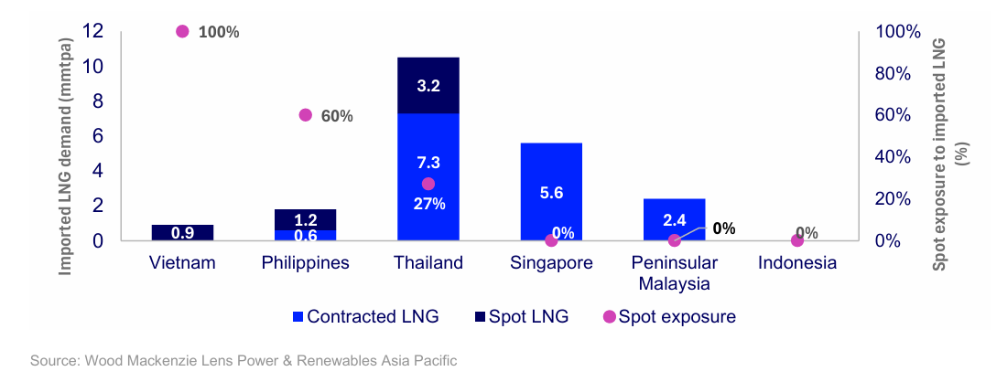
Imported LNG demand for power sector in Southeast Aisa and exposure to spot LNG in 2025 

Middle East conflict to have limited near-term impact on Southeast Asia power markets, but raises long-term energy security risks

“While Southeast Asia is relatively insulated from immediate price shocks, the current crisis is a clear reminder of the region’s structural exposure to global fuel markets,” said Yanqi Cao, senior analyst, Asia Pacific power and renewable research at Wood Mackenzie. “Energy security is moving back to the top of the agenda, and this will have lasting implications for how power systems evolve in the region.” 

Short-term impacts manageable, with uneven exposure 

Rising gas and LNG prices are expected to feed into Southeast Asian power prices through Q2 2026, though impacts will remain manageable and vary significantly across markets. 

Singapore and the Philippines are likely to experience the earliest effects. Singapore’s wholesale electricity prices have increased by around 20% in the third week of March compared to pre-conflict levels, while prices in the Philippines are following similar trend over the same period. In both markets, price caps are expected to limit the impact on end consumers. 

Elsewhere, regulatory mechanisms and subsidies will delay or dampen price increases. According to Wood Mackenzie, Thailand’s fuel tariff adjustment is not expected until May, while in Peninsular Malaysia, the impact is estimated at around a 1% increase in total power bills. Vietnam’s exposure remains limited, with gas accounting for just 9% of its power mix, and Indonesia’s fully subsidised tariff structure is expected to shield consumers from near-term changes. 

Limited flexibility constrains fuel switching 

If elevated fuel prices persist, most Southeast Asian markets will have limited ability to switch away from gas and LNG. 

Vietnam and Indonesia may partially offset higher gas costs through increased coal generation and power imports. However, Singapore and Thailand where gas and LNG account for approximately 85% and 65% of generation capacity, respectively have more limited short-term alternatives. Malaysia and the Philippines also retain coal capacity, but plants are already operating near maximum utilisation levels. 

Energy security concerns to accelerate structural shifts 

Prolonged market disruption is likely to accelerate policy and investment shifts across the region, particularly in nuclear power and firmed renewable energy. 

All six markets analysed have announced nuclear ambitions for 2030 – 2037, ranging from 1.2 GW in the Philippines to 4.0 – 6.4 GW in Vietnam. While these targets face execution challenges, heightened energy security concerns could drive renewed policy focus. 

Firmed renewables combining wind and solar with battery storage are also emerging as a more scalable near-term solution. Policy momentum is building across the region, including higher tariff caps for hybrid projects in Vietnam, battery requirements for new renewables in the Philippines, storage auctions in Malaysia, and ambitious solar-plus-storage targets in Indonesia. Singapore is also advancing plans to import up to 6 GW of low-carbon electricity by 2035. 

“Southeast Asia’s power markets are relatively well insulated from immediate shocks due to existing contractual and regulatory structures,” concluded Cao. “However, sustained volatility in global energy markets is likely to sharpen the region’s focus on energy security, accelerating investment in nuclear and firmed renewable capacity as alternatives to gas-fired generation.” 

India’s Growth Accelerates Across Infrastructure, Economy and Global Standing: PM Narendra Modi

Prime Minister Narendra Modi on Monday said India is witnessing rapid and broad-based growth, driven by major improvements in infrastructure, economic performance, and global influence.

Speaking at an event, he pointed to the sharp expansion of infrastructure as a key sign of progress. India now has over 160 airports, alongside growing road networks, railway modernization, and digital connectivity—developments that are improving mobility and boosting economic activity across regions.

The Prime Minister emphasized that India’s growth is no longer limited to policy announcements but is visible on the ground. He said faster execution of projects and time-bound delivery have helped shift the country from gradual progress to accelerated development.

On the economic front, he noted that India has remained resilient despite global challenges, including geopolitical tensions in regions such as West Asia. Stable growth, rising investments, and continued focus on manufacturing and exports have supported this momentum.

He also highlighted India’s increasing global standing, stating that the country is being seen as a reliable economic partner. According to him, consistent policy decisions and reforms have strengthened confidence among international investors and institutions.

Referring to governance, the Prime Minister said several key decisions taken in recent weeks reflect the government’s intent to maintain growth despite external pressures. He added that India’s ability to move forward even during global uncertainty demonstrates its economic strength.

Earlier in the day, while addressing the Lok Sabha, he also assured that India is prepared to handle global disruptions, including energy challenges, through strategic planning.

Overall, the Prime Minister presented India’s growth as a combination of faster infrastructure development, economic resilience, and rising global credibility, signaling a shift toward sustained, high-speed progress.

India Restores Tax Relief for Exporters as West Asia Crisis Disrupts Trade Routes

Responding to growing disruptions in global trade, the Indian government has reinstated tax incentives for exporters to help them cope with the fallout of the ongoing tensions in West Asia.

The crisis has begun to strain key shipping corridors, forcing rerouting of vessels, increasing transit time, and driving up freight and insurance costs. Exporters across sectors are feeling the pressure, particularly those dependent on time-sensitive deliveries and cost efficiency.

By restoring tax relief measures, the government aims to ease financial stress on exporters and maintain the competitiveness of Indian goods in international markets. The move is expected to improve cash flow for businesses at a time when margins are being squeezed by rising logistics expenses.

Sectors such as textiles, engineering goods, and marine exports are likely to benefit significantly, as they rely heavily on stable and cost-effective supply chains. Smaller exporters, who are more vulnerable to sudden cost spikes, may find the relief especially crucial.

Industry representatives have welcomed the decision, calling it timely and necessary. They note that without such support, prolonged geopolitical instability could slow export momentum and affect order volumes.

Officials indicated that the situation remains under close watch, with the possibility of additional measures if global conditions worsen. The government’s immediate focus, however, is to ensure that exporters remain resilient and trade flows continue despite external challenges.

Restaurants Across India Rework Kitchen Economics Amid LPG Supply Fluctuations

Mumbai, Mar 24: Restaurants across India are re-evaluating kitchen operations and cost structures as LPG supply fluctuations begin to impact consistency in fuel availability, a critical input for daily operations.For an industry that remains heavily dependent on LPG, the situation is bringing sharper attention to fuel dependency, cost control, and the need for viable energy alternatives.According to Chef Payal Thakkar, founder of Munchbox Thali, the immediate impact is being felt at the execution level within kitchens.“The LPG situation has made kitchen operations far more planning intensive. Processes that were earlier seamless now require tighter coordination due to limited and inconsistent availability,” she said.While menu rationalisation has not yet been implemented, restaurants are already adjusting workflows and output to maintain consistency.“At this stage, we are maintaining our menu. However, kitchen productivity is being closely managed to ensure consistency despite constraints on fuel availability,” Thakkar noted.

Restaurants Across India Rework Kitchen Economics Amid LPG Supply Fluctuations

 From a business standpoint, the issue extends beyond individual outlets to the broader food ecosystem. Vendors, central kitchens, and bakery partners are also navigating similar challenges, creating a cascading effect across supply chains.“The situation is not limited to restaurant kitchens. Our vendors and partners are also adapting, which makes coordination across the ecosystem far more critical,” she added.The current environment is also exposing a structural gap in the industry’s energy dependence. While alternatives such as induction based cooking and piped natural gas exist, their adoption remains uneven due to infrastructure access and scalability limitations.“We have started integrating induction cooking in certain sections as an immediate step, and we are in the process of securing a PNG connection for a more stable long term solution,” Thakkar said.

However, industry players note that such transitions are not frictionless. Induction based systems may not fully replace LPG for high volume or certain cooking formats, while PNG access remains inconsistent across locations, especially for standalone and smaller operators.At the same time, fluctuations in LPG availability are also translating into higher procurement costs, adding pressure to already tight operating margins, a key concern for an industry where profitability is closely linked to input cost stability.“The availability is not only inconsistent but also comes at a higher cost, which makes efficient resource management even more important,” Thakkar observed.The situation is prompting restaurant businesses to think beyond short term adjustments and relook at long term operating models. Energy diversification, tighter process control, and infrastructure led solutions are moving from optional to essential for long term viability.

In that sense, the current phase is accelerating a shift the industry has long delayed, moving from single fuel dependence towards more resilient and diversified kitchen energy models.

Odisha’s Debt Climbs to INR 1.26 Lakh Crore; Fresh Borrowing to Push Burden Higher

Odisha’s debt burden is steadily increasing, with the state’s total outstanding liabilities reaching ₹1,25,951 crore by the end of February 2026. The rising debt translates to an average burden of about ₹26,783 per person.

The situation is expected to intensify in the coming financial year, as the state government plans to raise an additional ₹47,800 crore in 2026–27. This could take the total debt stock to nearly ₹1,73,751 crore.

At the same time, the government has outlined repayment commitments. Around ₹22,000 crore will go toward clearing existing loans, while ₹8,200 crore is expected to be spent on interest payments. After accounting for repayments, the net debt is projected to stand at approximately ₹1,51,751 crore.

The data, presented in the State Assembly by Chief Minister Mohan Charan Majhi, highlights the growing reliance on borrowings to support the state’s financial requirements.

In recent years, Odisha has sourced funds from a mix of channels, including central government loans, open market borrowings, and institutions such as NABARD. A similar strategy is planned for 2026–27, with a major share expected from market borrowings, supplemented by institutional and government funding.

The continued rise in debt indicates mounting fiscal pressure, which may further increase the per capita burden in the future, even as the state attempts to balance borrowing with repayments.

Amid Rising Heat, Odisha Halts Outdoor Work During Peak Hours

Bhubaneswar: With temperatures expected to rise sharply in April, increasing the risk of heatstroke, the state Labor and Employees’ State Insurance Department has issued new safety guidelines to protect workers from extreme heat conditions.

According to the directive, outdoor labor activities should be suspended daily between 10:00 AM and 3:00 PM from April 1 to June 15. Instructions have been sent to all Revenue Commissioners, District Collectors, and the State Labor Commissioner to ensure strict implementation.

The advisory applies to all government departments, central government offices operating within the state, private employers, industrial units, commercial establishments, shops, and contractors. Employers have been urged to reschedule working hours to avoid exposing workers to peak daytime heat.

In cases where work is unavoidable—particularly for essential services—employers must take adequate precautionary measures to safeguard workers. These include:

  • Providing sufficient drinking water
  • Arranging shaded rest areas
  • Ensuring access to medical facilities
  • Supplying ORS (Oral Rehydration Solution) packets to workers

Additionally, healthcare institutions such as district hospitals, sub-divisional hospitals, primary health centers, and community health centers have been directed to remain prepared to handle heat-related illnesses.

The move aims to minimize the risk of heatstroke and ensure worker safety during the intense summer months.