Supply Chain Trends 2026: How AI, Total Value, and Global Restructuring Are Redefining Business

Supply Chain Trends 2026: How AI, Total Value, and Global Restructuring Are Redefining Business

Pic Credit: Pexel

Global supply chains are entering a defining phase in 2026—one shaped not just by efficiency and cost control, but by intelligence, adaptability, and long-term value creation. What was once considered a behind-the-scenes operational function has now become one of the most strategic pillars of modern business.

From manufacturing to retail, healthcare to technology, supply chains are no longer just about moving goods from point A to point B. They are now deeply integrated systems that influence competitiveness, customer experience, sustainability, and even national economic strength.

In this evolving environment, companies are being forced to rethink how supply chains are designed, managed, and measured.

From Resilience to Total Value Thinking

For much of the past decade, supply chain strategy revolved around one central idea: resilience. Businesses focused on surviving disruptions—whether caused by pandemics, geopolitical tensions, or logistics breakdowns.

However, in 2026, a more advanced concept is taking center stage: Total Value creation.

This approach expands supply chain thinking beyond risk management. Instead of simply preventing failure, companies are now optimizing for multiple outcomes at once:

  • Stronger customer experience
  • Higher operational efficiency
  • Sustainable cost structures
  • Long-term enterprise growth

In this model, supply chains are no longer passive support systems. They actively contribute to revenue generation, brand trust, and market expansion.

Organizations that adopt this mindset are beginning to treat supply chains as value engines rather than cost centers.

The Rise of Centralized Global Supply Chain Models

Another major shift is the increasing centralization of supply chain operations under Global Business Services (GBS) structures.

Traditionally, supply chains were fragmented across regions, departments, and business units. This often led to inefficiencies, duplication of effort, and limited visibility.

In 2026, companies are reversing this model by consolidating functions such as procurement, logistics, demand planning, and reporting into centralized systems.

This shift is driven by several advantages:

  • Improved global visibility of operations
  • Standardized decision-making processes
  • Better cost control and governance
  • Faster coordination across markets
  • Easier adoption of automation and AI tools

Centralization also enables organizations to build integrated digital command centers that track supply chains in real time, improving both speed and accuracy in decision-making.

Artificial Intelligence Becomes the Core Infrastructure

Artificial intelligence is no longer an experimental add-on in supply chains—it is becoming core infrastructure.

In 2026, AI is embedded across multiple stages of supply chain operations, including forecasting demand, managing inventory, optimizing logistics routes, and identifying risks before they escalate.

What makes this shift significant is the move toward connected intelligence. Instead of isolated AI tools, companies are building systems where data flows seamlessly across procurement, finance, operations, sustainability, and customer service.

This integration allows supply chains to function more like intelligent ecosystems rather than disconnected processes.

As a result, decisions that once took days can now be made in real time with higher accuracy and lower risk.

Agentic AI Transforms Procurement

One of the most transformative developments is the rise of Agentic AI in procurement and sourcing functions.

Unlike traditional AI systems that provide recommendations, agentic systems can execute tasks independently within predefined rules.

These systems are now capable of:

  • Evaluating and ranking suppliers
  • Managing tender and RFP processes
  • Monitoring supplier risk continuously
  • Automating contract lifecycle management
  • Triggering renewals and onboarding workflows
  • Supporting negotiation strategies based on historical data

This shift significantly reduces manual workload while improving compliance, transparency, and speed.

Procurement is evolving from a human-heavy administrative function into a hybrid system where humans focus on strategy and AI handles execution.

New Metrics for a Complex Supply Chain World

As supply chains become more advanced, traditional performance indicators are no longer sufficient.

Metrics such as cost per unit or on-time delivery still matter, but they are now part of a much broader measurement framework.

In 2026, organizations are increasingly tracking:

1. Real-Time Visibility
How quickly disruptions are detected and resolved using live data.

2. Resilience and Recovery
How fast supply chains recover after shocks and how flexible sourcing networks are.

3. AI Effectiveness
Accuracy of forecasting models and automation success rates.

4. Digital Twin Performance
How closely virtual simulations match real-world outcomes.

5. Human–Machine Collaboration
How effectively employees and AI systems work together.

6. Risk and Cybersecurity
Supplier risk exposure, incident response time, and system security strength.

7. ESG Performance
Carbon emissions across the supply chain, sustainable sourcing rates, and supplier compliance.

These metrics reflect a shift toward measuring supply chains not just by output, but by intelligence, sustainability, and adaptability.

Global Trade Volatility Continues to Shape Strategy

Despite technological progress, global supply chains remain exposed to external pressures.

Geopolitical tensions, tariff changes, and trade restrictions continue to disrupt sourcing strategies and cost structures. Businesses can no longer assume stable global trade conditions.

In response, companies are:

  • Diversifying supplier bases across multiple regions
  • Moving production closer to key consumer markets
  • Increasing buffer inventory in critical categories
  • Using scenario-planning tools to model risk outcomes

Digital simulation platforms now play a crucial role in helping businesses understand how policy shifts or disruptions could impact operations in real time.

Agility Becomes the Defining Competitive Advantage

In this new era, the most successful supply chains are not necessarily the largest or cheapest—they are the most agile.

Agility means the ability to:

  • Switch suppliers quickly
  • Adjust production locations dynamically
  • Reroute logistics in real time
  • Respond instantly to changes in demand

This flexibility allows companies to absorb shocks without losing efficiency or customer trust.

Agility is no longer optional—it is a core requirement for survival and growth.

Conclusion: The Future of Intelligent Supply Chains

The supply chain of 2026 represents a fundamental shift in how global business operates. It is no longer a linear process but a dynamic, interconnected system driven by data, automation, and strategic value creation.

Companies that embrace AI, centralization, advanced analytics, and flexible sourcing models will be better positioned to navigate uncertainty and capture new opportunities.

In the end, the future belongs to supply chains that are not only efficient and resilient—but intelligent, adaptive, and deeply aligned with business strategy and global economic change.


realme Expands 16 Series Lineup with Upcoming realme 16 5G, Introducing India’s First Selfie Mirror Phone

realme Expands 16 Series Lineup with Upcoming realme 16 5G, Introducing  India’s First Selfie Mirror Phone

New Delhi, Mar 23: realme, the most popular smartphone brand among Indian youth, is gearing up to add another standout device to its powerful 16 Series lineup with the launch of the realme 16 5G. Bringing a fresh twist to smartphone imaging, the device introduces India’s first Selfie Mirror Phone, redefining how users capture themselves, their squad, and every moment in between.

Inspired by the philosophy “Twist it. Own it. Trend it.”, the realme 16 5G introduces a uniquely intuitive way to own your frame. Its innovative selfie mirror allows users to preview their shots in real time, enabling sharper, more detailed, and instantly social‑ready images, all with just a simple twist of the phone.

Staying true to its design philosophy, the realme 16 5G comes with an elegant air design that feels effortlessly light, perfectly gleaming, and instantly boosts your confidence. With its sleek and premium finish, the smartphone fits comfortably in the hand, giving users a sense of ease and style with every touch. The realme 16 5G is crafted with such thoughtful precision that it feels as if the whole universe fits right in your hands.

With the introduction of the realme 16 5Grealme continues to strengthen its 16 Series portfolio, bringing meaningful innovation to the forefront. The device stands as a testament to realme’s vision of empowering young users with new camera and design, making smartphone ownership an altogether new and elevated experience.

The realme 16 5G will be launching soon in India. Stay tuned for more details on availability and specifications. Stay tuned, and for more information For more information, visit realme.com, X (Twitter), Facebook, and YouTube.

How India’s PLI Scheme Is Transforming Businesses and Strengthening the Economy

India’s manufacturing sector is stepping into a new era—one that goes beyond incremental growth and focuses on long-term transformation. At the heart of this shift is the Production Linked Incentive Scheme (PLI), a policy designed to turn India into a global manufacturing powerhouse.

While headlines often focus on investment figures and production milestones, the deeper impact of the PLI scheme lies in how it is reshaping business confidence, unlocking new opportunities, and strengthening the country’s economic backbone.

What Is the PLI Scheme and Why It Matters

The PLI scheme is a performance-based incentive program that rewards companies for increasing production within India. Simply put, the more a company manufactures, the greater the incentive it receives.

This approach has changed the way businesses think about India—not just as a consumer market, but as a competitive manufacturing destination.

How the PLI Scheme Is Helping Businesses Grow

For businesses, the PLI scheme acts as a powerful growth engine.

By directly linking incentives to output, it encourages companies to expand operations, invest in new facilities, and adopt modern technologies. This has led to:

  • Larger manufacturing capacities
  • Faster adoption of automation and innovation
  • Improved efficiency and product quality

For large enterprises, it reduces the financial risk of scaling up. For MSMEs, it creates opportunities to become suppliers and partners in expanding industrial ecosystems.

The result is a more dynamic and interconnected business environment where growth is both supported and sustained.

Improving Global Competitiveness

Indian manufacturers have long faced challenges competing with established global hubs due to cost pressures and supply chain inefficiencies.

The PLI scheme addresses these gaps by:

  • Promoting domestic production of critical components
  • Reducing dependency on imports
  • Enabling economies of scale

This shift is helping Indian industries become more competitive—not only in pricing but also in quality and reliability. Sectors such as electronics, pharmaceuticals, and automotive manufacturing are already seeing strong global traction.

Empowering MSMEs and Strengthening Supply Chains

Micro, small, and medium enterprises (MSMEs) are the backbone of India’s industrial ecosystem. While they may not always be direct beneficiaries of incentives, they play a crucial role in supporting larger manufacturers.

Through the PLI ecosystem, MSMEs gain:

  • Stable demand from large companies
  • Access to better technology and processes
  • Opportunities to scale and integrate into global supply chains

This creates a ripple effect where growth at the top strengthens the entire industrial base.

Driving Job Creation and Economic Activity

One of the most significant impacts of the PLI scheme is employment generation.

As manufacturing expands, it creates jobs across multiple levels—from factory workers and engineers to logistics and service professionals. These jobs increase household incomes, which in turn boosts consumer spending.

Higher consumption fuels demand across industries, creating a cycle of growth that supports the broader economy.

Boosting FDI and Global Investor Confidence

India is increasingly becoming a preferred destination for global manufacturers looking to diversify supply chains.

With supportive policies and incentives under the PLI scheme, foreign direct investment is on the rise. Investors are not just entering the market—they are building long-term manufacturing capabilities.

This brings added advantages such as:

  • Technology transfer
  • Improved production standards
  • Stronger global integration

Over time, this strengthens India’s position in international trade and manufacturing networks.

Reducing Import Dependence

A major economic benefit of the PLI scheme is its role in import substitution.

By encouraging local manufacturing of products like electronics, solar equipment, and telecom components, India is:

  • Reducing its import bill
  • Improving trade balance
  • Building economic resilience

In an uncertain global environment, this self-reliance is becoming increasingly important.

Aligned with India’s Long-Term Vision

The PLI scheme supports the broader vision of Atmanirbhar Bharat—building a self-reliant yet globally competitive economy.

The long-term objective is to significantly increase the contribution of manufacturing to India’s GDP and create a strong, sustainable industrial ecosystem.

Challenges to Overcome

While the opportunities are immense, businesses must also address key challenges:

  • Bridging skill gaps in the workforce
  • Strengthening infrastructure and logistics
  • Maintaining global quality benchmarks

Sustained success will depend on how effectively these challenges are managed.

Conclusion: A Defining Moment for India’s Economy

The PLI scheme is more than just a policy initiative—it represents a shift in India’s economic strategy.

It empowers businesses to scale, encourages innovation, and creates millions of job opportunities. At the same time, it strengthens the economy by attracting investment, boosting exports, and reducing import dependence.

As the scheme continues to evolve, it is laying the foundation for a stronger, more resilient India—one that is ready to compete and lead on the global stage.

Smart Materials, Strong Nation: India’s Push into Technical Textiles and Specialty Chemicals

How Technical Textiles Are Reshaping India’s Future: Innovation, Policy, and a $350 Billion Vision

Smart Materials, Strong Nation: India’s Push into Technical Textiles and Specialty Chemicals

Pic Credit: Pexel

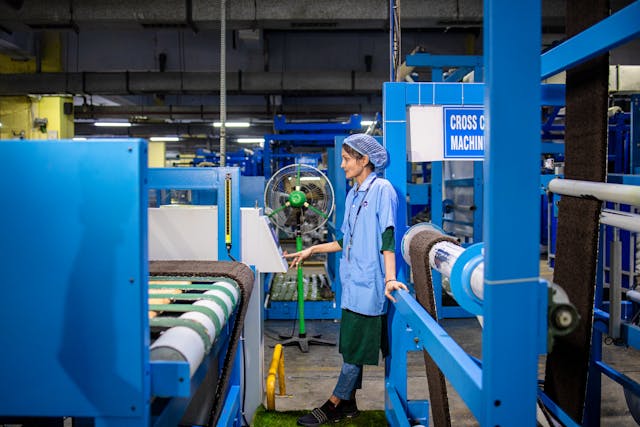
Walk into a modern hospital, step inside an electric vehicle, or drive along a newly built highway—chances are, you are surrounded by materials you never notice but cannot live without. These are technical textiles: high-performance fabrics engineered not for how they look, but for what they do.

Once considered a niche segment, technical textiles have moved to the center of global industrial innovation. Designed for strength, safety, durability, and specialized functionality, they are now essential across sectors like healthcare, mobility, infrastructure, and defense. As industries evolve, so does the demand for smarter materials—and this is where technical textiles, supported by advanced specialty chemicals, are making a lasting impact.

Globally, the sector is on a strong growth trajectory, expected to cross USD 324 billion by the end of the decade. But what makes this story particularly compelling is India’s rapid emergence as a serious contender in this space.

Understanding Technical Textiles: Beyond Fabric

At its core, technical textiles are problem-solving materials. Unlike traditional textiles that focus on comfort or fashion, these fabrics are engineered to perform under demanding conditions.

Think of seat belts that can withstand extreme force, surgical gowns that prevent infection, or geotextiles that hold together entire road structures. These are not just fabrics—they are enablers of safety, efficiency, and innovation.

From antimicrobial medical wear to fire-resistant suits and sensor-enabled wearable technology, technical textiles are quietly transforming everyday life.

India’s Strategic Push: Policy Meets Opportunity

Recognizing the transformative potential of this sector, the Ministry of Textiles, Government of India has taken a proactive role in building a future-ready textile ecosystem. Rather than focusing solely on volume, the government is prioritizing value—encouraging innovation, sustainability, and skill development.

This shift reflects a broader ambition: to position India not just as a manufacturing hub, but as a global leader in advanced materials.

Key Initiatives Powering the Transformation

India’s textile growth story is being actively shaped by a series of well-structured government programs:

National Technical Textiles Mission (NTTM)

The National Technical Textiles Mission is at the heart of India’s push into high-performance textiles. It promotes research, supports startups, and encourages the development of specialized applications in sectors like agriculture and healthcare. Just as importantly, it focuses on reducing dependence on imported machinery by supporting indigenous innovation.

PM MITRA Parks: Building Scale and Efficiency

Through the PM Mega Integrated Textile Region and Apparel Parks initiative, India is creating large, integrated textile hubs. These parks bring together the entire value chain—from raw material processing to finished goods—within a single ecosystem. The result is lower costs, faster production cycles, and greater global competitiveness.

Samarth Scheme: Investing in People

No industry can grow without skilled talent. The Samarth Scheme addresses this by training a new generation of workers equipped to handle modern textile technologies. It is a crucial step in ensuring that innovation on paper translates into impact on the ground.

Boosting Research and Advanced Materials

The government is also investing in research projects focused on next-generation materials—ranging from sustainable geotextiles to smart wearables. These efforts are helping Indian institutions move beyond manufacturing into innovation-led growth.

Integrated Wool Development Programme (IWDP)

The Integrated Wool Development Programme strengthens one of India’s traditional sectors by improving quality, productivity, and supply chain efficiency, ensuring it remains relevant in a modern context.

The Bigger Picture: A Self-Reliant Textile Economy

All these initiatives align with the vision of Atmanirbhar Bharat—building a self-reliant, globally competitive India. The goal is not just growth, but transformation: creating a $350 billion textile ecosystem by 2030 that blends scale with sophistication.

This approach is particularly significant in a world where supply chains are shifting and sustainability is no longer optional. By investing in eco-friendly chemicals, water-efficient processing, and biodegradable materials, India is aligning itself with global expectations while building long-term resilience.

Why Technical Textiles Matter More Than Ever

What makes technical textiles so powerful is their invisibility. They operate behind the scenes—reinforcing roads, protecting lives, improving medical outcomes, and enabling next-generation technologies.

As industries move toward automation, electrification, and sustainability, the demand for high-performance materials will only grow. Technical textiles, supported by innovations in specialty chemicals, are uniquely positioned to meet this demand.

Looking Ahead: From Potential to Leadership

India stands at a pivotal moment. With strong policy backing, a growing innovation ecosystem, and a large manufacturing base, the country has all the ingredients needed to lead in this space.

The journey, however, is not just about scaling up—it’s about moving up the value chain. Success will depend on continued investment in research, stronger industry-academia collaboration, and a relentless focus on quality and sustainability.

If executed well, India’s technical textiles sector will not just support industrial growth—it will define it.

G Square Acquires 5-Acre Former TVS Land in Madurai in INR 167 Crore Deal Led by Bala Ramajayam

India, Mar 23: The real estate developers have acquired land in Madurai for their new premium plotted project, with prices starting from ₹15,990 per sq. ft.

G Square Group, a Chennai-based real estate firm, has purchased a five-acre heritage land parcel in the temple city of Madurai from legacy owners of the TVS Group.

Project Details

The total land parcel is valued at ₹167 crore. Of the five acres, 1.63 acres is earmarked for residential development, two acres for commercial use, and the remainder is designated for infrastructure and common amenities, as per a company release.

The project includes 55 plots including 50 residential and 5 commercial units catering to both end users and long-term investors. Residential plots are priced starting at ₹15,990 per sq. ft., translating to ₹69.64 lakh per cent onwards. Commercial plots start at ₹25,990 per sq. ft., with pricing beginning at ₹1.13 crore per cent, according to the release.

The development has been named G Square Temple View Square (TVS) a premium plotted project in Periyar, Madurai reflecting the land’s historical ties to TV Sundaram Iyengar and the TVS legacy.

transcosmos announces the results of the Global Online Shopping Survey in 8 Cities 2026

AI “searches,” humans “assist” purchases — Shanghai, Bangkok, and Mumbai lead in AI-driven shopping

Tokyo, Japan, Mar 23: transcosmos has conducted its proprietary “Global Online Shopping Trends Survey 2026,” summarizing the latest trends in AI-powered shopping using generative AI. The survey compares how consumers in eight major cities utilize AI at each stage of the shopping process—from product discovery and comparison to final purchase—and where they still prefer human support.

■Survey overview Method: Global online research panel, multilingual questionnaire (respective local language options available) Regions: Japan (Tokyo), Shanghai (China), Seoul (South Korea), India (Mumbai), Thailand (Bangkok), Jakarta (Indonesia), London (U.K.), Los Angeles (U.S.) Respondents: Men and women aged between 15 and 49 years old that have used online shopping (made a purchase) in the past 1 year Samples: 320 x 8 cities = Total 2,560 Period: January 28 – Feburary 10, 2026 Research agency: Cross Marketing, Inc. Note: Due to stricter personal data protection regulations, respondents under 20 were excluded in Bangkok.

■Key findings 1. AI Shopping Usage: Over 80% use AI search in Mumbai, Bangkok & Shanghai — strong intention to use across all cities ●When asked about their use of generative AI search services (ChatGPT, Perplexity, DeepSeek, etc.) across shopping stages—product discovery, Q&A/troubleshooting, and purchase—all cities showed the highest usage in “product discovery.” In Mumbai, Bangkok, and Shanghai, usage reached 70–90% across all stages, while Tokyo remained low at around 20% even for product searches. ●Future intention to use AI (those who “have used and want to continue using” + “have not used but want to try”) exceeded current usage in all cities.In Mumbai, Bangkok, and Shanghai, over 80% expressed willingness to use generative AI search services at every stage. Even in Tokyo, nearly half showed positive interest.

Chart 1. Usage of Generative AI Search Services (e.g., ChatGPT, Perplexity, DeepSeek) for AI Shopping: Current Usage (Left) and Future Intent to Use (Right) (%)
━ Product Search ━ Q&A/troubleshooting ━ Purchase

2.Consumers prefer AI for searching, but still value human help for troubleshooting and purchases ●Regarding preferences between “AI assistance” and “human assistance,” AI overwhelmingly dominated the product discovery stage in every city except Tokyo. For troubleshooting and purchasing, demand for human support remained strong, resulting in a more balanced preference between AI and humans. ●Cities with higher AI usage—Mumbai, Bangkok, and Shanghai—also showed stronger preference for AI across all stages. For product discovery, AI preference reached 85% in Mumbai and Bangkok, and 80% in Shanghai, while Tokyo remained at 47%.

Chart 2. Preference for Customer Assistance in the Online Shopping Process (AI Support vs. Human Support Ratio) (%)

■ AI Support ■ Human Support

3.Social commerce usage continues to grow in all cities — Key channels are TikTok/Douyin and Instagram ●Over the past year, more than half of consumers in all cities except Tokyo used social commerce. Usage reached 95% in Bangkok, 93% in Shanghai, and 90% in Jakarta. Social commerce usage increased year-over-year in all cities, including London and Los Angeles. Tokyo remains low at 24%. ●The most widely used platform was TikTok/Douyin, particularly in cities where TikTok Shop is available (Shanghai, Bangkok, Jakarta, London, Los Angeles). In Mumbai and Seoul, Instagram and YouTube were most used, showing that short-video and image-driven social commerce remains strong even where TikTok/TikTok Shop is restricted.

Chart 3. Percentage of Social Commerce Users (2025–2026 Comparison) (%)

Chart 4. Main Platforms Used for Social Commerce Purchases (%)

Masayuki Hagiwara, Analyst, Global Business Division at transcosmos inc., commented: “The survey indicates that generative AI is significantly transforming online shopping behavior. AI is becoming the new gateway for product discovery, especially in Asian cities, where AI search and social media–driven purchasing behavior are rapidly expanding. Meanwhile, consumers still rely on human support for troubleshooting and final purchase decisions, showing a distinct division of roles between AI and humans. Additionally, platforms like TikTok are evolving from information sources to full-fledged shopping channels, diversifying entry points to e-commerce. In the future, the key to competitive advantage in e-commerce will lie in how companies integrate AI search, social commerce, and human support.”

transcosmos is a trademark or registered trademark of transcosmos inc. in Japan and other countries. Other company names and product or service names used here are trademarks or registered trademarks of respective companies.


Vincom Retail Hosts Global Partner Forum, Unveils Vision for Experiential Retail Growth

Ho Chi Minh City, March 23 (BNP): Vincom Retail hosted a large-scale partner forum titled “The New Era – Partnering to Shape the Future” in Ho Chi Minh City on March 20, bringing together over 500 domestic and international stakeholders to discuss emerging trends and collaboration opportunities in Vietnam’s evolving retail landscape.

The event saw participation from leading global and regional brands including UNIQLO, MUJI, Decathlon, Pandora, Starbucks, and Central Retail, alongside prominent Vietnamese brands and retail chains.

Vincom Retail Hosts Global Partner Forum, Unveils Vision for Experiential Retail Growth

At the forum, Vincom Retail highlighted the rapid transformation of shopping malls into integrated lifestyle destinations, reflecting a shift in consumer preferences toward immersive experiences and social engagement rather than conventional purchasing.

Outlining its strategic roadmap to 2030, the company said it aims to position itself as a leading retail real estate developer and operator in Asia. The strategy focuses on building world-class destinations, expanding its international footprint, and fostering a global ecosystem that enables new retail concepts to enter Vietnam.

As part of its product strategy, Vincom Retail is advancing two core models: Vincom Mega Mall, positioned as a large-scale “shoppertainment” hub, and Vincom Collection, a “retail-tainment” concept integrating shopping with tourism through experiences centred on play, discovery, dining, and relaxation.

Vincom Retail Hosts Global Partner Forum, Unveils Vision for Experiential Retail Growth

A key highlight was the introduction of a “super destination” model at Vinhomes Green Paradise Can Gio, which will feature 15 next-generation retail complexes. Initial projects such as Vincom Mega Mall Can Gio and Vincom Collection Cosmo Bay are expected to deliver immersive, sustainable, and nature-integrated experiences.

Industry leaders at the event underscored the importance of partnerships in driving growth. Representatives from brands such as Dookki noted that collaboration with Vincom Retail has enabled expansion and innovation in Vietnam’s competitive F&B sector.

Vincom Retail also reiterated its role as a key platform connecting international and domestic brands, supporting market entry, scaling operations, and enhancing customer experiences.

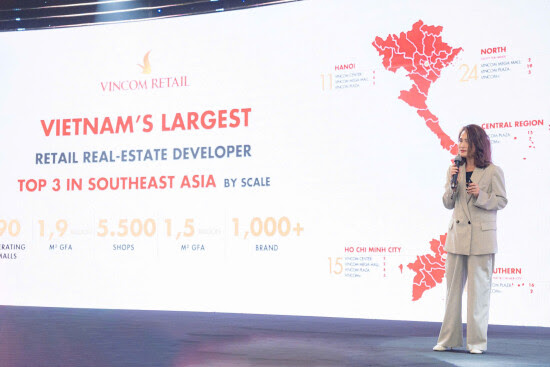
Currently, Vincom Retail operates 90 shopping malls across Vietnam with a total gross leasable area of 1.9 million square metres, along with 5,500 shophouses spanning 31 provinces and cities. The company partners with more than 1,000 brands and ranks among Southeast Asia’s largest retail real estate developers by scale.

The forum concluded with a focus on strengthening long-term partnerships and leveraging emerging “super destinations” such as Can Gio to drive the next phase of Vietnam’s retail growth.

Mayo Clinic Researchers Use Milk-Derived Nanoparticles to Target Aggressive Bile Duct Cancer

Rochester, Minn, Mar 23: Researchers at Mayo Clinic have unveiled a promising new approach to treating Cholangiocarcinoma, a rare and aggressive cancer with limited treatment options. The study, published in JHEP Reports, highlights an innovative targeted therapy using milk-derived nanoparticles to deliver gene-silencing treatment directly to cancer cells.

The research introduces a novel method that combines precision targeting with genetic therapy. By leveraging small interfering RNA (siRNA), scientists aim to selectively switch off cancer-driving genes while minimizing damage to healthy tissue.

“One significant challenge in treating these cancers is the lack of therapies targeting specific genetic alterations,” said Dr. Rory Smoot, surgical oncologist at Mayo Clinic and senior author of the study. “Our approach is designed to silence those genes in cancer cells while sparing normal cells.”

To achieve this, the multidisciplinary team screened an extensive library of DNA molecules using a technique known as Cell-SELEX. This led to the discovery of a specialized DNA strand, or aptamer, capable of selectively binding to cholangiocarcinoma cells, acting as a molecular “homing device.

The aptamer was then attached to biocompatible, milk-derived nanoparticles developed by Dr. Tushar Patel. These tiny fat-based particles were loaded with siRNA and engineered to deliver the gene therapy precisely to tumor cells.

“We demonstrated that this system can deliver gene-silencing therapy directly into cancer cells,” said Dr. Brandon Wilbanks, first author of the study. “This resulted in reduced tumor growth and increased cancer cell death, without harming surrounding healthy tissue.”

While the findings are currently preclinical, the technology has been patented by Mayo Clinic. Researchers are now focused on refining gene targets and evaluating the approach across multiple forms of cholangiocarcinoma, with the long-term goal of developing personalized gene therapies for patients.

“These advances offer real hope,” added Dr. Smoot. “They suggest a future where safer, more targeted treatments can be developed for patients with very limited options.”

The research was supported by multiple Mayo Clinic programs and collaborating institutions, reinforcing ongoing efforts to advance precision medicine and innovative cancer therapies.


MTR Karunadu Swada – Ugadi Special Edition Brings Karnataka’s Culinary Heritage Alive

MTR Karunadu Swada – Ugadi Special Edition Brings Karnataka’s Culinary Heritage Alive

Bengaluru, Mar 23: Celebrating the spirit of Ugadi and Karnataka’s rich culinary legacy, MTR successfully hosted MTR Karunadu SwadaUgadi Special Edition, a one-day food festival at Sahakar Nagar Ground in Bengaluru. Organised in collaboration with the team of Hon’ble Minister for Revenue, Shri Krishna Byre Gowda, the festival brought food lovers, families, and cultural enthusiasts together for an immersive journey through the state’s diverse food traditions.

Curated to mark the auspicious festival of UgadiMTR Karunadu Swada showcased over 40+ authentic regional dishes and traditional sweets from across North Karnataka, South Karnataka, and Kodagu. The festival served as a vibrant platform to rediscover Karnataka’s culinary roots from the bold, rustic flavours of the north to the refined, rich offerings of the south and the distinctive tastes of Kodagu.

Adding to the experience were MTR’s iconic favourites, including the legendary Rava Idli and Masala Dosa, reinforcing the brand’s deep connection with Karnataka’s food heritage. The festival created a lively, community-driven atmosphere, where age-old recipes, cultural narratives, and festive celebrations came together seamlessly.

The event witnessed an enthusiastic turnout, with over 2200+ attendees across multiple time slots throughout the day, reflecting the growing consumer interest in authentic, regional food experiences.

Speaking on the occasion, Mr. Sunay Bhasin, CEO, MTR, said: “Karnataka is where MTR was born, and MTR Karunadu Swada is a heartfelt tribute to our roots. Ugadi marks new beginnings for us, and there is no more meaningful way to celebrate than by honouring the flavours that have defined our land for generations. With MTR Karunadu Swada, we are bringing Karnataka’s rich regional cuisine to the forefront, reconnecting consumers with the tastes, traditions and cultural pride of our Karnataka.”

Karunadu Swada continues to be a testament to MTR’s commitment to preserving regional cuisines while making them relevant for today’s consumers. By bringing together authentic recipes, local culinary talent, and community experiences, the festival strengthens MTR’s role as a custodian of Karnataka’s rich food culture.

PM Pays Tribute to Bhagat Singh, Rajguru, Sukhdev on Shaheed Diwas

New Delhi, March 23 (BNP): Prime Minister Narendra Modi on Sunday paid tributes to freedom fighters Bhagat Singh, Shivaram Rajguru, and Sukhdev Thapar on the occasion of Shaheed Diwas, remembering their supreme sacrifice for the nation.

In a message, the Prime Minister said the martyrdom of the three revolutionaries remains deeply etched in the collective memory of the country, highlighting their extraordinary courage and unwavering commitment to India’s freedom at a young age.

He noted that undeterred by colonial rule, they chose the path of sacrifice with conviction, placing the nation above their own lives. Their ideals of justice, patriotism and fearless resistance continue to inspire generations, he added.

In a post on X, Modi said, “Today, we bow in reverence to the brave sons of Bharat Mata, Bhagat Singh, Rajguru and Sukhdev. Their martyrdom for the nation remains etched in our collective memory.”

He further said that their courage and commitment to the freedom struggle continue to ignite the spirit of countless Indians.