Odisha Captain Steers Indian Vessel to Safety Amid Gulf Tensions

Bolangir: In a story of courage and composure at sea, an Indian gas carrier has safely returned home from the volatile waters of the Middle East, bringing recognition to its Odia captain, Dheeraj Agrawal.

Captain Agrawal, who hails from Kantabanji in Odisha’s Bolangir district, has earned widespread praise for his steady leadership during a period of heightened geopolitical tension. His efforts ensured the safe navigation of the vessel and the well-being of its crew under extremely challenging circumstances.

The Indian gas carrier Nandadevi, along with another vessel, Shivalik, had been caught in a tense situation in the strategically crucial Strait of Hormuz. The region witnessed escalating tensions involving Iran, Israel, and the United States, leading to restrictions on maritime movement and creating uncertainty for ships operating in the area.

Reports indicate that the narrow sea corridor saw intense military activity, including missile strikes and aerial surveillance, making navigation both risky and unpredictable. Despite these conditions, the Nandadevi successfully charted a safe course and reached the Gujarat coast earlier this week, following diplomatic efforts that helped ease restrictions in the region.

The vessel had set sail from a port in the United Arab Emirates nearly two weeks earlier, before becoming entangled in the unfolding crisis. Throughout the ordeal, Captain Agrawal’s calm decision-making and professional expertise played a crucial role in ensuring that the crew remained safe and the vessel stayed on course.

Back home in Kantabanji, his return has been met with pride and celebration. Family members and well-wishers gathered to welcome the achievement, while messages of appreciation have poured in from across the state.

Born to late Ramesh Chhapadia and Santosh Devi, Agrawal completed his schooling in his hometown before pursuing nautical science in Mumbai. Since 2017, he has been actively serving in India’s maritime sector and is currently associated with the Shipping Corporation of India.

His mother expressed immense joy at his safe return, describing it as a moment of pride for the family. There is also growing excitement over the possibility of him being recognised at the national level, with reports suggesting he may meet Prime Minister Narendra Modi in the near future.

Captain Agrawal’s journey stands as a reminder of the resilience and professionalism of Indian seafarers, who often operate far from the spotlight, navigating not just oceans but also moments of global uncertainty.

BITS Pilani Alumnus Agendra Kumar Establishes INR 2.5 Crore Fellowship Fund for Interdisciplinary Research

Mar 19: Birla Institute of Technology and Science (BITS) Pilani, an Institution of Eminence, announced the donation of ₹2.5 crore by Agendra Kumar, Managing Director of Esri India and distinguished alumnus from the Class of 1977, to establish the Agendra Kumar Fellowships Fund. The fund will support 10 PhD scholars over the next decade, further strengthening BITS Pilani’s commitment to advancing research and nurturing future innovators.

BITS Pilani Alumnus Agendra Kumar Establishes INR 2.5 Crore Fellowship Fund for Interdisciplinary Research

 The fellowship fund will support purposive and relevant research to advance high-impact through technology and engineering solutions to critical problems in climate & sustainability, healthcare & biotech, cybersecurity for critical infrastructure, geospatial intelligence, water resource management, cancer research using computational methods, and precision agriculture, where BITS researchers can make a meaningful difference.

Prof. V. Ramgopal Rao, Vice-Chancellor, BITS Pilani, said,

“Agendra Kumar’s commitment reflects the finest tradition of BITSian giving – purposeful, forward-looking, and rooted in a genuine desire to see the institution grow. PhD research is the engine of long-term innovation, and fellowships of this kind make it possible for talented young researchers to pursue ideas that matter without being held back by financial constraints. We are deeply grateful to him for this generous and well-considered gift.”

Agendra Kumar said,

 “BITS Pilani gave me the foundation to build a career at the intersection of technology and real-world impact. Esri India’s work in geospatial intelligence has shown me, time and again, how research translates into solutions that change lives on the ground and create value. Through these fellowships, I hope to enable the next generation of researchers at BITS to do exactly that – work on problems that matter for India and do so with the freedom and support to think boldly.”

Prof. Arya Kumar, Dean Alumni Relations, said,

 “Agendra Kumar’s fellowship fund is a natural extension of his belief in the power of research to address real challenges. The focus areas he has chosen align closely with the nation’s most urgent priorities, and we are confident that the scholars supported through this fund will go on to make significant contributions by coming out with innovative solutions to critical problems.”

The research shall be undertaken in the aegis of School of Interdisciplinary Research and Entrepreneurship (SIRE) at BITS Pilani, which offers multiple programs for students and faculty. Most notable program is PhD DRIVE, which provides innovators an opportunity to earn a PhD Degree, while working on their deep-tech and deep-science venture.

BITS Pilani has set up a USD 100 million Endowment Fund to support its transformation into a globally ranked institution. The fund is aimed at strengthening faculty excellence, research capacity, student scholarships, and global engagement, with strong support from its worldwide alumni community.

Basantika Navaratra Begins at Maa Samaleswari Temple Amid Devotion and Festive Fervour

Thousands of devotees throng Bargarh shrine as rituals mark the spiritual onset of spring festival

Bargarh: The spiritually significant festival of Basantika Navaratra commenced with great devotion at the revered Maa Samaleswari Temple on Thursday, coinciding with the auspicious occasion of Chaitra Amavasya.

From early morning, a large number of devotees gathered at the temple to offer prayers and seek blessings, marking the beginning of the nine-day festival that celebrates the divine feminine energy in its various forms. The temple परिसर resonated with chants, conch sounds, and devotional hymns, creating an atmosphere of deep spirituality.

On the first day, the presiding deity was adorned as Goddess Shailaputri, the first manifestation of Goddess Durga, symbolising strength and new beginnings. Devotees offered flowers, coconuts, and prayers, while priests conducted elaborate rituals following traditional customs.

A key highlight of the opening day was the lighting of the Akhand Dipa (eternal flame), which will continue to burn throughout the Navaratra period. This sacred ritual signifies uninterrupted devotion and the continuous presence of divine energy.

Rituals and Significance

Basantika Navaratra, observed during the Chaitra month, marks the transition into spring and is considered a time of renewal and spiritual awakening. The festival begins with Kalash Sthapana, invoking the goddess, followed by daily worship of the nine forms of Durga. Devotees often observe fasts, participate in bhajans, and engage in prayers seeking strength, prosperity, and protection.

Each day of the festival carries its own significance, with the goddess worshipped in different forms, reflecting various aspects of power, wisdom, and compassion.

Recent Developments and Arrangements

This year, temple authorities and local administration have made special arrangements to manage the surge in footfall. Crowd management systems, queue arrangements, and safety measures have been strengthened to ensure a smooth and safe darshan experience for devotees.

The festival holds deep cultural and religious importance across western Odisha, where Maa Samaleswari is worshipped as a form of the universal mother. The temple, historically associated with the region’s spiritual identity, continues to attract thousands of श्रद्धालु during major festivals like Navaratra. ()

As Basantika Navaratra progresses, the temple is expected to witness even larger gatherings, with devotees coming together in faith, tradition, and celebration—making it not just a religious observance, but a vibrant expression of community and devotion.

Odisha to Launch Statewide Census Drive from April 16

Bhubaneswar, March 19: Odisha is set to launch the first phase of its census exercise from April 16, marking a significant step in updating the state’s demographic data. The process will continue until May 15, covering households across the state through a structured and coordinated effort.

During this phase, trained enumerators and supervisors will visit homes to collect detailed information. Officials have emphasized that the exercise will be carried out systematically to ensure accuracy and comprehensive coverage.

Ahead of the field survey, residents will have the option to participate through a self-enumeration process from April 1 to April 15. Using a dedicated online portal, individuals can submit their own details, making the process more convenient and reducing the workload during the physical enumeration phase.

According to Nikhil Pavan Kalyan, Director of the Census Directorate, the initiative combines technology with on-ground efforts to make the census more efficient and accessible. Speaking at a press briefing, he also highlighted efforts to raise public awareness, noting that internationally acclaimed sand artist and Padma Shri awardee Sudarshan Pattnaik has agreed to serve as the brand ambassador for the campaign.

The census operation will be conducted under a well-defined administrative framework. District Collectors and Municipal Commissioners will serve as Principal Census Officers, while Additional District Collectors will take on the role of District Census Officers. At the grassroots level, tahsildars and executive officers of urban local bodies will function as charge officers, overseeing implementation in their respective areas.

The Revenue and Disaster Management Department has been designated as the nodal department for the exercise. In a notable move, primary school teachers will be deployed as enumerators, while high school teachers will act as supervisors, ensuring both manpower availability and accountability.

Enumerators will collect information by asking household heads a set of 33 questions, covering key socio-economic indicators. Officials believe this data will play a crucial role in shaping future policy decisions and development planning.

Looking ahead, authorities have indicated that the second phase of the census is scheduled for February 2027, which will further build on the data collected during this initial phase.

With preparations in full swing, the state administration is calling on citizens to actively participate—either digitally or in person—to ensure the success of this important exercise.

Odisha’s Investment Surge Powers Jobs, Growth, and a Brighter Economic Future


With fresh approvals worth over ₹4,500 crore and a strong policy push, Odisha is turning industrial investment into real opportunities for its people

Odisha is quietly but confidently reshaping its economic narrative. What was once seen primarily as a resource-rich state is now evolving into a dynamic investment hub—where policy intent is translating into real progress on the ground.

This shift is not accidental. It reflects sustained efforts by the state government to create an environment where businesses can invest with ease and confidence. The results are now visible. In a recent development, the Single Window Clearance Authority approved 23 new projects, bringing in investments exceeding ₹4,500 crore. More importantly, these projects are expected to create employment opportunities for over 10,000 people—an outcome that directly impacts families, communities, and local economies.

Behind these numbers lies a deeper story of governance and reform. Odisha’s focus on simplifying procedures and improving transparency has made a tangible difference. The Single Window system, designed to reduce delays and eliminate complexity, signals a shift toward a more responsive and efficient administration. For investors, this means fewer hurdles; for the state, it means faster execution and stronger industrial momentum.

The Odisha Budget reinforces this direction. By prioritizing infrastructure, industrial growth, and skill development, the government is not just encouraging investment—it is preparing the state to sustain it. Roads, logistics networks, and industrial corridors are being strengthened, while parallel investments in education and training aim to ensure that the workforce is ready for new opportunities.

What makes this growth story particularly meaningful is its human dimension. Industrial expansion is often discussed in terms of capital and output, but in Odisha, it is increasingly about livelihoods. Each new project carries the promise of jobs, stability, and upward mobility for thousands of individuals. The emphasis on skill development further ensures that these opportunities are accessible to the local population, creating a more inclusive growth model.

Odisha’s journey is still unfolding, but the direction is clear. The convergence of investment, policy reform, and employment generation is laying the groundwork for a more resilient and diversified economy. As these projects move from approval to implementation, they will not only strengthen industrial capacity but also deepen the state’s social and economic impact.

In many ways, Odisha today represents a model of steady, purposeful progress—where ambition is matched by execution, and growth is measured not just in numbers, but in the lives it touches.


Modis Navnirman Limited Marks Bhoomi Poojan of ‘Rashmi Avenue’ Mixed-Use Project in Mumbai

Mumbai, Mar 19: Modis Navnirman Limited announced the successful Bhoomi Poojan ceremony of its upcoming residential and commercial project, Rashmi Avenue, located at Dahisar (West), Mumbai. The ceremony marks the formal commencement of construction for the thoughtfully planned mixed-use development.

Strategically situated at Village Eksar, Kandarpada, Rashmi Avenue is envisioned as a modern, community-centric development spread across approximately 4,836.25 sq. metres. The project will feature 225 residential apartments, 18 commercial shops, and 1 commercial office, catering to the evolving lifestyle and business needs of the locality.

The redevelopment project will replace the existing structure comprising 119 residential flats and 17 commercial shops, enhancing both the functionality and overall value of the space while contributing to the area’s urban transformation.

With its prime location in Dahisar (West), the development offers excellent connectivity to key parts of Mumbai along with proximity to essential social infrastructure such as schools, healthcare facilities, and commercial hubs, making it an attractive destination for both homebuyers and businesses.

Speaking on the occasion, Mr. Mahek Modi, Whole-Time Director & Chief Financial Officer, said,

 “Rashmi Avenue represents our continued focus on redevelopment-led growth and our commitment to transforming existing communities into modern, future-ready living spaces. The Bhoomi Poojan marks an important step forward, and we remain dedicated to delivering high-quality construction, efficient design, and long-term value for our residents and stakeholders.”

Rashmi Avenue further strengthens Modis Navnirman Limited’s expanding footprint in Mumbai’s redevelopment space and reinforces its vision of creating sustainable, well-planned, and community-driven developments.

AAEON to Showcase Innovative Platforms for Edge AI Security at ISC West 2026

Join AAEON at Booth #33074 at The Venetian Expo, Las Vegas from March 23 – 27, 2026

Taipei, Taiwan – Mar 19:  AAEON, a leading provider of edge AI platforms, will hold product showcases of upcoming products from across multiple platforms at the International Security Conference & Exposition – also known as ISC West.

ISC West is the leading comprehensive and converged security trade event in the United States, expected to host thousands of security and public safety professionals who will have access to over 750 exhibitors and 140 sessions throughout the show. AAEON will present a broad selection of products conducive to bringing edge AI functionality to security applications in areas including road safety, access control, and smart surveillance.

Date: March 23 – 27, 2026

Booth: #33074

Venue: Venetian Expo, 201 Sands Ave, Las Vegas, NV 89169.

AAEON’s live demonstration for the show will be a versatile AI vision monitoring application powered by the UP Xtreme i14. Utilizing the Intel® Core™ Ultra processor platform’s integrated CPU, GPU, and NPU in conjunction with the board’s MIPI camera support, this demonstration illustrates how power-efficient, fully embedded platforms can be used for applications such as access control.

Static displays of AAEON products catering to security applications across multiple vertical markets will also be on show at Booth #33074. Products such as the BOXER-8658AI, powered by NVIDIA Jetson Orin NX and E-Mark compliant for use in vehicles, will be on show to demonstrate how embedded in-vehicle technology can improve road safety through hazard detection. Also on show will be the upcoming BOXER-8741AI, built on NVIDIA Jetson T5000 module, which is positioned for the humanoid robotics market.   

Meanwhile, the new MEX-BTS, featuring Intel® Core™ Series 2 processors (formerly Bartlett Lake), will be on show. Compatible with both MXM 3.1 Type A and Type B GPU cards and able to perform simultaneous inference on up to eight video streams, the System Box PC is a particularly interesting offering from AAEON for smart surveillance and industrial safety monitoring applications.

AAEON will present a variety of new and upcoming products from across its diverse product ranges. Particular highlights include the EPIC-BTS7 from its Embedded Single Board Computers series, the UP Xtreme PTL Edge from its UP Edge System product line, and three new Mini-ITX Motherboards, each equipped with the newest Intel® Core™ Ultra platforms.


Capgemini’s Bio-CNG initiative in India to Support Sustainable Operations

Mumbai, Mar 19th: Capgemini has transitioned its cafeteria kitchens across offices in India from Liquefied Petroleum Gas (LPG) to nature-based BioCNG (biogas), as part of an initiative implemented in 2024 to advance sustainable operationsBioCNG is a renewable fuel produced from organic waste through anaerobic digestion, where biodegradable waste is converted into methane-rich gas that is purified and compressed for use in commercial kitchens. The transition is supported by dedicated gas bank infrastructure, enabling a safe and seamless shift from conventional fuels.

By adopting BioCNG for cooking operations across its campuses, Capgemini is enabling a cleaner and more sustainable energy model for its cafeteria infrastructure. The initiative supports a circular economy approach by converting organic waste into usable energy, while reducing reliance on conventional fossil fuels.

This initiative aligns with Capgemini’s broader environmental commitments and its focus on embedding sustainability into everyday operations. By integrating renewable energy alternatives into campus infrastructure, the company continues to strengthen its efforts towards reducing its carbon footprint and advancing circular economy practices.

Capgemini’s facilities in India operate on 100% renewable energy, reflecting the company’s progress in transitioning its operations toward cleaner energy sources. Capgemini’s Energy Command Center (ECC), a global first initiative implemented in India, is a digital platform that leverages IoT to monitor and optimize energy consumption across campuses in India. Capgemini’s Bengaluru campus became the first corporate campus in India to receive the ‘Net-Zero Energy – Platinum’ certification from the Indian Green Building Council (IGBC) for generating at least as much energy as it consumes. Furthermore, its campuses in Hinjewadi, Talawade, and Airoli have also been awarded the IGBC Net Zero Energy Platinum certification, recognizing their strong energy performance and use of 100% renewable electricity.

US University Boosts Sustainability with 21 Philips ePaper Displays for Energy & Paper Savings

US University Boosts Sustainability with 21 Philips ePaper Displays for Energy & Paper Savings

Leading US university reinforces commitment to sustainability with installation of 21 Philips Tableaux ePaper displays for instant energy and waste paper reductions 

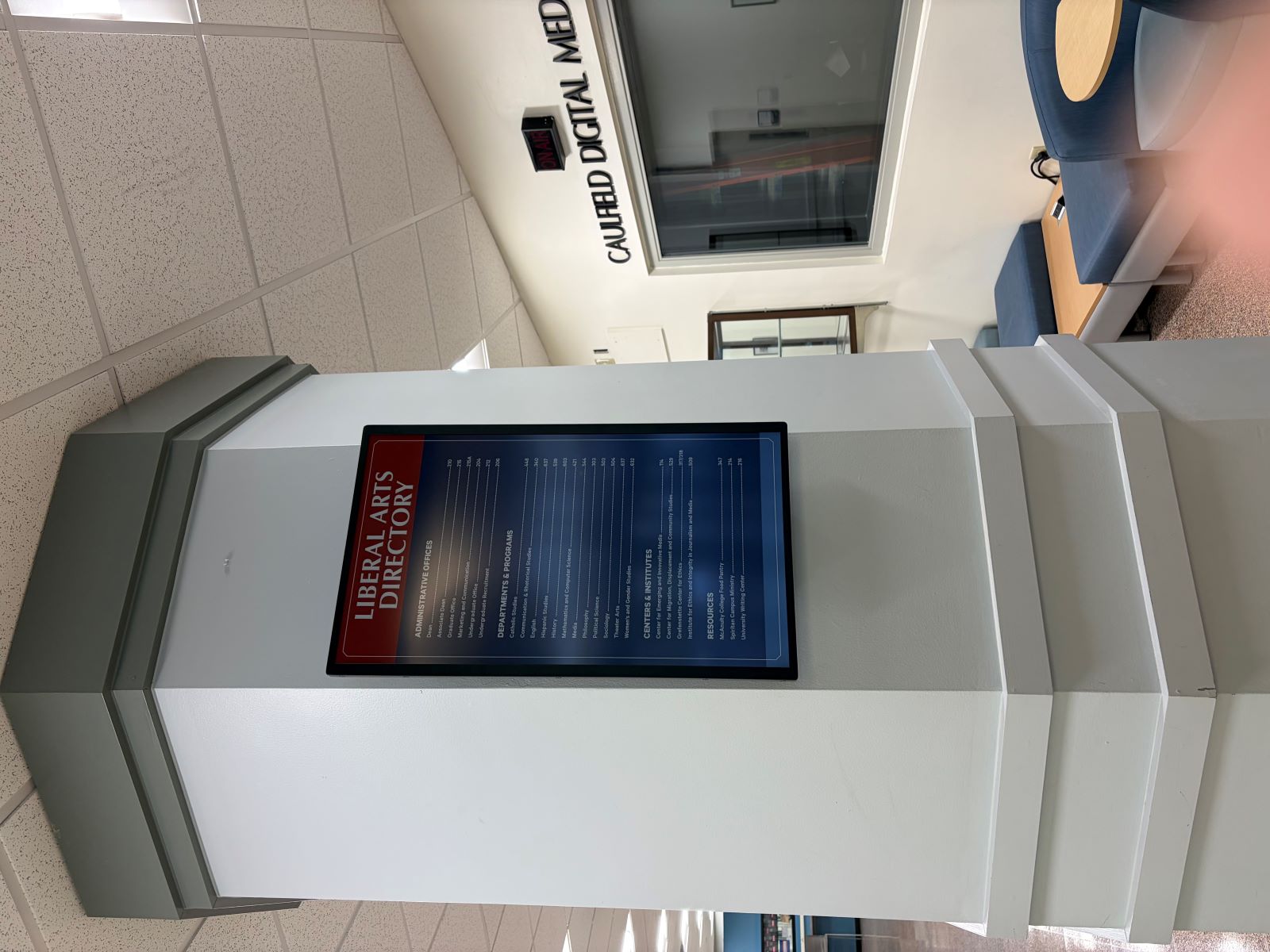
Creating a more sustainable campus: Pittsburgh-based Duquesne University – one of the nation’s top Catholic colleges – turned to PPDS to seize the sustainable and financial benefits of its groundbreaking ‘zero power’ Philips Tableaux ePaper displays, eliminating paper waste while enhancing communications to its 8,000 students. 

Amsterdam, March 2026: PPDS, the exclusive global provider of Philips Professional Displays and complementary solutions, is excited to announce the successful installation of 21 Philips Tableaux ePaper signage displays at Duquesne University, with the range bringing instant energy savings and waste cutting benefits, as well as delivering on a more informed and sustainable campus. 

Founded in 1887, Duquesne is among the top 15% educational institutions in the United States. A top ranked private Catholic university in Pittsburgh, it caters for 8,000 students from 80 countries and over 3,000 faculty and staff. 

As the university continues to experience exponential growth, both in appeal and in size, its scenic 49 acre (198,300 m2) campus overlooking downtown Pittsburgh continues to evolve, with the university placing a growing focus on enabling students with the latest technologies both in and outside of the classrooms. 

Aligned with the United Nations’ Sustainable Development Goals and with a commitment to sustainable ecologies – which saw them recently named on the Princeton Review List of Green Colleges – the team researched the global ePaper market and turned to PPDS to seize the opportunities of the technology to replace the tired paper directories used around its campus. 

Concluding the in depth analysis, Philips Tableaux ePaper displays were selected as the standout choice to achieve the team’s ambitions, with a fleet of 21x 32” 5150 and 25” 4050 Philips Tableaux installed in classrooms, study areas, and hallways. 

As with other installations of Philips Tableaux ePaper displays – most recently inside the Institut Pasteur’s HQ in Paris – the Philips Tableaux range provides Duquesne University with incredible levels of flexibility and adaptability, interchangeable for a wide range of uses – from wayfinding and safety notices, cafeteria menus and event information, and many more. This includes in areas with limited power sources. 

Light in weight and fully portable, Philips Tableaux models used on campus are capable of displaying full colour imagery for days, weeks, months, or even years without using a single kilowatt of energy, only requiring a small amount of electricity (0.0025 kWh for the 25” model) during content changes. 

Instant benefits

Running on an Android SoC, Philips Tableaux displays can be managed and updated remotely via a content management or remote display management system such as Philips Wave or as chosen by the team at Duquesne, content can be updated manually via a USB drive. 

The project has been deemed a major success, and a second rollout phase is set to include Philips Tableaux displays in other buildings around the campus, including the School of Nursing, the School of Liberal Arts, and the College of Medicine. 

Lauren Turin, Director of Classroom Technologies, Duquesne University, commented: “We have eliminated the need for complicated installation, and we are saving on the cost of paper, printing, and time. So, the cost per department is more economical in the long run. When our directories need an update, we use a USB drive with the content and an extension cord for power. The time it takes to update the directory is quicker than the time it takes to walk to the building.” 

PPDS Director of Education, Patrick VanTreese, added: “With sustainability now an important focus for businesses and in education, ePaper has become a real game changer, opening new opportunities to reduce wastage, save on costs, and create new opportunities to communicate. We’re delighted to have supported Duquesne University, delivering on their ambitions with our Philips Tableaux range.” 

To learn more about PPDS, please visit the website here, or contact your local PPDS sales manager.

Credit Monitoring Goes Mainstream: 183 Million Indians Now Self-Monitor Their CIBIL Score

Chandigarh, Mar 19: India is entering a new phase of active and informed credit ownership as credit monitoring becomes increasingly embedded in everyday financial behaviour. What was once largely a reactive, one-time, loan-related activity is now evolving into a regular consumer-led practice and a core part of financial hygiene, according to TransUnion CIBIL’s latest report, CIBIL for Every Indian – Uncovering How India Owned Its Credit Journey in 2025. The report highlights a fundamental shift in India’s credit behaviour from passive awareness to active ownership. Credit monitoring is no longer merely an enabler for borrowing; it has become a tool for self-awareness, discipline, and empowerment.

As of December 2025, the number of Indians who had self-monitored their CIBIL Score rose to 183 million across age groups, following a 27% year-over-year (YoY) increase in consumers monitoring their credit for the first time. This momentum signals a progressively widespread adoption of credit awareness as a core financial habit.

The impact of consumers regularly self-monitoring their CIBIL Score is evident in outcomes. Nearly 45% of monitoring consumers improved their credit score within six months of monitoring. The average CIBIL Score among monitoring consumers stood at 728[1], pointing to a strong alignment between active monitoring and healthier credit profiles. The transformation of credit monitoring from sporadic activity to financial habit has led to enhanced financial outcomes for consumers, with younger borrowers such as Millennials and Gen Z, women, and non-metro regions leading the movement.

Mr. Bhavesh Jain, MD and CEO, TransUnion CIBIL, said:

 “Historically, many consumers interacted with their credit profile only when they needed a product such as a personal loan or a credit card. Today, monitoring is not related merely to a single transaction but is embraced as ongoing financial hygiene. Consumer focus has shifted from a transactional approach towards an asset to build a strong, sustainable credit profile. In effect, India is moving from simply taking credit to truly taking charge. Monitoring is the behaviour that anchors this change, turning the CIBIL Score from a static number into a live indicator of financial health that consumers actively track and improve.”

Non-Metro Regions: India’s Growth Frontier

India’s credit awareness movement is now increasingly shaped by non-metro regions. As of December 2025, around 75% of all monitoring consumers were from non-metro locations, representing a 28% YoY growth in this segment. The trend of rapidly expanding credit awareness beyond major urban centres extends to first-time borrowers, with 78% of New-to-Credit consumers coming from these markets. Non-metros also lead in credit quality, with 73% of prime score (731+) consumers also residing there.

This combination of high participation and strong credit profiles positions non-metros as a key driver in India’s evolving credit landscape. With access barriers diminishing, awareness is becoming a more equitable force for financial opportunity. Non-metros are not just participating; they are leading in both the number of monitoring consumers and the quality of credit profiles.

Gen Z: India’s First Credit-Native Generation

Unlike previous generations who often encountered credit scores later in life, younger borrowers such as Millennials and Gen Z are engaging with financial tools at the outset of their financial journeys. These younger borrowers together account for 77% of all monitoring consumers, reflecting a generation that is more comfortable with data, digital journeys, and self-service tools.

Gen Z is emerging as India’s first truly credit-native generation, demonstrating an inherent understanding and proactive engagement with their financial profiles. Their 1.41x growth in credit monitoring activity significantly outpaced other demographics. As of December 2025, Gen Z consumers constituted 29% of the total monitoring base. This early adoption suggests a generation that is not just experimenting with credit but actively seeking to understand and manage it responsibly from the start.

Gen Z consumers’ proactive monitoring habits are translating into distinct shifts in their borrowing patterns. Post-monitoring, this generation exhibits a strategic approach to credit products. Among self-monitoring Gen Z consumers, gold loan originations rose by 61% YoY, while two-wheeler loans by them in semi-urban and rural areas saw a 23% YoY rise.

This generation is setting a new standard for credit engagement, demonstrating that early awareness coupled with strategic product choices can lead to a more responsible and empowered financial future.

Women: India’s New Credit Vanguard

Women are driving significant shifts in India’s financial landscape. As of December 2025, their engagement with credit monitoring grew at an accelerated pace with a 38% YoY growth in women monitoring their credit scores, compared to a 25% YoY increase among men.

Women now form 21% of all monitoring consumers, up from 19% previously. The growth is particularly strong in non-metro regions which account for 71% of newly self-monitoring women consumers. A substantial 63% of monitoring women maintain a Prime score (731+), underscoring their strong credit health and responsible financial behaviour. These figures collectively position women as a powerful and growing force in India’s credit evolution.

Women are not just accessing credit; their post-monitoring approach shows how their borrowing patterns align with their financial goals and demonstrates a sophisticated understanding of different credit instruments. Gold loan originations grew by 38% among self-monitoring women, signalling a strong preference for secured, flexible credit.

These encouraging trends not only serve women’s individual financial well-being, they are also collectively shaping a more inclusive, robust, and mature credit future for India.

Credit Monitoring as a Movement

Credit monitoring sets off a simple loop of awareness resulting in action followed by visible advantage. Monitoring doesn’t just reflect behaviour; it helps reshape it.

Trends seen among self-monitoring Indians confirm the popularity of gold loans, and their move from being an emergency fallback to becoming a mainstream credit lever. Gold loan originations grew by 25% within three months of monitoring, with a 2x rise in disbursal to Gen Z consumers, and a 26% growth in gold loans to consumers in semi-urban and rural areas.

Similarly, two-wheeler loan originations saw 6% YoY growth within three months of monitoring, including a 23% rise among Gen Z borrowers in smaller towns. Among monitoring consumers, 17% opened a consumption loan within three months of monitoring.

At the heart of this shift is a deeper change in how Indian consumers are engaging with credit. Monitoring is giving them greater visibility into their financial standing and helping them engage with formal credit with more awareness and intent. As this behaviour becomes more widespread, the millions of small, informed decisions along with cumulative and consistent action are adding up over time to shape a more resilient, inclusive, and mature credit ecosystem in India.

Mr. Jain said,

“Credit monitoring is now firmly a mass behaviour. Millions of Indians routinely check their CIBIL Score and Report. This practice is no longer confined to affluent urban centres. Non-metro India is redefining the contours of inclusion, leading both credit adoption and quality.

“Gen Z and Millennials, India’s first credit-native generations, are engaging with credit data early and systematically, and women are stepping into more visible and informed roles in borrowing and credit management. Together, these segments are driving this new credit culture and anchoring a more disciplined, data-driven approach to credit,” he added.

“At TransUnion CIBIL, we are proud of the part we play in ensuring responsible access to credit for every eligible consumer and business. India has seen a quiet but decisive shift in credit behaviour over the last few years towards active, informed credit management. We will continue to support sustainable credit growth and contribute to deepening financial inclusion across segments and geographies,” Mr. Jain concluded.