Odisha’s Investment Surge Powers Jobs, Growth, and a Brighter Economic Future


With fresh approvals worth over ₹4,500 crore and a strong policy push, Odisha is turning industrial investment into real opportunities for its people

Odisha is quietly but confidently reshaping its economic narrative. What was once seen primarily as a resource-rich state is now evolving into a dynamic investment hub—where policy intent is translating into real progress on the ground.

This shift is not accidental. It reflects sustained efforts by the state government to create an environment where businesses can invest with ease and confidence. The results are now visible. In a recent development, the Single Window Clearance Authority approved 23 new projects, bringing in investments exceeding ₹4,500 crore. More importantly, these projects are expected to create employment opportunities for over 10,000 people—an outcome that directly impacts families, communities, and local economies.

Behind these numbers lies a deeper story of governance and reform. Odisha’s focus on simplifying procedures and improving transparency has made a tangible difference. The Single Window system, designed to reduce delays and eliminate complexity, signals a shift toward a more responsive and efficient administration. For investors, this means fewer hurdles; for the state, it means faster execution and stronger industrial momentum.

The Odisha Budget reinforces this direction. By prioritizing infrastructure, industrial growth, and skill development, the government is not just encouraging investment—it is preparing the state to sustain it. Roads, logistics networks, and industrial corridors are being strengthened, while parallel investments in education and training aim to ensure that the workforce is ready for new opportunities.

What makes this growth story particularly meaningful is its human dimension. Industrial expansion is often discussed in terms of capital and output, but in Odisha, it is increasingly about livelihoods. Each new project carries the promise of jobs, stability, and upward mobility for thousands of individuals. The emphasis on skill development further ensures that these opportunities are accessible to the local population, creating a more inclusive growth model.

Odisha’s journey is still unfolding, but the direction is clear. The convergence of investment, policy reform, and employment generation is laying the groundwork for a more resilient and diversified economy. As these projects move from approval to implementation, they will not only strengthen industrial capacity but also deepen the state’s social and economic impact.

In many ways, Odisha today represents a model of steady, purposeful progress—where ambition is matched by execution, and growth is measured not just in numbers, but in the lives it touches.


Modis Navnirman Limited Marks Bhoomi Poojan of ‘Rashmi Avenue’ Mixed-Use Project in Mumbai

Mumbai, Mar 19: Modis Navnirman Limited announced the successful Bhoomi Poojan ceremony of its upcoming residential and commercial project, Rashmi Avenue, located at Dahisar (West), Mumbai. The ceremony marks the formal commencement of construction for the thoughtfully planned mixed-use development.

Strategically situated at Village Eksar, Kandarpada, Rashmi Avenue is envisioned as a modern, community-centric development spread across approximately 4,836.25 sq. metres. The project will feature 225 residential apartments, 18 commercial shops, and 1 commercial office, catering to the evolving lifestyle and business needs of the locality.

The redevelopment project will replace the existing structure comprising 119 residential flats and 17 commercial shops, enhancing both the functionality and overall value of the space while contributing to the area’s urban transformation.

With its prime location in Dahisar (West), the development offers excellent connectivity to key parts of Mumbai along with proximity to essential social infrastructure such as schools, healthcare facilities, and commercial hubs, making it an attractive destination for both homebuyers and businesses.

Speaking on the occasion, Mr. Mahek Modi, Whole-Time Director & Chief Financial Officer, said,

 “Rashmi Avenue represents our continued focus on redevelopment-led growth and our commitment to transforming existing communities into modern, future-ready living spaces. The Bhoomi Poojan marks an important step forward, and we remain dedicated to delivering high-quality construction, efficient design, and long-term value for our residents and stakeholders.”

Rashmi Avenue further strengthens Modis Navnirman Limited’s expanding footprint in Mumbai’s redevelopment space and reinforces its vision of creating sustainable, well-planned, and community-driven developments.

AAEON to Showcase Innovative Platforms for Edge AI Security at ISC West 2026

Join AAEON at Booth #33074 at The Venetian Expo, Las Vegas from March 23 – 27, 2026

Taipei, Taiwan – Mar 19:  AAEON, a leading provider of edge AI platforms, will hold product showcases of upcoming products from across multiple platforms at the International Security Conference & Exposition – also known as ISC West.

ISC West is the leading comprehensive and converged security trade event in the United States, expected to host thousands of security and public safety professionals who will have access to over 750 exhibitors and 140 sessions throughout the show. AAEON will present a broad selection of products conducive to bringing edge AI functionality to security applications in areas including road safety, access control, and smart surveillance.

Date: March 23 – 27, 2026

Booth: #33074

Venue: Venetian Expo, 201 Sands Ave, Las Vegas, NV 89169.

AAEON’s live demonstration for the show will be a versatile AI vision monitoring application powered by the UP Xtreme i14. Utilizing the Intel® Core™ Ultra processor platform’s integrated CPU, GPU, and NPU in conjunction with the board’s MIPI camera support, this demonstration illustrates how power-efficient, fully embedded platforms can be used for applications such as access control.

Static displays of AAEON products catering to security applications across multiple vertical markets will also be on show at Booth #33074. Products such as the BOXER-8658AI, powered by NVIDIA Jetson Orin NX and E-Mark compliant for use in vehicles, will be on show to demonstrate how embedded in-vehicle technology can improve road safety through hazard detection. Also on show will be the upcoming BOXER-8741AI, built on NVIDIA Jetson T5000 module, which is positioned for the humanoid robotics market.   

Meanwhile, the new MEX-BTS, featuring Intel® Core™ Series 2 processors (formerly Bartlett Lake), will be on show. Compatible with both MXM 3.1 Type A and Type B GPU cards and able to perform simultaneous inference on up to eight video streams, the System Box PC is a particularly interesting offering from AAEON for smart surveillance and industrial safety monitoring applications.

AAEON will present a variety of new and upcoming products from across its diverse product ranges. Particular highlights include the EPIC-BTS7 from its Embedded Single Board Computers series, the UP Xtreme PTL Edge from its UP Edge System product line, and three new Mini-ITX Motherboards, each equipped with the newest Intel® Core™ Ultra platforms.


Capgemini’s Bio-CNG initiative in India to Support Sustainable Operations

Mumbai, Mar 19th: Capgemini has transitioned its cafeteria kitchens across offices in India from Liquefied Petroleum Gas (LPG) to nature-based BioCNG (biogas), as part of an initiative implemented in 2024 to advance sustainable operationsBioCNG is a renewable fuel produced from organic waste through anaerobic digestion, where biodegradable waste is converted into methane-rich gas that is purified and compressed for use in commercial kitchens. The transition is supported by dedicated gas bank infrastructure, enabling a safe and seamless shift from conventional fuels.

By adopting BioCNG for cooking operations across its campuses, Capgemini is enabling a cleaner and more sustainable energy model for its cafeteria infrastructure. The initiative supports a circular economy approach by converting organic waste into usable energy, while reducing reliance on conventional fossil fuels.

This initiative aligns with Capgemini’s broader environmental commitments and its focus on embedding sustainability into everyday operations. By integrating renewable energy alternatives into campus infrastructure, the company continues to strengthen its efforts towards reducing its carbon footprint and advancing circular economy practices.

Capgemini’s facilities in India operate on 100% renewable energy, reflecting the company’s progress in transitioning its operations toward cleaner energy sources. Capgemini’s Energy Command Center (ECC), a global first initiative implemented in India, is a digital platform that leverages IoT to monitor and optimize energy consumption across campuses in India. Capgemini’s Bengaluru campus became the first corporate campus in India to receive the ‘Net-Zero Energy – Platinum’ certification from the Indian Green Building Council (IGBC) for generating at least as much energy as it consumes. Furthermore, its campuses in Hinjewadi, Talawade, and Airoli have also been awarded the IGBC Net Zero Energy Platinum certification, recognizing their strong energy performance and use of 100% renewable electricity.

US University Boosts Sustainability with 21 Philips ePaper Displays for Energy & Paper Savings

US University Boosts Sustainability with 21 Philips ePaper Displays for Energy & Paper Savings

Leading US university reinforces commitment to sustainability with installation of 21 Philips Tableaux ePaper displays for instant energy and waste paper reductions 

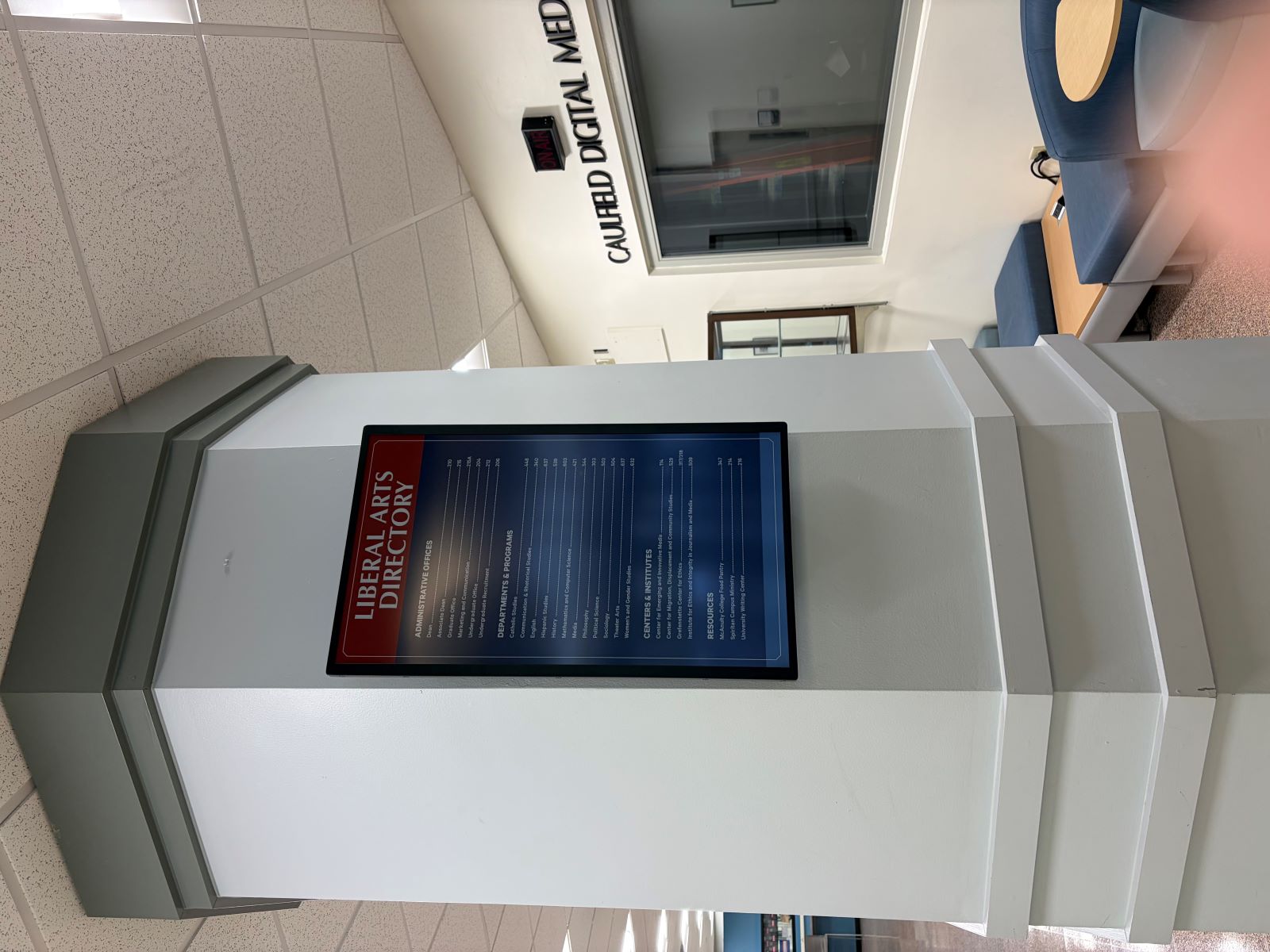
Creating a more sustainable campus: Pittsburgh-based Duquesne University – one of the nation’s top Catholic colleges – turned to PPDS to seize the sustainable and financial benefits of its groundbreaking ‘zero power’ Philips Tableaux ePaper displays, eliminating paper waste while enhancing communications to its 8,000 students. 

Amsterdam, March 2026: PPDS, the exclusive global provider of Philips Professional Displays and complementary solutions, is excited to announce the successful installation of 21 Philips Tableaux ePaper signage displays at Duquesne University, with the range bringing instant energy savings and waste cutting benefits, as well as delivering on a more informed and sustainable campus. 

Founded in 1887, Duquesne is among the top 15% educational institutions in the United States. A top ranked private Catholic university in Pittsburgh, it caters for 8,000 students from 80 countries and over 3,000 faculty and staff. 

As the university continues to experience exponential growth, both in appeal and in size, its scenic 49 acre (198,300 m2) campus overlooking downtown Pittsburgh continues to evolve, with the university placing a growing focus on enabling students with the latest technologies both in and outside of the classrooms. 

Aligned with the United Nations’ Sustainable Development Goals and with a commitment to sustainable ecologies – which saw them recently named on the Princeton Review List of Green Colleges – the team researched the global ePaper market and turned to PPDS to seize the opportunities of the technology to replace the tired paper directories used around its campus. 

Concluding the in depth analysis, Philips Tableaux ePaper displays were selected as the standout choice to achieve the team’s ambitions, with a fleet of 21x 32” 5150 and 25” 4050 Philips Tableaux installed in classrooms, study areas, and hallways. 

As with other installations of Philips Tableaux ePaper displays – most recently inside the Institut Pasteur’s HQ in Paris – the Philips Tableaux range provides Duquesne University with incredible levels of flexibility and adaptability, interchangeable for a wide range of uses – from wayfinding and safety notices, cafeteria menus and event information, and many more. This includes in areas with limited power sources. 

Light in weight and fully portable, Philips Tableaux models used on campus are capable of displaying full colour imagery for days, weeks, months, or even years without using a single kilowatt of energy, only requiring a small amount of electricity (0.0025 kWh for the 25” model) during content changes. 

Instant benefits

Running on an Android SoC, Philips Tableaux displays can be managed and updated remotely via a content management or remote display management system such as Philips Wave or as chosen by the team at Duquesne, content can be updated manually via a USB drive. 

The project has been deemed a major success, and a second rollout phase is set to include Philips Tableaux displays in other buildings around the campus, including the School of Nursing, the School of Liberal Arts, and the College of Medicine. 

Lauren Turin, Director of Classroom Technologies, Duquesne University, commented: “We have eliminated the need for complicated installation, and we are saving on the cost of paper, printing, and time. So, the cost per department is more economical in the long run. When our directories need an update, we use a USB drive with the content and an extension cord for power. The time it takes to update the directory is quicker than the time it takes to walk to the building.” 

PPDS Director of Education, Patrick VanTreese, added: “With sustainability now an important focus for businesses and in education, ePaper has become a real game changer, opening new opportunities to reduce wastage, save on costs, and create new opportunities to communicate. We’re delighted to have supported Duquesne University, delivering on their ambitions with our Philips Tableaux range.” 

To learn more about PPDS, please visit the website here, or contact your local PPDS sales manager.

Credit Monitoring Goes Mainstream: 183 Million Indians Now Self-Monitor Their CIBIL Score

Chandigarh, Mar 19: India is entering a new phase of active and informed credit ownership as credit monitoring becomes increasingly embedded in everyday financial behaviour. What was once largely a reactive, one-time, loan-related activity is now evolving into a regular consumer-led practice and a core part of financial hygiene, according to TransUnion CIBIL’s latest report, CIBIL for Every Indian – Uncovering How India Owned Its Credit Journey in 2025. The report highlights a fundamental shift in India’s credit behaviour from passive awareness to active ownership. Credit monitoring is no longer merely an enabler for borrowing; it has become a tool for self-awareness, discipline, and empowerment.

As of December 2025, the number of Indians who had self-monitored their CIBIL Score rose to 183 million across age groups, following a 27% year-over-year (YoY) increase in consumers monitoring their credit for the first time. This momentum signals a progressively widespread adoption of credit awareness as a core financial habit.

The impact of consumers regularly self-monitoring their CIBIL Score is evident in outcomes. Nearly 45% of monitoring consumers improved their credit score within six months of monitoring. The average CIBIL Score among monitoring consumers stood at 728[1], pointing to a strong alignment between active monitoring and healthier credit profiles. The transformation of credit monitoring from sporadic activity to financial habit has led to enhanced financial outcomes for consumers, with younger borrowers such as Millennials and Gen Z, women, and non-metro regions leading the movement.

Mr. Bhavesh Jain, MD and CEO, TransUnion CIBIL, said:

 “Historically, many consumers interacted with their credit profile only when they needed a product such as a personal loan or a credit card. Today, monitoring is not related merely to a single transaction but is embraced as ongoing financial hygiene. Consumer focus has shifted from a transactional approach towards an asset to build a strong, sustainable credit profile. In effect, India is moving from simply taking credit to truly taking charge. Monitoring is the behaviour that anchors this change, turning the CIBIL Score from a static number into a live indicator of financial health that consumers actively track and improve.”

Non-Metro Regions: India’s Growth Frontier

India’s credit awareness movement is now increasingly shaped by non-metro regions. As of December 2025, around 75% of all monitoring consumers were from non-metro locations, representing a 28% YoY growth in this segment. The trend of rapidly expanding credit awareness beyond major urban centres extends to first-time borrowers, with 78% of New-to-Credit consumers coming from these markets. Non-metros also lead in credit quality, with 73% of prime score (731+) consumers also residing there.

This combination of high participation and strong credit profiles positions non-metros as a key driver in India’s evolving credit landscape. With access barriers diminishing, awareness is becoming a more equitable force for financial opportunity. Non-metros are not just participating; they are leading in both the number of monitoring consumers and the quality of credit profiles.

Gen Z: India’s First Credit-Native Generation

Unlike previous generations who often encountered credit scores later in life, younger borrowers such as Millennials and Gen Z are engaging with financial tools at the outset of their financial journeys. These younger borrowers together account for 77% of all monitoring consumers, reflecting a generation that is more comfortable with data, digital journeys, and self-service tools.

Gen Z is emerging as India’s first truly credit-native generation, demonstrating an inherent understanding and proactive engagement with their financial profiles. Their 1.41x growth in credit monitoring activity significantly outpaced other demographics. As of December 2025, Gen Z consumers constituted 29% of the total monitoring base. This early adoption suggests a generation that is not just experimenting with credit but actively seeking to understand and manage it responsibly from the start.

Gen Z consumers’ proactive monitoring habits are translating into distinct shifts in their borrowing patterns. Post-monitoring, this generation exhibits a strategic approach to credit products. Among self-monitoring Gen Z consumers, gold loan originations rose by 61% YoY, while two-wheeler loans by them in semi-urban and rural areas saw a 23% YoY rise.

This generation is setting a new standard for credit engagement, demonstrating that early awareness coupled with strategic product choices can lead to a more responsible and empowered financial future.

Women: India’s New Credit Vanguard

Women are driving significant shifts in India’s financial landscape. As of December 2025, their engagement with credit monitoring grew at an accelerated pace with a 38% YoY growth in women monitoring their credit scores, compared to a 25% YoY increase among men.

Women now form 21% of all monitoring consumers, up from 19% previously. The growth is particularly strong in non-metro regions which account for 71% of newly self-monitoring women consumers. A substantial 63% of monitoring women maintain a Prime score (731+), underscoring their strong credit health and responsible financial behaviour. These figures collectively position women as a powerful and growing force in India’s credit evolution.

Women are not just accessing credit; their post-monitoring approach shows how their borrowing patterns align with their financial goals and demonstrates a sophisticated understanding of different credit instruments. Gold loan originations grew by 38% among self-monitoring women, signalling a strong preference for secured, flexible credit.

These encouraging trends not only serve women’s individual financial well-being, they are also collectively shaping a more inclusive, robust, and mature credit future for India.

Credit Monitoring as a Movement

Credit monitoring sets off a simple loop of awareness resulting in action followed by visible advantage. Monitoring doesn’t just reflect behaviour; it helps reshape it.

Trends seen among self-monitoring Indians confirm the popularity of gold loans, and their move from being an emergency fallback to becoming a mainstream credit lever. Gold loan originations grew by 25% within three months of monitoring, with a 2x rise in disbursal to Gen Z consumers, and a 26% growth in gold loans to consumers in semi-urban and rural areas.

Similarly, two-wheeler loan originations saw 6% YoY growth within three months of monitoring, including a 23% rise among Gen Z borrowers in smaller towns. Among monitoring consumers, 17% opened a consumption loan within three months of monitoring.

At the heart of this shift is a deeper change in how Indian consumers are engaging with credit. Monitoring is giving them greater visibility into their financial standing and helping them engage with formal credit with more awareness and intent. As this behaviour becomes more widespread, the millions of small, informed decisions along with cumulative and consistent action are adding up over time to shape a more resilient, inclusive, and mature credit ecosystem in India.

Mr. Jain said,

“Credit monitoring is now firmly a mass behaviour. Millions of Indians routinely check their CIBIL Score and Report. This practice is no longer confined to affluent urban centres. Non-metro India is redefining the contours of inclusion, leading both credit adoption and quality.

“Gen Z and Millennials, India’s first credit-native generations, are engaging with credit data early and systematically, and women are stepping into more visible and informed roles in borrowing and credit management. Together, these segments are driving this new credit culture and anchoring a more disciplined, data-driven approach to credit,” he added.

“At TransUnion CIBIL, we are proud of the part we play in ensuring responsible access to credit for every eligible consumer and business. India has seen a quiet but decisive shift in credit behaviour over the last few years towards active, informed credit management. We will continue to support sustainable credit growth and contribute to deepening financial inclusion across segments and geographies,” Mr. Jain concluded.

Rubrik & Rackspace Launch UK Sovereign Cyber Recovery Cloud


Enterprises empowered to detect threats early and recover in significantly faster timelines, in a fully sovereign environment

LONDON, UK — Mar 19 — Rackspace Technology® (NASDAQ: RXT), a leading end-to-end hybrid cloud and AI solutions company, and Rubrik, (NYSE: RBRK), the Security and AI Operations Company, today announced UK Sovereign Cyber Recovery Clouda new ransomware cyber recovery solution engineered to protect and restore UK public sector and regulated workloads within hours of an attack.

As the UK enters a pivotal year for digital sovereignty, new legislation mandates higher standards for organisations’ resilience and recovery. To meet these demands, UK Sovereign Cyber Recovery Cloud provides a dedicated, automated “clean room” recovery environment that remains entirely within UK borders and features pre-built runbooks ready for immediate activation.

The collaboration integrates Rubrik Security Cloud with Rackspace UK Sovereign Services to provide a secure, isolated recovery environment. All sensitive data, critical metadata, and support are strictly confined to the UK jurisdiction and remain offline from the outside world. An isolated cyber recovery cloud environment is activated and brought online only when a specific ransomware recovery event occurs.


Key Features of the UK Sovereign Cyber Recovery Cloud:

  • True Digital Sovereignty: providing operational and data sovereignty by maintaining all hardware, data, and administrative access within the UK; this strict jurisdictional control isolates organisations from foreign influence.
  • Rapid Cyber Recovery: Leverages advanced automation to reduce recovery times from days or weeks to hours.
  • Regulatory Alignment: Designed to support alignment with the National Cyber Security Centre (NCSC)’s Cyber Assessment Framework (CAF) and mandatory 24-hour breach reporting requirements.
  • Continuous Operations: The Rackspace security operations centre leverages Rubrik technology to monitor SaaS Cloud and on-premises applications around the clock, ensuring anomalies are detected and addressed at speed.

“2026 is the year where control becomes the new foundation of trust and truly having control over where our data is accessed and located,” said Rick Martire, General Manager, Sovereign Services at Rackspace UK.” By partnering with Rubrik, we are providing UK enterprises with the autonomy they need to recover from cyber threats while meeting the highest standards of digital sovereignty.”

“Our joint solution isn’t just about where data is stored – it’s about who has the authority to protect and restore it,” added David Kosman, Vice President, Global Managed Service Providers at Rubrik. “For UK public sector bodies and regulated enterprises, today’s announcement is a major leap forward in national cyber resilience. The evolution of our close partnership with Rackspace – which began with our strategic collaboration to deliver isolated recovery environments – continues to support enterprises that need strong security and compliance.”

In 2025, Rackspace and Rubrik announced Rackspace Cyber Recovery Cloud, to help enterprises achieve true cyber resilience and ensure business continuity in the event of a cyber-attack. Learn more here. Rubrik and Rackspace Technology are Platinum Sponsors of the CSO ThreatScape Manchester event, March 19th at the Hyatt Regency Manchester. Learn more about our presentations here.


RBI Grants All Approvals for Bain Capital to Acquire Joint Control of Manappuram Finance and Its Subsidiaries

Chennai, Mar 19: Manappuram Finance Limited announced that its subsidiaries, Asirvad Micro Finance Limited (“AMFL”) and Manappuram Home Finance Limited (“MHFL”), have received the requisite approvals from the Reserve Bank of India (RBI) for an indirect change in control and management. This follows the proposed acquisition of control and shareholding in the Company by affiliates of Bain Capital.

The approvals represent a significant milestone, with the Company and its subsidiaries now having secured all necessary statutory clearances for Bain Capital’s proposed investment of approximately ₹4,385 crore. The transaction includes acquisition of joint control alongside existing promoters and a consequent open offer under the SEBI (Substantial Acquisition of Shares and Takeovers) Regulations, 2011.

The Company and Bain Capital aim to complete the capital infusion by March 31, 2026, while the open offer will proceed in accordance with regulatory timelines. Upon completion, Bain Capital is expected to hold between 18.0% and 41.66% shareholding (on a fully diluted basis), while existing promoters will retain 28.9%.

Post-transaction, Bain Capital will be classified as a promoter and will jointly control the Company along with the existing promoters. The Boards of Directors of the Company and its subsidiaries will be reconstituted to include Bain Capital’s nominee directors, in line with the definitive agreements.

This strategic investment is expected to strengthen Manappuram Finance’s growth trajectory, enhance governance, and unlock long-term value across its lending and financial services businesses.

Business News For Profit

Lucknow Emerges as a New IT and Urban Development Hub with Enhanced Expressway Connectivity

Mar 19: The state capital, Lucknow, is rapidly transforming into a major IT and urban development hub, driven by extensive expressway and road connectivity across the region. With strategic infrastructure projects connecting the city to eastern, western, and industrial districts, Lucknow is now positioning itself as a prime destination for investment, real estate, and modern urban living.

Over the past few years, expressway projects like the Agra Expressway, Purvanchal Expressway, and the newly developed route to Kanpur have significantly improved accessibility and spurred industrial growth. Within the city, roads such as Shaheed Path, Kisan Path, and the upcoming Vigyan Path are making intra-city commuting faster and more efficient, further strengthening Lucknow’s urban framework.

“Road infrastructure is the backbone of any city’s progress. Lucknow’s evolving network of expressways and internal roads is not only enhancing connectivity but also creating new growth corridors across the city,”

Better connectivity is reshaping the city’s real estate and urban landscape. Areas once considered the outskirts are now emerging as vibrant neighborhoods with planned colonies, modern residential projects, world-class hospitals, and top-tier educational institutions. Key zones like Amrawati Sports City near the Green Corridor and Agra Expressway, and Amrawati IT City adjacent to Shaheed Path and Kisan Path, are becoming focal points for future urban development, especially with the proposed expansion of the Metro and the upcoming Vigyan Path.

The city’s expansion, guided by well-planned roads and expressways, ensures a structured and organized urban growth pattern. Analysts predict that with this momentum, Lucknow is set to evolve from being primarily an administrative capital to becoming one of Uttar Pradesh’s most active urban, economic, and technological centers.

Govt Approves Rs.472 Crore Road Over Bridge to Boost Tuna-Tekra Port Connectivity

New Delhi, March 19: The government has approved a ₹472 crore project for construction of a Road Over Bridge (ROB) and associated infrastructure at Tuna-Tekra to strengthen port connectivity and improve cargo evacuation, the Ministry of Ports, Shipping and Waterways said.

Union Minister for Ports, Shipping and Waterways Sarbananda Sonowal approved the project, which includes viaduct structures, a bridge over a creek, and provisions for maintenance over a 10-year period.

The ROB is expected to serve as a key connectivity link for the upcoming mega container terminal and multipurpose cargo berth at Tuna-Tekra. The container terminal is planned with a capacity of 2.19 million TEUs, while the cargo berth will handle up to 18.33 million metric tonnes per annum.

Officials said the project will help reduce logistics turnaround time, ease congestion, and improve overall supply chain efficiency in the region.

The execution of the ROB will be aligned with the commissioning of the Tuna-Tekra container terminal, which is currently about 45% complete. This is aimed at ensuring that supporting infrastructure is ready alongside port operations.

The project is expected to ease rail-road congestion and facilitate smoother movement of heavy cargo traffic to and from the port, strengthening last-mile connectivity.

The development is part of the government’s broader maritime strategy under Maritime India Vision 2030 and Maritime Amrit Kaal Vision 2047, aimed at enhancing port-led development and positioning India as a global maritime hub.