National Workshop on One Health in Nagpur Focuses on Pandemic Preparedness, Coordination

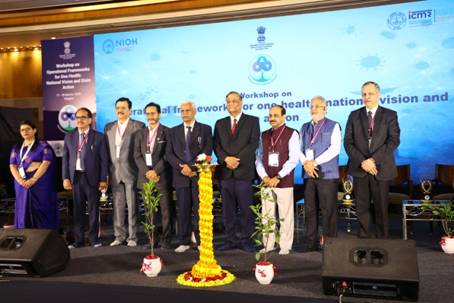
New Delhi/Nagpur, March 19: A two-day national workshop on “Operational Frameworks for One Health: National Vision and State Action” was held in Nagpur to strengthen coordination across sectors for improved disease surveillance and pandemic preparedness.

The workshop was organised by the National Institute of One Health (NIOH), Nagpur, under the Department of Health Research, in collaboration with the ICMR-Regional Medical Research Centre, Bhubaneswar.

National Workshop on One Health in Nagpur Focuses on Pandemic Preparedness, Coordination


The event aimed to translate the National One Health Mission into actionable strategies at the state and local levels, with a focus on integrating human, animal, and environmental health systems.

Delivering the keynote address, Principal Scientific Advisor Ajay Sood stressed the need for integrated and interoperable surveillance systems.

He said early warning mechanisms depend on seamless data sharing across human health, veterinary, wildlife, and environmental sectors, adding that states like Maharashtra could serve as models for structured implementation of the One Health approach.

Department of Health Research Secretary Rajiv Bahl highlighted the importance of inter-sectoral coordination in tackling zoonotic diseases and strengthening national health security.

He said the One Health Mission reflects a whole-of-government approach, given the complex interactions between humans, animals, and ecosystems that can lead to emerging health threats. He also emphasised the need to strengthen outbreak response mechanisms at the state and district levels.

The workshop included technical sessions and panel discussions on operationalising the One Health framework, with a focus on zoonotic diseases and spillover risks.

Discussions on the second day centred on biothreat preparedness, development of medical countermeasures, and investigation of wildlife-related outbreaks.

The inaugural session was attended by senior officials and experts from health, veterinary, and research institutions, including representatives from AIIMS Nagpur, NCDC, and Maharashtra Animal and Fishery Sciences University.

The workshop forms part of ongoing efforts to strengthen India’s preparedness against emerging and re-emerging diseases through coordinated policy and scientific action.

Centre Releases Over Rs.24,600 Lakh for Indigenous Cattle Development in Andhra Pradesh

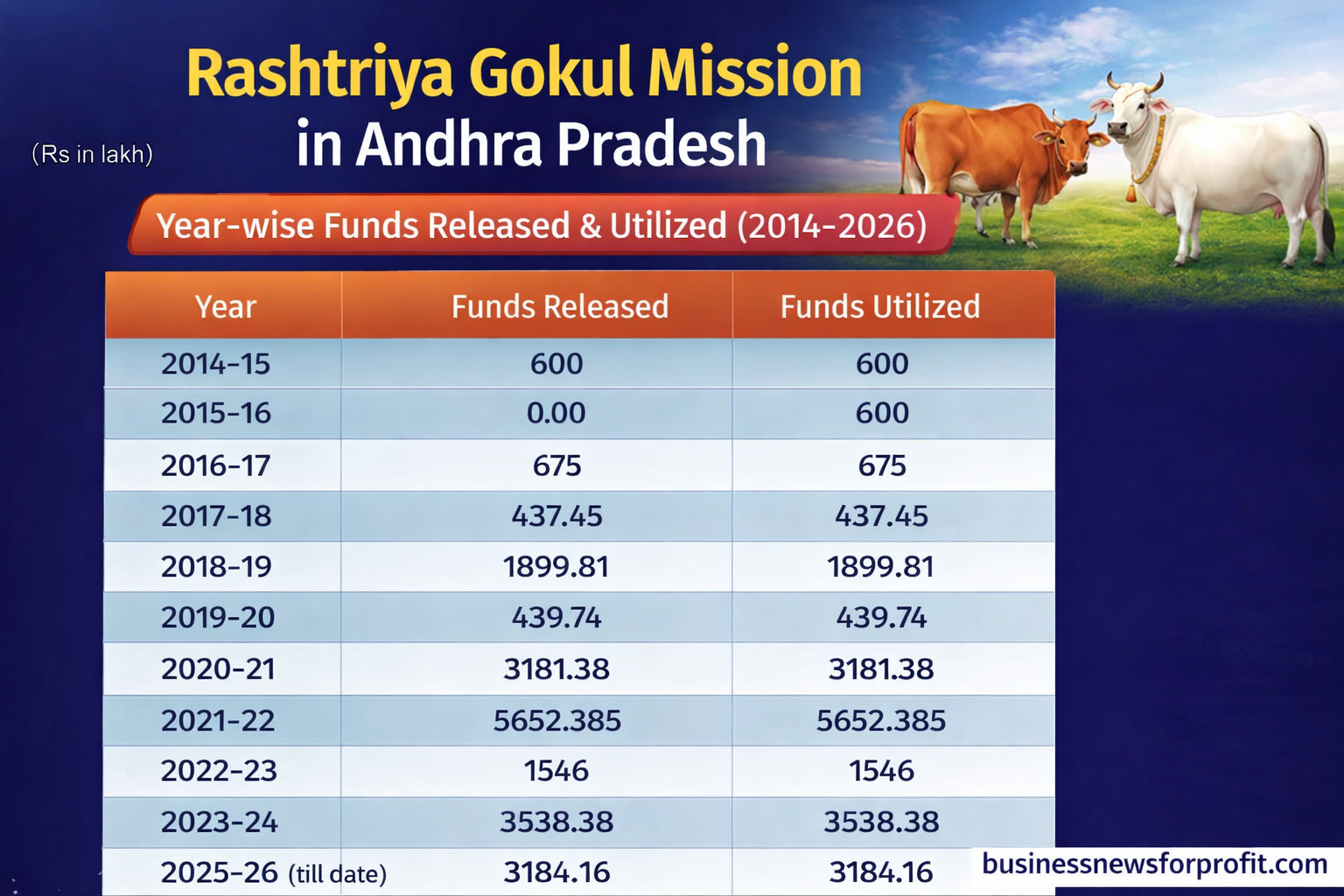
New Delhi, March 19: The Centre has released over ₹24,600 lakh under the Rashtriya Gokul Mission (RGM) to Andhra Pradesh between 2014–15 and 2025–26 to support indigenous cattle development, the Lok Sabha was informed.

In a written reply, Fisheries, Animal Husbandry and Dairying Minister Rajiv Ranjan Singh said the funds have been largely utilised by the state over the years, with utilisation matching releases in most financial years.

According to official data, major allocations were made in recent years, including ₹5,652.38 lakh in 2021–22, ₹3,538.38 lakh in 2023–24, and ₹3,184.16 lakh in 2024–25. An amount of ₹1,500 lakh has been released in 2025–26 so far, with utilisation yet to be reported.

Centre Releases Over ₹24,600 Lakh for Indigenous Cattle Development in Andhra Pradesh


Gokul Grams Established

The minister said 16 Gokul Grams were established in the state under the scheme. However, the component has been discontinued under the revised and realigned Rashtriya Gokul Mission for the period 2021–22 to 2025–26.

Rise in Indigenous Cattle Population

The government said the scheme has contributed to a significant increase in indigenous bovine breeds. At the national level, the population of indigenous cattle rose by nearly 30% between 2013 and 2022.

In Andhra Pradesh, the increase was higher at 62.11% during the same period, reflecting the impact of both central and state-level interventions.

Focus on Breed Improvement

The Rashtriya Gokul Mission aims to conserve and develop indigenous bovine breeds, improve milk productivity, and enhance farmers’ income through scientific breeding and better livestock management practices.

The government said coordinated efforts under the mission have supported breed improvement and strengthened the livestock sector in the state.

India’s Data Centre Boom: Capacity Quadruples as Digital Demand Surges

India’s data centre industry is entering a high-growth phase, driven by rising digital consumption, regulatory push, and the rapid expansion of cloud and data-driven services. Over the past five years, the country’s data centre capacity has grown from 375 MW in 2020 to more than 1,500 MW in 2025, underscoring the scale of demand emerging from a digitising economy.

This fourfold expansion reflects more than infrastructure growth. It signals a structural shift in how India stores, processes, and secures its data as businesses, governments, and consumers increasingly move online.

Demand Drivers: Data Explosion Meets Policy Push

The surge in capacity is closely tied to India’s broader digital transformation. Rising internet penetration, cheaper data, and widespread adoption of digital platforms have led to an explosion in data generation.

At the same time, regulatory frameworks are shaping demand. The Reserve Bank of India’s mandate requiring payment system data to be stored locally has accelerated investments in domestic data infrastructure. Similar trends are expected across sectors such as fintech, e-commerce, and government services.

For hyperscalers, cloud providers, and enterprise players, India is no longer just a consumption market. It is becoming a critical data storage and processing hub.

India’s Data Centre Boom: Capacity Quadruples as Digital Demand Surges


Mumbai Leads, Chennai Emerges

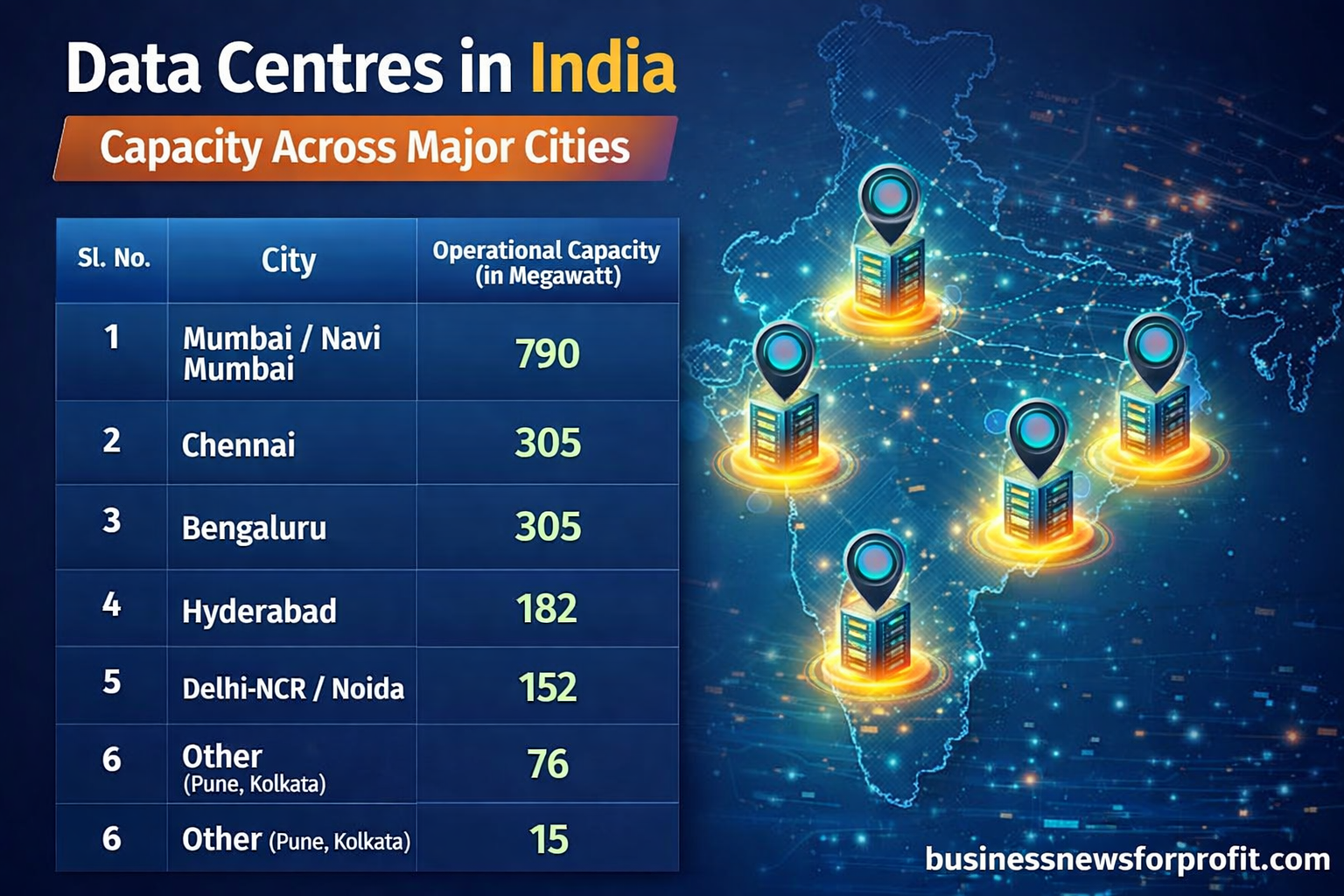
Geographically, data centre capacity remains concentrated in a few key hubs. Mumbai and Navi Mumbai dominate with around 790 MW of operational capacity, benefiting from strong connectivity and proximity to submarine cable landing stations.

Chennai has emerged as the second-largest hub with over 300 MW capacity, leveraging its strategic coastal location. Bengaluru, Hyderabad, and Delhi-NCR are also growing steadily, driven by enterprise demand and tech ecosystems.

Smaller markets like Pune and Kolkata are beginning to see early-stage development, indicating gradual geographic diversification.

Connectivity Backbone: Submarine Cables in Focus

India’s global data connectivity is being strengthened through new submarine cable systems. Four such systems are currently being commissioned at cable landing stations, while three more are in the planning stage.

These cables are critical for handling international data traffic, improving latency, and supporting cloud and hyperscale operations. As global data flows increase, robust submarine connectivity will be key to positioning India as a regional data hub.

However, the government has indicated that there are no immediate plans to establish new subsea gateways, suggesting a focus on optimising existing infrastructure.

Strategic Importance: Data Sovereignty and Security

The push for domestic data centre capacity is also tied to concerns around data sovereignty, cybersecurity, and regulatory compliance.

By ensuring that critical data is stored within the country, policymakers aim to create a more secure and accountable digital ecosystem. This is particularly relevant for sectors handling sensitive data, including finance, healthcare, and governance.

Investment Opportunity and Industry Outlook

The data centre sector is attracting significant investment from global hyperscalers, domestic conglomerates, and infrastructure funds. The combination of rising demand, policy support, and improving connectivity makes India one of the fastest-growing data centre markets globally.

Opportunities are emerging not just in core infrastructure, but also in allied areas such as renewable energy integration, cooling technologies, real estate, and edge computing.

Challenges Ahead

Despite strong growth, the sector faces challenges. High energy consumption, land acquisition issues, and the need for reliable power supply remain key constraints. Additionally, as capacity expands, maintaining efficiency and sustainability will become critical.

Bottom Line

India’s data centre expansion reflects the country’s transition into a data-driven economy. With capacity scaling rapidly and connectivity improving, the country is positioning itself as a key node in global digital infrastructure.

For investors and businesses, the message is clear: India’s next infrastructure boom is not just physical, it is digital.

Digital India at 10: How Connectivity, Data and Platforms Are Rewiring India’s Economy

A decade after its launch, the Digital India programme is no longer just a government initiative. It has evolved into the backbone of India’s economic and service delivery architecture, quietly reshaping everything from banking and payments to welfare distribution and digital commerce.

The scale of transformation is striking. Broadband subscribers have grown from 25 crore in 2014–15 to over 103 crore in 2024–25, a fourfold increase that signals not just connectivity expansion, but the creation of a massive digital consumer base.

Digital India at 10: How Connectivity, Data and Platforms Are Rewiring India’s Economy


This growth has been supported by a rapid expansion of telecom infrastructure. Mobile base stations have nearly quadrupled, while optical fibre networks have expanded exponentially, laying the groundwork for high-speed data access across urban and rural India alike.

The Data Revolution: Cheap, Ubiquitous, Transformative

Perhaps the most consequential shift has been in data consumption. Average monthly usage per user has surged from just 61 MB to over 25 GB. At the same time, the cost of data has dropped by nearly 97 percent.

This combination of affordability and availability has unlocked new markets. From short video platforms and e-commerce to edtech and telemedicine, entire digital industries have scaled on the back of cheap data.

For businesses, this means access to one of the world’s largest and fastest-growing internet user bases, with consumption patterns increasingly mirroring mature digital economies.

Digital Public Infrastructure as a Growth Engine

At the heart of this transformation lies India’s digital public infrastructure stack, often referred to as DPI. Aadhaar, UPI, and the broader JAM trinity have created a foundational layer on which both government services and private innovation now operate.

With over 143 crore Aadhaar identities issued, India has achieved near-universal digital identity coverage. This has enabled seamless onboarding for financial services, telecom, and government schemes.

UPI, in particular, has emerged as a global benchmark. With over 46 crore users and participation from 685 banks, it now powers the majority of India’s digital payments and accounts for a significant share of global real-time transactions.

For businesses, UPI has dramatically reduced transaction friction, enabling everything from street vendors to large enterprises to operate in a cash-light ecosystem.

Direct Transfers and Fiscal Efficiency

The JAM trinity has also transformed welfare delivery. Direct benefit transfers worth nearly ₹50 lakh crore have been routed directly to beneficiaries, reducing leakages and improving targeting.

This shift has implications beyond governance. It increases disposable income certainty at the household level, which in turn supports consumption, especially in rural markets.

Platforms That Scale with the Economy

Government-backed platforms such as DigiLocker and UMANG are quietly becoming part of everyday digital infrastructure.

DigiLocker, with 67 crore users and nearly 1,000 crore documents issued, is reducing paperwork and enabling faster verification processes across sectors like banking, education, and transport.

UMANG, offering more than 2,400 services, reflects a broader trend toward platformisation of public services, where citizens interact with the state through a single digital interface.

For private players, these platforms create opportunities for integration, partnerships, and service delivery innovations.

Bridging the Last Mile

One of the more understated achievements of Digital India has been its focus on inclusion. Village-level connectivity has reached near-universal levels, while digital literacy programmes like PMGDISHA have trained over 6.39 crore individuals.

This expansion is critical for unlocking demand in rural India, which remains the next frontier for digital growth.

What It Means for Business

Digital India has effectively created a large, connected, and increasingly data-savvy market. For companies, this translates into:

  • Lower customer acquisition and onboarding costs

  • Faster digital payments and reduced transaction friction

  • Access to verified digital identities

  • Expansion into rural and semi-urban markets

Sectors such as fintech, e-commerce, logistics, health tech, and edtech are already leveraging this ecosystem.

The Road Ahead

The next phase of Digital India will likely focus on deepening usage rather than just expanding access. This includes improving service quality, enhancing cybersecurity, and integrating emerging technologies like AI into public platforms.

As India moves toward a $5 trillion economy, its digital backbone will play a central role in driving productivity, formalisation, and innovation.

Bottom Line

Digital India has moved beyond infrastructure to become an economic multiplier. By combining connectivity, affordability, and scalable platforms, it has created a digital ecosystem that is not only inclusive but also commercially transformative.

For businesses, the message is clear: India’s growth story is increasingly a digital story.
Cooperative Banks in Odisha Stable, NPAs Decline: Govt

New Delhi, March 19: Cooperative banking institutions in Odisha remain financially stable, with no banks under liquidation and a marginal decline in non-performing assets (NPAs), the government informed the Rajya Sabha.

In a written reply, Union Minister for Home and Cooperation Amit Shah said the state has 9 Urban Cooperative Banks, 18 Rural Cooperative Banks — including one State Cooperative Bank and 17 District Central Cooperative Banks (DCCBs) — and 4,287 Primary Agricultural Credit Societies (PACS).

According to data shared by the Reserve Bank of India (RBI) and NABARD, none of the cooperative banks in Odisha are under liquidation. However, around 725 cooperative societies are currently under liquidation, with outstanding dues of ₹11.08 crore to banks.

The minister said annual audits of these societies are conducted by the Directorate of Cooperative Audit, Odisha.

The asset quality of cooperative banks in the state has shown improvement. The Gross NPA ratio of the Odisha State Cooperative Bank (OSCB) declined from 1.08% as of March 2024 to 0.87% as of March 2025.

Similarly, the cumulative Gross NPA ratio of all 17 DCCBs reduced from 7.33% to 7.18% during the same period.

As of March 2025, seven DCCBs reported NPAs below 5%, eight were in the 5–10% range, and two had NPAs between 10% and 15%.

The financial position of cooperative banks is regularly reviewed by the state government, RBI, and NABARD. NABARD also conducts statutory inspections of the Odisha State Cooperative Bank and DCCBs.

The government said several measures have been implemented to improve governance and financial stability. These include allowing cooperative banks to expand branch networks, offer doorstep banking services, and enhance lending capacity.

Other reforms include higher loan limits, one-time settlement schemes, integration with the RBI’s Integrated Ombudsman Scheme, onboarding on Aadhaar-enabled payment systems (AePS), and inclusion under the Credit Guarantee Fund Trust for Micro and Small Enterprises (CGTMSE).

The Odisha government has also extended financial support to strengthen cooperative banks by contributing to their share capital. Assistance to DCCBs stood at ₹102 crore in 2022–23, ₹73 crore in 2023–24, and ₹28.02 crore in 2024–25.

The government said ongoing regulatory reforms, technological integration, and capital support are aimed at improving governance, reducing financial risks, and strengthening the cooperative banking sector in the state.

Over 4,400 PACS Computerised in Bihar to Boost Transparency, Farm Services: Govt

New Delhi, March 19: The government has computerised more than 4,400 Primary Agricultural Credit Societies (PACS) in Bihar as part of efforts to improve efficiency, transparency, and service delivery to farmers, the Rajya Sabha was informed.

In a written reply, Union Minister for Home and Cooperation Amit Shah said Bihar has a total of 8,463 PACS, of which 4,477 have been taken up for computerisation. So far, 4,474 societies have been onboarded to ERP software, and 4,465 have been declared as e-PACS.

The minister said a majority of PACS in the state are being transformed into multipurpose entities. Of the total, 7,617 PACS are engaged in at least two services, while 6,234 are involved in three or more activities.

These include procurement operations, custom hiring centres, storage facilities, fertiliser distribution, fair price shops, and common service centres.

In addition, 5,375 PACS are functioning as Common Services Centres, 2,304 are involved in fertiliser distribution, and 1,696 have been upgraded as PM Kisan Samriddhi Kendras. Some PACS are also operating as Jan Aushadhi Kendras and banking correspondents for cooperative banks.

The government is also implementing a pilot project under the “World’s Largest Grain Storage Plan in Cooperative Sector” to address storage gaps and build decentralised infrastructure.

In Bihar, 36 PACS across nine districts have been identified under the plan, with a total storage capacity of 1.045 lakh metric tonnes. Loans have been sanctioned for 27 PACS, while construction support is being provided through the Bihar State Warehousing Corporation.

Data shared by the government showed that in 2024–25, 305 godowns with a capacity of 2.43 lakh metric tonnes were sanctioned, of which 77 have been completed and 228 are under construction. In 2025–26, 278 additional godowns have been approved, with most currently under construction.

To support the transition, extensive training has been conducted for PACS and cooperative bank officials. Over 10,000 participants have been trained in ERP operations, handholding support, and refresher programmes.

The computerisation initiative enables PACS to carry out transactions through a common digital platform, improving accountability and streamlining financial operations.

The Ministry of Cooperation, NABARD, and state authorities are monitoring progress through multi-level committees at national, state, and district levels. Regular review meetings are being held to track performance and ensure timely implementation.

The government said these measures are aimed at strengthening the cooperative sector in Bihar, enhancing farmer outreach, and improving access to agricultural services.

India Post Serves 47 Crore Savings Accounts, Expands Citizen Services: Govt

New Delhi, March 19: The Department of Posts is serving over 47 crore Post Office Savings Bank (POSB) account holders through its network of more than 1.64 lakh post offices, the government informed the Lok Sabha.

In a written reply, Minister of State for Communications Dr Pemmasani Chandra Sekhar said India Post continues to play a key role in financial inclusion by offering a range of savings schemes, including savings accounts, time deposits, recurring deposits, Public Provident Fund, and Senior Citizens Savings Scheme.

The department also supports the distribution of pensions, subsidies, and other benefits through Direct Benefit Transfer (DBT) into post office accounts.

According to the data, Sukanya Samriddhi Yojana accounts have reached 3.83 crore, while the Mahila Samman Savings Certificate scheme has 37.3 lakh accounts as of February 28, 2026. These schemes aim to promote financial security for the girl child and enhance women’s financial participation.

India Post has set up 13,352 Aadhaar centres across the country, including mobile units for remote areas. These centres have processed over 14.72 crore transactions, improving access to identity services, particularly for rural and elderly populations.

In collaboration with the Ministry of External Affairs, the department operates 452 Post Office Passport Seva Kendras (POPSKs). These centres have processed more than 2.09 crore passport applications and police clearance certificates, improving access to passport services in rural and semi-urban areas.

India Post Payments Bank (IPPB) is providing a range of citizen-centric services, including Aadhaar-enabled payments, digital life certificates, mobile number updates in Aadhaar, and enrolment services for children under five years of age.

The department has also upgraded its Complaint Management System under Advanced Postal Technology 2.0, launched in March 2025. The new system includes a customer-interactive resolution process, requiring user consent before closing complaints and enabling automatic escalation in case of disputes.

The government said these initiatives are aimed at strengthening financial inclusion and improving access to essential services, particularly in rural and underserved areas.

Govt Reviving Stalled Irrigation Projects, Expanding Digital Agriculture Push: Shivraj Singh in Lok Sabha

New Delhi, March 19: Union Agriculture Minister Shivraj Singh Chouhan on Thursday said the government has expedited long-pending irrigation and river-linking projects while undertaking structural reforms in agriculture aimed at improving farmer incomes and rural productivity.

Replying to a discussion in the Lok Sabha on the Ministry of Agriculture and Farmers Welfare, Chouhan said several major irrigation projects that remained incomplete for years have been fast-tracked under the Pradhan Mantri Krishi Sinchai Yojana.

He stated that out of 140 major irrigation projects, 99 had remained stalled earlier, and the government has now prioritised their completion, with work progressing to bring irrigation coverage to about 2.7 million hectares of additional farmland.

The minister also said river-linking initiatives, including the Ken–Betwa project connecting parts of Madhya Pradesh and Uttar Pradesh, are being advanced to address issues of floods and droughts.

Chouhan said the government is working to ensure the availability of quality seeds, fertilisers, and pesticides to farmers. He informed the House that new legislation on seeds and pesticides is being prepared to regulate standards and prevent the sale of substandard products.

He added that strict approval mechanisms have been introduced for bio-stimulants, with only those products cleared after multiple scientific trials being allowed in the market.

Highlighting digitisation efforts, the minister said nearly 9 crore farmer IDs have been created under the Digital Agriculture Mission. These digital profiles are expected to streamline access to institutional credit and improve delivery of government schemes.

He also referred to an AI-based platform, “Bharat Vistaar,” which will enable farmers to seek real-time advisory services by sharing crop images or queries, with responses provided in local languages.

Chouhan said the government is promoting natural farming to address concerns over soil health and sustainability. The initiative aims to reach one crore farmers, provide training to 18 lakh farmers, and expand natural farming practices to around 75 lakh hectares.

He added that the Centre is working with states to develop region-specific agricultural plans based on local conditions and crop suitability.

The minister said government interventions, including MSP operations and direct benefit transfers, are aimed at ensuring income support and reducing vulnerabilities faced by farmers.

He maintained that the focus is on improving farm productivity, strengthening rural economies, and advancing the goal of a self-reliant agricultural sector.

Kerala Scales Up Ayush Network with Rs.285 Crore Funding and 700 Wellness Centres

Kerala Scales Up Ayush Network with Rs.285 Crore Funding and 700 Wellness Centres

Kerala is expanding its Ayush healthcare ecosystem with central assistance of over ₹285 crore in the last four years, alongside the operationalisation of 700 Ayush wellness centres, strengthening its position as a key hub for traditional medicine and wellness services.

Data presented in Parliament shows that funding under the National Ayush Mission (NAM) to Kerala has risen steadily, peaking at ₹110.37 crore in 2024–25, before moderating to ₹51.38 crore in 2025–26. The total allocation between 2022–23 and 2025–26 stands at ₹285.65 crore.

Expanding Wellness Infrastructure

A major component of the expansion is the upgrade of 700 dispensaries into Ayushman Arogya Mandirs. All centres are now operational, delivering integrated healthcare services that include Ayurveda, Yoga, and other Ayush systems.

This large-scale rollout strengthens Kerala’s already established reputation in Ayurveda and wellness tourism, while also expanding access to preventive and primary healthcare at the community level.

Healthcare Meets Wellness Economy

Kerala’s push comes at a time when demand for alternative medicine and preventive healthcare is rising, both domestically and globally. The state is well-positioned to leverage this trend, given its strong base in Ayurveda, trained practitioners, and established wellness infrastructure.

The integration of Ayush services into public healthcare through these centres also signals a shift toward cost-effective, preventive care models, which can reduce long-term healthcare expenditure.

Boost to Medical Value Travel

The promotion of Medical Value Travel (MVT) is emerging as a key economic driver. The Ministry of Ayush recently held a South Zone MVT Summit in Chennai, with participation from Kerala and other southern states, aimed at positioning India as a global destination for traditional medicine and wellness therapies.

Kerala, in particular, stands to benefit due to its global brand recognition in Ayurveda-based treatments and wellness retreats.

Policy and Funding Trends

While public health remains a state subject, central funding through NAM continues to play a catalytic role in infrastructure development and capacity expansion. The funding pattern indicates both strong central support and the state’s active participation through State Annual Action Plans.

Opportunities and Challenges

The expansion opens up opportunities across multiple segments, including wellness tourism, herbal product markets, training institutions, and tele-health services.

However, scaling up services while maintaining quality, standardisation, and global credibility will be critical, especially as Kerala targets international patients under medical value travel initiatives.

Outlook

With a combination of public investment, infrastructure expansion, and global demand for wellness services, Kerala is positioning itself at the intersection of healthcare and tourism.

If supported by quality assurance and international outreach, the state’s Ayush ecosystem could evolve into a significant contributor to both public health outcomes and the regional economy.

Ayush Services Expand in Rural Odisha with Focus on Outreach, Training and Tele-Consultation

Ayush Services Expand in Rural Odisha with Focus on Outreach, Training and Tele-Consultation


Ayush healthcare services are witnessing steady expansion in rural and tribal areas of Odisha, supported by increased deployment of doctors, outreach programmes, and digital health initiatives, according to official data presented in Parliament.

The state currently has 584 Ayurvedic Medical Officers, 525 Homoeopathic Medical Officers, and 2 Unani Medical Officers posted across government dispensaries, strengthening primary healthcare delivery in underserved regions.

Strengthening Rural Healthcare Delivery

The expansion reflects a broader push to integrate traditional systems of medicine into public healthcare, particularly in areas where access to conventional medical infrastructure remains limited.

Public health being a state subject, Odisha has taken the lead in scaling awareness, training, and service delivery. At the same time, central support under the National Ayush Mission (NAM) is enabling infrastructure development, capacity building, and outreach programmes.

Investment in Training and Capacity Building

The state has rolled out induction and refresher training programmes for Ayush practitioners, including those serving as Community Health Officers at 422 Ayushman Arogya Mandir centres.

This focus on workforce development is critical for standardising care quality and expanding the role of Ayush practitioners in preventive and primary healthcare services.

Expanding Outreach and Preventive Care

Odisha has increased awareness through large-scale health campaigns and camps, including integrated Ayush camps, geriatric care initiatives, and screening programmes for musculoskeletal disorders.

These efforts are aligned with a preventive healthcare model, which is gaining policy traction as a cost-effective way to manage long-term health burdens, particularly in ageing populations.

Digital Push with Tele-AYUSH

A notable development is the rollout of tele-consultation services under the e-Sanjeevani platform. The model connects 50 Ayushman Arogya Mandir centres as spokes with major institutions such as Dr. Abhin Chandra Homoeopathic Medical College in Bhubaneswar and Gopabandhu Ayurveda Mahavidyalaya in Puri acting as hubs.

This hub-and-spoke approach is expected to improve access to specialist consultations in remote areas while reducing the need for physical travel.

Emerging Healthcare Ecosystem

The state’s network of 422 Ayushman Arogya Mandirs is playing a central role in delivering holistic healthcare services, including preventive, promotive, curative, and rehabilitative care. Activities such as yoga sessions, medicinal plant distribution, and health awareness campaigns are also being integrated into service delivery.

Policy and Market Implications

The expansion of Ayush services reflects growing institutional support for alternative medicine systems within India’s healthcare framework. For the broader healthcare ecosystem, this could open opportunities in areas such as herbal medicine, wellness services, tele-health platforms, and training infrastructure.

Outlook

As demand for affordable and preventive healthcare rises, Odisha’s model of integrating Ayush services with digital platforms and community outreach could serve as a template for other states.

The long-term impact will depend on service quality, patient trust, and the ability to scale infrastructure while maintaining standards.