SK Telecom’s AI Data Center Interconnection Architecture Approved as ITU-T International Standard

SEOUL, Korea, Mar 18 – SK Telecom (NYSE: SKM, hereinafter referred to as “SKT”) announced that its Recommendation, “Signalling Requirements and Architecture for Artificial Intelligence Data Centers (AIDC),” was officially approved as an international standard at the ITU-T Study Group 11 (SG11) meeting held in Geneva earlier this month.

ITU-T, the Telecommunication Standardization Sector of the International Telecommunication Union, is a leading global body responsible for developing international standards for information and communication technologies, with participation from 190+ member states and 900+ organizations.

With the approval of this standard, a global benchmark for AIDC system interconnection has been established, further strengthening the foundation for the development and operation of AI infrastructure worldwide.

SKT proposed a standardization work item titled “Interconnection Structure and Methods for AI Data Centers” to ITU-T in May 2024, which was approved as a new standardization project. Following related discussions, the final standard was officially approved at the ITU-T SG11 meeting in March 2026.

■ Increasing Complexity of Data Centers with AI Expansion Calls for Interconnection Standards

With the increasing complexity of data center system interconnection architectures driven by the proliferation of AI services, there is a growing need for global standards to define interconnection and signalling requirements for data center operations.

In particular, AIDCs are complex infrastructures that not only handle large-scale computational processing, but also integrate various systems such as power, cooling, storage, security, and resource management. This results in a higher structural complexity compared to conventional data centers.

Amid these changes, the industry has consistently called for global standards that define signalling and interconnection methods among internal AIDC systems.

This newly approved standard organizes the interconnection structure and signalling requirements among internal AIDC systems, providing a global technical benchmark for data center operation and service delivery.

■ Defining AI Data Center Architecture Based on Three Layers: Service, Management, and Infrastructure

The new standard classifies the main functions of AIDCs into a three-layer architecture—Service, Management, and Infrastructure—and systematically defines the roles and functions of each layer, as well as the signalling requirements for interconnection between them.

The Service Layer is responsible for functions such as service-level authentication and authorization, service status monitoring, and overall service management. The Management Layer handles data center-level authentication and authorization, operational management, resource allocation, and cybersecurity. The Infrastructure Layer encompasses the core AI infrastructure, energy systems, and cooling systems that support operations of the data center.

Together, these layers serve as higher-level concepts that organize various components and function blocks, ensuring that the AIDC operates efficiently and securely through clearly defined roles and systematic interconnection.

This can be likened to an airport, where airlines, air traffic control, and runway infrastructure coordinate operations by exchanging signals—similarly, the standard defines how internal systems within an AIDC interoperate organically through signalling.

SKT expects that the approval of this standard will serve as a catalyst for the global adoption of AIDCs by enterprises and organizations.

The company also explained that this achievement was made possible through collaboration with various SK Group affiliates and years of accumulated expertise and technology development in the AI and ICT fields.

“The approval of this standard is significant as it recognizes SKT’s accumulated expertise and operational know-how in AI Data Centers,” said Choi Dong-hee, Head of AI Strategy Planning Office at SK Telecom. “Moving forward, SKT will continue to strengthen its technological competitiveness across AI infrastructure, operations, and services through SK Group’s capabilities and global collaboration, contributing to international standardization and the expansion of the global AI ecosystem.”


Hiring Skilled Non-EU Employees in Italy: The Employer’s Legal Compliance Checklist

Why This Guide Matters for Italian Employers

Italy is increasingly attractive to international talent — from software engineers and healthcare professionals to financial analysts and specialized consultants. Yet many Italian companies and foreign businesses with Italian subsidiaries still struggle to navigate the legal framework for hiring non-EU workers legally and efficiently. The risks of non-compliance are concrete: fines up to €10,000 per worker, permit revocations, and potential criminal liability for directors.

The reform introduced by Legislative Decree 152/2023 — which transposed EU Directive 2021/1883 — significantly updated the EU Blue Card regime in Italy, cutting bureaucratic timelines and expanding access for both employed and self-employed highly qualified non-EU nationals. Understanding the employer’s role in this process is not optional: it is the prerequisite for any successful hire.

This compliance guide is designed for HR managers, legal officers, and business owners who need a structured overview of the steps, obligations, and risks involved. For a comprehensive analysis of the EU Blue Card requirements and procedure in Italy — including salary thresholds, contract duration rules, family reunification rights, and self-employment access — we recommend consulting the guide published by Damiani & Damiani International Law Firm.

  1. Who Qualifies as a ‘Highly Qualified Worker’ under Italian Law?

Before initiating any hiring procedure, the employer must verify that the candidate meets the eligibility criteria established by the reformed Blue Card regulation. Non-compliance at this stage invalidates the entire application.

Academic and Professional Requirements

  • University degree (Bachelor’s or higher), including foreign qualifications if officially recognized in Italy
  • Alternatively: at least 5 years of documented professional experience in a relevant sector
  • For IT and regulated professions: sector-specific certifications may substitute or supplement formal degrees

Minimum Salary Thresholds (2026)

Category Salary Multiplier Approx. Annual Gross
Standard 1.5x national average ~€35,000
Shortage Sectors 1.2x national average ~€28,000

Shortage sectors — officially listed quarterly by the Ministry of Labour — currently include IT, healthcare, engineering, and specialised tourism. Bonuses, overtime, and benefits are excluded from the salary calculation. Only gross base pay counts toward the threshold.

⚠️ Compliance Alert

The salary must be contractually guaranteed, not conditional. Variable or commission-based components that could fall below the threshold will result in application rejection.

  1. The Employer’s Role in the Blue Card Application Process

Unlike other visa categories where the worker applies directly, the EU Blue Card application in Italy is employer-initiated. The hiring company is the primary applicant before the Sportello Unico per l’Immigrazione (SUI) — the unified immigration desk at the prefecture level.

Step-by-Step Employer Obligations

  • Step 1 — Prepare the offer: Draft a compliant employment contract specifying role, salary, and contract duration (minimum 6 months under the new regulation).
  • Step 2 — Submit to SUI: File the application with certified documentation (employment contract, candidate’s qualifications, salary declaration, company registration).
  • Step 3 — Await Nulla Osta: The SUI issues a ‘nothing prevents’ clearance within a maximum of 20 working days for document review, and 90 days total for full Blue Card release.
  • Step 4 — Forward to candidate: Send the Nulla Osta to the worker abroad. It is valid for 6 months from issuance.
  • Step 5 — Post-arrival compliance: Notify SUI within 8 days of the worker’s arrival. Accompany or support the worker in collecting the permit at the Police Headquarters (Questura).

Total Estimated Cost for the Employer

Approximately €200 for the Nulla Osta, plus €100 for stamp duty. The entry visa (~€300) is the worker’s responsibility. Total employer outlay: ~€300 per application.

  1. Contractual Compliance: What the Employment Contract Must Contain

The employment contract submitted to the SUI is a legal document that will be scrutinised. The following elements are mandatory and must be consistent with the Blue Card application form:

  • Role title and description corresponding to the worker’s declared qualifications. A mismatch (e.g., hiring a biomedical engineer as an administrative assistant) is grounds for immediate rejection and potential sanctions.
  • Gross annual salary explicitly stated, meeting or exceeding the applicable threshold.
  • Contract duration of at least 6 months. Open-ended contracts are accepted and preferred.
  • Place of work (city and address), relevant for work permit registration.
  • Employer’s full legal details and VAT number (Partita IVA).
📋 Documentation Checklist for Employers

✓ Signed employment contract (original or digitally signed) · ✓ Company registration extract (Visura Camerale) · ✓ Employer’s declaration of salary and duties · ✓ Certified copy of worker’s degree (with apostille if non-EU) · ✓ Worker’s valid passport copy · ✓ DURC (social security compliance certificate for the employer)

  1. Managing Job Changes and EU Mobility After Hiring

One of the most operationally relevant aspects of the reformed Blue Card is the increased flexibility for both workers and employers regarding job changes and cross-border mobility within the EU.

Changing Employer — Obligations and Timelines

A Blue Card holder can change employers after 12 months with the first company. As the original employer, your obligations end at termination of the contract, but there are notification duties:

  • The worker must notify SUI within 30 days of signing the new contract.
  • The new employer must guarantee the same salary threshold compliance.
  • The Blue Card remains valid during the transition period (up to 6 months of unemployment are allowed).

EU Intra-Company Mobility

After 12 months of regular residence in Italy, a Blue Card holder can relocate to another EU member state for up to 3 months without additional bureaucracy. For longer periods, the worker applies for that country’s Blue Card with an accelerated procedure. This is a significant advantage for multinational employers managing international talent pools.

  1. Employer Sanctions: What Happens if You Get It Wrong

Italian immigration law imposes direct liability on employers for violations of the Blue Card framework. Ignorance of the rules is not a valid legal defence. Key sanctions include:

  • Fines up to €10,000 per worker for employing a non-EU national without a valid permit or with a non-compliant contract.
  • Blue Card revocation if the employer fails to maintain the minimum salary threshold after hiring.
  • Criminal liability for systematic violations or exploitation of non-EU workers (Article 22, Legislative Decree 286/98).
  • Exclusion from public procurement for up to 2 years following repeated violations.
⚖️ Legal Reminder

If a worker loses their job through no fault of their own, they have 6 months to find new qualifying employment. During this period, the employer’s obligations cease — but any unjustified early termination designed to circumvent Blue Card obligations may be scrutinised by authorities.

  1. Special Cases: Self-Employed Non-EU Workers and Startups

The 2023 reform introduced a significant novelty: qualified non-EU self-employed professionals can now access the EU Blue Card framework in Italy. This opens a new pathway for companies that work with international freelancers or consultants, and for non-EU founders who want to establish their business in Italy.

Requirements for Self-Employed Blue Card Applicants

  • Degree or 5+ years of professional experience in the relevant field.
  • An approved business plan validated by the local Chamber of Commerce (CCIAA).
  • Demonstrated minimum annual turnover of ~€28,000 (1.2x the national gross average).
  • VAT number (Partita IVA) must be activated within 30 days of arrival in Italy.

Advantage for Innovative Startups

Founders under 40 who apply under the startup or innovative SME framework benefit from a 30% reduction in bureaucratic fees. Companies certified as ‘innovative startups’ by the Italian Business Register have access to simplified hiring channels for non-EU technical and scientific talent.

Frequently Asked Questions (Employer Edition)

Can a company of any size apply for the EU Blue Card?

Yes. There is no minimum company size requirement. A one-person SRL can sponsor a Blue Card application as long as it can demonstrate financial capacity to pay the required salary.

Does the worker need to be abroad when applying?

Yes. The Blue Card process requires the worker to obtain an entry visa from the Italian embassy in their country of residence, using the Nulla Osta issued to the employer. Applications cannot be converted from within Italy (with limited exceptions for existing permit holders).

What if our offer is in a ‘shortage sector’? How do we prove it?

The Ministry of Labour publishes a quarterly list of shortage occupations. To qualify for the reduced 1.2x salary threshold, the job offer must correspond to a role on that list. The employer must reference the relevant occupation code in the application.

Is an official translation of the worker’s degree required?

Yes. Foreign degrees must be accompanied by a certified Italian translation and, for non-EU documents, an apostille or consular legalization. The employer is not legally required to bear this cost, but it is advisable to include this in the onboarding support offered to the candidate.

Conclusion: Compliance as a Competitive Advantage

The reformed EU Blue Card framework represents a genuine opportunity for Italian companies to access international talent faster and more reliably than ever before. With bureaucratic timelines capped at 90 days and simplified salary thresholds for strategic sectors, the barriers to hiring qualified non-EU professionals have materially decreased.

However, the complexity of the application process — from document certification to SUI notification obligations and post-hiring compliance — means that legal guidance remains strongly advisable, particularly for first-time sponsors or companies managing multiple international hires simultaneously.

For detailed information on the full regulatory framework — including salary requirements, contract duration rules, family reunification rights, and the self-employment pathway — consult the complete guide on EU Blue Card requirements and procedure in Italy by Damiani & Damiani, an international law firm specialised in Italian immigration law with offices in Palermo, Turin, Athens, and Barcelona.

Regulatory References

  • Legislative Decree No. 152 of 2023 (Blue Card Reform)
  • EU Directive 2021/1883 on conditions of entry and residence for highly qualified third-country nationals
  • Consolidated Immigration Law — Legislative Decree 286/1998 (as amended)
  • Ministry of Labour quarterly shortage occupation list (www.lavoro.gov.it)

This article is intended for informational purposes only and does not constitute legal advice. For specific legal guidance, consult a qualified Italian immigration lawyer.


Wordly Named Bronze Sponsor of the Association of National Olympic Committees (ANOC) to Power AI Translation for All 2026 Events

Los Altos, California – March 17 – The Association of National Olympic Committees (ANOC) has announced a sponsorship agreement with Wordly, naming the AI translation platform a Bronze Sponsor for 2026 and provider of real-time AI translation for ANOC events worldwide. 

As part of the agreement, Wordly’s technology will support ANOC meetings, assemblies, and activities throughout 2026, including the ANOC General Assembly in Hong Kong. The partnership will enhance accessibility and engagement for National Olympic Committees (NOCs) and stakeholders worldwide and align with ANOC’s broader digital transformation strategy. 

“Following the success of our previous partnership during the ANOC General Assembly in Cascais in 2024, we are pleased to renew our collaboration with Wordly as a Bronze Level Sponsor for 2026,” said ANOC Secretary General Gunilla Lindberg. “This renewed partnership means that all ANOC in-person and online events throughout 2026, including the ANOC General Assembly in Hong Kong, will be supported by Wordly’s AI interpretation solutions. This is an important step in making ANOC, and the Olympic Movement as a whole, more inclusive, ensuring that language is never a barrier to participation, dialogue, and representation.”

“We are honored and excited to continue our relationship with ANOC to enhance inclusivity and engagement at their events in 2026,” said Wordly CMO Dave Deasy. “The Olympic Movement is a very important global program and Wordly will help ensure everyone involved will be able to consistently and accurately communicate their message and understand the presentations and discussions.” 

Wordly provides real-time, AI-driven translation that lets participants access live spoken content in their preferred language on their personal devices, without traditional interpretation equipment, enabling more accessible, efficient, and sustainable multilingual communication.

NIPER Raebareli Partners with Roche Pharma India to Strengthen Pharmaceutical Education and Research

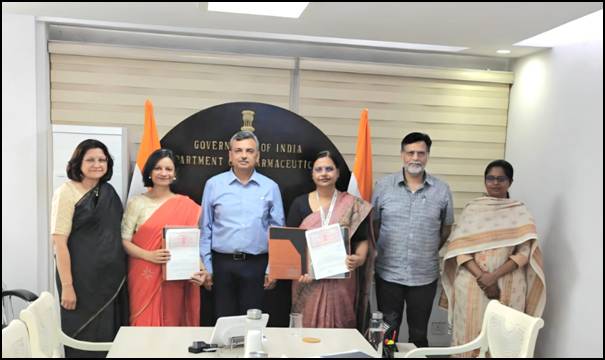
New Delhi: The National Institute of Pharmaceutical Education and Research, Raebareli, has signed a Memorandum of Understanding (MoU) with Roche Pharma India to promote academic collaboration and advance pharmaceutical education and research in India.

The MoU was signed at Shastri Bhawan, New Delhi, in the presence of Manoj Joshi, Secretary, Department of Pharmaceuticals under the Ministry of Chemicals and Fertilizers.

The partnership seeks to bridge the gap between academic learning and industry practices by providing students and faculty with practical exposure to the evolving pharmaceutical and regulatory landscape.

NIPER Raebareli Partners with Roche Pharma India to Strengthen Pharmaceutical Education and Research

Under the agreement, the two institutions will jointly undertake several initiatives, including a certificate programme in regulatory affairs for students and industry professionals. The collaboration will also feature guest lecture series by industry experts, focusing on emerging areas such as AI-driven pharmaceutical research, drug development and healthcare innovation, aimed at enhancing industry-oriented knowledge and skills among students.

Speaking on the occasion, Joshi stressed the importance of strengthening India’s capabilities in regulatory sciences, biologics and artificial intelligence in pharmaceuticals to sustain global competitiveness. He noted that stronger partnerships between academia and industry would play a crucial role in achieving these goals and positioning India as a leader in advanced pharmaceutical innovation.

The collaboration aligns with the government’s broader development vision and initiatives such as #ViksitBharat and the BiopharmaShakti mission, which aim to transform India’s pharmaceutical sector from a volume-driven model to a value-driven innovation ecosystem.

The initiative is expected to contribute to the development of a future-ready workforce, while also supporting sustainable growth in India’s rapidly evolving life sciences and biopharmaceutical sector.

Cabinet Approves Rs.11,440 Crore ‘Mission for Aatmanirbharta in Pulses’ to Boost Domestic Production

New Delhi, March 17: The Union Cabinet has approved a centrally sponsored scheme titled Mission for Aatmanirbharta in Pulses aimed at increasing domestic production of pulses and achieving self-sufficiency in the sector. The mission will be implemented over a six-year period from 2025–26 to 2030–31 with a total financial outlay of ₹11,440 crore.

The mission focuses on strengthening the pulses value chain by expanding cultivation, promoting improved seed distribution, and developing post-harvest infrastructure across the country.

Processing Units to Strengthen Post-Harvest Infrastructure

Under the post-harvest infrastructure component of the mission, the government has approved the establishment of 1,000 processing units (dal mills) during the mission period. In the first phase, a target of 528 processing units has been allocated to various states and Union Territories.

Among the states, Uttar Pradesh has received the highest allocation with 56 units, followed by Madhya Pradesh with 55, Bihar with 37, Maharashtra with 34, and Karnataka and Rajasthan with 30 units each. Other states such as Gujarat, Assam, Andhra Pradesh, Tamil Nadu, and Chhattisgarh have also been allotted processing units to strengthen local processing capacity.

Free Seed Kits to Expand Pulses Cultivation

To expand pulses cultivation, particularly in rice fallow areas and other diversifiable agricultural regions, the mission provides support through the distribution of free seed kits to farmers.

Under the programme, a total of 87.5 lakh seed kits are targeted for distribution over the six-year period based on the Annual Action Plans submitted by states and Union Territories. For the Rabi season of 2025–26, around 10.36 lakh seed kits have been allocated to states.

The tentative targets for seed kit distribution in the coming years include:

  • 2026–27: 15 lakh kits

  • 2027–28: 16.25 lakh kits

  • 2028–29: 17.50 lakh kits

  • 2029–30: 13.75 lakh kits

  • 2030–31: 12.5 lakh kits

Focus Districts Identified for Pulses Clusters

To accelerate the mission’s implementation, 489 districts across the country have been identified as focused districts for developing pulses clusters. The list of districts may be modified in the future based on local requirements and evolving agricultural conditions.

Area Under Pulses to Expand by 35 Lakh Hectares

As part of the mission’s long-term strategy, the area under pulses cultivation is projected to increase by 35 lakh hectares by 2030–31. This includes 24.5 lakh hectares in traditional pulses-growing regions and 10.5 lakh hectares in non-traditional areas where pulses cultivation will be promoted.

The mission is expected to significantly enhance domestic pulses production, reduce dependence on imports, and improve farmers’ incomes through improved productivity and better post-harvest infrastructure.

Over 2.12 Lakh Startups Recognised Under Startup India; Over 1 Lakh Have Women Directors

New Delhi, March 17: A total of 2,12,283 entities have been recognised as startups under the Government of India’s flagship Startup India initiative as of January 31, 2026, reflecting the rapid expansion of India’s entrepreneurial ecosystem over the past decade.

Launched on January 16, 2016, the initiative aims to build a strong ecosystem that nurtures innovation, promotes entrepreneurship, and encourages investment across sectors in the country.

According to data shared in Parliament, 1,02,054 recognised startups have at least one woman director or partner, indicating the growing participation of women in India’s startup ecosystem.

Over 2.12 Lakh Startups Recognised Under Startup India; Over 1 Lakh Have Women Directors


However, the government also noted that some startups have ceased operations. Data maintained by the Ministry of Corporate Affairs (MCA) shows that 6,789 recognised startups have been categorised as closed (dissolved or struck-off). Among these, 2,950 startups had at least one woman director or partner.

The recognised startups are registered with the Department for Promotion of Industry and Internal Trade (DPIIT), which oversees the Startup India initiative and maintains the recognition database.

Key Government Support Schemes

To support startups at different stages of their growth cycle, the government is implementing several flagship schemes under Startup India.

One of the major initiatives is the Fund of Funds for Startups (FFS), which aims to catalyse venture capital investment in Indian startups. The scheme is operationalised by the Small Industries Development Bank of India (SIDBI), which provides capital to SEBI-registered Alternative Investment Funds (AIFs) that subsequently invest in startups.

As of January 31, 2026, AIFs supported under the scheme have invested around ₹25,859 crore in startups, including ₹2,995 crore in women-led startups since 2020.

Another major initiative is the Startup India Seed Fund Scheme (SISFS), which provides financial assistance to early-stage startups through incubators. Implemented from April 1, 2021, the scheme has approved around ₹592 crore in funding to selected startups, of which ₹294 crore has been allocated to women-led startups.

The government has also introduced the Credit Guarantee Scheme for Startups (CGSS) to facilitate debt financing for startups through eligible financial institutions. Operational since April 1, 2023, the scheme has guaranteed loans worth around ₹925 crore to startup borrowers, including ₹39 crore to women-led startups.

Startups Supported and Closure Data

Under the Fund of Funds for Startups, 1,382 startups have been selected for support, of which 17 are currently categorised as closed. Under the Startup India Seed Fund Scheme, 3,311 startups have been supported, with 26 reported as closed. Meanwhile, the Credit Guarantee Scheme for Startups has supported 281 startups, with one startup recorded as closed.

State-wise data also shows significant participation of women entrepreneurs in the startup ecosystem across major states such as Maharashtra, Karnataka, Gujarat, Delhi, Tamil Nadu, and Uttar Pradesh.

The information was shared by Jitin Prasada, Union Minister of State for Ministry of Commerce and Industry, in a written reply to a question in the Lok Sabha.

India Leads Global Coconut Production; Centre Announces Coconut Promotion Scheme in Budget 2026–27

New Delhi, March 17: India continues to hold the top position in global coconut production, contributing 30.37% of the world’s total output, according to information shared in Parliament. The Government of India has also announced a Coconut Promotion Scheme in the Union Budget 2026–27 aimed at boosting productivity and strengthening the country’s competitiveness in coconut cultivation.

Globally, coconut cultivation spans approximately 12,390 thousand hectares, of which India accounts for about 2,165.20 thousand hectares. The country produces nearly 21,373.62 million coconuts annually, with an average productivity of around 9,871 nuts per hectare, highlighting the crop’s significant contribution to the agricultural economy.

Coconut farming also plays a crucial role in rural livelihoods. Nearly 30 million people, including around 10 million farmers, depend on coconut cultivation and related activities for their income and employment.

To further strengthen the sector, the government has proposed the Coconut Promotion Scheme as part of its efforts to enhance agricultural productivity and promote high-value crops. The scheme focuses on rejuvenation of coconut plantations, including the replacement of old and non-productive trees with improved saplings and high-yielding varieties. The initiative aims to increase both production and productivity in major coconut-growing states across the country.

The scheme forms part of a ₹350 crore allocation for high-value agriculture, which also includes crops such as cashew and cocoa. Through targeted interventions, the government intends to improve crop quality, increase farmers’ incomes, and strengthen India’s position in global agricultural markets.

However, officials clarified that the state- and Union Territory-wise fund allocation and utilization details are yet to be finalized, as the scheme is currently under formulation.

The details were provided by Bhagirath Choudhary, Minister of State for Ministry of Agriculture and Farmers Welfare, in a written reply to a question in the Lok Sabha.


Centre Approves 203 Integrated Ayush Hospitals and 383 Dispensaries Under National Ayush Mission

New Delhi, March 17: The Government of India has approved the establishment of 203 Integrated Ayush Hospitals (IAHs) and 383 new Ayush dispensaries across various states and Union Territories under the National Ayush Mission (NAM) to strengthen traditional healthcare infrastructure in the country.

Launched in 2014–15, the centrally sponsored scheme is being implemented through state and Union Territory governments with the aim of promoting and developing Ayush systems of medicine, including Ayurveda, Yoga, Naturopathy, Unani, Siddha, and Homoeopathy. The mission provides financial assistance for setting up 50-, 30-, and 10-bedded Integrated Ayush Hospitals, along with Ayush dispensaries based on proposals submitted by states through their State Annual Action Plans (SAAPs).

According to the Ministry of Ayush, the approvals have been granted to expand access to traditional healthcare services in different parts of the country. The projects are part of the Centre’s broader efforts to integrate Ayush systems into the public health framework and improve healthcare delivery, particularly in underserved regions.

Among the states, Rajasthan has received the highest number of approvals for Integrated Ayush Hospitals with 33 units, followed by Uttar Pradesh with 25, Maharashtra with 14, and Madhya Pradesh with 13 hospitals. Other states such as Kerala, Chhattisgarh, and Manipur have also been sanctioned multiple facilities to strengthen Ayush-based healthcare infrastructure.

Several northeastern states have also received approvals under the scheme, including Arunachal Pradesh, Assam, Manipur, Meghalaya, Mizoram, and Nagaland, reflecting the government’s focus on expanding traditional medicine services in the region. Union Territories such as Andaman & Nicobar Islands, Chandigarh, Lakshadweep, and Puducherry have also been included in the plan.

In addition to hospitals, 383 new Ayush dispensaries have been approved nationwide. Uttar Pradesh accounts for the largest share with 250 dispensaries, followed by Assam with 100 units. Other states including Jammu & Kashmir, Manipur, Meghalaya, Tamil Nadu, and Maharashtra have also been allotted dispensaries under the programme.

To support the implementation of these initiatives, the Centre has released ₹424.24 crore as grant-in-aid to states and Union Territories during the current financial year as part of the central share under the mission. The funds are intended for carrying out approved activities under the respective State Annual Action Plans.

The information was shared by **Prataprao Jadhav, Minister of State (Independent Charge) for the Ministry of Ayush, in a written reply to a question in the Lok Sabha on March 13, 2026.

The expansion of Ayush hospitals and dispensaries is expected to enhance access to traditional healthcare services and strengthen the integration of Ayush systems within India’s broader public health network.

Kore.ai Launches Agent Management Platform to Bring Governance and Control to Enterprise AI

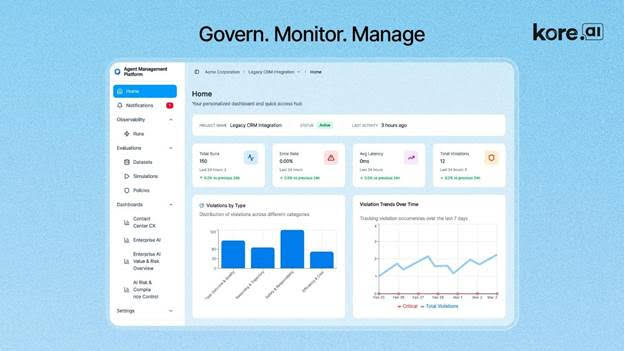
SAN FRANCISCO, CA — March 17, 2026 — Kore.ai, a provider of agentic applications and a market-leading enterprise AI platform, today announced the launch of its Agent Management Platform (AMP), a unified command center designed to govern, monitor, and manage AI agents and AI systems across the enterprise. 

As organizations rapidly deploy AI and multi-agent systems, many are encountering “AI sprawl,” a phenomena analysts describe as dozens of AI initiatives across different teams, tools, and clouds without centralized visibility or governance. Gartner predicts that by 2028, enterprises will operate thousands of AI agents across various business functions, making centralized management, policy enforcement, and value measurement critical for the responsible adoption of AI. 

The Kore.ai Agent Management Platform provides enterprises with a single operational layer to manage AI systems across frameworks, clouds, and development environments, including LangGraph, CrewAI, AutoGen, Google ADK, AWS AgentCore, Microsoft Foundry, Salesforce Agentforce, and proprietary systems. It consolidates AI observability, governance enforcement, performance monitoring, and value measurement, enabling organizations to move from fragmented AI experimentation to controlled, enterprise-scale deployment. 

Two core capabilities distinguish Agent Management Platform from other emerging solutions. First, the platform provides a comprehensive evaluation studio that allows enterprises to test agent behavior, workflows, and outcomes before production deployment, helping teams reduce uncertainty and accelerate time to reliable deployment. Second, AMP is designed to operate across heterogeneous AI environments. While similar governance offerings from established players are typically limited to their own ecosystems and many startup solutions have limited connectivity with enterprise applications, Kore.ai’s agnostic architecture and deep integration capabilities enable enterprises to connect and govern AI systems built across multiple frameworks, tools, and platforms. 

“AI agents are rapidly becoming the new software workforce inside enterprises,” said Prasanna Arikala, CTO and Head of Products at Kore.ai. “But without centralized governance, enterprises risk losing visibility and control over how AI operates across the organization. The Agent Management Platform introduces a new operational layer for enterprise AI, giving leaders the ability to manage AI agents with the same discipline, transparency, and accountability as any other critical business system.” 

Kore.ai Launches Agent Management Platform  to Bring Governance and Control to Enterprise AI


The new AMP platform integrates with AI agents built across leading frameworks and ecosystems, enabling organizations to manage heterogeneous AI environments through a unified control plane. Enterprises can now track AI performance and costs, enforce governance policies consistently, detect anomalies or drift, and align AI initiatives with measurable business outcomes. 

“AI is quickly becoming core infrastructure for how enterprises operate,” said Raj Koneru, CEO and Founder of Kore.ai. “But scaling AI responsibly requires more than powerful models; it requires governance, visibility, and accountability. With the Agent Management Platform, we are helping enterprises turn AI from isolated experiments into a trusted, enterprise capability that delivers real business value.” 

Designed to work across multi-agent environments and heterogeneous AI ecosystems, the Kore.ai Agent Management Platform provides organizations with a centralized foundation to govern AI adoption as it scales across the enterprise. 

Numeraire Future Trends Expands Partnerships with Three Contemporary Artists Using AI Authentication Technology

Abu Dhabi,  March 17— Numeraire Future Trends, the Abu Dhabi–based CultureTech company pioneering AI-powered Digital Product Passports (DPPs) for art, luxury goods, and cultural assets, today announced that three contemporary talented female artists have partnered with the company to secure the identity and provenance of their works using its object-level fingerprinting technology.

Emerging artists Megan Baker and Colette LaVette, represented exclusively by Gillian Jason Gallery, will integrate Numeraire’s proprietary AI-based authentication technology into their paintings. The platform creates tamper-resistant digital identities for each artwork, enabling collectors, galleries, and institutions to verify authenticity and provenance throughout the artwork’s lifecycle.

Exploring Old Master influences through a contemporary lens, Megan Baker’s lyrical abstractions transform into dream-like landscapes. Taking moments of stillness within nature, the artist reflects on our contained state as human beings, while evoking a quiet sense of comfort in solitude.

Colette LaVette’s practice borrows attributes from Rococo aesthetic, characterised by elaborate and ornamental decorations, lightness, a delicate chromatic palette and a focus on the fantastical.

Millie Foster: “As emerging artists, Baker and LaVette are taking steps to both create and secure their legacy. Numeraire’s technology is an important step to support this endeavour.”

Caroline Bergeron (ARO)

Numeraire has also onboarded Caroline Bergeron, known as Aro, a Quebec based artist whose work is gaining increasing visibility through prominent exhibitions and cultural events in Canada and internationally. Her abstract contemporary practice merges emotional intensity with refined visual sophistication, resulting in powerful, immersive works that leave a lasting imprint. Through this collaboration, she further affirms her commitment to innovation, transparency, and the long-term protection and value of her collectors’ acquisitions. “Every artwork holds a story, an energy, and a moment in time. Ensuring its authenticity for generations to come is a responsibility I take seriously as an artist.”