Numeraire Future Trends Expands Partnerships with Three Contemporary Artists Using AI Authentication Technology

Abu Dhabi,  March 17— Numeraire Future Trends, the Abu Dhabi–based CultureTech company pioneering AI-powered Digital Product Passports (DPPs) for art, luxury goods, and cultural assets, today announced that three contemporary talented female artists have partnered with the company to secure the identity and provenance of their works using its object-level fingerprinting technology.

Emerging artists Megan Baker and Colette LaVette, represented exclusively by Gillian Jason Gallery, will integrate Numeraire’s proprietary AI-based authentication technology into their paintings. The platform creates tamper-resistant digital identities for each artwork, enabling collectors, galleries, and institutions to verify authenticity and provenance throughout the artwork’s lifecycle.

Exploring Old Master influences through a contemporary lens, Megan Baker’s lyrical abstractions transform into dream-like landscapes. Taking moments of stillness within nature, the artist reflects on our contained state as human beings, while evoking a quiet sense of comfort in solitude.

Colette LaVette’s practice borrows attributes from Rococo aesthetic, characterised by elaborate and ornamental decorations, lightness, a delicate chromatic palette and a focus on the fantastical.

Millie Foster: “As emerging artists, Baker and LaVette are taking steps to both create and secure their legacy. Numeraire’s technology is an important step to support this endeavour.”

Caroline Bergeron (ARO)

Numeraire has also onboarded Caroline Bergeron, known as Aro, a Quebec based artist whose work is gaining increasing visibility through prominent exhibitions and cultural events in Canada and internationally. Her abstract contemporary practice merges emotional intensity with refined visual sophistication, resulting in powerful, immersive works that leave a lasting imprint. Through this collaboration, she further affirms her commitment to innovation, transparency, and the long-term protection and value of her collectors’ acquisitions. “Every artwork holds a story, an energy, and a moment in time. Ensuring its authenticity for generations to come is a responsibility I take seriously as an artist.”

Hungarian Study Offers New Insights into the Causes of Smartphone Addiction

According to research from Semmelweis University, problematic smartphone use is not caused by personality alone, but by weak self-control and a strong fear of missing out on social events (FoMO). The study published in Acta Psychologica also highlights that excessive phone use not only causes psychological difficulties, but can also lead to long-term physical consequences: Poor posture may impair balance, slow reaction time, and make it harder to concentrate.

Researchers at Semmelweis University investigated how smartphone use relates to mental and physical health, as well as cognitive functions, among students aged 18 to 35. In the online questionnaires, participants reported whether they had ever missed a planned task because of their phone use, and whether their phone was on their mind even when they weren’t using it. Participants were also asked about their daily active smartphone use and the types of activities they used their phones for.

The participants’ personality traits and mental state were also examined. One questionnaire measured neuroticism, meaning a tendency to experience negative emotions such as anxiety, low mood, fear, and anger. Another assessed self-control, and a third measured FoMO, the fear of missing out on events and peers’ activities.

Based on usage patterns, the researchers identified three groups. “Purely social” users relied on their phones mainly to communicate with friends and acquaintances, build social connections, and for social purposes. “Moderately process-oriented” users spent less than four to five hours a day on their phones for social purposes, news, entertainment, and passive scrolling, but spent less than four to five hours a day on their devices. About one third of participants were classified as “strong process-oriented” users, spending four to five hours or more per day on their phones, mainly for content consumption rather than social communication.

“Our main finding is that personality alone—such as a high level of neuroticism—does not make someone addicted to their phone. People who are more prone to negative emotions like anxiety, depression, or stress do not automatically become addicted. What really matters is how well they can control their behavior, emotions, and impulses, and how strongly they fear missing out,” said Dr. Johanna Takács, senior research fellow at the Faculty of Health Sciences at Semmelweis University and lead researcher of the study.

The study shows that the main problem is not the amount of time spent on phones, but how they are used. Passive scrolling on social media—such as watching short videos or browsing feeds—constantly exposes the brain to fast stimuli. This overloads attention, reduces concentration, and can cause mental fatigue over time.

Cognitive tests showed that “strong process-oriented” users performed worse on attention and memory tasks than expected for their age. They also slept worse, felt a stronger need for constant new stimulation and had more difficulty controlling their impulses when they wanted to check or do something immediately.

The study found that the duration of phone use was mainly associated with physical effects.

“When people hold their phones at waist or chest level and look down at them, the head moves forward, creating a forward head posture, also known as ‘text neck.’ This puts extra strain on the neck and can cause pain or early wear of the neck joints.

The neck contains sensors that tell the brain how the head is positioned. If a forward head posture is maintained for long periods, these signals can change and lead to balance problems. These effects are not limited to phone use but can also influence everyday movements,” said Beáta Seregély, assistant lecturer and expert responsible for the physical measurements in the study.

The researchers stress that the goal is not to ban phones or punish young people for using them. Instead, the focus should be on helping them use their phones more consciously. Simple steps can help, such as limiting notifications—especially from social media and messaging apps—setting time limits for social media, avoiding phone use before bedtime, and promoting more physical activity and maintaining good posture.

For mental prevention, it is especially important to help young people develop better self-control and feel less afraid of missing out on social events. This can be supported through behavioral training and psychological help. When self-control increases and fear of missing out decreases, personality-related vulnerability is no longer a major risk, and even more sensitive, anxious, or stress-prone individuals are much less likely to become addicted to their phones. 

Dr. Venkatesh Devanur Elected President of World Neem Organisation at International Neem Summit 2026

Hyderabad, March 17: Dr. Venkatesh Devanur, a Hyderabad-based agri-biotech entrepreneur and scientist, has been elected President of the World Neem Organisation (WNO) at the recently concluded 3rd International Neem Summit – 2026 and the 4th Global Neem Trade Fair, held in Pune.

The summit and trade fair were organised by the World Neem Organisation (WNO) and brought together researchers, industry representatives, farmers, and neem enthusiasts from across India and several other countries.

Dr. Venkatesh Devanur Elected President of World Neem Organisation at International Neem Summit 2026

The World Neem Organisation is an international non-profit body dedicated to promoting the neem tree and its benefits for agriculture, health, the environment, and industry. The organisation serves as a global platform for individuals and institutions working with neem to share knowledge, research, and resources while promoting the wider use of neem worldwide.

The key objectives of WNO include:

  • Promoting neem cultivation and plantation globally
  • Encouraging research on neem’s medicinal and agricultural benefits
  • Supporting the production and commercialization of neem-based products
  • Raising awareness about neem’s role in sustainable agriculture, healthcare, and environmental protection

Dr. Venkatesh Devanur has been actively involved in several agriculture-related organisations. He is the founding member and secretary of the BioAgri Inputs Producers Association (BIPA), one of the world’s oldest trade bodies in the bio-agriculture sector. Prior to his election as President, he served as Vice President of the World Neem Organisation.

He is also a Director in a joint venture with Koppert Biological Systems (Netherlands) and is widely recognised as a pioneer in India’s bio-pesticide and organic agriculture industry, leading companies that develop eco-friendly crop protection and soil health solutions.

The summit was attended by several distinguished guests, including Justice K. K. Tated, Chairman of the Animal Rights Commission, Government of Maharashtra, Dr. B. N. Vyas, President of WNO, along with leading scientists, industry representatives, and farmers.

During the conference, a White Paper on the Status of the Neem Industry was released. A documentary highlighting the importance of collecting and processing neem seeds and fruits was also launched to benefit neem seed and fruit suppliers, emphasizing the significance of proper collection and value addition within the neem supply chain.

The event witnessed participation from more than 150 delegates from India and overseas. Eminent scientists and experts presented research papers on the role of neem in agriculture, human health, cancer research, and other critical areas, creating opportunities for collaboration between academia and industry.

Turquoise Health Announces $40 Million Series C to Become the Operating System for Healthcare Contracts and Payments

SAN DIEGO, CA —March 17– Turquoise Health (“Turquoise”), a multi-sided healthcare pricing and payment platform, today announced it has raised $40 million in Series C funding. The round was led by Oak HC/FT, with participation from existing investors including Andreessen Horowitz, Adams Street Partners, and Yosemite.

Healthcare’s financial infrastructure is broken in a way that costs the industry nearly $1 trillion in administrative spend annually. The core problem is structural, with the contracts underlying every payment decision stored in disparate systems, inconsistently interpreted, and effectively invisible to the parties bound by them. The result is a world where it’s difficult for anyone to translate those rates into accurate payment amounts. The current system results in both sides losing money due to denials and administrative overhead, or needing to maintain teams of analysts to manage complex reimbursement scenarios and reviews of documentation. This also leads to the poor experience that most patients have with medical bills and the financial infrastructure supporting care. By centralizing data, contract information, and clinical coverage rules, Turquoise addresses the industry’s pricing opacity and revenue leakage, transforming the cost of care from a source of conflict and confusion into a clear, actionable source of truth.

Turquoise’s platform creates a new way to price, contract and transact in healthcare. Clear Rates synthesizes machine-readable files, claims data, Medicare benchmarks and all other relevant pricing signals into a single, auditable rate for every payer-provider combination. Contracts leverages AI to tag every rate and provision across a customers’ contract portfolio, turning static documents into a dynamic operating system so teams can find contract details, compare performance and model negotiation scenarios in a few clicks. Together, they lay the foundation for a fundamentally different healthcare transaction, one where standardized pricing and aligned contracts dissolve administrative waste and improve the patient experience by making same-day, transparent transactions the norm. Woven across the platform is AskTQ, the AI-powered pricing and contracting layer that cuts weeks of manual research down to seconds.

“Our goal has always been to move the industry toward clear, accurate, and actionable healthcare pricing,” said Chris Severn, CEO and Co-Founder of Turquoise. “By evolving from a data vendor to a full workflow and transaction platform, we are building the infrastructure for transparent, real-time payments. This round allows us to ensure that this model becomes the industry standard.”

Turquoise has demonstrated significant market momentum, with 35% of monthly active users now leveraging multiple products on the platform. The company’s platform is now utilized by more than 280 customers, including 10 of the top 25 health systems, 4 of the 5 national payers, 9 of the top 10 pharmaceutical companies, and 6 of the top 10 insurance brokers. The new capital will be used to assist with additional go-to-market efforts, accelerate the buildout of the product roadmap, and increase headcount. Turquoise has grown its team to nearly 200 employees since its founding 5 years ago and looks to add more talented, motivated people to the team.

“Turquoise is uniquely positioned at the center of the healthcare economy, leveraging a data moat bolstered by their subject matter expertise, extensive library of over 65,000 contracts and best-in-class user interface,” said Vig Chandramouli, Partner at Oak HC/FT. “We have tracked Chris and the team since 2021 and are impressed by their ability to expand adoption simultaneously across providers, payers, employers, and life sciences. Their platform doesn’t just provide data; it embeds transparency directly into the negotiation and payment workflows of the industry’s largest stakeholders.”

Pine Launches Message Gateway, Turns Everyday Messages Into AI-Powered Tasks

PALO ALTO, Calif. – March 17, 2026 – Pine, the trusted AI agent for consumers’ digital chores that delivers results, today announced Message Gateway, a new communication layer that allows users to interact with Pine’s AI assistant from anywhere, including messaging platforms, voice notes and phone calls, while Pine executes tasks in the background through AI agents.

By turning everyday messages into real-world actions, Message Gateway transforms Pine into an always-available assistant that operates across a user’s digital life. Message Gateway enables Pine to operate across time and channels, managing tasks that may run for minutes, hours or even weeks.

It transforms messaging from simple conversations into a control interface for AI agents that can perform real-world work.

“Most AI assistants today still live inside a single app,” said Pine CEO Stanley Wei. “But real life doesn’t happen inside one interface. With Message Gateway, Pine can meet users wherever they already communicate, whether that’s messaging, voice or mobile. Our goal is simple: You talk to Pine naturally, and Pine takes care of the work.”

Instead of having to open a specific application or interface to interact with an AI assistant, Message Gateway users simply send a message or speak naturally via channels like Telegram, WhatsApp, Slack or the Pine mobile app. Pine will understand the request, launch the appropriate AI agents and manage the task over time. The AI assistant tracks progress and keeps the user updated while tasks are completed.

Unlike most voice assistants designed for quick commands or chatbots built primarily to answer questions, Pine is designed to manage long-running tasks that require coordination, follow-up and execution across multiple systems. Instead of returning a single response, Pine can start tasks that unfold over time, interacting with services, making calls, researching information and keeping users informed as progress is made.

Key capabilities of Message Gateway include:

·        Multi-channel access: Users can interact with Pine through messaging platforms such as Telegram, WhatsApp, Slack and the Pine mobile app.

·        Voice and audio support: Voice notes and audio messages are automatically transcribed and processed, allowing users to speak naturally instead of typing.

·        Persistent task management: Tasks can run asynchronously for minutes, hours or days, while Pine tracks progress and provides updates.

·        Single assistant experience: Users interact with one assistant, while multiple AI agents work behind the scenes to complete tasks.

·        Real-world execution: Pine can perform actions such as negotiating bills, making calls, booking appointments, researching information or generating documents.

·        Context and memory: Pine remembers important details from conversations so users do not need to repeat themselves.

“What makes Pine different is that it doesn’t just answer questions; it actually handles things for you,” said a Pine user. “Being able to send a message and have Pine take care of a task in the background feels like having a real assistant.”

Message Gateway is part of the Pine AI assistant platform, a subscription-based service designed to help consumers delegate everyday digital tasks through natural conversation. Users can interact with Pine through messaging channels, voice or the Pine mobile app, while Pine manages the work through AI agents operating in the background.

Message Gateway represents a key step toward Pine’s broader vision of building an AI assistant that operates across a user’s entire digital life. Rather than requiring people to adopt another standalone app, Pine aims to create an AI operating layer for everyday tasks, where simple conversations become the interface for getting things done.

PwC India Foundation strengthens climate resilient livelihoods for more than 400 farming households through flood recovery initiatives

Chandigarh, March 17: PwC India Foundation (PwCIF) is expanding its commitment to integrated flood recovery interventions by supporting more than 400 farming households through climate-smart agriculture and rural livelihood interventions. In collaboration with Shramik Bharti, an NGO focused on grassroots development, PwCIF is aiding communities across Moga and Tarn Taran in Punjab to transition to natural farming, diversify income streams, and enhancing village-level disaster readiness.

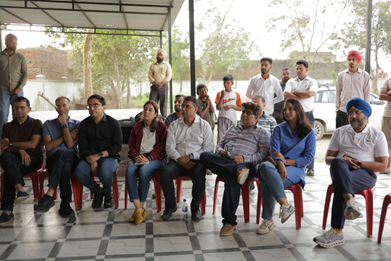
Sanjeev Krishan, Chairperson, PwC in India and Jaivir Singh, Vice Chairman, PwC India Foundation at the Model Farm along with farmers.

In Moga, the initiative begins at the household level. PwCIF is supporting more than 90 beneficiary households, with kitchen gardens and backyard poultry, to move towards natural farming, boosting household income and improving nutritional outcomes. Each garden, of about 600 sq. ft., provides year-round access to safe, chemical free vegetables and enables families to save an estimated INR 1,500–2,000 per month on vegetable purchases.

PwC India Foundation strengthens climate resilient livelihoods for more than 400 farming households through flood recovery initiatives


Climate‑smart cultivation in practice: farmers tending to crops on a flood‑recovered farm.

At the same time, the project is building proof points for scale. Ten multi-crop model farms are demonstrating how natural farming, intercropping and soil friendly practices can improve farm economics, with model farmers targeted to increase their incomes by 40%. As these practices gain traction, neighbouring farmers are beginning to replicate them, creating a growing circle of indirect beneficiaries.

Poultry rearing as a new income stream for farmers in Moga, complementing natural farming on their fields.

Farmer operating the community jaggery processing unit that adds value to locally grown sugarcane.

To further strengthen farm-based livelihoods, the initiative includes a community-based jaggery processing unit that supports value addition to locally grown sugarcane and better price realisation for farmers. Shared fossil fuel‑free multi-seeding drills are also being used as village-level tool banks to enhance farm efficiency and encourage climate-smart cultivation practices.

PwC India leadership team and NGO partner Shramik Bharti discussing with the Moga community about the impact of our programme and understanding the impact of floods in the region.

Arnab Basu, Partner and Chief Industries Officer, PwC India, at a nutrition garden in Moga.

As part of the ongoing efforts, the PwC India leadership team visited Moga to engage with farmers and community groups, assess the progress of natural farming and livelihood diversification projects, and reaffirm the organisation’s long-term dedication to disaster resilience and livelihood restoration programs.

“PwC India Foundation’s role in Punjab is centred around helping farming communities transition from crisis to resilience,” said Jaivir Singh, Vice Chairman, PwC India Foundation. “By merging natural farming, diversified livelihoods, and robust village institutions, we aim to support farmers in Moga and Tarn Taran to rebuild with dignity with these initiatives in turn creating replicable models that can be curated to different local contexts across more districts in the country.”

Integrated farming with livestock support on smallholder farms in Moga.

The successful implementation in Moga laid the foundation for an extension of the initiative to Tarn Taran. In this flood-affected border district, PwCIF is collaborating with more than 325 households to restore agricultural land, integrate natural farming, and strengthen village disaster response and resilience committees.

PwC India Leadership team along with farmer beneficiaries of the initiative

Beyond Moga and Tarn Taran, PwCIF’s broader engagement across India focuses on restoring livelihoods, strengthening critical local infrastructure and building community-led disaster preparedness across districts affected by floods. The Foundation aims to create integrated, scalable models that can support farming communities in navigating future climate and livelihood risks, while contributing to India’s long-term sustainable development.

New Era Cleantech Begins Development of India’s first greenfield Integrated Coal Gasification and Carbon Capture Complex in Chandrapur

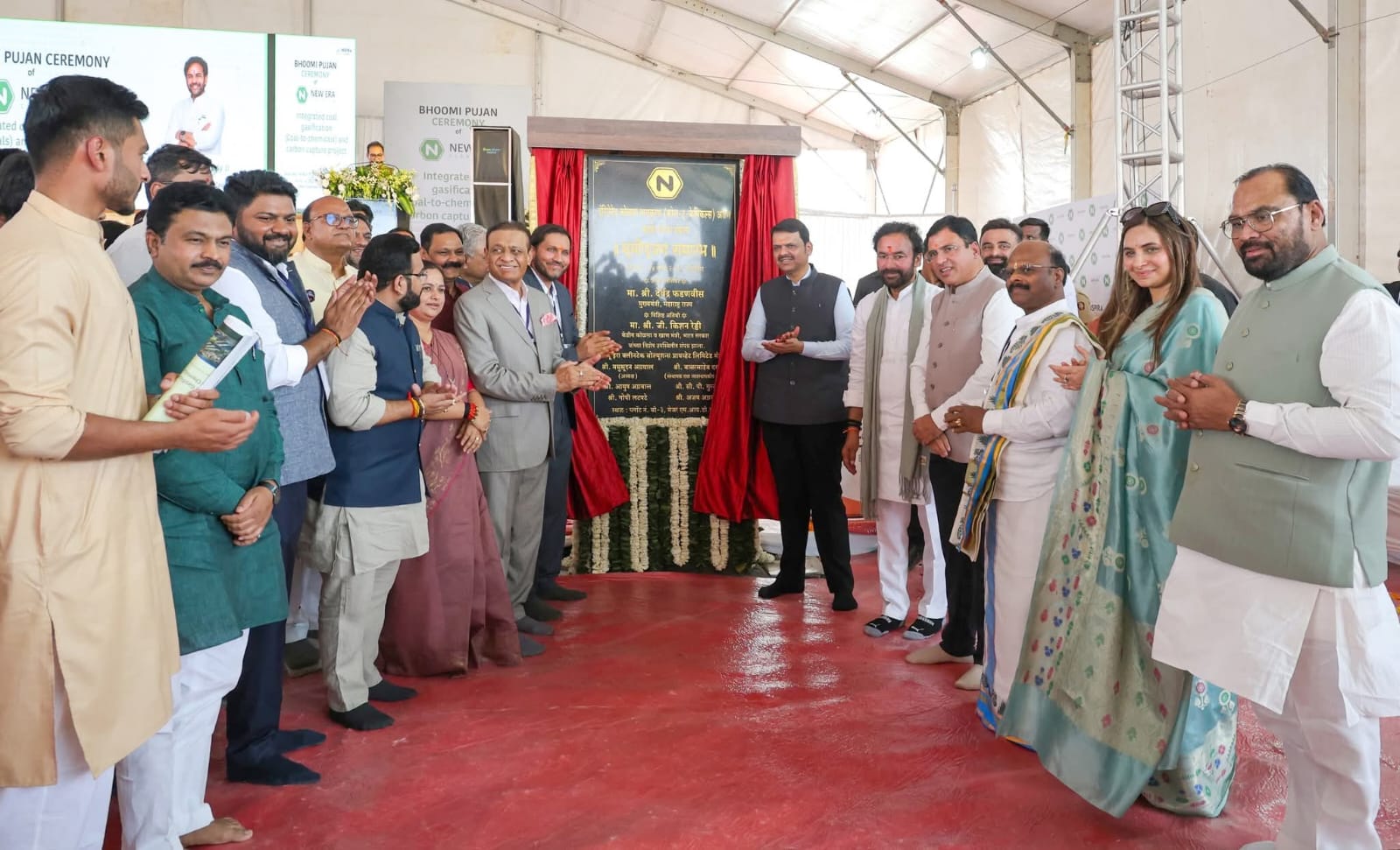
New Delhi, Mar 17: New Era Cleantech Solutions Pvt. Ltd. a company focused on developing coal gasification and coal-to-chemicals infrastructure in India, today conducted the Bhoomi Pujan ceremony for India’s first greenfield Integrated Coal Gasification and Carbon Capture Complex at Bhadrawati in Chandrapur, Maharashtra. The auspicious ceremony was performed by Hon’ble Chief Minister of Maharashtra Shri Devendra Fadnavis and was also attended by Union Minister of Coal & Mines Shri G. Kishan Reddy.

New Era Cleantech Begins Development of India's first greenfield Integrated Coal Gasification and Carbon Capture Complex in Chandrapur

 Spread across approximately 1,650 acres, the complex represents India’s most advanced coal-to-chemicals initiative, integrating state-of-the-art gasification technology with Carbon Capture, Utilisation and Storage (CCUS) infrastructure. The project will convert domestic coal into critical industrial chemicals and fuels used across sectors such as fertilisers, mining, textiles and packaging. Once operational, the facility will process over 5 million metric tonnes of coal annually, positioning it among India’s largest coal-to-chemicals initiatives. Environmental clearance has already been obtained, and a coal mine has been allocated to ensure a secure supply of raw material.

The development will be implemented in phases. Phase 1 will focus on the production of ammonia, ammonium nitrate, and mono ethylene glycol (MEG). Phase 2 will expand the product portfolio to include DME (Di Methyl Ether), urea, sustainable aviation fuel (SAF), and ethanol, thereby strengthening India’s domestic manufacturing capabilities for essential industrial inputs. The total investment in the project is ₹20,000 crores across the two phases.

India is currently heavily dependent on imported chemicals, fertilisers, and fuels which causes a persistent drain on foreign exchange reserves. This complex is a direct and large-scale response to this structural challenge, converting India’s abundant domestic coal reserves into products that India imports at significant cost.

Speaking at the ceremony, Shri Devendra Fadnavis, Hon’ble Chief Minister of Maharashtra, said

 “ I am delighted to inaugurate the India’s first greenfield Integrated Coal Gasification and Carbon Capture Complex in Chandrapur. I congratulate New Era Cleantech and on this occasion.”

Madhusudan Agrawal, Chairman, New Era Cleantech Solutions Pvt. Ltd states,

India has vast coal resources, and this project demonstrates how they can be utilised responsibly to build a strong domestic industrial ecosystem. Through the integration of advanced coal gasification technology and carbon capture infrastructure, we aim to produce critical chemicals, fuels and fertiliser inputs that India currently imports in large quantities. This complex will not only strengthen manufacturing self-reliance but also contribute to the creation of a circular carbon economy by utilising captured emissions productively. We believe initiatives like this will play an important role in supporting India’s long-term energy security, industrial growth and transition towards cleaner and more sustainable technologies.”

Balasaheb Darade, Managing Director, New Era Cleantech Solutions Pvt. Ltd said

 “The project represents a significant step toward strengthening Maharashtra’s industrial ecosystem and advancing domestic manufacturing of critical chemicals and fuels. The Bhoomi Pujan marks the formal commencement of on-ground development activities for the complex, which will be implemented in phases over the coming years. Once operational, the project is expected to help reduce India’s dependence on imported chemicals while supporting industrial growth and economic development in the Vidarbha region.”

New Era Cleantech Solutions was founded on a singular, ambitious conviction, that India’s vast coal reserves, when converted responsibly and efficiently through advanced gasification technology, can become the foundation of a new, self-reliant industrial economy, rather than merely an environmental liability.

Casagrand Launches No Pre-EMI Scheme for Homebuyers at Casagrand Caladium in Pune

Casagrand Launches No Pre-EMI Scheme for Homebuyers at Casagrand Caladium in Pune

Pune, Mar 17th: Casagrand, one of India’s leading real estate developers, has introduced a limited-period no PreEMI scheme at its premium residential project, Casagrand Caladium, located near Upper Kharadi in PuneThe offer, valid until 31st March 2026, is applicable exclusively on new bookings and is aimed at making homeownership more accessible for prospective buyers. 

At a time when many homebuyers are balancing rent, EMIs, and other financial commitments, the initiative reflects Casagrand’s continued focus on creating solutions that simplify the homebuying journey. Under the schemeCasagrand will bear the PreEMI commitment on behalf of the buyer for the committed tenure period, enabling customers to move closer to owning their home without the immediate burden of monthly instalments during the construction phase. 

The limited period offer has been designed to provide homebuyers with a simple, transparent and a convenient way to own a home. It will allow the homebuyer to avail of the scheme by simply booking the property and completing the home loan process within the stipulated timelines. 

Casagrand Caladium offers thoughtfully designed spacious 2 & 3 BHK homes along with 110+ modern lifestyle amenities which includes 1800 sft. Infinity pool, amphitheatre, Yoga court, Multi-purpose court and many more. The property offers 70% open space and a Singapore styled façade. The property is strategically located near Upper Kharadi, one of Pune’s fastest-growing residential corridors and well-connected to renowned schools, colleges, IT hubs and other social infrastructures.

ICMAI to Convene Industry Leaders at RISE India Leadership Summit 2026

New Delhi, March 17, 2026: 

The The Institute of Cost Accountants of India (ICMAI), a statutory body established under an Act of Parliament and functioning under the administrative jurisdiction of the Ministry of Corporate Affairs, Government of India, is organising the RISE India Leadership Summit 2026 on March 18, 2026, at Shangri-La Eros.

ICMAI to Host RISE India Leadership Summit 2026 in New Delhi

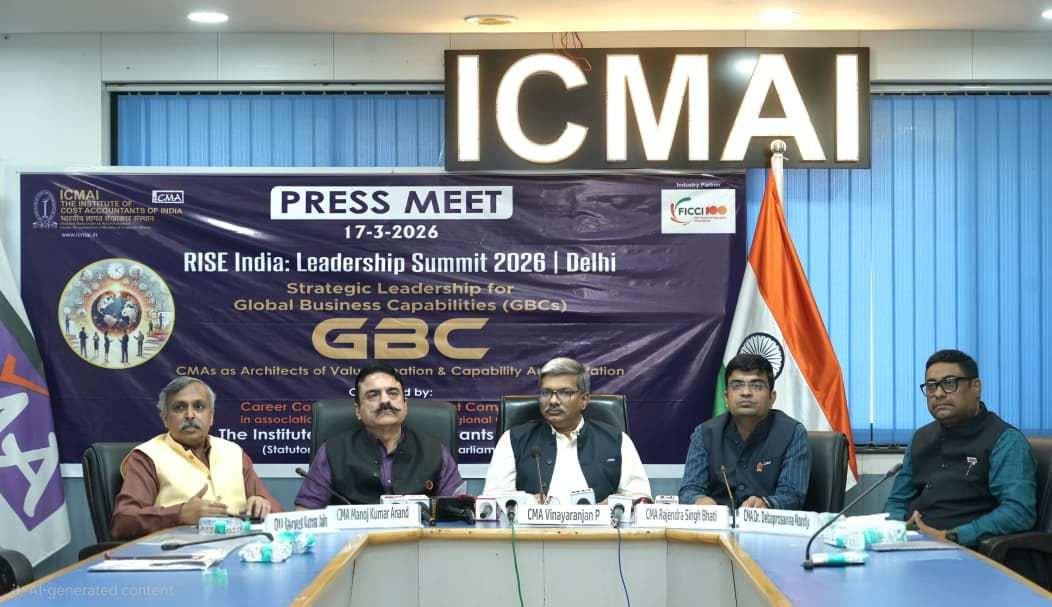
(L–R): CMA Navneet Kumar Jain, Council Member, ICMAI; CMA Manoj Kumar Anand, Council Member, ICMAI; CMA Vinayaranjan P, Chairman, Career Counselling & Placement Committee, ICMAI; CMA Rajendra Singh Bhati, Council Member, ICMAI; CMA Dr. Debaprosanna Nandy, Secretary Officiating, ICMAI

The announcement was made today during a press conference hosted by ICMAI at its headquarters in New Delhi.

The Summit will focus on the theme: “Strategic Leadership for Global Capability Centre – CMAs as Architects of Value Creation & Capability Augmentation.”

The Leadership Summit aims to provide a dynamic platform for thought leadership and meaningful dialogue on the evolving role of strategic leadership in driving organisational transformation, enhancing global competitiveness, and creating sustainable value. The event will highlight the critical contribution of Cost and Management Accountants (CMAs) in strengthening Global Capability Centres (GCCs) and modern enterprises.

The Summit will witness participation from an eminent gathering of CEOs, CFOs, Directors, senior corporate leaders, HR professionals, senior government officials, and industry representatives, making it a significant forum for collaboration, knowledge exchange, and strategic insights.

The event is being spearheaded by the leadership of ICMAI, including TCA Srinivasa Prasad, President; Neeraj Dhananjay Joshi, Vice President; Vinayaranjan P, Chairman, Career Counselling & Placement Committee; along with Council Members including Manoj Kumar Anand, Rajendra Singh Bhati, Navneet Kumar Jain, Dr D P Nandy, Secretary, and Rakesh Yadav, Chairman, ICMAI-NIRC, along with other Council Members, who are contributing to make the event a grand success.

Eminent speakers from leading organizations such as Microsoft India, Indian Oil Corporation Limited, Accenture, Apple India Private Limited, Power Finance Corporation Limited, BHEL, National Small Industries Corporation Limited (NSIC), REC Limited, Central Warehousing Corporation, Cement Corporation of India Limited, KRIBHCO Green Energy Pvt Ltd, TPM Consultants Pvt Ltd are expected to deliver insightful sessions at the summit.

Federal Bank Inaugurates New Branch at Okhla Industrial Estate, New Delhi

New Delhi, Mar 17: Federal Bank today announced the inauguration of its new branch at Okhla Industrial Estate, Phase I, New Delhi, further strengthening its presence in one of the capital’s key industrial and MSME hubs.

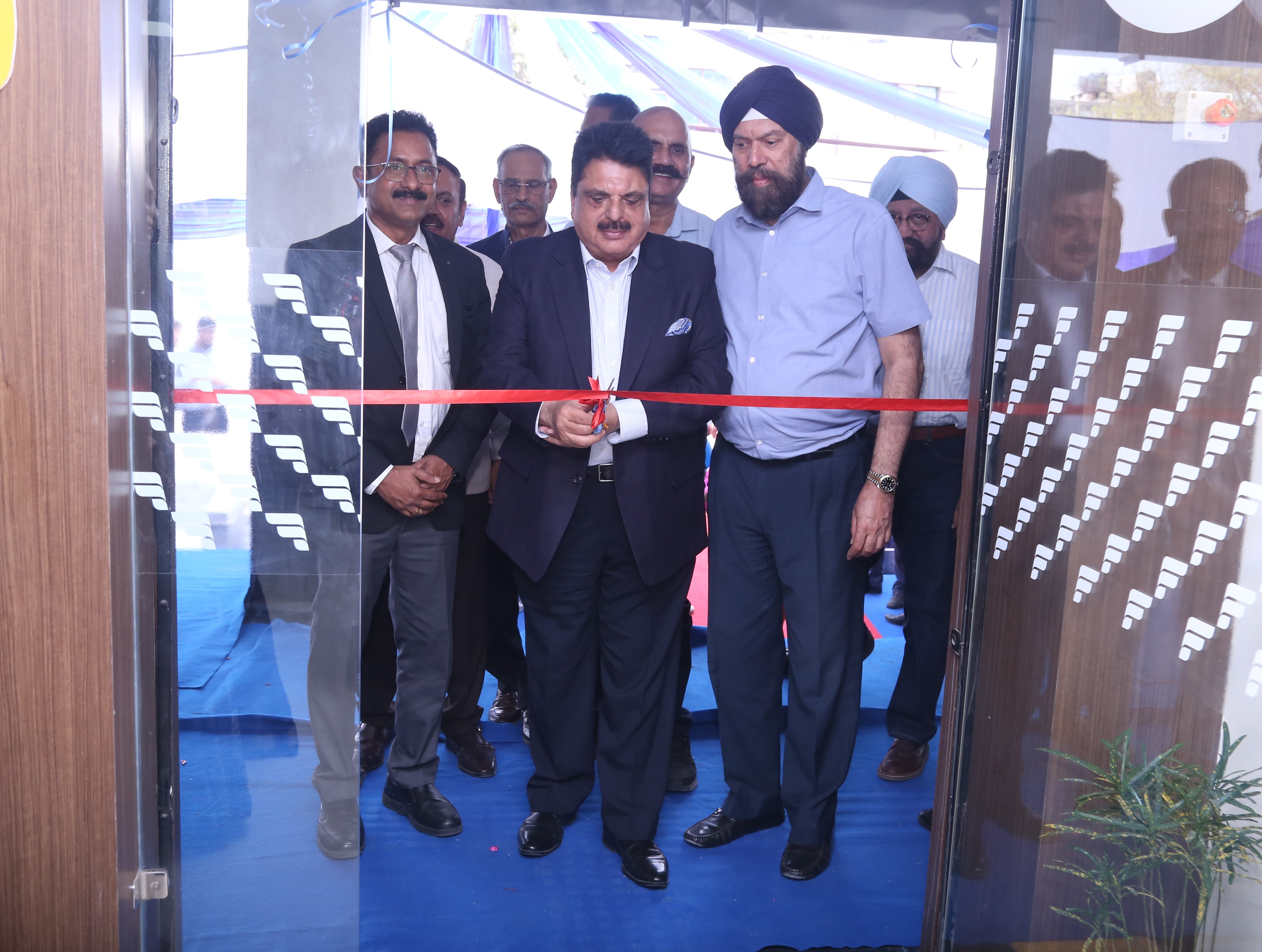
Federal Bank Inaugurates New Branch at Okhla Industrial Estate, New Delhi

The inauguration ceremony was marked by the presence of prominent dignitaries and industry representatives. Shri Sunil Malhotra, President of the Okhla Industries Association, inaugurated the branch. Shri Vinay Baveja, President of the Okhla Printing Press Association (OPPA), inaugurated the strong room, while the ATM-cum-Cash Deposit Machine (CDM) was inaugurated by Shri Y.C. Jain, General Secretary of the Okhla Industries Association.

The event was presided over by Vinod Kumar R, Vice President and New Delhi Zonal Head of the Bank. Other distinguished attendees included Shri Harshpal S. Sawhney, Senior Vice President of the Okhla Industries Association; Shri Jugesh Arora, Organising Secretary of the Association; Shri Augustine Ambat Joseph, Managing Director of Console Industries; and Shri Sunny Dahuja, Deputy Vice President and New Delhi Regional Head of the Bank, along with valued customers and officials from nearby branches.

In his address, Vinod Kumar R highlighted the critical role of MSMEs as the backbone of India’s economy and emphasized the strategic importance of Okhla as a thriving industrial cluster. He noted that the new branch will enable the Bank to better cater to the financial needs of entrepreneurs, manufacturers, traders, and small businesses in the region.

The newly inaugurated branch is equipped with modern infrastructure and advanced technology, designed to deliver a seamless and efficient banking experience to customers.

Now in its ninth decade of operations, Federal Bank continues to expand its footprint through a robust “phygital” strategy, combining an extensive branch network with industry-leading digital capabilities.