Wama’s Newest Exhibition Unearths The Mysterious World Beneath Our Feet

WAMA’s newest exhibition, Entanglements with Fungi: Life, Death and Renewal, is opening at the National Centre for Environmental Art on March 21. This exhibition brings together a group of multidisciplinary artists who explore the Kingdom Fungi, a mysterious underworld that acts as the bridge between interspecies life. 

Wama’s Newest Exhibition Unearths The Mysterious World Beneath Our Feet


Through a compelling mix of reflections on art, science, history, and politics, Entanglements with Fungi: Life, Death and Renewal focuses on the cycles of life, death, and renewal that exist within this hidden kingdom. 

The multi-sensory exhibition features a mix of traditional and experimental projects. Highlights include works created from local earth and materials created through the fungus recycling process, paintings based on data that tracks how mushrooms grow, and an artists’ book that stretches eight metres across the gallery. 

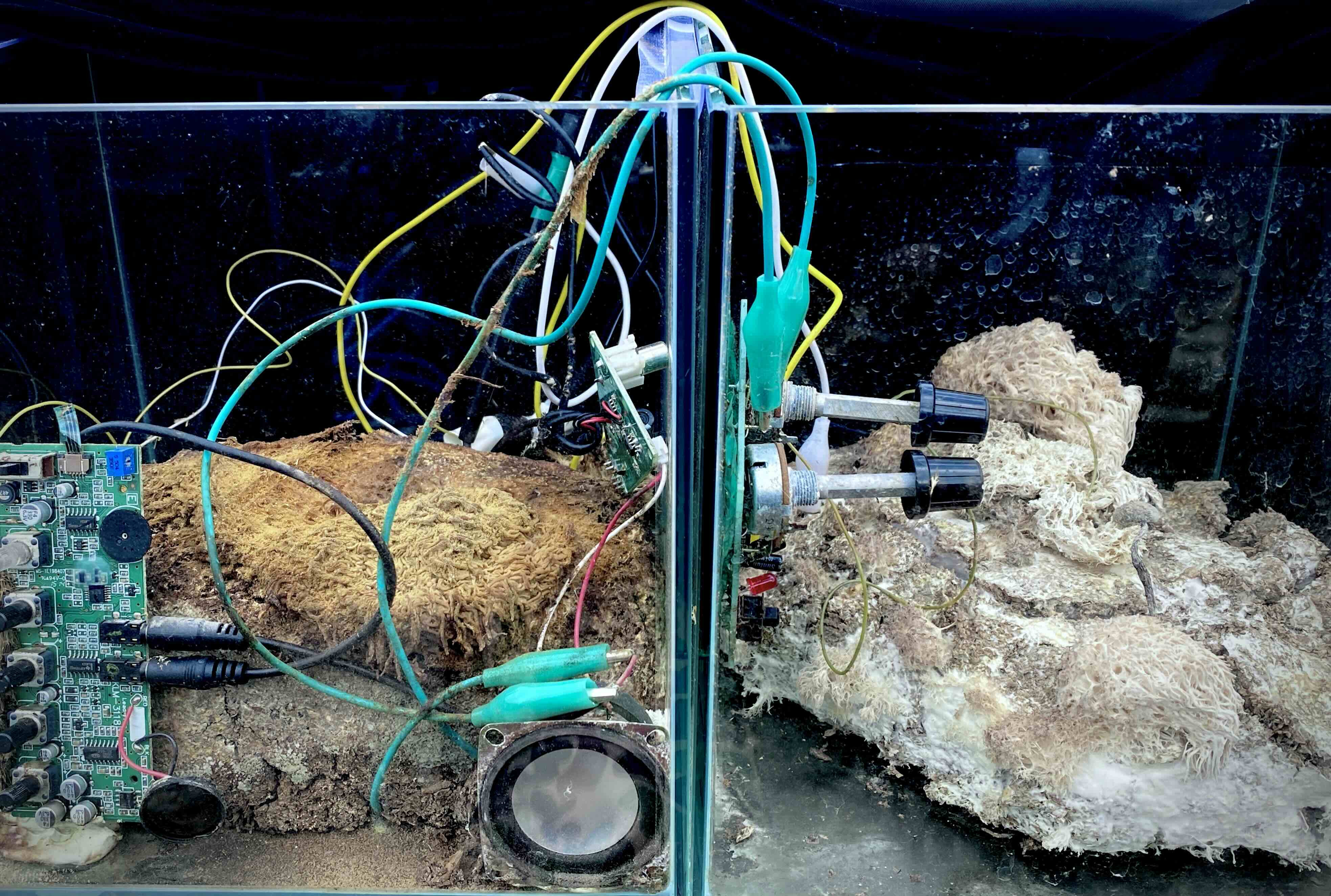
The gallery also features digital projections of the forest floor, sound installations made from recordings of tree roots and soil, and live experiments where sensors track the movement of growing fungi. 

“The artists invite you to imagine what it might feel like to see, or hear, or smell, through the nurturing exchanges between species which are often remote from the immediacy of our human senses. They ask you to imagine what it might feel like to be something other than human,” says exhibition curator Dr Felicity Spear. 
Wama’s Newest Exhibition Unearths The Mysterious World Beneath Our Feet


Neither plant nor animal, fungi underpin all ecosystems, living in water, on trees, in the air, and even on our bodies. Their networks span kilometres and they are linked to every function on the planet, from food security to pharmaceutical medicines. Despite this, they remain largely misunderstood and their future is threatened by the impact of human influences. 

“WAMA at Gariwerd is building a bridge between nature and culture, prompting us to think about human culture not as separate from, but intertwined with Earth’s hidden networks and ecological systems, mutually shaping each other,” says Spear. 

Exhibiting artists include UK environmental artist Chris Drury, sound artist Vicki Hallett, environmental photographer Alison Pouliot and handmade book and digital collage artists Gracia Haby & Louise Jennison. 

Other artists include Sam Leach, Chris Henschke, Debbie Symons, and the curator herself, Felicity Spear. 

Situated at the foothills of Gariwerd/Grampians National Park, WAMA offers a distinctive new cultural experience that unites contemporary art and environmental consciousness across a 16-hectare precinct and includes the Gariwerd Endemic Botanic Garden and Jallukar Native Grasslands alongside the National Centre for Environmental Art – Australia’s only institution dedicated exclusively to the intersection of art and the environment. 

EXHIBITION LAUNCH EVENT 

Mushroom Masterclass with Alison Pouliot

Saturday 21 March 10am to 12.30pm

This hands-on workshop is designed to change the way the forest floor is seen. Learn the basics of mushroom identification, how to tell edible species from toxic look-alikes, and where to find the most interesting fungi in the wild.

Tickets are extremely limited, $75.

-ENDS-

Dabur turns ingredient storytelling into a cultural exploration with influencer-led IP ‘Miswaknama’

New Delhi, Mar 17: Dabur has launched Miswaknama, a digital-first influencer-led initiative for Dabur MeswakToothpaste that takes audiences on a journey across India to rediscover Miswak, the natural ingredient long associated with traditional oral care.

The initiative blends travel, culture and wellness, with regional creators exploring the presence and legacy of the Miswak tree across different parts of the country. Through the campaign, the brand aims to introduce Miswak to new-age consumers and position it as a relevant natural ingredient in today’s wellness conversations.

Exploring Miswak across India

In its first phase, Miswaknama travelled across five culturally diverse regions of India. Regional travel influencers documented their journeys as they explored local landscapes and traditions while tracing the role of Miswak in natural oral care practices.

The stories were primarily shared on Instagram, where audiences followed the creators as they navigated different terrains, interacted with local communities and uncovered the heritage of Miswak in everyday life. Each journey offered a glimpse into how traditional ingredients continue to remain relevant in modern wellness routines.

Turning an ingredient story into a cultural narrative

With Miswaknama, Dabur Meswak aims to move beyond conventional ingredient storytelling by presenting Miswak through the lens of travel and culture. The initiative highlights the connection between nature, tradition and oral care while making the narrative more engaging for younger, digitally native audiences. 

By collaborating with regional storytellers, the brand blends authentic travel experiences with wellness education, encouraging audiences to rediscover ingredients that have been part of traditional oral care practices for generations.

Excited about the campaign Prashant Agarwal, Marketing Head – Oral Care, Dabur said,

“With Miswaknama, we wanted to move beyond conventional ingredient communication and celebrate the rich cultural heritage behind Miswak. For generations, Miswak has been associated with natural oral care traditions, and through this initiative we aim to rediscover and share its story with a new generation of consumers. By collaborating with regional creators and exploring different parts of India, we are bringing the legacy of Miswak closer to audiences in a format that is engaging, authentic and rooted in culture.”

Executing the campaign Amrita Sharma, Founder, Mixed Route Juice (Agency) said,

“With Miswaknama, the idea was to transform an ingredient story into a cultural journey. By bringing together travel, local narratives and wellness, we created an influencer-led storytelling format that allows audiences to experience the heritage of Miswak in an immersive way. Partnering with regional creators helped us capture authentic perspectives while building a narrative that resonates with today’s digitally native consumers.”

      Business News For Profit

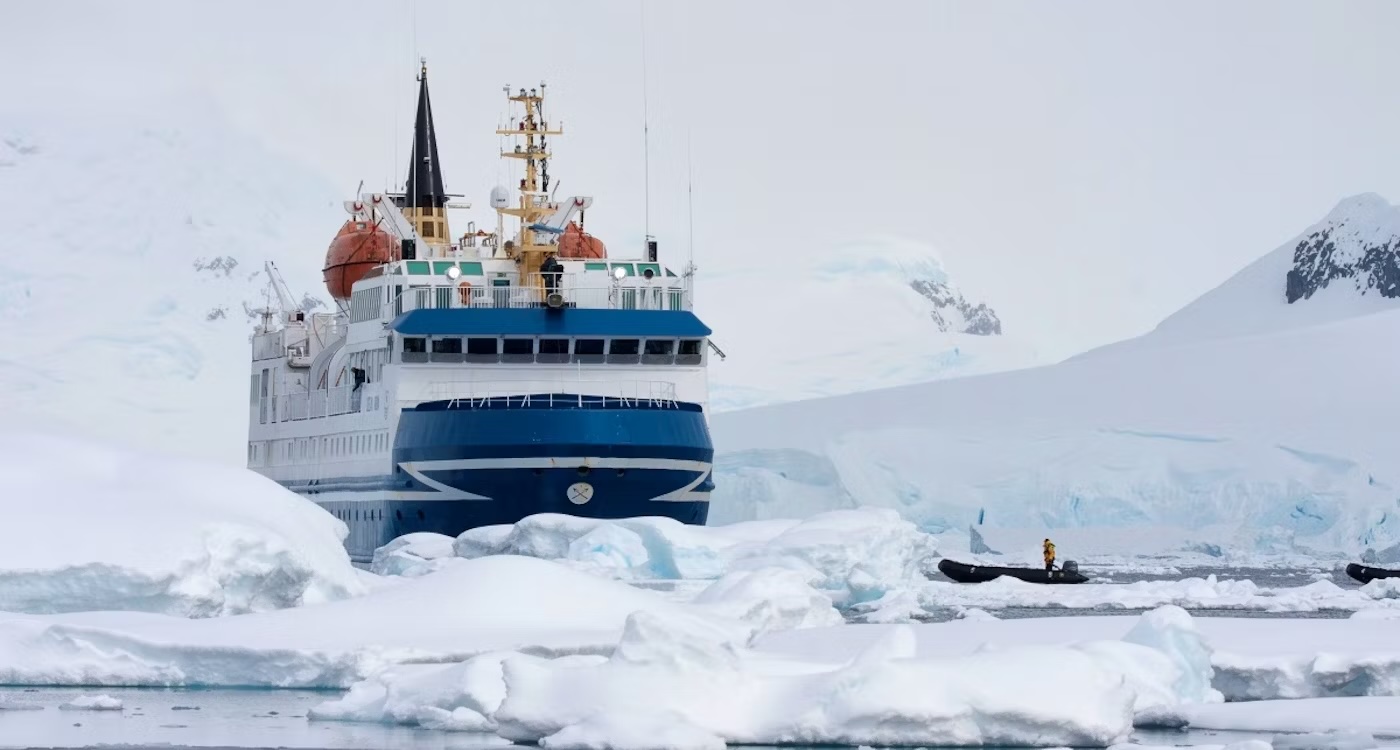
Polar Latitudes Expeditions Adds Discoverer to Fleet, Expanding Antarctic Adventures for Global Travellers

Mar 17:  Expedition cruise specialist Polar Latitudes Expeditions today announced the addition of a new expedition vessel, Discoverer, to its fleet, enhancing its Antarctic offerings for the 2026–2027 season.

Polar Latitudes Expeditions Adds Discoverer to Fleet, Expanding Antarctic Adventures for Global Travellers

 Previously known as Exploris One, Discoverer joins the company’s Antarctica programme and replaces the current ship Seaventure, marking a key milestone in Polar Latitudes’ strategic transition from chartered vessels to owned ships. This move allows the company greater control over the expedition experience, ensuring immersive, expert-led journeys for travellers.

“By replacing a chartered vessel with one that we own, we strengthen our ability to shape the expedition experience from start to finish,” said Anders Kristensen, Chief Commercial Officer at Polar Latitudes Expeditions. “This enables us to refine every aspect of the journey—from expedition planning to onboard learning—so travellers can experience Antarctica in the most immersive way possible.”

A Ship with a Legacy in Polar Exploration

Built at Finland’s renowned Rauma shipyard, Discoverer has sailed some of the world’s most remote waters under several notable names, including Silver Explorer and Prince Albert II. The vessel underwent a major refurbishment in 2023, featuring upgraded guest accommodations, modernised technical systems, and redesigned public spaces. Ahead of its Antarctic debut with Polar Latitudes, further enhancements are planned to align the ship with the company’s small-ship expedition philosophy, which emphasises deeper exploration, expert-led learning, and responsible travel in fragile environments.

Expanded Antarctic Access

Discoverer will operate all previously scheduled departures originally planned for Seaventure, with guests sailing in equivalent cabin categories. The vessel’s addition also allows Polar Latitudes to expand its Antarctic departure calendar, offering more sailings during peak travel months. Highlights include the company’s iconic Crossing the Antarctic Circle itinerary, a milestone journey sought after by expedition travellers worldwide.

Exploring New Frontiers Beyond Antarctica

When not navigating Antarctic waters, Discoverer will operate voyages for sister brand Heritage Expeditions, exploring remote corners of the globe. In early 2027, the vessel will venture into new territory, navigating the dramatic Chilean fjords and introducing Patagonia to Polar Latitudes’ expedition portfolio for the first time.

Growing Interest Among Indian Expedition Travellers

The expansion comes amid rising interest in expedition cruising and polar travel among Indian luxury and adventure travellers, who increasingly seek once-in-a-lifetime journeys to destinations such as Antarctica and the Arctic. With small ships, expert expedition teams, and immersive wildlife encounters, Polar Latitudes Expeditions aims to offer travellers a deeper understanding of pristine environments while maintaining a strong commitment to responsible exploration.

A New Chapter for Polar Latitudes

For founder John McKeon, the addition of Discoverer represents the next phase of the company’s evolution.

“We have had many successful seasons with Seaventure, and we are grateful for the journeys we have shared,” he said. “At the same time, Discoverer represents the next step in our long-term vision of building one of the most comprehensive expedition cruise programmes in the industry. There is much more to come.”

Integrating Ancient Wisdom with Modern Knowledge, crucial to achieve sustainability aver experts at Amity

Integrating Ancient Wisdom with Modern Knowledge, crucial to achieve sustainability aver experts at Amity


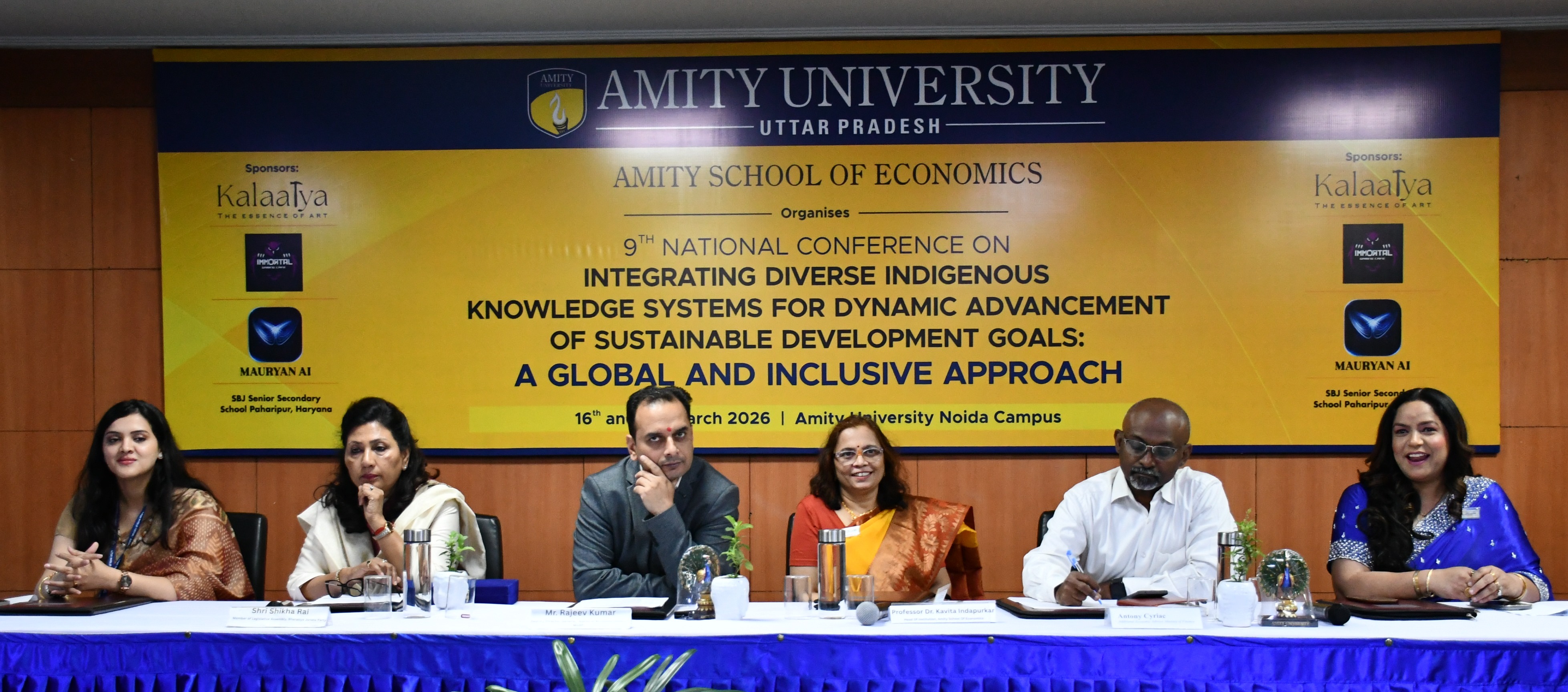
Mar 17: Amity School of Economics, Amity University Uttar Pradesh Noida campus is organizing its 9th National Conference on the theme “Integrating Diverse Indigenous Knowledge Systems for Dynamic Advancement of Sustainable Development Goals” from 16th-17th March, 2026.

Addressing the students during the Inaugural Session, Ms. Shikha Rai, MLA(Delhi), Bhartiya Janta Party, averred, “Sustainability cannot exist without wisdom and therefore, every citizen needs to be extremely careful, wise and responsible, so as to safeguard the planet. Tribal communities have developed agricultural and ecological practices that sustain both livelihoods and ecosystem. These communities inherited sustainability as a way of life. India is building ancient sustainable systems into modern governance. Under the visionary leadership of our Prime Ministers, India has taken crucial steps in combining ancient wisdom with modern innovation. Therefore, India has launched global missions like “Mission Life” which encourages sustainable living inspired by traditional values. The well- being of humanity and the well-being of nature are inseparable, this is why India model of development is based on “Sabka Saath, Sabka Vikaas.”

Mr. Rajeev Kumar, Director, National Accounts Division, Ministry of Statistics and Programme Implementation (MoSPI), said, “If we have to make things sustainable, we must go local and focus on indigenous development, at grassroot level. Traditional knowledge needs to be combined with policy framework, which can be helpful in removing the challenges and obstacles. We need to work on rediscovering traditional medicines since we know the harmful effects of antibiotics on human body. Also, there is a need to brainstorm about how we can revive ancient wisdom and apply it in the present context.”

Mr. Antony Cyriac, Additional Economic Advisor, Ministry of Finance, stated, “When a country is capital deficient, skilled labour cannot flow. Therefore, skill development is essential for making the country economically strong and we need to develop our own systems of resilience. We must know the stage of development in order to make further development in all areas. Ancient wisdom is important, however, we should not be dependent on ancient wisdom for development, rather we must integrate it with modern practices.”

Mr. Atul Kharate, Chief Operating Officer, Indian Oil Adani Ventures, opined, “There is only 6.8% contribution by India in cleaner use of fossil fuels which needs to be increased. Conservation of fossil fuels, biogas and renewable energy are required to achieve a sustainable economy. We should be committed to holistic energy conservation system which includes a comprehensive approach to saving energy, thereby contributing to sustainability.”

Keynote Speaker, Ms. Tanushri Roy, Policy Consultant, Niti Aayog, asserted, “It is important to align traditional medicine with Sustainable Development Goals. Some of the initiatives which have been taken by the government to achieve sustainability include building traditional knowledge digital library, bringing back ayurveda and ancient systems of medicine, establishment of National Innovation Foundation which is working to strengthen technological innovations by integrating it with traditional knowledge, adopting chemical-free agriculture practices, participation of tribal communities in various sectors and many other initiatives. We all must support these initiatives of the government and make our own contribution towards achieving sustainability.”

Welcoming the guests, Prof. (Dr.) Kavita Indapurkar, Assistant Director, Amity School of Economics, said “The Conference will demonstrate the role of Indigenous Knowledge systems for attaining the Sustainable Development Goals. It will also help in facilitating interdisciplinary studies between heritage, science and sustainability in the light of Indian ethos, by providing a national platform to bring together policymakers, practitioners and innovators towards achieving SDGs.”

During the two-day Conference, Technical Sessions on “Integrating Diverse IKS for Dynamic Advancement of Sustainable Development Goals: A Global and Inclusive Approach”, “Enabled Digital Finance and Accounting: Inclusion, Sustainability, and Transparency, “Inspired Governance and Public Service Innovation: Sustainability, Inclusion, and Digital Transformation in a Global Framework”, “Infused Tech Solutions for Sustainable Socio-Economic Progress”, and many others will be conducted.

Retail Digital Payments Surge to Over 22,000 Crore Transactions in FY25: Finance Minister

New Delhi, March 17: India’s retail digital payment transactions have witnessed rapid growth over the past four financial years, driven by coordinated efforts of the government, the Reserve Bank of India (RBI) and the National Payments Corporation of India (NPCI), the government informed the Lok Sabha.

In a written reply, Nirmala Sitharaman, Union Minister of Finance, said the total volume of retail digital payments rose from 7,176.90 crore transactions in FY 2021–22 to 22,167.90 crore transactions in FY 2024–25.

During the same period, the value of transactions increased from ₹457.44 lakh crore in FY 2021–22 to ₹849.12 lakh crore in FY 2024–25, reflecting sustained expansion in India’s digital payments ecosystem.

According to the data shared in Parliament, digital payments recorded 58.42 percent growth in volume and 28.41 percent growth in value in FY 2022–23, followed by 44.39 percent and 22.47 percent growth respectively in FY 2023–24. In FY 2024–25, transactions continued to rise with 35.04 percent growth in volume and 18.04 percent growth in value.

Among various digital payment modes, the Unified Payments Interface (UPI) accounted for 81 percent of total retail digital payments in FY 2024–25, making it the largest real-time retail payment system in the world.

The growth of digital payments has been supported by factors such as increasing smartphone penetration, Aadhaar-enabled authentication, e-KYC, expanded financial inclusion, and wider merchant acceptance infrastructure across urban and rural areas. India’s digital public infrastructure has also enabled interoperability and simplified onboarding processes for users.

Government initiatives such as the Incentive Scheme for Promotion of Digital Payments and the Payment Infrastructure Development Fund (PIDF) have further supported the expansion of digital payment systems.

The Finance Minister noted that the rise in digital payments has also brought challenges including cybersecurity risks, digital literacy gaps, network issues and user awareness, though no specific concerns related to Maharashtra and Andhra Pradesh have been reported.

To combat digital financial fraud, the government, RBI and NPCI have implemented several safeguards, including device binding between mobile numbers and devices, two-factor authentication through PIN, daily transaction limits and restrictions on certain use cases. NPCI has also introduced an AI and machine learning-based fraud monitoring system to detect suspicious transactions.

Citizens can report cybercrime incidents, including financial fraud, through the National Cybercrime Reporting Portal and the National Cybercrime Helpline number 1930, launched by the Ministry of Home Affairs.

Additionally, the Department of Telecommunications has introduced the Digital Intelligence Platform (DIP) and the “Chakshu” facility, enabling people to report suspicious communications received through calls, SMS, or WhatsApp.

To improve digital payment infrastructure in rural and remote areas, the PIDF initiative has supported the deployment of about 5.80 crore digital touchpoints and nearly 56.86 crore QR codes across the country.

For users in low-connectivity regions and feature phone users, NPCI has introduced UPI 123PAY, which allows payments through interactive voice response (IVR) and sound-based proximity payments, and Hello UPI, which enables conversational digital payments.

The government has also focused on improving financial literacy. As of March 31, 2025, a total of 2,421 Centres for Financial Literacy (CFLs) have been established across India, each covering three blocks. In addition, Financial Literacy Week, observed annually since 2016, continues to promote awareness about safe and responsible use of digital financial services.

National Mission on Libraries Strengthens Digital Access and Upgrades Library Infrastructure Across India

New Delhi, March 17: The National Mission on Libraries (NML) is progressing across multiple components aimed at strengthening library infrastructure, digital access to knowledge, and capacity building of library professionals across India, the government informed in the Lok Sabha.

In a written reply, Gajendra Singh Shekhawat, Union Minister for Culture and Tourism, said the mission operates through four key components, including the National Virtual Library of India, model libraries, library surveys, and capacity-building programmes.

Digital Knowledge Access through NVLI

Under the National Virtual Library of India (NVLI) component, the Indian Culture Portal was launched in December 2019 to provide unified digital access to resources related to India’s cultural traditions, history, literature, arts and heritage.

The Version 2.0 of the portal, launched on March 5, 2026, introduces a modern architecture with a React-based frontend and Drupal backend, improving performance and scalability.

The upgraded portal features an AI-powered chatbot “Bharti”, integrated with the Government of India’s Bhashini language platform, enabling assistance in 22 Indian languages. It also offers advanced multi-level search, operates as a Progressive Web App, and includes 3D walkthroughs, virtual tours, 46 curated cultural categories, and interactive learning activities.

Model Libraries Across States

Under the Setting up of NML Model Libraries component, financial assistance has been sanctioned for 28 State Central Libraries, 41 District Libraries, and five libraries under the Ministry of Culture to upgrade facilities and services.

Libraries upgraded under the scheme are spread across states and union territories including Port Blair, Itanagar, Ambala, Bengaluru, Thiruvananthapuram and Bhubaneswar, among others.

For instance, in Rajasthan, financial assistance has been provided to Dr. Radhakrishnan Rajya Kendriya Pustakalaya, Jaipur with ₹183.51 lakh sanctioned (₹94.81 lakh released) and Rajakiya Sarvajanik Mandal Pustakalaya, Kota with ₹63.46 lakh sanctioned (₹63.21 lakh released).

Survey and Capacity Building

The Quantitative and Qualitative Survey of Libraries component has been completed and the report has been accepted by the Ministry.

Under the Capacity Building Programme, 54 training programmes have been organised so far, training 2,465 library professionals from across the country.

State Responsibility for Libraries

The government clarified that libraries fall under the State List in the Seventh Schedule of the Constitution of India, and therefore public libraries are managed by respective State and Union Territory authorities.

However, the NML scheme provides financial assistance for upgrading one State Central Library and one District Library in each State or Union Territory, based on recommendations from the concerned state authorities.

According to the government, a total of ₹8,671.01 lakh has been sanctioned under the mission, of which ₹6,716.56 lakh has been released so far for library development across the country.

The initiative aims to modernise India’s library ecosystem, expand digital knowledge access, and strengthen the country’s reading and research infrastructure.

Sahitya Akademi Announces Awards for 24 Indian Languages for 202

New Delhi, March 17: Sahitya Akademi has announced the Sahitya Akademi Awards 2025 for outstanding literary works in 24 Indian languages recognised by the national literary body. The awards cover a diverse range of genres including poetry, novels, short stories, essays, literary criticism, autobiography, and memoirs.

According to the Akademi, the awards this year include eight books of poetry, four novels, six short story collections, two essay collections, one work of literary criticism, one autobiography, and two memoirs.

The selection process for the awards began in January 2025 with an open advertisement issued on 30 January 2025. The awardees were recommended by distinguished jury members across the 24 languages, and the final selections were approved by the competent authority of the Akademi.

Among the notable winners are Devabrat Das for the Assamese novel Karhi Khelar Sadhu, Navtej Sarna for the English novel Crimson Spring, N. Prabhakaran for the Malayalam novel Maayaamanushyar, and Mamta Kalia for the Hindi memoir Jeete Jee Allahabad.

In the poetry category, awards have been announced for Shrestha Kabita by Prasun Bandyopadhyay (Bengali), Thakur Satsayie by Khajur Singh Thakur (Dogri), Bhattkhadaki by Yogesh Vaidya (Gujarati), Najdavanek’y Pot Aalav by Ali Shaida (Kashmiri), Padapurana by Girijakumar Baliyar Singh (Odia), Prasthanacatustaye Brahmaghosah by Mahamahopadhyaya Sadhu Bhadreshdas (Sanskrit), Animesha by Nandini Sidha Reddy (Telugu), and Safar Jaari Hai by Pritpal Singh Betab (Urdu).

The short story category includes works such as Dada Seerisu Tande by Amaresh Nugadoni (Kannada), Kanglamdriba Eephut by Haobam Nalini (Manipuri), Safety Kit by Jinder (Punjabi), Bharkhama by Jitender Kumar Soni (Rajasthani), Mid Birna Chenne Saon Inag Sagai by Sumitra Soren (Santali), and Waghoo by Bhagwan Atlani (Sindhi).

The awards also recognise essay collections such as Konkani Kavyem: Rupani Ani Rupakam by Henry Mendonca (H.M. Pernal) in Konkani and Nepali Paramparik Sanskriti Ra Sabhyata Ko Dukuti by Prakash Bhattarai in Nepali.

In addition, Sa. Tamilselvan received the award for literary criticism for Thamiz Sirukathaiyin Thadangal (Tamil), while Raju Baviskar was honoured for the Marathi autobiography Kalyanilya Resha. The memoir category includes Jeete Jee Allahabad by Mamta Kalia (Hindi) and Dhatri Paat San Gaam by Mahendra (Maithili).

The Sahitya Akademi Award carries a casket containing an engraved copper plaque, a shawl, and a cash prize of ₹1,00,000. The awardees will be honoured at a presentation ceremony scheduled on March 31, 2026, in New Delhi.

Established as India’s national academy of letters, Sahitya Akademi annually recognises literary excellence across multiple Indian languages, promoting the richness and diversity of the country’s literary traditions.

Department of Posts Launches ‘24 Speed Post’ for Next-Day Guaranteed Delivery in Six Cities

New Delhi, March 17: The Department of Posts has launched ‘24 Speed Post’, a next-day guaranteed delivery service designed for urgent and time-sensitive consignments. The service was formally launched on March 17, 2026, at the Rangbhawan Auditorium in Akashwani Bhawan.

The launch ceremony was attended by Jyotiraditya M. Scindia, Union Minister of Communications, and Chandra Sekhar Pemmasani, Minister of State for Communications, along with senior officials of the postal department.

The 24 Speed Post service introduces next-day guaranteed delivery (D+1) for consignments sent through the premium postal network. In the first phase, the service will be available in six major metropolitan cities — New Delhi, Mumbai, Chennai, Kolkata, Bengaluru and Hyderabad.

In addition to the new offering, the department will also provide 24 and 48 Speed Post services, ensuring assured D+1 and D+2 delivery timelines. These services will be supported through dedicated processing windows and priority air transmission, enabling faster handling and transportation of consignments.

The upgraded Speed Post services will include several customer-centric features such as OTP-based secure delivery, end-to-end tracking with SMS alerts, Buy Now Pay Later (BNPL) facility for business customers, free pickup for bulk bookings, API integration, and centralized billing.

The department has also introduced a money-back guarantee in case of delivery delays, reinforcing the reliability of its premium express delivery services.

Officials said the initiative is aimed at strengthening India Post’s express logistics capabilities and enhancing service standards for businesses and individual customers requiring fast and secure delivery solutions.

TEC to Host International Workshop on 6G Standardisation in New Delhi on March 18

New Delhi, March 17: The Telecommunication Engineering Centre (TEC), the technical arm of the Department of Telecommunications under the Ministry of Communications, will organise an International Workshop on 6G Standardisation on March 18, 2026, at Vigyan Bhawan.

The workshop aims to advance India’s participation in the global development of sixth-generation (6G) telecommunications technologies and aligns with the government’s vision of Atmanirbhar Bharat and the Bharat 6G Vision, which seeks to position India as a leading contributor to the design, development, and deployment of 6G technologies by 2030.

The event will bring together experts from government, industry, academia, and international standardisation organisations to deliberate on the evolving global roadmap for 6G technologies and to strengthen India’s engagement in the international standards development process.

Jyotiraditya M. Scindia, Union Minister of Communications and Minister for Development of North Eastern Region, will deliver the inaugural address at the workshop. A special address will be delivered by Pemmasani Chandra Sekhar, Minister of State for Communications and Minister of State for Rural Development.

Senior officials from the Department of Telecommunications, representatives from international telecom organisations, industry leaders, technology experts, and members of the research community are expected to participate in the discussions.

The workshop will feature several technical sessions and expert deliberations focusing on critical aspects of the emerging 6G ecosystem, including:

  • Global roadmap for 6G standardisation

  • Evolution of network architecture for next-generation communication systems

  • Spectrum planning for future mobile networks

  • Integration of Artificial Intelligence and Machine Learning in telecom networks

  • Security and trust frameworks for future communication systems

  • Developments in Radio Access Network (RAN) technologies

  • Emerging 6G applications and use cases

  • India’s roadmap towards 2030 for next-generation communications

Strengthening domestic innovation and enhancing India’s role in global telecom standardisation will remain the central focus of the workshop.

As international discussions around IMT-2030 and future mobile systems gain momentum, the event is expected to provide an important platform to review global developments and explore opportunities for expanding India’s role in shaping the future architecture of global telecommunications.

India’s Wholesale Inflation Rises to 2.13% in February 2026

New Delhi, March 17: India’s annual wholesale price inflation rose to 2.13 percent in February 2026, according to provisional data based on the All India Wholesale Price Index (WPI). The increase was primarily driven by higher prices in manufactured products, basic metals, non-food articles, food articles, and textiles.

The WPI index for all commodities stood at 158.2 in February 2026, compared to 157.8 in January 2026 and 157.2 in December 2025. The inflation rate rose from 1.81 percent in January 2026 and 0.96 percent in December 2025, indicating a steady upward trend in wholesale prices.

Among the major components, Primary Articles recorded an inflation rate of 3.27 percent in February 2026, while Manufactured Products saw inflation at 2.92 percent. In contrast, Fuel and Power continued to record negative inflation at –3.78 percent during the month.

The Food Index, which includes food articles and food products, registered 1.85 percent inflation year-on-year in February 2026, compared to 1.41 percent in January 2026.

On a month-on-month basis, the WPI increased by 0.25 percent in February 2026 compared with January 2026.

The Primary Articles index declined by 0.52 percent to 192.9 in February 2026, mainly due to lower prices of food articles (–1.33 percent) and minerals (–1.21 percent). However, prices of crude petroleum and natural gas (4.17 percent) and non-food articles (0.83 percent) registered an increase during the month.

The Fuel and Power index rose by 1.17 percent, reaching 147.6 in February 2026, mainly driven by a 2.05 percent rise in mineral oil prices, while electricity prices declined by 0.27 percent.

Meanwhile, the Manufactured Products index increased by 0.47 percent to 148.2 in February 2026. Out of the 22 two-digit manufacturing groups, 16 groups recorded price increases, while five groups saw declines. Key sectors showing price increases included other manufacturing, food products, textiles, electrical equipment, and chemicals.

However, price declines were observed in sectors such as basic metals, computer and electronic products, fabricated metal products, wood products, and leather-related products during February compared with January 2026.

The WPI Food Index declined slightly from 194.2 in January 2026 to 192.9 in February 2026, though the year-on-year inflation rate rose to 1.85 percent.

The final WPI for December 2025 stood at 157.2 with an inflation rate of 0.96 percent. The provisional WPI for February 2026 was compiled with a weighted response rate of 83.9 percent, while the final December figures were based on a 93.1 percent response rate.

The next WPI data release for March 2026 is scheduled for April 14, 2026.