Retail Digital Payments Surge to Over 22,000 Crore Transactions in FY25: Finance Minister

New Delhi, March 17: India’s retail digital payment transactions have witnessed rapid growth over the past four financial years, driven by coordinated efforts of the government, the Reserve Bank of India (RBI) and the National Payments Corporation of India (NPCI), the government informed the Lok Sabha.

In a written reply, Nirmala Sitharaman, Union Minister of Finance, said the total volume of retail digital payments rose from 7,176.90 crore transactions in FY 2021–22 to 22,167.90 crore transactions in FY 2024–25.

During the same period, the value of transactions increased from ₹457.44 lakh crore in FY 2021–22 to ₹849.12 lakh crore in FY 2024–25, reflecting sustained expansion in India’s digital payments ecosystem.

According to the data shared in Parliament, digital payments recorded 58.42 percent growth in volume and 28.41 percent growth in value in FY 2022–23, followed by 44.39 percent and 22.47 percent growth respectively in FY 2023–24. In FY 2024–25, transactions continued to rise with 35.04 percent growth in volume and 18.04 percent growth in value.

Among various digital payment modes, the Unified Payments Interface (UPI) accounted for 81 percent of total retail digital payments in FY 2024–25, making it the largest real-time retail payment system in the world.

The growth of digital payments has been supported by factors such as increasing smartphone penetration, Aadhaar-enabled authentication, e-KYC, expanded financial inclusion, and wider merchant acceptance infrastructure across urban and rural areas. India’s digital public infrastructure has also enabled interoperability and simplified onboarding processes for users.

Government initiatives such as the Incentive Scheme for Promotion of Digital Payments and the Payment Infrastructure Development Fund (PIDF) have further supported the expansion of digital payment systems.

The Finance Minister noted that the rise in digital payments has also brought challenges including cybersecurity risks, digital literacy gaps, network issues and user awareness, though no specific concerns related to Maharashtra and Andhra Pradesh have been reported.

To combat digital financial fraud, the government, RBI and NPCI have implemented several safeguards, including device binding between mobile numbers and devices, two-factor authentication through PIN, daily transaction limits and restrictions on certain use cases. NPCI has also introduced an AI and machine learning-based fraud monitoring system to detect suspicious transactions.

Citizens can report cybercrime incidents, including financial fraud, through the National Cybercrime Reporting Portal and the National Cybercrime Helpline number 1930, launched by the Ministry of Home Affairs.

Additionally, the Department of Telecommunications has introduced the Digital Intelligence Platform (DIP) and the “Chakshu” facility, enabling people to report suspicious communications received through calls, SMS, or WhatsApp.

To improve digital payment infrastructure in rural and remote areas, the PIDF initiative has supported the deployment of about 5.80 crore digital touchpoints and nearly 56.86 crore QR codes across the country.

For users in low-connectivity regions and feature phone users, NPCI has introduced UPI 123PAY, which allows payments through interactive voice response (IVR) and sound-based proximity payments, and Hello UPI, which enables conversational digital payments.

The government has also focused on improving financial literacy. As of March 31, 2025, a total of 2,421 Centres for Financial Literacy (CFLs) have been established across India, each covering three blocks. In addition, Financial Literacy Week, observed annually since 2016, continues to promote awareness about safe and responsible use of digital financial services.


National Mission on Libraries Strengthens Digital Access and Upgrades Library Infrastructure Across India

New Delhi, March 17: The National Mission on Libraries (NML) is progressing across multiple components aimed at strengthening library infrastructure, digital access to knowledge, and capacity building of library professionals across India, the government informed in the Lok Sabha.

In a written reply, Gajendra Singh Shekhawat, Union Minister for Culture and Tourism, said the mission operates through four key components, including the National Virtual Library of India, model libraries, library surveys, and capacity-building programmes.

Digital Knowledge Access through NVLI

Under the National Virtual Library of India (NVLI) component, the Indian Culture Portal was launched in December 2019 to provide unified digital access to resources related to India’s cultural traditions, history, literature, arts and heritage.

The Version 2.0 of the portal, launched on March 5, 2026, introduces a modern architecture with a React-based frontend and Drupal backend, improving performance and scalability.

The upgraded portal features an AI-powered chatbot “Bharti”, integrated with the Government of India’s Bhashini language platform, enabling assistance in 22 Indian languages. It also offers advanced multi-level search, operates as a Progressive Web App, and includes 3D walkthroughs, virtual tours, 46 curated cultural categories, and interactive learning activities.

Model Libraries Across States

Under the Setting up of NML Model Libraries component, financial assistance has been sanctioned for 28 State Central Libraries, 41 District Libraries, and five libraries under the Ministry of Culture to upgrade facilities and services.

Libraries upgraded under the scheme are spread across states and union territories including Port Blair, Itanagar, Ambala, Bengaluru, Thiruvananthapuram and Bhubaneswar, among others.

For instance, in Rajasthan, financial assistance has been provided to Dr. Radhakrishnan Rajya Kendriya Pustakalaya, Jaipur with ₹183.51 lakh sanctioned (₹94.81 lakh released) and Rajakiya Sarvajanik Mandal Pustakalaya, Kota with ₹63.46 lakh sanctioned (₹63.21 lakh released).

Survey and Capacity Building

The Quantitative and Qualitative Survey of Libraries component has been completed and the report has been accepted by the Ministry.

Under the Capacity Building Programme, 54 training programmes have been organised so far, training 2,465 library professionals from across the country.

State Responsibility for Libraries

The government clarified that libraries fall under the State List in the Seventh Schedule of the Constitution of India, and therefore public libraries are managed by respective State and Union Territory authorities.

However, the NML scheme provides financial assistance for upgrading one State Central Library and one District Library in each State or Union Territory, based on recommendations from the concerned state authorities.

According to the government, a total of ₹8,671.01 lakh has been sanctioned under the mission, of which ₹6,716.56 lakh has been released so far for library development across the country.

The initiative aims to modernise India’s library ecosystem, expand digital knowledge access, and strengthen the country’s reading and research infrastructure.

Sahitya Akademi Announces Awards for 24 Indian Languages for 202

New Delhi, March 17: Sahitya Akademi has announced the Sahitya Akademi Awards 2025 for outstanding literary works in 24 Indian languages recognised by the national literary body. The awards cover a diverse range of genres including poetry, novels, short stories, essays, literary criticism, autobiography, and memoirs.

According to the Akademi, the awards this year include eight books of poetry, four novels, six short story collections, two essay collections, one work of literary criticism, one autobiography, and two memoirs.

The selection process for the awards began in January 2025 with an open advertisement issued on 30 January 2025. The awardees were recommended by distinguished jury members across the 24 languages, and the final selections were approved by the competent authority of the Akademi.

Among the notable winners are Devabrat Das for the Assamese novel Karhi Khelar Sadhu, Navtej Sarna for the English novel Crimson Spring, N. Prabhakaran for the Malayalam novel Maayaamanushyar, and Mamta Kalia for the Hindi memoir Jeete Jee Allahabad.

In the poetry category, awards have been announced for Shrestha Kabita by Prasun Bandyopadhyay (Bengali), Thakur Satsayie by Khajur Singh Thakur (Dogri), Bhattkhadaki by Yogesh Vaidya (Gujarati), Najdavanek’y Pot Aalav by Ali Shaida (Kashmiri), Padapurana by Girijakumar Baliyar Singh (Odia), Prasthanacatustaye Brahmaghosah by Mahamahopadhyaya Sadhu Bhadreshdas (Sanskrit), Animesha by Nandini Sidha Reddy (Telugu), and Safar Jaari Hai by Pritpal Singh Betab (Urdu).

The short story category includes works such as Dada Seerisu Tande by Amaresh Nugadoni (Kannada), Kanglamdriba Eephut by Haobam Nalini (Manipuri), Safety Kit by Jinder (Punjabi), Bharkhama by Jitender Kumar Soni (Rajasthani), Mid Birna Chenne Saon Inag Sagai by Sumitra Soren (Santali), and Waghoo by Bhagwan Atlani (Sindhi).

The awards also recognise essay collections such as Konkani Kavyem: Rupani Ani Rupakam by Henry Mendonca (H.M. Pernal) in Konkani and Nepali Paramparik Sanskriti Ra Sabhyata Ko Dukuti by Prakash Bhattarai in Nepali.

In addition, Sa. Tamilselvan received the award for literary criticism for Thamiz Sirukathaiyin Thadangal (Tamil), while Raju Baviskar was honoured for the Marathi autobiography Kalyanilya Resha. The memoir category includes Jeete Jee Allahabad by Mamta Kalia (Hindi) and Dhatri Paat San Gaam by Mahendra (Maithili).

The Sahitya Akademi Award carries a casket containing an engraved copper plaque, a shawl, and a cash prize of ₹1,00,000. The awardees will be honoured at a presentation ceremony scheduled on March 31, 2026, in New Delhi.

Established as India’s national academy of letters, Sahitya Akademi annually recognises literary excellence across multiple Indian languages, promoting the richness and diversity of the country’s literary traditions.

Department of Posts Launches ‘24 Speed Post’ for Next-Day Guaranteed Delivery in Six Cities

New Delhi, March 17: The Department of Posts has launched ‘24 Speed Post’, a next-day guaranteed delivery service designed for urgent and time-sensitive consignments. The service was formally launched on March 17, 2026, at the Rangbhawan Auditorium in Akashwani Bhawan.

The launch ceremony was attended by Jyotiraditya M. Scindia, Union Minister of Communications, and Chandra Sekhar Pemmasani, Minister of State for Communications, along with senior officials of the postal department.

The 24 Speed Post service introduces next-day guaranteed delivery (D+1) for consignments sent through the premium postal network. In the first phase, the service will be available in six major metropolitan cities — New Delhi, Mumbai, Chennai, Kolkata, Bengaluru and Hyderabad.

In addition to the new offering, the department will also provide 24 and 48 Speed Post services, ensuring assured D+1 and D+2 delivery timelines. These services will be supported through dedicated processing windows and priority air transmission, enabling faster handling and transportation of consignments.

The upgraded Speed Post services will include several customer-centric features such as OTP-based secure delivery, end-to-end tracking with SMS alerts, Buy Now Pay Later (BNPL) facility for business customers, free pickup for bulk bookings, API integration, and centralized billing.

The department has also introduced a money-back guarantee in case of delivery delays, reinforcing the reliability of its premium express delivery services.

Officials said the initiative is aimed at strengthening India Post’s express logistics capabilities and enhancing service standards for businesses and individual customers requiring fast and secure delivery solutions.

TEC to Host International Workshop on 6G Standardisation in New Delhi on March 18

New Delhi, March 17: The Telecommunication Engineering Centre (TEC), the technical arm of the Department of Telecommunications under the Ministry of Communications, will organise an International Workshop on 6G Standardisation on March 18, 2026, at Vigyan Bhawan.

The workshop aims to advance India’s participation in the global development of sixth-generation (6G) telecommunications technologies and aligns with the government’s vision of Atmanirbhar Bharat and the Bharat 6G Vision, which seeks to position India as a leading contributor to the design, development, and deployment of 6G technologies by 2030.

The event will bring together experts from government, industry, academia, and international standardisation organisations to deliberate on the evolving global roadmap for 6G technologies and to strengthen India’s engagement in the international standards development process.

Jyotiraditya M. Scindia, Union Minister of Communications and Minister for Development of North Eastern Region, will deliver the inaugural address at the workshop. A special address will be delivered by Pemmasani Chandra Sekhar, Minister of State for Communications and Minister of State for Rural Development.

Senior officials from the Department of Telecommunications, representatives from international telecom organisations, industry leaders, technology experts, and members of the research community are expected to participate in the discussions.

The workshop will feature several technical sessions and expert deliberations focusing on critical aspects of the emerging 6G ecosystem, including:

  • Global roadmap for 6G standardisation

  • Evolution of network architecture for next-generation communication systems

  • Spectrum planning for future mobile networks

  • Integration of Artificial Intelligence and Machine Learning in telecom networks

  • Security and trust frameworks for future communication systems

  • Developments in Radio Access Network (RAN) technologies

  • Emerging 6G applications and use cases

  • India’s roadmap towards 2030 for next-generation communications

Strengthening domestic innovation and enhancing India’s role in global telecom standardisation will remain the central focus of the workshop.

As international discussions around IMT-2030 and future mobile systems gain momentum, the event is expected to provide an important platform to review global developments and explore opportunities for expanding India’s role in shaping the future architecture of global telecommunications.

India’s Wholesale Inflation Rises to 2.13% in February 2026

New Delhi, March 17: India’s annual wholesale price inflation rose to 2.13 percent in February 2026, according to provisional data based on the All India Wholesale Price Index (WPI). The increase was primarily driven by higher prices in manufactured products, basic metals, non-food articles, food articles, and textiles.

The WPI index for all commodities stood at 158.2 in February 2026, compared to 157.8 in January 2026 and 157.2 in December 2025. The inflation rate rose from 1.81 percent in January 2026 and 0.96 percent in December 2025, indicating a steady upward trend in wholesale prices.

Among the major components, Primary Articles recorded an inflation rate of 3.27 percent in February 2026, while Manufactured Products saw inflation at 2.92 percent. In contrast, Fuel and Power continued to record negative inflation at –3.78 percent during the month.

The Food Index, which includes food articles and food products, registered 1.85 percent inflation year-on-year in February 2026, compared to 1.41 percent in January 2026.

On a month-on-month basis, the WPI increased by 0.25 percent in February 2026 compared with January 2026.

The Primary Articles index declined by 0.52 percent to 192.9 in February 2026, mainly due to lower prices of food articles (–1.33 percent) and minerals (–1.21 percent). However, prices of crude petroleum and natural gas (4.17 percent) and non-food articles (0.83 percent) registered an increase during the month.

The Fuel and Power index rose by 1.17 percent, reaching 147.6 in February 2026, mainly driven by a 2.05 percent rise in mineral oil prices, while electricity prices declined by 0.27 percent.

Meanwhile, the Manufactured Products index increased by 0.47 percent to 148.2 in February 2026. Out of the 22 two-digit manufacturing groups, 16 groups recorded price increases, while five groups saw declines. Key sectors showing price increases included other manufacturing, food products, textiles, electrical equipment, and chemicals.

However, price declines were observed in sectors such as basic metals, computer and electronic products, fabricated metal products, wood products, and leather-related products during February compared with January 2026.

The WPI Food Index declined slightly from 194.2 in January 2026 to 192.9 in February 2026, though the year-on-year inflation rate rose to 1.85 percent.

The final WPI for December 2025 stood at 157.2 with an inflation rate of 0.96 percent. The provisional WPI for February 2026 was compiled with a weighted response rate of 83.9 percent, while the final December figures were based on a 93.1 percent response rate.

The next WPI data release for March 2026 is scheduled for April 14, 2026.

India’s Total Exports Reach USD790.86 Billion in April–February FY26, Register 5.79 percent Growth

New Delhi, March 17: India’s cumulative exports of merchandise and services during April–February 2025–26 are estimated at US$ 790.86 billion, compared to US$ 747.58 billion during the same period in 2024–25, registering a growth of 5.79 percent, according to the latest trade data.

The cumulative value of merchandise exports during April–February 2025–26 stood at US$ 402.93 billion, up from US$ 395.66 billion recorded during April–February 2024–25, reflecting a positive growth of 1.84 percent.

Meanwhile, non-petroleum exports during the same period reached US$ 354.12 billion, marking an increase of 5.03 percent compared to US$ 337.17 billion in April–February 2024–25.

The export performance in February 2026 was driven by several key sectors, including engineering goods, electronic goods, organic and inorganic chemicals, gems and jewellery, and meat, dairy and poultry products.

Exports of engineering goods rose by 12.90 percent, increasing from US$ 9.17 billion in February 2025 to US$ 10.36 billion in February 2026. Similarly, electronic goods exports recorded a 10.37 percent growth, rising from US$ 3.79 billion to US$ 4.18 billion during the same period.

Exports of organic and inorganic chemicals grew by 6.85 percent, increasing from US$ 2.23 billion in February 2025 to US$ 2.38 billion in February 2026. Gems and jewellery exports also witnessed growth of 4.08 percent, rising from US$ 2.53 billion to US$ 2.64 billion.

A notable surge was recorded in the meat, dairy and poultry products sector, where exports increased by 22.66 percent, climbing from US$ 0.45 billion in February 2025 to US$ 0.55 billion in February 2026.

Overall, India’s total exports (merchandise and services combined) for February 2026 are estimated at US$ 76.13 billion, registering a growth of 11.05 percent compared to February 2025.

During the same month, total imports (merchandise and services combined) were estimated at US$ 80.09 billion, reflecting a 21.64 percent increase compared to February 2025.

The continued growth in key export sectors highlights the resilience of India’s external trade amid evolving global economic conditions.

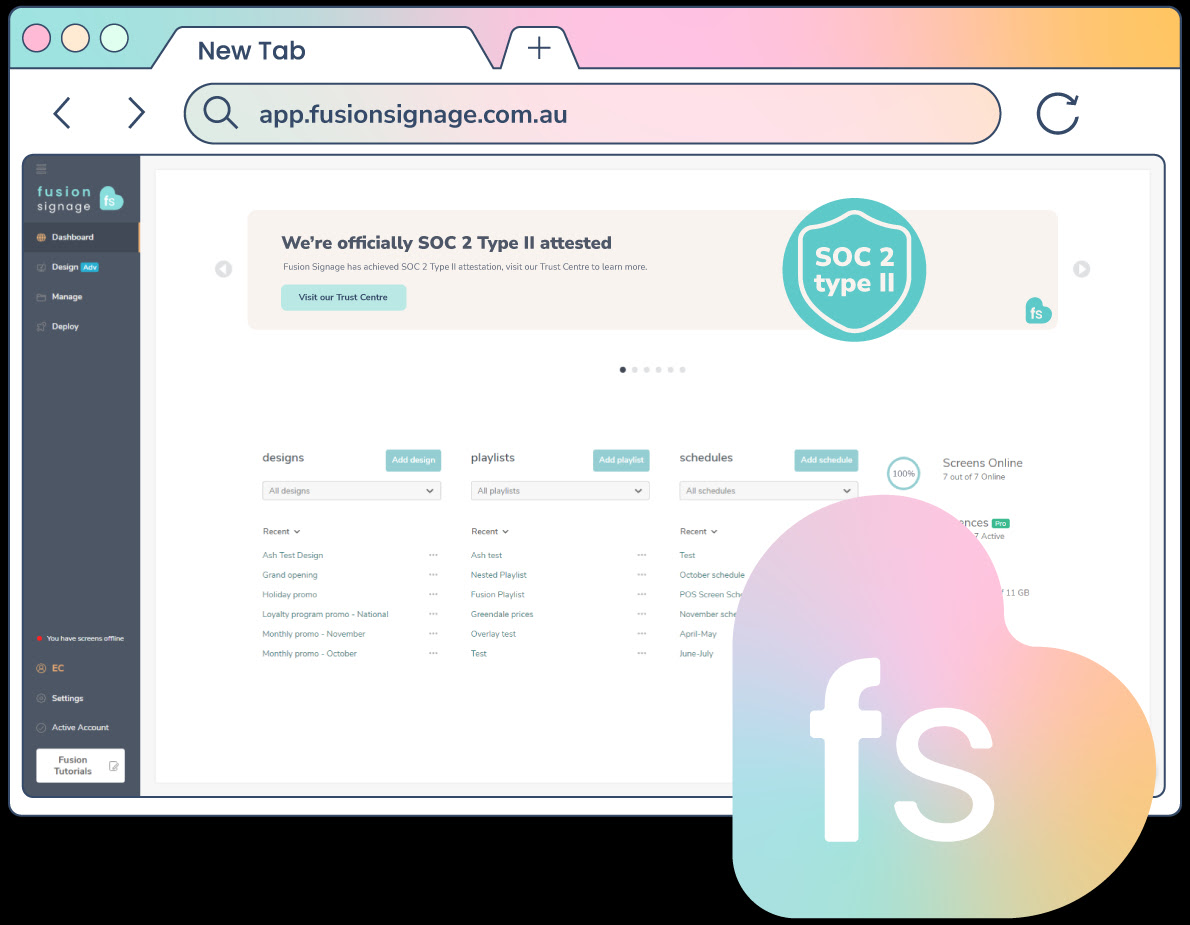
Fusion Signage achieves SOC 2 Type II attestation and launches Trust Centre

BRISBANE, March 17– In a major achievement Fusion Signage, often referred to as Australia’s user-friendliest digital signage software, has officially achieved SOC 2 Type II attestation. The new SOC 2 Type II attestation is very highly regarded and critical to all users of digital signage software. The company’s SOC 2 Type II audit was completed by Sensiba, an independent organisation known for thorough, transparent audits.

Fusion Signage MD James Ingram explained, “This attestation is not just policies on paper, but a rigorous, independent, months‑long audit proving our controls aren’t only well‑designed, they’re operating effectively, day in and day out across the whole business. A SOC 2 Type II attestation digs into how we operate over time, not at a single moment. It’s an in‑depth audit against the AICPA Trust Services Criteria for Security. It is the gold standard proving our systems are protected and your security practices are actually working.”

Fusion Signage achieves SOC 2 Type II attestation and launches Trust Centre

Fusion Signage MD James Ingram

Fusion Signage’s SOC 2 Type II attestation is a significant achievement as it confirms the company’s access controls work exactly as designed, their monitoring and alerting are accurate and reliable, their processes around risk, incidents and change control are “real-world” and their platform and operations are run with consistency, discipline and transparency.

Fusion Signage achieves SOC 2 Type II attestation and launches Trust Centre

Ingram added, “Our SOC 2 Type II attestation is independent proof that Fusion Signage operates the way we say it does – not just in policy documents, but in real life. This matters a lot to procurement teams, CISOs, CTOs and anyone doing vendor due diligence. Protecting customer data has always been part of who we are and as an Australian team supporting organisations across every industry, we’ve always believed security shouldn’t be a box‑ticking exercise. It should be something you can feel confident in without ever thinking about it.”

Sensiba’s SOC 2 Type II audit of Fusion Signage also included a thorough and comprehensive evaluation of the company’s infrastructure, how they build and ship software and how they store and process customer data.

It also covers internal governance and access controls, monitoring and incident response and day‑to‑day operations across the entire team.

Ingram said, “It’s a holistic look at Fusion Signage – something we wanted and requested. Security shouldn’t live in one corner of the company, it should be everywhere. As a result, now, with this attestation, Fusion Signage users get independent assurance we’re running with strong, consistently‑applied controls. Their IT and security teams can also be 100% confident when doing vendor risk assessments which leads to smoother procurement, as SOC 2 Type II is a very common requirement.”

Fusion Signage has always prided itself and been known as a platform users can trust, built by a team that invests in doing things the right way for its customers.

James Ingram concluded, “Our SOC 2 Type II attestation is our new baseline. Security isn’t a feature we add, it’s part of how Fusion Signage works, grows and evolves. As we roll out new capabilities and support more organisations, security remains a core design principle – not an afterthought.”

To watch a video on what Fusion Signage achieving SOC 2 Type II attestation means for the company, its customers and users click here or go to:  https://www.youtube.com/watch?v=7Y1sGJj_57c 

In another first customers can now also access Fusion Signage’s Trust Centre, its simple, self-service portal where users can explore the company’s security standards at any time, from any connected device, anywhere.

The Trust Centre is an always‑available single and trusted source to see how Fusion Signage approach security and security information and where you can request their SOC 2 Type II report directly.

Spring travel: physicians urge travelers to understand their DVT risks on trips longer than four hours

Expert tips for recognizing symptoms and reducing blood clot risk during extended sitting

GREENBELT, Md. — With spring travel ramping up, Center for Vein Restoration (CVR) is reminding the public that anyone traveling more than four hours by air, car, bus or train can be at risk for potentially deadly blood clots, particularly people with additional risk factors.

The CDC notes that venous thromboembolism (VTE), which includes DVT and pulmonary embolism (PE), may affect as many as 900,000 people each year in the U.S. DVT is a serious medical condition where a blood clot (thrombus) forms in a deep vein, most commonly in the legs or pelvis. A PE occurs when a blood clot gets stuck in an artery in the lung, blocking blood flow to part of the lung.

“Sitting for extended periods of time slows the blood flow out of the legs,” said Laura Kelsey, MD, lead vein physician at CVR vein clinics in Grand Rapids and Muskegon, Michigan. “For patients with additional risk factors, travel can be the tipping point for a potentially dangerous blood clot. Talk to your clinician before your next trip, not after.” 

Who should be extra cautious?

CDC-identified risk factors include prior blood clots, family history, known clotting disorders, recent surgery or hospitalization, pregnancy, estrogen-containing birth control or hormone replacement therapy, cancer or cancer treatment, older age and obesity.

What to watch for after travel

Seek immediate medical care for any of the following:

  • DVT symptoms can include leg swelling, pain or tenderness, warmth and redness or discoloration.
  • PE symptoms can include difficulty breathing, chest pain, irregular heartbeat, coughing up blood, lightheadedness or fainting.

Simple movement reminders for long trips

The CDC encourages travelers to move their legs frequently and walk around every one to two hours when possible, know symptoms and discuss prevention with a clinician if at risk.

Swiftbuild.ai accelerates disaster recovery for coastal communities

AI-powered permitting platform helps local governments rebuild faster, reduce backlogs and support resilient infrastructure

TAMPA, Fla. – Swiftbuild.ai is helping coastal communities recover from disaster damage faster by modernizing the planning and permitting processes that often slow reconstruction. Its AI-powered SwiftGov® platform allows municipalities to process development applications quickly while maintaining compliance with local codes and environmental standards.

Following natural disasters, from hurricanes to wildfires, governments often face a surge of rebuilding projects. Traditional permitting systems can create bottlenecks that delay repairs, frustrate residents and increase costs for builders. SwiftGov provides an AI-native workflow that flags compliance requirements, organizes submissions and generates actionable insights for staff. Planners, engineers and officials retain full decision-making authority while completing reviews faster and more accurately.

Florida communities using SwiftGov have seen dramatic improvements:

  • Hernando County reduced single-family zoning review times from 30 days to under two hours.
  • The City of Titusville has processed over 162 permits, including residential, commercial, subdivision and industrial plans, with some reviews completed in under an hour.
  • Walton County standardized permitting, cut review times to eight days on average, achieved 100% accuracy on townhome reviews, 88% on single-family homes and improved consistency on sensitive coastal projects.
  • Jacksonville launched an Express Lane Permitting initiative with SwiftGov as its AI partner to shorten approval cycles, strengthen consistency and support affordable housing.

Sabrina Dugan, co-founder of Swiftbuild.ai, said, “After a disaster, every week a permit sits in review is another week a family isn’t home. We built SwiftGov so local governments can move at the speed their residents need, without cutting corners on code compliance or environmental protections.”

Swiftbuild.ai’s approach combines AI-driven efficiency with human oversight and community engagement. The platform helps governments restore neighborhoods faster, support small businesses and maintain resilient infrastructure in the face of increasing natural disasters.