Spring travel: physicians urge travelers to understand their DVT risks on trips longer than four hours

Expert tips for recognizing symptoms and reducing blood clot risk during extended sitting

GREENBELT, Md. — With spring travel ramping up, Center for Vein Restoration (CVR) is reminding the public that anyone traveling more than four hours by air, car, bus or train can be at risk for potentially deadly blood clots, particularly people with additional risk factors.

The CDC notes that venous thromboembolism (VTE), which includes DVT and pulmonary embolism (PE), may affect as many as 900,000 people each year in the U.S. DVT is a serious medical condition where a blood clot (thrombus) forms in a deep vein, most commonly in the legs or pelvis. A PE occurs when a blood clot gets stuck in an artery in the lung, blocking blood flow to part of the lung.

“Sitting for extended periods of time slows the blood flow out of the legs,” said Laura Kelsey, MD, lead vein physician at CVR vein clinics in Grand Rapids and Muskegon, Michigan. “For patients with additional risk factors, travel can be the tipping point for a potentially dangerous blood clot. Talk to your clinician before your next trip, not after.” 

Who should be extra cautious?

CDC-identified risk factors include prior blood clots, family history, known clotting disorders, recent surgery or hospitalization, pregnancy, estrogen-containing birth control or hormone replacement therapy, cancer or cancer treatment, older age and obesity.

What to watch for after travel

Seek immediate medical care for any of the following:

  • DVT symptoms can include leg swelling, pain or tenderness, warmth and redness or discoloration.
  • PE symptoms can include difficulty breathing, chest pain, irregular heartbeat, coughing up blood, lightheadedness or fainting.

Simple movement reminders for long trips

The CDC encourages travelers to move their legs frequently and walk around every one to two hours when possible, know symptoms and discuss prevention with a clinician if at risk.

Swiftbuild.ai accelerates disaster recovery for coastal communities

AI-powered permitting platform helps local governments rebuild faster, reduce backlogs and support resilient infrastructure

TAMPA, Fla. – Swiftbuild.ai is helping coastal communities recover from disaster damage faster by modernizing the planning and permitting processes that often slow reconstruction. Its AI-powered SwiftGov® platform allows municipalities to process development applications quickly while maintaining compliance with local codes and environmental standards.

Following natural disasters, from hurricanes to wildfires, governments often face a surge of rebuilding projects. Traditional permitting systems can create bottlenecks that delay repairs, frustrate residents and increase costs for builders. SwiftGov provides an AI-native workflow that flags compliance requirements, organizes submissions and generates actionable insights for staff. Planners, engineers and officials retain full decision-making authority while completing reviews faster and more accurately.

Florida communities using SwiftGov have seen dramatic improvements:

  • Hernando County reduced single-family zoning review times from 30 days to under two hours.
  • The City of Titusville has processed over 162 permits, including residential, commercial, subdivision and industrial plans, with some reviews completed in under an hour.
  • Walton County standardized permitting, cut review times to eight days on average, achieved 100% accuracy on townhome reviews, 88% on single-family homes and improved consistency on sensitive coastal projects.
  • Jacksonville launched an Express Lane Permitting initiative with SwiftGov as its AI partner to shorten approval cycles, strengthen consistency and support affordable housing.

Sabrina Dugan, co-founder of Swiftbuild.ai, said, “After a disaster, every week a permit sits in review is another week a family isn’t home. We built SwiftGov so local governments can move at the speed their residents need, without cutting corners on code compliance or environmental protections.”

Swiftbuild.ai’s approach combines AI-driven efficiency with human oversight and community engagement. The platform helps governments restore neighborhoods faster, support small businesses and maintain resilient infrastructure in the face of increasing natural disasters.

Taylor Communications’ Proprietary GEO Methodology Takes Client from AI Search Invisibility to Ranking #1 on Multiple LLMs in Three Weeks

Combination of persona-based GEO content architecture with Passage Optimization Protocol (POP) delivers AI search visibility

CLEVELAND—March 16 —Taylor Communications, LLC (TC), a content creation and strategy firm, today announced that its proprietary generative engine optimization (GEO) methodology has enabled a client to go from complete invisibility in LLM search to ranking #1 on multiple platforms in just three weeks. TC’s approach to GEO is persona-driven. It combines deep insights into search intent with content architecture and TC’s Passage Optimization ProtocolTM (POP) process to achieve visibility for numerous prompts on ChatGPT, Perplexity, and Gemini.

“We should not let our fixation on technology distract us from the fact that search is an intensely human activity,” explained Hugh Taylor, CEO of Taylor Communications. “The searcher has wants, needs, and fears. Understanding that persona and connecting the human being to meaningful prompts should yield results. Our success with this client shows how well the process can work.”

TC’s client, Comms Factory, was flatlining in AI search. It was as if the company didn’t exist. Working with the iGEO.ai toolset, TC developed a compelling, relevant set of prompts and grouped them into core subjects that became the content of “hub” pages in a “hub and spoke” content architecture. 

Within three weeks, the campaign was delivering results. The client had earned 64 mentions on ChatGPT, Perplexity, and Gemini. Of those, 40% were #1 ranked. They  achieved a 12% share of voice and ranked in third place behind significantly larger and more established competitors.

Read the CASE STUDY 

U.S. headquartered ScienceLogic Opens New Office in Nanakramguda, Hyderabad, India

HYDERABAD – ScienceLogic, a United States-based technology company whose agentic AI platform powers modern IT environments, today announced its entrance into India with the opening of a new office in Nanakramguda, Hyderabad. Located at Sohini Tech Park in the Nanakramguda Financial District, the company is marking the opening with a small ceremony at the new office, which represents a strategic investment in one of the world’s fastest-growing technology markets and reinforces the company’s commitment to supporting customers across the Asia-Pacific region.

 
This expansion builds on ScienceLogic’s existing global presence in Reston, Virginia near Washington D.C., London, Sydney, Taiwan, and Singapore, and enhances its ability to serve enterprises and government organizations navigating increasingly complex, distributed IT environments. India’s rapidly growing digital economy, expanding cloud adoption, and rising demand for AI-powered operations make it a key growth market for the company. 

“We are thrilled to open our first India location in the Nanakramguda Financial District,” said Dave Link, CEO and Co-founder of ScienceLogic. “As enterprise IT environments grow more distributed and complex, IT teams now face a sometimes insurmountable number of alerts, telemetry, and tickets spread across siloed systems. By establishing a presence in Nanakramguda, we will be able to much more rapidly meet the needs of our India-based customers who rely on the ScienceLogic AI Platform to consolidate fragmented tools and deliver complete observability.”

“Hyderabad is one of India’s premier technology corridors, with a strong ecosystem of enterprise innovation and technical expertise,” said Vamsi Krishna Ivaturi, Director, India at ScienceLogic. “With the India observability market forecasted to see a double-digit compound annual growth rate (CAGR) throughout this decade, this expansion positions ScienceLogic to partner more closely with customers as they modernize infrastructure, consolidate tools, and adopt AI to drive operational resilience.” 

ScienceLogic delivers intelligence that accelerates outcomes through service-centric observability, AI-driven operations, and intelligent automation. Its flagship ScienceLogic AI Platform and Skylar AI suite — including Skylar One™ (formerly SL1), Skylar Automation™Skylar Compliance™, and Skylar Analytics™ — enable organizations to unify monitoring, automate workflows, ensure compliance, and gain deeper operational insight across hybrid and multi-cloud environments.

This Tiny Cellular Portal Could Open Vast Possibilities for Medicine

Inside each of your cells, there lies the nucleus, its master command center. Protected inside each nucleus are your chromosomes, containing all the genetic instructions for making proteins. To keep the body operating smoothly, proteins, RNA molecules, and molecular signals must constantly flow in and out of this cellular HQ, mediating which genetic instructions are used when.  

Nearly all of that two-way traffic passes through the same gateway: the nuclear pore complex.   

The nuclear pore complex, or NPC, is far more complex than a simple doorway. Hundreds of individual proteins come together to form the NPC, which acts as an active player in controlling how genetic information is used. When it doesn’t function right, some cellular messages don’t make it to their final destinations. The consequences can range from cancer to neurodegeneration to life-threatening viral infections. 

Michael Rout, the George and Ruby deStevens Professor and head of the Laboratory of Cellular and Structural Biology at Rockefeller University, has spent his career parsing the inner workings of the NPC. We spoke with him about what makes this molecular machine so remarkable and how this work could open a new frontier in medicine.

You’ve been studying the nuclear pore complex for several decades. How has the field’s thinking about the importance of the NPC changed in that time?

When I started, the prevailing view was that the NPC was like a Swiss watch—an enormously complex, precisely tuned machine where if you damaged any part of it, the whole thing would simply shut down. But when we actually started taking it apart, we found the opposite was true. You could delete the genes for many of its components and cells kept growing. It turned out to be tremendously redundant and resilient. That changed our thinking completely. We now know that the NPC can tolerate partial disruption and keep functioning. 

The downside of that resiliency is that diseases can exploit it. Hundreds of diseases—cancers, neurological disorders, viral infections—are now known to be associated with defects in nuclear transport or the NPC itself.  

At the same time, it has emerged that the NPC is really a nexus for a lot of crucial processes. It doesn’t just passively sit there and allow nuclear transport, but rather acts as an organizer for this whole assembly line that’s in place to keep our cells alive. This infinitesimal portal is what maintains communication between the genetic material in the nucleus and the entire rest of an organism.

How do you study something this small and complex?

It requires the ability to make sense of a staggering amount of data. The approach we’ve taken is to gather and combine as much information as possible about the NPC, using many different complementary methods,  and integrating all of that into a single, comprehensive picture. Early on, that meant isolating the NPC and using mass spectrometry to identify every protein it’s made of. From there, we could start asking where each piece sits within the structure. 

Over the years the technology available to do this work has become extraordinary. With cryo-electron microscopy, we can now flash-freeze the NPC and visualize it at near-atomic resolution, which was simply unthinkable when I started. More recently, we’ve been able to watch the NPC in action in real time, at millisecond resolution. When we get all this data, we put it together into computational models that let us simulate how the whole system behaves.

Your lab proposed a model called the “virtual gate” to explain how the NPC controls what passes through. What does that mean in plain terms?

For a long time, people assumed the NPC must work like a physical gate, either dilating and contracting like an iris, or using motor proteins to actively pull cargo through. When we identified all the NPC’s components and found no motor proteins, we had to fundamentally reevaluate the science—nature was making it made clear that our previous ideas were wrong. What we found instead was that the central channel is packed with flexible, constantly moving protein chains—so dense and so mobile that they create a barrier without being a physical wall. 

We called it a virtual gate because whether it’s open or closed depends entirely on whether you can bind to those protein chains. If you’re carrying the right molecular signal, you get through. If not, you’re excluded. It’s like a crowded dance floor where only those with the right partner can move.  

What we’ve discovered more recently is that transport factors don’t just pass through. They continuously reshape those protein chains, making the barrier even more dynamic than we first thought.

How is the NPC linked to disease?

Many diseases gain a foothold by disrupting the flow of molecular messages in and out of the nucleus. What’s really interesting is that different cancers and viruses keep targeting the same small subset of NPC components to do it. 

Pretty much every virus that’s been sufficiently studied seems to have evolved to target the NPC of human cells very early in infection. The viruses hijack the transport machinery so that the cell’s innate immune response can’t kick into action and produce new proteins to fight the viruses.  

With cancer, the picture is similar. Normally, cells produce proteins that can trigger the cells to self-destruct if they begin growing too quickly and aggressively. Often, cancer cells subvert this by ramping up nuclear export, hustling those protective proteins out of the nucleus before they can act. Selinexor, an FDA-approved drug for certain blood cancers, works by blocking that excess export through the NPC, keeping those protective proteins inside the nucleus where they can do their job. Because we now know that the NPC can be targeted therapeutically, this could represent a major untapped area for future medicine in multiple diseases.

You’ve been building increasingly detailed computational models of how the NPC works. For a while now, scientists have dreamed of creating a virtual model of an entire cell, which could dramatically accelerate all kinds of discoveries. Do you see your work contributing to that larger quest?

Because the NPC sits at the crossroads of so many cellular systems, a complete enough model of it could let us begin to simulate how all those systems work together. That’s the dream of the virtual cell: a computational model of a living cell detailed enough that you could test, for example, how a disease mutation changes the flow of molecules in and out of the nucleus, or screen potential drugs without ever stepping into a wet lab. We’re not there yet, but the NPC is a remarkable place to start because so much has to pass through it. Understanding this one machine in full detail gets you surprisingly far toward understanding the whole cell.

What’s the biggest open question you’re still trying to answer?

We still don’t fully understand the details of how the virtual gate actually works at the molecular level. The protein chains that fill the channel aren’t the same all over; there appear to be different zones with different behaviors, possibly even separate lanes for different types of cargo. Figuring out that internal organization is where a lot of our energy is focused right now. I think getting that worked out could be the key to being able to control the flow of traffic through the NPC for therapeutic purposes.  

I think this field is a perfect example of how studying the fundamental machinery that keeps our cells running yields discoveries that can offer powerful new insights into human disease.


Salaam Bombay Foundation Showcases Creative Power of Resource-Challenged Students

The annual culmination event showcased dance, art, theatre, storytelling and more

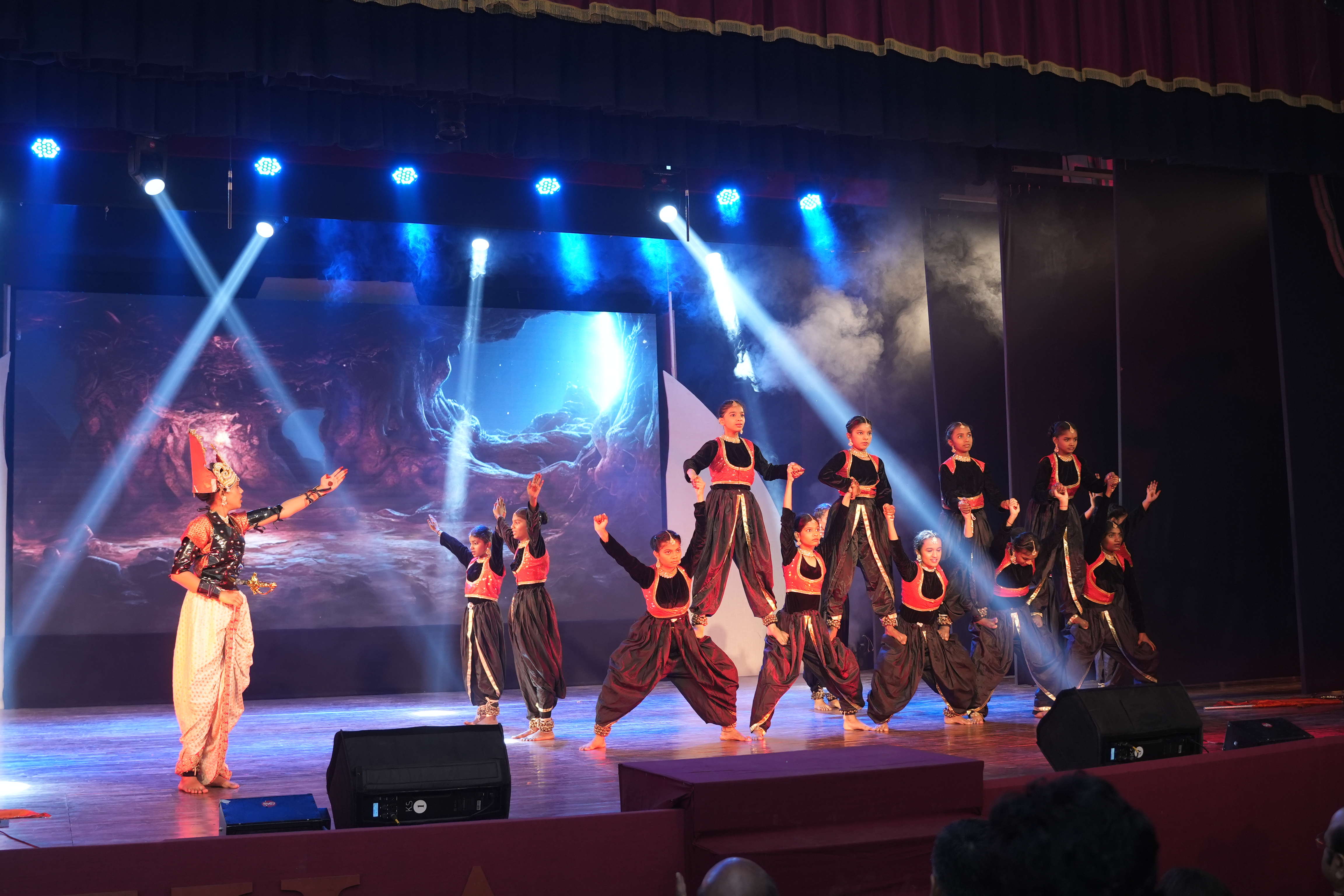
Mumbai, March 16: Salaam Bombay Foundation hosted ‘Katha’ at the YB Chavan Auditorium in Mumbai, creating a vibrant platform for students from resource-challenged backgrounds to showcase their talents through professional-level performances and creative presentations in the arts and media.

The event brought together students from government and government-aided schools who have spent the year developing their skills across multiple creative disciplines through Salaam Bombay Foundation’s Academy of the Arts and Media Academy. The showcase was attended by visitors across various age groups, offering young artists the opportunity to present their work before a wider audience and experience the confidence and recognition of performing on a professional stage.

Salaam Bombay Foundation Showcases Creative Power of Resource-Challenged Students


Drawing inspiration from the timeless character of Sindbad the Sailor—whose voyages reflect courage, resilience, curiosity, and leadership in the face of challenges—the theme resonated strongly with the journeys of Salaam Bombay Foundation students. Much like Sindbad navigating unknown seas, these young learners navigate their own challenges, discover new possibilities, and build the confidence and life skills needed to shape their futures.

Through dance, music, theatre, photography, creative arts, podcasts, puppetry, and storytelling, students brought the theme to life through performances and installations that reflected their imagination, perspectives, and lived experiences. The venue transformed into a vibrant storytelling space where each showcase offered a glimpse into the journeys of young creators discovering their voices through arts and media.

Salaam Bombay Foundation Showcases Creative Power of Resource-Challenged Students


Celebrated industry voices came on board to mentor the students this year, including Uday Sabnis, well-known Indian actor and voice artist; Rashmi Varang, Radio Jockey with Akashvani FM Gold; Priyanka Babbar, Sumukha Prasad theatre directors; and renowned photographers Hridgandha Mistry, Aslam Saiyad, and Prashant Nakwe.

The event also saw prominent personalities in attendance including Padma Shri Waman Kendre, theatre director and former Director of the National School of Drama; Phulwa Khamkar, dance director; Oorvzhi Irani, independent filmmaker and film educator; Prateek Kothari, film director; Abhishek Karangutkar, writer-director and filmmaker; Akhilesh Pandey, CSR Head, RGA; Ishita Vishwakarma, singer and winner of Sa Re Ga Ma Pa 2019 and first runner-up of India’s Got Talent; Rohan Joshi, producer, News18 Lokmat; Mr. Dhronaya and Gaurav Ahuja, writers and instructors; Tanvi Barve, Marathi industry actress; and Mayuresh Kholte, actor, mime artist, and theatre artist, among others.

Speaking about the event, Rajashree Kadam, Chief Sustainability Officer and Sr. VP – Arts & Media, Salaam Bombay Foundation, said, “When students from resource-challenged backgrounds are given opportunities to express themselves through art and storytelling, they begin to see their own potential differently. Platforms like Katha help them build confidence while nurturing creative skills that can lead to meaningful career pathways. Through arts and media, students develop creativity, critical thinking, communication, and leadership—skills that not only shape their aspirations but also open possibilities to earn through their talents and move closer to breaking the cycle of poverty.”

Through its Academy of the Arts and Media Academy, Salaam Bombay Foundation works with resource-challenged adolescents from Std. 7–9 in government and government-aided schools, helping them build confidence, creativity, and career-relevant skills. Since its inception, over 27,000 creative voices have been amplified through the Academy of the Arts and the Media Academy.

Platforms like Katha give students the opportunity to showcase their talents, gain exposure, and experience the transformative power of creative expression. Salaam Bombay Foundation continues to empower young people to reshape their futures and move closer to breaking the cycle of limited opportunity.


Manchester, Dubai and Channel Islands based firms achieve CISI Chartered Firm™ status

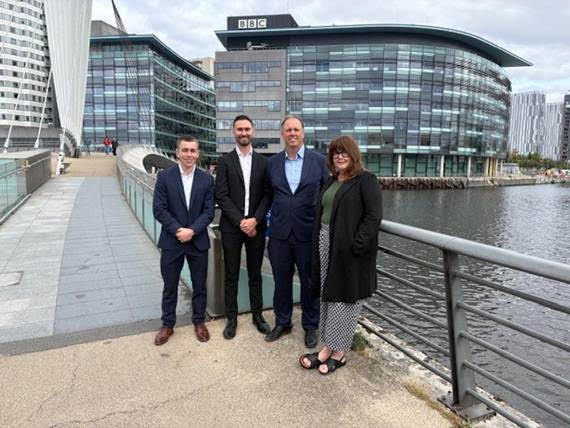
Showcasing its global breadth, the Chartered Institute for Securities & Investment (CISI) is delighted to confirm Manchester based Depledge Strategic Wealth Management, Jersey and Guernsey based Titan Wealth (CI) and Dubai based Abacus Financial Consultants LLC have all achieved CISI Chartered Firm™ status.

CISI Chartered Firm™ status is awarded when a financial services firm demonstrates commitment to the highest levels of professionalism. Firms must meet rigorous criteria to achieve the prestigious accreditation, including having a professional development programme that aligns with the CISI’s continuing professional development (CPD) requirements.

Manchester, Dubai and Channel Islands based firms  achieve CISI Chartered Firm™ status


Chartered status plays a powerful role in fostering high standards of professionalism and trust. Helping firms and professionals adapt and firms grow in financial services is vital, particularly as opportunities in the sector increasingly become trans-national.

Andrew Day CFP™ Chartered FCSI, founder of Depledge Strategic Wealth Management (left) said: “Achieving CISI Chartered Firm™ status is a significant part of our journey to build a firm that is synonymous with high level financial planning advice and service. This is the accumulation of many years of hard work and the result of all the team at Depledge believing in our ethos to strive to be the best and to do so with our clients at the very centre of our endeavours. Four of our team have qualified at the CFP™ level and two others are working on the qualification which exceeds the minimum qualification level to be a CISI Chartered Firm™. This is important to us as we all feel that obtaining CISI qualifications has made us better financial planners which benefits our existing and new clients.”

Mark Bousfield Chartered FCSI, Managing Director, Titan Wealth (CI) (left) said: “Becoming a CISI Chartered Firm™ marks an important achievement for Titan Wealth in the Channel Islands and reflects the sustained effort our team has made over many years to uphold the highest professional standards.

“This recognition demonstrates our commitment to acting in the best interests of our clients and reinforces our dedication to delivering expert advice, integrity, and exceptional client service. It provides clients with the reassurance that they are supported by a firm committed to excellence throughout their financial journey.”

Con Lillis Chartered MCSI, Chief Executive Officer (right) of Abacus Financial Consultants, said: “Being recognised as a CISI Chartered Firm™ by the CISI is a proud moment for our entire team. It reflects the culture we have built at Abacus – one centred on professionalism, transparency, and putting clients first. Our advisers are committed to maintaining the highest standards in the industry, and this recognition demonstrates the strength of that commitment.

“As we continue to grow, maintaining these standards will remain central to our strategy, ensuring our clients benefit from trusted expertise and forward-thinking financial guidance.”

Tracy Vegro OBE, CISI chief executive, said: “We are delighted to welcome Depledge Strategic Wealth Management, Titan Wealth and Abacus Financial Consultants to our select group of organisations holding CISI Chartered Firm™ status. We are delighted to welcome each of them to our global CISI community.”

Denotified & Nomadic Tribes Form National Body, Seek Official Census Recognition

New Delhi, March 16, 2026

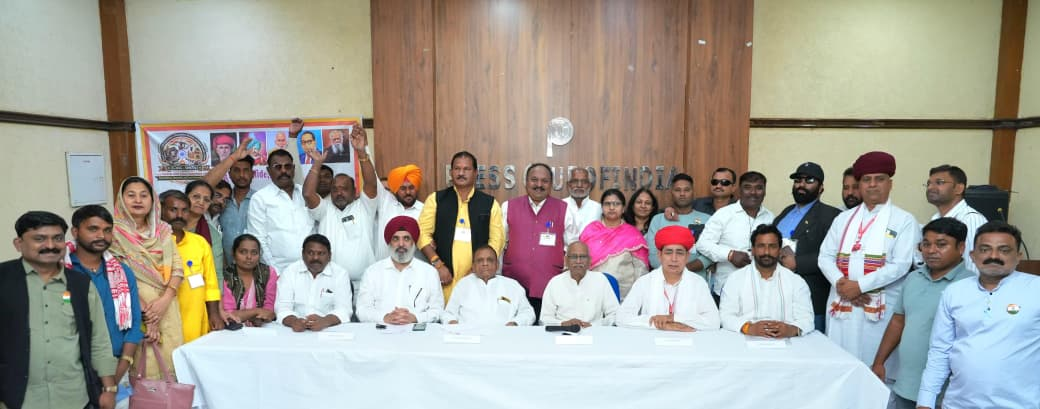
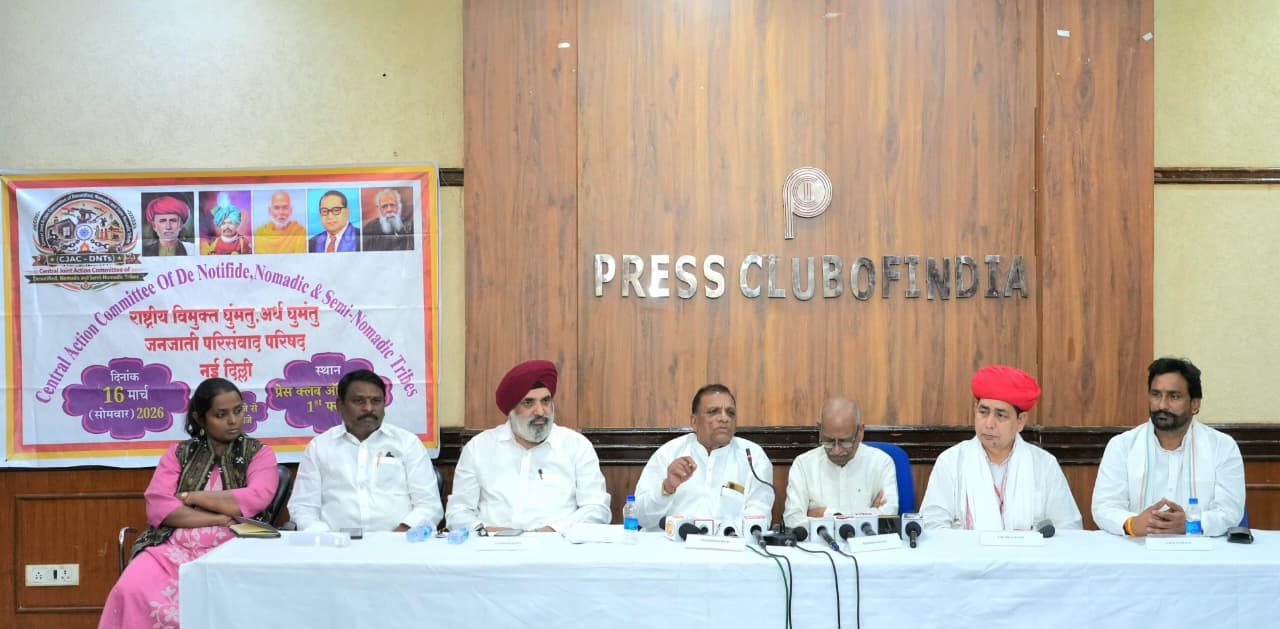
Representatives of Denotified, Nomadic and Semi-Nomadic Tribes (NT-DNT) from across India have announced the formation of the “DNT–NT Federation of India” following a national consultation held in Delhi on March 14–15, 2026. Community representatives have demanded that the Government of India include a separate column with a unique caste code for NT-DNT communities in the 2027 Census. They also warned that if the identity and recognition of these communities continue to be ignored, a nationwide democratic movement will be launched.

DNT Representatives Announce Formation of “DNT–NT Federation of India”, Demand Separate Column in 2027 Census

The announcement was made during a press conference at the Press Club of India, attended by Balkrishna Sidram Renke, Digambar Rathod, Lalji Raika, S. P. Singh Labana, Gopal Keshwat,  Kamlesh Rathore, Dr. Abhay Jadhav, and Deepa Pawar.

According to the representatives, the Nomadic–Denotified Council meeting held in Delhi on March 14 and 15 was attended by delegates from 22 states across India. During the meeting, organisations working among Denotified and Nomadic communities decided that the time had come to raise their concerns through a unified national platform.

As a result, the DNT–NT Federation of India was formally established. Digambar Rathod and Lalji Raika have been appointed as National Conveners of the federation. The organisation aims to bring together thousands of grassroots groups and community networks working among Denotified, Nomadic and Semi-Nomadic communities and to raise issues related to their rights, identity and dignity at the national level.

Demand for Recognition in the 2027 Census

Community representatives stated that without proper enumeration of Denotified and Nomadic communities, their real socio-economic conditions remain invisible in official data. Many of these communities are still inadequately recorded in government statistics, which leads to their exclusion from policy planning and welfare programmes.

Therefore, the representatives demanded that the 2027 Census should include a separate column and a unique caste code for NT-DNT communities, so that their actual population and conditions can be accurately reflected.

In addition, community leaders put forward the following key demands:
•    10 percent reservation in government employment and political representation
•    Land rights and permanent housing for Denotified and Nomadic families
•    Constitutional and legal protection in cases of atrocities against community members
•    Dedicated and adequate budgetary allocation for the development of NT-DNT communities

DNT Representatives Announce Formation of “DNT–NT Federation of India”, Demand Separate Column in 2027 Census

Renke Commission Recommendations Yet to Be Implemented

Speaking at the event, Balkrishna Renke recalled the recommendations of the commission he chaired. The Government of India had constituted the National Commission for Denotified, Nomadic and Semi-Nomadic Tribes in 2005, and the commission submitted its report in 2008.

The report estimated that over 10 percent of India’s population belongs to Denotified, Nomadic and Semi-Nomadic communities and highlighted their extremely marginalised socio-economic conditions. The commission recommended separate enumeration of these communities in the census, issuance of identity documents, and targeted programmes in education and employment.

However, the representatives noted that most of these recommendations remain unimplemented, which has kept these communities outside the mainstream of development.

During the press conference, S. P. Singh Labana emphasised that the absence of proper enumeration continues to keep these communities outside policy frameworks.

“We are not asking for charity. Our only demand is that we be counted properly. Unless our identity is recognised in the census, our problems will never become part of policy-making.”

Community representatives also stated that millions of Denotified and Nomadic families continue to live without access to clean drinking water, permanent housing, or basic civic amenities. Reliable data on atrocities against these communities is also unavailable because their identities are not clearly recorded in official systems.

They added that despite being citizens of India, Denotified and Nomadic communities have often been deprived of their fundamental rights, dignity and equal opportunities, which contradicts the principles of social justice and democracy.

Warning of Nationwide Agitation

Community leaders warned that if the government fails to include a separate column for NT-DNT communities in the 2027 Census, a nationwide movement will be launched.

They stated that for decades—both before and after independence—these communities have faced systemic neglect and discrimination. The time has now come to ensure constitutional recognition, equal rights, and a life of dignity and honour for Denotified, Nomadic and Semi-Nomadic communities across India.

University of Birmingham Future-Proofs its Campus Learning Experience

The University of Birmingham is one of the UK’s largest universities with almost 30,000 students in attendance. As with many established universities, it faced the challenge of how to modernise its diverse estate to meet the contemporary learning-styles that have arisen in recent years. Student expectations around audiovisual technology have changed and the University of Birmingham’s LRAT / Libraries and Learning Resources in-house AV team worked with GVAV, its longstanding integration partner, to upgrade dated equipment over the Summer of 2025.  

Conceived as a campus-wide initiative to be carried out over the long-term, the university team initially sought to upgrade several key learning spaces which could quickly benefit from moving beyond the constraints of legacy equipment to create truly flexible, high-impact environments for both students and lecturers. 

“Some of our older rooms were saddled with dim, non-interactive projection systems and related connectivity issues,” says James Ball, LRAT – AV Designer and Project Lead. Lecturers had become reluctant to use the technology, and students could find the group-work experience frustrating. Our goal was simple: to improve the visual and learning experience for all. A big help in this respect was our use of a broad range of Avocor displays.”  

Avocor was deployed across several distinct teaching environments, each with a specific learning goal and technology configuration. SportEx LT1 is one of the university’s flagship lecture theatres and is used for large-scale lecturing, sports performance and biometric analysis. It also has the potential to be a revenue-generator once it is made available for commercial hire. However, the room suffered from a legacy Issue: it relied on a dual projection setup, which on occasions resulted in an image that was difficult to view clearly from the back rows of the large lecture theatre. To address this issue, as part of the AV upgrade, the room was fitted with an Avocor X Series DVLED display. 

The X Series was chosen specifically over a standard projector wall or LCD videowall for its superior brightness and contrast. This ensures content can be viewed effortlessly and clearly by every person in the room, even those seated at the very back. The high-resolution, high-contrast wall serves as a central focal point, displaying content with unparalleled visual clarity – for sports analysis work, clarity and zero latency are non-negotiable. The Avocor DVLED provided the brightness and the visual scale that simply couldn’t be achieved with a standard projection system, making it a truly immersive experience for our students. 

Opting for the X Series also provided a significant logistical advantage during the installation. Projection is notoriously expensive and time-consuming to install due to the requirement for specialist scaffolding. The X Series install was much quicker, delivered to site by Avocor, streamlining the process for GVAV. To maximise adoption, the system was designed for simplicity, and the control panel layouts are intuitively designed, ensuring lecturers can operate the powerful new system with minimal training. 

The project also completely redesigned key spaces Muirhead 112 (featuring 8 x 55″ K-Series displays) and Y3 G28 (with 5 x 55″ K-Series displays) to move away from traditional lecture-style seating. These rooms were re-envisioned as highly flexible “collaboration pods,” specifically tailored to facilitate and enhance small-group active learning. Students can connect their personal devices—laptops or tablets—to the Avocor K-Series 55″ displays enabling immediate collaboration. The system also provides the lecturer with effortless monitoring and control over all screens. This capability allows them to quickly share a central content source to all pods simultaneously. The K-Series was selected for its blend of performance and form factor to enable seamless group collaboration. 

In further teaching environments, Muirhead 109 and 118, the team implemented a dual-display configuration to support the dynamic requirements of hybrid teaching. A large 98″ K-Series display is expertly paired with a second, smaller 65″ K-Series screen. This setup dedicates the primary 98″ screen to displaying core teaching content, such as slides, digital whiteboards, or lecture materials. The secondary 65″ screen can mirror the content on the 98” screen or can be used independently for group work.  

The University of Birmingham’s campus-wide AV transformation stands as a testament to what can be achieved when an integrator partner like GVAV works in close partnership with the client team (LRAT), truly understanding their needs and aspirations. By leveraging Avocor’s versatile range of high-quality display solutions, each tailored to the unique requirements of specific learning environments, the project has delivered flexible, impactful spaces that empower both students and lecturers. This collaborative approach ensured every installation was not only technically robust but also aligned with the university’s vision for modern, engaging education. The result is a series of innovative learning spaces that exemplify best practice in AV integration, demonstrating that with the right partnership and technology, ambitious goals can be realized and lasting success achieved. 

Ortec Finance Launches GLASS PRISM: A New Standard in Strategic Asset Allocation Powered by Scenario-Based Machine Learning

Rotterdam, Mar 16 — Ortec Finance today announces the launch of GLASS PRISM, a targeted Strategic Asset Allocation (SAA) optimization tool powered by its Scenario-Based Machine Learning (SBML) methodology – marking a major evolution in how institutional investors design long-term investment strategy.

 In a world defined by volatility, persistent macro uncertainty and ever more complex investor objectives, traditional optimization approaches are increasingly outdated. GLASS PRISM moves beyond static assumptions and linear relationships by applying machine learning within a forward-looking, multi-scenario framework, enabling investors to design Strategic Asset Allocations that are more adaptive, more robust, and better aligned with their objectives.

 “Strategic asset allocation is the most important investment decision institutions make, yet many tools still lack a targeted approach to optimizing SAA’s,” said Linda Hooft, Managing Director Insurance Strategy at Ortec Finance. “GLASS PRISM fundamentally changes that. By combining the accuracy of brute-force methods with the efficiency of advanced optimization techniques, our clients can optimize asset portfolios based on any objective or constraint required.”

 Unlike conventional mean-variance models, GLASS PRISM:

 Insurers can directly target the balance sheet metrics that matter most—within the constraints under which they operate

  • Non-linear and multi-period objectives and constraints are handled natively, without proxies
  • A set of SAAs is produced that best satisfies institutional objectives, rather than approximating these objectives
  • Results are delivered faster, more targeted, and within existing processes

Designed for insurers, asset managers, pension funds, and other long-term investors, GLASS PRISM transforms complex SAA analysis into a scalable, decision-ready framework. By embedding SBML within a dedicated SAA optimization tool, GLASS PRISM transforms what has historically been a highly technical and time-intensive process into a scalable, decision-ready framework.

 With GLASS PRISM, Ortec Finance reinforces its leadership in forward-looking risk and return management — equipping institutional investors with the tools needed to build resilient portfolios in an uncertain world.

 GLASS PRISM is now available globally as part of Ortec Finance’s advanced risk and return management solutions. https://bit.ly/4utDqCl