Pink Adrak Secures Strategic Backing from String Ventures’ Shivam Mishra; Targets INR 55 Crore Revenue by 2028

Pink Adrak Secures Strategic Backing from String Ventures’ Shivam Mishra; Targets INR 55 Crore Revenue by 2028

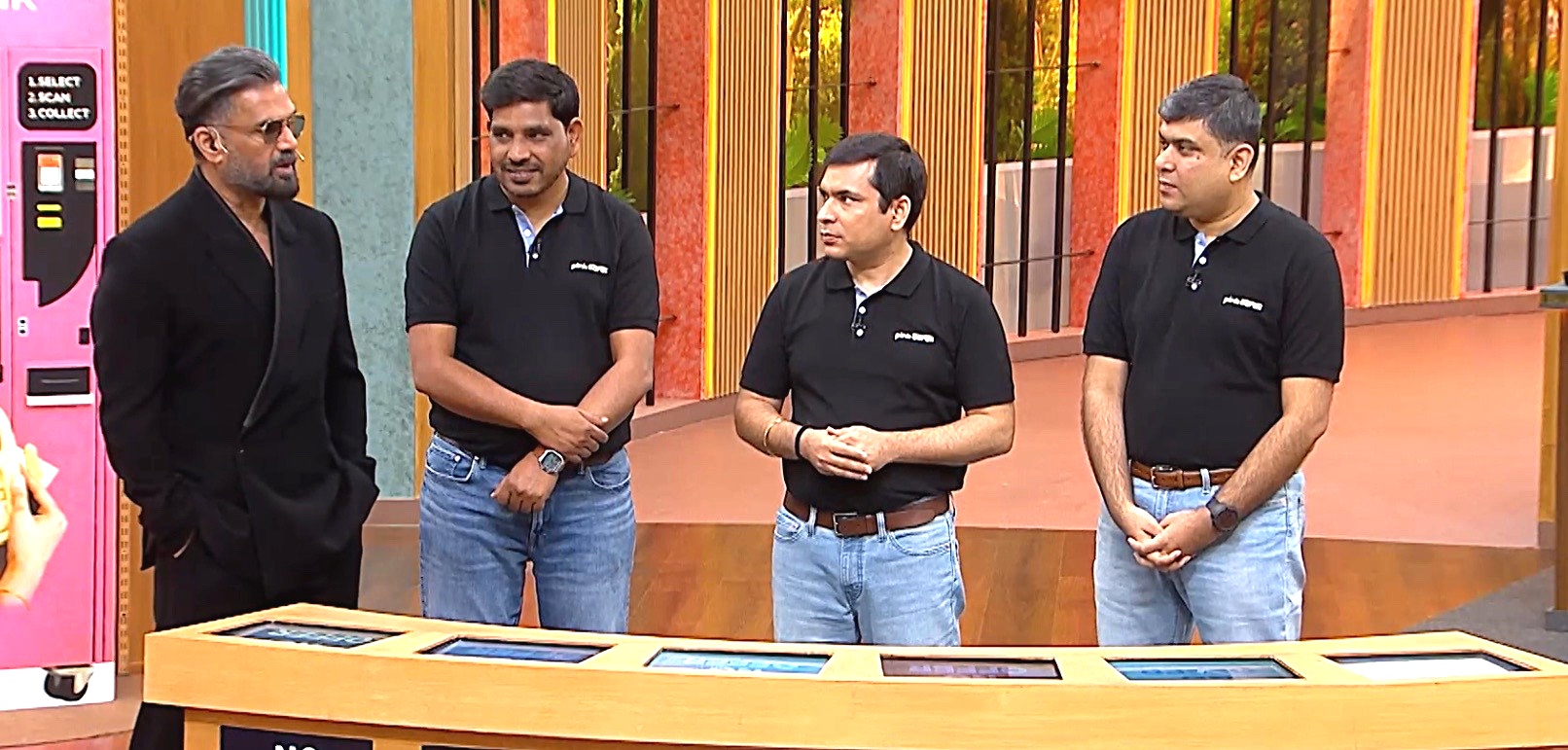
Mar 10: Pink Adrak, an emerging nextgeneration Quick Service Restaurant (QSR) platform from India, has secured strategic backing from Shivam Mishra, Founder of String Ventures, following its appearance on Bharat ke Super Founders. The investment marks a key milestone in the companys ambition to build a scalable, technologydriven and capitalefficient food platform designed for Indias evolving consumption habits.

The funding includes ₹12.25 crore attributed towards a combination of equity capital and revenue support, enabling the company to accelerate expansion across North India while strengthening its QSR platform and techfirst operational stack.

Founded with the vision of building a platform-led food services company, Pink Adrak currently operates 12 outlets across Gurugram and Jaipur. The brand has served over 1.5 lakh customers and delivered more than 5 lakh orders, while maintaining a 4.6 average rating across food delivery platforms.

Pink Adrak’s model integrates six proprietary culinary formats within a single operational ecosystem, allowing the company to diversify menus, optimise kitchen infrastructure, and deliver stronger unit economics. The platform combines dinein, delivery, and subscription-led consumption through its proprietary app along with marketplace integrations across Zomato and Swiggy.

With fresh strategic backingPink Adrak plans to expand to 50 outlets while targeting ₹55 crore in revenue by 2028.

As part of its next growth phase, the company will launch a Fresh Meal Vending Cafe, a lightweight format designed for corporate campuses, educational institutions, and high-footfall transit locations. Pink Adrak is also scaling its subscription-led Pink Adrak Pass, aimed at building daily consumer engagement and predictable recurring demand.

Additionally, the brand plans to expand into desserts, beverages, and FMCG categories, creating multiple omnichannel consumption touchpoints across physical outlets, direct-to-consumer channels, and marketplace platforms.

Shivam Mishra, Founder, String Ventures, said “Pink Adrak represents a new generation of QSR brands emerging from India – capital-efficient, platform-driven, and built on strong unit economics. Its focus on building a tech-enabled food ecosystem makes it a compelling opportunity in India’s rapidly growing food services market.”

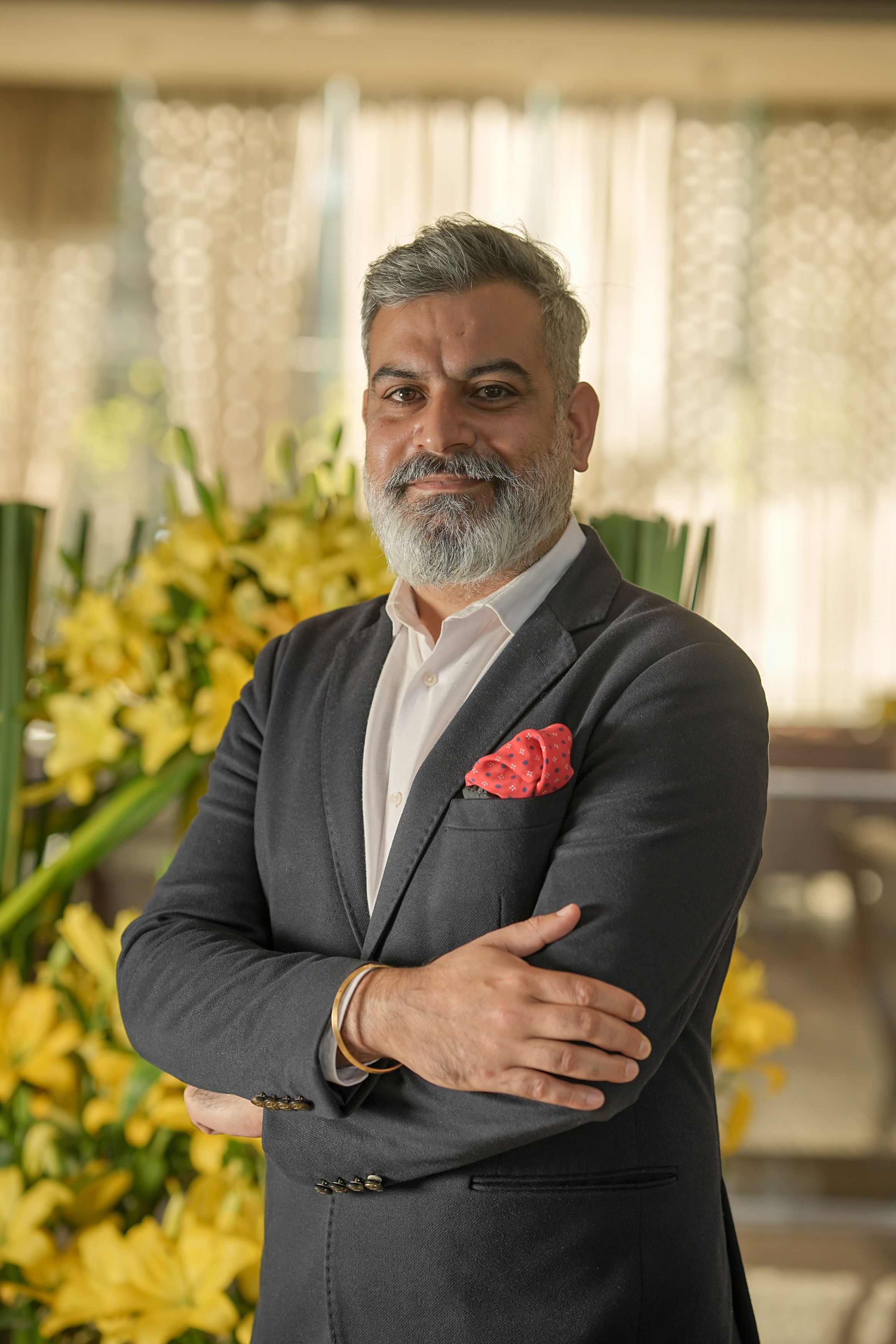
Ankur Gakkhar, Founder & CEO, Pink Adrak, added “This investment reinforces our belief that India needs a scalable QSR platform built on strong fundamentals and operational discipline. Pink Adrak is not just expanding outlets – we are building an integrated food ecosystem combining kitchens, technology, subscriptions, and omnichannel distribution.”

Pink Adrak has been incubated by Ripplewalk, a venture studio for food entrepreneurs that supports scalable food brands through platform infrastructure, demand generation, and capital access.

With a clear expansion roadmap and technology-led model, the company aims to build a category-defining QSR platform from India, combining innovative formats, capital-efficient expansion, and strong consumer demand.

New Report Highlights Zoomcar Host Earnings for 2025

Bengaluru, Mar 10: Zoomcar Holdings, Inc., India’s largest marketplace for self-drive car sharing, today released a high-level host earnings update for calendar year 2025 alongside a companion Host Earnings Trend Report featuring additional insights across host cohorts, geographies, product features, trip duration, vehicle categories, and seasonality.

For CY 2025, Zoomcar hosts collectively recorded robust earnings, supported by a total of 18,800 active earning hosts those completing at least one booking. Internal platform data showed that more than half of host earnings were generated from repeat renters, highlighting the strength of repeat-led demand in supporting host income outcomes.

“Host earnings are one of the clearest indicators of marketplace health and value creation,” said Deepankar Tiwari, Chief Executive Officer of Zoomcar. “This CY 2025 update reflects the strength of our host ecosystem, the quality of repeat-led demand on the platform, and the income potential for hosts who adopt the right features and operate consistently.”

CY 2025 Host Earnings Highlights

  • 18,800 active earning hosts with at least one completed booking.

  • Repeat renters accounted for over half of total host earnings, underscoring repeat-led marketplace demand quality.

  • Hosts offering Home Delivery earned significantly more than non-delivery hosts.

  • A meaningful contribution came from new host cohorts who joined Zoomcar in 2025.

  • Multi-car hosts earned higher per-car income compared to single-car hosts, indicating monetization upside through scaled operations.

  • Hatchbacks, compact SUVs, and SUVs remained the leading contributors to host earnings.

  • Seasonal travel peaks around year-end holidays, summer, and long weekends drove notable earnings spikes.

Key Marketplace Trends from the Companion Report

  • Metro demand density remains strong: Bengaluru, Delhi NCR, Mumbai, Pune, and Chennai together accounted for approximately two-thirds of total host earnings, reflecting strong liquidity in core markets alongside expansion into additional cities.

  • Product adoption is a clear earnings lever: Home Delivery and longer bookings contributed meaningfully to annual host income.

  • Supply scaling correlates with higher earnings: Multi-car hosts consistently outperformed single-car hosts.

  • Seasonality drives earnings: December and January ranked among the highest earning months, aligning with recurring travel peaks.

The companion Host Earnings Trend Report underscores the depth and quality of Zoomcar’s marketplace, demonstrating the potential for hosts to monetize effectively through repeat demand, product adoption, and strategic scaling.

Kotak Mahindra Bank and United Way Bengaluru join forces to refurbish Anganwadi centres in Coimbatore


Kotak Mahindra Bank and United Way Bengaluru join forces to refurbish Anganwadi centres in Coimbatore


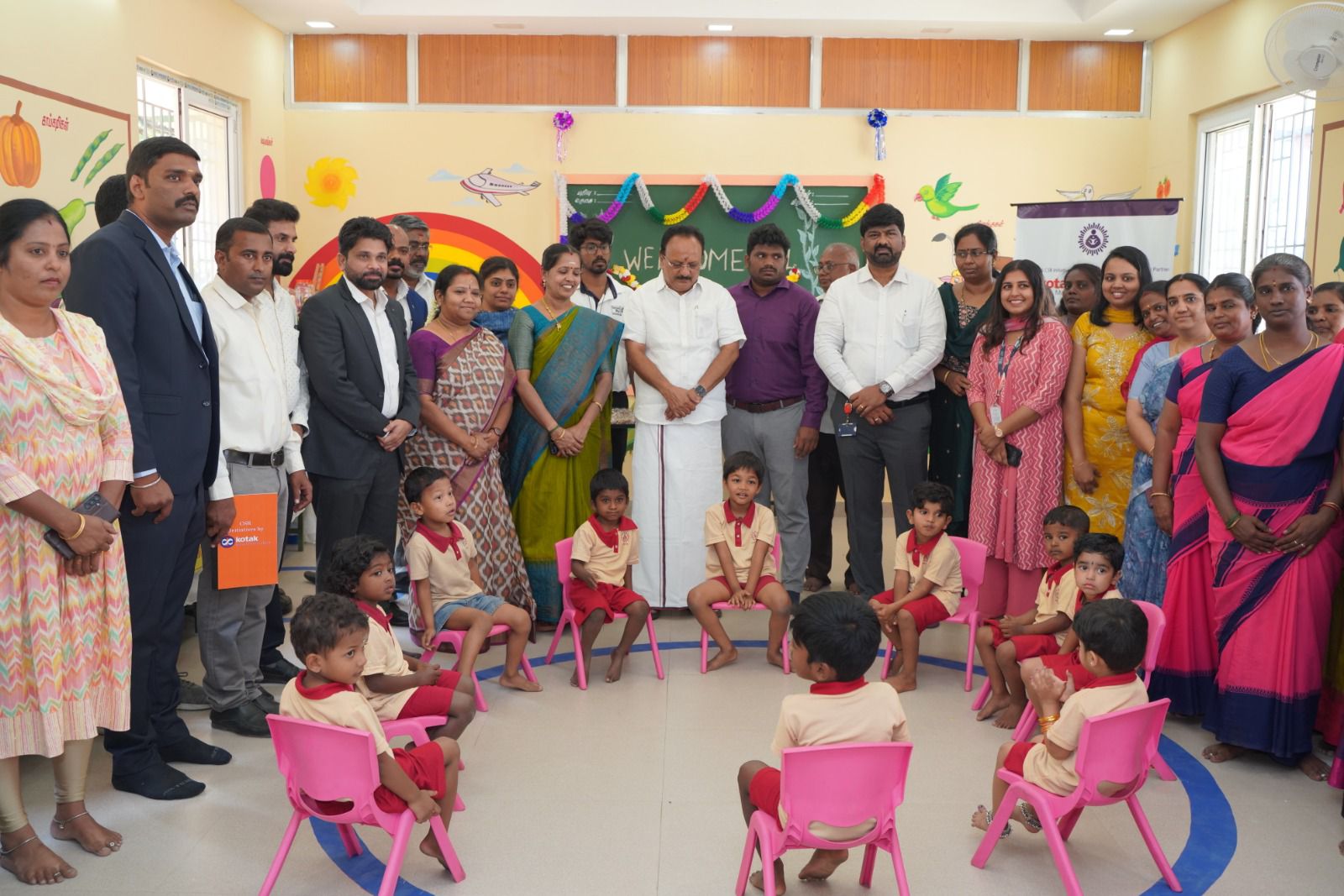
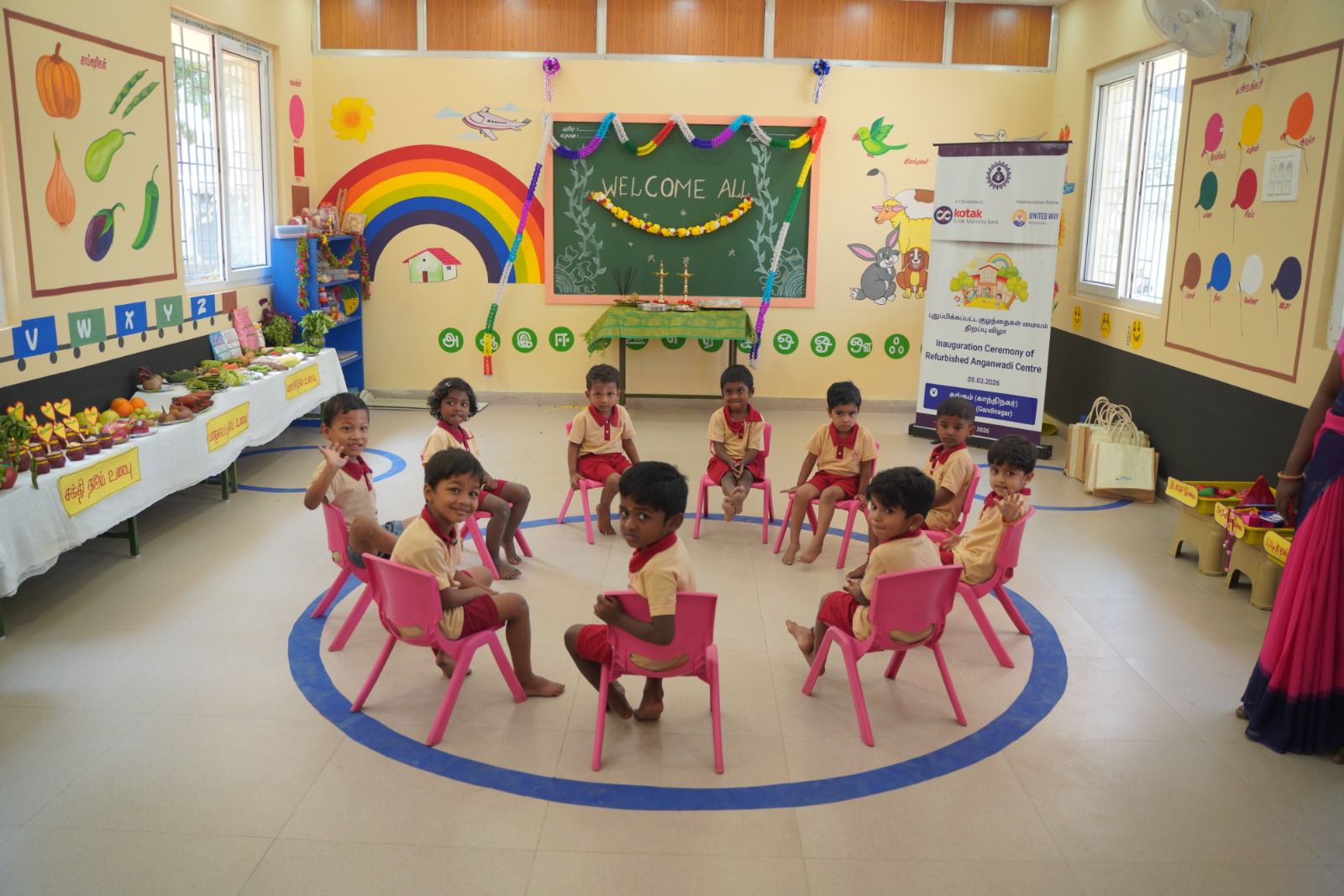
Mar 10 | Coimbatore, Tamil Nadu:  United Way Bengaluru (UWBe), with CSR support from Kotak Mahindra Bank and in collaboration with the Department of Women and Child Development, has launched the Model Anganwadi Project to refurbish 10 Anganwadi centres across Coimbatore Corporation zones. The initiative aims to strengthen early childhood development for children aged 0–6 years by creating safe and child-friendly learning environment.

The refurbished Anganwadi centres will be equipped with age-appropriate learning materials, upgraded sanitation amenities, and improved access to nutrition for children, pregnant women and lactating mothers. The project is expected to benefit approximately 1300 children and positively impact a community of nearly 15,000 people. 

One of the refurbished centres located in Sungam Gandhinagar was inaugurated by Dr. Ganapathy Rajkumar P, Member of Parliament; M. Sivaguru Prabakaran (I.A.S), Commissioner, Coimbatore City Municipal Corporation; R. Ranganayaki, Mayor, Coimbatore City Municipal Corporation; R. Vetriselvan, Deputy Mayor, Coimbatore City Municipal Corporation; Dhevakumari, District Program Officer – ICDS; Sandhya, CDPO ICDS. Key representatives from Kotak Mahindra Bank included Mr. Karthick C, Regional Business Head, Branch Banking; Vengidasubramanian R – Circle Manager; Guruprasad- ABM, Branch Manager; Kesavraj, Branch Manager along with the UWBe team.

Kotak Mahindra Bank and United Way Bengaluru join forces to refurbish Anganwadi centres in Coimbatore


Commenting on this, Himanshu Nivsakar, Head – CSR & ESG said, “At Kotak Mahindra Bank, our CSR commitment focuses on creating sustainable, inclusive, and measurable impact. Early childhood development is a critical enabler of long-term social progress, and upgrading Anganwadi infrastructure directly contributes to this vision. This project with United Way Bengaluru is a testimony of our vision to strengthen education and community well‑being at the grassroot.”

“Under the Born Learning Campaign, our vision for early childhood care is to transform Anganwadis into vibrant, safe, and inclusive spaces that foster learning and growth. For many children, Anganwadis are their first step into education and through our partnership with Kotak Mahindra Bank, we are building an ecosystem where every child has the opportunity to thrive. This initiative strongly reflects our commitment to education, health, and holistic community development,” said Rajesh Krishnan, CEO, United Way Bengaluru.

Don’t Ignore the Silent Thief of Sight, Glaucoma Can Steal Vision Without Warning

By- Dr Mahipal Singh Sachdev, Founder and Director, Centre for Sight Group of Hospitals

Glaucoma is often referred to as the “silent thief of sight,” and for good reason. Unlike many other eye conditions, glaucoma progresses quietly, often without noticeable symptoms until significant vision damage has already occurred. It gradually damages the optic nerve—the crucial pathway that transmits visual information from the eye to the brain. By the time a patient notices vision loss, the damage is usually irreversible. This makes glaucoma one of the most dangerous yet overlooked eye diseases worldwide.

Glaucoma Awareness Week, observed from March 8 to 14, serves as an important reminder that protecting vision begins with awareness. The most powerful weapon against glaucoma is not just treatment—it is early detection. A simple, regular eye check-up can mean the difference between preserving sight and losing it forever.

Globally, glaucoma is among the leading causes of irreversible blindness. It is estimated that more than 76 million people are living with glaucoma worldwide, and this number is projected to exceed 110 million by 2040 due to aging populations and increasing life expectancy. The challenge lies in the fact that nearly half of the people with glaucoma globally remain unaware that they have the disease because early stages rarely produce symptoms.

India carries a particularly heavy burden of glaucoma. Current estimates suggest that around 11–12 million Indians are living with the condition, making it one of the most common causes of irreversible blindness in the country. Alarmingly, nearly 70–90 percent of glaucoma cases in India remain undiagnosed, primarily because people do not undergo routine eye examinations. In fact, approximately 1.2 million Indians have already lost their vision due to glaucoma, highlighting the urgent need for awareness and early screening.

What makes glaucoma particularly concerning is its silent progression. In most cases, especially the common form known as primary open-angle glaucoma, the disease initially affects peripheral vision. Because central vision remains intact during the early stages, patients often do not realize that their field of vision is narrowing. By the time symptoms such as tunnel vision or blurred vision appear, a substantial portion of the optic nerve may already be damaged.

The good news is that blindness from glaucoma can often be prevented if the disease is detected early. While lost vision cannot be restored, timely diagnosis and treatment can significantly slow or even halt the progression of the disease. Regular comprehensive eye examinations—especially for individuals above the age of 40, those with a family history of glaucoma, diabetes, high myopia, or long-term steroid use—are crucial for early detection.

Proactive glaucoma screening and management rely on advanced diagnostic technologies and comprehensive eye evaluations. Early detection typically includes tests such as intraocular pressure measurement, optic nerve assessment, visual field analysis, and imaging techniques like Optical Coherence Tomography (OCT). These technologies enable ophthalmologists to detect even subtle structural changes in the optic nerve and retinal nerve fiber layer, often before any noticeable symptoms develop, allowing timely intervention to slow the progression of the disease and protect vision.

Modern glaucoma management has evolved significantly in recent years. Treatment options now include highly effective medications in the form of eye drops, minimally invasive glaucoma surgeries (MIGS), advanced laser procedures such as selective laser trabeculoplasty (SLT), and precision microsurgical techniques. These interventions are designed to reduce intraocular pressure—the most important modifiable risk factor for glaucoma—thereby protecting the optic nerve from further damage.

Glaucoma management today increasingly follows a personalized, patient-centric approach. Patients typically undergo detailed evaluation and risk assessment to determine the most appropriate treatment strategy based on the stage and type of glaucoma. Many advanced eye care centres across India are now equipped with state-of-the-art diagnostic systems and surgical technologies that enable early detection and comprehensive management of the disease, helping doctors monitor progression closely and initiate timely interventions to preserve vision.

Vision once lost cannot be regained, but with timely screening and expert care, it can certainly be protected. Let this week inspire us all to prioritize eye health and encourage our families and communities to undergo regular eye examinations. In the fight against glaucoma, awareness truly saves sight.

Calcom Vision Partners with Gold Medal for LED Manufacturing

Delhi Ncr  Mar 10: Calcom Vision Limited  a leading Indian Electronics Manufacturing Services (EMS) and Original Design Manufacturer (ODM), has entered into a business association with Goldmedal Electricals, one of India’s leading Fast Moving Electrical Goods (FMEG) companies to manufacture a range of LED lighting products. The engagement is expected to support an annual production, contributing an estimated ₹20-25 crore annual revenue to Calcom Vision at steady-state capacity.

Calcom Vision Partners with Gold Medal for LED Manufacturing

 The engagement marks a strategic addition to Calcom Vision’s growing client portfolio and further strengthens its presence in India’s electricals and LED lighting manufacturing ecosystem.

Goldmedal has a strong presence across wiring devices, modular switches, LED lighting, and electrical accessories. The collaboration brings together Goldmedal’s brand strength and market reach with Calcom Vision’s manufacturing, engineering, and product execution capabilities.

Under the agreement, Calcom Vision will manufacture select LED lighting products for Goldmedal Electricals at its 15,000 sq. metre manufacturing facility in Greater Noida. The association will enhance manufacturing scale, operational efficiency, and time-to-market for LED lighting products catering to residential and commercial segments.

Manufacturing will be Goldmedal’s product specifications and quality standards. The LED lighting products manufactured by Calcom Vision will be marketed and distributed by Goldmedal Electricals across residential and commercial segments through its pan-India distribution network covering 21+ cities.

Commenting on the association, Mr. Abhishek Malik, Executive Director, Calcom Vision Limited, said,

“Goldmedal is a respected name in India’s electricals industry, and we are pleased to partner with them as part of our expanding customer portfolio. At Calcom Vision, our focus remains on building long-term, strategic relationships while continuously strengthening our engineering, R&D, and manufacturing capabilities to meet evolving market requirements.”

Calcom Vision has over 50 years of experience in electronics manufacturing and an overall annual manufacturing capacity of more than 100 million units across product categories. The company serves 20+ OEM and FMEG clients, providing end-to-end design, development, and manufacturing support.

Calcom Vision continues to expand its product offerings across indoor and outdoor LED lighting, solar lighting solutions, and BLDC fans. The company currently serves several leading Original Equipment Manufacturers (OEMs), including Panasonic, Bajaj, USHA, Great White, LEDvance, RR Kabel, Polycab, Opple Lighting, Amazon, and Anchor, providing end-to-end design, development, and manufacturing support.


Right-Fitting Senior Indian Homeownership

Akash Pharande

– by Akash Pharande, Managing Director – Pharande Spaces

As the world gets increasingly torn by war and Indian retirees worriedly track the impact on their investments, one major area of concern should be housing – specifically, the costs involved, and whether the house is a good fit in the first place. If it is not, good money may be following bad in the worst possible times.

For decades, the Indian middle and upper-middle class have viewed the ‘big bungalow’ or the spacious 4 BHK apartment as the ultimate badge of success. In a culture where property is the primary symbol of wealth and social standing, the instinct has always been to upsize. However, there is a dawning realization among retirees and soon-to-be retirees that for the happiest homeowners, the most strategic move is not getting the biggest house possible.

Nor is it just right-sizing, which is just a fancy name for downsizing – which is depressing. It is ‘right-fitting’ – getting the right size AND type of home for the life they actually lead.

For senior Indian homebuyers and homeowners approaching or in retirement, the transition from ‘more is better’ to “what (not how much) do I really need?” is one of the most consequential financial and lifestyle decisions they will ever make.
Right-Fitting Senior Indian Homeownership


The Illusion of the ‘Dream Home’

For younger Indians, a home typically has some very specific concept parameters. It is a hub for raising children, if necessary housing extended family, proudly socializing, and storing artifacts accumulated over the years. It is a container for a life lived and yet to be lived, so it has to be big. To reuse the term – the bigger the better.

When Indian homebuyers sell their homes in a tier-1 city like Mumbai to relocate to a tier-2 city like Pune, Kochi or Coimbatore, the temptation is to use the price differential to buy a bigger home than the previous one. Size is often the primary criterion, with not much thought given to how well the space and location will serve in later years.

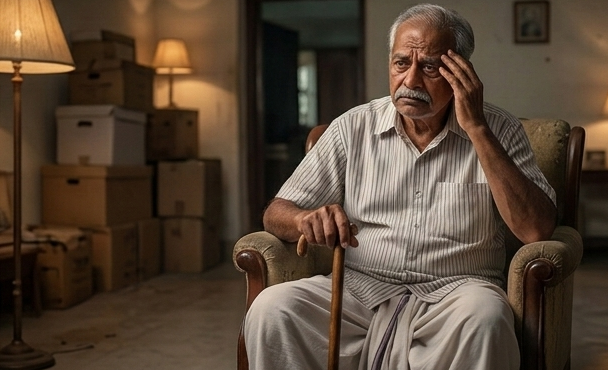
In later years, as children often move abroad for education or migrate to different cities for work, the functions of the home change. It is not unusual to find elderly Indian homeowners living in outsized, badly-located storage spaces dedicated to a life that they once had – or hoped to have – and no longer have now.

For older people with an empty nest, an oversized home in the wrong area becomes a source of depression and regret. Depression because large empty spaces echo the past far more efficiently than smaller ones, and regret because the cost – both financially and in terms of effort – are no longer justified.

There may be a lingering hope that the flown birds, so to speak, may return to the nest. And indeed, that can happen, especially in these times of global socio-economic upheaval where many NRIs have to return to India and may need the space. But this assumes that the returning migratory birds will either have no option other than to live with their parents, or that they would prefer to.

This is a big assumption, and may even be vindicated in some cases. But the larger trend is that returning expatriate professionals are more interested in the nuclear family format, and will want to live separately.  Also, younger Indians value convenience and being able to entertain themselves and their family. A large flat can accommodate the body, but not the heart and soul.

Too often, managing a large home becomes the single focus of a retired Indian couple’s life. It feels ‘productive’, since they are working hard at tangible tasks, but it is actually just the life of a hamster in a wheel. They are running energetically to nowhere, spending their precious silver years and remaining bandwidth as perennial housekeepers.

The Township Advantage

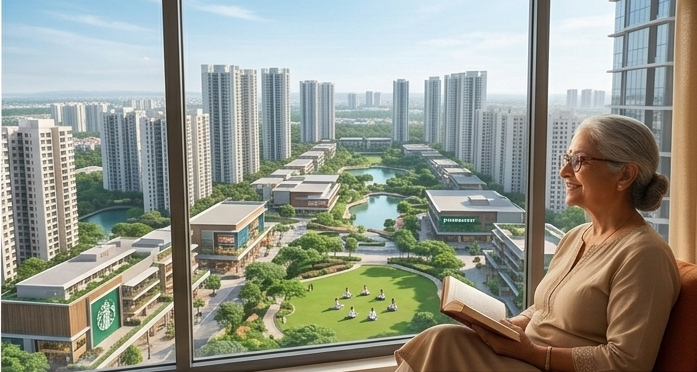
The financial logic of a tool that fits the job — in this case, a home that actually serves its occupants — is particularly relevant in the Indian context. Inflation eats into everything, from the value of one’s savings to the cost of living. A large, isolated home consumes as many resources as a well-located one, without delivering a better life. This is where the integrated township emerges as the ultimate ‘right-fitting’ solution for ageing Indians.

In a regular residential tower or villa, you must manage the property but the world outside is often chaotic, inaccessible, or lonely. A township flips the script. It is not just about the square footage of your apartment but about the extended living room that starts the moment you step out of your front door.
Right-Fitting Senior Indian Homeownership


From Maintenance Trap to Managed Lifestyle

In a township, the burden of maintaining the structure is professionalized and shared. Instead of haggling with individual contractors for plumbing or security, homeowners enjoy a seamless ecosystem. This shift allows retirees to stop being property managers and start being real residents.

The efficiency of a township means you can opt for a ‘right-fitted’ 2 or 3 BHK that is easier to clean, manage and navigate even as you enjoy the luxury of dedicated green open spaces, landscaped gardens, and fully-equipped clubhouses.

Social Touch Points

The greatest risk of the ‘big house’ is the ‘beautiful bubble’ effect. Yes, it is big, but the life that ageing inhabitants live inside becomes very small. There is no world to step into. Townships solve this because they are fundamentally ‘social architecture’.

When you live in a township, you don’t have to schedule a visit to see a friend. You are likely to meet them at the clubhouse or supermarket within the premises, on the walking track, or at the cafe. For the Indian senior, these small interactions are the literal heartbeat of a happy retirement.

Townships provide a safe, pedestrian-friendly environment where ‘going out’ does not need a car or driver. It offers the independence of a private home with the safety net of a village.

Future-Proofing for the ‘Returning Migratory Birds’

The concern that children might return from abroad and need space is valid, but the township model addresses this more realistically than a giant, empty villa. If children and their nuclear families do return, they are rarely looking for a spare bedroom in a silent house. They are often returning from a developed country, and want a real lifestyle.

A township offers amenities like swimming pools, gyms, play areas, and high-speed connectivity that every modern NRI professional takes for granted. It allows for ‘proximity without pressure.’ Many families find that ‘right-fitting’ involves owning two smaller units within the same township rather than one giant, awkward bungalow. This preserves the privacy of both generations while ensuring they are only a five-minute walk apart.

The Luxury of Optionality

Ultimately, ‘right-fitting’ into a township is a strategic allocation of resources. By not over-investing in dead square footage that only serves to store old furniture, homeowners unlock capital and time.

The real luxury in the silver years is optionality — the freedom to travel to see grandchildren, to join a hobby club, or to simply enjoy a sunset in a park that you do not have to mow yourself. A big house demands that you serve it, while a township serves you.

For the modern Indian homeowner, the dream is no longer just about the height of the gate or the size of the floor plan. It is about finding a fit that is snug enough for comfort, yet expansive enough for a community. If you are over 50, it is high time to stop thinking about wider-apart walls and ceilings, start optimizing the life you live within them.

About the author:

Akash Pharande is Managing Director of Pharande Spaces, a leading real estate construction and development firm famous for its township projects in Greater Pune and beyond. Pharande Promoters & Builders, the flagship company of Pharande Spaces and an ISO 9001-2000 certified company, is a pioneer of townships in the region.

 

Flite’s Stylish Picks for Perfect Ramadan Evenings

Ramadan mornings are about reflection. Evenings are about people. The moment Iftaar wraps up, the energy shifts. Homes open up & invitations flow. Plans extend as one step out to meet friends, visit family, or host at home. The day slows down, but Shaam (the evening) comes alive. And that is where style quietly matters. Most of us plan the outfit. The kurta gets ironed. The dupatta is chosen carefully. The watch, the fragrance, the small details get attention. Footwear often gets picked in the last minute rush.

Flite’s Stylish Picks for Perfect Ramadan Evenings

But it is one of the first things people notice. This Ramadan, we let our evenings feel intentional from head to toe. Here are four styles that help you become Har Shaam Stylish, without overthinking it.

1. The Cream Triple-Buckle Slide

The soft cream upper paired with gold buckles makes this slide feel upscale without trying too hard. It works beautifully with pastel kurtas, light salwar sets, or even a minimal co-ord. The structured straps give it a neat silhouette. The cushioned base supports long evenings where conversations stretch past dessert. Whether you are hosting or stepping out for Iftaar, this pair feels composed and refined. It is the kind of footwear that quietly pulls your entire look together.

2. The Olive Printed Double-Strap

The olive straps balance beautifully with the vibrant printed base. It adds colour without overpowering your outfit. Pair it with solid tones and let the footwear do the talking. The wide straps sit comfortably on the foot, and the base feels stable for extended wear. Ramadan evenings often mean moving between spaces, greeting guests, standing for long chats. Comfort becomes important. This pair blends playfulness with practicality. It feels festive without feeling loud.

3. The Tan Suede Double-Buckle

This tan suede-finish slide carries a soft, textured look that complements deeper colours like maroon, emerald, or navy. The metal buckles add detail, while the finish keeps it classic. It works especially well for slightly dressier gatherings. When your outfit leans traditional, this pair supports the mood without distracting from it. The footbed feels gentle, making it suitable for evenings that start at sunset and extend well into the night, thus making it simple alongside thoughtful & reliable.

4. The Deep Brown Multi-Strap Slide

The deep brown tone feels grounded and versatile. The layered strap design gives it definition, making it ideal for more tailored festive looks. It pairs well with darker ensembles and textured fabrics. The shape offers a secure feel, which helps when you are on your feet greeting guests or moving between homes. It is understated but confident. The kind of footwear that completes your presence without demanding attention.

Why Do Our Evenings Deserve More Attention?

Ramadan evenings are not rushed moments. They are shared moments. They are about stepping into someone’s home with warmth. About sitting together after a long day of fasting. About laughter, dua, and connection. When you dress for the evening with intention, the entire experience feels elevated. And footwear plays a bigger role than we often admit.

The right pair does three things:

• It complements your outfit without clashing.

• It supports your feet through long hours.

• It makes you feel put together without effort.

When footwear looks this considered, getting ready feels easier. The outfit feels complete. You move differently. You carry yourself differently.

That is the idea behind Har Shaam Stylish.

Air India Expands Europe and US Services Amid West Asia Situation

Chandigarh, Mar 10: In response to sustained high demand for reliable travel options amid the ongoing situation in West Asia, Air India today announced it will deploy additional capacity to five key gateways in Europe as well as to New York (JFK)1 over the next few days, supported by additional services to the Maldives and Sri Lanka.

Between 10 and 18 March 2026, Air India will operate 78 additional flights on the following routes, thus boosting much-needed capacity when travel options for passengers remain constrained:

1.Delhi-New York (JFK)1

2.Delhi-London (Heathrow)

3.Mumbai-London (Heathrow)

4.Delhi-Frankfurt

5.Delhi-Paris (CDG)

6.Delhi-Amsterdam

7.Delhi-Zurich

8.Delhi-Malé

9.Delhi-Colombo

Together, these flights add 17,660 seats on nine routes in both directions. The additional flights on the European routes will operate with B787-8 and those to Malé and Colombo will be operated with A320neo aircraft. The flights to New York (JFK) are subject to the requisite regulatory approvals and would operate with Air India’s B777-300ER aircraft.

Nipun Aggarwal, Chief Commercial Officer, Air India, said:

 “Despite the odds, Air India continues to maintain its scheduled services to Europe and North America, sustaining connectivity to several international gateways using alternative routings that are assessed as safe for operations. We are confident that passengers in need to travel to destinations in these regions will appreciate the additional options and reliability with Air India.”

SCHEDULE OF ADDITIONAL FLIGHTS (10-18 March 2026)

FLIGHT #

SECTOR

DEPARTURE

ARRIVAL

DAYS OF OPERATION

AI165

Delhi-London (LHR)

1225 Hrs

1800 Hrs

11, 13, 15, 18 Mar

AI166

London (LHR)-Delhi

1930 Hrs

1020 Hrs+1

11, 13, 15, 18 Mar

AI4131

Mumbai-London (LHR)

0125 Hrs

0640 Hrs

12, 14 Mar

AI4130

London (LHR)-Mumbai

0810 Hrs

2255 Hrs

12, 14 Mar

AI121

Delhi-Frankfurt

1230 Hrs

1750 Hrs

Daily from 10-18 Mar (except 14 Mar)

AI120

Frankfurt-Delhi

1920 Hrs

0850 Hrs+1

Daily from 10-18 Mar (except 14 Mar)

AI4155

Delhi-Amsterdam

1230 Hrs

1800 Hrs

12, 14, 16 Mar

AI4156

Amsterdam-Delhi

1935 Hrs

0900 Hrs+1

12, 14, 16 Mar

AI177

Delhi-Paris (CDG)

1430 Hrs

2040 Hrs

15 Mar

AI178

Paris (CDG)-Delhi

2215 Hrs

1200 Hrs+1

15 Mar

AI151

Delhi-Zurich

1335 Hrs

1900 Hrs

10, 17 Mar

AI152

Zurich-Delhi

2035 Hrs

1000 Hrs+1

10, 17 Mar

AI4101

Delhi-New York (JFK)1

0535 Hrs

1705 Hrs

12, 14, 17 Mar

AI4102

New York (JFK)-Delhi1

2005 Hrs

2030 Hrs+1

12, 14, 17 Mar

AI3201

Delhi-Maldives

0200 Hrs

0545 Hrs

Daily from 10-18 Mar

AI3202

Maldives-Delhi

0645 Hrs

1130 Hrs

Daily from 10-18 Mar

AI3203

Delhi-Colombo

0015 Hrs

0400 Hrs

Daily from 10-17 Mar (except 11 Mar)

AI3204

Colombo-Delhi

0500 Hrs

0845 Hrs

Daily from 10-17 Mar(except 11 Mar)

All times are indicated in local time zones. +1 indicates next day arrival 1The additional flights to New York are subject to the requisite regulatory approvals.

The additional flights are being progressively opened for bookings through all channels, including Air India’s official website (www.airindia.com), mobile app, and through travel agents.

DoubleTree by Hilton Gurugram Baani Square Appoints Nikhil Malhotra as Commercial Director

DoubleTree by Hilton Gurugram Baani Square Appoints Nikhil Malhotra as Commercial Director

 New Delhi, Mar 10: DoubleTree by Hilton Gurugram Baani Square has appointed Nikhil Malhotra as Commercial Director, strengthening the hotel’s leadership team as it sharpens its positioning across corporate, leisure, and MICE segments.

In this role, Malhotra will lead the hotel’s commercial strategy across sales, marketing, and revenue optimisation. He will work closely with the leadership team to grow market share, build strategic partnerships, and drive sustained revenue performance across key business segments.

Malhotra brings over 15 years of hospitality experience across leading international hotel brands. Over the course of his career, he has worked with brands including Accor, Hyatt, The Zuri Group, and Alila Hotels & Resorts, building strong expertise in market development, key account management, commercial planning, and team leadership.

Commenting on the appointment, Nikhil Malhotra said, “The Gurugram market continues to evolve rapidly, and it presents strong opportunities across corporate travel, social events, and emerging lifestyle segments. I look forward to working closely with the team to strengthen our commercial strategy, deepen market partnerships, and drive sustained growth for the property.”

With his strong background in strategic sales leadership and market-driven commercial planning, Malhotra will support the hotel’s continued growth in Gurugram’s dynamic hospitality market.

AAEON Brings Innovative Robotics, Machine Vision, and Industrial AI Demos to Embedded World 2026

AAEON Brings Innovative Robotics, Machine Vision, and Industrial AI Demos to Embedded World 2026

AAEON will be at Hall 1, Booth 306 of NürnbergMesse in Nuremberg, Germany between March 10 and March 12, 2026.


(Taipei, Taiwan – Mar 10) AAEON, an industry leader in embedded computing, will host live demonstrations showcasing the edge AI capabilities of its products across multiple solutions at Embedded World 2026 in Nuremberg, between March 10 and March 12, 2026.

Date: March 10 – March 12, 2026

Booth: Hall 1, Booth 306

Venue: Nuremberg Messe GmbH, Messezentrum 90471 Nuremberg, Germany


This year, robotics and edge AI will be central themes of AAEON’s Embedded World showcase, allowing visitors the opportunity to see how scalable AI platforms from across its product portfolio are accelerating intelligent automation across industries.

At Booth 306, AAEON will present a varied selection of live application demonstrations featuring new, exciting technologies from leading platform providers. Most notable of these is a speak-and-command robot featuring the upcoming BOXER-8741AI, built on NVIDIA Jetson T5000 module.

Meanwhile, AAEON will host a number of live demonstrations developed in conjunction with key software partners, beginning with a four-wheeled robot running on AAEON’s BOXER-8651AI and remotely controlled by AAEON’s RTC-1030 rugged tablet, built in collaboration with Rover Robotics and Cogniteam.

On the themes of machine vision and industrial AI, AAEON will introduce visitors to a new AI Workstation powered by the NVIDIA RTX PRO™ 6000 Blackwell, running Ipsotek’s AI Video Analytics from Eviden. The demonstration will feature multiple use-case videos showcasing the adaptability and scalability of Ipsotek’s VISuite software. Demo scenarios include edge-based deployments as well as advanced forensics and investigations, utilizing VLM and agentic AI models. In addition to this, an industrial defect detection application developed with computer vision specialists Awentia will be present, executing Awentia’s VLM engine on AAEON’s new modular MEX-BTS System Box PC, equipped with NVIDIA RTX 5000 Ada Generation GPU, powered by NVIDIA Ada Lovelace architecture.

In its first public outing, the upcoming MIX-PTLWV1 Mini-ITX motherboard will be used in a demonstration illustrating how its Secure Edge AI reference architecture can be implemented for intelligent perception and decision-making. Powered by Ultralytics and Sandgrain CyberRock, the solution will illustrate the suitability of Ultralytics’ YOLO models on Intel® Core™ Ultra Series 3 Processors, as well as how such licensed models can secured by Sandgrain CyberRock.

From AAEON’s UP Division, the UP Xtreme ARL AI Dev Kit will be deployed with Network Optix’s Nx AI Manager, showcasing the tool’s cross-hardware compatibility, custom pipeline configuration, and centralized, software-based model management. A further offering from UP will be a voice-controlled robotic arm built on the upcoming UP Xtreme PTL Edge, AAEON’s first Mini PC to host Intel Core Ultra Series 3 Processors.

On Tuesday 10 March at 15:00, AAEON will participate in a technical workshop featuring a live demonstration on deploying and accelerating real-time computer vision workloads on Intel Core Ultra Series 3 processors using the Intel® OpenVINO™ Toolkit and Ultralytics YOLO. The session will showcase practical implementation strategies and performance optimization techniques for edge and embedded AI applications. Industry professionals and developers are encouraged to register in advance to secure their participation: https://aaeon-intel-ultralytics-vision-ai.eventbrite.com.

Among its static product demos, AAEON will present a range of products that utilize innovative technologies from leading providers including Qualcomm Technologies and AMD. Notably, visitors will get a public showing of AAEON’s uCOM-Q6490, a SMARC module powered by Qualcomm Dragonwing™ QCS6490 processors, which features an 8-core CPU running up to 2.7 GHz, a dedicated GPU, and an NPU capable of up to 12 dense TOPS to deliver powerful heterogenous compute performance, and the GENE-R8K6, a 3.5″ SubCompact Board with AMD Ryzen™ Embedded 8000 Series processors.