AAEON Launches Intelli TWL01 Edge, an Industrial Multimedia PC with Dual 4K Display Support

AAEON Launches Intelli TWL01 Edge, an Industrial Multimedia PC with Dual 4K Display Support


Featuring dual 4K displays, efficient Intel processing, and flexible mounting options, the Intelli TWL01 Edge marks AAEON UP brand’s entry into the multimedia space. 

(Taipei, Taiwan – March 4) AAEON’s UP brand (Stock Code: 6579) has announced the release of the Intelli TWL01 Edge, an Industrial Multimedia PC with dual 4K displays, multiple mounting options, and a range of Intel® Core™ Processor N-series CPUs (formerly Twin Lake).

Built to provide a cost-effective platform for multimedia solution building, the Intelli TWL01 Edge hosts two HDMI 2.0b ports capable of dual simultaneous 4K displays. In addition to this, AAEON notes that the system’s Intel® Processor N-series platform grants users access to both Intel® UHD Graphics and DirectX 12.1 graphics API support, for the purpose of leveraging interactive dashboard functionality, reduced frame latency, and more efficient video rendering for both smaller kiosk and video conferencing suite setups as well as commercial large-scale video walls and interactive billboards.

The Intelli TWL01 Edge is both compact at 152mm x 124.5mm x 39mm and fanless, a design choice driven by market user requests for a system that can be discreetly installed and operate with minimal noise. Moreover, the system offers versatile mounting options, with DIN Rail, VESA, and wall mounting available, allowing the device to be securely mounted in high-vibration settings, clutter-free integration with monitors or kiosks, and even secure media control room cabinets. In the same vein, its environmental specifications make it a relatively safe option for industrial deployment, with a broad 9V to 36V power input range, as well as 8GB of soldered LPDDR5 system memory.

For storage, the Intelli TWL01 Edge comes with 64GB of eMMC. In addition to this, the system offers an M.2 2280 M-Key slot for the integration of high-speed NVMe SSD storage. With this balance, the Intelli TWL01 Edge can maintain local OS storage while leveraging the accelerated read/write performance of external NVMe for large media libraries, faster app launches, and UI responsiveness. Along with its SSD support, the Intelli TWL01 Edge provides an M.2 2230 E-Key slot for Wi-Fi module installation.

The system’s physical I/Os are simple yet robust, with four USB 3.2 Gen 2 Type-A ports, two RJ-45 ports for Gigabit Ethernet, a 10-bit GPIO, and a single COM port for RS-232/422/485.

For OS support, the Intelli TWL01 Edge is compatible with Windows® 11 LTSC, Ubuntu 24.04 LTS, and Yocto 5.1.


Missouri Launches First-Ever Child Care WAGE$ Pilot

Child Care Aware of Missouri secures $5.6 million to boost educator pay and strengthen St. Louis County’s early childhood workforce.

(St. Louis, Mo., Mar 4, 2026) Child Care Aware of Missouri (CCAMO) recently announced the launch of the Child Care WAGE$ Missouri pilot project, a groundbreaking initiative designed to increase retention through compensation based on education for early childhood educators in St. Louis County. The program – funded by a $5.6 million award administered by the St. Louis County Children’s Services Fund on behalf of the County – will begin offering services in May 2026.

Developed by the TEACH Early Childhood National Center in North Carolina, the Child Care WAGE$ program is a strategic salary supplement initiative investing in early childhood educators to elevate care quality and workforce stability. With more than 30 years of proven success in five other states, this marks the first-ever implementation in Missouri, made possible through CCAMO’s long-standing affiliation with the national TEACH Early Childhood Scholarship program.

Missouri Launches First-Ever Child Care WAGE$ Pilot

Beth Ann Lang, Deputy CEO of Child Care Aware of Missouri.

“This has been a four-year journey driven by one clear goal: valuing early childhood educators,” said Beth Ann Lang, Deputy CEO of Child Care Aware of Missouri. “Launching WAGE$ in St. Louis County is a powerful step toward fairer compensation and stronger workforce stability. We’re proud to bring this opportunity to educators who have long asked for recognition and financial support tied to their experience and dedication.”

Through the WAGE$ Missouri pilot, eligible educators in licensed or license-exempt child care programs in St. Louis County will receive salary supplements based on their education level and retention at their St. Louis County-based child care program. These ongoing financial incentives reinforce that professional growth translates into tangible pay increases and long-term workforce stability. The organization’s leadership envisions the St. Louis County pilot as a proof of concept, using data and measurable outcomes to advocate for expanding the WAGE$ model across additional Missouri counties in the coming years.

CCAMO’s leadership in strengthening the early childhood profession spans more than two decades. In 2000, CCAMO secured the sole state license for the TEACH Early Childhood Missouri Scholarship program and awarded the first TEACH Missouri Scholarships, setting the foundation for educational advancement and career development across the state’s early education workforce. To date TEACH Missouri has awarded more than 5,500 scholarships to early child professionals.

CCAMO will hire a Director to lead the new WAGE$ program and plans to bring on two counselors once fully staffed. A tax consultant position will be added in a contracted position beginning in April.

“This pilot is an investment not only in St. Louis County’s child care professionals,” Lang added “but also in the children and families who benefit from consistent, high-quality care.”

Founded in 1999, CCAMO is a statewide nonprofit that focuses on a comprehensive early childhood education experience through impactful programs and partnerships. The organization’s services include workforce development, child care business supports, advocacy and policy work, and its new Child Care Keeps Missouri Working, a regional campaign offering concierge solutions to businesses undergoing employee recruitment and retention challenges due to the overwhelming shortage of quality child care options. For more information, call (314) 535-1458 or visit www.mochildcareaware.org.

Digital Rights Network Launches First Global Platform Connecting Real Estate and Content Creators to Monetize the Digital Layer of the Physical World

More than $400 Billion in value and over 11 Billion in Square Footage  registered as buildings become digital content affiliates driving revenue for property and IP owners.

LOS ANGELES, Mar 4 — Digital Rights Network today announced the launch of its groundbreaking platform designed to connect real estate owners with content creators, media companies, brands, and IP holders to monetize the digital layer of real-world properties. The platform enables property owners to register and manage their Digital Rights while allowing creators to deploy immersive 3D and augmented reality (AR) content on buildings transforming the physical world into a scalable, rights-protected content network.

As augmented reality, spatial computing, and AI-driven media rapidly move from screens into physical environments, buildings are increasingly being used as canvases for digital advertising, entertainment, and social content, often without the consent of property owners. Digital Rights Network provides the missing infrastructure, creating a transparent marketplace where property owners and content creators can collaborate, transact, and share value.

Founded by five-time Emmy® Award–winning producer and augmented reality pioneer Neil Mandt, Digital Rights Network operates as both a digital rights platform and a next-generation distribution network for the physical world. Through the platform, television networks, YouTubers, influencers, celebrities, and brands can form partnerships with property owners to display immersive AR content on buildings’ digital layers, reaching consumers directly. Each participating property functions as a digital content affiliate, generating new revenue with no cost, hardware, or operational burden to the owner.

“Every building has both a physical footprint and a digital presence,” said Neil Mandt, Founder and CEO of Digital Rights Network. “Until now, that digital layer has been unregulated and unclaimed. Digital Rights Network gives ownership, structure, and opportunity to that space, allowing property owners and creators to decide what appears, who profits, and how the real world evolves in an augmented future.”

The platform utilizes secure, blockchain-based verification to publicly record Digital Rights ownership and manage licensing, compliance, and monetization. Digital Rights Network unites industries including real estate, media, advertising, insurance, data, finance, and government, providing the legal, financial, and technical foundation for digital content in physical space.

How Digital Rights Network Works:

  • Register Properties: Real estate owners establish Digital Rights for their assets

  • Onboard Creators & IP Owners: Media companies, creators, and brands access verified properties for content partnerships

  • Policy & Compliance: Governments and municipalities define guidelines for acceptable AR content

  • Monetize: Licensed transactions are facilitated and recorded on blockchain through the platform

  • Protect: Proprietary technology supports automated compliance and insurance frameworks

Early Adoption and Market Traction:
During its invite-only beta, Digital Rights Network has registered more than $400 Billion value, including participation from leading real estate organizations such as BXP, Colliers, and BOMA/Chicago.

Registered properties include:

  • BXP assets such as Prudential Tower, Salesforce Tower, Times Square Tower and the GM Building

  • 29 million square feet of Colliers-managed properties

  • Iconic landmarks including the Flatiron Building (NYC), One Chicago, TD Garden (Boston), and major Las Vegas resorts such as Treasure Island

  • Mixed-use and retail destinations managed by WS Development

“Buildings are the intellectual property of our industry and deserve the same level of protection and monetization as other forms of IP,” said Bryan Koop, Executive Vice President at BXP. “Digital Rights Network provides a framework that finally recognizes that value and generates a new stream of revenue for property owners.”

“This technology will fundamentally change how people interact with the built environment,” said Steve Weikal, Industry Chair of the Real Estate Transformation Lab at the MIT Center for Real Estate. “Few platforms have the global relevance and scalability of Digital Rights Network; it applies to every building, in every city.”

As the internet expands beyond screens and into streets, skylines, and shared spaces, Digital Rights Network is establishing the trusted infrastructure that defines ownership, enables creativity, and unlocks new economic opportunities in the augmented world.

For more information or to participate, visit www.digitalrightsnetwork.com

Moneyboxx Finance Raises ₹33.4 Crore in Equity to Accelerate Growth and Strengthen Capital Base

Moneyboxx Finance Limited, a listed NBFC focused on empowering underserved small and micro entrepreneurs in rural and semi-urban India, successfully raised ₹33.4 crore through allotment of equity shares. The fundraise strengthened the company’s capital base and positioned it to accelerate its next phase of growth. 44 lakh equity shares of face value ₹10 each on were allotted on a preferential basis at an issue price of ₹76 per share, including a premium of ₹66 per share.

With this allotment, Moneyboxx Finance’s total equity capital raised since inception stood at ₹303.9 crore, including this round. The entire equity raised in FY26 has come from promoters and existing shareholders, underlining their strong confidence in the company’s business model and growth prospects. The proceeds were earmarked to expand branch presence across high-potential markets, support AUM growth, and further enhance technology-led underwriting and risk management systems.

Moneyboxx has built a strong phygital model that combines deep on-ground distribution with data-driven credit assessment to deliver responsible, income-linked lending. Commenting on the development, Mr. Deepak Aggarwal, Co-Founder and Co-CEO, Moneyboxx Finance, said, “This equity infusion of ₹33.4 crore reinforced confidence in our model and strengthened our ability to drive responsible financial inclusion at scale. We remain focused on expanding our footprint while leveraging technology to enhance underwriting precision and operational efficiency.”

Moneyboxx Finance Limited remained committed to building a resilient, technology-enabled rural lending platform that delivered long-term value to customers and stakeholders. About the company: Moneyboxx Finance Limited is a listed, non-deposit taking, Base-Layer NBFC engaged in the business of providing small business loans to micro enterprises with a focus on semi-urban and rural India. Moneyboxx has a network of 150+ branches spread across 12 states (Rajasthan, Madhya Pradesh, Haryana, Punjab, Uttar Pradesh, Chhattisgarh, Bihar, Gujarat, Telangana, Andhra Pradesh, Karnataka, and Tamil Nadu). It caters to the underserved small and micro entrepreneurs in essential segments (livestock, kirana, retail traders, micro and small manufacturers) by extending secured and unsecured business loans from INR 1 to 25 Lakh.

New Research Offers Businesses a Playbook for Surviving Social Media Firestorms

By Anthony Borrelli

This was how critics labeled a 30-second Peloton holiday ad in 2019 that featured a man giving a woman an exercise bike as a gift. Backlash was so severe that Peloton’s stock fell by about 9%, after social media erupted over perceived outdated gender roles and body image standards.

Researchers describe this kind of reaction as online social disapproval (OSD) — the public expression of criticism against businesses on digital platforms — which can rapidly escalate into bursts of public responses with significant reputational and financial consequences. For instance, in 2023, Bud Light faced boycotts and sales declines following backlash over its partnership with a transgender influencer.

In response, new research co-authored by Associate Professor Jinglu Jiang from the Binghamton University School of Management introduces a digital toolkit designed to help organizations anticipate, interpret, and respond to social media backlash more effectively. The conceptual paper, “Bursts of online social disapproval: leveraging analytics for comprehension and detection,”(opens in a new window) was published in the Journal of Business Strategy.

The toolkit, developed by combining a review of existing research with real-world cases, identified four phases of OSD — preburst, initial burst, spreading and contagion, and recalibration — that explain how backlash emerges and evolves over time.

“The whole point is that online social disapproval is different from traditional crisis management. It’s not linear; it’s more like a cycle, because of how the internet and social media algorithms create different bursting patterns affecting how these kinds of responses can spread,” Jiang said. “Negative opinions become a battlefield in the spreading phase, and sometimes one perspective emerges as more dominant. When things settle down and get back to normal, that’s when management should revert to prebursting monitoring practices, rather than just waiting for it to happen again.”

Jinglu Jiang, associate professor in the Binghamton University School of Management.

Jinglu Jiang, associate professor in the Binghamton University School of Management. Image Credit: Jonathan Cohen.

Using the four phases, the study offers guiding questions and analytical indicators to give managers more robust capabilities for early detection, response, and recovery:

  • Preburst: Is there a process to monitor emerging trends within your firm?
  • Initial burst: Have you identified indicators for OSD popularity?
  • Spread and contagion: Is a company-specific burstiness threshold defined? Is a structured procedure in place to monitor OSD burst trajectories?
  • Recalibration: Have situational and long-term impact measures been defined?

For the final phase, researchers said the critical question is not simply whether online activity has subsided, but what lasting imprint the OSD burst has left on the organization.

“In the short term, firms can track immediate market and financial responses, such as sales fluctuations, stock price volatility, or shifts in customer traffic. These indicators provide situational feedback on the material consequences of the burst,” the study stated. “However, analytics also structure longer-term interpretations by highlighting enduring reputational shifts. Measures such as customer satisfaction, online review trends, survey-based reputation indices, and social media engagement reveal whether stakeholder trust is recovering or whether skepticism persists.”

Each business needs to define its own baseline “normality” for how the public responds on social media to different events or situations for this type of toolkit to be effective, Jiang said. The study also cautions that older events can resurface unexpectedly, triggering renewed backlash as past news and content are rediscovered online.

“The moment you observe that initial burst online, you need to be cautious and strategic about how you respond,” Jiang said, “because once it enters the spreading and contentious phase, it can become a social media battlefield that’s more difficult to contain. That’s something any business would want to avoid.”


Photo: This was how critics labeled a 30-second Peloton holiday ad in 2019 that featured a man giving a woman an exercise bike as a gift. Backlash was so severe that Peloton’s stock fell by about 9%, after social media erupted over perceived outdated gender roles and body image standards.

Researchers describe this kind of reaction as online social disapproval (OSD) — the public expression of criticism against businesses on digital platforms — which can rapidly escalate into bursts of public responses with significant reputational and financial consequences. For instance, in 2023, Bud Light faced boycotts and sales declines following backlash over its partnership with a transgender influencer.

In response, new research co-authored by Associate Professor Jinglu Jiang from the Binghamton University School of Management introduces a digital toolkit designed to help organizations anticipate, interpret, and respond to social media backlash more effectively. The conceptual paper, “Bursts of online social disapproval: leveraging analytics for comprehension and detection,”(opens in a new window) was published in the Journal of Business Strategy.

The toolkit, developed by combining a review of existing research with real-world cases, identified four phases of OSD — preburst, initial burst, spreading and contagion, and recalibration — that explain how backlash emerges and evolves over time.

“The whole point is that online social disapproval is different from traditional crisis management. It’s not linear; it’s more like a cycle, because of how the internet and social media algorithms create different bursting patterns affecting how these kinds of responses can spread,” Jiang said. “Negative opinions become a battlefield in the spreading phase, and sometimes one perspective emerges as more dominant. When things settle down and get back to normal, that’s when management should revert to prebursting monitoring practices, rather than just waiting for it to happen again.”


Using the four phases, the study offers guiding questions and analytical indicators to give managers more robust capabilities for early detection, response, and recovery:

  • Preburst: Is there a process to monitor emerging trends within your firm?
  • Initial burst: Have you identified indicators for OSD popularity?
  • Spread and contagion: Is a company-specific burstiness threshold defined? Is a structured procedure in place to monitor OSD burst trajectories?
  • Recalibration: Have situational and long-term impact measures been defined?

For the final phase, researchers said the critical question is not simply whether online activity has subsided, but what lasting imprint the OSD burst has left on the organization.

“In the short term, firms can track immediate market and financial responses, such as sales fluctuations, stock price volatility, or shifts in customer traffic. These indicators provide situational feedback on the material consequences of the burst,” the study stated. “However, analytics also structure longer-term interpretations by highlighting enduring reputational shifts. Measures such as customer satisfaction, online review trends, survey-based reputation indices, and social media engagement reveal whether stakeholder trust is recovering or whether skepticism persists.”

Each business needs to define its own baseline “normality” for how the public responds on social media to different events or situations for this type of toolkit to be effective, Jiang said. The study also cautions that older events can resurface unexpectedly, triggering renewed backlash as past news and content are rediscovered online.

“The moment you observe that initial burst online, you need to be cautious and strategic about how you respond,” Jiang said, “because once it enters the spreading and contentious phase, it can become a social media battlefield that’s more difficult to contain. That’s something any business would want to avoid.”
 

Tech Mahindra Advances AI-Driven Autonomous Network Operations for CSPs Globally with NVIDIA

Barcelona Mar 03: Tech Mahindra, a leading global provider of technology consulting and digital solutions to enterprises across industries, announced a collaboration with NVIDIA to introduce an industry-first AI-powered Telco Network Operations Reasoning Agent. The solution is designed to help Communication Service Providers (CSPs) accelerate their journey toward Level 4+ (L4+) autonomous networks by transforming traditional Network Operations Centers (NOCs) into intelligent, closed-loop operations.

The solution is delivered through Tech Mahindra’s Orion platform, combining AI engineering, domain expertise, and human-in-the-loop design. Additionally, it ensures enterprise-grade trust without using customer or Personally Identifiable Information (PII) allowing CSPs to safely operationalize artificial intelligence (AI) while maintaining data privacy and governance. The collaboration highlights Tech Mahindra’s capabilities in helping operators advance toward L4+ autonomy through scalable, production-ready AI frameworks.

Amol Phadke, Chief Transformation Officer, Tech Mahindra, said, “Network operations centers still rely on rule-based, open-loop workflows with significant manual intervention. Engineers continue to spend considerable time correlating alarms, logs, and performance data across systems, impacting resolution times and operational efficiency. Our collaboration with NVIDIA addresses this challenge by embedding AI-driven reasoning into the core of network operations. By enabling intelligent, closed-loop execution, we are helping Communication Service Providers (CSPs) move decisively toward simplified operations aligned with L4+ autonomous network ambitions.” 

The AI reasoning agent within the solution enables CSPs to move beyond conventional automation by embedding contextual intelligence directly into network operations. It supports autonomous alarm validation, root-cause analysis, and resolution across Operations Support Systems (OSS) and Business Support Systems (BSS) environments, enabling faster incident handling, greater operational consistency, and a better customer experience. A key differentiator of the solution is its extensibility, as once CSPs deploy a foundational Large Telco Model, they can build and scale domain-specific reasoning agents that integrate with their existing data lakes, tools, and workflows. Leveraging NVIDIA AI Enterprise software, Tech Mahindra customized a reasoning model with synthetic and anonymized data using NVIDIA NeMo and deployed it as NVIDIA NIM inference microservice. The model provided 2-3x improvement in accuracy compared with a non-fined tuned model. 

Chris Penrose, Vice President, Global Business Development – Telecom, NVIDIA, said, “Network operations demand rapid decision-making across complex, real-time environments. By combining NVIDIA’s AI software stack with Tech Mahindra’s deep telecom expertise, this collaboration enables CSPs to deploy reasoning-based AI systems that can act, adapt, and learn within live NOC environments. Together, we are laying the groundwork for a new era of autonomous, resilient, and intelligent networks.” 

The transition to autonomous networks is an iterative and ecosystem-driven journey, as modular architecture and reusable pipelines enable CSPs to adopt AI reasoning incrementally and scale it across their operations. The collaboration reinforces Tech Mahindra’s commitment to driving AI innovation in telecom and redefining network operations through intelligent automation, deep learning, and multimodal AI models.

IndiGo Commences Repatriation Flights and Progressively Resumes Scheduled Operations

Mar 03: In-light of the evolving situation in the Middle East and Persian Gulf, IndiGo has begun its repatriation efforts aligned with the relevant authorities in India and the respective governments. Four such flights are now enroute to Jeddah and one is expected to be operated to/from Muscat, later in the day. 

From tomorrow, 04 March 2026, more scheduled flights and seat capacity are expected to be offered. IndiGo will be reinstating select flights as part of a carefully planned restoration of its schedule, with safety as the topmost priority. Operations are expected to be resumed to the following destinations in- line with prevailing airspace conditions and necessary approvals. 

  • Middle East: Muscat, Jeddah, Madinah
  • Europe: Athens

Totaling 13 return flights (26 sectors) 

Furthermore, for 04 March, repatriation flights to stations in the UAE are being worked upon, however, it will depend on the local situation and required necessary approvals. Given the evolving situation this shall be confirmed at a later stage. 

For all other stations, IndiGo is closely monitoring the situation and working with the relevant authorities for local slots and permits to progressively restore its operational schedule. IndiGo continues to update its social media platforms and website with the latest status. Amidst this highly volatile situation, safety and security of its customers, crew and aircraft continue to be of paramount importance to IndiGo.

MAHE Celebrates National Science Day 2026 with Grand Science Exhibition and Distinguished Lecture

MAHE Celebrates National Science Day 2026 with Grand Science Exhibition and Distinguished Lecture

Manipal, Mar 03: Manipal Academy of Higher Education (MAHE), an Institution of Eminence Deemed to be University, celebrated National Science Day 2026 on Saturday, February 28, at Manipal. As part of the celebrations, around 350 high school students and teachers from the Academy of General Education (AGE), Dr TMA Pai Foundation schools and other educational institutions were invited to the MAHE campus to experience its science and technology facilities. Several competitions were organised, including science seminars, drawing competitions, and model-making contests, encouraging active student participation. 

science exhibition featuring more than 50 stalls showcased a wide range of scientific models and innovative projects across disciplines. The exhibition was inaugurated by Dr Narayana Sabhahit, Pro Vice Chancellor – Technology and ScienceMAHE, in the presence of dignitaries and university officials. The initiative aimed to nurture curiosity among young learners and strengthen their interest in scientific learning and research. 

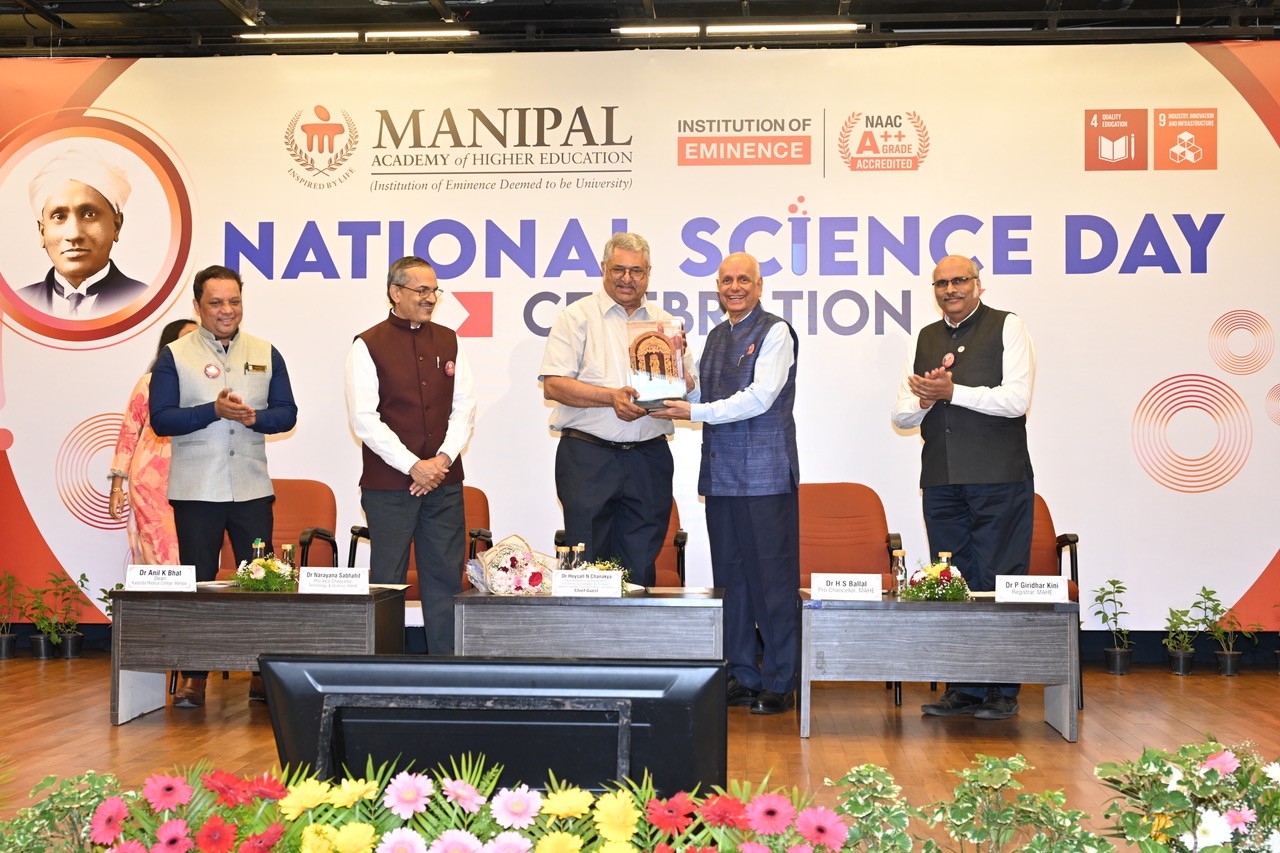
The formal programme was held at the Dr TMA Pai Auditorium, KMC, Manipal. The Chief Guest, Dr Hoysall N. Chanakya, Chief Research Scientist (Retd.), Centre for Sustainable Technologies, Indian Institute of Science (IISc), Bengaluru, delivered the keynote address. With over four decades of research experience, Dr Chanakya has guided more than 10 doctoral scholars and over 20 postgraduate research students, and has led over 50 research, development, and consultancy projects. Since 1978, his work has focused on decentralised bioenergy technologies, including biogas systems, integration of energy solutions into rural livelihoods, water and wastewater purification, and restoration of water bodies.

 In his address, Dr Chanakya emphasised the importance of scientific innovation in addressing environmental, societal challenges and encouraged students to pursue research that contributes to sustainable development. 

The event was presided over by Dr H S Ballal, Pro Chancellor, MAHE. Senior MAHE leadership present on the occasion included Dr Narayana Sabhahit, Pro Vice Chancellor – Technology and Science; Dr Sharath Rao, Pro Vice Chancellor – Health Sciences; Dr P. Giridhar Kini, Registrar, and Dr Anil K. Bhat, Dean, Kasturba Medical College (KMC), Manipal. 

National Science Day is observed across India to commemorate Sir C. V. Raman’s discovery of the Raman Effect. Through this celebration, MAHE reaffirmed its commitment to promoting research excellence and innovation, while inspiring young minds to adopt a scientific approach towards life and society.

LatentView Analytics Recognized as a Strong Performer in Marketing Measurement and Optimization Services, Q1 2026 Report by Independent Research Firm

Chennai, India, Mar 03:  Latent View Analytics Limited, an AI-driven analytics, data engineering, and consulting firm, today announced it has been named a Strong Performer in The Forrester Wave™: Marketing Measurement and Optimization Services, Q1 2026.

The Forrester Wave™ is an evaluation of top providers in a defined market segment. In this report, LatentView was evaluated among 12 providers. LatentView received the highest possible score of 5 out of 5 in both Models and Algorithms and Data Hygiene and Processing criteria.

According to the report, “LatentView is best suited for brands with complex modeling needs that are looking for a powerful solution that doesn’t require sharing data outside their own data environment.”

The report notes that each of the vendors in the Wave has a marketing measurement consulting focus that offers advanced marketing measurement services to clients through a combination of tools and platforms for marketing measurement, strategic analysis, and strategy consulting. LatentView’s approach integrates these capabilities to help enterprises translate measurement into business growth, reinforced by its Elite partnership with Databricks.

The report also cites MARKEE, LatentView’s modular AI-driven performance marketing platform, which enables modeling and measurement components to be deployed within client environments. This architecture preserves data ownership and governance while enabling scalable optimization.

LatentView was previously included in The Marketing Measurement and Optimization Services Landscape, Q3 2025, which provided an overview of 16 notable providers supporting brands in measuring cross-channel effectiveness, optimizing media investments, and conducting forward-looking scenario planning. LatentView was also included in The Forrester Wave™: Customer Analytics Services, Q2 2025.

Rajan Sethuraman, CEO of LatentView Analytics, said, “Organizations are under increasing pressure to connect marketing investments to measurable business outcomes while navigating growing data complexity and privacy expectations. We believe this recognition reflects the rigor of our modeling, the strength of our data engineering, and our ability to deploy solutions within client controlled environments. For our clients, it reinforces that they can pursue advanced measurement and optimization with confidence, backed by transparency, governance, and scalable execution.”

As LatentView approaches its 20th year partnering with global enterprises, the company continues to invest in unified measurement frameworks, responsible AI, and scalable deployment models, grounded in methodological rigor, strong data governance, and clear alignment to business outcomes.
 
Forrester does not endorse any company, product, brand, or service included in its research publications and does not advise any person to select the products or services of any company or brand based on the ratings included in such publications. Information is based on the best available resources. Opinions reflect judgment at the time and are subject to change. 

Water Recycling Systems Launched at Arignar Anna Zoological Park to Strengthen Sustainable Conservation Efforts

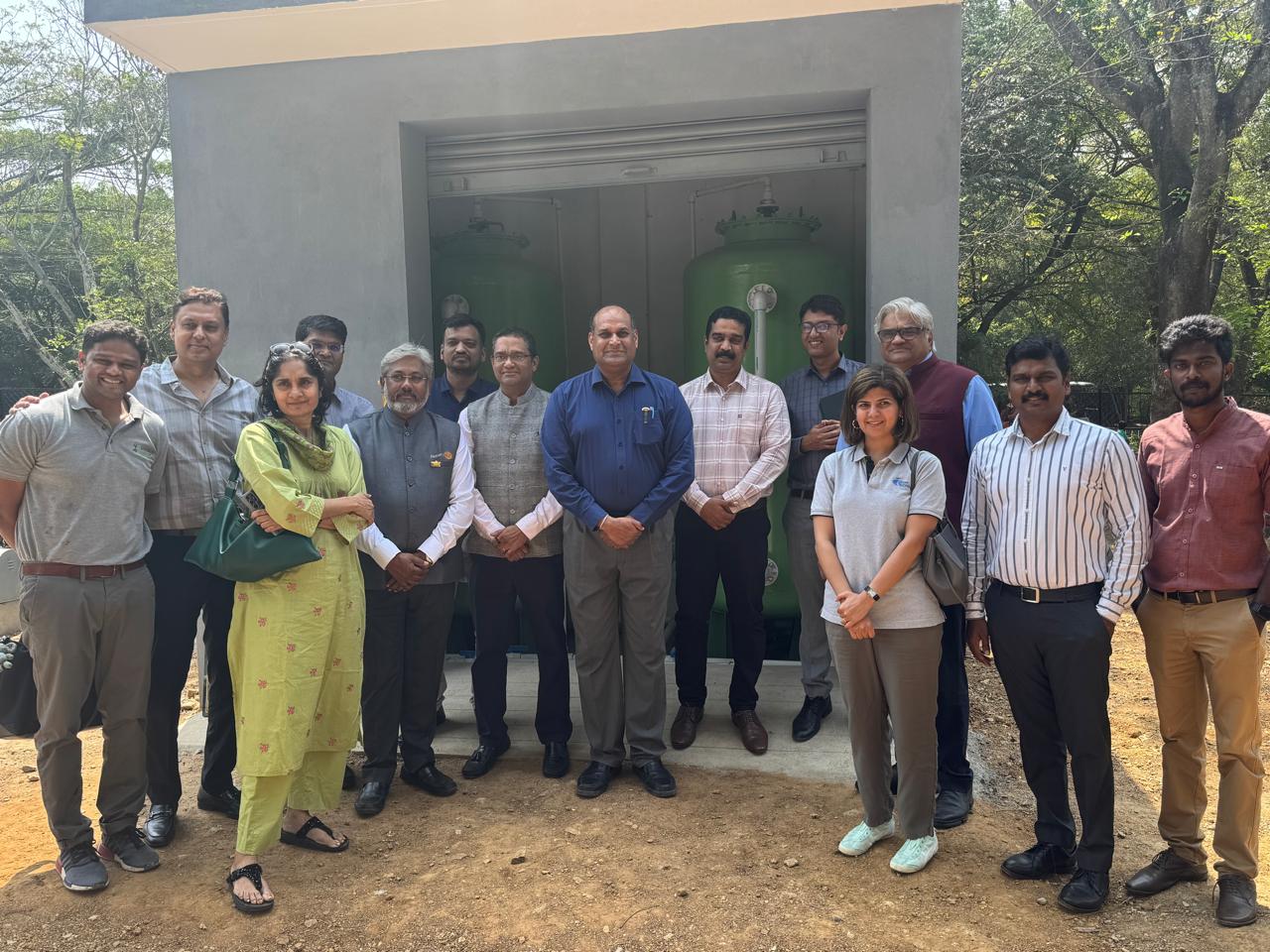
Vandalur, Mar 03: The inauguration of the Water Recycling System at the Langur Enclosure and the laying of the foundation for similar systems at the Otter and Chimpanzee enclosures at the Arignar Anna Zoological Park, Vandalur, Chennai mark a significant milestone for the Institute for Climate and Environment (ICE) in its capacity as Knowledge Partner.

Water Recycling Systems Launched at Arignar Anna Zoological Park to Strengthen Sustainable Conservation Efforts

 The ceremony was graced by Thiru. Srinivas R. Reddy, IFS, Principal Chief Conservator of Forests (Head of Forest Force), who attended as the Chief Guest. Rtn. Nikhil Raj, President of the Rotary Club of Madras, was the Guest of Honour, and Thiru. T. Ritto Cyriac, IFS, Director of Arignar Anna Zoological Park, presided over the function.

The project has been made possible through the generous support of sponsors R B Agarwalla & Co., Aspire Systems (India) Pvt. Ltd., and DRA Homes, along with co-sponsors Rtn. Shri Shakthi Girish and Rtn. Suresh Amirapu. Circen Technologies served as the CTCe Implementation Partner, delivering environmentally responsible and efficient solutions aligned with sustainable water management practices.

Developed in collaboration with the Rotary Club of Madras, the initiative represents a meaningful step toward advancing environmental sustainability and responsible resource management within wildlife habitats.

Implemented by the Environmental Action Committee of the Rotary Club of Madras, the water recycling system has a treatment and recirculation capacity of 400,000 litres per day. The technology, provided by Circen Technologies, is designed to significantly reduce the enclosure’s dependence on fresh water while ensuring the highest standards of habitat care and animal welfare.

The system installed at the Nilgiri Langur wet moat enclosure is expected to reduce fresh water consumption by nearly 70% while maintaining optimal living conditions for the primate population. The initiative sets a benchmark for eco-friendly infrastructure and responsible water management practices within zoological parks. The project aims to promote efficient water usage while supporting the health and well-being of the animals, setting a benchmark for eco-friendly infrastructure in zoological parks.

In addition to the Langur enclosure system, the foundation stone was laid for a new water treatment plant at the Otter Pond, sponsored by Aspire Systems (India) Pvt. Ltd. Plans are also underway for a water recycling system for the Chimpanzee Enclosure, supported by DRA Homes. What began with the Langur enclosure is now expanding across the zoo, building momentum toward improved water efficiency and environmentally conscious operations.

This collaborative effort between Arignar Anna Zoological Park, the Rotary Club of Madras, and Institute for Climate and Environment (ICE) highlights how partnerships can play a crucial role in advancing sustainable conservation practices while promoting responsible resource management in public institutions.