ITRHD inaugurates 12th Annual Craft Festival initiative to connect rural artisans of Uttar Pradesh and Rajasthan directly with the market
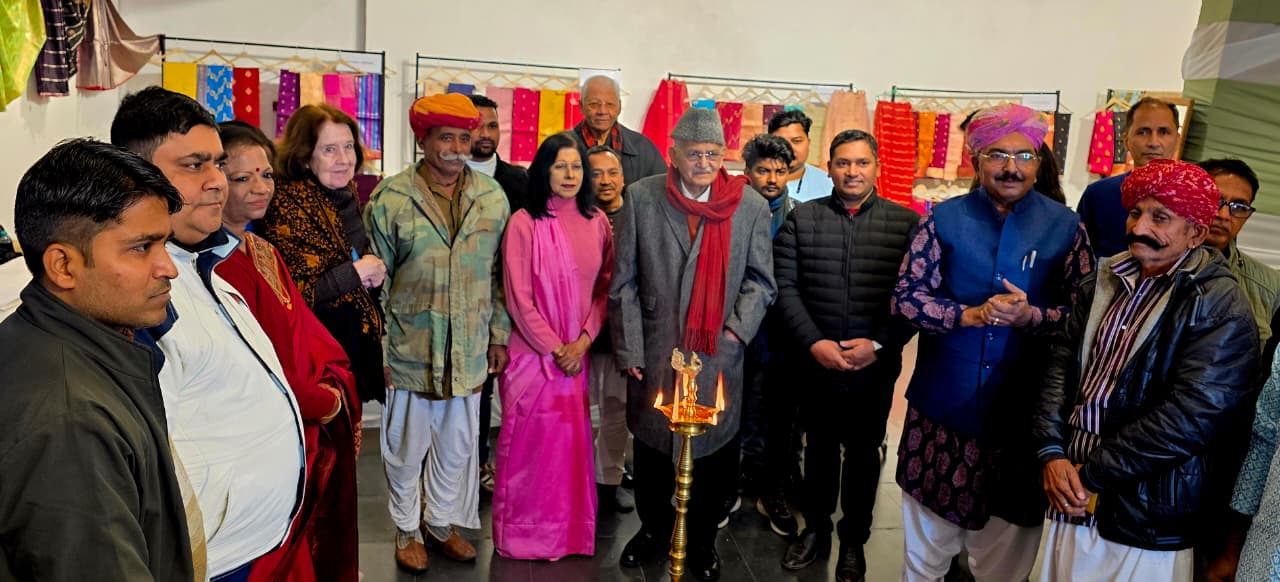
New Delhi, Jan 7: The 12th Annual Craft Festival, organised by the Indian Trust for Rural Heritage and Development (ITRHD), opened in New Delhi on Wednesday. The event offers a rare platform to artisans from the border regions of Rajasthan and rural areas of eastern Uttar Pradesh. The objectives of the festival are to increase the reach of craftsmen to new markets while conserving cultural heritage.
The four-day festival is being held at Alliance Française New Delhi, Lodhi Estate. Artisans from Rajasthan and Uttar Pradesh are participating, enabling direct interaction and sales between artisans and buyers without intermediaries. The exhibition will remain open till January 10, from 11 a.m. to 7 p.m. daily, with free entry.
The festival was formally inaugurated by renowned Kathak dancer Shovana Narayan, who emphasised the cultural responsibility of preserving India’s living craft traditions. ITRHD Chairman Shri S.K. Mishra was also present at the event.
Addressing the gathering, Shri S.K. Mishra said, “ITRHD’s objective goes beyond showcasing crafts. Our effort is to increase the reach of craftsmen to new markets while ensuring that their cultural heritage and traditional knowledge systems are preserved.”
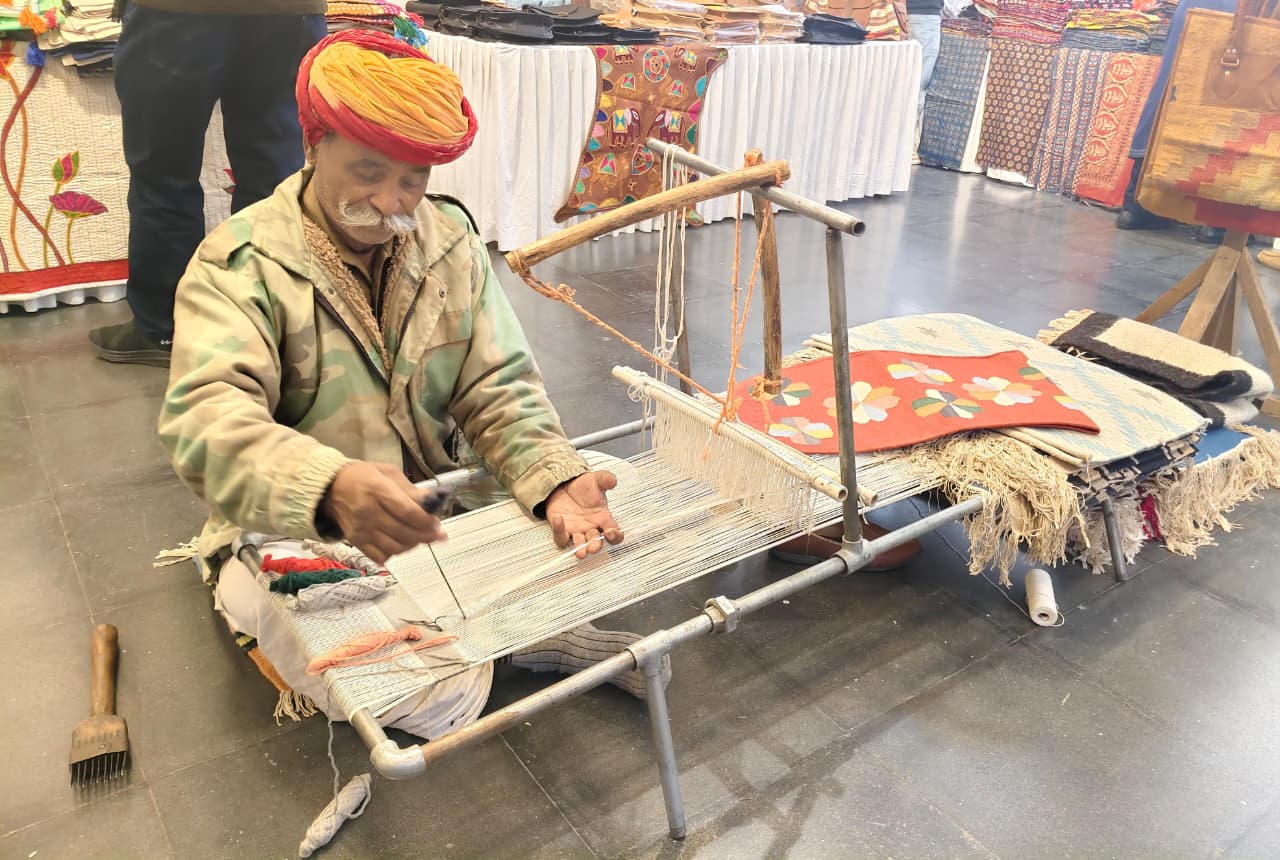
Shovana Narayan said, “Indian crafts are not static artefacts displayed in museums; they are living traditions sustained by families, memory, and daily practice. Platforms like this festival ensure that artisans are not reduced to anonymity and that the dignity of their labour and legacy is protected.”
A key focus of this year’s festival is Barmer district in western Rajasthan, located close to the India–Pakistan border. Six artisans from the region are participating, representing traditional skills such as embroidery, appliqué work, leather craft, dhurrie weaving, and Ajrak textile printing.
Participating artisans are conducting live demonstrations, offering urban audiences insight into crafts practiced in geographically isolated regions where access to markets remains limited. According to the organisers, the festival enables artisans to generate independent income while building long-term relationships with buyers.
ITRHD said it has been working continuously with artisans from Barmer for the past six to seven years, expanding participation every year. Beyond exhibitions, the Trust supports artisans through design intervention, product diversification, and access to multiple platforms, while covering participation-related costs so that artisans retain the full proceeds from sales.
From Uttar Pradesh, the festival features artisans from three villages in Azamgarh district, each representing a distinct cultural tradition.
Mubarakpur, located about 100 km from Varanasi, is known for its skilled handloom weavers whose work is closely linked to the Banarasi saree tradition. Despite this proximity, the region has remained relatively under-recognised. The festival aims to establish Mubarakpur as an independent weaving centre through direct sales and wider exposure.
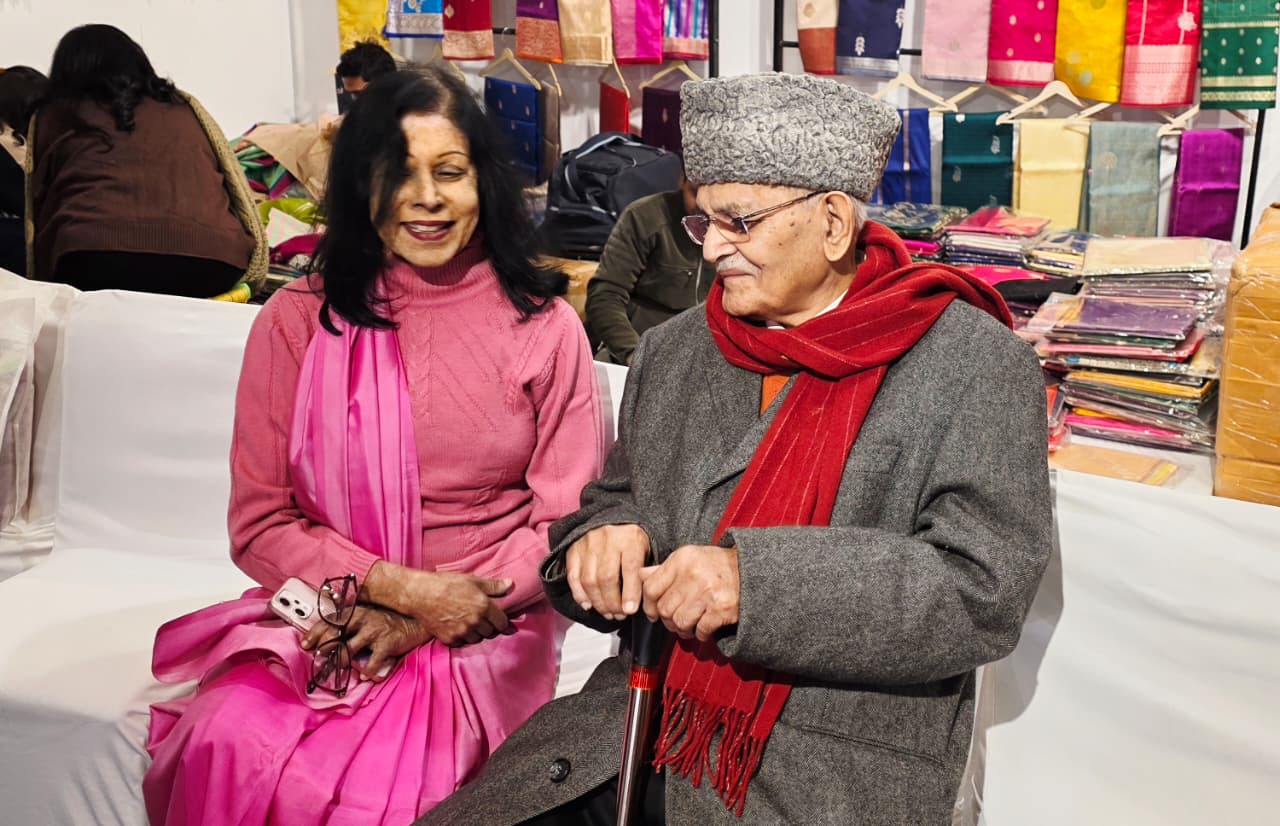
Another major highlight is Nizamabad’s black pottery, which has emerged over the past decade as a significant example of craft revival. The pottery received global recognition after Prime Minister Narendra Modi gifted Nizamabad black pottery to Japanese Prime Minister Fumio Kishida during the G7 Summit in Germany in June 2022. Several of the works on display have been created by members of the original artisan family associated with the revival of the craft.
Speaking at the festival, Ankit Prajapati, grandson of master artisan Rajendra Prasad Prajapati and a key figure in the contemporary revival of black pottery, raised concerns over misattribution and erosion of legacy.
“Black pottery is not just a product; it is a family-held knowledge system passed down through generations. Today, the biggest challenge is that the names of original artisans are disappearing, even as the craft gains fame. Our effort is to protect both the technique and the truth of its history,” Ankit Prajapati said.
The third cultural strand from Azamgarh is Hariharpur village, known for its classical music tradition linked to the Banaras gharana and musicians such as Pandit Chhannulal Mishra. Artists from the village will present a classical music recital on January 9, from 5:30 p.m. to 8 p.m., at the Alliance Française auditorium.
Now in its 12th edition, the Annual Craft Festival is held every year in New Delhi. In addition, ITRHD also organises a similar annual craft event at Mehrangarh Fort in Jodhpur, where space is provided by the fort’s trustees to support sustained engagement with artisans in Rajasthan.
