As 2025 draws to a close, Indian architecture stands at a pivotal moment of transformation. Public institutions are being reimagined, schools and universities are redefining learning environments, hospitality and IT districts are emerging as engines of economic growth, and public landscapes are being reclaimed as vital civic spaces. Across these shifts, CP Kukreja Architects (CPKA) continues to shape some of the country’s most significant projects.
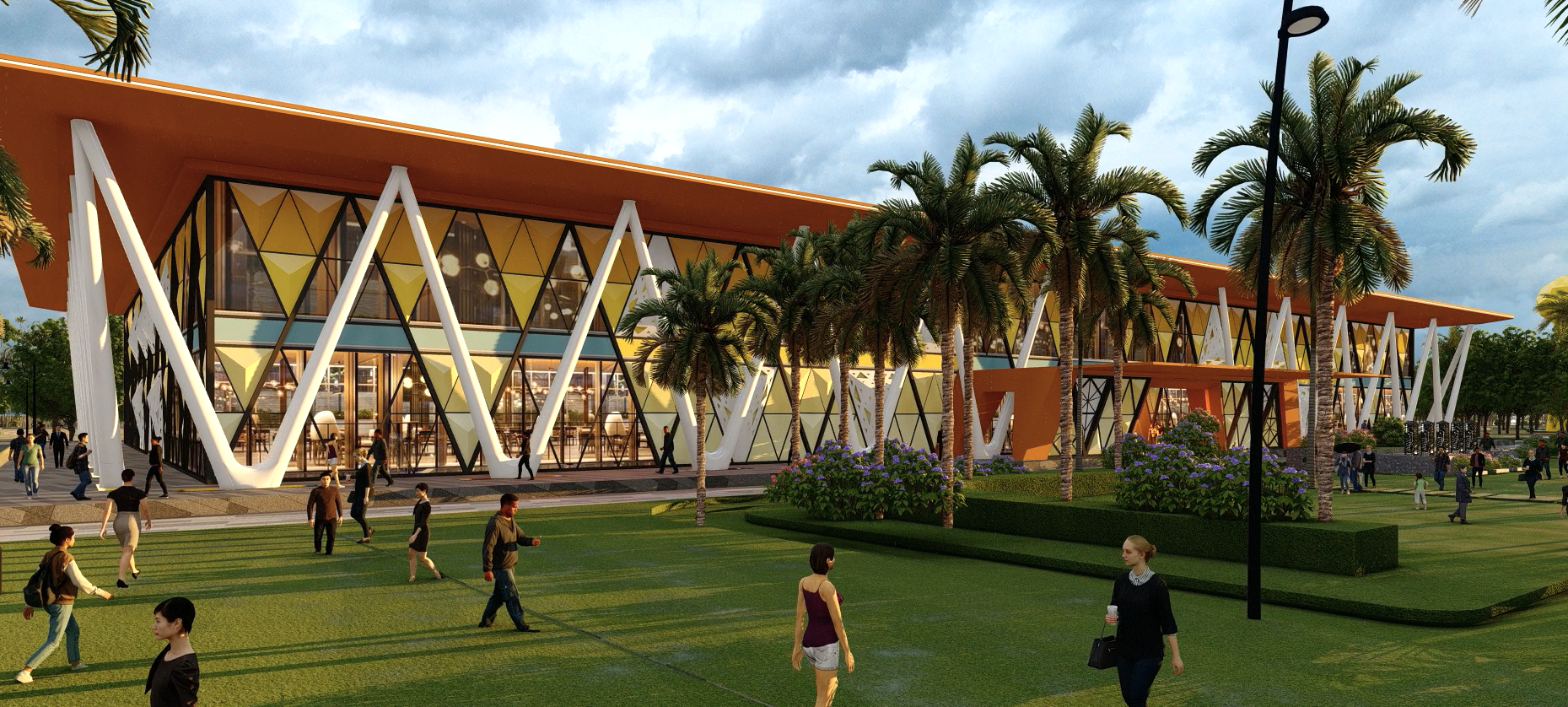
The year ahead will see several of these developments enter decisive phases. Together, they reflect the firm’s commitment to creating environments that are humane, future-ready, and deeply rooted in context. From the Indian Army’s new headquarters in Delhi to a landmark public park in Dehradun, from an Elizabethan-inspired school in Gurugram to a major IT hub in Kerala and a luxury hospitality expansion in Lucknow, 2026 promises to be a defining year. Below is a curated list of seven key projects to watch.
1. Thal Sena Bhawan, New Delhi
The upcoming headquarters of the Indian Army stands among the most consequential institutional developments in the country. The design translates the spirit of the Army into an architectural expression of unity, clarity, and strength.
Drawing inspiration from the crossed swords and national emblem of the Army crest, the form is abstracted into a powerful geometric composition. The building establishes a dignified presence within the Delhi Cantonment while remaining sensitive to its natural setting, carefully preserving hundreds of existing trees.
Connectivity, security, and efficiency underpin the planning strategy. Internal circulation is organised to minimise travel distances between departments, informed by global precedents such as the Pentagon and Hexagone Balard. Landscaped courtyards are woven into the built footprint, creating a campus that balances calmness with security. In 2026, the project will advance into detailed coordination, marking a key milestone toward a new national landmark.
2. International Convention and Expo Centre for ONGC, Goa
The ONGC campus in Goa is one of the largest institutional projects currently underway in India. Conceived as a comprehensive destination for conventions, exhibitions, training, and public engagement, the campus integrates three primary components: a Convention Centre, an Exhibition Hall, and a Management Training Facility.
The Convention Centre is designed as a high-capacity venue with a multi-tiered retractable stage, VVIP and VIP zones, expansive pre-function areas, and multiple meeting spaces. Carefully planned circulation ensures the segregation of public, VIP, and VVIP movement, including direct helipad access for high-level delegations.
The Exhibition Hall offers a highly flexible span of nearly 120 metres, supported by efficient service and mezzanine levels. The Management Training Facility provides an academic environment with classrooms, syndicate rooms, and collaborative spaces organised around clear circulation and outdoor connections.
Rooted in Goa’s coastal context, the architectural language draws from local colours and textures while maintaining a contemporary identity. With significant construction and coordination scheduled for 2026, the campus is set to become a national hub for large-scale events and knowledge exchange.
3. Queen Elizabeth School, Gurugram
Queen Elizabeth School reinterprets Elizabethan architectural traditions for a contemporary learning environment. Founded in the 16th century during the reign of Queen Elizabeth I, the school carries a rich historical lineage that the design honours while adapting it for modern pedagogy.
Academic blocks express this heritage through red brick façades, stone detailing, gables, towers, and articulated rooflines—recalling the proportions and rhythms of English Renaissance architecture. In contrast, the auditorium emerges as a sculptural contemporary form inspired by the crown, serving as a visual anchor for the campus.
The masterplan integrates academic, residential, and sports zones into a cohesive whole, structured by courtyards, landscapes, and pedestrian pathways. With façade development and final visualisations completed, the project will move into key construction phases through 2026.
4. Technocity & Technopark IT Building (Technopark Phase IV), Thiruvananthapuram
Technocity, the fourth phase of Kerala’s Technopark, is envisioned as one of India’s most forward-looking IT districts. Spread across nearly 390 acres, the masterplan integrates workplace infrastructure with ecological corridors, social amenities, and open public spaces.
The development is structured into three interconnected districts: the Central District with mixed-use and public functions; the Eco District, which preserves water bodies, forests, and natural features; and the IT Park District, housing high-density commercial and technology facilities.
Mobility planning prioritises pedestrians and non-motorised transport through shaded streets, elevated nature walks, link bridges, and interactive spines. Sustainability informs every layer—from stormwater management and afforestation to energy-efficient design.
Within this larger vision, the Technopark IT Building will act as a key anchor for Phase IV. Together, these projects will progress into advanced detailing and development in 2026, setting the foundation for a future-ready technology ecosystem.
5. American Embassy School, New Delhi
The American Embassy School (AES) in Chanakyapuri is undergoing a carefully phased, multi-stage transformation aimed at creating a more flexible and future-ready campus.
The initial phases include a new Wellness Centre and High School Annex, followed by the renovation of the existing high school, upgrades to the central administration block, and the construction of a new cafeteria. Subsequent phases will introduce workshops, plant facilities, and infrastructure reorganisation across the campus.
A key strength of the project lies in its sensitive phasing strategy, ensuring uninterrupted academic activity throughout construction. Circulation routes, play areas, service access, and entry points are recalibrated at each stage to maintain safety and continuity. As implementation deepens in 2026, AES is set to establish a benchmark for international school campuses in India.
6. Rashtrapati Udyan, Dehradun
The redevelopment of Rashtrapati Udyan is among the most ambitious public landscape projects in Uttarakhand. Located at the foothills of the Himalayas, the design envisions a park that celebrates ecology, culture, and recreation.
The masterplan organises the site into experiential zones, including the Sanskriti Udyan and Cultural Walk, Biodiversity Zone, Udyan Lake, forested ecological areas, and active spaces such as an amphitheatre, food court, maze garden, meditation pavilion, play courts, and outdoor fitness areas.
A network of elevated nature walks, cycling tracks, and secondary pathways creates diverse visitor experiences. Landscape strategies focus on regeneration through Miyawaki forests, oxygen-rich plantations, thematic gardens, and aviaries. Entering active development in 2026, Rashtrapati Udyan will emerge as one of North India’s most significant public parks.
7. Taj Hotel, Lucknow
Taj Lucknow represents the expansion of one of the city’s most iconic hospitality landmarks at Vipin Khand. The project adds 96 luxury keys across approximately 100,000 square feet, extending the legacy of the existing Taj property while responding to its prominent setting overlooking the Ambedkar Memorial Park and Gomti Nagar riverfront.
The architecture builds on the hotel’s classical vocabulary through symmetry, proportion, and a refined façade language featuring arches, rectilinear windows, and corniced parapets. A double-height arched colonnade defines the arrival experience, while guest rooms are oriented toward landscaped courts and green edges. The planning emphasises clarity, natural light, and understated luxury, creating an addition that is both contemporary and contextually grounded.
Looking Ahead
Across these seven projects, a clear architectural philosophy emerges. CP Kukreja Architects continues to view architecture as a catalyst for shaping institutions, cities, and landscapes—balancing innovation with sensitivity to culture, heritage, and ecology. As these developments progress through 2026, they are poised to contribute lasting references to India’s built environment and strengthen the country’s architectural narrative.
