Gurgaon, Dec 22:- MDI Gurgaon has been awarded the EQUIS accreditation, placing it among the rare group of global business schools that hold the Triple Crown, accreditation by AACSB, AMBA, and now EQUIS. Fewer than 1% of the world’s management schools carry this distinction, making it one of the most respected markers of quality in business education.
Accreditation by EQUIS represents the highest quality in five areas: teaching, research, internationalisation, Ethics & Governance, and its strong tie with business and society. The EQUIS Accreditation awarded to MDI Gurgaon is proof that MDI Gurgaon has established an academic integrity that has been consistently upheld over time, continues to maintain a high level of research capabilities, and has made many connections around the world through numerous International Academic Partnerships so that students may view management from many different perspectives.
In recent years, the institute has enhanced its global presence through partnerships with top universities, international learning experiences, and collaborative research projects. In addition, EQUIS also focuses heavily on corporate social responsibility and creating a positive impact on society, where MDI Gurgaon has taken a leadership role in expanding its commitment to responsibility, through the development of curriculum that emphasize sustainability, conduct research that enhances understanding of how we can use corporate power and influence to benefit society, and develop partnerships with other businesses and organizations for mutual benefit.
Commenting on the achievement, Prof. Arvind Sahay, Director, MDI Gurgaon, said:
“EQUIS accreditation is a testimony to MDI Gurgaon’s academic strength, global vision, and commitment to shaping responsible leaders. Earning the Triple Crown places us in a highly selective global league and reinforces our aspiration to be a management institution that is internationally benchmarked yet deeply connected to Indian business realities.”
The accreditation process recognises institutions that demonstrate coherence between strategy, mission, and measurable outcomes, an area where MDI Gurgaon has made substantial progress through curriculum redesign, experiential learning, and stronger industry interfaces across all programmes.
Sharing his perspective, Prof. Avanish Kumar, Dean added: “Triple Crown accreditation symbolises institutionalisation and internalisation of global standard in our teachings, research and training. More importantly it bestows a seamless confluence of our policies-practices. For our students, it improves scope and scale of their sphere of influence with this global acknowledgement. It also reinforces their choice of opting MDI as a student and builds confidence in their roots, which have global standards.
With its recent successes, MDI Gurgaon continues to position itself among the most well-respected business schools in India and will continue to develop global partnerships, build research output, and provide learning experiences that equip students to lead in a globalized society. MDI Gurgaon has expanded its global reach through collaboration with leading universities worldwide, offering global immersions, and developing joint research projects with universities. As a result, MDI has created more extensive initiatives for impact-driven research, sustainability-based coursework, and a greater degree of engagement with industry.
Delhi, Dec 22: NICMAR, India’s premier and dedicated institution for Construction, Real Estate, Infrastructure and Project Management education has announced extending its admission deadline to December 30 for its 2026 academic year, across its campuses in Pune, Delhi-NCR and Hyderabad. Due to an overwhelming response, nearly twice the number of applications compared to last year, NICMAR has witnessed exceptionally high interest in its programmes. To accommodate this surge and ensure that all eligible candidates receive a fair opportunity to apply, the institution has revised its application deadline.
Commenting on the deadline extension, Dr. Tapash Kumar Ganguli, Director General NICMAR, said,
“India’s infrastructure growth requires professionals who understand both engineering realities and management decision-making. The continued interest in our specialised programmes reflects this need. Extending the application deadline allows serious aspirants additional time to make an informed decision and prepare for careers that directly contribute to nation-building.”
Amidst NICMAR’s diverse portfolio of postgraduate programmes, a set of courses is witnessing strong and growing interest from applicants, reflecting the evolving needs of India’s infrastructure and construction ecosystem.
As the country accelerates investments in transportation networks, urban development, industrial corridors and large-scale infrastructure projects, these programmes align closely with the skills required on-ground, where engineering knowledge, project execution capability and managerial decision-making converge.
The courses witnessing strong interest in this admission cycle include;
This programme is for engineering graduates aspiring to take on leadership roles in construction and EPC environments, where execution excellence, site management and delivery timelines are critical to project success.
With project management becoming a core requisite across infrastructure, manufacturing and urban development, this course appeals to candidates seeking cross-sector project leadership roles.
As infrastructure projects grow in scale and complexity, commercial, contracts and cost-management expertise has emerged as a critical function. This course is particularly relevant for graduates seeking specialised commercial roles within the sector.
NICMAR offers engineering graduates a clear pathway to transition into high-growth techno-managerial roles. By blending their technical foundation with specialised management education, NICMAR prepares students for leadership opportunities across the CRIP sector. This integrated approach – merging engineering expertise with industry-focused managerial skills has become a key differentiator for NICMAR graduates.
Students are encouraged to apply early to secure their preferred specialisation, prepare for personal interview, and join the early academic orientation. Extended deadline:
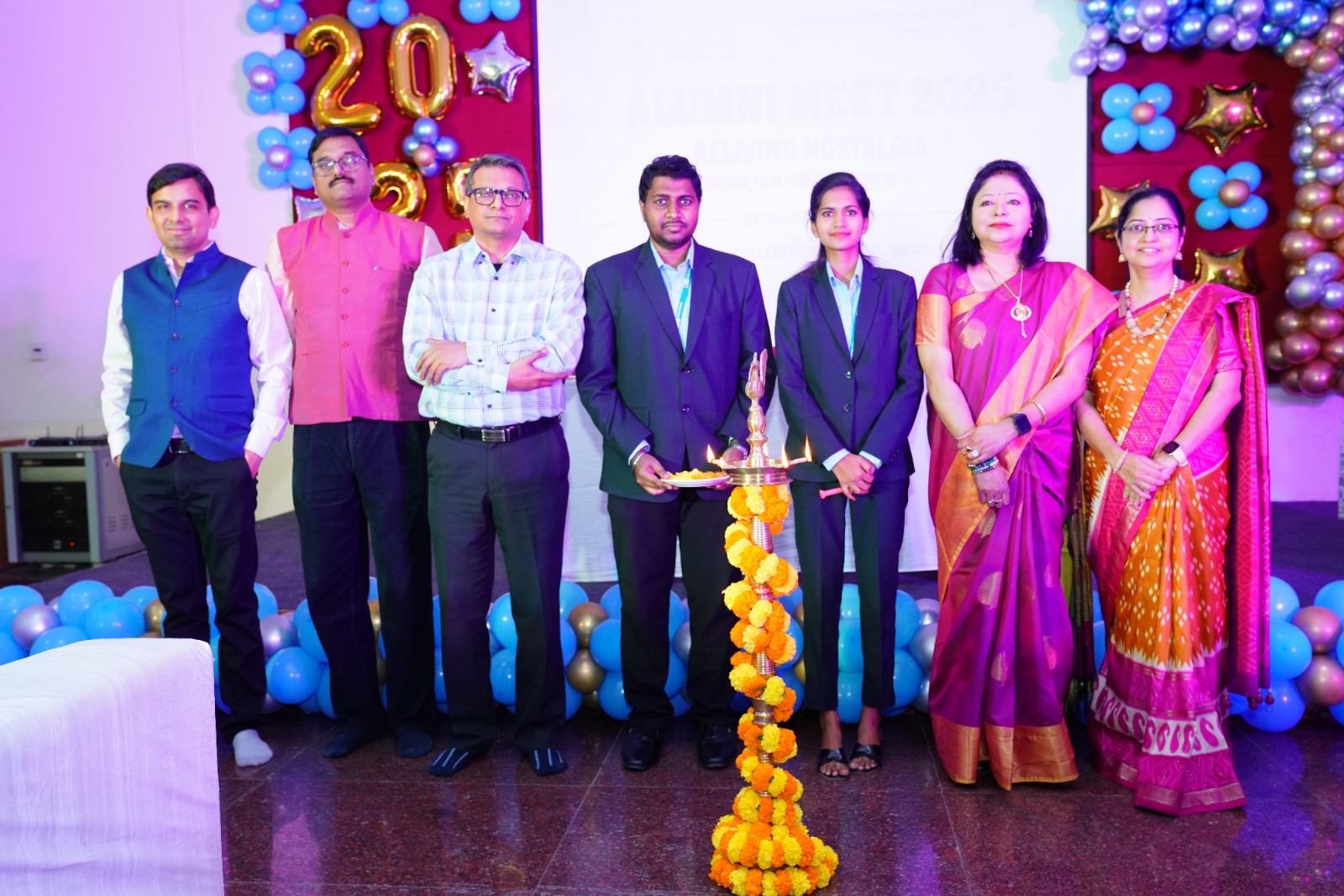
Hyderabad, Dec 22: The Administrative Staff College of India proudly hosted its annual Alumni Meet 2025 for the ASCI School of Management, bringing together graduates from its flagship Post Graduate Diploma in Management program spanning 2019 to 2025. Launched in 2019 under the leadership of Dean Dr. Nirmalya Bagchi, the PGDM program has rapidly emerged as a powerhouse, producing batches of high-caliber professionals who now thrive in top organizations like Anand Rathi Share and Stock Brokers Ltd., Deloitte, and SBI Mutual Funds Limited.

The vibrant event served as a dynamic platform for networking, knowledge exchange, and reconnection with faculty and peers, underscoring ASCI’s unwavering commitment to nurturing a robust alumni ecosystem. With enthusiastic participation from alumni across all six batches, the meet highlighted the program’s growing impact and the institute’s role in shaping future business leaders.
“This Alumni Meet is a testament to the enduring bonds we’ve built since 2019. Our alumni are not just graduates they are ambassadors driving change in India’s corporate landscape,” said Dr. Nirmalya Bagchi, Dean, ASCI School of Management. “Events like this fuel our vision of sustained engagement, mentorship, and collective success.”
ASCI continues to solidify its reputation as a premier management institute, fostering innovation and leadership through programs that deliver real-world results.

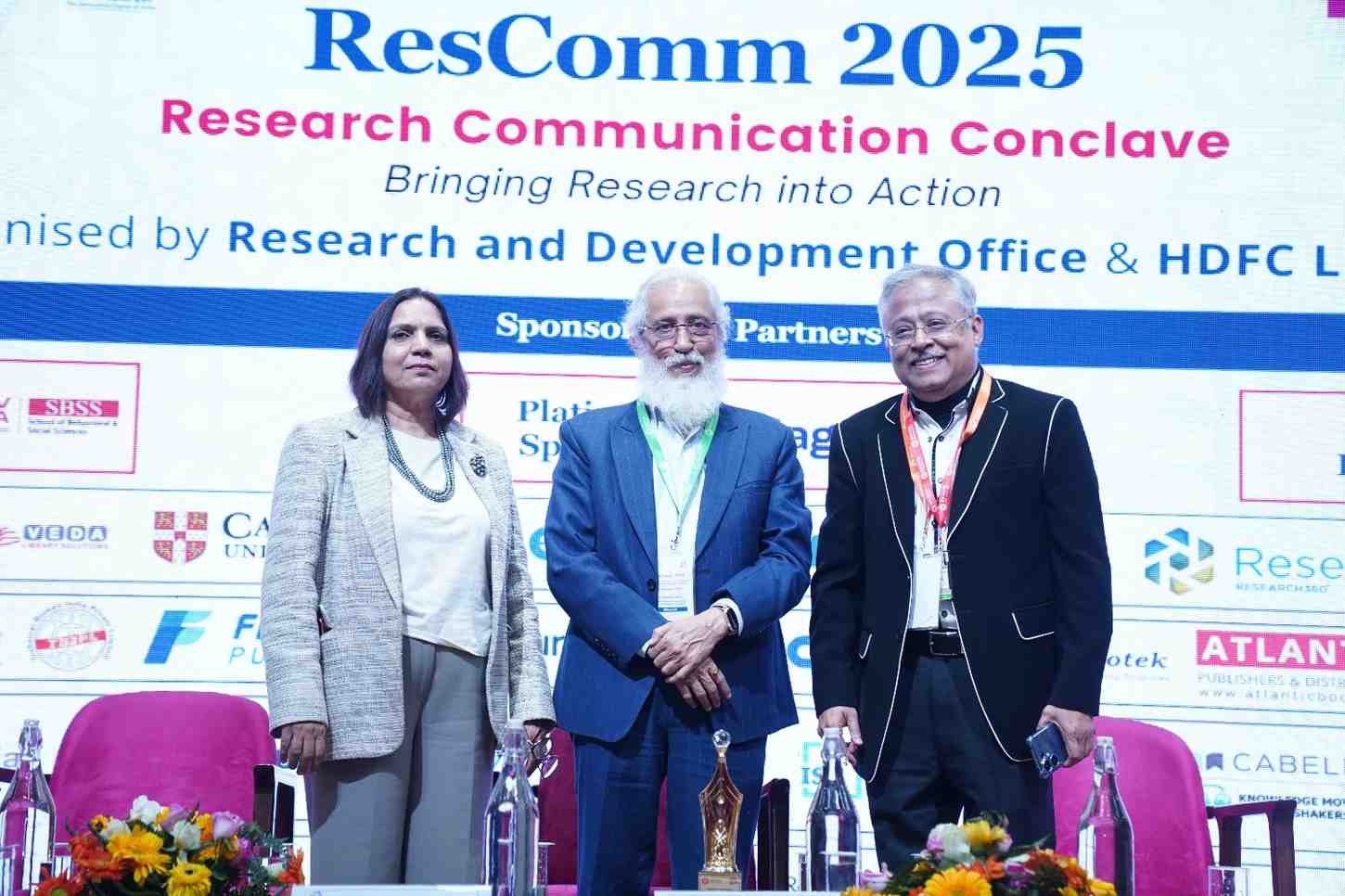
New Delhi, Dec 20: Ashoka University, India’s premier institution for interdisciplinary higher education and research, hosted the three-day ResComm 2025 Conclave at its campus, with a focus on strengthening interdisciplinary research communication across the sciences and humanities. The conclave opened with a high-profile inaugural day that brought together leading academics, policy advisors, researchers, and communication specialists to engage with the evolving demands of research dissemination, integrity, and public engagement.

The first day saw participation from senior government, policy, and research stakeholders, including Prof. (Dr) Anil Sahasrabudhe, Chairman, Executive Committee of NAAC; and Chairman, National Educational Technology Forum and National Board of Accreditation Dr Rajnikant Srivastava, Chair (Disease Elimination), ICMR; and Prof. (Dr) K. Vijay Raghavan, Chair, Science Advisory Council, Ashoka University, among others.
The conclave commenced with an opening address from Professor Gautam Menon, Dean, Research and featured key sessions on research communication and public engagement, including a plenary chaired by Dr Rajnikant Srivastava, Chair (Disease Elimination), ICMR, examining the challenges and opportunities in communicating health and biomedical research.
In a talk focused on healthcare communication, Dr Anurag Agrawal, Dean of BioSciences and Health Research at Trivedi School of Biosciences and Head of the Koita Center for Digital Health, Ashoka University emphasised upon the importance of learning to communicate research effectively to diverse audiences and said, “In healthcare, the public in particular is not just looking for information but also for solutions, and effective healthcare research and communication can help bridge that gap.”
Delivering the Distinguished Lecture, Prof. (Dr) Anil Sahasrabudhe, Chairman, Executive Committee, NAAC, spoke about India’s rapid rise in research output and the need to now focus on quality and impact. “Over the last 10 years, India has come a long way. In terms of the number of research publications, we are already number three in the world,” he said.
Prof. Sahasrabudhe underlined that the country has moved from seventh or eighth place to third in research quantity, but he cautioned that quality remains a concern. “Quantity-wise, we have leapfrogged, but in terms of quality, we have a long way to go,” he said, calling for greater emphasis on high-impact research. He also noted that while India’s patent ecosystem has grown rapidly, much of the work remains at early technology readiness levels. To convert research into usable technologies, he emphasised closer collaboration between universities and industry.
Professor Somak Raychaudhury, Vice-Chancellor, Ashoka University, reaffirmed the University’s commitment to nurturing a culture of rigorous research and accessible communication. He shared anecdotes from his on-ground experience of grassroot level communication. He said, “Our ambition at Ashoka is not just to be a leading Research University but to actually contribute actively to the world through global communication, partnering and collaboration.”
Prof. K. Vijay Raghavan, Chair, Science Advisory Council, Ashoka University remarked “We should invest in research that is curiosity-driven, sparks excitement, and challenges the human mind ensuring that the outcomes of such work are accessible to everyone.”
There were sessions on the role of AI and innovation in translating research for policy and public audiences, interactive workshops on Grant Writing, Research Integrity, and Enhancing Research Communication through visuals.
The conclave also witnessed the launch of Productive Failure, authored by Prof. (Dr) Manu Kapur, Professor of Learning Sciences and Higher Education at ETH Zurich, Switzerland, and published by Wiley International. The proceedings were led by Dr Shantanu Ganguly, Director of Library at Ashoka University. The book explores learning through struggle and reflection, aligning closely with the conclave’s emphasis on experimentation and effective communication.
The conclave concluded successfully, advancing the vision of ethical, interdisciplinary, and impactful research communication.
For many higher education students in India’s small towns, completing a degree does not always translate into career clarity. Limited exposure to organised career pathways, lack of mentorship, and financial constraints often leave students uncertain about their next steps, particularly those from unorganised and underserved backgrounds. As a result, the demand for structured career guidance and skill development support is steadily growing across Tier 2, Tier 3, and Tier 4 cities.

In response, career-focused initiatives are increasingly targeting higher education students with programmes that combine counselling, competitive exam preparation, and skill-based learning. These efforts aim to bridge the gap between academic education and employability by helping students align their interests and strengths with real-world career opportunities.
Scholarship programmes introduced across smaller towns are also playing a significant role in addressing affordability challenges. By easing financial pressure, such initiatives allow meritorious students to access quality guidance and training that might otherwise remain out of reach. In states like Punjab and Himachal Pradesh, collaborations with government bodies have further expanded access, creating pathways for students from unorganised sectors to transition into structured and sustainable careers.
Highlighting the importance of early and informed career decision-making, Neeraj Kansal, Founder and CEO of Crack Academy, said,
“Students from smaller towns often have the talent and ambition, but not the exposure or direction needed to make confident career choices. By providing counselling, skill development, and financial support, we can help them move towards stable and rewarding career paths.”
Beyond financial assistance, regular workshops, mentorship sessions, and accessible learning models are helping first-generation learners and aspiring professionals gain confidence and awareness of emerging career options. Such exposure is proving critical in helping students navigate new-age roles and evolving industry demands.
As these initiatives continue to expand their reach, they are quietly reshaping how higher education students in India’s smaller towns approach career planning—turning uncertainty into clarity and aspiration into achievable progress.
Visakhapatnam, Dec 19:Adani Gangavaram Port, in collaboration with Adani Foundation, inaugurated the Adani Skill Development Centre at Gangavaram as part of its Corporate Social Responsibility initiatives. The Skill Development Centre is designed to provide structured training programs and practical exposure to help youth and women in local communities gain industry-relevant skills and improve livelihood opportunities.

The inauguration ceremony was graced by senior leadership from Adani Gangavaram Port Limited and Adani Foundation, along with village leaders, community representatives, trainers, and enthusiastic students. Their presence reaffirmed the Adani Group’s strong commitment towards inclusive growth and community development.
The Adani Skill Development Centre will offer structured training, practical exposure, and continuous support to trainees, aligning with the Skill India Mission and Adani Group’s vision of nation-building. The centre focuses on creating employable talent while fostering inclusive growth and sustainable development in the region.
Speaking on the occasion Adani Gangavaram Port Management said,that the Adani Skill Development Centre is a catalyst for empowering women and youth by providing industry-relevant skills that build confidence, enable financial independence and support sustainable livelihoods. Adani Foundation’s commitment to skill training initiatives that foster empowerment and long-term socio-economic growth. We thank the local community and educational partners for their ongoing trust and support. This initiative is one of the many ways we continue to strengthen our bond with the local community and work towards inclusive development.
New Delhi, Dec 19: As 2025 wraps up, College Vidya, India’s trusted platform for navigating, comparing, and selecting UGC-approved online and distance education programs has released its Year-End Online Education Trends 2025, mapping what Indians chose to study this year, where demand is coming from, and which specialisations are shaping career ambitions at scale.
Key Highlights
MBA leads India’s online degree market with 42.52% of all enrollments; the single largest share across programs.
Tech degrees form 28%+ of India’s online learner base, led by BCA (16.67%) and MCA (11.27%).
BBA is the fastest-growing UG management degree, rising to 43.87% YoY growth in 2025.
Doctorate in Business Administration is the biggest breakout trend of 2025, recording an 86.82% YoY jump (despite a smaller market share of 1.86%).
Delhi leads India’s online learning map with 18.63% contribution, followed by Uttar Pradesh (13.14%) and Bihar (10.49%) highlighting how strongly Tier-2/3 India is shaping demand.
India is choosing degrees that make them employable
The year-end data shows a clear pattern: learners are increasingly choosing degrees aligned with high-demand domains, particularly across technology and business, reflecting how academic choices are evolving with market relevance.
In BCA, the largest specialisation clusters were Cloud Computing & Cybersecurity (30.70%) and Data Analytics (30.18%), followed by Computer Science & IT (15.61%) and ML & AI (12.21%); signalling that students are optimising for real-world hiring pipelines across security, data, and AI-led roles.
In MCA, demand is concentrated in Computer Science & IT (42.16%), ML & AI (25.22%), and Cloud Computing (17.72%), highlighting strong interest in advanced technology degrees.
In BBA, India’s business learners are not picking generic management anymore – Financial Management (40.16%) dominates, with strong interest in Data Analytics (14.44%), Business Analytics (8.66%), Digital Marketing (7.61%), and Project Management (6.82%).
Even in BA, preferences reflect career utility: English accounts for 54.43%, followed by Hindi (18.83%), with meaningful demand for Psychology (6.97%) and Political Science (6.40%).
Learner demand is expanding across states
Year-end trends show that demand for online degrees is spread across multiple regions, with strong participation from both established and emerging education markets.
Delhi contributes 18.63% of enrollments; the largest single hub.
Uttar Pradesh (13.14%) and Bihar (10.49%) together contribute nearly a quarter of all enrollments, reinforcing how strongly Tier-2 and Tier-3 India is driving adoption.
Maharashtra (9.17%) and West Bengal (5.66%) strengthen West and East as fast-growing learner markets.
DBA emerges as the “mid-career power move”
The sharpest spike in the dataset is Doctorate in Business Administration (DBA); growing 86.82% YoY in 2025. College Vidya’s year-end view indicates that working professionals are increasingly choosing short-duration, management-focused doctorates as a credential for leadership acceleration and career leverage.
Rohit Gupta, COO, College Vidya, said:
“2025 showed us that India is no longer chasing degrees for their names, but for their outcomes. The rise of MBA, the momentum in BCA and MCA, and the unexpected jump in DBA all point to a workforce that is thinking with precision: What will this degree do for my career? With online education now fully mainstream, learners across India, especially in Tier-2 and Tier-3 regions are making faster, and far more informed choices than ever before.”
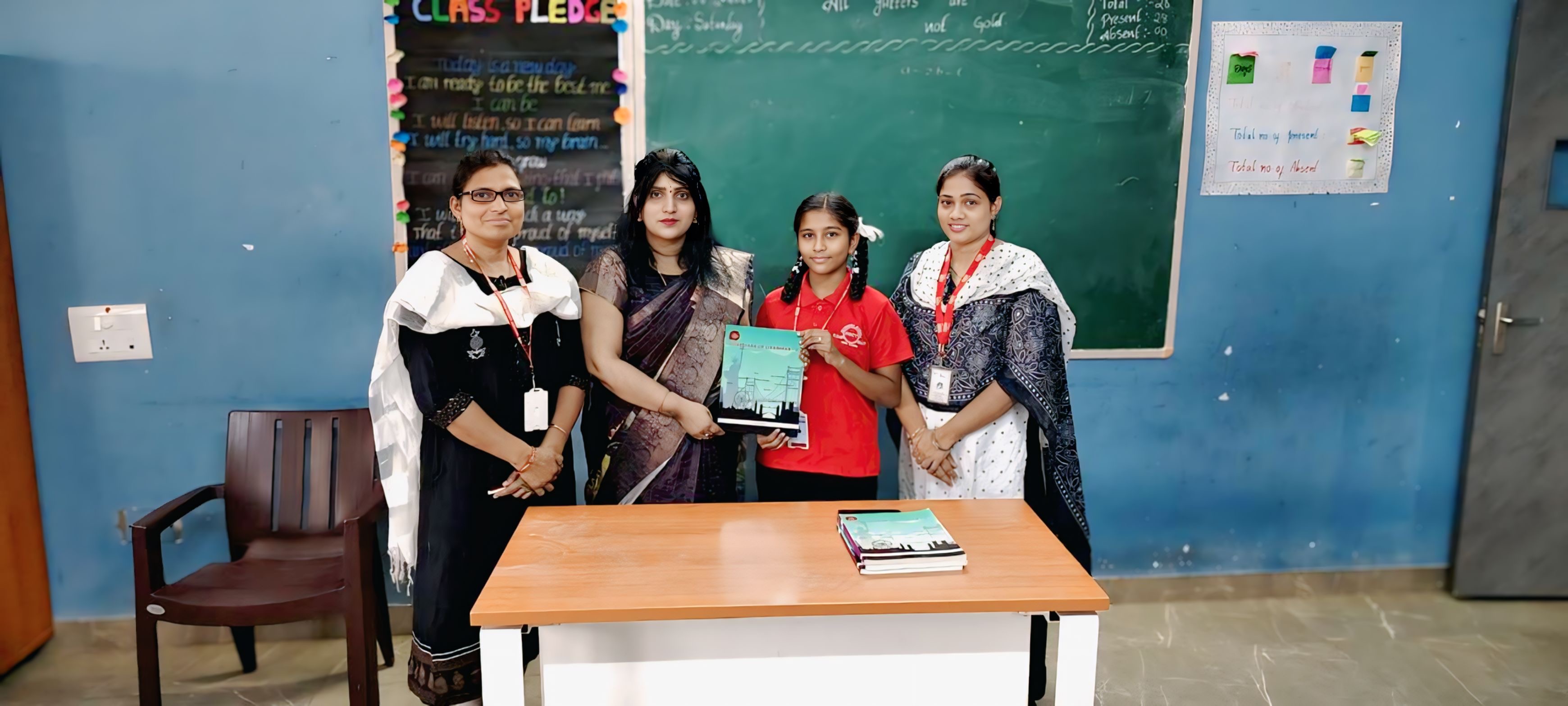
Andhra Pradesh,Dec 18:-Birla Open Minds recently took a heartfelt step toward nurturing young minds by organising a Book Donation Drive at Devireddy Sarada Reddy High School in Allur Mandal, Nellore District, Andhra Pradesh. The initiative reflected the institution’s strong belief that education goes beyond classrooms and that access to books can open doors to lifelong learning.

Devireddy Sarada Reddy High School is a charitable institution established in memory of Ms Dodla Sharmila Reddy’s mother and currently supports the education of over 310 students from the local community. The book donation drive was conducted in collaboration with DSR Education and focused on students from Grades 5 to 10, aiming to encourage reading habits and ignite curiosity at a formative age.
As part of the initiative, students received a carefully selected set of learning resources, including English Language & Arts practice books, Hindi practice books, Soul Science books, and English Grammar books. These books were chosen to support both academic learning and personal development, helping students build strong language skills while also encouraging self-awareness and critical thinking.
Sharing his thoughts on the initiative, Mr Yatharth Gautam, Director & COO, Birla Open Minds, said,
“Education begins with curiosity and grows with access. Books have the power to shape thinking, build confidence, and inspire children to dream beyond their surroundings. At Birla Open Minds, we believe it is our responsibility to ensure that every child has the opportunity to learn and grow, regardless of circumstances. Through this initiative, we hope to nurture a love for reading and remind children that their potential is limitless.”
Ms Dodla Sharmila Reddy, DSR Education, added,
“This initiative is very close to my heart, as it continues my mother’s vision of empowering children through education. She believed that true education builds not just knowledge, but character and compassion. Seeing these children receive books with excitement and curiosity reminds me why this journey matters. Our hope is that these books will inspire them to explore new ideas, express themselves confidently, and believe in their dreams.”
As an alliance partner of Birla Open Minds, DSR Education shares the same values of compassion, curiosity, and community contribution. Together, they continue to work toward creating meaningful learning experiences that support not only academic growth but also emotional well-being.
Through initiatives like this book donation drive, Birla Open Minds and its partner institutions reaffirm their commitment to enriching young lives, encouraging society to come together in support of education and the power of knowledge.