Kotak Education Foundation Honours 1,400 Scholars at RIZE 2025 in Mumbai

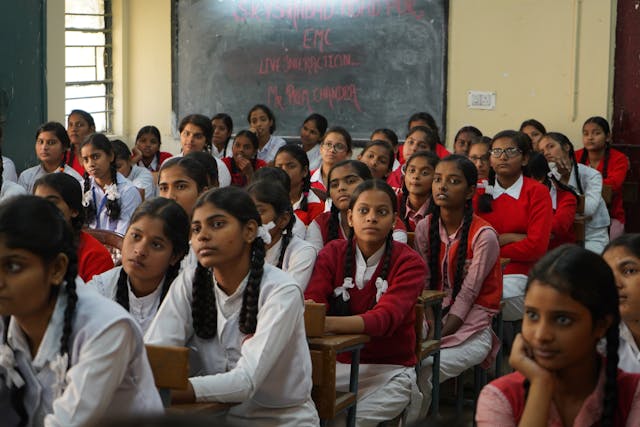
Mumbai Dec 17: Kotak Education Foundation  the CSR implementing arm of Kotak Mahindra Group, celebrated its annual scholarship felicitation ceremony, RIZE 2025, honouring over 1,400 newly inducted scholars from economically disadvantaged communities across the Mumbai Metropolitan Region. The event reaffirmed KEF’s long-standing commitment to enabling access to quality education and holistic development.

Kotak Image 2

The ceremony was graced by Rinku Hooda, India’s celebrated para-athlete and 2025 World Champion in Javelin, whose inspiring journey includes multiple international podium finishes, including silver medals at the World Para Athletics Championships 2023 (Paris) and 2024 (Japan). His interaction with scholars and words of encouragement left a lasting impression on the young achievers.

A highlight of the event was an inspiring address by Mr. Vishal Nevge, Assistant Commissioner of State Tax, GST Department, Government of Maharashtra, and a proud alumnus of the Kotak Junior Scholarship Programme. He expressed gratitude to KEF and urged scholars to pursue excellence with perseverance.

Devang Gheewalla, Group Chief Financial Officer, Kotak Mahindra Bank, addressed the gathering, underscoring the program’s growth and its role in shaping future leaders. Paul Parambi, Trustee, Kotak Education Foundation, encouraged scholars to remain resilient and purpose-driven in their academic journeys.

Arati Kaulgud, Director  Scholarship Program, Kotak Education Foundation, said;

“These 1,400 Kotak Scholars exemplify the transformative power of education. Beyond financial support, we offer mentorship, guidance, and opportunities that help them unlock their highest potential.”

The ceremony also featured cultural performances by scholars, celebrating their talents beyond academics. Each scholar received a scholarship certificate, marking the beginning of their higher education journey across diverse fields. The event was attended by KEF’s leadership, including Ganesh Raja, CEO; Jayasree Ramesh, COO  Education; and Kavita Shanghvi, Director  Education.

Kotak Education Foundation;

For over 18 years, Kotak Education Foundation has been committed to empowering children and youth from economically disadvantaged backgrounds through education and foundational skills. Its ‘Inch Wide, Mile Deep’ approach focuses on quality-driven, scalable interventions.

KEF’s work spans three core pillars;

  1. Holistic school interventions for children and educators

  2. Equitable scholarships for higher education

  3. Vocational education and skills training for livelihood

Key scholarship initiatives include:

  • Kotak Kanya Scholarship (launched in 2021) for meritorious girl students across India

  • Kotak Junior Scholarship for Class 11–12 students in the Mumbai Metropolitan Region

  • Kotak Graduate Scholarship for professional courses such as Engineering, MBBS, Law, and certification programs

  • Kotak Shiksha Nidhi, a PAN-India initiative supporting students impacted by COVID-19-related family loss

To date, KEF has supported 7,500 scholars, with 1,500 alumni now working as white-collar professionals in leading organisations. In 2025, KEF launched a dedicated scholarship programme for Persons with Disabilities  supporting 150 students in its inaugural year.

KEF also runs the Unnati Programme, which equips unemployed youth with IT skills, spoken English, life skills, and assured placements.

As KEF scales its impact, it is transitioning from a school-centric approach to district and state-level education transformation, focusing on leadership development, teacher capacity building, digital learning ecosystems, Foundational Literacy & Numeracy through the Kshamata Project, and support for Model Schools. The Foundation is expanding its footprint beyond Maharashtra into Gujarat, Andhra Pradesh, and Goa.

Kotak Education Foundation is the primary implementing agency for Kotak Mahindra Group’s CSR initiatives in education under the Kotak Karma umbrella

IIM Kashipur Introduces Executive MBA for Working Professionals

India,  Dec 17: Indian Institute of Management Kashipur, in partnership with Nulearn has opened admissions for the fifth batch of its Executive MBA  The two-year program is ideal for working professionals, entrepreneurs, and graduates with a minimum of three years of full-time work experience.

The Executive MBA  aims to prepare future-ready leaders who can apply analytical tools to solve business challenges and build efficient organisational processes. The program is built on a globally benchmarked curriculum and covers emerging domains such as business analytics, artificial intelligence, machine learning, deep learning, management, and strategy. Participants are trained to develop cross-functional capabilities that are essential for Industry 4.0.

The learning model combines online delivery with campus engagements to ensure continuity, flexibility, and practical exposure. Participants can customise their learning through a wide elective pool, interact directly with faculty members, and gain insights from case studies, simulations, and industry-led sessions.

Program highlights;

  • Around 900 contact hours delivered across six terms over a two-year duration.
  • Elective options across more than 40 courses in nine specialised domains.
  • Individual online meetings with faculty to discuss concepts and viewpoints.
  • Full alumni benefits from IIM Kashipur, enabling long-term professional networking.
  • Designed to support working professionals through a location-independent learning structure.
  • Case-based learning, simulations, peer discussions, industry workshops, and a capstone project.
  • Live online sessions combined with periodic on-campus modules led by IIM faculty and industry experts.
  • Continuous and end-term evaluation methods to support academic progress.
  • Six on-campus immersions, with the first and fourth modules being compulsory. The first module spans five days, and the remaining modules are four days each.

Speaking about the program, Prof. Neeraj Dwivedi, Director, IIM Kashipur, said;

 “We see a clear shift in how organisations operate today. Data is no longer limited to specialists and is influencing every business function. The Executive MBA  has been designed to help professionals understand these changes and build the ability to turn data into meaningful decisions, combining strong academic foundations with practical exposure to real business challenges.”

Kunal K. Ganguly-Professor & Dean (Development) Chairperson-Executive Education Operations Management & Decision Sciences, said;

 “The Executive MBA reflects our commitment to preparing managers who can respond to industry needs with clarity, analytical thinking, and a deeper understanding of emerging technologies. We are delighted to launch the fifth batch, helping learners build strong analytical and leadership capabilities for the evolving business landscape.”

The spokesperson of Nulearn said;

 “We work closely with professionals from diverse sectors, and the message we hear consistently is the need for flexible programs that offer practical skills without disrupting careers. The Executive MBA brings together the academic strength of IIM Kashipur and a learning format that fits the pace of modern work life. We are proud to collaborate with IIM Kashipur in launching the fifth batch.”

Admissions are now open with limited seats available. Interested professionals can visit the website or connect offline to get complete details about the program.

FORE School of Management Opens FPM & EFPM Admissions for 2026

Admissions Open for FPM & EFPM Programmes at FORE School of Management, New Delhi Batch Commencing in 2026

New Delhi, Dec 17: FORE School of Management (FSM), one of the leading B-schools in Delhi NCR, has announced the opening of admissions for its Full-Time Fellow Programme in Management (FPM) and Executive Fellow Programme in Management (EFPM) for the academic year 2026.
IMG_7317 (2)
Applications are now invited from aspiring scholars and senior professionals seeking to advance their careers in management research, consulting, and academia.
Eligibility & Accepted Test Scores
FSM accepts scores from CAT (conducted by the IIMs), GATE, GRE, GMAT, UGC-NET/JRF, CSIR, or the FORE Entrance Test (FET) for FPM applicants.
Full-Time FPM:
  • Master’s degree with First Class
  • Final-year postgraduate students may apply provisionally, with final marksheets due by December 31, 2026
EFPM:
  • Master’s degree with First Class
  • Minimum four years of managerial experience
Specialisations Offered
Specialisations include Communication, Economics & Business Policy, Finance & Accounting, Organisational Behaviour & Human Resource Management, International Business, Information Systems, Marketing, Operations Management & Decision Sciences, Strategy, and related areas.
Fellowship & Research Support
Full-time FPM scholars receive comprehensive financial and academic support, including:
  • ₹56,550 per month for the first two years
  • ₹68,250 per month for the third and fourth years
  • Contingency Grant of ₹30,000 during the third and fourth years
  • Conference support of up to ₹1.5 lakh for national and international conferences
FSM fosters a vibrant research culture, with scholars presenting at over 40 national and international conferences, publishing in reputed peer-reviewed journals, and securing Best Paper Awards at top international forums. The institute integrates advanced research methodologies, including GenAI applications, into teaching and research. The first cohort of FPM scholars has successfully graduated and secured strong placements.

Britannica Education Hosts National Felicitation for Young Author Quest 2025

Britannica Education Hosts National Celebration & Felicitation Ceremony of the Britannica Young Author Quest (Y.A.Q.) 2025

Britannica Education hosted the National Celebration & Felicitation Ceremony of its flagship writing initiative, the Britannica Young Author Quest (Y.A.Q.) 2025, in Delhi on 13th December 2025. Launched in September 2025, this first edition of the program engaged over 80, 000 students from 80+ schools across India, culminating in the recognition of the top 120 exceptional young finalists.

Britannica Y.A.Q. 2025 (2)

Britannica Y.A.Q. encourages students to express imagination, creativity, and empathy through original stories helping them develop essential 21st-century skills such as literacy, communication, and critical thinking. The initiative empowers young minds to become confident communicators, reflective thinkers, and compassionate storytellers.

Finalists from grades 4 to 9 were recognized across three categories — Rising Quill, Creative Scriber, and Master Writer. These young authors were selected for demonstrating originality, clarity of thought, and purposeful storytelling shaped by compassion and creativity. Winners were felicitated with trophies, certificates, and prizes, including iPads, Lenovo Tablets, and Amazon Echo Dots.

The winners across categories included Ilyan Shamin (1st), Arham Kapasi (2nd), and Abhijith Kumar (3rd) in the Rising Quill category; Taijasi Santra (1st), Mihika Singal (2nd), and Anika Srivastava (3rd) in the Creative Scribes category; and Maya Davele (1st), Siddhi Tyagi (2nd), and Koshika Bishit (3rd) in the Master Writers category.

A stellar jury shortlisted the winners and champions of literature, including Ms. Angeline Chauhan, Instructional Mentor, Writer & Editor, Podcaster, Ms. Shabnam Dohutia, Executive Editor, Encyclopedia Britannica, and Ms. Pragya Pandita, Product & Academic Head, Britannica Education India. The ceremony was graced by Dr. Kiran Bedi, a former IPS Officer, Social Reformer, and Author, whose presence deeply inspired participating students, educators, and parents. In her address, she encouraged young authors to write with empathy, awareness, and responsibility, reinforcing the power of words as a tool for transformation and social impact.

Speaking about the success of the initiative, Utkarsh Mishra, Commercial Director, India & South Asia, Britannica Education, said, 

“The Young Author Quest embodies Britannica’s mission to nurture curiosity, creativity, and confidence in every learner. Seeing over 80,000 students use storytelling as a medium to express ideas, emotions, and purpose has been truly inspiring. This first edition reinforces our belief that when young minds are given the right platform, their voices can spark meaningful change. We are proud to celebrate these young authors and the educators who guided them and hope to scale up the initiative even further next year.”

The initiative brought together students and educators nationwide, fostering creative expression, strengthening writing proficiency, and deepening reflective thinking across participating schools. It nurtured students’ confidence by enabling them to see themselves as storytellers and potential published authors, while also encouraging purpose-driven narratives grounded in compassion, courage, and positive action.

The event hosted 24 finalists along with their parents, educators, school leaders from Delhi NCR, and the Britannica Education team. As the first edition of the program, launched in September 2025, the celebration marked a milestone in Britannica Education’s efforts to nurture young voices and promote purposeful storytelling across the country.

Bioengineering For a Bright and Blissful Future

Prof. PB Sharma

Prof. PB Sharma

By Anugyan Sharma and Prof. PB Sharma

Bioengineering is not just a discipline of the future; it is the fundamental force of our existence in harmony with nature. Let us not forget that the life itself began and continues its immortal journey through the regenerative power of biological nature, creating the vast “diversity of oneness” that defines our world. It also reminds us of the ‘oneness of diversity’ and invokes in us a sense of responsibility to maintain diversity and harmony to cultivate a happy and healthy life on planet Mother Earth.

Today, as humanity grapples with the crises of climate change, staggering global inequality, and the mounting burden of disease, and existential threat coming from ever-rising power of microbial kingdom, we must rediscover the profound power of bioengineering to forge a bright and sustainable future.


Anugyan Sharma

Anugyan Sharma

Physical Sciences Dominated the Science Horizons

For too long, the physical sciences—physics, chemistry, and conventional engineering—have dominated scientific progress. This focus yielded impressive capabilities, enabling us to move faster on land, fly in the air, and venture into space. Yet, many of these advances have inadvertently created serious global challenges, even posing existential threats. In this scientific journey all along we laid a heavy emphasis on physical sciences including natural materials and minerals, negotiated their properties and designed and developed marvels of great scientific value. More lately, advancements in nano-science and technology and immense capabilities of analysis provided by information technology have given a renewed upsurge for artificial intelligence and smart and autonomous systems. While these developments offer humanity unprecedented empowerment, the unintended consequences of this physical-science-led journey, also gave rise to global challenges and mounting fears of technological insecurity rising out of advanced science and technology falling in unscrupulous hands. This demands a pivotal shift in scientific priority.

Biological Sciences Possess Great Transformative Power

Biological sciences and bioengineering entered the scientific revolution much later, but with a profoundly transformative impact. Through rapid advancements in life sciences and biomedical engineering, we now possess a deeper understanding of biological systems and processes. This knowledge empowers humanity with a renewed hope: the potential to wipe out hunger, eradicate disease, reverse enormous pollution, and usher in a new era of global prosperity and happiness. Bioengineering is the critical science that will heal our planet and safeguard the future of humanity. It will power the bioeconomy and shall create a renewed hope for harmonious living with nature, in the era of prosperity and development.

The monster of environmental pollution, including water, air, and soil pollution can be tackled more effectively using bioengineering and bio-inspired solutions that include bio-treatment of wastewater,

Bioengineering is emerging as a critical discipline to address the world’s most pressing environmental challenges, offering scalable, biological solutions where traditional physical sciences often fall short. For climate change, bioengineering utilizes genetically enhanced photosynthetic organisms, such as algae and cyanobacteria, for highly efficient Carbon Capture and Storage (CCS), converting atmospheric CO2 into valuable bio-products or carbon-neutral biofuels.

Simultaneously, in the fight against widespread pollution, advanced bioengineering is transforming environmental remediation. For water and soil, this involves engineering microbes and plants (phytoremediation) to act as biological filters, either degrading persistent pollutants like pesticides and hydrocarbons or hyper-accumulating heavy metals, thereby cleaning contaminated sites in situ. Furthermore, specialized microbial systems are deployed in advanced bio-filters to break down industrial air pollutants like VOCs and NOx, while microbial fuel cells treat wastewater and generate renewable energy. By harnessing and optimizing the intricate metabolic pathways of life, rapidly advancing frontiers of bioengineering are poised to deliver sustainable, cost-effective technologies that are essential for restoring ecological balance and securing a healthier future.

Humanity on the Threshold of Bioeconomy

Bioeconomy is emerging as a transformative force for sustainable development, leveraging biological resources and innovative technologies to address global environmental challenges. By integrating advances in biotechnology and digital tools with circular economy principles, the bioeconomy offers solutions that not only mitigate environmental impacts, but also drive economic growth and societal well-being. It is estimated that the global bioeconomy shall grow to $4 Trillion by 2040. The major sectors currently contributing to the global GDP are services, manufacturing, and agriculture. The emergence and growth of the bioeconomy is expected to reshape these traditional sectors by integrating biotechnology and sustainable, bio-based processes, leading to reduced reliance on fossil fuels and the creation of new bio-processing industries powering bioenergy, biomaterials, bio-manufacturing, quantum biology, bio-inspired computing, quantum sensing for healthcare and medicine, and bioinstrumentation.

The WEF views the emerging bioeconomy as a strategic imperative, not just a “nice to have,” for global sustainability as per its recent publications on bioeconomy. “Scaling integrated bioeconomic solutions demands significant investment in infrastructure and technology. Developing bioprocessing facilities, establishing supply chains for bio-based materials, and funding research and development are critical steps. Governments and private investors must commit to the bioeconomy’s growth and recognize its long-term benefits”, says WEF.


Bioengineering For a Bright and Blissful Future

Source: American Society for Microbiology, 2024

The Dawn of the Biological Age: A Call to Action

Standing at a civilizational crossroads, we must transition from a physical-science-centric world toward one guided by the restorative wisdom of Bioengineering. This shift is no longer a choice but a necessity for survival. By moving beyond the unintended consequences of traditional technology and embracing the intelligence of the microbial and plant kingdoms, we can finally reconcile human ambition with planetary health. The projected $4 Trillion Bioeconomy is more than a financial milestone; it is a new social contract between humanity and Mother Earth. Yet, this “blissful future” depends on more than just innovation, it requires a profound shift in our ethical compass and a commitment to the oneness of diversity. The future resides in the intricate pathways of the cell and the resilient roots of our Mother Earth. It is therefore our collective responsibility to lead this biological revolution with wisdom, ensuring a legacy of restoration, harmony, and a flourishing existence for all generations to come.

*The authors, Anugyan Sharma is a student member of Biomedical Engineering Society and Bioengineering Undergraduate at UC San Diego; Professor PB Sharma is a renowned thought leader, visionary educationist, and a crusader for sustainable development, currently Vice Chancellor of Amity University Gurugram, India.

Young Innovators Shine at Smart India Hackathon 2025 Hardware Finale at VNR VJIET

Young Innovators emerge victorious at Ministry of Education’s Smart India Hackathon “Hardware Edition grand finale at VNR VJIET”

Bengaluru, Dec 17: The 8th edition of the Smart India Hackathon (SIH) 2025 Hardware Edition successfully concluded at VNR Vignana Jyothi Institute of Engineering & Technology (VNR VJIET), Hyderabad, with a grand Valedictory Ceremony. Hosted as a Ministry of Education–designated Nodal Centre, the event brought together 25 finalist teams comprising 150 students from 22 premier institutions across 10 states, making it one of the most significant national student innovation gatherings of the year.

Young Innovators Shine at Smart India Hackathon 2025 Hardware Finale at VNR VJIET

Organised by the Ministry of Education’s Innovation Cell (MIC) in collaboration with AICTE, SIH 2025 focused on developing technology-driven solutions to critical national challenges. At the VNR VJIET nodal centre, 10 teams  MACGYVER (Chengalapattu, Tamil Nadu), Team Jayastra (Bhimavaram, Andhra Pradesh), Circuit Sentinels (Kanchipuram, Tamil Nadu), 818_Dhruva (Indore, Madhya Pradesh), CtrlAltDefeat.. (Bengaluru, Karnataka), Tech Mates 2025 (Coimbatore, Tamil Nadu), ECO GRID INNOVATORS (Bhimavaram, Andhra Pradesh), Team Innoventors (Jaipur, Rajasthan), AkashPankh (Pune, Maharashtra), and Sky Sentinels (Kanchipuram, Tamil Nadu) were declared Joint Winners across five problem statements. Each winning team received a cash award of ₹75,000. The solutions addressed key areas such as river water quality monitoring, renewable energy integration, power distribution safety, UAV-based surveillance systems and smart infrastructure, demonstrating strong potential for scalability, patenting and real-world deployment.

Engineer Peeyush Gupta, Information Specialist, NMCG, Ministry of Jal Shakti said,

“The solutions presented here by students have direct applicability on the ground, and the Ministry will explore collaboration with the winning teams to take these ideas forward. I do not want the students to let this journey end here.”

Dr. B Chennakesava Rao, Director, VNR Vignana Jyothi Institute of Engineering & Technology, said

“Smart India Hackathon teaches students the true value of teamwork, time management and resilience under pressure. Hosting this national finale reflects our commitment to enabling young innovators to build solutions of real societal impact.”

The event received widespread appreciation for its scale, seamless execution and mentoring ecosystem, reinforcing VNR VJIET’s standing as a trusted national innovation host. The winning solutions are now expected to move into the post-hackathon development phase, with concerned ministries facilitating mentorship, refinement and potential pilot implementation. By successfully hosting the Hardware Edition Grand Finale, VNR VJIET reaffirmed its role in advancing youth-led innovation, entrepreneurship and nation-building.

IIT Bombay’s Trust Lab Concludes National-Level Cybersecurity Competition

Mumbai,  Dec 16: IIT Bombay’s Trust Lab successfully concluded the grand finale of its national-level cybersecurity competition Capture The Flag today at its Powai campus. The event brought together some of India’s most promising young cybersecurity minds for a full-day challenge designed to mirror real-world digital threat scenarios.

Mumbai, India: December 16, 2025: IIT Bombay’s Trust Lab successfully concluded the grand finale of its national-level cybersecurity competition Capture The Flag (CTF) today at its Powai campus. The event brought together some of India’s most promising young cybersecurity minds for a full-day challenge designed to mirror real-world digital threat scenarios.

 A Capture The Flag (CTF) is a cybersecurity competition where participants solve challenges to find “flags,” special strings serving as proof-of-hack. It tests skills across cryptography, reverse engineering, web security, forensics, and networking. Players analyse vulnerable programs or services, identify weaknesses, and submit the flags for points. In the IITB Trust Lab CTF, challenges covered Cryptography, Web Exploitation, Reverse Engineering, and Miscellaneous categories.

This initiative by IIT Bombay’s Trust Lab comes at a time when the demand for cybersecurity talent in India is rising sharply, even as nearly 50% of cybersecurity jobs reportedly remain unfilled—reflecting an urgent need to strengthen the country’s talent pipeline.

The competition drew 480 teams from top engineering institutes, cybersecurity clubs, and technology universities across India. Participants competed individually or in teams of two. From this pool, the top 50 finalists were shortlisted for the on-campus finale, where they undertook a series of escalating technical challenges developed by cybersecurity researchers from Trust Lab.

 Prof. Shireesh Kedare, Director of IIT Bombay, said, “CTF competitions are globally accepted as one of the most effective ways to build hands-on cybersecurity capability. Participants are required to solve challenges across domains such as reverse engineering, cryptography, application security, digital forensics and system exploitation—the skills crucial for combating online scams, financial fraud, phishing, ransomware, and emerging digital risks targeting individuals and institutions,” adding, “With India’s digital footprint expanding rapidly—from UPI and fintech to smart infrastructure and AI-powered services—the demand for skilled cybersecurity professionals has never been higher. IIT Bombay’s Trust Lab aims to nurture this talent through competitions, workshops, research collaborations, and real-world testing platforms.”

 At the conclusion of the competition, the first place was secured by Team ‘Gingers’, followed by Team ‘Chatpata Vada Paav’ in the second place and Team ‘Daalbaatichurma’ in the third place, with all three teams representing IIT Roorkee. The fourth place was awarded to Team ‘fl4g0rD13’ from IIT Madras, while the fifth place went to Team ‘Deathwing’ from Vishwakarma Institute of Technology, Pune.

In addition, Shriyansh Gupta from Team ‘JEE is Tuff’ received a special mention for his exceptional performance. Notably, Shriyansh is an 11th standard student from Kendriya Vidyalaya Delhi, who competed alongside undergraduate students from some of India’s leading technical institutions.

Prof. G. Sivakumar, Principal Investigator of IIT Bombay’s Trust Lab, said, “Competitions like this are crucial for closing the gap between academic learning and the rapidly evolving threats confronted by industry. They force participants to think like real adversaries, apply core technical principles under pressure, and build the instincts that modern cybersecurity demands. The CTF finale also immersed students in IIT Bombay’s advanced cybersecurity research ecosystem—offering direct interactions with faculty, exposure to cutting-edge defence frameworks, and insights into the latest global attack techniques.”

Mr. Mukul Joshi, Program Director of IIT Bombay’s Trust Lab, said, “While Trust Lab has been fostering a community and culture of cybersecurity among students through CTFs, we are also witnessing growing interest from industry to conduct similar challenges for their employees. IIT Bombay’s Trust Lab has successfully collaborated with industry partners in the past and will continue to leverage this platform to enhance the skills of working professionals as well.”

Trust Lab has been a trailblazer in shaping India’s CTF culture. At a time when cybersecurity competitions were still emerging in the country, Trust Lab launched one of India’s earliest large-scale national CTFs, attracting exceptional talent from premier institutes. As one of the first institutions to actively sponsor and champion CTF initiatives, Trust Lab has played a pivotal role in nurturing the next generation of cybersecurity professionals and catalysing a competitive ecosystem that continues to strengthen year after year.

 A Capture The Flag  is a cybersecurity competition where participants solve challenges to find “flags,” special strings serving as proof-of-hack. It tests skills across cryptography, reverse engineering, web security, forensics, and networking. Players analyse vulnerable programs or services, identify weaknesses, and submit the flags for points. In the IITB Trust Lab CTF, challenges covered Cryptography, Web Exploitation, Reverse Engineering, and Miscellaneous categories.

This initiative by IIT Bombay’s Trust Lab comes at a time when the demand for cybersecurity talent in India is rising sharply, even as nearly 50% of cybersecurity jobs reportedly remain unfilled reflecting an urgent need to strengthen the country’s talent pipeline.

The competition drew 480 teams from top engineering institutes, cybersecurity clubs, and technology universities across India. Participants competed individually or in teams of two. From this pool, the top 50 finalists were shortlisted for the on-campus finale, where they undertook a series of escalating technical challenges developed by cybersecurity researchers from Trust Lab.

Prof. Shireesh Kedare, Director of IIT Bombay, said;

“CTF competitions are globally accepted as one of the most effective ways to build hands-on cybersecurity capability. Participants are required to solve challenges across domains such as reverse engineering, cryptography, application security, digital forensics and system exploitation the skills crucial for combating online scams, financial fraud, phishing, ransomware, and emerging digital risks targeting individuals and institutions,” adding, “With India’s digital footprint expanding rapidly from UPI and fintech to smart infrastructure and AI-powered services the demand for skilled cybersecurity professionals has never been higher. IIT Bombay’s Trust Lab aims to nurture this talent through competitions, workshops, research collaborations, and real-world testing platforms.”

At the conclusion of the competition, the first place was secured by Team ‘Gingers’, followed by Team ‘Chatpata Vada Paav’ in the second place and Team ‘Daalbaatichurma’ in the third place, with all three teams representing IIT Roorkee. The fourth place was awarded to Team ‘fl4g0rD13’ from IIT Madras, while the fifth place went to Team ‘Deathwing’ from Vishwakarma Institute of Technology, Pune.

In addition, Shriyansh Gupta from Team ‘JEE is Tuff’ received a special mention for his exceptional performance. Notably, Shriyansh is an 11th standard student from Kendriya Vidyalaya Delhi, who competed alongside undergraduate students from some of India’s leading technical institutions.

Prof. G. Sivakumar, Principal Investigator of IIT Bombay’s Trust Lab;

 said, “Competitions like this are crucial for closing the gap between academic learning and the rapidly evolving threats confronted by industry. They force participants to think like real adversaries, apply core technical principles under pressure, and build the instincts that modern cybersecurity demands. The CTF finale also immersed students in IIT Bombay’s advanced cybersecurity research ecosystem offering direct interactions with faculty, exposure to cutting-edge defence frameworks, and insights into the latest global attack techniques.”

Mr. Mukul Joshi, Program Director of IIT Bombay’s Trust Lab, said,

“While Trust Lab has been fostering a community and culture of cybersecurity among students through CTFs, we are also witnessing growing interest from industry to conduct similar challenges for their employees. IIT Bombay’s Trust Lab has successfully collaborated with industry partners in the past and will continue to leverage this platform to enhance the skills of working professionals as well.”

Trust Lab has been a trailblazer in shaping India’s CTF culture. At a time when cybersecurity competitions were still emerging in the country, Trust Lab launched one of India’s earliest large-scale national CTFs, attracting exceptional talent from premier institutes. As one of the first institutions to actively sponsor and champion CTF initiatives, Trust Lab has played a pivotal role in nurturing the next generation of cybersecurity professionals and catalysing a competitive ecosystem that continues to strengthen year after year.

Avinya Grand Finale Concludes at IIIT Bangalore

Chennai, Dec 16, : The Grand Finale of Avinya, a nationwide initiative by Veranda K-12 designed to foster innovation among students from Grades 8 to 12, concluded on a high note at IIIT-Bangalore. The event celebrated the creativity and determination of India’s young minds, who presented innovative solutions aligned with the United Nations’ Sustainable Development Goals

Rohini Mahajan (left), Cluster Head – Operations, Veranda K-12, Chitrashree C (second from left) and Divyanshi Soo (centre) from Deeksha STEM School, Bengaluru and Prof. Debabrata Das, Director, IIIT-Bangalore

The finale marked the culmination of an inspiring journey that began with over 385 entries from 15 cities across India. After a rigorous evaluation process, the finalists underwent specialized training sessions and mentorship, helping them refine and present their ideas effectively.

Top Winners of Avinya 2025

  • Winner: Chitrashree C & Divyanshi Soo  Deeksha Stem School, Bangalore

  • First Runner-Up: H Praveena Sri Dhurka  BVM Global Group of Schools, Perungudi, Chennai

  • Second Runner-Up: S. Meena & R. Dharshine  Perunthalaivar Kamarajar Govt. Girls Hr. Sec School, Ambattur, Chennai

These participants showcased exceptional creativity, problem-solving skills, and innovative approaches to real-world challenges.

Empowering Changemakers of Tomorrow

Avinya’s mission is to inspire students to think creatively, solve pressing problems, and contribute meaningfully to a sustainable future. For more information, visit: www.verandak12.com/avinya.

The finale featured live presentations judged by a distinguished panel, including:

  • Mr. Chaitanya Shravanth, Founder & CEO  Circle Health

  • Mr. Navratan Katariya, Director  Innovation & Entrepreneurship (IoT & AI), NASSCOM

  • Mr. Prateek Madhav, Co-founder & CEO  AssisTech Foundation (ATF)

  • Ms. Kalpana Subbarramappa, Program Manager  Centre for Nano Science and Engineering (CeNSE), IISc

Prior to the finale, participants attended an intensive Bootcamp, providing insights into ideation, implementation, and entrepreneurship, equipping students with tools to transform innovative ideas into actionable solutions.

Insights from Industry and Academic Leaders;

Mr. Deepak Paul, Managing Director, igus (India) Pvt. Ltd, Chief Guest at the Inauguration Ceremony, highlighted the importance of fostering innovation early.


“Clarity of thought, flexibility, and the ability to define problems correctly are the foundations of effective problem-solving and innovation,” he said, appreciating the initiative for nurturing future-ready young minds.

Prof. Debabrata Das, Director, IIIT-Bangalore, Chief Guest at the Awards Ceremony, emphasized the role of purpose in innovation;

“Innovation is not merely about technology, but about responsibility and impact. Avinya provides a meaningful platform for young innovators across the country to address real-world challenges. At IIIT-B, sustainability is a lived practice, reflected in our commitment to clean energy, responsible resource use, and environmental stewardship. Initiatives like Avinya empower students to become problem-solvers and changemakers for a sustainable future.”

Mr. Rajesh Pankaj, Joint CEO, Veranda K-12, added;

“Avinya was conceived with a simple yet powerful belief: innovation and purpose must begin early. At the Grand Finale, we witnessed not just creativity, but deep thinking, empathy, and a genuine commitment to solving real-world problems aligned with the Sustainable Development Goals. At Veranda K-12, we are proud to provide a platform that nurtures curiosity, critical thinking, and confidence to build solutions for a better tomorrow.”

UP CM Commends Galgotias University for Global Ranking Surge and Innovation

Greater Noida,  Dec 16: In a landmark moment reflecting Uttar Pradesh’s growing prominence on the global education map, Galgotias University received high praise from the  Chief Minister of Uttar Pradesh, Shri Yogi Adityanath ji, during a special interaction. Commending the University’s impressive performance in the QS World University Rankings and Times Higher Education the Chief Minister described Galgotias University as a leading example for higher education institutions across the state and a matter of pride for Uttar Pradesh. He further encouraged the University to continue its upward trajectory and blessed it to achieve even greater heights in global rankings in the years ahead.

During the interaction, the  Chief Minister emphasised the pivotal role of educational excellence, innovation-driven learning, and global collaborations in positioning Uttar Pradesh as an emerging knowledge hub. He noted that the progressive governance and development model of Uttar Pradesh is increasingly becoming a benchmark for other states across the country, particularly in advancing education, infrastructure, and global engagement. In this context, he appreciated Galgotias University’s consistent efforts to build a world-class academic ecosystem and observed that institutions like Galgotias inspire others across the state to aspire to international benchmarks and global recognition.

A key highlight of the interaction was the Chief Minister’s appreciation of Galgotias University’s pioneering student-centric education philosophy G-SCALE (Galgotias Student-Centred Active Learning Ecosystem). Recognised as a future-ready academic model, G-SCALE ensures immersive, personalised, and experiential learning aligned with global best practices. The University’s learning framework is further strengthened through academic inspiration drawn from the InsPIRE model at Nanyang Technological University (NTU), Singapore, reinforcing its commitment to internationally benchmarked education.

The Chief Minister expressed particular satisfaction on learning about Galgotias University’s focused initiatives in emerging and strategic technology domains such as Artificial Intelligence Semiconductor education and research, and Drone technology. He noted that such forward-looking programmes play a crucial role in preparing students for next-generation industries while contributing to India’s vision of technological self-reliance and innovation-led growth.

The Chief Minister also acknowledged the strategic advantage of Greater Noida’s rapidly evolving global infrastructure, including the upcoming Noida International Airport, which significantly enhances international connectivity, global faculty engagement, and student mobility. Galgotias University’s expanding network of global faculty, visiting professors, and international research collaborations was highlighted as a key contributor to its rising global academic stature.

Speaking on the occasion, Dr. Dhruv Galgotia, CEO of Galgotias University, said,

“We are deeply honoured by the encouraging words and blessings of  Chief Minister Shri Yogi Adityanath ji. His recognition of Galgotias University’s achievements in the QS and THE rankings is a strong validation of our efforts. Through our G-SCALE learning ecosystem, academic inspiration from the InsPIRE model at Nanyang Technological University, Singapore, and focused initiatives in AI, Semiconductor, and Drone technologies, supported by active global faculty engagement, we are building a truly future-ready academic environment. Our mission is to contribute meaningfully to Uttar Pradesh’s vision of becoming a global destination for quality education while nurturing leaders who will drive India’s growth story.”

This recognition further energises Galgotias University’s mission to deliver globally benchmarked education rooted in innovation, research, and industry relevance. As the University continues to strengthen international partnerships, global faculty engagement, and future-focused academic initiatives, it remains steadfast in preparing students for opportunities in a rapidly transforming world. The milestone reinforces Galgotias University’s standing as one of India’s most progressive and future-ready institutions.

Temple Management Education Gains Momentum as WeSchool Inaugurates Batch 2

Mumbai, Nov 16:- As India strengthens its institutions through transparency and accountability, the need for professionally managed religious organisations is growing. Addressing this shift, Prin. L. N. Welingkar Institute of Management Development & Research (WeSchool), Mumbai, inaugurated Batch 2 of its Temple Management Programme on 13 December 2025, offering students a unique opportunity to apply management education beyond corporate settings.

WeSchool 111

The inauguration brought together leaders from academia, law, and public service, who underscored the importance of ethical and structured temple governance. The programme blends classroom learning with field immersion and practitioner insights, equipping students with capabilities across services management, perspective management, an understanding of the spiritual economy, financial frameworks, and community engagement, preparing them for responsible leadership in sacred institutions.

Welcoming the new batch, Advocate Shri S. K. Jain, Chairman  Managing Council, Shikshan Prasarak Mandal, and Chairman  College Development Committee, emphasised the importance of responsible trust governance in today’s complex environment; “Temple Trust Management goes far beyond administration. It involves balancing the interests of trustees, devotees, priests, government authorities, and society at large. This programme equips learners with the right mindset and managerial discipline to protect trust assets, ensure transparency, manage crowds sensitively, and uphold faith without compromising emotions,” he said.

Drawing attention to current challenges faced by religious trusts, ranging from regulatory compliance and financial accountability to crowd control and infrastructure utilisation, he added that structured education in temple management is no longer optional but essential for safeguarding India’s spiritual and cultural institutions.

Prof. Dr. Uday Salunkhe, Group Director, WeSchool, highlighted the programme’s larger vision of nation-building through education; “For us, this initiative is about ‘Temple Management for Nation Building’. Temples are not only places of worship; they are social, cultural, and economic nerve centres of communities. By integrating modern management practices with Indian Knowledge Systems and value-based learning, we aim to create leaders aligned with the vision of Viksit Bharat 2047,” he said.

Dr. Suresh Haware, Chairman, Temple Management  Core Committee, congratulated WeSchool for being the first institution globally to launch a formal, structured programme in temple management; “WeSchool is the pioneer of Temple Management education. The first batch will always be remembered as the founding cohort of this movement, and the second batch carries forward that legacy. This programme addresses real-world challenges such as, temple economy and even the application of emerging technologies like artificial intelligence,” he said.

Adding a social perspective, Shri Sumant Amshekar, social worker and activist, spoke about temples as invisible yet powerful centres of management; “The best management is often the one that is not noticed. Temple management is about service, discipline, and creating an ecosystem where devotees experience dignity, order, and spiritual fulfilment. This programme has the potential to turn temples into centres of social transformation,” he said.

Dr. Suhas Pednekar, Former Vice Chancellor, University of Mumbai, highlighted the cultural significance of temples in India’s civilisational framework; “Indian society has always stood on four pillars, home, school, temple, and nature. Strengthening temples through knowledge and modern management is essential to preserving our cultural foundation while preparing for the future,” he remarked.

With the inauguration of Batch 2, WeSchool continues its mission to create socially responsible leaders capable of managing sacred institutions with professionalism, compassion, and accountability, ensuring that India’s temples remain resilient pillars of faith, service, and nation-building.