Indian Education Sector Sees Surge in Cyberattacks: 8,000 Weekly, Double the Global Average – Check Point Threat Intelligence Report

New Delhi, 30th September 2024 — Check Point Software Technologies Ltd. (NASDAQ: CHKP), a leading AI-powered, cloud-delivered cyber security platform provider, has unveiled finding of its latest Threat Intelligence Report for the last 6 months. The report revealed a startling increase in cyberattacks on the Indian education sector, with 8,195 attacks per week, more than double the global average of 3,355. After the education sector, the other most attacked industries were healthcare with 7,982 weekly attacks per organization, followed by Government/Military sector experiencing 4,590 attacks and the Consulting sector facing 4177 weekly attacks per organization.

The surge in attacks is largely attributed to the rapid shift to remote learning during COVID-19 and the continued digitization of education. Educational institutions in India are collecting and storing vast amounts of sensitive student data, including personal, academic, and financial information, making them prime targets for cybercriminals. The increasing frequency and sophistication of cyberattacks, coupled with the widespread adoption of online learning platforms, have expanded the digital footprint of these institutions, making them more vulnerable to data breaches. Cybercriminals are exploiting weak cybersecurity defenses in schools and universities to steal personally identifiable information (PII), often sold on the Dark Web.

Over the past six months, organizations in India have experienced an average of 3,244 cyberattacks per week, which is nearly double the global average of 1,657 attacks per organization. This stark contrast underscores the heightened vulnerability of Indian organizations in the face of escalating cyber threats.

The report highlights Fake Updates, Qbot, and Formbook as the most prevalent malware in India, with 54% of attacks delivered via email and 58% of email-borne attacks using .exe files. Information disclosure vulnerabilities have also affected 70% of Indian organizations, exposing critical data to threats.

The most common malware in India includes four botnets, one infostealer (Formbook), and one downloader (Fake Updates).

Sundar Balasubramanian, Managing Director for India and SAARC at Check Point Software Technologies, commented, “Cybercriminals are increasingly targeting critical sectors in India, particularly those handling vast amounts of personally identifiable information (PII), such as education, which often has wide attack surface. With the rise of Gen AI, these threats are poised to become even more severe especially as social engineering and phishing attacks escalate. The surge in attacks underscores the urgent need for organizations to strengthen their cyber security frameworks. Proactive measures, including robust defenses and continuous monitoring, are essential to safeguard sensitive data and maintain operational integrity.”
Indian Workers Report Highest Satisfaction with Hybrid Working, Outpacing Global Average, says Unispace Study

Bengaluru, 30 September, 2024 – Indian employees and employers state the highest satisfaction with their current hybrid work environment, even as Indian employees are least likely to spend time at their desks in office, reveals the latest Global Workspace Insights report from one of the world’s leading workplace creation companies.

97% of employees and 98% employers in India surveyed by Unispace for the report expressed their satisfaction with the hybrid working arrangement, as compared to a global average of 87% employees and 95% employers. This marks a significant shift from last year’s statistics that showed that employees in India are far more likely than any other country globally to be willing to take a pay reduction in order to work from home, with almost a third (31%) indicating that they have already done so, which is almost double the global average of 16%.

The report titled ‘From Restrictions to Resilience’, part of Unispace’s Global Workplace Insights 2024-25, reveals trends and insights, based on surveys of 10,700 employees and employers across 13 countries globally, to guide organizations in creating resilient workplaces. 500 employees and 250 employers from India were surveyed for the report.

The third edition of the annual Unispace report found that employees worldwide are spending nearly half a day more per week in 2024 on average (3.7 days vs 3.4 days last year) in the office as compared to a year ago.

“Even as people are now spending nearly half a day more in the office compared to a year ago, our research shows that both employees and employers yearn for workspaces that inspire innovation and promote productivity. If they’re to endure long commutes and arrange childcare, the destination must be an environment where ideas soar,” says Swatasiddha Majumdar, Principal, Strategy at Unispace India. “There’s also been a noticeable change this year where employees are actively seeking workplaces that enable individual focus, rather than reserving concentration for work from home.”

Time spent in office

While face-to-face collaboration remains a top incentive for coming to the office, in reality, employees worldwide report spending 64% of their time in the office at their desks. Interestingly, Indian employees with 50% average reported time are least likely to spend time at their desks while working from the office.

The report further reveals that Indian employees’ inability to work productively at the office is hampered most by noise, or problems with temperature and air quality. Finding no time to exercise or staying active during the workday is an additional challenge that can cause physical and mental exhaustion.

To mitigate these challenges, the Unispace report recommends a combination of furniture and workplace configurations that cater to various tasks and working styles. “People now seek quiet areas for focused work and flexible spaces for various activities and collaboration. By addressing these needs, companies can better support their workforce, supporting both productivity and employee wellbeing,” Majumdar added.

The Unispace report also reveals that Indian employers’ confidence in their workplace’s capacity to foster innovation shows a downward trend. While 96% of employers in India believed that their workplace enables employees to be innovative in 2023, the number has dropped to 85% in 2024.

The report further reveals the biggest motivators for Indian employees to work from office, noting that paid-for or subsidized travel (parking or public transportation), access to more training or development programs, or free drinks, coffee and snacks are the top three reasons for them to feel happier to spend more time in office. Additionally, technology infrastructure, wellbeing areas for relaxation or stress relief, and hygiene facilities make up the top three essential reasons for Indian employees to work from the office.

Internshala Signs MoU with NIELIT for Collaborative Initiatives

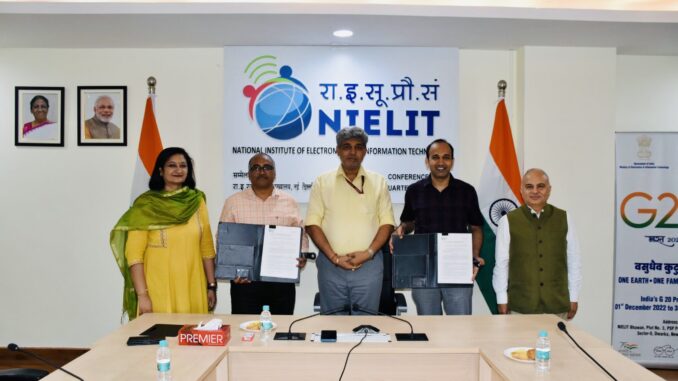
27th September 2024, New Delhi: The career-tech platform, Internshala has signed an MoU with the National Institute of Electronics & Information Technology (NIELIT), the autonomous scientific society of the Ministry of Electronics and Information Technology (MeitY), Government of India. As a part of this partnership, Internshala will help NIELIT trained students with internships and employment opportunities. The partnership aims to streamline campus recruitment processes across NIELIT centres while connecting students with diverse employers through Internshala’s online platform.

NIELIT signs MoU with Internshala

As part of the MoU, NIELIT students will gain access to the Internshala platform for internship and job placements. NIELIT will spread awareness about the platform across its centres and assign placement officers to manage student data and job activities on the portal. To improve placement outcomes, Internshala will also conduct an Employability Skill Test for NIELIT students, and create an Analytical Skill Report based on their performance. The question bank for the test will be prepared by Internshala and moderated by NIELIT.

Under this partnership, Internshala’s skilling programmes will be integrated with NIELIT’s courses, adhering to industry standards for accreditation. These courses will bear the credibility of both Internshala and NIELIT, providing students with industry-recognised certifications. Additionally, both Internshala and NIELIT will work together to enhance the career prospects of students by offering free access to the internship and jobs platform and organising joint employment initiatives like job fairs.

Sarvesh Agrawal, Founder and CEO of Internshala said, “We are excited to have partnered with NIELIT to help their trained students with internships and placements. Together with NIELIT, we aim to enhance employability and ensure that students are equipped with the skills and experiences that the modern job market demands. Together, we believe this initiative will play a significant role in shaping the future workforce of India and contribute to the nation’s digital transformation goals.

“Internshala is honoured to be the organisation having an official MoU in place with all 3 ministries working in the area of education and skilling – Ministry of Education (AICTE & Swayam Plus), Ministry of Skill Development (NSDC), and now Ministry of Electronics and IT (MeitY). We were also part of the pre-budget consultation meeting on employment and skilling chaired by the Hon’ble Finance Minister. There are a few more ministries whose work overlaps with ours and we aim to close a partnership with them too before we close this year“ he added.

On signing the MoU, Dr. Madan Mohan Tripathi, Director General, NIELIT congratulated Internshala and team for this collaboration through which students will be provided with valuable internship and job placements, equipping them with industry-relevant skills and facilitating effective campus recruitment processes. This collaboration would entail a comprehensive evaluation of integrated courses against industry standards, ensuring that they meet the required benchmarks for accreditation.

S P Jain Global Ranked Among Top 10 B-Schools in Asia-Pacific by Bloomberg Businessweek

Mumbai, 27th September 2024: S P Jain School of Global Management has been ranked among the top 10 business schools in the Asia-Pacific region by Bloomberg Businessweek in its latest B-School rankings. This marks the second consecutive year that the institution has received this prestigious recognition.

The Bloomberg Businessweek rankings are based on an in-depth evaluation of data provided by business schools, combined with surveys from students, alumni, and recruiters. Key areas of assessment include the quality of learning experiences, networking opportunities, and career outcomes—critical factors in shaping tomorrow’s business leaders.

Commenting on the achievement, Nitish Jain, President of S P Jain Global, said:
“Securing a spot in the top 10 for two years in a row is a powerful endorsement of our commitment to providing a truly global and transformative business education. At S P Jain Global, we go beyond traditional learning, equipping our students with the skills, perspectives, and networks they need to succeed in the dynamic global marketplace.”

Highlighting the school’s unique multi-city model, which allows students to study across Singapore, Dubai, Sydney, and London, Jain added: “This distinctive model gives our students invaluable exposure to different markets and cultures, fostering a global mindset—a skill highly valued by employers in today’s interconnected world. With our new London campus, through our sister school SPJ London, we’re continuing to expand this global experience and open new doors for our students.”

Dr Balakrishna Grandhi, Dean of the Full-Time MBA Program at S P Jain Global, emphasized the significance of the ranking, saying: “Our consistent presence in Bloomberg Businessweek’s top 10 is a reflection of the passion and dedication of our faculty, staff, and students. It highlights our relentless focus on academic excellence, cutting-edge research, and preparing graduates to lead in an ever-evolving business landscape.”

KIIT College of Engineering Teams Selected for AICTE’s IDE Bootcamps

Gurugram: Six teams from KIIT College of Engineering have been shortlisted at the all-India level to participate in the prestigious “Innovation, Design, and Entrepreneurship (IDE) Bootcamps,” organized by the All India Council for Technical Education (AICTE) and the Ministry of Education’s Innovation Cell (MIC).

KIIT COLLAGE

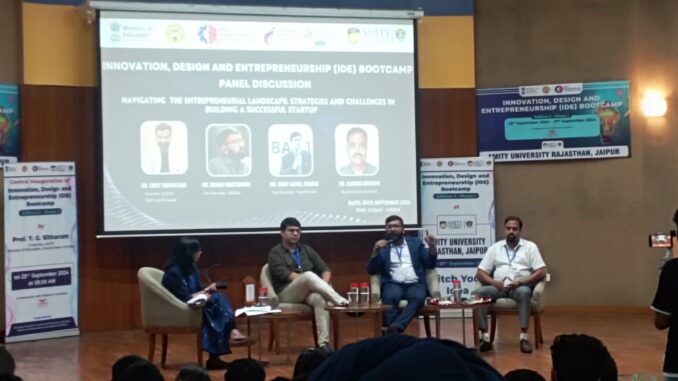
This initiative, aimed at nurturing the innovation, design, and entrepreneurial skills of students, will take place from 23rd September 2024 to 27th September 2024. Four of the selected teams from KIIT will attend the bootcamp at Amity University Jaipur, while two teams will participate at SVNIT Surat. Additionally, Dr. Kanika Kaur and Dr. Atul Kumar from KIIT College of Engineering have been invited as Ideas Mentors, further emphasizing the college’s commitment to fostering innovation.

Registrar Neelima Kamrah shared her excitement, stating, “The selection of our teams for the IDE Bootcamp is a proud moment for KIIT College of Engineering. It showcases the innovative talent of our students and the dedication of our faculty. We eagerly anticipate the groundbreaking ideas that will emerge from this experience and contribute to the national innovation landscape.”

Authored Article- The Filtered Truth: Unlocking the Benefits of Ultra-Filtered Milk

By- Dr. Preeti Nagar, Dietician at Noida International Institution of Medical Sciences College & Hospital (NIIMS)

 Ultra-filtered milk, also known as UF milk or diafiltered milk, is a game-changer for those seeking a healthier dairy option. This innovative product boasts enhanced nutritional properties, making it an ideal choice for individuals with specific dietary needs. But what sets ultra-filtered milk apart from regular milk, and who can benefit from it?

The Ultrafiltration Process

Ultra-filtered milk undergoes a unique process where regular milk is passed through membranes, removing excess water, lactose, and some minerals. This process retains larger molecules like proteins and fats, resulting in a milk product with increased protein content and reduced sugar levels.

Key Benefits of Ultra-Filtered Milk

  1. Increased Protein Content: Ultra-filtered milk contains nearly twice as much protein as regular milk, making it perfect for athletes, bodybuilders, and those seeking high-performance nutrition.
  2. Less Sugar: The ultrafiltration process reduces lactose, making ultra-filtered milk an attractive option for those managing diabetes or monitoring sugar intake.
  3. Lactose-Free: Ultra-filtered milk is 99.9% lactose-free, alleviating symptoms of lactose intolerance.
  4. Enhanced Calcium and Vitamin D: Some ultra-filtered milk brands are fortified with calcium and vitamin D, promoting bone health.
  5. Longer Shelf Life: Ultra-filtered milk has a longer shelf life due to higher pasteurization temperatures.

Who Can Benefit from Ultra-Filtered Milk?

  1. Athletes and bodybuilders seeking high protein intake.
  2. Individuals with lactose intolerance or sensitivity.
  3. Those managing diabetes or monitoring sugar intake.
  4. Individuals require enhanced calcium and vitamin D for bone health.

Who Should Avoid Ultra-Filtered Milk?

  1. Those with milk allergies.
  2. Individuals concerned about processed foods.
  3. People sensitive to additives.
  4. Those following specific dietary restrictions (e.g., ketogenic or paleo diets).

Impact on Lactose-Intolerant Individuals

Ultra-filtered milk is a boon for lactose-intolerant individuals, offering:

  1. Lactose-free benefits.
  2. Added lactase enzymes to aid digestion.
  3. Enhanced nutritional profile with more protein and less sugar.

Ultra-filtered milk offers numerous benefits, especially for those seeking higher protein, lower sugar, or lactose-free options. While it may not be suitable for everyone, this innovative dairy product is a valuable addition to the market.

University of Leeds and TERI SAS University Sign MoU to Foster Academic Cooperation and Research Collaboration

New Delhi: The University of Leeds (UoL) and TERI School of Advanced Studies have signed a Memorandum of Understanding (MoU) during an official visit by a UoL delegation to the institute. This strategic agreement aims to enhance academic cooperation and establish a long-term collaborative partnership between the two institutions.

Under the MoU, the partnership will focus on developing collaborative research projects, organising joint academic activities such as courses, conferences, and seminars, facilitating the exchange of research and teaching personnel, and creating opportunities for student placements and exchanges. The exchange of publications and other materials of common interest will further enrich the partnership. A key area of focus will be collaboration with the University of Leeds’ School of Politics and International Studies (POLIS), ensuring a vibrant exchange of expertise and thought leadership.

Professor Adam Tyson, Pro-Dean International for the Faculty of Social Sciences, University of Leeds, highlighted the significance of the agreement and said, “We are excited to formalise this collaboration with TERI School of Advanced Studies, which represents a pivotal step in broadening our international academic and research networks. This MoU underscores our commitment to fostering cross-border partnerships that contribute to addressing global challenges. By combining the strengths of TERI SAS and the School of Politics and International Studies at the University of Leeds, we will work together on innovative research and education initiatives that advance understanding in key areas such as sustainability, governance, and international relations. This partnership is not only a platform for academic exchange but also a means to contribute meaningfully to the solutions needed for the future. We look forward to the mutual learning and transformative impact this collaboration will bring.”

 Professor Suman Kumar Dhar, Vice Chancellor of the TERI School of Advanced Studies, expressed his delight about the partnership, stating, “This collaboration with the University of Leeds marks a significant step toward enhancing our academic and research activities. TERI SAS is dedicated to advancing knowledge and understanding through collaboration with esteemed institutions worldwide. This MoU will enable us to combine our resources and expertise, fostering innovative research and actionable insights into sustainable development. By working together, we can develop impactful solutions that address critical environmental and social issues on a global scale.

I would like to congratulate the faculty members of the School of Politics and International Studies at the University of Leeds and the Department of Policy and Management Studies at TERI SAS for jointly facilitating an innovative academic course titled ‘International Collaborative Studio on Public Policy’ as part of the Master’s Programme in Public Policy and Sustainable Development at TERI SAS. We look forward to many more collaborative academic and research initiatives between the two collaborative institutions.”

The strategic goals of both organisations to advance diverse research and expand their global networks are aligned with the newly formed relationship. The University of Leeds and TERI School of Advanced Studies are certain that their collaboration will produce innovative discoveries and impact society for a very long time.

Udemy Data Highlights Three-Dimensional Design Application and GitHub as Emerging In-Demand Skills in India

New Delhi – September 25, 2024 – Udemy, a leading online skills marketplace and learning platform, today released its Q2 2024 Global Workplace Learning Index. This quarterly report provides insights into which technical and professional skills are growing in demand to help organizations stay ahead of the competition worldwide.

The latest 2024 Q2 Skills Index reveals a significant surge in demand for technological and professional skills among Indian learners in Q2 when compared to Q1. The following percentages reflect the highest increases in course consumption in India during Q2:

Computer-Aided Three-Dimensional Interactive Application (CATIA) – 94%
GitHub – 81%
English Grammar – 80%
Problem Solving – 56%
System Design Interview – 41%

These findings indicate a strong focus on developing skills in design, technology, communication, critical thinking, and system architecture. Notably, English Grammar and problem-solving are in high demand globally, as they enhance operational efficacy and interpersonal communication, making them essential skills across all regions and industries. The Q2 Index highlights the evolving needs of the Indian workforce and the importance of upskilling to remain competitive in the job market.

Vinay Pradhan, Country Manager & Senior Director, Udemy India, said, “With nearly 15 million learners in India, we are witnessing a growing impetus on moving towards a skills-based economy, aligning with the government’s mission to create a future-ready workforce. The surge in demand for emerging skills like CATIA, GitHub, System Design, English Grammar, and Problem Solving highlights the growing need for both technical and professional skills. CATIA, in particular, will aid in upskilling not just the tech sector but also the manufacturing workforce, which is vital as India strives to become a global leader in innovation and entrepreneurship. Investing in targeted learning and development, especially in skills like CATIA, is crucial to unlocking the full potential of our workforce and driving economic growth.”

“Udemy’s research shows that most organizations have begun implementing skills-based processes, but employees and leaders still need help knowing which skills to focus on first,” said Greg Brown, President and CEO of Udemy. Soft skills, like teamwork and problem-solving, are critical to enabling the success of key tech trends like AI, which have the potential to shift the trajectory of many industries, so it’s encouraging to see these themes trending in this quarter’s Index.”

“With technology like Generative AI and the shift to hybrid work models, constant change is all around us. Adapting to this change can be tough, but it’s really about understanding and guiding how people think and behave,” says Sivakami S, a Udemy instructor and change management expert. “All change is rooted in human behavior, making it crucial for leaders to draw insights from psychology and behavioral economics. By developing critical thinking, problem-solving, and teamwork skills, leaders can build trust and motivation, guiding employees effectively through complex changes.”

To learn more about how organizations can partner with Udemy Business to upskill for the future, visit: business.udemy.com.

Methodology:

The Udemy Global Workplace Learning Index uses data from thousands of Udemy Business customers worldwide. Location data is based on the country associated with the company. The skills data compares the consumption of courses in the Udemy Business collection from Q1 2024 to Q2 2024. Courses are associated with one or more topics, with a maximum of five topics per course. The trending skills that you see in the report are based on these topics. If a course covers multiple topics, consumption minutes are divided equally across all topics associated with the course.

Skillsoft Unveils Reimagined Learner Experience to Help Organizations Maximize Learning Outcomes

New Delhi – September 25, 2024 – Skillsoft (NYSE: SKIL), a leading platform for transformative learning experiences, today announced a series of innovative features designed to make learning more intuitive, engaging, and impactful. These enhancements streamline the process for learners to earn new certifications, while also leveraging generative AI (GenAI) technologies to deliver a highly personalized and adaptive learning experience, accelerating the development of critical, in-demand skills.

“Skillsoft is at the forefront of delivering innovative talent development solutions, continually evolving to meet the dynamic skilling needs of businesses and learners,” said Apratim Purakayastha, General Manager, Talent Development Solutions, Skillsoft. “By integrating cutting-edge GenAI technologies with a best-in-class learning curriculum, these new enhancements bring a richer, more impactful learning experience to our customers, driving enhanced learner engagement, administrative efficiencies, and measurable organizational growth.”

Skillsoft streamlines the path to certification with new end-to-end management feature
Certifications bring significant benefits at the organizational and individual levels. According to Skillsoft’s 2024 C-Suite Perspectives Report, more than a third of executive-level respondents value the added skills that certifications bring at $20,000 or more per employee per year. Skillsoft’s most recent IT Skills & Salary Report also showed learners seeing improvements with quality of work (62%), work engagement (47%), and job performance (45%) after earning certifications.

Skillsoft’s new Certification Paths streamline and simplify the process for learners to discover, prepare, earn, and upload in-demand certifications from top providers including CompTIA, AWS, Microsoft, Google, Cisco, HRCI, Prince2, and PMI, through a single, intuitive platform. Meanwhile, learning administrators, HR teams, and managers benefit from robust tracking features, enabling them to guide and chart team members’ progress, stay ahead of upcoming expirations and renewals, and efficiently manage vouchers.

“In today’s rapidly evolving enterprise landscape, technical certifications are key. But they can be difficult for administrators and learners to track and share,” says Gina Smith, PhD, Research Director for IDC’s IT Skills for Digital Business practice. “Skillsoft Certification Paths aim to tackle such issues by providing comprehensive certification management for administrators and a centralized hub for learners to access all of their certification needs.”

Skillsoft leverages GenAI to boost learner satisfaction and skill building outcomes
As organizations and learners grapple with rapid technological advancements, shifting industry demands, and widening skills gaps, businesses require more personalized, experiential, and scalable learning models. According to new research from Skillsoft, one-in-four workers say a lack of relevant training experiences is their biggest barrier to achieving skill-building goals.

One Tara App Unveiled by DEVI Sansthan to Foster Informal Education, Honoring Over 100 Children at Global Learning Lab Conclave

Lucknow, 26th September 2024: The grand finale of the 14th Ed Leadership Summit, was held as part of the First Global Learning Lab Conclave, which saw the launch of “One Tara Initiative” which is an EdTech tool that lowers barriers, empowering ordinary citizens with the know-how, skills and materials they need to open an informal education centre. This initiative is in the loving memory of Educationist Shri. Jagdish Gandhi, the founder of City Montessori School, Lucknow. The launch marked a significant highlight with the attendance of over 100 children from various slum regions of Lucknow. The event showcased the transformative potential of education but also celebrated the achievements of young learners through the “One Tara Initiative”. The pilot project of 3 months was conducted for 100 slum children who are part of City Montessori School Shalimar One World Campus, City International School, One Tara Jawahar Nagar and Umeed Foundation. 20 children who passed grade 5 and were part of the pilot project were awarded certificates of NIOS.

DEVI Sansthan has signed MoUs with 3 NGOs working at the grassroot levels namely Shambhuka Foundation represented by Mr. Anurag Goel, Prayaas Ek Sankalp represented by Ms. Garima Prakash and Umeed Foundation represented by Mr. Balbir Singh for implementing “One Tara” Schools in their respective areas. One Tara schools will be launched in Lucknow, Ayodhya and Khushinagar by Umeed Foundation which will benefit the children in these areas. Shambhuka Foundation signed an MOU which will cater to students studying in One Tara schools by providing them meals, organising health camps, counselling sessions, communication skills coaching and more.

Dr. Sunita Gandhi, Founder of DEVI Sansthan, added, “One Tara app will empower individuals to become changemakers by enabling anyone to start their own ‘One Tara School.’ The aim is to strive to decentralise high quality and learner-centred education, enabling millions of children to benefit from the groundbreaking accelerating learning for all pedagogy. The app will enable us to reach the goal of getting the children to pass the NIOS exams thus giving them a chance to join mainstream school thereafter.”

One Tara School is a free school for children and adolescent girls who have been deprived of an education and is powered by Accelerating Learning for All (ALfA). One Tara School gives this hope to children that they are not alone in their fight for survival. The school’s “One Tara” app has several key features like teaching the children through videos, storybooks, roleplays, etc. Free study material can also be downloaded from the app. The persons running the “One Tara” centres can also add information like number of teachers, number of students and their attendance, teachers’ attendance can also be tracked and more such features. The app will enable the children to learn foundational skills which can guide them on a successful path towards education and employment.

For more information visit One Tara School is a free school for children and adolescent girls who have been deprived of an education and is powered by Accelerating Learning for All (ALfA). One Tara School gives this hope to children that they are not alone in their fight for survival. The school’s “One Tara” app has several key features like teaching the children through videos, storybooks, roleplays, etc. Free study material can also be downloaded from the app. The persons running the “One Tara” centres can also add information like number of teachers, number of students and their attendance, teachers’ attendance can also be tracked and more such features. The app will enable the children to learn foundational skills which can guide them on a successful path towards education and employment.