Jaslok Hospital’s Life-Changing Hyperhidrosis Surgery Restores Woman’s Confidence

Life-Changing Surgery at Jaslok Hospital Helps Woman Overcome Hyperhidrosis Affecting 2-5% of Indians, Restores Confidence and Dignity

Mumbai, Dec 12: Jaslok Hospital & Research Centre has successfully treated a young ex-airhostess suffering from palmar hyperhidrosis, a medical condition characterized by excessive sweating of the hands, through Bilateral Thoracoscopic Sympathectomy (VATS)—a safe, minimally invasive, day-care surgical procedure with immediate results.

Patient Hand picture before surgery-1

Hyperhidrosis is estimated to affect 2–5% of the population in India, yet remains significantly underreported, as many individuals do not recognize it as a medical condition and continue to suffer silently. The disorder can severely impact daily functioning, emotional well-being, and professional life if left untreated.

The patient had been experiencing symptoms since adolescence and had sought multiple medical opinions over the years with no lasting relief. The condition eventually forced her to step away from her profession and affected her mental health and self-confidence.

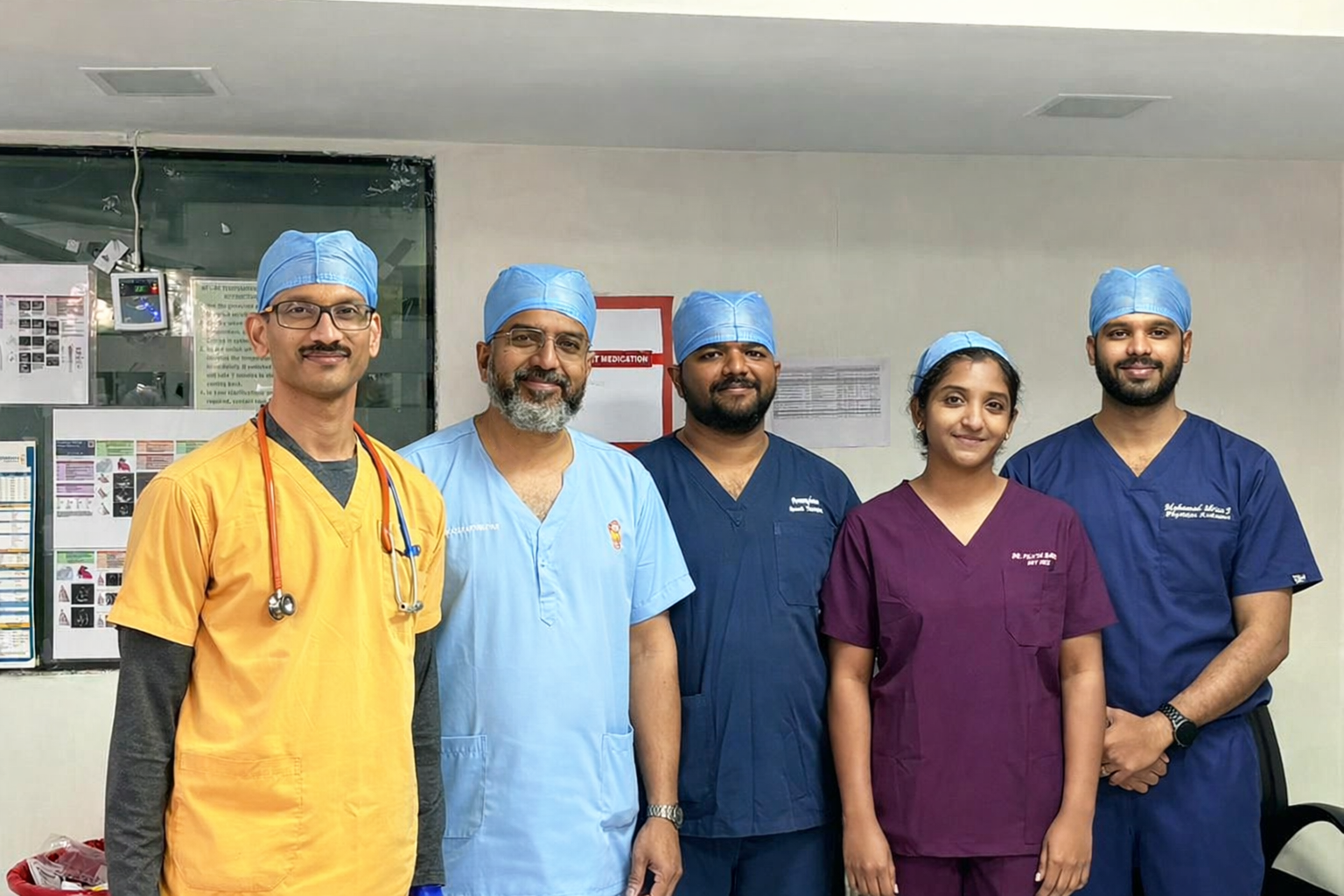
The patient underwent Bilateral Thoracoscopic Sympathectomy (VATS), performed by Dr. Vimesh Rajput, Consultant – Thoracic Surgery. Anaesthesia was expertly managed by Dr. Savi Kapila, Consultant – Anaesthesiology, a one-hour surgical procedure that interrupts the sympathetic nerves responsible for excessive sweating of the hands.

“Hyperhidrosis is not a minor inconvenience—it is a disabling medical condition that can push patients into social isolation, anxiety, and even depression,” said Dr. Vimesh Rajput, Thoracic Surgeon at Jaslok Hospital. “What makes the situation unfortunate is that a definitive, safe solution exists, yet awareness remains extremely low.”

Emphasising the effectiveness of the procedure, he added:

“This is a minimally invasive, day-care surgery. Patients walk in with a problem that has affected them for years and walk out the same day with immediate relief. The results are predictable, lasting, and often life-changing.”

Dr. Rajput also highlighted the importance of early consultation and intervention:

“Many patients dismiss excessive sweating as something they must live with. Over time, it impacts confidence, social interactions, and mental health. Early diagnosis and timely surgical treatment can completely restore dignity and quality of life.”

Post-procedure, the patient experienced instant and complete resolution of symptoms, allowing her to resume normal daily activities without fear, embarrassment, or discomfort.

Speaking about the case Dr Milind Khadke, Chief Medical Officer at Jaslok Hospital & Research Centre said

“Correct diagnosis of hyperhidrosis is vital. With minimally invasive, short-stay procedures like VATS sympathectomy, patients can achieve immediate relief and restored confidence. Greater awareness is needed so individuals recognise this condition as treatable and seek timely medical intervention. Jaslok Hospital’s clinical excellence ensures comprehensive management of all kinds of diseases with world-class care.”

LVPEI Hosts Fun-Filled Day Out for Children with Visual Impairment

Dec 11: About 400 Children with visual impairment, their siblings and parents from the Institute for Vision Rehabilitation  of the L V Prasad Eye Institute indulged in a day of shared laughter and joy at Wild Waters, a 30-acre amusement theme park in Shankarpally. The special day of fun celebrated inclusion, confidence, and togetherness, the values that deeply resonate with IVR’s mission to empower those for whom medical science has no definitive cure.

IMG_8188

The day began at the LVPEI campus with a scrumptious breakfast, followed by a vibrant cultural program presented by the children. Their performances filled the campus with high spirits, setting the perfect tone for the day. Dr Tarjani Dave, Head of the Ocularistry Laboratory at LVPEI, graced the event as the special guest. She inspired and encouraged the children with her heartfelt words, asking them to repeat in unison, “I’m strong, I’m capable, I’m beautiful, I’m unlimited.” The affirmation echoed through the campus, symbolizing empowerment, confidence, and the limitless potential that the IVR strives to nurture in every child.

Accompanied by their siblings, parents, and support staff, the children enjoyed games and rides designed to engage their senses and comfort levels. Separate lawns were dedicated for these activities, where IVR’s rehabilitation professionals thoughtfully curated games that encouraged participation, teamwork, and fun. The setup ensured that every child could confidently compete while parents and siblings stood close by, offering both reassurance and encouragement.

For the parents, particularly the mothers, the day was much more than recreation. It was a meaningful opportunity to connect. As they shared stories, laughter, and experiences, bonds were formed that would go beyond the event. “It was heartening to see the parents, especially mothers open up, share hope, and celebrate their children’s strengths,” said Dr Beula Christy, Head of the Institute for Vision Rehabilitation at LVPEI. “Such moments remind us that rehabilitation is as much about emotional support and community as it is about learning and independence.”

The Institute for Vision Rehabilitation at LVPEI is one of the very few globally integrated facilities within an eye institute, created to serve individuals for whom medical or surgical options offer limited solutions. Its holistic model focuses on maximizing functional vision, promoting lifelong independence, and restoring dignity through education, training, and psychological support.

Throughout the day, the families explored a variety of rides and water activities, enjoyed freshly prepared meals at the park’s food courts, and soaked in an atmosphere of warmth and acceptance. As the sun set, the air resonated with laughter, renewed confidence, and heartwarming memories. The event was made possible through the generous donations of a number of individual donors.

LVPEI’s Institute for Vision Rehabilitation continues to stand as a beacon of inclusion and possibility, proving that while vision may be impaired, the human spirit and capacity for joy remain boundless.


Senores Pharmaceuticals Bags Pharmaceutical Excellence Award at Hurun Stars of Gujarat 2025

Ahmedabad, Gujarat, Dec 11: In the recent Hurun Stars of Gujarat 2025 event, Senores Pharmaceuticals Limited emerged in the spotlight as its Managing Director, Mr. Swapnil Shah, and Chief Heart Officer, Ms. Anar Modi, were honoured with the Pharmaceutical Excellence Award. The recognition underscores Senores’ continued commitment to advancing Gujarat’s healthcare and pharmaceutical landscape through innovation, responsible leadership, and global ambition.

At the event, Mr. Shah joined a dynamic panel on “Think Global, Act Gujarati: Building Global Brands from Gujarat,” while Ms. Modi participated in a fireside chat on “Raising from Gujarat: Building Ambition, Impact & Leadership.” Both discussions, moderated by industry leaders, highlighted Gujarat’s entrepreneurial spirit, resilience, and growing global influence.

“This honour is a reflection of the hard work and passion of our entire team,” said Mr. Swapnil Shah, “Gujarat has always been a land of opportunity and innovation, and we are committed to contributing meaningfully to its economic and healthcare advancements.”

Expressing her gratitude, Ms. Anar Modi, shared, “This recognition strengthens our resolve to lead with purpose, nurture talent, and build an organisation that creates lasting impact—both within India and globally.”

With this recognition, HURUN INDIA acknowledges Senores Pharmaceuticals as a key contributor to Gujarat’s progress, underscoring the company’s ongoing efforts to innovate, lead with responsibility, and play a meaningful role in the state’s growth story.

5 Warning Signs of Chronic Constipation Parents Often Miss

“Most people understand constipation as a condition when one isn’t passing stools as often as usual. However, parents must remember that constipation isn’t just about the frequency of stools, but also how easy or difficult it is for your child to pass them,”

Dr.Parijat-ram-tripathi11

explains Dr Parijat Ram Tripathi, Consultant Pediatric Gastroenterologist and Hepatologist, Ankura Hospital for Women and Children. He further says that in the present day, with a changing diet and lifestyle, roughly 30% Indian kids suffer from constipation. 

Bowel habits vary widely between children; thus, parents may sometimes not realize when their child’s constipation is worsening and when they need a specialist. Dr. Parijat discusses with us five red flags of constipation that should alert any parent. Identifying early signs can help a parent take timely steps for constipation in their child, saving them from discomfort, complications, and prolonged suffering.

  • Standing and passing stools: “Many younger children, especially those who aren’t fully toilet trained, may pass stools in a standing position. In most cases, parents assume this is just another habit,” Dr. Parijat explains. He reinforces that if a child repeatedly passes stool in a standing position, it should alert parents to possible underlying constipation, and they must consult an expert.
  • Child avoids stools altogether: In some cases, a child may avoid passing stools altogether because of painful motions. Subtle signs can include an older child running away when taken to the potty, or a visible display of discomfort when trying to pass stools.
  • Leakage of stools: Dr. Parijat urges parents to carefully check their child’s diaper or underpants for leakage of stools. Small amounts of stool leaked in the diaper or underpants are indicative of accumulated stool that the child isn’t able to pass.
  • Hard stools: The child passing stool doesn’t rule out constipation completely. If the stools are hard or passed in small quantities multiple times, the child may still be constipated. Parents often mistake the passage of any stool as a sign that there is no constipation, which shouldn’t be the case.
  • Blood in stools: “Prolonged hard stools may result in anal fissures which may cause blood in the stools, a red flag that parents should never ignore,” Dr Parijat warns. 

Apart from the above signs, a bloated or firm tummy in smaller babies, loss of appetite, pellet-like stools, or the baby crying while passing stools are some other signs that are suggestive of constipation.

Diet and Constipation

Diet plays a crucial role in causing constipation. After six months of age, complementary feeding starts for babies. However, if the baby continues to be more dependent on milk and less on solids, then constipation can result. 

“Higher intake of carbohydrates and fats in the form of junk food, combined with low fibre in the diet, is a major reason why constipation has increased in the past few years,” Dr. Parijat says. He advises that fruits, vegetables, millets, and other fibre-rich foods should be a regular part of a child’s diet for a healthy gut, and parents should introduce them in an age-appropriate manner from the start. Hydration, he says, is equally important and children should be encouraged to drink plenty of water. Apart from diet, he encourages parents to start toilet training on time for developing regular bowel habits. 

He further adds that in some cases, the cause for constipation may be an underlying medical issue, which is why a thorough and timely checkup by a pediatric gastroenterologist is advised. 

“Constipation is common, yet challenging for the child. If left unaddressed, it can linger for months or years and cause significant discomfort. With early attention, simple dietary changes, and timely expert care, parents can help their child overcome it with ease,” Dr Parijat concludes.

Miracle at Fortis Shalimar Bagh: 55-Year-Old Defies 5% Survival Odds After Multiple Cardiac Arrests

New Delhi, Dec 09: Doctors at Fortis Hospital, Shalimar Bagh pulled off a medical miracle when they revived a 55-year-old man who had suffered multiple cardiac arrests following a minor procedure at another city-based hospital in Delhi. Despite being given less than 5% chances of survival, the patient made a complete recovery, owing to the swift action, coordinated teamwork, and advanced cardiac support provided by the Fortis cardiology and critical-care teams.

Image (3)


The patient, a known diabetic, had undergone a routine procedure to remove a sebaceous cyst, a small benign lump on his back. Six hours after the surgery, he suddenly collapsed in his hospital room. His heart stopped, prompting the medical team to initiate immediate CPR and deliver multiple electric shocks to revive him.

Recognising the severity of the situation, the treating doctors reached out to Dr. Rashi Khare, Additional Director- Cardiology, Fortis Hospital, Shalimar Bagh. Dr. Khare rushed to the hospital, assessed the patient’s critical condition, and advised shifting the patient to Fortis Hospital, Shalimar Bagh for advanced cardiac care.

When the patient arrived at Fortis Shalimar Bagh, he was critically ill, on ventilator and battling severe complications. Imaging revealed that his lung had collapsed, a consequence of the intense CPR he had endured. Without wasting a moment, the medical team moved him to the Cath lab for emergency angiography, which showed restored blood flow in his coronary vessels. But despite those efforts, he suffered yet another cardiac arrest.

Facing a life-or-death moment, with mortality risk soaring extremely high -the team made a bold decision: they placed him on ECMO (Extracorporeal Membrane Oxygenation). This advanced life-support system temporarily takes over the function of the heart and lungs. The ECMO therapy was initiated within an hour, and continued uninterrupted for five days, until his heart and lungs regained strength and began to function on their own.

Under the leadership of Dr. N. N. Tripathi, Head of Cardiology, Fortis Shalimar Bagh and with the seamless collaboration of Dr. Rashi Khare, Dr. Sandeep Garg (Principal Consultant & Unit Head, Pulmonology, Fortis Shalimar Bagh, alongwith the cardiac anesthesia team led by Dr. Amit Prakash and Dr. Vishal Garg, the patient began a steady recovery. His heart gradually regained strength, infections were brought under control and over time, he was successfully weaned off ECMO and ventilatorsupport. After several weeks of intensive monitoring, he was discharged in a stable condition and is now recuperating well at home.

“After 45 minutes of CPR and multiple cardiac arrests, his chances of survival were extremely slim. When he arrived at Fortis on life support, scans showed a collapsed lung from the resuscitation, and his heart was barely functioning,” said Dr. Rashi Khare, Additional Director of Cardiology at Fortis Hospital, Shalimar Bagh. “Putting him on ECMO was a decisive move — it gave his heart and lungs exactly the rest they needed. This case truly exemplifies how the right mix of timely intervention, teamwork, and advanced technology can save a life.”

Naveen Sharma, Facility Director, Fortis Hospital Shalimar Bagh said

This case underscores Fortis Hospital Shalimar Bagh’s advanced cardiac care and the team’s ability to act decisively in critical, time-sensitive situations. Surviving multiple cardiac arrests with complete heart and brain recovery is extremely rare, and this outcome reflects the expertise, coordination, and commitment of our medical teams. It truly demonstrates that with the right skill, speed, and collaboration, every second can make the difference between life and loss.”

Manipal Hospital EM Bypass Saves 4-Year-Old After Swallowing Metal Pin

Kolkata,  Dec 8: In a remarkable medical intervention at Manipal Hospital EM Bypass, led by Dr. Pradeepta Kumar Sethy, Director of Gastroenterology Manipal Hospital EM Bypass and Mukundapur Cluster, specialists successfully removed a sharp metal pin from the stomach of 4-year-old Krishanu Roy (name changed) from Barasat, Uttar 24 Parganas. Krishanu had accidentally swallowed the object while drinking water. While playing, he had put the metal pin into his water bottle, and it was accidentally ingested when he drank from it, prompting his family to rush him immediately to the hospital, where he was diagnosed with a potentially life-threatening condition.

Following admission, Krishanu was promptly assessed and found to have a sharp metallic foreign body lodged in his stomach. The high risk of internal injury, including gastric wall perforation, necessitated urgent medical action.

Elaborating on the case, Dr. Pradeepta Kumar Sethy, said, “Ingestion of sharp objects among children is a serious emergency, and swift intervention is critical to prevent life-threatening complications. In Krishanu’s case, the metal pin posed a high risk of perforation or bleeding if it had moved further into the intestine. We immediately planned and performed an emergency endoscopy, carefully retrieving the pin without any surgical incision. Thanks to the coordination and expertise of our team, the procedure was successful, and Krishanu’s recovery has been smooth. This case highlights the importance of timely medical attention and parental vigilance when young children are involved.”

Using advanced endoscopic tools, Dr. Pradeepta Kumar Sethy supported by his expert team comprising Dr. Prasanta Debnath, Consultant – Medical Gastroenterology, Dr Rahul Samanta, Consultant Medical Gastroenterology and Dr. Prashanta Kumar, Consultant Medical Gastroenterology carefully retrieved the object while ensuring no injury to Krishanu’s internal organs. Post-procedure, he was closely monitored by Dr. Nicola Judith Flynn, Head of Paediatrics and Neonatology, Manipal Hospital EM Bypass, and her team. Krishanu responded well to treatment and was later discharged in stable condition.

Expressing his relief, Krishanu’s father said, “We are extremely grateful to Dr. Sethy and the entire team at Manipal Hospital EM Bypass. From the moment we arrived, they handled the situation with incredible professionalism and care. Seeing our son in pain was terrifying, and the thought of what could have happened if the pin had caused internal injury was unbearable. Thanks to their quick decision-making and expertise, Krishanu is safe and recovering well at home. We truly can’t thank them enough for their timely intervention and dedication.”

With this incident, Manipal Hospital EM Bypass once again demonstrated excellence in paediatric emergency care, advanced endoscopic interventions, and prompt multidisciplinary coordination ensuring safe and positive clinical outcomes for young patients.

Bandhan Bank Donates 10 ambulances across India, two in Bangalore

Bangalore, Dec 8: Bandhan Bank, as part of its CSR initiatives, has donated 10 fully equipped ambulances across India, including two in Bangalore, to strengthen emergency medical access and improve healthcare delivery across diverse communities. Announced during the Bank’s 10th Foundation Day celebrations, the initiative has now been implemented with the donation of ambulances. The initiative reflects the Bank’s commitment to improving the reach and responsiveness of healthcare services, ensuring that patients receive timely medical attention during emergencies. The fully equipped ambulances were donated to the CBCI Society for Medical Education and the Bharat Sevashram Sangha in Bangalore.

ambulance

The ambulances have been donated to reputed medical institutions and healthcare organizations across the country, including those in Bengaluru, Ahmednagar, Vadodara, Delhi, Jaipur, Akbarpur, Jalandhar, Kolkata, Secunderabad and Murshidabad. By enhancing healthcare infrastructure and supporting hospitals across multiple states, the Bank is contributing to building stronger, healthier, and more resilient communities. By enhancing healthcare infrastructure and supporting hospitals across multiple states, the Bank is contributing to building stronger, healthier, and more resilient communities.

Mr. Partha Pratim Sengupta, MD & CEO, Bandhan Bank, said “At Bandhan Bank, we firmly believe that access to quality healthcare is a fundamental right, not a privilege. Through this initiative, we aim to strengthen emergency medical response and support hospitals serving diverse communities. Our commitment to inclusive development goes beyond banking, it’s about enabling healthier, more resilient communities across India. With this initiative, we aim to make a difference in people’s lives, ensuring that timely medical assistance is accessible when it is needed the most.”

Bandhan Bank’s CSR programs have reached over 25 lakh families in 82 districts across 14 states, with a strong focus on women and rural communities in healthcare, education, livelihoods, and climate resilience. Through these initiatives, Bandhan Bank continues to demonstrate its commitment to social responsibility and community development.

Medanta Hospital Gurgaon Brings its Expertize in Healthcare to Jaipur, Announces Mediclinic in Rajasthan’s Capital

Jaipur, Dec  8:Gurugram-based Medanta The Medicity, one of the largest private multi-specialty tertiary care providers in India which has been named Best Private Hospital in India by Newsweek for six years in a row, on 6 December 2025 announced its entry into Rajasthan with its plan to establish a super specialty Mediclinic in Jaipur, thus reaffirming its commitment to deliver world-class healthcare across the country.
1000677492
The new facility, located at Tonk Road in Jaipur, offers super-specialist consultations in more than five diverse medical fields including Medical Oncology, Cardiology, Lung Transplant,  Uro-oncology, and Gastrosciences as well as provide a clinical review of cases related to Lung Transplant, Chest Surgery etc.
Dr. Naresh Trehan, Chairman and Managing Director, Medanta said,
“Medanta’s patient-first approach allows teams of super specialist doctors to collaborate seamlessly and arrive at the best possible treatment, customized for each patient in line with our guiding philosophy ‘Har Ek Jaan Anmol’, meaning ‘Every Life Is Invaluable’. Today marks the beginning of a new chapter for Medanta, and this Mediclinic demonstrates our resolve to make quality healthcare accessible beyond metro cities.”
The launch of the Mediclinic follows rising heart health issues in Indians one of the country’s critical healthcare challenges. Medanta aims to shed light on the alarming rise in cardiovascular diseases (CVDs) among young Indians, the growing burden of hypertension, and the increasing prevalence of sleep apnea, under the banner of “Mission Save Heart”. The initiative is led by Dr. B. C. Roy National Award recipient Dr. R. R. Kasliwal, Chairman, Clinical & Preventive Cardiology, Cardiac Care, Medanta, Gurugram, who noted that India contributes to one-fifth of deaths due to CVDs, according to the World Health Organization.
CVDs, such as heart disease and hypertension, account for 17.7 million deaths globally and remain the leading cause of mortality. Notably, CVDs tend to affect Indians nearly a decade earlier than their Western counterparts.
Emphasizing about the importance of awareness about CVDs, Dr. R. R. Kasliwal, Chairman, Clinical & Preventive Cardiology, Cardiac Care at Medanta Gurugram, said,
“According to the Global Burden of Disease report, nearly one-fourth of all diseases in India stem from cardiovascular conditions, primarily driven by the “4 Hs” Heart attack, Hypertension, Heart failure, and heart muscle disease (cardiomyopathy). These interconnected conditions often act as both causes and consequences of one another. With India witnessing a surge in heart attacks among young adults—now a leading cause of death in the 40–69 age group there is an urgent need to address this growing crisis. Through ‘Mission Save Heart,’ Medanta aims to raise awareness, empower individuals to take preventive action, and ensure communities have access to timely, quality cardiac care.”
Earlier in the day, Dr. Kasliwal said the new Medanta Mediclinic marks the beginning of a transformative journey to strengthen healthcare in Rajasthan. He said, “This Mediclinic is more than just a building, it is a testament to Medanta’s core values of providing affordable medical services to patients with care, compassion and commitment. This facility is built around our belief that quality healthcare should be accessible and focused on every individual who walks through our doors.”

Former Vice President Venkaiah Naidu Flags Off Walkathon on Diabetic Foot Care Hosted by FootDoctor Hospital

Hyderabad, Dec 08:  FootDoctor Hospital organized a walkathon in Hyderabad to raise awareness on diabetic foot care an increasingly critical health concern as India continues to hold the highest number of diabetes cases in the world. The event was inaugurated by former Vice President of India M. Venkaiah Naidu, along with Tollywood actor Sushant, KIMS Hospitals Chairman & Managing Director Dr. Bollineni Bhaskar Rao, and Delhi Public School Chairman Ramesh Gorantla.

Photo 4

Experts highlighted that 15–25% of diabetics are at risk of developing foot ulcers, and many may eventually require amputation if early symptoms are ignored.

Key Messages from Dignitaries

Shri Venkaiah Naidu emphasized the silent onset of diabetes, stating that many people remain unaware until complications develop.
He urged citizens to adopt an active lifestyle through walking, yoga and physical exercise, warning that dependence on gadgets and smartphones has reduced physical activity significantly. He further stressed the importance of timely treatment for foot ulcers, loss of vision, and injuries, to prevent severe outcomes including amputation.

Ramesh Gorantla, Chairman, Delhi Public School, expressed concern over the rising incidence of diabetes among younger individuals. He said minor injuries in diabetics take longer to heal, and if untreated, can lead to amputations. He added that early foot screening for children, especially those involved in sports, can prevent long-term complications such as flat feet.

Tollywood actor Sushant highlighted that awareness about foot-care specialists is still limited. He urged the public to seek specialized foot clinics at the earliest signs of abnormalities, especially given the growing prevalence of diabetes.

Dr. Bollineni Bhaskar Rao, CMD, KIMS Hospitals, noted that nerve damage in diabetics often masks pain, leading to neglected ulcers. He stated that 85% of diabetic amputations occur due to untreated foot ulcers, and timely treatment is crucial to prevent such outcomes.

Dr. Narendranadh Meda, Director & CEO, The Foot Doctor Hospital, stressed that even small wounds can turn severe if ignored due to neuropathy. Regular diabetes check-ups, including dedicated foot examinations, can significantly reduce the risk of amputation. He added,“Our goal through this walkathon is awareness timely care saves feet, saves lives.”

App Launch & New Technology for Personalized Foot Protection

During the walkathon, FootDoctor Hospital launched the Dr. Wound App, enabling patients to receive safe at-home wound care with real-time monitoring by specialists reducing hospital visits, time, and cost.

Additionally, the hospital introduced a custom footwear technology that creates personalized shoes based on precise foot measurements, offering enhanced protection and helping diabetic patients prevent injuries.

From Hormones to Ovulation, Signs You Might Be Naturally Fertile

By:-  Dr. Meghana Nyapathi, Cluster Head – Reproductive Medicine, Milann Fertilityl, Bengaluru

Fertility isn’t just about getting pregnant,it also reflects your hormones, nutrition, and overall well-being. But, many women often ignore or miss simple signs of their body.  At times , women find it difficult to identify when they ovulate or recognize the natural cues of their reproductive health. A 2023 study published in the Indian Journal of Community Medicine revealed that over 60% of Indian women had low fertility awareness.

Understanding the subtle signs that the human body gives out on a regular basis is crucial.  The following are the six main indicators that you might be naturally fertile.

  • Women having regular menstrual cycles:

The physiological process by which one of your ovaries releases an egg is called ovulation, and it usually happens 14 days before to your next period.  Following its release, the egg passes through the fallopian tube, where sperm can fertilise it and this leads to pregnancy.  The egg disintegrates 24 hrs post ovulation if fertilisation is unsuccessful, and your menstrual cycle continues with the onset of the period. The menstrual cycle normally lasts between 26 and 35 days, with ovulation usually taking place approximately 14 days before the next period.  Regular cycles indicate that your hormones are in balance and that the ovaries are regularly releasing eggs.  About 20% of Indian women experience irregular cycles, which might be a sign of PCOS, thyroid imbalance, or stress, all of which can disrupt ovulation.

  • Understanding possible ovulation symptoms:

Around the middle of the  cycle, you might notice a dull ache in your lower belly, a bit of bloating, or even a sudden burst of energy. These are your body’s gentle hints that ovulation is happening,  a phase doctors call mittelschmerz, which simply means “middle pain” in German. It’s your ovary releasing an egg, and a key moment if you’re trying to conceive. Nearly 8 in 10 women experience these subtle signs.

  • The changes in Cervical mucus

As you get closer to ovulation, you might notice a change in your vaginal discharge, it becomes clear, slippery, and stretchy, almost like egg whites. This is your body’s way of helping sperm move easily and stay alive longer, making it the perfect time for conception. If your discharge feels dry or sticky instead at all times, or discolouredit could be your body’s signal that you’re not in your fertile phase yet, or that your hormones need a little attention.

  • What healthy skin and hair describes

If your skin feels clear and your hair looks healthy and shiny, it’s often a sign that your hormones are well balanced. But if you’re struggling with frequent breakouts, hair loss, or noticing extra facial hair, your body might be trying to tell you something. These changes can happen when male hormones (androgens) rise, which is common in PCOS, a condition that affects about one in five Indian women and can make it harder to get pregnant.

  • What does stable weight and active metabolism tell you about

Keeping your weight in a healthy range helps your hormones stay balanced and supports regular ovulation. If you’re underweight, your body might not produce enough reproductive hormones. On the other hand, carrying extra weight can affect insulin levels and make ovulation less regular. Studies show that even a small weight gain, about five BMI points can lower your chances of getting pregnant by nearly 25%.

  • Minimal Premenstrual Syndrome (PMS) or Menstrual Pain

It’s normal to feel a little discomfort before your period, but very painful cramps or heavy bleeding can be a warning sign. Conditions like endometriosis , fibroids,or even endometrial polyps which affect about 1 in 10 women, can make it harder to conceive. Smooth, manageable cycles usually mean your hormones are in good balance.

When a couple tries to conceive for 12 months but fails, and most importantly ,after trying for even just 6 months , if the woman is over 35 years, they should consult a fertility specialist. Because, early intervention can help to identify underlying issues quickly and help to get improved outcomes.

Fertility is also one of the factors that decides your body’s internal equilibrium.  Therefore, by understanding these signs women can safeguard their reproductive health and make educated decisions by being aware of these covert indicators and getting prompt medical attention before it’s too late.