Is Humanity Sleepwalking Into a Digital Dark Age… Why Nearly All Knowledge Is Still at Risk…

PHOENIX, Ariz, Feb. 19— What if humanity’s greatest knowledge crisis isn’t in the past — but unfolding right now? In an age of cloud storage, artificial intelligence and instant information, global innovator and engineer Jack R. Bialik warns of the hidden risks of a fully digital society — and what history reveals about how knowledge is lost.

 “A DVD or a CD … those only last 30 or 40 years,” Bialik said in a recent interview. “Thumb drives or USB drives or solid-state drives … how long do those last? How long does your computer last? Five or 10 years? We’re taking our information, putting it on denser things with no thought about how long it lasts.”

 In his new book, Lost in Time: Our Forgotten and Vanishing Knowledge, Bialik reveals a startling reality: only 1.6 percent of our collective history has been preserved, and today’s preferred method of preservation — digital records — may be placing humanity’s memory on its most unstable footing yet.

 Through bite-sized nuggets of wisdom, Lost in Time takes readers on a captivating exploration of humanity’s lost ingenuity and the forgotten knowledge that once shaped civilizations. Spanning centuries and continents, the book uncovers astonishing technologies, philosophies and cultural practices that have been buried under the sands of time — some of which are more advanced than what people use today. Bialik effortlessly confronts the assumption that only modern-day humans are capable of producing innovative feats of technology and brilliance.

 With meticulous research that spanned over 10 years and compelling storytelling, Bialik highlights how these past innovations could still hold the potential to address modern challenges, from knowledge sustainability to societal resilience. Lost in Time unravels the intricate tapestry of human civilization, weaving together narratives of inventions of yesterday, overlooked pioneers and epoch-defining discoveries that have shaped the modern world.

 Among the amazing facts readers will learn:

•             Cataract surgery was being performed in India more than 2000 years ago.

•             The first known fountain pen was created centuries before Europe “invented” it.

•             Ancient civilizations debated waste disposal and sanitation solutions that rival or even surpass some modern systems.

 Through thought-provoking analysis, Lost in Time examines the fragile nature of human knowledge and the forces — be they war, natural disasters or changing priorities — that contribute to its disappearance.

 However, Lost in Time is more than an archive of historical losses. Bialik inspires readers to reconnect with the lessons of the past as a means of fostering a more informed and innovative future. He challenges readers to consider whether humanity is building a legacy of accessible wisdom — or an archive of forgotten lessons.

 In Bialik’s own words: “We keep trying to save knowledge, and what we need to do is turn the knowledge into wisdom so that it can be saved from generation to generation.”

 Both a cautionary tale and a celebration of resilience, this book illuminates the enduring power of human curiosity and determination. Readers will contemplate how much of humanity’s ingenuity has been left behind, urging them to consider the steps needed to safeguard knowledge for generations to come.

 From history enthusiasts to curious thinkers to those passionate about reclaiming lost wisdom, this book offers a fascinating lens through which to view humanity’s enduring quest for progress. This book is appropriate for grade school children all the way to adults of all ages.

 

Aetna Donates $50,000 to Child Care Aware of Missouri

Contribution will strengthen infrastructure for the nonprofit’s new child care cost-sharing program.


(St. Louis, Mo., February 18, 2026) Child Care Aware of Missouri (CCAMO) recently received a $50,000 donation from Aetna to support Child Care Works, the newest initiative administered by CCAMO designed to increase family access to affordable, high-quality child care through locally coordinated cost-sharing exchanges.


The support from Aetna is important at a time when many Missouri families are struggling to balance the rising cost of child care with work and other basic needs. Aetna’s contribution will directly support Child Care Works in making child care more affordable, providing families with quality child care options, which can lead to greater employment opportunities, improved quality of life and overall health benefits. Child Care Works launched in late 2025 as Missouri’s first statewide child care cost-sharing initiative.


Modeled after the Tri-Share approach, Child Care Works divides the cost of child care among employers, families and either state government or a philanthropic partner, making it easier for working parents to find and afford reliable care while helping employers retain a stable workforce.


“Access to reliable, high-quality child care is directly tied to a family’s health and stability,” said Dr. Michelle Bucknor, Chief Medical Officer, Aetna Better Health. “When parents know their children are safe and supported, it is easier to stay employed, keep medical appointments and manage chronic conditions. Our support for Child Care Works reflects our commitment to addressing the real-life barriers that affect health, far beyond the walls of a clinic or hospital.”


“Child Care Works was created to make quality child care a realistic option for more Missouri families who don’t qualify for state child care subsidy,” said Robin Phillips, CEO of Child Care Aware of Missouri. “Aetna’s investment strengthens this new program by helping employers, families, and community partners share costs, stabilize the child care workforce, and keep parents connected to the jobs that power our state’s economy.”


Founded in 1999, CCAMO is a statewide nonprofit that focuses on a comprehensive early childhood education experience through impactful programs and partnerships. The organization’s services include resource and referral, workforce development, child care business supports, advocacy and policy work. For more information, call (314) 535-1458 or visit  www.mochildcareaware.org .

Xitus Names INTX as Core Insurance Operating System Supporting Global Portfolio and Captive Operations

AUSTIN, Texas– INTX Insurance Software, a complete Insurance Operating System for specialty P&C insurers, MGAs, reinsurers and captives, today announced that Xitus has selected INTX as its core insurance operating system to support and scale global run-off, LPT, IBT and captive (re)insurance- operations across its subsidiaries, Xitus Bermuda, Xitus UK, Xitus Europe including its latest acquisition of Chevron Captive, Insco. 

Xitus expanded its use of the INTX platform for capital visibility across long-tail portfolios and faster execution of LPTs and acquisitions. INTX supports this work by enabling enhanced portfolio monitoring, reporting, and coordination tied to acquisitions and loss portfolio transfers. 

“As an early adopter, we are growing the relationship with INTX because the platform gives us the control to manage our business at scale and as our transaction volume and geographic footprint expand, INTX is the core system we can rely on to operate with confidence and control,” said Benjamin Dovey, Head of Commercial & Operations at Xitus. “INTX brings structure to historically fragmented and manual processes and gives our team confidence to move quickly as we take on more transactions.” 

Unlike general-purpose core systems, INTX is designed for the operational and financial realities of legacy and captive insurance. As transaction activity increases and management of reinsurance treaties becomes more complex, by implementing the INTX platform Xitus puts the operational structure in place to manage that evolution with a modern approach, combining specialized expertise with a unified technology designed to scale. 

“Runoff and captive portfolios demand a level of financial control and the ability to utilize Predictive AI Actuarial modelling that legacy systems were never designed to deliver. INTX gives organizations like Xitus real-time visibility and governance across complex, multi-entity portfolios as they scale globally,” said Rob Lewis, CEO of INTX Insurance Software. “Our platform gives leadership real-time visibility into reinsurance and claims activity that provides clean data for their predictive AI Models and regulatory oversight.”

The Great Eastern Home’s Latest Sofa Collection.

The Great Eastern Home, India’s iconic destination for fine furniture and luxury interiors, unveils its distinguished Sofa Collection, a thoughtfully curated range that celebrates global design legacies while elevating everyday living. Rooted in artistry and heritage, the collection reflects the brand’s enduring commitment to craftsmanship, superior materials, and timeless appeal transforming the sofa from a functional necessity into a lasting statement of style and comfort.

Drawing inspiration from iconic movements and design traditions across eras, the Sofa Collection brings together a rich spectrum of styles including Italian, classical European, colonial, and contemporary interpretations. From stately Italian silhouettes with refined proportions and European classic forms rooted in heritage craftsmanship, to colonial influences marked by structure and warmth, and more relaxed transitional designs suited for modern homes, each piece is thoughtfully designed to evoke character, elegance, and a sense of history within contemporary living spaces.

True to The Great Eastern Home’s philosophy, every sofa is crafted with meticulous attention to detail, using premium woods, plush upholstery, and artisanal techniques that honour time honoured traditions. With an emphasis on craftsmanship, quality materials, and timeless appeal, values long associated with The Great Eastern Home, each sofa becomes more than a seating solution it evolves into an enduring addition that enhances everyday living and grows more meaningful over time.

Designed to anchor living rooms, lounges, and intimate seating areas, the collection seamlessly balances comfort with aesthetic distinction. Whether styled as a focal point in a formal setting or as a refined accent in a relaxed interior, these sofas offer versatility without compromising on elegance, making them ideal for homes that appreciate depth, detail, and design integrity.

Located in South Mumbai’s historic Byculla precinct, The Great Eastern Home continues to be a haven for collectors, architects, designers, and discerning homeowners seeking furniture with soul. With its Sofa Collection, the brand once again reaffirms its position as a curator of timeless interiors where heritage, craftsmanship, and beauty come together to create spaces that endure.

Indian Potash Limited Honored at Kandla & Vizag Ports on International Customs Day 2026

New Delhi, Feb 18 : Fertilizer major Indian Potash Limited has been recognised for its outstanding import performance at Kandla Port and Visakhapatnam Port on the occasion of International Customs Day 2026.

 IPL has been awarded ‘Top Importer’ for fiscal 2025-26 at Kandla port, Gujarat.

It has also been awarded Appreciation Certificate for one of the highest performers under ‘Importer (PSU)’ for 2025 at Visakhapatnam port, Andhra Pradesh, by the Customs Department, Government of India.

‘Top Importer’ award was presented to IPL on 15 February 2026 at the IFFCO Auditorium, Gandhidham. The award was presented by Shri Nitin Saini, Commissioner of Customs, Kandla, in the presence of the Chief Guest, Shri Narayan Joshi, Padma Shri Awardee, Kutch.

On behalf of IPL, Mr. Jatin Shah, Sales Officer, Kutch, IPL Gujarat, received the award.

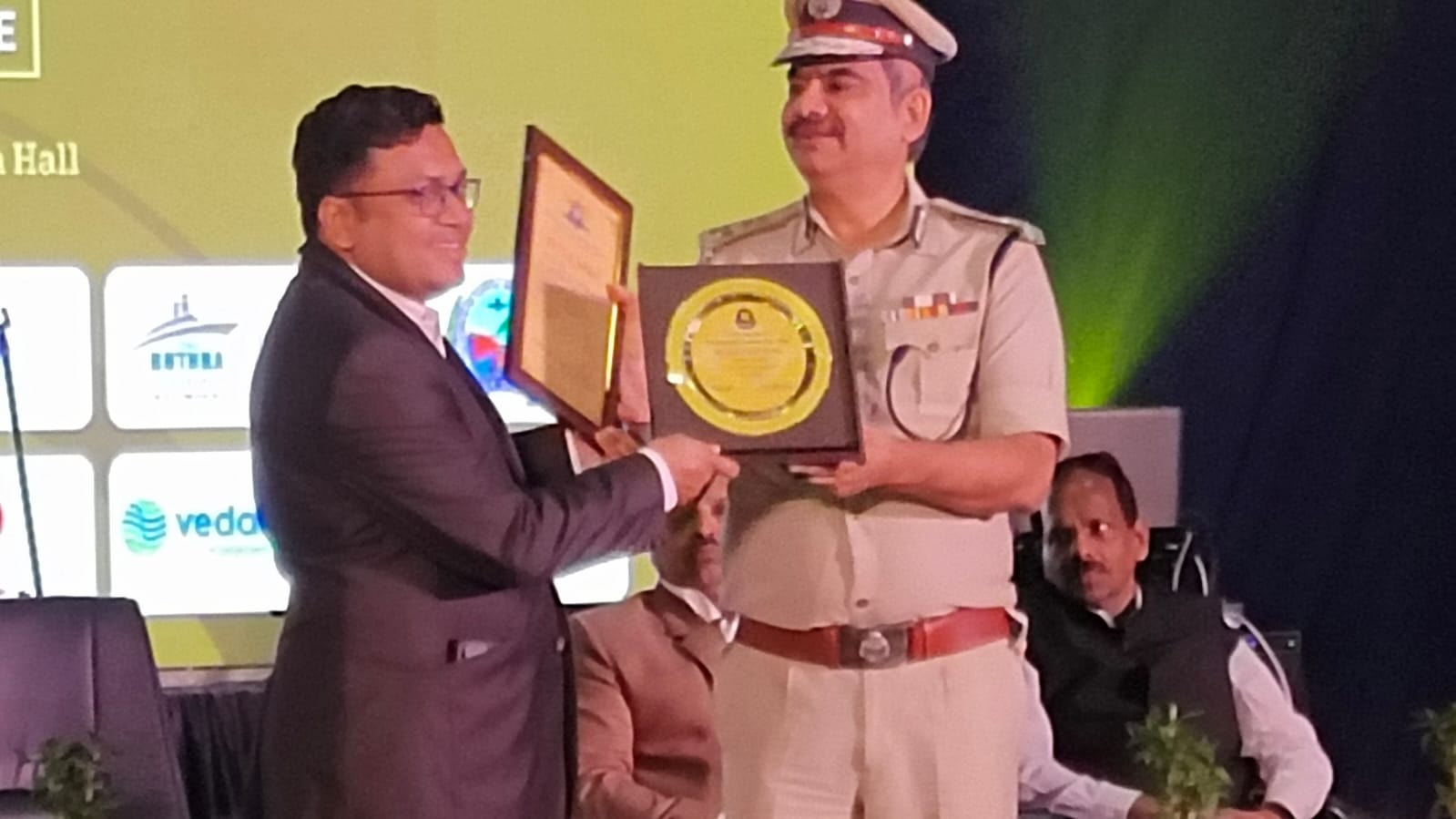
IPL received Appreciation Certificate at Visakhapatnam, which acknowledges the organisation as one of the highest importers in the PSU sector. The award ceremony took place on 16 February 2026 at the Sagarmala Convention Hall, Salagramapuram.

The certificate was presented by the Chief Guest of the event, Dr. Shankhabrata Bagchi, IPS, Police Commissioner, Visakhapatnam, and was received by Ms. Aptakama Sarangi, Deputy Manager, Port Operations, on behalf of Indian Potash Limited.

These recognitions underscore IPL’s sustained commitment to operational efficiency, regulatory compliance, and transparent trade practices. The awards reflect the organisation’s capability to manage large-scale import operations while adhering to the highest standards of governance and process discipline.

The twin honours further reinforce IPL’s position as a responsible and performance-driven organisation, contributing significantly to India’s agricultural supply chain and trade ecosystem.

 Commenting on the recognition, Dr. P S Gahlaut, MD, Indian Potash Limited said:

“These recognitions reflect Indian Potash Limited’s strong focus on operational excellence, compliance, and reliability across our import operations. They are a testament to the dedication of our team working at ports and logistics touchpoints across the country. We remain committed to strengthening transparent trade practices and supporting India’s agricultural supply chain.”

Get Pre-Holi Ready with KIKO Milano’s Glow-Perfecting Essentials

KIKO Milano Pure Clean Cleansing Balm Makeup Remover Balm For Face and Eyes

This Pre-Holi, prep and protect your skin with KIKO Milano’s Pure Clean Cleansing Balm a luxurious balm-to-oil formula that effortlessly melts away even waterproof makeup while keeping your skin soft and hydrated. Enriched with hyaluronic acid and nourishing oils, this non-greasy cleanser deeply purifies, leaving your skin feeling refreshed, pampered and celebration-ready. 

KIKO Milano Hydrating And Perfecting Face Base Primer – Blue

This Pre-Holi, create the perfect canvas with KIKO Milano Hydrating & Perfecting Face Base Primer – Blue, a 2-in-1 formula infused with aloe vera and shea butter for an instant boost of hydration and freshness. Lightweight and seamlessly blending, it smooths texture, blurs imperfections and delivers a natural, flawless finish without weighing the skin down. 

KIKO Milano Radiance Boost Serum Face Base – Peach

Glow bright this Pre-Holi with KIKO Milano Radiance Boost Serum Face Base – Peach, a skin-perfecting formula enriched with maca root extract that camouflages imperfections while nourishing the skin. With its fresh gel-serum texture and subtle pink hue that melts into a luminous finish, it leaves behind a refined, sophisticated glow. 

KIKO Milano New Drop Lip Balm

This Pre-Holi, keep your pout soft and celebration-ready with KIKO Milano New Drop Lip Balm, enriched with shea butter, jojoba and almond oils for long-lasting nourishment. Its creamy, lightweight formula glides on effortlessly without greasiness, while the adorable tear-drop design ensures smooth, even application every time. 

Mumbai To Host The Earthshot Prize 2026

 MUMBAI, India, Feb 18: Mumbai was announced as the host city for The Earthshot Prize 2026 – the world’s most prestigious and impactful environmental award.

The announcement was made during the city’s inaugural Climate Action Week, underscoring India’s growing role as a global leader in climate and nature solutions. An evening event gathered leaders from science, business, politics and the arts to hear from previous Earthshot Prize Finalists from India on how they are scaling solutions to repair and restore the planet.

 Chief Minister of Maharashtra Devendra Fadnavis, said:

“The Earthshot Prize is the world’s most prestigious environmental award and I’m proud to announce that it will be hosted in Mumbai in November. Sustainability and climate action remain top priorities for Maharashtra, and The Earthshot Prize will create global attention for India’s leadership and commitment to turning our goals into meaningful action on the ground.”

 Founded by HRH Prince William, The Earthshot Prize exists to inspire a decade of urgent optimism and environmental action. The celebration in Mumbai will bring together environmental and business leaders, investors and philanthropists who are spearheading change. The Awards Night will culminate in five Earthshot leaders each winning £1 million to accelerate the impact of their innovative solutions.

 Founder and President of The Earthshot Prize, HRH Prince William, said:

’’We must continue to look to the future with urgency and optimism, which is why I am delighted that Mumbai will host The Earthshot Prize 2026. India is one of the world’s most important forces for climate and nature. What succeeds in India at scale has the power to inspire progress everywhere.’’

 “With the largest population of young people in the world, there is a real sense of momentum – to not only imagine a better future, but to inspire change and make it a reality. Together we can rise to meet our greatest challenge, to repair and restore our planet by 2030.​”

 Jason Knauf, CEO of The Earthshot Prize, said:

“We cannot wait to celebrate India’s climate leadership with the world this November. Earthshot 2026 Mumbai is going to be the biggest and most impactful in our history.”

 Event speaker and UN Environment Goodwill Ambassador and sustainability advocate Dia Mirza Rekhi said:

“What drew me to The Earthshot Prize is its focus on solutions that are already creating real impact, not just conversations about the future. India is demonstrating that climate action can be practical, inclusive, and scalable and this moment is about recognising that leadership and taking it further.”

 Inspired by President John F. Kennedy’s 1962 ‘Moonshot’ to land a man on the moon within a decade, The Earthshot Prize was founded by HRH Prince William in 2020 to spark the same spirit of collective ambition and action for our planet.

This year’s Prize will shine a global spotlight on 15 groundbreaking environmental solutions, under five categories developed in collaboration with leading environmental experts: Protect and Restore Nature; Clean our Air; Revive our Oceans; Build a Waste-Free World; and Fix our Climate.

Five years into the Earthshot decade, the Prize has identified over 5,600 emerging environmental innovations from 156 countries – over 2,400 in 2025 alone, recognised and supported 75 Finalists and awarded £25 million to Prize Winners to help scale their solutions. Earthshot Prize Finalists have already:

  • Protected and restored over 1 million square kilometres of land and oceans – an area nearly twice the size of France.
  • Stopped 250,000 tonnes of waste reaching landfill – the same as 22,000 school buses.
  • Captured 4.8 million tonnes of CO2 – the equivalent of taking 1.2 million cars off the road for an entire year.

Earthshot Prize Finalists have collectively secured more US$500m in investment and philanthropy, setting the stage for unprecedented acceleration in solutions to repair our planet over the next five years.

Mumbai joins previous Earthshot host cities Rio de Janeiro, Cape Town, Singapore, Boston and London in being a launchpad for environmental action.

As one of the world’s largest and fastest-growing economies, India represents both the scale of climate challenge and the opportunity to deliver solutions that work in dense cities, agricultural systems and complex supply chains.

What succeeds in India at scale has the potential to shape global climate progress. The multi-day celebration of environmental leaders who are delivering bold solutions to repair our planet will come to India for the first time in November 2026.

India is home to more Earthshot Prize Winners and Finalists than any other country, with seven Finalists to date, including four winners, reflecting the country’s depth of innovation and execution across clean energy, regenerative agriculture, waste management and air quality. They are:

  • The State of Gujarat (2025 Finalist – Clean Our Air) The State of Gujarat in India has pioneered the world’s first trading scheme for particulate emissions, that lets businesses keep growing while providing clean, healthier air for its citizens.
  • S4S Technologies (2023 Winner – Build a Waste-free World) S4S Technologies’ solar-powered dryers and processing equipment combats food waste – enabling smallholder farmers to preserve crops and turn produce, that might otherwise go to waste, into valuable products.
  • Boomitra (2023 Winner – Fix Our Climate) Inspired by an event in India, and with multiple projects there (including the URVARA Project, Boomitra’s first and largest project in India involving over 12,000 smallholder farmers across nearly 50,000 acres) Boomitra is removing emissions and boosting farmer profits by incentivising soil restoration and the adoption of regenerative agriculture through a verified carbon-credit marketplace.
  • Kheyti (2022 Winner – Protect and Restore Nature) Eight in ten of the world’s farmers are smallholders. Beset by climate-affected harvests, Kheyti’s Greenhouse-in-a-Box is helping them reduce climate risk and increase yields.
  • Fleather (2022 Finalist – Build a Waste-free World) Flowers cast into the Ganges River contain highly toxic pesticides. Phool used this floral waste to make a sustainable alternative to leather.
  • Takachar (2021 Winner – Clean Our Air) – Globally, we generate US$120 billion of agricultural waste every year, which is often burnt. Takachar’s technology massively reduces these emissions.
  • Vinisha Umashankar (2021 Finalist – Clean Our Air) Its solar-powered ironing cart is a clean alternative to the charcoal powered street irons that press clothes for millions of Indians each day.

Disciple Day Celebrated at Osho Dham, with Devotion, Reflection and Art

Disciple Day Celebrated at Osho Dham, with Devotion, Reflection and Art
New Delhi, Feb 13:  Osho Dham observed Disciple Day with devotion and reflection, of the birth anniversary of Ma Yog Laxmi, the first disciple and first secretary of Osho. The day is dedicated not to personality or position, but to the essence of discipleship. Seekers and meditators gathered to honor her life as a living example of surrender, trust and total alignment with the Master. The morning featured a book reading and sharing session on The Only Life by Rashid Maxwell, offering insights into Ma Laxmi’s journey of ego-transcendence and unwavering commitment to Osho’s vision.

Throughout the sessions, participants reflected on what it truly means to be a disciple. Ma Yog Laxmi’s life was remembered as one of devotion without doubt, work without ego and awareness in action. Osho had described her as a “perfect vehicle,” acknowledging her ability to function as a transparent medium for his work. Her simplicity, tireless energy and absolute faith remain an inspiration for seekers navigating the path of inner transformation.

Speaking on the occasion, Ma Dharm Jyoti, a long-time disciple of Osho, said, “Disciple Day is not only about remembering Ma Laxmi; it is about rediscovering the disciple within ourselves. She showed us that discipleship is not blind obedience, but deep harmony, a courageous inner ‘Yes’ to the Master and to existence. Her life reminds us that surrender, when rooted in awareness, becomes a doorway to immense strength and grace.”

The celebration concluded with the inauguration of the art exhibition “Divine Intervention” by young Osho sannyasin Ma Prem Arpita (Hiral Singhal). Her meditative and intuitive paintings, reflecting innocence and inner trust, were unveiled by Ma Dharm Jyoti. The exhibition added a creative dimension to the day’s events, reinforcing the spirit of offering and presence. Through meditation, remembrance and art, Disciple Day at Osho Dham reaffirmed the timeless bond between Master and disciple, a celebration of the transformative power of a total inner “Yes.”

Housing Sales in 15 Tier-2 Cities Dip 10 Percent in 2025; Launches Decline 6 percent : PropEquity

Feb 12: Housing sales across the top 15 tier-2 cities declined 10% year-on-year (YoY) in 2025 to 1,56,181 units, even as the overall sales value remained flat at ₹1.48 lakh crore, according to NSE-listed real estate data analytics firm PropEquity.

The moderation in volumes reflects rising housing prices and increasing premiumisation across tier-2 markets. Except for Mohali and Lucknow, which recorded growth of 34% and 6% YoY respectively, the remaining 13 cities witnessed declines of up to 38%, with Visakhapatnam registering the steepest fall.

A clear shift toward high-ticket housing was observed during the year. Sales of homes priced under ₹1 crore declined 15% YoY in 2025, with their share dropping to 72% from 77% in 2024. In contrast, homes priced above ₹1 crore saw a 9% increase in sales, with their share rising to 28% from 23% a year earlier.

In absolute terms, the four Gujarat cities—Ahmedabad, Gandhinagar, Vadodara and Surat—accounted for 63% of total sales across the top 15 tier-2 cities. Ahmedabad alone contributed 33% of total sales, with 51,148 units sold in 2025. Beginning 2026, Ahmedabad can be regarded as a tier-1 city, having surpassed several established tier-1 markets in both housing launches and absorption, reflecting its scale of development and depth of demand.

City-wise, Ahmedabad saw sales decline 8% to 51,148 units in 2025 from 55,315 units in 2024. Surat fell 15% to 19,835 units, while Vadodara dropped 19% to 13,798 units. Gandhinagar witnessed a marginal 1% decline to 13,710 units. Nashik recorded a 10% drop to 11,188 units, Jaipur declined 5% to 9,758 units, and Nagpur fell 18% to 6,260 units. Bhubaneshwar registered a 25% decline to 4,885 units, while Visakhapatnam saw the sharpest fall of 38% to 2,406 units. Kochi declined 17% to 2,214 units, Coimbatore fell 4% to 3,702 units, and Bhopal dropped 5% to 3,599 units. Goa remained largely stable at 3,507 units.

Commenting on the findings, Samir Jasuja, Founder & CEO of PropEquity, said,

“The slowdown in housing sales over the past two years is largely due to a shrinking supply of homes priced below ₹1 crore—a segment that has traditionally driven demand in tier-2 cities. Rising land and construction costs, along with changing buyer aspirations, are pushing new launches into higher price brackets. As a result, tier-2 markets are increasingly mirroring tier-1 cities, where volumes are declining even as prices continue to rise.”

He added, “Government focus on tier-2 cities—through enhanced urban development, improved connectivity, and the creation of industrial corridors and manufacturing hubs—has driven sustained price appreciation. This has pushed even average housing units in many tier-2 markets beyond the ₹1 crore mark, leading to slower absorption. Going forward, this trend could be a cause for concern, as affordability pressures begin to impact not just premium segments but also affordable and mid-income housing in these cities.”

New Supply Declines 6% in 2025

New supply across the top 15 tier-2 cities declined 6% YoY to 1,36,243 units in 2025, down from 1,45,139 units in 2024. The contraction was visible across price segments, with supply of homes priced under ₹1 crore declining 5%, and those above ₹1 crore falling 8%.

Ahmedabad recorded a 3% rise in launches to 48,646 units, while Jaipur saw a 2% increase to 8,803 units. Mohali posted a sharp 108% jump to 8,606 units, and Bhopal registered a 66% rise to 3,312 units.

However, most other cities saw declines. Surat and Gandhinagar both fell 13% to 17,256 units and 12,829 units, respectively, while Vadodara declined 25% to 8,367 units. Nashik dropped 4% to 8,222 units and Nagpur fell 10% to 5,485 units. Lucknow witnessed a 43% decline to 2,884 units, Bhubaneshwar recorded the steepest fall of 57% to 2,840 units, and Visakhapatnam declined 53% to 1,155 units. Goa saw a marginal 2% dip to 2,749 units, Kochi fell 5% to 1,838 units, and Coimbatore declined 12% to 3,251 units.

The four Gujarat cities together accounted for 64% of total launches in 2025.

PropEquity noted that while tier-2 cities continue to benefit from infrastructure development and industrial expansion, moderation in both sales and supply signals a recalibration phase, with affordability and premiumisation emerging as key themes shaping demand dynamics in 2026.

Smart Publishing: Key Tools Driving the Future of Academic Journals

By:-  Sameer Kanodia, Managing Director and CEO, Lumina Datamatics, and Vice Chairman and CEO, TNQTech

As academic publishing embraces digital transformation, the industry is navigating rapid change. Rising manuscript volumes, expanding open-access mandates, and the need for multi-format content delivery are reshaping how journals operate. Publishers must balance speed with accuracy, ensuring research integrity while meeting global compliance standards. In this context, intelligent content tools have become indispensable. They streamline workflows, automate repetitive tasks, and support editors in maintaining quality at scale. By leveraging these technologies, journals can reduce turnaround times, improve discoverability, and enhance their global impact in an increasingly competitive publishing landscape.

Lumina Datamatics shares important tools that can redefine journal publishing in the digital era. Here are some of the most impactful content tools transforming academic journals today:

1. AI-Powered Manuscript Screening

Early-stage screening tools powered by artificial intelligence can evaluate submissions against journal guidelines, formatting requirements, and ethical standards. This helps reduce editorial workload and ensures only compliant manuscripts proceed to peer review

2. Plagiarism Detection Systems

Advanced plagiarism checkers safeguard academic integrity by scanning submissions against vast databases of published content, flagging overlaps, and preventing duplicate or unethical publication.

3. Automated Reference Checking

Reference validation tools automatically cross-check citations against indexing databases like CrossRef, PubMed, or Scopus—ensuring accuracy, consistency, and linking integrity.

4. XML-First Publishing Platforms

XML-driven platforms support structured content workflows, enabling publishers to generate multiple formats (PDF, HTML, ePub) from a single source. They also align with indexing and archiving requirements.

5. Semantic Enrichment Engine

These tools enhance discoverability by tagging articles with subject-specific metadata, keywords, and taxonomies making scholarly work easier to find across search engines and academic databases.

6. Peer Review & Workflow Management Systems

Digital peer review systems track submissions, assign reviewers, manage timelines, and facilitate transparent editorial decision-making all while reducing delays in the review cycle.

With academic publishing becoming increasingly complex, intelligent content tools have emerged as more than just add-ons—they are strategic enablers. By addressing challenges of editorial accuracy, compliance, discoverability, and global dissemination, these tools empower publishers to streamline journal operations and build future-ready publishing ecosystems.