NTT DATA Research Reveals C-Suite Misalignment Over GenAI Adoption

June 18, 2025 – NTT DATA, a global leader in digital business and technology services, today launched its new report, “The AI Security Balancing Act: From Risk to Innovation,” highlighting the opportunities and risks AI presents in cybersecurity. The findings show a misalignment among C-Suite leaders when it comes to business goals and operational readiness for GenAI deployment.

The report, which includes data from an NTT DATA survey of more than 2,300 senior GenAI decision makers, comprising 1,500 *C-Suite leaders across 34 countries, found that while CEOs and business leaders are committed to GenAI adoption, CISOs and operational leaders lack the necessary guidance, clarity and resources to fully address security risks and infrastructure challenges associated with deployment.

The C-Suite disconnect

Nearly all (99%) C-Suite executives are planning further GenAI investments over the next two years, with 67% of CEOs planning significant commitments.

In parallel, 95% of CIOs and CTOs report that GenAI has already driven, or will drive, greater cybersecurity investments, with organizations ranking improved security as one of the top three business benefits realized from GenAI deployment in the last 12 months.

Yet, even with this optimism, there is a notable disconnect between strategic ambitions and operational execution with nearly half of CISOs (45%) expressing negative sentiments toward GenAI adoption. More than half (54%) of CISOs say internal guidelines or policies on GenAI responsibility are unclear, yet only 20% of CEOs share the same concern – revealing a stark gap in executive alignment.

Despite feeling cautious about the deployment of GenAI, security teams still acknowledge its business value. In fact, 81% of senior IT security leaders with negative sentiments still agree GenAI will boost efficiency and impact the bottom-line.

Organizational operations not ready for GenAI

NTT DATA’s research further reveals a critical gap between leadership’s vision and the capabilities of their teams. While 97% of CISOs identify as decision makers on GenAI, 69% acknowledge that their teams lack the necessary skills to work with the technology.

In addition, only 38% of CISOs say their GenAI and cybersecurity strategies are aligned compared to 51% of CEOs.

Adding to the complexity, 72% of organizations surveyed still lack a formal GenAI usage policy and just 24% of CISOs strongly agree that their organization has a robust framework for balancing risk with value creation.

Legacy tech limiting GenAI adoption

Beyond internal misalignment, 88% of security leaders said legacy infrastructure is greatly affecting business agility and GenAI readiness, with modernizing IoT, 5G and edge computing identified as essential for future progress.

To navigate these obstacles, 64% of CISOs are prioritizing co-innovation with strategic IT partners rather than relying on standalone AI solutions. Notably, security leaders #1 top criteria when assessing GenAI technology partners is end-to-end GenAI service offerings.

“As organizations accelerate GenAI adoption, cybersecurity must be embedded from the outset to reinforce resilience. While CEOs champion innovation, ensuring seamless collaboration between cybersecurity and business strategy is critical to mitigating emerging risks,” said Sheetal Mehta, Senior Vice President and Global Head of Cybersecurity at NTT DATA, Inc. “A secure and scalable approach to GenAI requires proactive alignment, modern infrastructure and trusted co-innovation to protect enterprises from emerging threats while unlocking AI’s full potential.”

 “Collaboration is highly valued by line-of-business leaders in their relationships with CISOs. However, disconnects remain, with gaps between the organization’s desired risk posture and its current cybersecurity capabilities,” said Craig Robinson, Research Vice President, Security Services at IDC. “While the use of GenAI clearly provides benefits to the enterprise, CISOs and Global Risk and Compliance leaders struggle to communicate the need for proper governance and guardrails, making alignment with business leaders essential for implementation.”


Gartner Predicts 75 Percent of Analytics Content to Use GenAI for Enhanced Contextual Intelligence by 2027

SYDNEY, Australia, June 18, 2025 — Seventy-five percent of new analytics content will be contextualized for intelligent applications through generative AI (GenAI) by 2027, enabling composable connection between insights and actions, according to Gartner, Inc.

“We’re moving from an era where analytic tools help business people make decisions, to a future where GenAI-powered analytics becomes perceptive and adaptive,” said Georgia O’Callaghan, Director, Analyst at Gartner. “This will enable dynamic and autonomous decisions that have the potential to transform enterprise and consumer software, business processes and models.”

A Gartner survey of 403 analytics or AI leaders, conducted between October and December 2024, revealed over 50% report their organizations use AI tools for automated insights and natural language queries (NLG) for analytics or AI development. Even with these capabilities, the static nature of current analytics often falls short of delivering in a truly dynamic and automated fashion.

Gartner predicts augmented analytics capabilities will evolve into autonomous analytics platforms by 2027, which will fully manage and execute 20% of business processes. The perceptive future of analytics will deliver benefits by being proactive, collaborative, connected, contextual and continuous (see Figure 1).

Figure 1: AI-Powered, Perceptive Analytics

“Perceptive analytics will use AI agents and other GenAI-fueled technologies to continuously monitor evolving conditions and perceive the target environment, such as market shifts, customer behavior changes or supply chain disruptions,” said O’Callaghan.

“Guidance and analysis can then be autonomously adjusted in response, creating a more resilient and responsive analytical infrastructure. As these capabilities emerge and be adopted by organizations, their potential to reshape business operations and drive growth will only continue to expand.”

Perceptive Analytics Overarching Risk

According to Gartner research, the overarching risk that applies to perceptive analytics is the over reliance on autonomous actions without sufficient validation, which could result in unintended negative consequences, reputational damage and regulatory scrutiny.

The risk of “agent drift” is a serious concern, where a system’s perceptions and actions gradually deviate from desired outcomes due to evolving data or unforeseen interactions. Guardian agents are emerging to deal with this inherent issue in AI systems, according to Gartner. These agents are specifically tasked with monitoring and enforcing policies and rules to ensure the systems operate within a set of guardrails.

“Building guardian agents will need to be a key focal point of new governance initiatives for data and analytics leaders, as agentic and perceptive analytics become the standard way of insight delivery across platforms,” said O’Callaghan.

98 Percent of Indians Value AI But Still Seek the Human Touch, Says Twilio Report

INDIA, June 17, 2025 — Twilio (NYSE: TWLO), the customer engagement platform that drives real-time, personalised experiences for leading brands, today released its sixth annual State of Customer Engagement Report. Based on a global survey of more than 7,600 consumers and 600+ business leaders across 18 countries, including India, the report reveals a clear disconnect: while AI drives measurable returns, customer perception hasn’t caught up. A stubborn gap persists between what brands believe they are delivering and what customers actually experience.

Indian brands are personalising customer experiences with AI, but customers want consistency

India is seeing a significant surge in AI adoption to drive personalised customer experiences. Businesses are increasingly leveraging AI to analyse data, ensure consistent communication across channels, and meet evolving customer expectations. These efforts are paying off— almost 8 in 10 (79%) Indian consumers report spending more with brands that personalise their engagement, and an overwhelming 98% say they are more likely to buy when engagement is personalised in real-time. Additionally, a majority (90%) of Indian consumers believe personalisation is important, expecting brands to use it to provide relevant recommendations (71%), make shopping easier (66%), and boost confidence in brand legitimacy (65%).

Despite these positive indicators, customer sentiment is nuanced. Although 80% of Indian consumers say brands do a good or excellent job at personalisation, only 30% feel that engagement happens consistently. This highlights a clear opportunity for brands to transform one-off personalisation into always-on, individualised experiences.

This disconnect has real consequences. 70% of Indian consumers say they are ‘much more likely’ to purchase when engagement is personalised, and 88% will abandon a purchase if engagement feels impersonal. Conversely, an overwhelming 98% of Indian consumers are more likely to make purchases when engagements are personalised in real time, highlighting a major opportunity for brands to align automation with actual customer experience and drive higher conversions.

AI alone is not enough, Indians still expect a human fallback

Although AI acceptance is growing, Indian consumers still value human involvement and control in their brand interactions. 91% say it is important that AI-powered brand interactions feel human-like, and more than half (55%) want the ability to speak to a person if AI fails to resolve their issue effectively.

Transparency also matters. More than 7 in 10 (72%) of consumers want to know when they are communicating with AI, underscoring the need for brands to implement safeguards around visibility and control. Additionally, the majority (87%) of Indian consumers want to choose how brands communicate with them, rather than having AI agents automatically assume their preferences. This reflects a strong desire to retain control and autonomy over their brand interactions.

“Indian consumers are increasingly aware that while AI-powered personalisation influences buying behaviour, it is not a substitute for relevance, trust and human connection,” said Nicholas Kontopoulos, VP of Marketing, Asia Pacific & Japan at Twilio. “Indian brands are already leading the way, demonstrating a deep understanding of the importance of AI and excelling at delivering personalised experiences. As they continue to scale their use of AI, the next step is to move beyond basic personalisation to true individualisation, where every interaction feels timely, contextual, and humanised. This means putting transparency at the centre, respecting customer preferences, and using data to serve, not just sell. The brands that will lead in India’s next wave of growth are those that get this balance right by blending intelligent automation with authentic engagement to earn loyalty and drive long-term impact.”

The future of customer engagement is Individualisation and Trust

In a world where customer loyalty is harder to win — and easier to lose — businesses can no longer afford to treat trust and personalisation as optional. The 2025 State of Customer Engagement Report shows that basic personalisation no longer cuts it. The future of customer engagement lies in individualisation, built on customer interactions that are relevant, timely, tailored and trustworthy.

By investing in transparent, data-driven and AI-powered engagement strategies, brands in India can bridge the expectation gap, earn trust, deepen relationships and stand out in an increasingly competitive marketplace.

Pocket Entertainment elevates Umesh Bude to CTO, accelerating its vision as an AI Entertainment Leader

India, 17 June 2025:  Pocket Entertainment, the parent company behind Pocket FM, Pocket Toons, and Pocket Novel, has announced the elevation of Umesh Bude to Chief Technology Officer (CTO). Previously Senior Vice President of Engineering, Umesh will now spearhead the company’s technology vision, with a sharp focus on building the future of AI-powered storytelling.

Umesh Bude, Chief Technology Officer, Pocket Entertainment

Umesh Bude, Chief Technology Officer, Pocket Entertainment

As CTO, Umesh will lead the end-to-end tech strategy across all platforms under Pocket Entertainment, anchoring efforts to scale its global products through next-gen AI solutions. His mandate includes building seamless user experiences, advancing generative AI capabilities, and ensuring tech-led innovation across the board.

Commenting on his new role, Umesh Bude said, “It’s a privilege to take on this responsibility at such an exciting time for Pocket Entertainment. I look forward to driving the next wave of innovation, where technology and AI are not just enablers, but storytellers in their own right.”

Umesh Bude will continue reporting to Prateek Dixit as the company strengthens its position at the intersection of entertainment and technology.

“We are at a pivotal moment in our journey where technology and creativity are deeply intertwined. As we reimagine storytelling for the AI era, technology is the foundation,” said Prateek Dixit, Co-founder of Pocket Entertainment. “Umesh’s elevation is a reflection of our ambition to lead this transformation from the front. His leadership will be central to creating intelligent, emotionally aware experiences that push the boundaries of what storytelling can be.”

With close to two decades of experience across engineering, data science, and platform security, Umesh has been instrumental in scaling Pocket Entertainment’s tech stack from the ground up. Under his leadership, the company will continue to pioneer responsible and disruptive innovations in AI, turning technology into a creative force that empowers both our storytellers and audiences.

OnGrid Launches Instant Background Verification to Accelerate Hiring Workflows

New Delhi | June 17, 2025: OnGrid, a leading provider of background verification solutions in India, has unveiled a new Instant Background Verification solution designed to streamline the hiring process and offer HR professionals a faster, more reliable way to verify candidates. This solution eliminates the need for lengthy, multi-week workflows traditionally associated with background checks, providing instant results with minimal input.

The Instant Background Verification platform empowers HR teams to initiate verifications with just a few key details, receiving comprehensive reports in real-time. This speed and efficiency are enabled by OnGrid’s AI-driven technology, which extracts data from uploaded documents to pre-fill verification forms and generate instant reports. OnGrid’s Instant BGV service offers a range of background checks, including identity verification, criminal record checks, employment history validation, address verification, face match, credit history check and bank account verification. The solution addresses the diverse needs of modern organizations, delivering checks instantly and securely while ensuring data privacy and compliance with regulatory standards.

One of the key advantages of OnGrid’s Instant BGV solution is the ability for HR professionals to manage the entire verification process themselves. The platform supports large-scale operations, offering options for bulk uploads or integration with client APIs, and is suitable for organizations with high-volume recruitment needs. The service also includes a seamless consent process, which ensures that candidates’ privacy rights are respected while maintaining compliance with data protection laws.

“The Instant Background Verification service is a reflection of our commitment to making the hiring process faster, smarter, and more secure. By leveraging advanced technology, we are empowering HR teams to make better, data-driven decisions in real-time, without compromising on security or accuracy”, said Piyush Peshwani, CEO and co-founder of OnGrid.

Vaibhav Yadav, Head of Product, OnGrid, added, “We’ve designed this platform to bring HR professionals a more efficient, secure, and automated way of conducting background checks. Our goal is to eliminate the delays and inefficiencies in traditional workflows, providing businesses with instant, reliable insights while safeguarding candidate data.”

Servotech Renewable Launches New TVC, Highlights Smart Solar Solutions

New Delhi, 17th June 2025: In a bid to stitch a new connect with the Indian households, Servotech Renewable, India’s leading manufacturer of Solar Products and EV Chargers, launched its latest TVC under their integrated marketing campaign “Bijli Ki Smart Bachat”. The campaign features the catchy tagline “Zero Bijli Ka Bill, Life Bane Super Chill”.  The tagline was thoughtfully created so everyone could effortlessly resonate with the big idea behind the advertisement which is, how adopting solar energy directly cuts down on electricity bills.

Servotech Solar Solutions TVC Still

The TVC featured Sunita Rajwar and Paritosh Sand, two prominent faces from the Indian cinema, and OTT. The actors, through an engaging and typical ‘Indian family drama’ conversation highlight how electricity bills can be a pain in the Indian households followed by how adopting solar energy is the perfect solution to cutting down on those bills.

Speaking about the television commercial, Prabhutva Tiwari, Public Relations & Corp Comm Head at Servotech Renewable Power System Ltd. said, “This is not just a TVC but a campaign to tap into rural Indian market and connect with home owners to educate them about the potential of solar energy. We understand how electricity bills can be a financial pain in Indian households which is why, we thoughtfully curated a script that highlighted this pain followed by delivering the perfect relief for it so people would seamlessly integrate solar into their daily lives without worrying about bills.”

Speaking of Servotech’s future plans Prabhutva added, “We plan to solarise over 1 Lakh households by the end of year 2026 and build a strong PAN India network of dealers & distributers. Looking at the recent boom in the sports industry we chose Star Sports to air our latest TVC and reach larger number of target audience. To achieve targets, our plan is to air this TVCs on every possible medium including OTTs, national and regional satellite channels, and social media platforms like Meta, YouTube, and X”

“India is a growing economy, and with time, our energy needs are going to increase only, putting an excessive load on both our pockets and the power grids. That’s exactly where our solar products come into play. We’ve developed a complete ecosystem of solar solutions including our new age on-grid and hybrid solar inverters, solar lithium batteries, and much more so we can help put that excessive load off of our customers’ pockets while improving grid stability in the process. We’ve ensured that all our products are at par with the global industry standards, integrated with future-ready technology to create safe and reliable solar solutions that offer long lasting power backups. We have some amazing plans lined up for ‘ Bijli Ki Bachat’ to show you everything Servotech has to offer, and we’re definitely not stopping now”, he added.

How AI-Powered Smart Living Is Redefining the Consumer Electronics Experience in 2025

The living room in a typical Indian household today tells a different story from what it did even five years ago. Where once stood a simple television set now sits an AI-powered entertainment hub that anticipates viewing preferences. The air conditioner no longer runs on preset timers but learns from daily routines, adjusting temperature before anyone reaches for the remote. This transformation extends beyond mere automation to intelligent systems that understand context, adapt to individual needs, and seamlessly integrate into the fabric of daily life.

Revenue in the Smart Home market is projected to reach US$7.3bn in 2025 in India, marking a significant shift in how consumers interact with technology. This growth reflects a broader transformation where artificial intelligence moves from being a buzzword to becoming an invisible assistant that enhances every aspect of home life.

The AI Revolution Takes Root in India

“India’s consumer tech landscape is undergoing a true AI transformation, moving beyond basic automation to intelligent systems that genuinely understand context and adapt to individual needs. We’re seeing a shift from surface-level AI features to meaningful innovations that address real-life challenges and enhance daily productivity—something Indian consumers increasingly value,” observes Rajeev Singh, Managing Director, BenQ India and South Asia.

This sentiment echoes across the industry as companies recognise that Indian consumers, particularly in Tier 2 and Tier 3 cities, are embracing smart technology at an unprecedented pace. AI-integrated products have now captured customer attention like never before. This shift is largely driven by Indian consumers’ preference for efficient products that deliver long-term cost savings and higher productivity.

Visual Intelligence Transforms Entertainment

The transformation in visual entertainment exemplifies how AI enhances rather than complicates the user experience. “At BenQ, we take a purposeful approach to AI integration. Our W2720i and W4100i projectors use AI-powered cinema modes that automatically adjust to ambient lighting and content, ensuring an optimal viewing experience without manual intervention. Similarly, our MOBIUZ gaming monitors leverage AI Contrast to intelligently enhance details in dark scenes while maintaining overall visual balance. We believe AI should solve real user problems, operate seamlessly in the background, and support—not replace—human creativity. Our technology is designed to learn user preferences over time, automatically fine-tuning display settings based on both content and environment. For us, AI isn’t just a buzzword; it’s an invisible assistant that anticipates needs and empowers users to express their creativity and enjoy immersive visual experiences in the most intuitive way possible,” adds Singh.

Pankaj Rana, CEO of Hisense India, shares a similar philosophy: “AI is no longer just a feature, it’s shaping how we live, interact, and make decisions every day. At Hisense India, we see AI as a real opportunity to simplify life at home. Whether it’s a TV powered by our Hi-View Engine or Toshiba’s Regza Engine ZRi that adjusts picture and sound automatically, or a system that learns your preferences to suggest content you’ll actually enjoy, our goal is to make technology feel less like tech and more like a natural extension of your lifestyle.”

He further explains, “We’ve also taken this thinking into our products where features like AI Energy and AI Scenario quietly do the work in the background, learning how you use your devices and adapting to fit your routine. At the end of the day, we’re not just building products with smart features. We’re building products that are smart about people. And that’s what drives us every day.”

Democratising Smart Living

The vision of smart living extends beyond premium segments. Ravi Agarwal, Founder and Managing Director of Cellecor Gadgets Limited, emphasises accessibility: “At Cellecor, we believe smart living should be simple, intuitive, and accessible to every Indian household. Our mission is to democratize technology by designing products that meet the real needs of consumers across Tier 2 and Tier 3 cities, where digital adoption is rising fast, and also resonate with value-conscious users in Tier 1 markets. Our smart TVs come equipped with voice assistance, screen mirroring, and app integration, offering a rich entertainment experience that’s both personalized and easy to use. Our smartwatches are packed with practical features like Bluetooth calling, health and fitness tracking, and real-time notifications, ensuring users stay connected and informed on the go. We see AI not just as a trend, but as a powerful enabler of meaningful innovation. We’re not just creating devices, we’re building experiences that align with how people live, work, and unwind. Cellecor is making smart living a reality for millions of Indians.”

Wearables Become Lifestyle Companions

The evolution of wearables demonstrates how AI transforms simple devices into intelligent companions. CP Khandelwal, CEO PR Innovations and Brand Custodian, Amazfit India, notes: “AI is no longer just a feature, it’s becoming the foundation of how consumers interact with technology. At Amazfit, we’re seeing this shift firsthand in how our smartwatches are evolving from passive health trackers to intelligent lifestyle companions. Features like offline maps powered by real-time location intelligence, adaptive battery optimization based on usage patterns, and advanced health monitoring, including heart rate variability and stress tracking, are all driven by AI to make the experience deeply personalized and proactive. In a world that values convenience, autonomy, and seamless integration, AI-enabled wearables like Amazfit are no longer accessories – they’re central to the connected, intuitive ecosystem of smart living.”

The Road Ahead

As CES 2025 showcased groundbreaking advancements in AI technology, including AI-powered gadgets like intelligent wearables, robotics powered by AI for personalized assistance, and generative AI applications transforming content creation and communication, the Indian market stands poised to embrace these innovations. The focus remains on creating products that solve real problems while remaining accessible to the diverse Indian consumer base.

The future of AI-powered smart living in India lies not in complexity but in simplicity. As these industry leaders demonstrate, success comes from understanding that technology should adapt to people, not the other way around. With the market expected to grow at a healthy 9% annualized rate through 2030, AI-integrated products will continue to redefine how Indians experience their homes, making smart living not a luxury but an everyday reality.

India needs to take a unique approach to Gen AI regulation, says Trilegal Whitepaper

Mumbai, 16 June 2025 – Trilegal, a leading full-service law firm, today released a comprehensive white paper titled “Approach Paper on Regulation of Gen AI in India”. The paper calls for a unique homegrown regulatory framework that champions inclusive innovation over restrictive safety measures adopted by developed nations. The paper prepared by the Technology Media and Telecommunications team of Trilegal argues that India needs a regulatory model tailored to its unique socio-economic landscape to foster the transformative potential of Generative AI (Gen AI) while managing emerging risks.

 The white paper advocates for India to reject the one-size-fits-all approach of the EU and instead create a regulation that aligns with the country’s developmental goals. Unlike developed nations, which can afford to prioritise safety measures at the expense of innovation, India’s emphasis should be on leveraging Gen AI to bridge socio-economic gaps, fostering inclusive growth across sectors like healthcare, education, and financial inclusion.

Core Recommendations

The paper outlines a flexible regulatory model that enables Gen AI growth while addressing its risks. It rejects overly prescriptive, omnibus regulations favouring adaptive, sector-specific guidance. The proposed graduated liability framework accounts for the non-deterministic nature of Gen AI, introducing mechanisms for notice-and-remediation and providing safe harbour protections unless negligence is proven. Liability is proposed to be strict only for extreme harms, including Chemical, Biological, Radiological, and Nuclear (CBRN) content, child sexual abuse material (CSAM), and non-consensual intimate images (NCII).

 Nikhil Narendran, Partner – Technology, Media & Telecommunications Practice at Trilegal, emphasised, “India is at a defining crossroads. The decisions we make today about AI will shape our economic and social future for generations. We have a real opportunity to ensure this technology drives inclusive growth, grounded in equity, transparency, and trust. What’s needed now is thoughtful leadership, collaborative policymaking, and a commitment to innovation that works for everyone. Our white paper charts a path that enables India to harness AI’s transformative potential while maintaining appropriate safeguards”.

Legislative Changes

The paper also suggests several legislative amendments to support Gen AI innovation. Key recommendations include introducing explicit Text and Data Mining (TDM) exemptions in the Copyright Act, expanding exemptions in the Digital Personal Data Protection Act for AI training, and removing legal barriers that could stifle innovation.

Leveraging Existing Laws

Trilegal’s white paper demonstrates how India’s current legal framework can address many AI-related harms without requiring new laws. Existing laws, such as the IT Act, the Bharatiya Nyaya Sanhita, and the Consumer Protection Act, can effectively manage AI-related risks like impersonation, misleading advertisements, and election interference. The paper calls for training regulators to apply these laws effectively to emerging AI issues.

Global Comparative Analysis

The white paper contrasts India’s proposed regulatory model with global approaches. Unlike the EU’s strict AI Act, and US’s shifting stance under different administrations, India’s approach is designed to remain nimble and adaptable. Trilegal advocates for flexible regulation, balancing risk mitigation with the immense potential benefits of AI.

 Managing Emerging Risks

To tackle future risks, the paper recommends empowering the IndiaAI Safety Institute to collaborate with global AI safety networks for early risk detection. It also proposes exploring revenue-sharing frameworks for intellectual property concerns and addressing new harms like style mimicry and IP dilution.

Implementation Strategy

Trilegal’s proposal emphasizes adaptive governance. Rather than creating new, rigid laws, India should focus on empowering regulators with the tools and knowledge needed to apply existing laws to Gen AI-related scenarios. The firm suggests starting with sector-specific guidance and using subordinate legislation before enacting primary laws.

Policy Call to Action

The white paper urges policymakers to evaluate whether existing laws can address Gen AI risks, introduce enabling provisions in copyright and data protection laws, and establish notice-based safe harbours for AI developers. The focus should be on genuinely mitigating risks rather than imposing constraints on innovation.

The comprehensive white paper is a blueprint for India’s AI regulatory future. Trilegal stresses that India’s unique socio-economic context requires a regulatory approach that maximizes developmental benefits while maintaining vigilance about emerging risks and dynamic harm mitigation.

Ascendion Joins ServiceNow Partner Program to Drive AI-Powered Business Transformation

Mumbai, 16th June, 2025– Ascendion, a leader in AI-powered software engineering, proudly announces it has joined the ServiceNow Consulting and Implementation Partner Program, reinforcing its mission to revolutionize business operations and digital transformation. The partnership enables Ascendion to utilize its industry expertise and deep implementation knowledge to help customers accelerate digital transformation through the ServiceNow Platform.

 With this partnership, Ascendion is taking AI to the next level, ensuring organizations not only adopt AI but fully integrate it into their workflows to drive real, measurable impact. By modernizing IT operations, enhancing employee and customer experiences, and leveraging low-code/no-code development, Ascendion is bridging the gap between AI’s potential and its practical execution.
“The ServiceNow Platform is a springboard for business transformation to help businesses unlock value with AI,” said Dharam Gurbani, Chief Growth Officer, Global Growth Markets, Ascendion. “This partnership is about more than adopting AI—it’s about operationalizing it. With our Engineering to the Power of AI tools and methods, we’re engineering ServiceNow solutions that eliminate inefficiencies, drive measurable business impact, and turn what’s possible into what’s real for our clients.”

Ascendion’s ServiceNow capabilities will focus on five key areas:

  • AI-enabled services for agents, customers and employees on the ServiceNow Platform.
  • Streamlined IT workflows which include IT Service Management (ITSM), IT Asset Management (ITAM), and IT Operations Management (ITOM).
  • Digitizing business workflows, covering Customer Service Management, Field Service Management, Source-to-Pay, Procure-to-Pay, and more.
  • Enhanced employee workflows to enable and enrich talent experience for our customers
  • End-to-end business workflows: Modernizing customer service, field operations, procurement, and more with digitized processes
  • Low-Code/No-Code development accelerating app development with ServiceNow’s App Engine for rapid, scalable results.

“At Ascendion, we know that AI isn’t just a tool—it’s a catalyst,” added Gurbani, “This partnership with ServiceNow allows us to help businesses design and execute bold, scalable AI strategies while delivering seamless, delightful customer experiences. We’re not just transforming businesses; we’re ensuring they thrive in an AI-first world.”

“As a Consulting and Implementation Partner, Ascendion’s expertise in AI-powered software engineering is essential to scaling and extending ServiceNow solutions to new markets,” Ira Simon, senior director, partner strategy and programs at ServiceNow. “We are thrilled to partner with Ascendion to deliver a seamless experience to solve some of our customers’ biggest digital transformation challenges.”

This partnership underscores Ascendion’s mission to combine AI-powered innovation with human ingenuity, empowering businesses to move faster, work smarter, and confidently embrace the future of digital transformation.

Samsung R&D Institute, Noida and IIT Madras Sign MoU to Drive Research on AI for Indian Languages, HealthTech and Generative AI

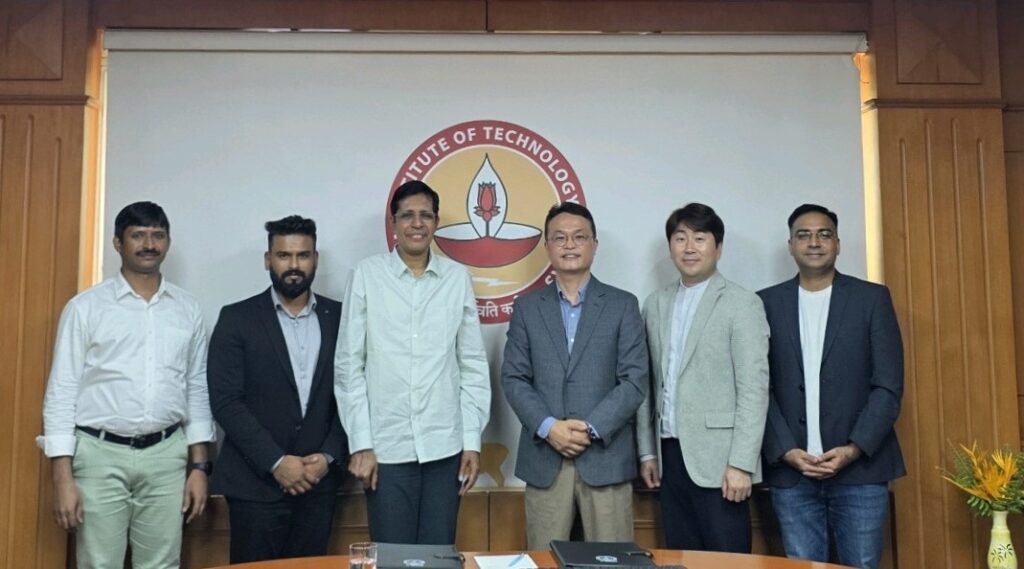
Bengaluru, India, June 16, 2025: Samsung R&D Institute, Noida (SRI-N) has deepened its industry-academia engagement through an MoU with the Indian Institute of Technology Madras (IIT Madras) to drive collaborative research, accelerate technology development and nurture future-ready talent. The partnership will focus on pioneering advancements in AI for Indian languages, HealthTech and emerging areas such as Generative AI, reinforcing Samsung’s commitment to build a stronger innovation ecosystem aligned with the vision of ‘Make in India’ and ‘Digital India’.

The five-year MoU that was signed by Kyungyun Roo, Managing Director, SRI-N and Prof. V. Kamakoti, Director, IIT Madras, aims to provide a wide range of collaborative activities, including sponsored research projects, consultancy projects, technology licensing, trainings, facility development and sponsorship of student fellowships in future.

“At SRI-N, we are continuously working towards creating technologies that empower people and communities. Our collaboration with IIT Madras marks an important step towards co-creating solutions that are meaningful, inclusive, and future-ready. Together, we aim to enhance the Galaxy AI ecosystem with deeper integration of Indian regional languages and contribute to breaking language barriers across the country. In addition, we are engaging in co-development of emerging technology and enhancement of skill sets,” said Kyungyun Roo, Managing Director, Samsung R&D Institute, Noida.

Prof. V. Kamakoti, Director, IIT Madras, echoed the excitement surrounding this collaboration. “We are proud to partner with SRI-N and this alliance will sponsor revolutionary research and technological development through effective utilization of AI technology. In the fast-changing tech landscape, the MoU will upskill beneficiaries to develop strong connection between theoretical knowledge and practical industry solutions required to mitigate risks and address uncertainty,” he said.

This strategic partnership between Samsung India and IIT Madras adds to SRI-Noida’s growing network of academic collaborations, having already established long-term strategic MoUs with premier institutes including IIT Delhi, IIT Kanpur, IIT Bombay and IIT Ropar. Samsung and these institutes are charting an expansive roadmap toward a smarter, more connected world. By combining industry-scale resources with academic rigor, these partnerships are cultivating a thriving ecosystem for future breakthroughs.

SRI-Noida will sponsor research and development (R&D) projects, which may be conducted at IIT Madras, the company’s premises or through a collaborative arrangement at both locations.