DST MATH Hosts 17 AI Startups Pitching Healthcare Innovations

DST MATH

Hyderabad, 7th February 2025: Department of Science and Technology’s MATH (Machine Learning and Artificial Intelligence Technology Hub) that is one of India’s leading AI and ML startup incubators, successfully hosted the AI Healthcare Summit 2025 in Hyderabad. India’s healthcare landscape is on the brink of an AI revolution, as a defining moment of the summit was the showcase of breakthrough AI-powered healthcare solutions. Seventeen cutting-edge technologies promise to enhance efficiency, accuracy, and accessibility in healthcare delivery, addressing critical gaps in diagnostics, patient engagement, and medical decision-making.

Themed “Redefining Healthcare with AI,” the summit brought together leading government officials, top healthcare corporates, and AI-driven startups to showcase innovations in preventive care, precision medicine, and remote healthcare solutions. A total of 17 AI-driven startups participated in VC Pitch Games 2.0, a high-stakes showdown where they pitched groundbreaking solutions in diagnostics, robotic-assisted surgeries, and AI-powered patient engagement tools to a panel of India’s leading investors and healthcare giants.

Startups featured:

  1. CerboTech Education: Brain-computer interface (BrainHat) for real-time neurofeedback to boost focus and mental wellness
  2. ONI: AI-driven prenatal care combining lifestyle guidance (nutrition, mental health) and automated workflows.
  3. Velectron Labs: Wearable device to monitor addiction patterns and support recovery.
  4. VaidhyaMegha: Cloud/AI tools for hospitals to streamline diagnostics and patient management.
  5. Augsidius: AI assistant (AstraAI) for doctors, with 20,000+ disease profiles and guidelines.
  6. SETV: AI layer for hospitals + app (Medona) for symptom checks and doctor referrals.
  7. Donation: AI tools for at-home oral scans and dental clinic management.
  8. Aarogya ID: AI platform to automate health insurance claims for hospitals.
  9. ViviSTAR Biologics: AI tool for early brain tumor detection using spectral analysis.
  10. Carewell360: Phygital platform offering discreet, on-demand gynecology consultations and wellness services for women in non-metro areas.
  11. Kode Blue: Ambulance-to-hospital system for real-time patient data sharing.
  12. Apex Cura: SaaS platform for hospital operations (queues, records, dialysis tracking).
  13. Metaloga: VR therapy (RelVersiv) for chronic pain relief.
  14. Salubrity Health: Nutrition platform for personalized dietary plans and wellness.
  15. Cliniv Health Tech LLP – AI-powered remote patient monitoring for proactive healthcare.
  16. Signel Biomedical – Wearable biosensors for real-time vital sign tracking.
  17. EH Note – Blockchain-based medical data security and interoperability.

Investor panel: Hyderabad Angels, Venture Catalysts, Inflection Point Ventures, Speciale Invest, Guptaji Invests, Powerscale Ventures, Anthill Ventures, and Dr. Gowda’s Dental.

Corporate giants in attendance: Apollo Hospitals, Global Hospitals, Medtronic, Johnson & Johnson, LV Prasad Eye Institute, Capsico Health, Sanofi, Map My Genome, IIIT Hyderabad, IKP, and more.

Metaloga (Founder: Sunil Golla), Augsidius (Founder: Dr. Akhila), and SetV (Founder: Mr. Vaibhav Ram) emerged victorious, impressing the jury with their innovative approaches and potential to revolutionize healthcare decision making.

During the second half of summit two AI-powered healthcare solutions were showcased—Augsidius AI & Manage My Startup. These cutting-edge technologies promise to enhance efficiency, accuracy, and accessibility in healthcare delivery, addressing critical gaps in diagnostics, patient engagement, and medical decision-making.

  • Augsidius AI’s is an AI clinician assistant designed to aid doctors in clinical decision making. Built on our proprietary knowledge base of 20000+ diseases, Astra offers clinical pathways & guidelines that are adaptive to the patient notes and actionable to ease out the process. It also has various tools like AI medical search, clinical calculators and medical library to become a handy pocket tool to doctors.
  • Manage My Startup is an AI driven platform empowers Founders to succeed from Concept to IPO for their Entrepreneurial journey. The Platform empowers to build, sustain, and grow a vibrant startup innovation ecosystem ensuring long-term economic growth and global competitiveness. Meanwhile,

The summit also featured powerful discussions on AI adoption in healthcare, regulatory pathways, and the future of AI-driven medical breakthroughs. Sessions included:

  • “The Path to AI Adoption in Healthcare” – Addressing challenges and opportunities for AI integration in mainstream healthcare.
  • “Unveiling Diverse AI Applications in Healthcare” – Exploring AI’s potential in drug discovery, medical imaging, and remote patient monitoring.
  • A fireside chat with Padma Shri awardee Dr. Gopala Krishna Gokhale, Mr. Sujit Jagirdar, CEO, T-HUB & Dr. Kancherla Ravindranath, Chairman & MD, Global Hospital who spoke about the future of healthcare.

Speaking about MATH’s mission, Rahul Paith, CEO of MATH, stated: “The AI Healthcare Summit 2025 has successfully created a platform that unites visionaries, startups, and industry leaders. We are committed to fostering an ecosystem where AI-driven healthcare innovations can scale and significantly improve patient outcomes. By bridging the gap between technology and medicine, we aim to accelerate AI adoption, enhance diagnostic precision, and make healthcare more accessible for all.”

Sri. Jayesh Ranjan, Spl. Chief Secretary, Dept. Of Information Technology Electronics and Communications (ITE&C); Dept. of Industries and Commerce stated: “Telangana has been at the forefront of AI adoption, particularly in the healthcare and life sciences sector. Since 2019, we have been focused on building a robust AI ecosystem, and in 2020, we became the first state to launch an AI framework. To advance AI-driven healthcare, we are developing a Health Data Exchange for secure medical data access and collaborating with CDAP to provide subsidized compute infrastructure for AI startups. As Hyderabad emerges as India’s data center hub, we are engaging hyperscalers to enhance AI-enabled healthcare solutions. The Telangana government remains committed to fostering a thriving AI ecosystem that empowers startups and enterprises alike in transforming healthcare through technology. AI Healthcare Summit 2025 is a key step in this journey, serving as a catalyst for meaningful collaborations that will shape the future of AI-driven healthcare.”

EKA Mobility Partners with KPIT to Enhance Electric Powertrain Technology Components

Mr. Kishor Patil, CEO, KPIT Technologies

Mumbai, India | 6th Feb 2025 | EKA Mobility, a leader in sustainable mobility solutions, and KPIT Technologies, a global leader in building mobility technology solutions for a cleaner, smarter, and safer world, have entered into an MOU to develop and integrate cutting-edge electric powertrain technology components. This collaboration aims to set new benchmarks for efficiency, performance, and sustainability in India’s electric commercial vehicle (e-CV) industry.

The MoU will focus on developing advanced electric powertrain systems, such as Traction motors, Controllers, Vehicle Control Units, and Battery Management Systems, tailored for EKA’s extensive range of electric buses and commercial vehicles. The MOU will leverage KPITs three decades of work in mobility and an extensive lineup of indigenously developed electric powertrain technologies. These innovations will enable EKA Mobility to deliver superior energy efficiency, reduced total cost of ownership (TCO), and an unmatched driving experience for its customers.

Speaking on the partnership, Dr. Sudhir Mehta, Founder & Chairman of EKA Mobility and Pinnacle Industries Limited, said, “We are delighted to partner with KPIT Technologies, a pioneer in mobility technology with over three decades of legacy. This collaboration underscores our commitment to redefining mobility by delivering cutting-edge, sustainable, and efficient electric vehicles to our customers. By leveraging KPIT’s expertise in electric powertrain technologies, we aim to accelerate India’s transition to zero-emission commercial vehicles.”

“World over, consumers are looking for clean and safe mobility solutions that meet their everyday needs. KPIT’s electric powertrain solutions offer high efficiency and are highly cost-competitive. We are pleased to collaborate with EKA, which is building a wide range of BHARAT-centric trucks, buses, and logistics fleets. Together, we will develop EV mobility solutions for country-specific use cases, promoting wide adoption”, said, Mr. Kishor Patil, CEO, of KPIT Technologies.

Wabtec Announces Winners for Its Exceed 3.0 Campus Challenge in India

Wabtec

Bengaluru, February 6, 2025 — Wabtec Corporation announced today the winners of the company’s 2024-25 “Exceed 3.0 Campus Challenge” in India. In its third edition, the challenge provided these aspiring professionals an opportunity to showcase their creative capabilities and align them with the dynamic, complex realities of the railroad industry.

“The Exceed Campus Challenge provides an ideal biennial platform to cultivate tomorrow’s thinkers and doers,” said Dr. Sujatha Narayan, Senior Vice President and Regional Leader for Wabtec Corporation in India. “The winning teams demonstrated the innovative spirit, technical acumen, dedication, and passion necessary to succeed in the rail industry.”

The Exceed 3.0 winning team represented VIT (Vellore Institute of Technology), Bhopal, and showcased innovative concepts for ‘Decoding, Categorizing and Graphical Representation of Errors with their Frequency’. The first runner-up was from Gati Shakti Vishwavidyala, Vadodara who presented ‘Automated Train Scheduling and Routing’. The two-second runners-up were from Cummins College of Engineering for Women, Pune who proposed ‘Safe Siding of Trains’, and VIT (Vellore Institute of Technology), Chennai who proposed ‘Application of Computer Vision for Rail Infrastructure Inspection’.

These winners for the pan-India contest were among 150 teams and more than 500 students from 70 institutes. Of the 150 teams, eight qualified for a final round and presented projects to the leadership at Wabtec India Technology and Engineering Centre in Bangalore. The top 3 finalists won a total cash price of Rs.2.75 lakh.

“Our campus outreach program has been growing over the past years,” said Anup Kumar Pal, Senior Director of Human Resources for Wabtec Corporation India. “Every version of the Exceed Campus Challenge is an opportunity for prospective employees to learn about how Wabtec is solving Transportation problems in India and across the world. We like ideas that have a larger impact beyond the rail industry. “

Wabtec requested applications for the challenge in August 2024. The challenge was open to students in their first year of college through the final year of their Ph.D. The topics posed for this contest covered a diverse range of subjects, such as interdisciplinary innovations in mechanical and software engineering, explorations of cutting-edge technologies like robotics & advanced software development, and alternate fuels and associated safety aspects, artificial intelligence, cloud computing, condition monitoring, vision enhancement, hydrogen-powered locomotive, and braking performance.

Jaipur BookMark Day 2 Highlights Evolving Trends in Technology and Literature

Jaipur,  February 1st, 2025 – The second day of Jaipur BookMark 2025, India’s premier publishing conclave, running concurrently to the Jaipur Literature Festival, hosted a range of sessions, including translation, diversity in children’s publishing, AI & creativity, and more.

 JBM has evolved into a dynamic hub for the global book trade, bringing together publishers, literary agents, editors, writers, translators, and booksellers from across the world. With its mission to foster collaboration, build business relationships, and spark inventive ideas, JBM remains a vital platform for those in the publishing industry.

 Notable conversations held during this year’s edition of JBM included Scanning the Horizon, with Brian Murray in conversation with Ananth Padmanabhan, and AI and Creativity: The Emerging Picture, featuring Dhruvank Vaidya, Peter Coveney, and Roger Highfield in conversation with Meru Gokhale. The platform also hosted Hindi Ke Badalte Swaroop, a stimulating conversation with Aishwary Kumar, Manisha Kulshrestha, and Satyanand Nirupam, moderated by Akhil Katyal.

 The AI panel focused on its impact on creativity, focusing on audiobooks and translation. Roger Highfield noted AI’s predictive power but highlighted its lack of deep insight. Peter Coveney pointed out AI’s potential for literary and medical discoveries but warned of its statistical limitations. Dhruvank Vaidya discussed AI’s rapid content generation, raising concerns about deepfakes and content overload. Meru Gokhale emphasized AI’s evolving role in publishing while stressing the need for authenticity. The panel agreed that while AI enhances creativity, ethical and critical considerations remain crucial in balancing efficiency with human imagination.

 In Hindi ke Badalte Swaroop, panellists bemoaned the loss of writing in Hindi. Even in the world of advancing technology, younger generations have retained their love for the art of calligraphy and writing in Hindi. The strength of a language is in the hands of its speakers, so we need more people to engage with the language to keep it alive.

 Charting the roles of the writers and creators, Brian Murray outlines the changes the publishing industry has been through in today’s time of major technological booms. Murray expressed concerns regarding the increasing popularity of Tik Tok, Instagram and Amazon presenting challenges for the publishers. Murray concluded with the acceptance and the importance of change and vibrancy the writers and publishers need to bring about in their approaches.

 The International Publishing Roundtable featured a global line-up of publishing leaders, including Aditi Maheshwari-Goyal, Emmanuelle Collas, Isabelle Kenyon, Jon Krog Pederson, Kannan Sundaram, Mélody Enjoubault, Milee Aishwarya, Raphaël Thierry, Sabine Wespieser, Stéphane Husar, Swetha Yerram, Tiffany Gassouk, and Vasudhendra, in conversation with Arcopol Chaudhuri. The roundtable featured speakers discussing their publishing houses and the exciting books in the pipeline.

From struggle to strength — technology could hold the key to securing our farmers’ futures

Mr. Ashish Dobhal, CEO UPL SAS

By Ashish Dobhal, CEO of UPL SAS

India’s farmers have long played a pivotal role as custodians of the country’s food security. But they find themselves beset by challenges just when the country needs their farmlands to be at their productive best.

India, home to 1.4 billion people, is already the world’s most populous country. Its population, still growing, is only expected to peak at a whopping 1.7 billion in 2062.

This population surge, combined with a growing economy, rising disposable incomes, increasing urbanization and rapidly evolving dietary habits, is creating unprecedented demand for food.

India needs its farmlands to step up if it is to keep its growing population fed and hold on to its mantle as one of the world’s largest food exporters. We have to do this at a time when global warming-induced climate change is wreaking havoc, causing everything from disrupted weather patterns and extreme events to more frequent pest attacks.

To put it simply — India’s farmlands are being called upon to produce more food than they ever have at a time when growing that food has never been harder.

This pressure to meet growing domestic and global food demand is exacerbating the challenges farmers in India have already been grappling with like high costs of production, reduced farm incomes and cumbersome debt burdens.

Clearly, the approach to farming needs a re-think. We need to equip the agriculture sector and our farmers to meet the challenges facing them not just today but the challenges they will face tomorrow.

We need to equip them to boost the productivity of their farmlands while building resilience to the ever-worsening effects of climate change.

Technology could hold the key.

New-age digital solutions powered by Artificial Intelligence (AI), Machine Learning (ML), sensor-based Internet-of-Things (IoT) has transformed nearly every aspect of human existence.

Similarly, it has the power to revolutionize India’s farmlands.

It can enable precision agriculture, a practice that uses technology and data on soil and crop health to determine the specific quantity and timing of water, nutrients and protection products a crop needs based on which stage of its growth cycle it is in.

Precision agriculture, therefore, turns farming into a far more regenerative, resource-responsible practice which brings down costs, boosts yields and therefore farm incomes, while also conserving soil health.

Other aspects of digital agriculture can help farmers plan crop cycles better.

Satellite technology, for instance, can help predict weather more accurately. This information can help farmers plan sowing and harvesting cycles to coincide with the most favorable weather.

This is crucial in today’s age of disrupted weather patterns, with delayed or unseasonal rainfall affecting yields of key seasonal crops like monsoon rice and winter wheat.

Digitization can also prove to be a formidable weapon against pest attacks. Drones, for instance, can fly over large tracts of land fast. Their imaging technology can scan for signs of a pest or disease outbreak, alerting farmers to it before it has had a chance to spread too far.

Digitization has already shown results. The World Economic Forum’s AI for Agriculture Innovation initiative carried out in collaboration with the Telangana government, for instance, helped chill farmers in the state achieve a 21 percent increase in yields.

At the same time, it helped them reduce pesticide use by 9 percent and, most crucially, delivered an $800 income boost per acre per cycle.

In fact, on a broader scale, research shows that digital agriculture has the potential to boost agricultural GDP of low-and-middle income countries by over $450 billion or 28 percent a year.

This is as strong a reason as any to change the way we do farming. The world is now in a digital age. Farming needs to go digital too. India’s farmers have sacrificed much to help the country achieve food security often at great cost. This food security has been the bedrock underpinning the economic growth that has made India prosperous. It’s time we recognized this. It’s time we empowered our farmers to prosper too.

Air India launches AI-driven eZ Booking for faster reservations

eZ-Booking-Screen

Chandigarh, 23 January 2025: Air India, India’s leading global airline, has rolled out an Artificial Intelligence (AI)-driven feature eZ Booking whereby customers can complete their reservation on its website in fewer steps than currently available by just texting or talking to the AI Agent his detailed travel itinerary.

Currently available exclusively for members of Maharaja Club, Air India’s loyalty program, the innovation helps customers book their tickets on the Air India website, airindia.com, by eliminating several commands and without having to navigate multiple screens. eZ Booking is another step in Air India’s endeavor to give its customers an enhanced and seamless experience.

eZ Booking is powered by intelligent ‘Agentic AI’ tools and simulates the role of a travel agent by listening to the customer’s requirements and generating a customized itinerary. ‘Agentic AI’ helps users complete complex tasks with minimal human intervention by utilizing machine learning, natural language processing, and automation technologies to take decisive action.

The reservation journey on digital channels for airline customers involves navigation through multiple screens to enter travel details, make selections from available choices, feed in information about travelers, etc. before making the payment and getting the ticket. eZ Booking aims to streamline the process to fewer clicks and pages by eliminating multi-step navigation on the website.

How eZ Booking works:

  •  Simple and Minimal Steps: Customers can express their travel needs in simple natural language. For example, they can say ‘Give me the first flight from Delhi to Mumbai tomorrow’ or ‘I need to go to Chennai from Mumbai next Thursday and return on Friday,’ just like they would convey their travel needs to a human travel agent. The eZ Booking would promptly provide a complete itinerary which the user can accept or modify if required and simply make the payment to get the ticket.
  •  Voice Input: Guests can also talk to eZ Booking instead of entering text. This further simplifies the effort needed to convey the travel intention and creates an almost human-like interaction.
  •  Changes or Choices with Minimum Commands: In case guests are not satisfied with the itinerary provided, they can easily change it with additional input on what needs to be modified through text or voice commands. This combination of visual presentation and text or voice driven changes speeds up the entire reservation process sparing the customer the hassle to navigate back and forth several screens to change and re-enter the choices made earlier.

“In our pursuit of developing technologies to elevate customer experience and provide them a seamless and intelligent digital interface, we have introduced eZ Booking on our website, initially for our loyalty programme members. This is an industry-leading initiative and we are taking early steps in deploying the emerging ‘Agentic AI’ capabilities across all our digital footprint. We hope our guests will enjoy the ease-of-use, speed and convenience of eZ Booking, that further enriches our strong digital channel presence,” said Dr. Satya Ramaswamy, Chief Digital and Technology Officer, Air India.

Air India’s pioneering experience in using the latest artificial intelligence technologies helps the airline offer a smooth reservations journey making eZ Booking customer friendly. The patent-pending design concept for eZ Booking had won the ‘Red Dot Design Concepts’ award recently which is showcased in the Red Dot Design Museum in Singapore.

eZ Booking further enhances experience for Air India’s online customers by leveraging learnings from Air India’s innovative AI-driven chatbot ‘AI.g’, launched in May 2023. The global airline industry’s first generative AI chatbot, the AI.g has responded to over 7 million guest queries so far, answering 50,000 queries per day across multiple issues. It answers an impressive 97% of queries autonomously, with just 3% of the queries escalated to human agents.

Guests can find the eZ Booking feature on the top navigation bar once they log into the Maharaja Club website on www.airindia.com. Air India plans to launch the eZ Booking feature on its mobile website and mobile app in the coming weeks.

IP Bazzaar and RIPA to host Tech Talk on Emerging DefenceTechnologies

New Delhi Jan 20, 2025: In a bid to address the growing technological demands of modern defence systems, IP Bazzaar, in collaboration with Reinforce Intellectual Property Association (RIPA), is organizing a Tech Talk on “Emerging Technologies Shaping Modern Defence.” The event will take place on January 24, 2025, at the National Productivity Council, Lodhi Road, New Delhi, from 2:30 PM to 6:00 PM.

The roundtable discussion will bring together experts from the defence sector, academia, and the industry to focus on enhancing collaboration for the development of cutting-edge defence technologies. The event will explore the current state of India’s defence technology landscape in comparison to global advancements and will seek to identify critical gaps that need to be addressed to foster self-reliance.

A key theme of the discussion will be the importance of aligning academic research with the strategic needs of the defence sector to create indigenous solutions that meet India’s specific requirements. The organizers have emphasized the need for targeted research and development initiatives to address the challenges of modern defence systems and improve country’s technological readiness.

“India’s defence sector is at a pivotal point where technological advancement is critical to meet evolving security challenges. Strategic collaboration between industry and academia is essential for cultivating innovation, facilitating international cooperation, and developing state-of-the-art Indigenous technologies,” said Mr Lalit Ambastha, Co-Founder of IP Bazzaar.

The Tech Talk will include perspectives from key stakeholders, highlighting the gaps in defence technology development and strategies to bridge them. Discussions will focus on research and development priorities, innovation frameworks, and long-term pathways for collaboration between academic institutions and the defence industry. The event will also touch upon ways to foster a culture of innovation within the defence sector, ensuring that India remains competitive in the global defence landscape.

The roundtable is expected to feature notable speakers and delegates from leading institutions, think tanks, and organizations, including the Centre for Joint Warfare Studies (CENJOWS). These discussions aim to identify actionable steps for enhancing India’s defence capabilities through focused innovation and partnerships.

Speakers:

  1.  Major General (Dr) Ashok Kumar (Retd), VSM, DG, CENJOWS
  2.  Air Vice Marshal Rajiva Ranjan VM (Retd), Ex Asst. Chief of Integrated Def. Staff
  3.  Cmde (Dr) Arun Pratap Golaya (Retd), VSM
  4.  Cmde Manish Tripathi (Retd), Ex-Deputy Asst. Chief of Integrated Def. Staff
  5.  Mr. Sumit Chauhan, CEO, Datopic Technologies
  6.  Prof. Prabhat Ranjan, Vice Chancellor, D Y Patil International University
  7.  Brigadier Rajeev Ohri (Retd), VSM
  8.  Mr. Vivek Venugopal, Executive Director, PwC

The event’s focus on fostering collaboration aligns with broader national objectives to strengthen India’s defence infrastructure and technological self-reliance. It reflects the urgent need to address the critical areas where India lags behind global standards while leveraging its strengths to achieve significant progress.

IP Bazzaar, a technology consulting firm specializing in the commercialization of Intellectual Property Rights (IPRs), is leading this initiative as part of its mission to bridge the gap between innovation and application. Known for creating platforms that connect stakeholders across industries, IP Bazzaar aims to drive meaningful dialogue and actionable outcomes through this Tech Talk.

The event will be open to representatives from the defence sector, academic institutions, and industrial organizations interested in contributing to the future of defence technology in India.

Gmmco CAT Kondattam: Unveiling Caterpillar Machinery

06th December 2024: Gmmco, a trusted partner of Caterpillar in India, has launched Gmmco CAT Kondattam, a transformative initiative aimed to empower tier-2 cities with Caterpillar’s world-class machinery, equipment, and advanced solutions. The inaugural event, held in Salem, brought together customers, industry leaders, and experts to experience the unmatched capabilities of CAT equipment designed for infrastructure and mining industries.
The Gmmco CAT Kondattam roadshow represents a shared commitment by Gmmco and Caterpillar to support India’s industrial landscape by making cutting-edge technology accessible to individual and businesses in high-potential Tier-2 cities. Showcasing a range of Caterpillar’s machinery and solutions, the mega roadshow will be open for customers in prominent cities across Salem district until Dec 12th, 2024.

Chandrashekar V, Managing Director & CEO, Gmmco, said, “With seamless connectivity to Tamil Nadu, Karnataka, and Kerala, Salem city is a key hub for construction equipment business and also known for its enterprising customers and experienced contractor’s base. The core supplier of blue metal for road constructions and with major upcoming projects, the city is poised for significant growth and a potential market for machinery business in infrastructure and mining sector. Salem is an ideal location to bring in the Gmmco CAT Kondattam exhibition to empower local businesses with Caterpillar’s advanced machinery, equipment and solutions”.

Caterpillar Spokesperson, said, “Salem represents the dynamism and potential of Tier-2 cities in India’s infrastructure and mining sectors. Through initiatives like Gmmco CAT Kondattam, Caterpillar is committed to delivering advanced machinery and solutions that address local industry needs, enabling customers to achieve greater efficiency and profitability. Our partnership with Gmmco ensures that we continue to support regional growth while strengthening our footprint in key markets like Salem.

Rahul Shorey, Vice President, Construction, Gmmco Limited, added, “Salem’s potential in infrastructure and mining business aligns perfectly with our vision of empowering businesses with innovative machinery and solutions. Through Gmmco CAT Kondattam initiative, we bring Caterpillar’s advanced machinery, equipment and solutions to empower local businesses to benefit from durability, and cost-effectiveness.

Key Highlights of CAT Kondattam in Salem:
· Mega CAT Exhibition: Displayed a comprehensive range of Caterpillar machinery tailored to local industries, including live demonstrations of CAT Backhoe Loaders and Excavators.
· Simplified Finance Solutions: Provided insights into innovative financial packages, machine rebuilds, and Scheduled Oil Sampling (SoS), enhancing customer convenience.
· Customized Offers: Tailored packages addressing Salem’s unique business ecosystem, fostering growth and operational efficiency.

The construction equipment industry is growing at 10-15% annually, with India set to become the world’s third-largest market. By establishing robust infrastructure and tailored solutions in high-potential Tier-2 cities like Salem, Gmmco and Caterpillar reaffirm their commitment to transforming India’s industrial landscape. To strengthen the brands commitment to the region and as part of the expansion plans, Gmmco is in the process of establishing a new upgraded 3S Facility in Salem, which will offer parts and service support directly at the customers’ doorsteps. This facility will also stock Caterpillar equipment locally, ensuring timely availability and efficient operations.

Lava Launches Yuva 4 with Retail-First Strategy in Bengaluru

Lava Unveils Yuva 4

06th December 2024Lava International Limited, the leading Indian smartphone manufacturer, hosted an exclusive unveiling event in Bangalore for its latest model in the Yuva Series, the Yuva 4. Designed to cater to the evolving needs of first-time smartphone adopters Yuva 4 is punched with power performance, elegant design, and a lag free experience at an exciting introductory price of 6,999. The new Yuva 4 will be available from Lava’s retail outlets starting December. The product’s exclusive launch in Bangalore marks an exciting milestone for Lava as it continues to enhance its retailfirst strategyfocusing on expanding its presence and engaging with customers in the South Indian market. The latest addition to Lava’s lineup will be powered by the UNISOC T606 chipset and will be available in three attractive color variants—Glossy White, Glossy Purple, and Glossy Black.

The exclusive launch event was a vibrant celebration, attended by region’s top influencers and key opinion leaders. The event was buzzing with energy as local influencers, who truly understand the pulse of South India’s tech-savvy audience, showcased the Yuva 4’s features in real-time.

Commenting on the occasion, Sudhanshu Sharma, National Sales and Distribution Head – Lava International Limited said, “The Yuva series has consistently set a new benchmark in delivering high-quality, affordable smartphones that elevate the user experience. With the Yuva 4, we are taking a significant leap forward in redefining the entry-level smartphone segment, offering powerful performance, sophisticated design, and cutting-edge features at an exceptional value.

 “Furthermore, this exclusive launch in Bangalore highlights our retailfirst approach, expanding our presence to connect directly with our customers. South India is a key growth area for us, and the Yuva 4 is designed for the region’s tech-savvy crowd. We’re confident it will resonate with our audience, helping Lava solidify its position as a top brand in this dynamic market.

 The Yuva 4 features a 16.55 cm (6.56″) HD+ Punch Hole Display with a 90Hz refresh rate, providing users with a vibrant and fluid viewing experience. Powered by the UNISOC T606 chipset, the device ensures robust performance across all applications. Its 5000mAh battery allows for extended usage without frequent charging interruptions. The smartphone also comes with RAM options of 4GB+4GB and storage variants of 64GB and 128GB, ensuring users never run out of space. Running on the latest Android 14, the Yuva 4 offers a clean and intuitive user interface.

Equipped with a 50MP rear camera and an 8MP front camera, the Yuva 4 allows users to capture stunning photos and selfies with ease, thanks to its advanced camera system. The device’s premium glossy back design, coupled with a side fingerprint sensor, adds a touch of elegance and enhanced security. Available in three attractive color variants—Glossy White, Glossy Purple, and Glossy Black—this smartphone is designed to turn heads.

Yuva 4 comes with a 1-year warranty and free service at home, ensuring that customers have peace of mind and excellent support post-purchase.

 Availability and Pricing

The Lava Yuva 4 will be available for purchase starting the first week of December through Lava’s retail outlets. Customers looking to buy the Yuva 4 can choose from the following variants:

Variant Price
4GB + 64GB ₹6,999
4GB + 128GB ₹7,499

Specifications Yuva 4
Screen Size (“) 16.55cm (6.56”)
Display HD + Punch Hole
Refresh Rate 90Hz
Battery 5000mAh
Camera (MP) Back 50 MP
Camera (MP) Front 8MP
Chipset UNISOC T606
AnTuTu 230K+
RAM(GB) 4GB+4GB*
ROM(GB) 64/128GB
Fingerprint Side
Charger 10W
Speaker Single
Android 14
Back Design Premium Glossy Back Design
Color Variants Glossy White, Glossy Purple, Glossy Black

Digital revolution in transformer substations

The energy sector is under a lot of pressure. German distribution grid operators need to get their infrastructure ready for the energy transition and fast.

dital revolution

By 2030, some 80 percent of electricity is to be generated from renewable sources. A pilot project at naturenergie netze GmbH is demonstrating how transformer substations can be modernised more quickly. In collaboration with software suppliers Eplan and entegra, this southern German distribution grid operator is now working for the first time on a digital twin that will greatly speed up the planning and further development of transformer substations.

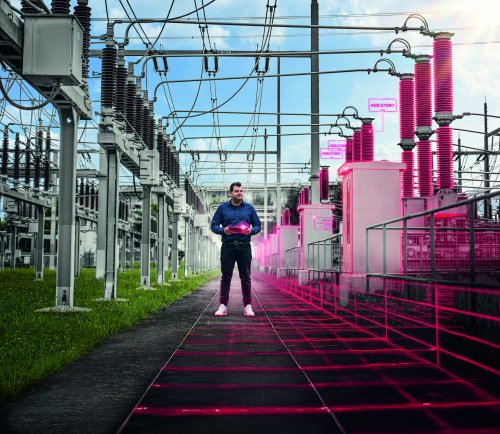
New start at the transformer substation: “The digital twin forms the basis for our planning,” says Rainer Beck from naturenergie netze.

In the past, there was distribution. For decades, energy was simply distributed in one direction – from continuously operating coal and nuclear power stations to transformer substations, and from there (once the voltage had been stepped down several times) to end consumers. To use a road traffic analogy, this quiet “one-way street” has now become a busy city-centre road network. Nowadays, the energy mix changes hourly with the wind and weather, so there essentially isn’t a reliable base load any more. In addition, wind farm and solar system operators feed in energy decentrally at medium- and low-voltage levels, so power grids now work in two directions. Heat pumps and electric vehicle charging stations mean higher consumption, while the long-familiar load profiles that peak in the early evening are now a thing of the past. However, both the quality of the supply and the 50 Hz frequency must be guaranteed at all times.

Engineering with Eplan: When modernizing secondary technology – naturenergie netze relies on 3D software from Eplan.

Grid operators are facing a mammoth task – they need to make their grids fit for these complex requirements. For naturenergie netze, this involves new construction work as well as modernising a number of existing transformer substations. The plants need to be adapted to suit the increasing demand for electricity, but that isn’t the only challenge. A bigger challenge is that they need to be adapted to cope with a much higher level of flexibility in terms of energy sources and flows and the precise control of electricity.

A digital twin

naturenergie netze (see text box) was quick to address these challenges and is currently working on a pilot project as it modernises one of its systems. The grid operator is using a digital concept to plan and configure its conversion of the Rheinfelden transformer substation. The new approach applies even to the preliminary work. Rainer Beck, a grid development coordinator, explains: “Before we start planning, we create a digital twin of the transformer substation, i.e. a virtual representation with all the data for both the live components (the primary technology) and the control level (the secondary technology) and, of course, for the buildings and all the peripherals. We then plan the conversion on the basis of this digital twin.”

Rainer Beck, naturenergie netze: “After the preliminary planning stage, we see considerable time savings during the actual conversion of the transformer substations. What’s more, that applies to every project.”

Another reason why this is a challenging task is that the primary and secondary technology are planned using different CAD software tools. In this pilot project, this issue was resolved by a very special collaboration. As members of the VDE ETG “Digital twins for electrical energy systems” task force, two leading suppliers – entegra with its primtech software solution for the primary technology and Eplan for the secondary technology – had prepared for precisely what naturenergie netze needed for the first (preliminary) planning stage, namely combining primary and secondary technology in a single model.

Major efficiency gains

For this unique project, entegra and Eplan were looking for an innovative distribution grid operator with a suitable pilot project to get involved as the third party in this collaboration. Contact with naturenergie netze came at exactly the right time – especially since the project in question was a complex one. As Rainer Beck explains: “The aim of the project is to renew all the secondary technology in an existing, highly complex transformer substation – and during ongoing operations.” It’s easy to understand why involvement in this project was appealing. “It would normally take two to three years to plan and implement the modernisation, but the new planning methodology will really speed things up.” Everybody involved in the project agrees. Matthias Schuy, Business Development Manager at entegra, explains: “What we’re doing here – integrating a transformer substation’s primary and secondary technology into one digital twin – has never been done before, but promises major benefits.” We asked him if he could give us a bit more detail. Rainer Beck: “Of course. Ultimately, we need to prove that the one-off investment will pay off quickly. After the first project phase – the preliminary planning – we see considerable time savings during the actual conversion of the transformer substations. What’s more, that applies to every project.”

Matthias Schuy, entegra: “Digitally combining primary and secondary technology is unique – and it promises major benefits.”

One model for all users

During the first stage of the project, the transformer substation was scanned, photos were taken of the rating plates, and the primary technology data generated was compared with the data from the asset management system. The result was a valid, functional primtech 3D model of the transformer substation. During a fully automated process, the datasets created in primtech were then exported to Eplan via an interface and used as the basis for planning the secondary technology in Eplan. Finally, the data from the secondary technology was integrated into the digital twin. This work is almost complete. By documenting the scenario as it currently stands, the basis has been provided for replacing the transformer substation’s secondary technology efficiently. “This is a really important step. All the data is verified. We basically follow the ‘single source of truth’ principle. The data in the original systems is left untouched and linked to the digital twin. This prevents redundancies that could prove problematic in the future,” explains Jan Oliver Kammesheidt, Global Vertical Market Manager Energy at Eplan.

Jan Oliver Kammesheidt, Eplan: “The industry needs to standardise. We are delighted to have found an innovative partner in naturenergie netze.”

In terms of the architecture of the combined data model, the parties involved – very much in keeping with the twin approach – have created a special infrastructure. “There’s no leading system – instead, there are merely different perspectives of one and the same model. The digital twin opens a window to the systems – for example, from primtech to Eplan or SAP. The digital twin therefore fulfils one of its main functions – namely offering centralised access to all relevant information for the transformer substation,” Schuy explains.

Standardising secondary technology

This collaboration by the three parties – entegra, Eplan and the distribution grid operator – was made possible, or at least made easier, by a decision taken two years ago. That was when naturenergie netze started using the Eplan Electric P8 and Eplan Pro Panel software solutions to plan its secondary technology, i.e. its control technology. Simon Rümmele, who is a grid development project leader, was responsible for this and is still in charge today. “With Eplan, we can drive forward the standardisation and more efficient engineering of the secondary technology – as well as end-to-end planning that we can also use during the operation phase for preventive maintenance and overhauls,” he says.”

Simon Rümmele, naturenergie netze: “With Eplan, we can drive forward the standardisation and more efficient engineering of the secondary technology.”

Lessons from mechanical engineering

The project is demonstrating that users in the electricity industry are benefiting from experience and solutions from mechanical engineering. In that sector – one in which Eplan has been active for decades – standardisation and “industrialisation” of panel building and switchgear manufacturing equipment is firmly established. As regards this step for transformer substations, there’s still a lot of catching up to do – but it has to happen. “Up until now, transformer substations have been planned on a case-by-case basis and built as one-offs. However, this makes it very difficult to judge the need for modernisation and new-builds that is arising as a result of the energy transition. The sector needs to standardise much more than it has in the past. We are providing support and are delighted to have found an innovative partner in naturenergie netze. With the joint digital twin for primary and secondary technology, we are speeding up the process considerably and making it more reliable, too,” Kammesheidt explains.

Strong partners for the conversion

As Rümmele explains, this is precisely what naturenergie netze is setting out to achieve. “We want and need to digitalise more, because we believe this will open up opportunities and make things easier in the future. That’s why we’re trying out the latest technologies and planning further pilot projects at our transformer substation in Rheinfelden. What’s more, with Rittal, the sister company of Eplan, we also have a strong partner on board for converting the ‘hardware’, in other words, all the enclosure technology,” he says.

entegra and Eplan are working closely together to develop a “project blueprint”. This helps to ensure that grids can be expanded in a future-proof way – with high efficiency.

naturenergie netze has also been planning standardisation for some time now – and the joint digital twin created by entegra and Eplan will provide the basis for this, too. Rainer Beck: “We can envisage using two standard concepts and buildings in the 110 kV range and creating variants on the basis of these. We’re also working on this with the main primary suppliers. This will also cut down the amount of time and planning required. And this is vital, because we’re going to be forced to adapt the majority of our transformer substations to comply with the new requirements. The digital twin and the preliminary work being carried out by entegra and Eplan will help us with this. Through partnership and collaboration, we are coming up with a genuine innovation that will help us develop our grids and make them fit for the future efficiently.”

However, it is not only naturenergie netze who will benefit from the project. Kammesheidt: “In contrast to the mechanical engineering sector, grid operators openly share information, because they’re not competing with each other. There’s already a lot of interest. I’m convinced that many grid operators will be able to take what we’re doing here and in the VDE task force and use it to plan and implement their own conversion and new-build projects fast.