Government Keeps Small Savings Scheme Interest Rates Steady for April-June 2026

New Delhi, March 30: The government on Monday announced that interest rates for various small savings schemes will remain unchanged for the eighth consecutive quarter, starting April 1, 2026. The decision covers popular schemes such as the Public Provident Fund (PPF), National Savings Certificate (NSC), and Sukanya Samriddhi Yojana (SSY).

A notification from the Finance Ministry stated that the interest rates for the first quarter of FY 2026-27 (April 1 to June 30, 2026) will stay the same as those applicable in the previous quarter (January-March 2026).

Key interest rates include:

  • Sukanya Samriddhi Yojana (SSY): 8.2%
  • Three-year term deposit: 7.1%
  • Public Provident Fund (PPF): 7.1%
  • Post Office Savings Deposit: 4%
  • Kisan Vikas Patra (KVP): 7.5% with maturity in 115 months
  • National Savings Certificate (NSC): 7.7%
  • Monthly Income Scheme (MIS): 7.4%

The decision reflects the government’s focus on stability and predictability for small savers, providing a reliable avenue for long-term investment. These schemes continue to play a key role in encouraging financial discipline and savings among individuals, while offering safe returns amid broader economic fluctuations.

Experts note that keeping the rates unchanged benefits retirees, households, and risk-averse investors, who rely on these instruments for regular income and wealth accumulation.

With these measures, the government aims to maintain public confidence in small savings schemes and promote their continued use as a foundation of personal financial planning.

Philip Morris International Presents its Value Report 2025: change in motion

Business Wire India

Philip Morris International (NYSE: PM) today released its Value Report 2025, offering a holistic perspective on the company’s approach to sustainable value creation. The report marks the completion of PMI’s 2025 Roadmap, communicating achievements for each aspiration introduced by the company in 2020, and introduces its Value Plan 2030+, set to guide the company’s continued path to sustainable growth.


For more than a decade, PMI has pursued an industry-leading shift away from cigarettes—a transformation that goes far beyond product innovation to encompass how we allocate capital, engage stakeholders, and measure success,” said Jacek Olczak, Group Chief Executive Officer. “‘change in motion’ captures the reality that transformation is not a project with a defined end date, it is the continuous work of improvement, innovation, and adaptation that keeps us relevant and resilient. We transform continuously because markets evolve, science advances, stakeholder expectations rise, and new opportunities emerge. This is who we are: a company perpetually in motion toward a better future, refusing to stand still even as we celebrate how far we have come.”


Built on the progress that PMI has made over the past decade, the report explains how the company is securing the resources, capabilities, and stakeholder trust that will sustain its business for decades to come. The sustainability of the business is PMI’s strategy; it is how it secures resources, manages risk, meets stakeholder expectations, and future-proofs a business built to deliver results today, while securing the ability to deliver tomorrow.


Our approach to value creation is anchored in a simple conviction: long-term financial success depends on the health of the resources and relationships that make it possible.By investing in natural, human, social, intellectual, and manufactured capital—what we define as non-financial capitals—we strengthen the very foundations on which long-term financial success depends,” said Emmanuel Babeau, Group Chief Financial Officer. “This is fundamental to our growth, resilience, and identity as a forward-thinking organization.


PMI achieved meaningful progress across both product and operational impact in 2025, as it closed its 2025 Roadmap.


PMI’s Business Transformation Metrics (BTMs) have provided stakeholders with clear, comparable indicators of our progress toward a smoke-free future. These metrics go beyond traditional reporting frameworks to capture aspects unique to PMI’s change of motion. They include the following:


  • Around 43.5 million adult consumers of smoke-free products worldwide.i
  • PMI’s smoke-free products were available for sale in 106 markets.ii
  • PMI’s smoke-free business net revenues reached USD 16.9 billion and represented 41.5% of total annual net revenues.iii


In addition, PMI celebrated progress on:


  • 98% coverage of shipment volume with youth access prevention programs in its indirect retail channels.iv
  • 91% coverage of shipment volumes with PMI’s anti-littering programs for cigarette butts.v
  • 76% of PMI employees globally had access to structured lifelong learning opportunities. vi
  • 99.6% of contracted farmers supplying tobacco to PMI made a living income by year-end 2025. This was achieved through initiatives aimed at boosting farm productivity and encouraging income diversification.vii
  • 99.3% of tobacco purchased at no risk of net deforestation of managed natural forest and no conversion of natural ecosystems.viii
  • 46% decrease versus 2019 on absolute Scope 1 and 2 greenhouse gas (GHG) emissions, with the company achieving carbon neutrality in its direct operationsix, and PMI’s absolute Scope 3 Forest, Land, and Agriculture (FLAG) GHG emissions decreased by 31% versus 2010.x


“We have identified six strategic priorities that reflect what matters most to our stakeholders and our business: consumers and product health impact, circularity, climate change, nature and biodiversity, our own workforce, and workers throughout our value chain, which are consolidated in our Value Plan 2030+. This plan identifies where our actions intersect most significantly with business imperatives, ensuring our initiatives drive tangible outcomes across various forms of capital, creating a strategy that is comprehensive yet focused, ambitious yet pragmatic, and deeply integrated into how we operate and grow,” said Jennifer Motles, Chief Sustainability Officer. “Our plan is explicit about what we control directly and what requires the action of, and partnership with others, setting a strong foundation for effective action. That is the spirit with which we present our Value Plan 2030+, as an invitation to dialogue, a platform for collaboration, and a roadmap for the next chapter: turning sustainability into lasting business value.”


PMI’s Value Plan 2030+ sets the course for the company’s next chapter—a continuation of the change in motion that has defined PMI’s evolution over the past decade. It focuses on accelerating the growth of its smoke-free product portfolio, working to make cigarettes obsolete, and exploring adjacent avenues of growth in wellness, while maintaining responsible sales and marketing practices, investing in human and natural capital, and strengthening the operational resilience that underpins long-term, sustainable value creation.


PMI’s Value Report 2025 has been prepared with reference to the Global Reporting Initiative (GRI) Universal Standards (2021) and relevant topic-specific standards. This report follows guidance from the International Sustainability Standards Board (ISSB) of the IFRS Foundation, including SASB Standards, Integrated Thinking Principles, and the Integrated Reporting Framework. Beginning with the 2025 reporting cycle, the company renamed its annual disclosure from the ‘Integrated Report’ to the ‘Value Report’ to reflect its commitment to transparency, communicating how it creates, preserves, and enhances value over the short, medium, and long term. The Value Report continues to build on the foundation established by previous Integrated Reports, providing a comprehensive and integrated view of PMI’s strategy, management, performance, and outlook in relation to its most significant sustainability-related topics.


Please visit www.pmi.com/sustainability to learn more and read the full 2025 Value Report, as well as Stories of Impact.


Philip Morris International: A Global Smoke-Free Champion


Philip Morris International is a leading international consumer goods company, actively delivering a smoke-free future and evolving its portfolio for the long term to include products outside of the tobacco and nicotine sector. The company’s current product portfolio primarily consists of cigarettes and smoke-free products, including heat-not-burn, nicotine pouch and e-vapor products. Our smoke-free products are available for sale in over 105 markets, and as of December 31, 2025, PMI estimates they were used by over 43 million legal-age consumers around the world, many of whom have moved away from cigarettes or significantly reduced their consumption. The smoke-free business accounted for 41.5% of PMI’s full year 2025 total net revenues. Since 2008, PMI has invested over $16 billion to develop, scientifically substantiate and commercialize innovative smoke-free products for adults who would otherwise continue to smoke, with the goal of completely ending the sale of cigarettes. This includes the building of world-class scientific assessment capabilities, notably in the areas of pre-clinical systems toxicology, clinical and behavioral research, as well as post-market studies. Following a robust science-based review, the U.S. Food and Drug Administration has authorized the marketing of Swedish Match’s General snus and ZYN nicotine pouches and versions of PMI’s IQOS devices and consumables – the first-ever such authorizations in their respective categories. Versions of IQOS devices and consumables and General snus also obtained the first-ever Modified Risk Tobacco Product authorizations from the FDA. With a strong foundation and significant expertise in life sciences, PMI has a long-term ambition to expand into wellness areas. References to “PMI”, “we”, “our” and “us” mean Philip Morris International Inc., and its subsidiaries. For more information, please visit www.pmi.com and www.pmiscience.com.


Forward-Looking and Cautionary Statements


This press release contains projections of future results and goals and other forward-looking statements, including statements regarding business plans and strategies. Achievement of future results is subject to risks, uncertainties, and inaccurate assumptions. In the event that risks or uncertainties materialize, or underlying assumptions prove inaccurate, actual results could vary materially from those contained in such forward-looking statements. Pursuant to the “safe harbor” provisions of the Private Securities Litigation Reform Act of 1995, PMI is identifying important factors that, individually or in the aggregate, could cause actual results and outcomes to differ materially from those contained in any forward-looking statements made by PMI.


PMI’s business risks include: marketing and regulatory restrictions that could reduce our competitiveness, disrupt our SFP commercialization efforts, eliminate our ability to communicate with adult consumers, or ban certain of our products in certain markets or countries; excise tax increases and discriminatory tax structures; health concerns relating to the use of tobacco and other nicotine-containing products; litigation related to tobacco and/or nicotine products and intellectual property rights; intense competition; inability to anticipate changes in adult consumer preferences; use and reliance on third-parties; the adverse effects of global and individual country economic, regulatory and political developments, natural disasters and conflicts; geopolitical instability affecting international trade; the impact and consequences of Russia’s invasion of Ukraine; changes in adult smoker behavior; continued decline of tax-paid cigarettes; lost revenues as a result of counterfeiting, contraband and cross-border purchases; governmental investigations; unfavorable currency exchange rates and currency devaluations, sustained periods of elevated inflation, and limitations on the ability to repatriate funds; adverse changes in applicable corporate tax laws; disruptions in the credit markets or changes to its credit ratings; recent and potential future tariffs imposed by the U.S. and other countries; adverse changes in the cost, availability, and quality of tobacco and other agricultural products and raw materials, as well as product components for our electronic devices; and the integrity of its information systems and effectiveness of its data privacy policies. PMI’s future profitability may also be adversely affected should it be unsuccessful, in key markets or systemically, in its efforts to introduce, commercialize, and grow smoke-free products or if regulation or taxation do not differentiate between such products and cigarettes; if it is unable to successfully introduce new products, promote brand equity; if there are prolonged disruptions of facilities used to produce its products; if it is unable to enter new markets or improve its margins through increased prices and productivity gains; if other market participants are more successful in their SFP commercialization efforts; if it is unable to attract and retain the best global talent; or if it is unable to successfully integrate and realize the expected benefits from recent transactions and acquisitions. Future results are also subject to the lower predictability of our smoke-free products performance.


PMI is further subject to other risks detailed from time to time in its publicly filed documents, including PMI’s Annual Report on Form 10-K for the fourth quarter and year ended December 31, 2025. PMI cautions that the foregoing list of important factors is not a complete discussion of all potential risks and uncertainties. PMI does not undertake to update any forward-looking statement that it may make from time to time, except in the normal course of its public disclosure obligations.


________________________________

i Total PMI smoke-free users is defined as the sum of total IQOS users, total oral smokeless users, and total e-vapor users of PMI products and considering poly-users across PMI’s smoke-free product categories. For definitions, see Glossary in PMI’s Value Report 2025.

ii For definition of available for sale, see Glossary in PMI’s Value Report 2025.

iii For definition of net revenues related to smoke-free, see Glossary in PMI’s Value Report 2025. This information should be read in conjunction with the Reconciliation of non-GAAP measures in PMI’s Value Report 2025.

iv Total shipment volume includes cigarettes, other tobacco products (OTPs), and smoke-free product consumables. See PMI’s Non-financial KPI hub for further details.

v See PMI’s Non-financial KPI hub for further details.

vi See PMI’s Non-financial KPI hub for further details.

vii Excludes China, Thailand, Switzerland, and India (flue-cured). See PMI’s Non-financial KPI hub for further details on methodology.

viii For definitions, please see PMI’s Zero Deforestation Manifesto and PMI’s Non-financial KPI hub.

ix Ambition achieved in early 2026 against 2025 emissions; data refer to yearly gross emissions from the reporting year minus the retroactive offsetting of the previous year’s emission. See PMI’s Non-financial KPI hub for further details.

x For further details on scope 3 calculation, please refer to PMI’s Value Chain Carbon Footprint Methodology Overview and PMI’s Non-financial KPI hub.


India’s Semiconductor Drive: Pioneering a Self-Reliant Tech Future

India is no longer just a spectator in the global technology race—it is actively shaping the future. With a bold vision for the 21st century, the country is making strategic moves to establish itself as a leader in semiconductor manufacturing and innovation, a sector that forms the backbone of modern technology.

The journey gained momentum in 2021 with the launch of the India Semiconductor Mission (ISM). More than an industrial policy, the ISM was a statement of confidence, signaling India’s readiness to compete globally and become a reliable supplier of semiconductors. These tiny but critical components power everything from smartphones and laptops to automobiles, medical devices, and advanced defense technologies, making them indispensable in today’s digital world.

A major milestone in this effort is the inauguration of the Kaynes Semicon facility, a state-of-the-art manufacturing hub. This facility strengthens India’s push for self-reliance in chip production, reducing dependence on imports while creating a strong domestic ecosystem for design, fabrication, and testing. Experts say it marks a transformational step toward building a sustainable semiconductor industry in India.

The implications of this initiative extend far beyond manufacturing. By fostering domestic expertise, encouraging research, and attracting global investment, India is laying the foundation for a high-tech economy that can compete on the world stage. From supply chain resilience to job creation, the benefits of a robust semiconductor ecosystem are manifold, making India an active participant in shaping the future of global technology.

As the Prime Minister’s Office recently remarked, it is now “time to shape the future tech landscape.” With initiatives like the India Semiconductor Mission and facilities such as Kaynes Semicon, India is demonstrating a clear commitment to innovation, self-reliance, and technological leadership—a strategy that promises to define the nation’s role in the global tech ecosystem for decades to come.

Harnessing AI to Revolutionize Organ Transplants in India

Bhubaneswar, March 31: Emphasizing the transformative potential of artificial intelligence (AI) in healthcare, Subhasish Panda, Additional Secretary to the Prime Minister’s Office, highlighted how AI could significantly enhance organ transplantation in India. Speaking at a workshop-cum-regional Continuing Medical Education (CME) programme on “Organ Transplantation and Artificial Intelligence in Healthcare,” he said AI can integrate large datasets to support smarter, faster, and more informed clinical decisions.

“AI has the ability to revolutionize the organ transplantation ecosystem,” Panda noted. “It can streamline donor-recipient matching using genetic, clinical, and laboratory data, track organ availability in real time, optimize transport logistics for timely delivery, and assist clinicians through predictive analytics and intelligent dashboards.”

India currently ranks third globally in organ transplantation, with approximately 20,000 procedures performed in the past year. However, Panda expressed concern that 82 percent of donations come from living donors, with women representing the majority. He also highlighted that most transplants are conducted in the private sector, which affects affordability, and stressed the need for greater public awareness and increased participation from government healthcare institutions.

The programme was organized by AIIMS-Bhubaneswar, in collaboration with the National Academy of Medical Sciences (NAMS). It brought together more than 300 doctors from Odisha, West Bengal, Bihar, and Jharkhand to discuss innovations in transplantation and the role of AI in improving patient outcomes.

Panda’s remarks underscored the importance of combining technology, awareness, and policy support to make organ transplantation more efficient, accessible, and equitable across India.

Odisha Governor Urges Stronger Awareness and Early Detection to Fight Cancer

On Monday, Odisha Governor Hari Babu Kambhampati urged everyone to come together to fight the rising number of cancer cases in the state. Speaking at the “Cancer-Free Odisha” Awareness Conclave and the Mahanayak–2026 Awards, he said cancer is not just a medical problem—it affects families and communities across Odisha.

The Governor pointed out that lifestyle changes, tobacco use, environmental factors, and late diagnosis are contributing to the steady rise in cancer cases. He stressed that prevention is better than cure. By spreading awareness about healthy diets, physical activity, and avoiding tobacco, many cancer cases could be prevented.

He also emphasized the importance of early detection. Strong primary healthcare and wider screening, especially in rural areas, can help identify cancer early, improve survival rates, and reduce the emotional and financial burden on families.

Governor Kambhampati called for collaboration between the government, private sector, and civil society to ensure cancer care reaches every corner of the state. He also congratulated the Mahanayak–2026 awardees for their contributions and encouraged continued efforts to create a cancer-aware Odisha.

The event was attended by dignitaries including Korei MLA Akash Dasnayak and former Balasore MP Rabindra Kumar Jena, while the welcome address was delivered by Asim Odisha Foundation Trust Chairperson Asima Das.

The conclave made it clear that tackling cancer in Odisha will require awareness, early detection, and the support of the entire community.

Oil India Limited Partners with CSIR-IMMT to Boost Critical Minerals Research

Bhubaneswar, March 30: In a significant move to strengthen India’s strategic mineral ecosystem, Oil India Limited (OIL) on Monday signed a Memorandum of Understanding (MoU) with the CSIR–Institute of Minerals and Materials Technology (IMMT) to establish a Centre of Excellence for critical minerals.

The collaboration, formalized in Bhubaneswar, is aligned with the National Critical Mineral Mission under the Ministry of Mines and aims to enhance research, exploration, and processing of critical minerals, supporting the country’s self-reliance objectives.

Under this agreement, OIL will become the first “Industry Spoke” of CSIR-IMMT under the Ministry of Petroleum and Natural Gas, creating a new model of partnership between India’s energy and mining sectors.

The MoU was signed by Saloma Yomdo, Director (Exploration & Development), Oil India Limited, and Ramanuj Narayan, Director of CSIR-IMMT, in the presence of OIL CMD Ranjit Rath. Senior officials from OIL and CSIR-IMMT scientists, including Kali Sanjay and Satyajit Rath, also attended the ceremony.

Speaking at the event, CMD Ranjit Rath emphasized that the partnership would expand OIL’s role beyond hydrocarbons, boosting its contribution to the National Critical Mineral Mission. He also highlighted the potential of artificial intelligence and machine learning in identifying mineral resources, noting that OIL has already pinpointed ten focus areas for technology-driven initiatives in consultation with the CSIR Director General.

Director Ramanuj Narayan underlined CSIR-IMMT’s expertise in research and technology solutions for the mining, minerals, and metals sectors, with a particular focus on critical minerals. He expressed optimism that the Centre of Excellence would drive innovation and support India’s long-term goals in mineral self-reliance.

This collaboration represents a strategic convergence of energy and mining expertise, aimed at strengthening India’s capabilities in critical mineral exploration and processing, while leveraging advanced technologies for sustainable resource development.

Royal Orchid Hotels Expands Its Presence by Signing New Property in Mundra, Gujarat

Royal Orchid Hotels Expands Its Presence by Signing New Property in Mundra, Gujarat

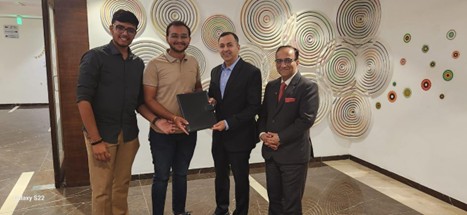
Mar 31:  Royal Orchid & Regenta Hotels Ltd. (ROHL), one of India’s fastest-growing hospitality chains, today announced the signing of a new upscale property in MundraGujarat.

The upcoming Regenta Hotel, Mundra will be operated under a hotel management agreement, reinforcing ROHL’s asset-light expansion strategy and strengthening its presence in key industrial and port cities across India.

Strategic Location and World-Class Amenities

Located in the prominent port city of Mundra, the hotel is designed to cater to the evolving needs of business travellers and logistics professionals. The property will feature 103 well-appointed keys and is scheduled to open by Q4, 2027.

To ensure a seamless stay for its guests, the hotel will offer a comprehensive suite of premium facilities, including:

  • Dining: A signature all-day dining restaurant.

  • Wellness: A dedicated swimming pool, fully-equipped gym, and a rejuvenating spa.

  • Convenience: Extensive parking facilities with a capacity for over 150 vehicles.

Premier Venue for Events

Regenta Hotel, Mundra is set to become a preferred destination for corporate gatherings and social celebrations in the region, featuring expansive banquet facilities totaling 14,000 sq. ft.:

  • Grand Ballroom: A massive 10,000 sq. ft. space for large-scale events.

  • Junior Ballroom: A versatile 4,000 sq. ft. hall for mid-sized meetings and functions.

“The signing of Regenta Hotel, Mundra aligns seamlessly with our vision of expanding our footprint in high-growth economic hubs. As we continue to march toward our goals, this property will deliver the distinctive hospitality experience that defines the Regenta brand in Gujarat‘s industrial landscape.” 

— Mr. Chander K. Baljee, Chairman & Managing Director, Royal Orchid & Regenta Hotels Ltd.

“We are delighted to partner with Royal Orchid & Regenta Hotels for this landmark development in Mundra. With its strategic location and robust infrastructure, we are confident this hotel will set new benchmarks in hospitality for the region and cater effectively to the growing demand from business and industrial travelers.”
— Directors, Bonava Hospitality LLP

2nd SAHIT Annual Conference Celebrates Women Achievers, Releases Knowledge Report

New Delhi,  Mar 31 : SAHIT, founded by Dr. Subi Chaturvedi, to empower women, drive inclusive growth and build collaborative pathways to meaningful workforce inclusion, today held the second edition of their national conference. Shri Jitendra Singh, MOS (IC), Ministry of Science and Technology, and Earth Sciences, was the Chief Guest on the occasion and also felicitated 17 women and 8 organizations for outstanding achievements and work done towards addressing barriers to women

2nd SAHIT Annual Conference Celebrates Women Achievers, Releases Knowledge Report

 The  Minister released the SAHIT Knowledge Report, along with Dr. Subi Chaturvedi, and Dr. Parvinder Maini, Scientific Secretary, Office of PSA; Ms. Debjani Ghosh, Distinguished Fellow, NITI Aayog. and Chief Architect – NITI Frontier Tech Hub, and Ms. Kavita Bhatia, COO, India AI Mission. After the release of the report, Dr. Singh remarked, “Platforms like SAHIT are extremely important for promoting women in decision-making roles and establishing role models that can inspire a generation of female innovators and pathbreakers. Owing to Hon’ble PM’s vision, we are quickly moving from development from women to women-led development of the nation. Sahit will be an important proponent for that. I congratulate Dr. Subi Chaturvedi for creating such a relevant platform and wish her all the best as she continues to chart new territory in the space and influence young women to dream big, work in STEM fields and aspire for excellence ”.

Thanking the  Minister, Dr Subi Chaturvedi, Founder of SAHIT remarked, “If India is to remain at the forefront of the digital economy, we don’t need only more women in the workforce, but women in critical decision-making roles shaping policy, platforms, and capital flows.” Highlighting the systemic shifts required to secure India’s techade and highlighting SAHIT’s importance, she further said, “SAHIT is our

dedicated effort to bridge that gap, ensuring half of the nation’s population can purposefully contribute toward nation-building and the  Prime Minister’s vision of a Viksit Bharat by 2047. We are deeply committed to celebrating role models and plugging  the  leaky  pipeline  for  women  in  STEM  and  girls  in  ICT.”

Central to the event was the launch of the SAHIT Knowledge Report which included primary empirical research from SAHIT and other partner organisations, detailing ground-level surveying on concerns impacting women’s participation in the Indian workforce. One of the key findings of the report was that while 57% of the women benefit from inclusive policies at their workplace, less than a third of the women have sufficient knowledge regarding such policies and programs, indicating a need for better internal communication and information exchange at organizations. The report also noted an increase in FLPR and highlighted the opportunity to increase the GDP by 27% if the gender gap in the labour force is closed.

A central pillar of the SAHIT mission is establishing visible role models to inspire the next generation of female innovators. During the ceremony, Shri Jitendra Singh conferred the prestigious SAHIT Icon Awards upon five trailblazing women which included Dr. Parvinder Maini; Smt. Debjani Ghosh, Distinguished Fellow, NITI Aayog and Founder, NITI Frontier Tech Hub; Dr. Kiran Mazumdar-Shaw, Executive Chairperson and Founder, Biocon India and Smt. Kavita Bhatia, COO, IndiaAI Mission. In addition to the Icons, SAHIT also felicitated 17 Women Achievers for their proven excellence across administration, science and technology, business, industry, and sports. The platform also honored 8 Changemaker Partner Organisations whose foundational research and contributions were instrumental to the SAHIT Knowledge Report.

Reflecting on the success of the overarching event, Col. Saurabh Sanyal, Secretary General of ASSOCHAM, added, “Today’s session, ‘Icons of Impact: Women Who Are Rewriting India’s Growth Story,’ has been a powerful reminder that women are at the forefront of India’s transformation. Their resilience, innovation, and leadership are not only inspiring but essential to shaping our future. We are proud to partner with a prestigious platform like SAHIT to make this initiative truly impactful.”

The SAHIT Awardees expressed their profound appreciation for the initiative, emphasizing the essential role that dedicated platforms like SAHIT can play in dismantling systemic barriers and amplifying female voices. They noted that such recognition not only celebrates individual milestones but serves as a vital catalyst, encouraging more women and young girls to aspire for excellence and actively realizing the Hon’ble Prime Minister’s vision for a women-led Viksit Bharat. Summarizing the mission forward, Dr. Subi Chaturvedi stated, “The SAHIT platform is designed to be a dynamic network of networks for action. By forging robust collaborations and partnerships across government, academia, and industry, we will continue to serve as the definitive platform for accelerating women’s equitable

participation in the formal workforce and championing women in leadership roles across every sector of our economy fulfilling the Hon. PM’s vision of Viksit Bharat 2047.”

STV Group and Post-Quantum Successfully Trial World’s First Quantum-Resilient Drones

Business Wire India

Partnership delivers quantum-resilient drone platform for NATO allies

Technical breakthrough: first airborne deployment of Classic McEliece algorithm

Combat-proven UAV systems integrated with Classic McEliece post-quantum cryptography (PQC) to secure unmanned operations against future quantum threats.


STV Group a.s., a European defence technology integrator with platforms deployed in Ukraine and allied theatres, and Post-Quantum, the UK cybersecurity company, today announced successful testing of the world’s first quantum-safe drones for active deployment across allied theatres.


As allied nations adapt to warfighting defined by autonomous systems and drones, the ability to futureproof secure communications between drones and their operators is of paramount importance.


Drone swarms procured today may be stored and deployed in future operations years later. This dynamic requires drones manufactured today incorporate encryption that’s resistant to attack by both classical and quantum computers.


The collaboration combines STV’s combat-tested unmanned systems and command-and-control infrastructure with Post-Quantum’s patented post-quantum cryptography and secure radio technologies. The two companies have now successfully trialled the new approach at STV’s weapons testing facility in the Czech Republic. This is unique as STV is one of very few companies worldwide which can deploy its drone solutions directly to theatre without further certification.


The partnership introduces two industry firsts:


  • A quantum-resilient drone architecture designed for contested operational environments
  • The first airborne deployment of Classic McEliece, the longest-studied post-quantum public-key cryptographic algorithm, previously considered infeasible for DDIL (denied, disrupted, intermittent, limited) communications


Securing Drone Operations for the Quantum Era


Unmanned systems now play a central role in modern defence operations, supporting Intelligence, Surveillance & Reconnaissance (ISR), electronic warfare, precision strike, border security and critical infrastructure monitoring. Drone fleets are increasingly operating in swarms and multi-domain environments, placing greater demands on communications security.


In theatres such as Ukraine and the Middle East, unmanned platforms must operate under conditions that include:


  • Jamming, GPS denial and signal interception
  • Beyond-line-of-sight missions over degraded communications links
  • Large-scale fleet command and control
  • Continuous transmission of sensitive ISR data


At the same time, governments recognise that adversaries may already be collecting encrypted communications for decryption once quantum computing becomes viable. With drone platforms expected to remain operational for decades, protecting these systems against future quantum threats is becoming a near-term requirement.


Classic McEliece for Operational Deployment


Underpinning the new platform is Classic McEliece, the code‑based post‑quantum cryptographic scheme co-invented by the team at Post-Quantum.


Classic McEliece is based on the original McEliece cryptosystem with the longest unbroken security track record in public‑key cryptography. Designed conservatively and subjected to almost 50 years of cryptanalytic scrutiny without security degradation, it is widely regarded as the most robust option for scenarios where long‑term confidentiality is paramount.


The partnership’s architecture uses Classic McEliece in a targeted, mission‑aligned way by encrypting full‑motion video, imagery and flight metadata for the duration of the mission. This ensures sensitive ISR data remains confidential over the long term against Harvest Now Decrypt Later attacks.


As co-inventor of the algorithm, Post-Quantum brings specialised expertise in adapting Classic McEliece for hostile operational environments, including secure radio systems and contested electromagnetic conditions.


Post-Quantum, being the pioneer in promoting crypto agility since 2009 and the author of the IETF hybrid quantum-safe VPN protocol, is also uniquely positioned to optimise and deliver CNSA 2.0 compliant PQC requirements in the most constrained environments.


Executive Commentary


JUDr. Pavel Kudrhalt, Chief Executive Officer of STV Group, said:


“STV’s unmanned platforms operate daily in Ukraine, where drone communications are among the most contested in the world. In this environment, communications security is no longer an afterthought – the risk of an adversary intercepting or even seizing control of a drone swarm is simply unacceptable. By integrating Classic McEliece into our operational stack, we are giving our customers the strongest available future‑proof cryptography, engineered for the realities of the battlefield and ready for immediate deployment.”


Rikky Hasan, Chief Executive Officer of Post-Quantum, said:


“Classic McEliece’s large key size has long been considered too large for real world deployments, especially for airborne platforms operating in DDIL environments. We have proven that assumption wrong. Its tiny ciphertexts and ultra‑fast encryption, combined with our experience in government‑grade radio communications and electronic warfare, make it the ideal choice for protecting drone ISR against both classical and quantum attacks. This partnership is about more than cryptography – it is about delivering a complete sovereign unmanned operations system, with quantum‑resilient security built in as standard.”


Deployment Plans


The companies will begin phased integration of the quantum-resilient UAV platform across European and allied defence programmes. Additional field validation will be conducted on systems already operating in active theatres.


The architecture is designed to extend beyond aerial systems, enabling the same quantum-resilient communications layer to support ground, maritime and subsurface unmanned platforms.


www.stvgroup.cz


www.post-quantum.com


Krvvy Launches All-Day Shaper Shorts, Focusing on Everyday Shapewear

New Delhi,  Mar 31 : Krvvy, a function-first women’s innerwear brand, has launched its All-Day Shaper Shorts, strengthening its presence in the everyday shapewear category. This is coming at a time when comfort-led design is reshaping how shapewear is worn and experienced. The move taps into a decisive shift in the innerwear market, where performance, ease, and all-day wearability are becoming the new baseline.

Krvvy Bets on Everyday Shapewear with Launch of All-Day Shaper Shorts

 Krvvy’s All-Day Shaper Shorts is an everyday wear that offers light to mid-level compression that delivers subtle shaping while allowing ease of movement across daily routines, from long work hours to travel and social outings. Designed for the modern consumer who expects comfort, flexibility, and performance in equal measure, the product prioritises wearability without compromising on support. Crafted from a breathable blend of 67% polyamide and 33% elastane, the fabric is engineered to move with the body while maintaining shape retention through extended wear.

A key differentiator lies in its bonded construction, a smooth, stitch-free finish, making the garment virtually invisible under skirts, dresses, and workwear. The high-waist, upper-thigh silhouette is designed to contour the body and stay in place, addressing common category concerns such as rolling waistbands and discomfort during prolonged use. 

Commenting on the launch, Yash Goyal, Co-Founder & CEO, Krvvy, said, 

 “The biggest challenge was getting the balance right. Most shapewear either supports or feels comfortable, rarely both. We focused on bonded construction to eliminate seams, and a fabric that adapts to the body rather than working against it. The goal was to create something women can wear for hours without constantly adjusting or feeling restricted. With All-Day Shaper Shorts, shapewear becomes invisible not just under clothing, but in how it feels.”

Anant Bhardwaj, Co-Founder, Krvvy, added that the shift toward comfort-led innerwear is becoming more pronounced.

 “Customer feedback played a big role in shaping this product. Women in our focus group told us they wanted shapewear that isn’t too long or too short, stays invisible under dresses, and still delivers the right level of compression. That balance is exactly what we’ve aimed to achieve. Everyday shapewear is clearly evolving into a comfort-first, practical category.”

The All-Day Shaper Shorts are priced at INR 1499 and are available on the company website and e-commerce platforms namely Amazon, Myntra and Nykaa.The product is offered across sizes S – 5XL, catering to a diverse range of body types.

This launch builds on Krvvy’s recent introduction of the TrueForm Bra, as the brand continues to expand its portfolio of function-first innerwear designed for everyday comfort, versatility, and confidence. 

Founded in 2023, Krvvy has since raised INR 7.2 crore to date and reported revenue of approximately INR 6 crore as of September in the current financial year, with a projected target of INR 15 crore for the full year. The company is currently expanding its product portfolio and strengthening its reach across India through its digital-first channels.