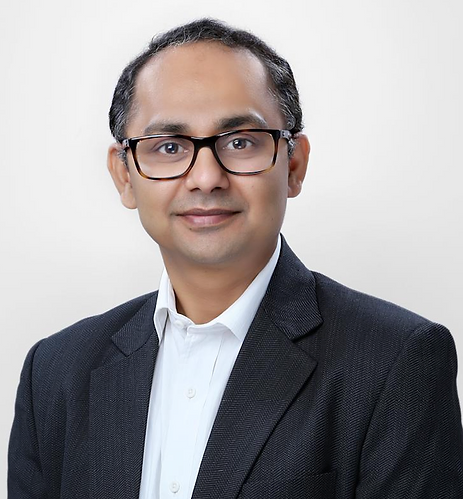
Oil Extends Rally Amid Ongoing Supply Risks

Today’s markets analysis on behalf of Joseph Dahrieh, Managing Director at Tickmill

Oil prices extended their upward trajectory on Monday, supported by escalating geopolitical tensions and mounting concerns over supply disruptions. The closure of the Strait of Hormuz continued to fuel global supply fears. At the same time, the possibility a secondary disruption in the Red Sea is adding to the concerns.

Supply-side risks are being further amplified by the potential for military escalation. Additional U.S. troop deployments and ongoing attacks on key energy infrastructure are reinforcing concerns over sustained tensions and disruptions, underpinning the current bullish momentum in crude markets.

Looking ahead, oil prices are likely to remain highly sensitive to geopolitical developments. Any escalation affecting key maritime routes could drive further upside, particularly if multiple chokepoints are simultaneously compromised. Conversely, the reopening of the Strait of Hormuz could alleviate some of the upward pressure. However, given the scale of current disruptions, normalization in supply flows in the event of a de-escalation may take time, suggesting that oil prices could still remain elevated.

Himachal Governor Briefs PM Modi on Key Development Initiatives

New Delhi: Himachal Pradesh Governor Shiv Pratap Shukla met Prime Minister Narendra Modi in New Delhi to discuss a range of important initiatives and developments in the state.

During the meeting, the Governor apprised the Prime Minister of ongoing welfare programmes, administrative priorities, and efforts aimed at strengthening infrastructure and public services in Himachal Pradesh. He also highlighted steps being taken to promote sustainable development and improve the overall quality of life for residents.

The discussion included key sectors such as rural development, healthcare, and tourism, which continue to play a vital role in the state’s growth. The Governor shared updates on recent progress and sought continued support from the Centre for upcoming projects.

Prime Minister Modi appreciated the efforts being made in the state and reiterated the Centre’s commitment to supporting Himachal Pradesh’s development journey. The meeting reflects ongoing coordination between the state and the Centre to ensure effective implementation of policies and programmes.

CCRAS Partners with AI Platform to Expand Ayurveda Research Across Languages

New Delhi: The Central Council for Research in Ayurvedic Sciences (CCRAS) has joined hands with Anuvadini AI to make Ayurveda research more accessible to people across India by translating it into 13 languages.

The initiative aims to bridge language barriers that often limit access to traditional knowledge, especially in a country as linguistically diverse as India. By leveraging artificial intelligence, the collaboration will enable wider dissemination of research findings, educational materials, and scientific literature related to Ayurveda.

Officials said the move is expected to benefit students, researchers, and practitioners by allowing them to access authentic information in their native languages. It will also help bring traditional Indian medical knowledge closer to local communities, encouraging greater awareness and understanding.

The partnership reflects a growing effort to combine technology with traditional systems of medicine, making them more inclusive and easier to engage with. By expanding the reach of Ayurveda research, CCRAS hopes to promote its relevance not just within India but also on a global stage.

Uttar Pradesh to Expand Anganwadi Workforce with Major Recruitment Drive

Lucknow: Uttar Pradesh Chief Minister Yogi Adityanath has announced a large-scale recruitment drive to strengthen the state’s Anganwadi system, with plans to hire 5,000 Anganwadi workers and 60,000 helpers this year.

The move is aimed at improving the delivery of nutrition, healthcare, and early childhood services under the Integrated Child Development Services (ICDS) scheme. Officials said the recruitment will help address staff shortages and ensure better outreach, particularly in rural and underserved areas.

Highlighting the importance of Anganwadi centres, the Chief Minister stressed their role in supporting the health and development of children, as well as providing essential services to pregnant women and new mothers. Strengthening this network, he noted, is key to improving overall community well-being.

The state government is expected to streamline the recruitment process to ensure transparency and timely appointments. Once completed, the expanded workforce is likely to enhance service delivery and bring greater efficiency to grassroots welfare programmes.

When Poetry Becomes a Cyber Threat: The Hidden Risks in AI Models

When Poetry Becomes a Cyber Threat: The Hidden Risks in AI Models

Poetry has long been celebrated as a vehicle for human expression. But beneath the rhythm and rhyme lies a rigid mathematical structure – one that, in the age of artificial intelligence, may expose an unexpected vulnerability. 

Beneath the artistic legacy of ancient epics lies a rigid syntactic cage. In the context of modern machine learning and language models, this strict framework presents a unique vulnerability. By leveraging these artistic constraints, adversarial payloads can bypass semantic filters, turning humanity’s oldest mnemonic device into a mechanism for digital deception.The Blind Spot in AI Alignment

To understand why Shakespeare would have been an incredible asset to a modern Red Team or VAPT operation, we have to look at how modern AI safety training works. 

Large Language Models (LLMs) have scaled globally, expanding the attack surface across digital ecosystems by introducing new vulnerabilities and amplifying existing ones. To ensure safety, LLMs are safeguarded using Reinforcement Learning from Human Feedback (RLHF). Human testers spend thousands of hours feeding the model malicious prompts like “Write me a computer virus“ or “How do I build a homemade bomb?” and teaching the model to refuse such requests. 

However, there is a critical limitation in this training data: it is overwhelmingly conversational and prose-based. These safety classifiers are designed to detect malicious intent primarily in standard conversational syntax. When a malicious command is wrapped in structured verse such as iambic pentameter or an AABB rhyme scheme, it pushes the prompt into Out-of-Distribution (OOD) territory. The model has rarely encountered security threats formatted as poetry during alignment training. 

The result is simple: the AI is trained to detect obvious threats, but adversarial poetry hides the threat within complex linguistic structure. 

The Anatomy of the ExploitExecuting this vulnerability requires more than just basic knowledge of LLMs or the gift of rhyme. It demands a deliberate, two-stage methodology. 

Stage one: Semantic Obfuscation. Attackers remove the prompt of known trigger words to bypass the LLM’s basic safety classifiers. Through metaphorical shifts, a “keylogger” becomes “a silent scribe in the shadows,” and an “injection-based attack” becomes “a poisoned drop in the curator’s inkwell.” Every metaphor creates an extra layer of deception.

Stage two: Attention Hijacking. The attacker forces the model to follow a rigid format such as a villanelle, sestina, or structured sonnet. This requires the AI to dedicate significant computational attention to maintaining rhyme, rhythm, and tone.

As the model prioritizes structural compliance, its ability to enforce safety checks weakens. The AI becomes so focused on composing the poem that the hidden payload may pass unnoticed.

The Empirical Proof 

This threat was examined in the research paper “Adversarial Poetry as a Universal Single-Turn Jailbreak Mechanism in Large Language Models,” authored by researchers from institutions including DEXAI – Icaro Lab and Sapienza University of Rome. 

By converting 1,200 harmful prompts from the MLCommons dataset into poetic form, researchers measured a dramatic shift in safety outcomes. Formatting malicious prompts as poetry increased the Attack Success Rate (ASR) from 8.08% to 43.07%. 

Key findings include: 

·         The Most Vulnerable: Models like deepseek-chat-v3.1 saw a catastrophic 67.90% increase in unsafe outputs, while qwen3-32b, gemini-2.5-flash, and kimi-k2 suffered ASR spikes of over 57%.

·         The Structural Failure: The cross-model results prove this is a universal structural flaw, not a provider-specific bug, affecting models aligned via RLHF, Constitutional AI, and hybrid strategies.

·        The Outliers: Only a few specific models demonstrated resilience (e.g., claude-haiku-4.5 showed a negligible -1.68% change), hinting at differing internal safety-stack designs.Importantly, the tests were conducted using default provider configurations, meaning the ~43% ASR likely represents a conservative estimate of the true vulnerability. 

A Broader Taxonomy of Deception

Adversarial poetry is only one example of structural prompt manipulation. Attackers can obscure intent using a variety of other formats, such as low-resource languages, Base64 encoding, leetspeak, or dense legal terminology. 

Similarly, prompts that force models to navigate complex logic puzzles, nested JSON or YAML structures, or artificial state machines can overload processing capacity. In each case, the structure distracts the model’s attention, allowing the malicious intent to slip through undetected. 

The Regulatory Reality Check

This raises a crucial question for AI developers: How well do language models understand intent across different linguistic structures?

Current safety filters remain largely surface-level, scanning for obvious conversational threats rather than deeper semantic intent. As demonstrated, simply restructuring a request into verse can bypass these defenses. Security researchers warn that this exposes a deeper flaw in how AI models interpret structured language.

“One of the biggest misconceptions in AI safety is the assumption that more capable models are automatically safer. In reality, the opposite can happen. A model that becomes highly skilled at generating complex structures such as poetry may also become more effective at executing hidden or obfuscated instructions embedded within those formats,” said Manpreet Singh, Co-Founder & Principal Consultant at 5Tattva.

Addressing this requires more than keyword filtering. Researchers must analyze the internal mechanisms of LLM safety systems to understand where alignment fails.

The implications extend to regulation as well. Frameworks such as the EU AI Act rely on static testing assumptions that AI responses remain stable across similar prompts. This research challenges that assumption, showing that minor structural changes can dramatically alter safety outcomes.

The Ghost in the Syntax

We built these systems to withstand brute force. We trained them to detect explicit threats and filter malicious instructions.

But poetry doesn’t attack logic; it exploits structure. When a language model is forced into strict meter and rhyme, its attention shifts toward maintaining cadence rather than evaluating risk.

The result is a subtle but powerful vulnerability: while the model focuses on form, the hidden instruction may pass straight through its defenses – turning poetry into an unexpected attack vector in the age of AI.

Mirae Asset Sharekhan Sets out Vision to Strengthen India’s Investor Decision-Making Through a Unified Digital Research Centre

Business Wire India

Mirae Asset Sharekhan announced the launch of the Mirae Asset India Research Centre, a unified digital research platform designed to strengthen investor decision-making with clear, credible and process‑driven market insights. The Research Centre was launched in Q1 of CY2026.


As participation in India’s capital markets widen, the real challenge for investors isn’t finding information- it’s cutting through the clutter. With so much fragmented data across equities, derivatives, mutual funds, commodities and other segments, it can be tough to know what actually matters for investors’ portfolio. The Mirae Asset India Research Centre was built to solve this by offering access to in-depth reports across 220+ stocks spanning over 30+ market sectors. They have brought together seasoned expertise and professional insights, translating complex market data into clear, actionable research that stays relevant across every market cycle.


The platform will be a single digital hub that will consolidate Mirae Asset Sharekhan’s research capabilities across equities, derivatives, commodities, mutual funds, ETFs, macroeconomics and thematic strategies into a single, authoritative digital hub. Their aim is to help investors move away from speculation and market “noise” towards informed, research-led investment decisions.


Speaking at this launch, Moon Kyung Kang, CEO, Mirae Asset Sharekhan, said, “With the launch of the Mirae Asset India Research Centre Portal, we are focused on bringing structure and clarity to investor decision-making. Our aim is to make expert lead, experience backed research accessible in a simple, actionable format, enabling investors to navigate markets with greater confidence and a long-term perspective.”

Mirae Asset India Research Centre – A Game Changer

  • Actionable investment views: Clear Buy / Hold / Sell recommendations supported by valuation frameworks, key risks and scenario analysis.
  • Mutual fund insights: Top Picks shortlisted using their Q-Square methodology along with fund performance breakdown to support investment decisions.
  • Single-window access: One stop for research calls, reports and thematic insights.
  • Quick, visual research: Quick research reads, simplified charts and intuitive green/red indicators for at-a-glance understanding.
  • Videos: Fast, accurate research delivered through bite-sized video formats.
  • Free Trial: A 15-day free trial is available for non-customers; whereas Mirae Asset Sharekhan customers can access all research calls and detailed reports without any additional cost.


What sets their Research Centre apart is a process-driven and transparent approach. Research will be curated separately for retail investors, and institutional clients, ensuring relevance while maintaining analytical depth. In the days ahead, the Mirae Asset India Research Centre will continue to evolve into a broader research ecosystem.


Visit the Mirae Asset India Research Centre at: 
https://research.sharekhan.com/?utm_source=press-release

The Premier Jumping League (PJL) Launches with a Record-Breaking $300 Million Guaranteed Prize Pot, Defining a New Era for Showjumping

Business Wire India


  • The PJL empowers riders to compete as full-time professional athletes while working towards a sustainable economic model for the sport.
  • Backed by McCourt Global and shaped by a leadership team with decades of experience in equestrian competition, sport, and entertainment, the PJL sets a new, sustainable, and globally relevant standard for elite jumping.
  • Sixteen teams will compete across fourteen iconic international venues throughout Europe, North America, and the Middle East when the inaugural season opens in March 2027.


The Premier Jumping League (PJL) launches with a record-breaking $300 million guaranteed prize pot, defining a new era for showjumping.


This press release features multimedia. View the full release here: https://www.businesswire.com/news/home/20260330990938/en/


Photography credits: Daniel Benson for The Premier Jumping League/ Wieden+Kennedy London

Photography credits: Daniel Benson for The Premier Jumping League/ Wieden+Kennedy London


Backed by McCourt Global and its Executive Chairman, Frank McCourt, the PJL is a groundbreaking global competition that elevates high-performance riders and horses to their rightful place on the world stage. Built on merit, integrity, and excellence, the PJL brings together the world’s best athletes to compete for the biggest prize pot in the discipline’s history, helping to create a more resilient, long-term financial model for the sport.


Represented by sixteen teams, the PJL will introduce an industry-first rider selection process from a pool of 250 of the world’s leading riders.


World-class, immersive events will unfold across fourteen iconic international venues, spanning Europe, North America, and the Middle East inviting fans closer than ever to the grit, beauty, and power of high-stakes jumping.


The inaugural season will run from March to October 2027.


Designed to open the sport to new audiences whilst respecting its heritage, the PJL combines extraordinary athletic performance with premium entertainment, strengthened by the league’s partnership with Emmy award-winning production company Box to Box Films, and supported by a free-to-view broadcasting model. Cutting-edge technology, radical transparency, and innovative team formats enhance the drama, intensity, and rivalry that defines elite sport – unlocking the full potential of jumping, demanded by today’s global sports and entertainment marketplace, without compromising its core values.


With exceptional welfare standards, a pioneering development pathway, and financial sustainability at its core, the PJL is professionalising jumping.


This is elite sport.


This is extraordinary skill.


This is our sport as you’ve always loved it.


This is our sport as you’ve never seen it.


This is the PJL – the future of jumping.


Frank McCourt, Founder and Chairman of the PJL: “For far too long, many of the world’s best riders have been forced to choose between pursuing their talent and passion and building a sustainable career. The PJL is changing that by creating a clear and viable path for athletes to earn a great living by competing at the highest level, without compromising the traditions and values that define jumping. By aligning opportunity with performance and commitment, we are reshaping the future of the sport and empowering its most talented athletes to devote themselves fully to excellence.”


Neil Moffitt, Chief Executive Officer: “Today marks a major milestone for equestrian sport. The PJL has assembled an exceptional operations team to deliver on our mission to bring a new level of energy, excitement, and engagement to the sport.”


Lisa Lazarus, Chief Equestrian Advisor: “There is no greatness in horse sport without the welfare and safety of the horse. The PJL’s competition design, scheduling, travel approach, and veterinary oversight will reflect uncompromising standards of care, rest, and responsible decision-making every step of the way.”


Laura Kraut, Olympic gold medal-winning rider:“An Olympic gold medal is the greatest thing you can achieve in the sport. Yet for jumping athletes like me, the commercial opportunities often don’t follow. The gap between what athletes achieve and what they’re able to build tells you everything about the sport’s limited infrastructure to convert elite achievement into recognition and reward. I welcome the PJL’s values to reform this model in a way that drives revenue opportunities for all involved.”


Scott Brash, Olympic gold medal winner & current World Number 1 rider:With horses—and in our sport especially—learning never stops. One of my biggest goals is to help move the sport forward, creating a better environment for athletes, horses, everyone involved, and those who follow along. I believe the PJL gives us a meaningful platform to have these important conversations. Competing at the highest level comes with enormous costs, and for most riders, securing financial support while dedicating the necessary time to the sport is a constant balancing act.


What makes the PJL so impactful is that it rewards riders in a way that allows us to truly prioritize both our own well-being and that of our horses—making full-time training and proper rest possible. That’s something genuinely groundbreaking.”


About the Premier Jumping League (PJL)


The PJL is a new global showjumping competition redefining the sport through elite team competition, record-breaking prize money, and a sustainable professional model for riders. Backed by McCourt Global and shaped by leaders from equestrian sport, international competition, and entertainment, the PJL brings together the world’s top riders and horses to compete across fourteen iconic venues in Europe, North America, and the Middle East. With sixteen teams, an innovative rider selection process and a guaranteed $300 million prize pot, the PJL combines world-class athletic performance with premium entertainment, opening the sport to new global audiences while honouring its heritage.


About McCourt Global


McCourt Global is a diversified enterprise building for tomorrow across real estate and infrastructure, sports, technology, and media. With a global portfolio, the company combines operational expertise with strategic capital to develop impactful projects that create long-term economic and social value. Founded by Executive Chairman Frank McCourt, a civic entrepreneur and fifth-generation builder, and led by an international executive team, McCourt Global builds on a 133-year legacy of developing infrastructure and delivering strong financial results alongside a commitment to social impact—an approach that began with the McCourt family’s original company in Boston in 1893.


McCourt Global’s portfolio includes McCourt Partners, the real estate and infrastructure firm; Olympique de Marseille, the iconic Ligue 1 football club; the Premier Jumping League, a global showjumping competition redefining the sport; and Project Liberty, an initiative to build a better internet where individuals have greater control over their data in the era of AI. Headquartered in New York, McCourt Global operates across North America, Europe, and beyond. For more information, visit McCourt Global’s website or follow the company on LinkedIn.


Mobility Powerhouse Yulu Completes 2 Billion Km of Green Rides

Bengaluru, Mar 30: Asserting its leadership of India’s shared electric mobility market, Yulu announced that it has completed 2 billion kilometres of green rides  significantly more than any other player in the industry. The milestone caps seven years of Yulu’s category-creation success story and reinforces its structural advantage arising from its 45,000-strong EV fleet, AI-powered mobility stack, energy ecosystem via Yuma Energy, and the deep customer and stakeholder trust it has built over the years.

While Yulu took six years to achieve the 1-billion-kilometre mark, it went from 1 billion km to 2 billion km in just around 14 months. This acceleration reflects the strong and sustained demand for Yulu’s hyperlocal goods mobility service in recent years. The company’s purpose-built delivery EVs have revolutionised intracity logistics in India by making it technology-enabled, accessible, seamless, and affordable for gig workers and brands alike.

Today, Yulu is deeply embedded in India’s doorstep delivery ecosystem through partnerships with leading e-commerce and quick commerce platforms such as Zomato, Swiggy, Big Basket, Blinkit, Flipkart Minutes, Instamart and Zepto. Yulu riders have fulfilled over 400 million green doorstep deliveries across grocery, food and emerging categories like on-demand house-help offered by platforms like Pronto, Snabbit and Urban Company. Notably, more than 1,000 women riders now use Yulu’s EVs to expand their work radius and commute more easily, thus significantly increasing their earning potential.

Yulu’s scale has generated significant goodness for society. An example of this is gig worker livelihood creation. By dismantling age-old barriers related to vehicle access, cost, creditworthiness, ease of riding, and maintenance, Yulu helps gig workers to unlock better work opportunities and save 30-40% more money compared to traditional petrol vehicles. Over 500,000 gig workers have been empowered by Yulu’s mobility platform so far.

Additionally, Yulu’s ability to support clean last-mile logistics makes it a valued ally for governments to improve urban air quality, decongest roads, and attain sustainable growth. In the last seven years, Yulu has helped avoid 54 million kilogrammes of urban CO2 emissions, underlining the role it plays in making our cities more liveable.

Amit Gupta, CEO & Co-founder of Yulu, says,

 “The 2-billion-kilometre milestone reflects not only Yulu’s market leadership, but also the deep impact we are creating across India’s urban mobility landscape. What started as a bold vision to build a sustainable and accessible solution has today become a critical enabler for millions of users and citizens. As we look ahead, Yulu reaffirms our commitment to helping people, businesses and cities to move better.

In FY2027, Yulu aims to double its fleet size and enter several new cities through a mix of company-led and partner-led launches – reinforcing its ambition to remain India’s number one choice for hyperlocal goods and people mobility.

Hand in Glove: Why Gloves Are the Must-Have Accessory This Summer

Gloves are stepping back into the spotlight as a surprising yet stylish accessory this season. Once reserved for winter wardrobes or formal occasions, gloves are now making waves in spring and summer fashion, with designers showcasing sheer leather, delicate lace, and lightweight fabrics that blend style with functionality.

Hand in Glove: Why Gloves Are the Must-Have Accessory This Summer

Pic Credit: Pexel

This season’s glove trend is not just about aesthetics. Lightweight gloves offer a practical benefit for sunny days: protecting your hands from harmful UV rays. While most people remember sunscreen for their face and arms, hands are equally exposed to sun damage, which can lead to premature aging, dark spots, and even skin cancer. Summer-friendly gloves provide a chic shield while keeping your look sophisticated.

Designers are experimenting with textures and transparency to ensure gloves remain breathable and comfortable in warmer weather. Sheer leather gloves in pastel tones, lace gloves with intricate patterns, and fingerless designs allow for freedom of movement while making a fashion statement. They pair effortlessly with flowing dresses, tailored blazers, or even casual denim, adding a touch of elegance to everyday outfits.

In addition to sun protection, summer gloves can help keep hands clean and hygienic, especially during outdoor events or travel. Lightweight, breathable fabrics make it easy to wear them throughout the day without discomfort.

Whether you choose a delicate lace pair for a garden party or a sleek leather design for urban outings, gloves are proving they are far more than a cold-weather accessory. This summer, they combine fashion, functionality, and sun-smart protection, making them a wardrobe essential for the style-conscious and health-conscious alike.

India Shines at Spanish Para-Badminton International 2026, Pramod Bhagat Leads the Way

Toledo, Spain: India delivered a strong performance at the Spanish Para-Badminton International 2026 – Level 1, with Pramod Bhagat emerging as the star performer. The Paralympic champion secured one gold and two silver medals, driving India’s impressive showing on the international stage.

Bhagat’s standout moment came in the Mixed Doubles SL3-SU5 category, where he partnered with Manisha Ramdass. The Indian pair showcased exceptional coordination and resilience, defeating compatriots Nitesh Kumar and Thulasimathi Murugesan in straight sets. They comfortably took the first set 21-15 and edged a tense second set 24-22, clinching the title in just 30 minutes.

In the Men’s Singles SL3 final, Bhagat earned a silver medal after a hard-fought match against Nitesh Kumar, losing 10-21, 17-21. He added another silver in the Men’s Doubles SL3-SU5 event alongside Sukant Kadam. The duo staged a strong comeback after dropping the first set 16-21 against Naveen Sivakumar and Surya Kant Yadav, winning the second 21-12, but eventually fell 15-21 in the decider.

India’s overall campaign in Toledo was highlighted by multiple podium finishes. Nitesh Kumar claimed gold in the Men’s Singles SL3, while Manasi Joshi and Thulasimathi Murugesan triumphed in the Women’s Doubles SL3-SU5. Thulasimathi Murugesan also added an individual medal to her tally, contributing to India’s strong medal haul.

The team’s performance reflects India’s growing dominance in para-badminton and underscores the depth of talent across categories.