India’s Kalpakkam Fast Breeder Reactor Achieves Criticality

India has achieved a landmark moment in its quest for energy self-reliance with the indigenously built Prototype Fast Breeder Reactor (PFBR) at Kalpakkam reaching criticality. Prime Minister Narendra Modi called it a “defining step” in India’s civil nuclear journey, highlighting the nation’s growing expertise in advanced science and engineering.

India’s Kalpakkam Fast Breeder Reactor Achieves Criticality

Pic Credit: Pexel

A Journey Years in the Making

Criticality is the moment when a nuclear reactor achieves a self-sustaining chain reaction—a key milestone before it begins full-scale power generation. For the scientists and engineers behind the PFBR, it is the culmination of decades of research, careful planning, and relentless effort.

The PFBR forms the second stage of India’s unique three-stage nuclear programme, a long-term vision designed to harness the country’s vast energy resources and reduce dependence on imported fuels.

Why the PFBR Is Special

Unlike conventional reactors, the PFBR is a “breeder” reactor—it produces more fuel than it consumes. This ability is vital for India, which has limited uranium but abundant thorium reserves. By generating additional fissile material, the reactor supports a closed nuclear fuel cycle and strengthens the country’s energy security.

This achievement is not just about producing electricity—it is about laying the foundation for future thorium-based reactors, which will form the third stage of India’s nuclear programme. Thorium, more abundant in India than uranium, has the potential to provide cleaner, safer, and virtually inexhaustible energy.

A Global Achievement

With the PFBR, India joins a small group of countries, including Russia, capable of operating commercial fast breeder technology. It demonstrates the country’s ability to innovate and execute complex scientific projects at a global standard.

Looking Ahead

While criticality is a major milestone, the PFBR’s journey is far from over. The next phase will involve fine-tuning the reactor, scaling operations, and eventually integrating it into India’s energy grid.

For millions of Indians, this development represents more than technology—it symbolizes a step toward energy independence, sustainable growth, and a future where the nation can harness its own resources to power homes, industries, and progress.

The PFBR is a reminder that innovation and perseverance can turn ambitious visions into reality, securing energy for generations to come.

Odisha Cabinet Approves ₹929.96 Crore Redevelopment of VSSUT

The Odisha Cabinet, chaired by Chief Minister Mohan Charan Majhi, has approved a redevelopment project worth ₹929.96 crore for Veer Surendra Sai University of Technology in Burla.

The project aims to upgrade the university’s infrastructure and strengthen technical education in the state. As part of the plan, new academic blocks, advanced laboratories, and improved hostel facilities will be developed across the campus.

The redevelopment is expected to benefit more than 10,000 students by providing better learning, research, and residential facilities. Officials said the initiative will enhance the overall academic environment and support the growing demand for quality technical education.

The decision is seen as a key step toward improving higher education infrastructure in Odisha and supporting the state’s long-term development goals.

Shishu Katha Diwas Celebrated to Inspire Young Minds During Odia Pakhya

As part of the ongoing celebrations of Odia Pakhya, Shishu Katha Diwas was observed today with the aim of nurturing creativity among children and strengthening their connection with the Odia language.

Shishu Katha Diwas Celebrated to Inspire Young Minds During Odia Pakhya

Pic Credit: https://x.com/MohanMOdisha

‘ଓଡ଼ିଆ ପକ୍ଷ’ ଅବସରରେ ଶିଶୁମାନଙ୍କ ସୃଜନଶୀଳ ପ୍ରତିଭାର ବିକାଶ ଏବଂ ସେମାନଙ୍କୁ ମାତୃଭାଷାର ସମୃଦ୍ଧ ପରମ୍ପରା ସହ ଅନୁପ୍ରାଣିତ କରିବା ଉଦ୍ଦେଶ୍ୟରେ ‘ଶିଶୁ କଥା ଦିବସ’ ଓ ‘ବର୍ଣ୍ଣବୋଧ ବଣ୍ଟନ’ କାର୍ଯ୍ୟକ୍ରମ ଆୟୋଜିତ ହେଉଛି। ଶୈଶବର କଳ୍ପନାପ୍ରସୂତ ଜଗତକୁ ପାରମ୍ପରିକ ଗଳ୍ପର ରଙ୍ଗରେ ରଞ୍ଜିତ କରିବା ସହ ଆଗାମୀ ପିଢ଼ିକୁ ଆମ ସାହିତ୍ୟ ଓ… pic.twitter.com/xLHOYOkOr6

— CMO Odisha (@CMO_Odisha) April 7, 2026

The initiative focuses on encouraging children to engage with storytelling, helping them develop imagination while fostering a deeper appreciation for their mother tongue. Various activities were organized to make learning interactive and meaningful, bringing together students, teachers, and community members.

In addition to storytelling sessions, Varnabodha—basic learning materials designed to introduce young learners to the Odia language—were distributed among children. The effort seeks to build a strong foundation in language skills while also introducing them to the richness of Odisha’s literary and cultural traditions.

Organizers emphasized that storytelling plays a vital role in shaping young minds by passing down values, traditions, and cultural identity. By connecting children with folk tales and traditional narratives, the program aims to keep Odisha’s heritage alive for future generations.

The event also highlighted the importance of collective participation. Parents, educators, and communities were encouraged to actively engage with children, motivating them to read, listen, and express themselves in their native language.

Through such initiatives, Shishu Katha Diwas serves as a meaningful step toward preserving linguistic heritage while inspiring the next generation to stay rooted in culture and creativity.

New Biohub Investigators Will Engineer Immune-Cell ‘Scouts’ to Detect Disease at Earliest Stages

Biohub today added 11 new researchers from Columbia University, The Rockefeller University, and Yale University to its Immune Cell Reprogramming program, which aims to harness and bioengineer immune cells for the early detection, prevention, and treatment of a broad spectrum of age-related diseases.

“We are at an extraordinary inflection point, where the convergence of AI, synthetic biology, and immunology is making it possible to move from observing the immune system to truly engineering it,” said Andrea Califano, president of Immune Cell Reprogramming, and head of Biohub New York. “Each of these investigators brings a distinct and essential perspective to that challenge, and together they will help us build the predictive and programmable tools we need to detect and prevent disease long before it takes hold.”

Diseases are often diagnosed only after obvious symptoms appear, while early signals that precede these symptoms are generally missed. Immune cells are well-suited to fill this gap, as they constantly monitor and maintain the health of organs and tissues while circulating through the blood and lymphatic systems. By deciphering the molecular language these cells use to report problems they’ve identified, researchers can leverage and augment their ability to spot and even treat hard-to-detect cancers and other diseases that can evade the immune response. Better understanding and measurement of how immune cells monitor abnormalities also opens avenues to program new functions into these cells, allowing them to take therapeutic actions, such as repairing damaged cells or eliminating diseased ones.

Through its Investigator Program and parallel Affiliated Investigator cohort, Biohub accelerates research led by scientists, engineers, and technologists by providing them with unrestricted funding to pursue their most innovative and high-impact research projects. The new Investigators will join a vibrant, collaborative, and supportive research community in New York, gaining access to cutting-edge tools, expertise, and training opportunities.

UST Acquires Award-Winning Workday Partner Intecrowd

Business Wire India

UST, a leading AI and technology transformation solutions company, has acquired Intecrowd LLC (Intecrowd), a globally recognized boutique Workday Partner specializing in strategic deployments and full lifecycle support for Workday solutions. This strategic move will improve UST’s ability to meet the needs of its global client base while also expanding its portfolio in the dynamic Workday ecosystem. Acquiring Intecrowd strengthens UST’s position in the Workday market and enhances its ability to deliver innovative, AI-powered solutions at scale.


As part of UST’s strategy to expand its enterprise application capabilities and deliver its SaaS++ value proposition to Global 2000 customers, the acquisition of Intecrowd significantly strengthens the company’s Workday services. Intecrowd’s proven, Workday-certified implementation expertise complements UST’s global scale to enable faster deployments, continuous optimization, and more measurable outcomes. The two companies will accelerate time-to-value by combining implementation excellence with AI-ready data foundations, intelligent automation, and AI-driven solutions, which will enhance the efficiency and effectiveness of their service delivery to clients.


Founded in 2014 and headquartered in Lake Worth, Florida, USA, Intecrowd, with over 250 employees in the US, India, Australia, Canada, New Zealand, the Philippines, Poland, Germany, and the UK, is a globally respected leader in Workday services. Its exclusive focus on Workday has earned the company a reputation for excellence, reinforced by strong client retention and a consistent track record of delivering high-quality outcomes.


As a full-service Workday partner, Intecrowd provides end-to-end capabilities across Workday Human Capital Management (HCM), Workday Financial Management, and Workday Extend. Intecrowd is also one of the first Workday partners authorized to build applications using Workday Extend. The company has twice won the Workday Hackathon for its development of advanced solutions. Intecrowd earned a Responsible AI Badge for its AI Translation Generator app and was recently named 2026 Workday Partner of the Year for AI Excellence. Intecrowd further enhances customer outcomes through AI-driven deployment accelerators, advanced analytics, and proprietary built on Workday apps that reduce implementation time and cost while unlocking actionable insights.


The acquisition of Intecrowd aligns with UST’s inorganic growth strategy to build depth in key service offerings. Strengthening our Workday capabilities supports our focus on domain‑led AI solutions and innovation across our service lines. By bringing this expertise into UST’s global operating model, we are creating a scalable platform that supports efficient growth and long‑term value creation,” said Vijay Padmanabhan, Chief Financial Officer, UST.


“Intecrowd’s unwavering dedication to excellent service for the Workday platform has made it a leader in this critical ecosystem. The integration of Intecrowd into our Business Application portfolio is strategically aligned with Workday’s accelerating market momentum and its forward-looking innovation, especially in the area of artificial intelligence. This acquisition empowers UST to better meet global client needs in an ever-evolving technology landscape,” said Kailash Attal, Chief Solutions Officer, UST.


“We are delighted to join UST. By combining UST’s scale and AI leadership with Intecrowd’s deep expertise in Workday, we are creating one of the world’s leading Workday partners. As Workday continues to lead in enterprise AI, we are well-positioned to accelerate AI adoption to drive HR and finance gains across our global customer base,” said Don McDougal, Founder and Chief Executive Officer, Intecrowd.


Clearsight Advisors acted as the financial advisor to Intecrowd LLC.


Workday © and the Workday logo are trademarks of Workday, Inc. All brand and product names are trademarks or registered trademarks of their respective holders.

New Software Safeguards Research Participants’ Privacy

By Marta Wegorzewska

Which details in a de-identified scientific record are enough to still identify a person? If, for example, the record includes that a person is a CEO, the abundance of CEOs in the world would make identification nearly impossible. If the person is a CEO living in Missouri, the list becomes notably shorter but likely extensive enough to safeguard identity. But the name of a CEO living in St. Louis and working at a particular company is easy to figure out.

Some scientific research studies collect qualitative data — information provided through focus groups, surveys and interviews — that harbor potentially telling information, including cities lived in, work histories, personal anecdotes and other details. Privacy concerns have kept such data largely inaccessible to the wider scientific community and the public, with only the study’s researchers having access.

But now, a team at Washington University School of Medicine in St. Louis has developed software that flags sensitive information in interview text — such as where a person works or lives — making it easier for scientists to remove or modify identifiable details. Subtracting the risk of identifying study participants opens the doors to sharing qualitative data with other researchers and the public, which has several benefits, according to James DuBois, DSc, PhD, executive director of the Bioethics Research Center within the WashU Institute of Clinical and Translational Sciences.

“Sharing data can be critical for improving public trust in science,” said DuBois, who led the development of the software, which has become the De-ID App. “Greater access to data also supports new research with existing data, allows for verification of results, and provides teaching opportunities. Our software will guide researchers in the safe and ethical sharing of qualitative data that have historically remained hidden.”

DuBois developed the software with fellow researchers at WashU Medicine and other institutions. The group then worked with WashU’s Office of Technology Management to license the software to Socio-Cultural Research Consultants, a company that creates tools for researchers in various sectors, for further development and commercialization. De-ID became commercially available in early 2026.

As much as necessary and as little as possible

Under a National Institutes of Health (NIH) data-sharing policy updated in 2023, researchers are required to share all data gathered during NIH-funded research — including qualitative data — with the public. But to meet that requirement without sacrificing participants’ privacy or making their information vulnerable to misuse, researchers must painstakingly identify and remove personal details from the text before sharing it, which can be time-consuming and vulnerable to human error.

With funding from the NIH’s National Human Genome Research Institute, DuBois’ team collaborated with programmers and researchers in the WashU Medicine Institute for Informatics, Data Science & Biostatistics (I2DB), as well as researchers and data curators at a large data repository at the University of Michigan, to develop resources to help scientists to meet the NIH’s new requirements. They created a toolkit to guide researchers through the intricacies of qualitative data sharing and developed the new software to help researchers de-identify private information quickly and correctly.

De-ID highlights and suggests generic replacements using a color-coding scheme: red for the 18 identifiers protected under the Health Insurance Portability and Accountability Act (HIPAA), including names, Social Security numbers and phone numbers; yellow for information that has a medium risk of identifying a participant on their own or when combined with other details contained in the file, such as dates or locations; and blue for low-risk information that is probably safe to keep but can occasionally identify an individual when combined with other information in the file, such as age references or driver’s license numbers.

The original owner of the data is prompted to review the flagged details and accept the suggested changes or otherwise alter identifiable details as warranted. DuBois cautioned that this process requires care and discernment: Mindlessly deleting or modifying potential identifiers could negatively impact the usefulness of the data, he warned.

“We follow the rule of as much as necessary and as little as possible,” said DuBois, who is also the Steven J. Bander Professor of Medical Ethics and Professionalism at WashU Medicine. “It’s a fine line. If you want other researchers using the data to understand the context and who is speaking, you want to leave in as much as you can — but you absolutely don’t want to risk identifying any individuals.”

Aditi Gupta, PhD, an assistant professor of biostatistics at the I2DB, and Albert M. Lai, PhD, a professor of medicine in the Division of General Medical Sciences at WashU Medicine, also were leaders in the software’s development.

“The software knows to look for certain details,” Lai said. “But it doesn’t know how to combine details and determine whether they can identify a person. For example, it can flag a person’s age, but it would be challenging to identify someone based on that information. However, when combined with information such as their profession and workplace institution, it could make someone look unique.”

A scientific manuscript serves as a vehicle for disseminating discoveries and fostering innovation. It allows other researchers to build upon a study’s findings, advancing societal understanding and progress — in theory. But the challenge of sharing sensitive, qualitative data has limited its potential impact, DuBois explained.

“Most research participants’ voices never get heard,” said DuBois, also a professor of psychology and brain sciences. “Researchers performing qualitative studies control how the story is told. There is huge room for bias in research articles that rely on data collected from interviews, focus groups and surveys. Sharing full data can help correct for this, but it must be done in a way that respects confidentiality. That was the aim in developing this software.”


AAEON Bring Live Demos, New Products, and More to Japan IT Week at Embedded, Edge & IoT Development Expo Tokyo

AAEON Bring Live Demos, New Products, and More to Japan IT Week at Embedded, Edge & IoT Development Expo Tokyo

Join AAEON at Booth #W22-22 of Tokyo Big Sight, West Hall 3 from April 8 – 10, 2026.


Taipei, Taiwan – Apr 07: AAEON (Stock Code: 6579), a leading provider of advanced industrial robotics and edge AI platforms, will present a range of new product demonstrations at the Embedded, Edge & IoT Development Expo, held as part of Japan IT Week (Spring).

Date: April 8, 2026 – April 10, 2026

Booth: #W22-22

Venue: Tokyo Big Sight, West Hall 3 (3-11-1 Ariake, Koto-ku, Tokyo, Japan 135-0063)

Japan’s largest tradeshow dedicated to IT and digital transformation, the exhibition is an indispensable fixture in the calendar of industry pioneers in the Japanese market, who are provided a wealth of product demonstrations and opportunities to discover new ways to optimize their business operations through the integration of edge computing solutions.

At booth #W22-22, AAEON will present a variety of live demonstrations focused on the core themes of robotics and edge AI, showcasing how its scalable AI platforms are able to accelerate the development of intelligent systems across industries.

Among its most anticipated demonstrations will be an intelligent frozen food vending machine controlled by a MediaTek Genio 510-powered custom AAEON Pico-ITX motherboard. Meanwhile, AAEON’s UP Xtreme ARL, powered by Intel® Core™ Ultra Series 2 Processors (formerly Arrow Lake), will be deployed alongside MIPI cameras as part of a versatile AI vision monitoring application. Utilizing the Intel® Core™ Ultra processor platform’s integrated CPU, GPU, and NPU in conjunction with the board’s MIPI camera support, this demonstration illustrates how power-efficient, fully embedded platforms can be used for applications such as access control and contactless health monitoring.

Also on show will be the BOXER-8645AI, powered by NVIDIA Jetson AGX Orin module, which will be deployed as part of an object recognition application. AAEON notes that this solution is one that is already being used in the smart agriculture sphere.

In addition to its live demonstrations, the event will also feature a broad range of new and upcoming static product showcases featuring the most advanced technologies from leading providers, including NVIDIA and Intel. One such example will be the BOXER-8741AI, built on NVIDIA Jetson T5000 module demonstrating AAEON’s technological breakthroughs in providing advanced platforms for humanoid robotics. Meanwhile, AAEON will present a number of boards and systems equipped with the latest Intel Core Ultra Series 3 (formerly Panther Lake) platform. One such product, the MIX-PTLWV1 Mini-ITX motherboard, will also be used as part of a live demonstration.

AAEON invites all interested parties to join them at Booth #W22-22, where attendees can discuss their needs and discover how best to integrate embedded solutions to their projects.

OZEN LIFE MAADHOO Redefines Wellness Travel with Personalised Archetype-Led Journeys at ELE|NA Elements of Nature

Personalised Wellness Archetypes, Elemental Healing, and Conscious Luxury at ELE|NA Elements of Nature

OZEN LIFE MAADHOO Redefines Wellness Travel with Personalised Archetype-Led Journeys at ELE|NA Elements of Nature


Apr 07: Wellness travel today is no longer about one-size-fits-all spa rituals. It is about intention, individuality, and experiences that respond intuitively to who you are. At OZEN LIFE MAADHOO, this philosophy comes to life through a deeply personalised approach to well-being, one that recognises that every guest’s journey is distinct.

At the heart of this evolution lies ELE|NA Elements of Nature, where bespoke experiences are thoughtfully crafted around defined wellness archetypes. Rather than offering standardised treatments, OZEN LIFE MAADHOO exemplifies its dedication to personalised wellbeing by tailoring each journey to individual needs, whether guests seek restoration, vitality, balance, or transformation.

Wellbeing at ELE | NA Elements of Nature extends far beyond the spa. Guests are invited to explore a range of restorative healing modalities including sound healing sessions using a combination of handpans and Tibetan bowls, energy healing therapies, breathwork, meditation, and mindful movement practices designed to restore balance between body and mind.

Education is also a central part of the experience. Through engaging wellness and sustainability workshops, guests gain practical knowledge they can integrate into everyday life, from conscious living practices to holistic self-care rituals. These sessions empower individuals to deepen their understanding of wellbeing while reconnecting with simple, meaningful habits that support long-term health.

In collaboration with the resort’s culinary team, a dedicated wellness menu blends Ayurvedic wisdom with expert culinary craftsmanship. Emphasising nourishment, sustainability, and conscious sourcing, each dish is thoughtfully designed to support the guest’s healing journey, ensuring that restoration continues well beyond the treatment room.

Guests experience these offerings within serene overwater treatment rooms where skilled therapists deliver deeply personalised care using carefully selected products aligned with holistic wellbeing principles.

“Today’s discerning traveller seeks more than relaxation; they seek alignment,” said Mei P. Pun, General Manager of OZEN LIFE MAADHOO. “At OZEN LIFE MAADHOO, wellness is deeply personal. Through ELE|NA Elements of Nature’s archetype-led journeys, elemental therapies, and mindful culinary collaborations, we offer a destination where luxury and well-being exist in complete harmony—allowing our guests to reconnect with themselves in a truly meaningful way.”

Complementing this immersive philosophy is the resort’s signature INDULGENCE™ Plan an all-encompassing holiday plan, which seamlessly integrates wellness experiences, curated dining, and island discoveries into one effortless journey. Designed to remove logistical distractions, it allows guests to fully surrender to restoration where every detail is considered and every moment intentional.

In this serene enclave of the Maldives, wellness is not a programme, it is a way of being. OZEN LIFE MAADHOO invites travellers to experience a sanctuary where personalised care, elemental balance, and refined island luxury redefine what it means to truly travel for well-being.

Saudi Fund for Development Signs USD 15 Million Agreement with the Republic of Palau to Drive Local Economic Growth

Business Wire India

The Saudi Fund for Development (SFD) today signed a USD 15 million development loan agreement with the Republic of Palau, marking the Fund’s first-ever development partnership in the Pacific island nation.


This press release features multimedia. View the full release here: https://www.businesswire.com/news/home/20260406306007/en/


Saudi Fund for Development Signs USD 15 Million Agreement with the Republic of Palau to Drive Local Economic Growth (Photo: AETOSWire)

Saudi Fund for Development Signs USD 15 Million Agreement with the Republic of Palau to Drive Local Economic Growth (Photo: AETOSWire)


The agreement was signed by H.E. Sultan Abdulrahman Al-Marshad, Chief Executive Officer of SFD, and H.E. Surangel S. Whipps Jr., President of the Republic of Palau during a ceremony in Palau’s capital, Ngerulmud.


The USD 15 million development loan will be channeled through the National Development Bank of Palau. Designed to empower the local economy, the financing will support projects spearheaded by Palauan developers, businesses, and entrepreneurs. By aligning with Palau’s national priorities, the funds will catalyze high-impact initiatives and foster sustainable, grassroots economic growth.


This agreement reflects SFD’s continued commitment to Small Island Developing States (SIDS), having supported development projects across 18 island nations in the Caribbean and Pacific regions. Through its financing, SFD contributes to strengthening economic resilience, expanding access to essential services, and enabling sustainable development in developing economies.


H.E. Surangel S. Whipps Jr., President of the Republic of Palau, stated the deep appreciation for the assistance. He noted: “This agreement is about building a stronger Palauan economy by channeling this financing through our National Development Bank so that Palauan developers, businesses, and entrepreneurs can lead new projects that create jobs, unlock investment, and keep more value here at home. At the same time, by prioritizing affordable, climate-resilient housing, we are strengthening our communities, giving our young people more reasons to build their future in Palau, and laying a more resilient economic foundation for generations to come.”


H.E. Sultan Abdulrahman Al-Marshad, CEO of SFD, stated: “We are proud to launch our first collaboration with the Republic of Palau. By expanding access to vital funding, we aim to uplift local entrepreneurs and help secure a resilient future for the Palauan people. This agreement embodies our broader mission to foster prosperity across island nations.”


Since its establishment in 1974, SFD has supported developing countries through concessional financing, contributing to sustainable social and economic growth worldwide.


About the Saudi Fund for Development:


The Saudi Fund for Development (SFD) is a government institution that provides concessional development loans, to finance projects and programs in developing countries.


Since its establishment in 1974, SFD has financed more than 800 projects and programs in over 100 countries, with a total value exceeding USD 22 billion. These projects span sectors including transportation and communications, social infrastructure, agriculture, energy, industry and mining, among others. These projects contribute to generating socio-economic growth and improving the living standards of disadvantaged communities in countries most in need. SFD’s activities are guided by international development principles and support the achievement of the United Nations Sustainable Development Goals. The Fund also works to strengthen development cooperation through partnerships with regional and international organizations.


*Source: AETOSWire


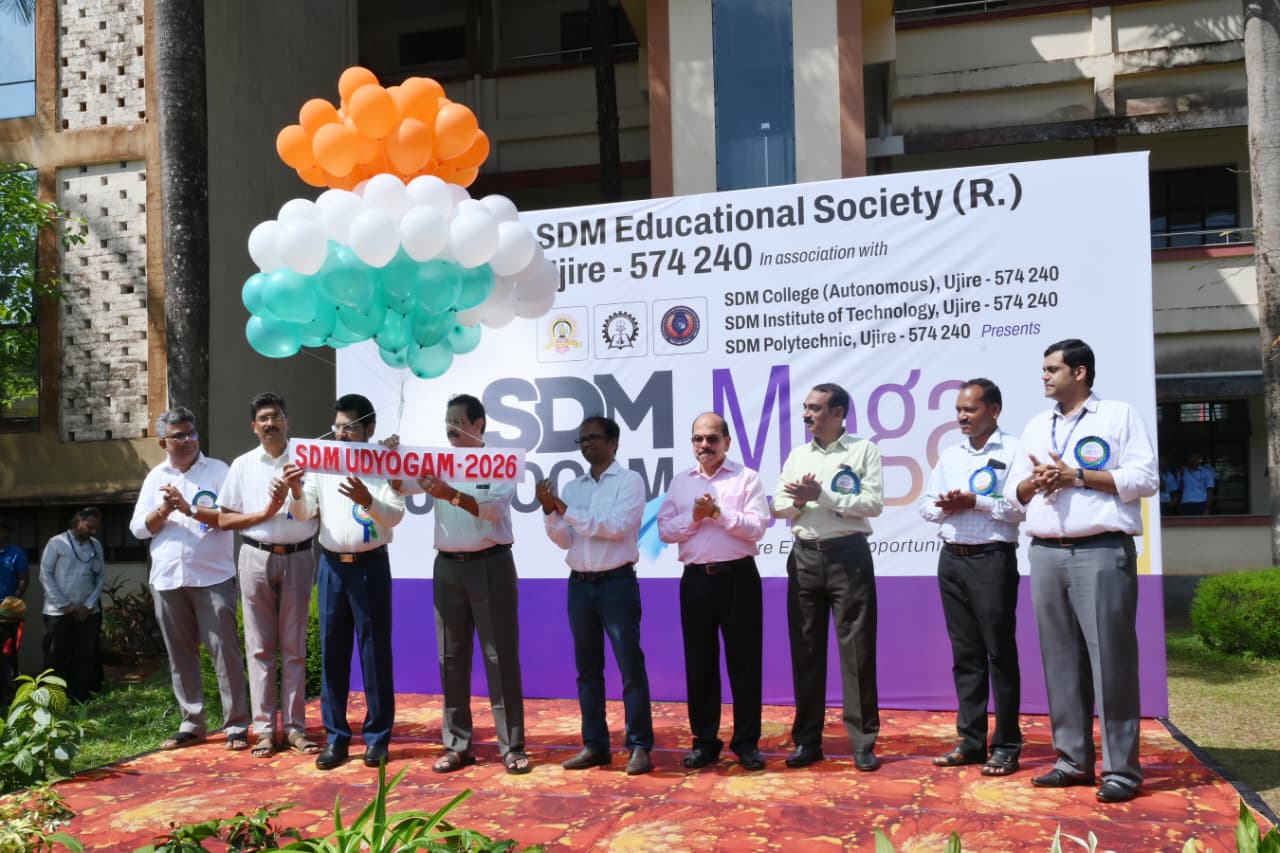
State-level ‘SDM Udyogam 2026’ job fair inaugurated

State-level ‘SDM Udyogam 2026’ job fair inaugurated

Ujire, Apr 07:  A two-day mega job fair, ‘SDM Udyogam 2026’, organised under the aegis of Shri Dharmasthala Manjunatheshwara Educational Institutions (R), was inaugurated at SDM Autonomous College, Ujire.

The state-level job fair was formally launched by Dr Satishchandra S, Secretary of SDM Educational Institutions. Addressing the gathering, he highlighted that one of the biggest challenges in the education sector today is the availability of employment opportunities.

“Many job aspirants are capable, yet remain deprived of suitable opportunities. One of the key reasons is the gap between employers and job seekers. As a solution, this two-day mega job fair has been organised by bringing over 100 companies to a rural setting like Ujire,” he said.

He further noted that the fair is not limited to students of SDM institutions but is open to all job aspirants from the region, offering them a platform to attend interviews and explore career opportunities.

Referring to the vision of Dr D Veerendra Heggade, President of the institutions, he said the initiative aims to ensure that students from rural areas are not deprived of opportunities and resources. “This will provide exposure and new avenues for a large number of rural youth,” he added.

Chief guest of the event Avinash Rao, Founder and CEO of Agrileaf, remarked that industries today are evolving rapidly due to technological advancements. “Changes that once took a generation now occur within a short span. Students must adapt to these shifts. With the growing influence of artificial intelligence, it is essential for youth to become skilled and strive for sustainable success,” he said.

He also emphasised that job aspirants must stay informed about developments in their respective fields. “Educational institutions, like parents, carry the responsibility of enabling students to secure employment and build their lives. SDM institutions are fulfilling this responsibility by organising such a significant job fair,” he added.

During the programme, Avinash Rao was felicitated by the SDM Educational Institutions.

Among those present on the dais were Prof Vishwanath P, Principal of SDM Autonomous College; Dr Ashok Kumar T, Principal of SDM IT College; Santosh, Principal of SDM Polytechnic College; and organising committee secretaries Dr Nagaraj Poojary, Dr Subrahmanya and Amaresh Hebbar.

Various SDM institutions heads, administrative staff, faculty members, and a large number of job aspirants were present during the inauguration. Vaidehi and her team rendered the invocation. The programme was compered by Dr Mahesh Kumar Shetty, Assistant Professor at SDM Autonomous College, who also delivered the vote of thanks.

“This is the first-ever, ambitious and prestigious initiative organised under the guidance of our President Dr D Veerendra Heggade. It will greatly benefit thousands of rural students by opening up new opportunities. I extend my best wishes to all job aspirants and express gratitude to the reputed companies participating in this fair,” said Dr Satishchandra S, Secretary. SDME Society.