Bureau Veritas Acquires Lotusworks, Reinforcing Its Position in Data Centers and Entering the Semiconductor Sector; This Establishes a New c.Eur 300 Million Growth Platform

Business Wire India

Bureau Veritas, a global leader in Testing, Inspection, and Certification services (TIC), announces that it has signed an agreement to acquire Lotusworks, a global leader in mission‑critical assets commissioning and quality assurance and control. This strategic move will uniquely position the Buildings & Infrastructure Product Line to benefit from AI-driven construction investments.


Headquartered in Ireland, Lotusworks is a leading provider of commissioning, quality assurance and quality control, calibration, maintenance, and construction management services for mission‑critical facilities for semiconductors manufacturers and data center owners. The Company operates in the United States and Europe, and employs 750 people including highly skilled experts, serving a diversified base of blue‑chip global clients, including hyperscalers and semiconductor manufacturers. Lotusworks’ activity is supported by long‑term frameworks, a strong multi‑year backlog, and recurring technical services in environments requiring world‑class expertise, and rigorous execution. In calendar year 2025, the company generated EUR 131 million in revenue. This acquisition will enhance Bureau Veritas’ organic growth and will be accretive to the Group’s Adjusted Operating Margin.


The acquisition is a key milestone in the implementation of LEAP | 28, strengthening the Group’s leadership in the Buildings and Infrastructure sector. Combined with Bureau Veritas’ existing data center activities, this creates a new mission-critical platform, unique in the TIC industry. Bureau Veritas becomes a leader in the high-growth, technically complex market of data centers and semiconductors manufacturing. At closing, this platform will represent circa 15% of the Buildings & Infrastructure division.


“The acquisition of Lotusworks is a major milestone for Bureau Veritas,” said Hinda Gharbi, Chief Executive Officer of Bureau Veritas. The company brings outstanding technical capabilities, long‑standing customer relationships, and a strong presence across strategic markets of data centers and semiconductors manufacturing. By combining Bureau Veritas’ rigorous execution, expertise, and global network with the technical know-how of Lotusworks, we are establishing a unique platform of commissioning, validation, and technical assurance for mission-critical assets. This comes at a time when AI expansion is spurring a semiconductor manufacturing, and digital infrastructure new and powerful investment cycle.


This acquisition is fully aligned with our LEAP | 28 portfolio priorities. It will contribute to our goal of doubling the rotation of our portfolio within the next 12 months, from the ~10% level we have attained since the launch of the plan. This acquisition accelerates our portfolio pivot towards higher‑growth, higher‑margin activities.


I am very pleased to welcome all the colleagues from Lotusworks to the Bureau Veritas family.”


The transaction, representing an enterprise value of EUR 375 million, will be financed via existing and recently negotiated credit lines. This implies a 2026e EV/EBITA multiple of 15x. The agreement includes an earn-out mechanism should the business outperform its plan.
Following completion, Bureau Veritas’ net debt is set to remain within the 1x to 2x leverage range as per the LEAP | 28 plan ambition. The deal is anticipated to be slightly accretive to earnings this year.


The transaction is expected to close by summer 2026, subject to customary regulatory approvals.


About Bureau Veritas:


Bureau Veritas is a world leader in inspection, certification, and laboratory testing services with a powerful purpose: to shape a world of trust by ensuring responsible progress. With a vision to be the preferred partner for customers’ excellence and sustainability, the company innovates to help them navigate change.
Created in 1828, Bureau Veritas’ 82,000 employees deliver services in 140 countries. The company’s technical experts support customers to address challenges in quality, health and safety, environmental protection, and sustainability.
Bureau Veritas is listed on Euronext Paris and belongs to the CAC 40, CAC 40 ESG, SBF 120 indices and is part of the CAC SBT 1.5° index. Compartment A, ISIN code FR 0006174348, stock symbol: BVI.


For more information, visit http://www.bureauveritas.com, and follow us on LinkedIn.


Our information is certified with blockchain technology.


Check that this press release is genuine at www.wiztrust.com.


Svante & Meadow Lake Tribal Council Partnership Agrees to Sell Microsoft 626,000 Tonnes of Carbon Removal Credits

Business Wire India

  • Microsoft agrees to purchase 626,000 tonnes of durable carbon dioxide removal (CDR) credits over a 15-year delivery term from the North Star BECCS project in Saskatchewan, Canada.
  • Indigenous ownership: North Star Carbon Solutions LP is a Meadow Lake Tribal Council (MLTC)–Svante partnership.
  • The deal is Microsoft’s first Canadian BECCS CDR offtake agreement and is believed to be the first of its kind in Canada involving Indigenous ownership.
  • The project is co-located at the MLTC Bioenergy Centre and supplied by sustainable waste biomass from MLTC’s adjacent sawmill.


Svante Technologies Inc. (Svante) and Meadow Lake Tribal Council (MLTC) announced today that North Star Carbon Solutions LP has entered into an offtake agreement with Microsoft to deliver 626,000 tonnes of durable carbon dioxide removal (CDR) credits to be delivered over 15 years from the North Star bioenergy with carbon capture and storage (BECCS) project in Saskatchewan, Canada. The project is being developed through a partnership between MLTC and Svante and will be co-located at the MLTC Bioenergy Centre in Meadow Lake.


This press release features multimedia. View the full release here: https://www.businesswire.com/news/home/20260406630377/en/


As part of the project, a new carbon capture plant will be established at the MLTC Bioenergy Centre, a renewable power generation facility supplied by sustainable waste biomass from the adjacent sawmill owned by MLTC and other local forest product mills. The new plant will be owned by North Star Carbon Solutions LP, a partnership between MLTC and Svante’s recently acquired subsidiary, Carbon Alpha Corp. At capacity, the carbon capture plant will generate up to 90,000 tonnes of CDR credits per year and deliver CDR credits to Microsoft over a 15-year period. Captured CO2 will be safely transported and permanently stored at a geologic storage site owned and operated by North Star, providing a fully integrated system for carbon removal from source to sink.


The CDR credits delivered under the agreement are expected to be independently verified and issued in accordance with applicable carbon removal crediting standards and robust monitoring, reporting, and verification (MRV) practices. The North Star project plans to use waste biomass and to monitor CO2 capture, transport, and permanent geologic storage to support long-term durability.


Svante will provide all funding required until the decision is made to start construction. Commercial operation is planned for early 2029.


Scott Gardner, President of Svante Development Inc. said, “We are excited about this landmark agreement for BECCS in Canada, which is the result of Microsoft’s leadership in carbon removal. Microsoft’s anchor offtake commitment sends a strong signal to the market about the quality of North Star’s CDRs and the readiness of the Canadian market to deliver such projects.”


“Meadow Lake Tribal Council welcomes Microsoft’s significant offtake commitment for the North Star project,” said Jeremy Norman, Tribal Chief, Meadow Lake Tribal Council. “As a Canadian Indigenous-owned BECCS project that is believed to be among the first of its kind, North Star reflects MLTC Nations’ long-standing commitment to land stewardship and sustainable forest management. The project demonstrates how Indigenous leadership and collaboration can advance climate solutions while supporting meaningful employment and economic opportunities for our member Nations and the surrounding community.”


“We’re pleased to work with North Star Carbon Solutions and Meadow Lake Tribal Council to help advance high-quality, durable carbon dioxide removal,” said Phillip Goodman, Director of Carbon Removal Portfolio, Microsoft. “To meet our climate goals, we need to help scale solutions that deliver durable storage and are backed by rigorous monitoring and verification. This agreement supports an Indigenous-led collaboration that enables the infrastructure needed to bring durable carbon removal online in Canada, thus creating a pathway for additional projects over time.”


North Star is expected to create approximately 50 local jobs during the development and construction phase, and up to 10 ongoing jobs once the facility is operating, creating valuable employment opportunities for the Meadow Lake community. In addition, the project will support the local economy by increasing demand for nearby businesses such as restaurants, hotels, and service providers.


About Meadow Lake Tribal Council (MLTC)


MLTC was formed in 1981 and represents nine First Nations located in Northwest Saskatchewan. MLTC invests in businesses to meaningfully participate in Saskatchewan’s economy, supporting economic reconciliation in a rural and remote area of the province. 100% of the distributions flow to the nine First Nations, to foster local economic growth; enhance on-reserve education; healthcare; youth and elder programs; housing; and other community social and infrastructure needs.


About Svante


Svante is a fully integrated carbon management company headquartered in Vancouver, BC, Canada. The company manufactures nanoengineered solid sorbent filters and modular rotating contactor machines, licenses CO2 capture technologies and offers project development services and capital covering the entire carbon capture, removal, and storage value chain. Svante is on the 2025 Global Cleantech 100 Hall of Fame and TIME & Statista’s list of Top Greentech Companies of 2025. For more information, visit www.svanteinc.com.


Goa creates platform for startups to pitch to investors

Goa creates platform for startups to pitch to investors

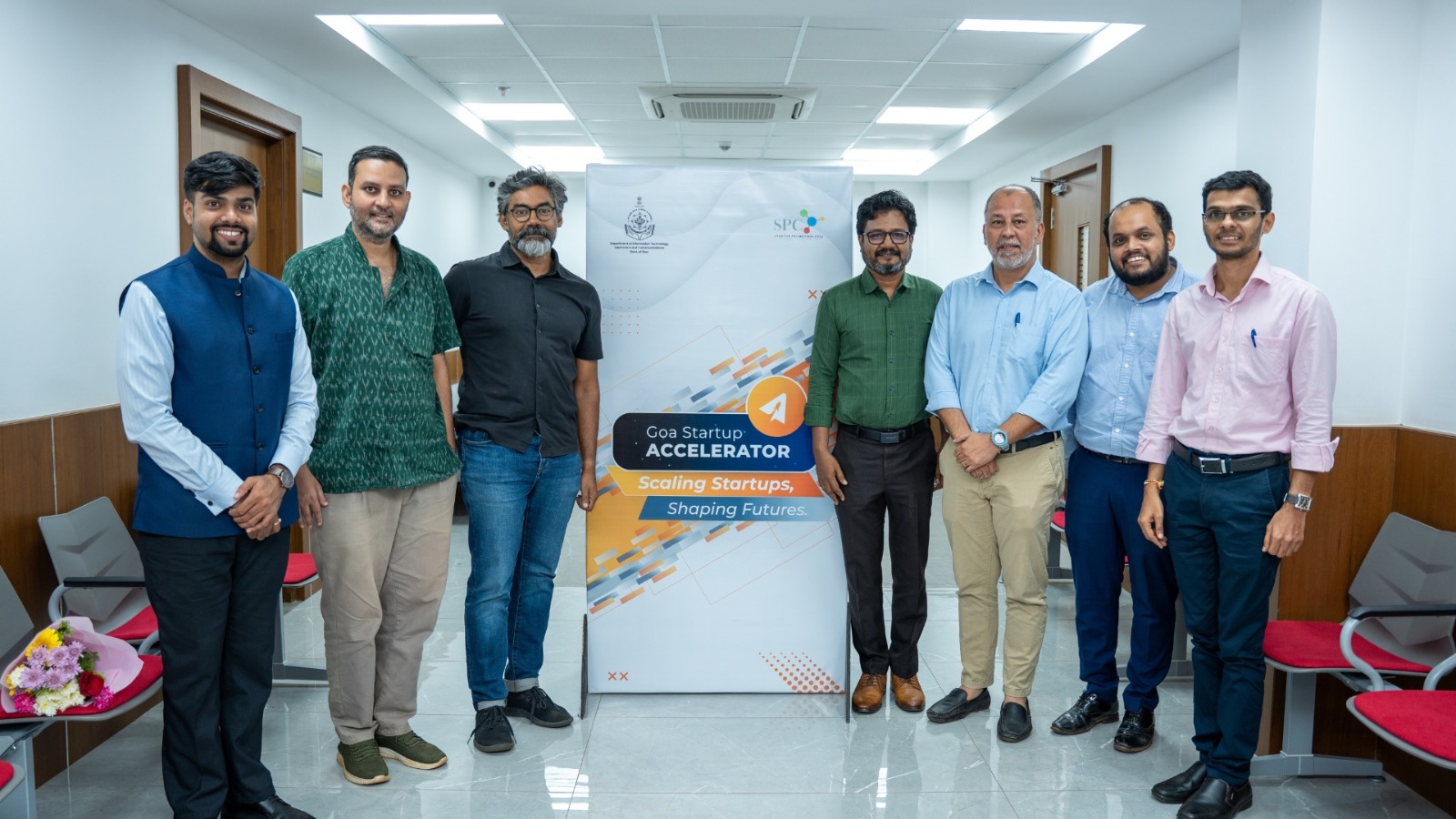
Panaji, Apr 07: The Goa Startup Accelerator (GSA) Programme, an initiative of the Department of Information Technology, Electronics & Communications (DITE&C), Government of Goa, through the Startup & IT Promotion Cell (SITPC), has marked an important milestone, reflecting steady progress in strengthening the state’s startup ecosystem.

 
Launched on February 12, 2026, the five-month structured accelerator programme has been designed to support startups through focused mentorship, market access and growth opportunities.
 
The programme witnessed an encouraging response, with over 160 applications received, out of which 45 startups were shortlisted for the accelerator. Over the past few weeks, these startups have undergone a series of focused sessions covering key areas such as business model refinement, product-market fit, technology integration, scaling strategies and investor readiness.
 
As part of this phase, a first milestone demo day was held on March 30 and March 31, 2026, bringing together around 41 startups who presented their ventures. The startups shared insights into their ideas, innovations and the progress made through the programme, highlighting the diverse and technology-driven solutions emerging from Goa’s entrepreneurial ecosystem. Following the presentations, 26 startups have been selected to move ahead to the next stage of the programme. The evaluation and selection process was carried out by a distinguished panel of jury members composed of investors and Industry experts. 
 
Shri Kabir Shirgaonkar, Director, DITE&C, highlighted that the Goa Startup Accelerator Programme is a first-of-its-kind initiative for the state, designed to provide structured and sustained support to startups. The strong response and the quality of participation reflect the growing entrepreneurial energy in Goa, and the department remains committed to enabling startups through the right ecosystem, guidance and opportunities.
 
One of the Industry experts Shri. Indraneil Borkakoty, while sharing his perspective on the programme, stated that the overall quality of startups and the ideas presented over the two days have been extremely encouraging. He noted that the innovative use of technology across sectors reflects strong potential and expressed confidence in seeing many more such innovators emerging from Goa.
 
Shri. Gaurav Pokle, Founder and Director, Reclevo Pvt. Ltd, while sharing his experience, stated “Having been in business for several years and having built ventures previously, I chose to be part of this process because it offered an opportunity to learn and engage with industry experts. The interaction provided valuable insights into the mindset required to build and sustain a startup, along with the reality checks that are essential at every stage of growth. I would also like to thank Hon’ble Minister for IT Shri Rohan A. Khaunte for ensuring that the startup ecosystem in Goa remains inclusive. The initiative has evolved to support not only startups with developed products, but also those at the idea stage, giving aspiring entrepreneurs the confidence and encouragement to take their first step.”
 
Through such initiatives, DITE&C continues to strengthen Goa’s innovation-driven ecosystem and support startups at every stage of their growth journey.

Seeti 2.0 puts Meghalaya on the global culinary map through deep cultural immersion

Seeti 2.0 puts Meghalaya on the global culinary map through deep cultural immersion


Shillong, April 6, 2026: Seeti 2.0, a never-before-seen five-day culinary immersion initiative, brought together around 50 chefs, creators, and storytellers for an experience designed to go beyond conventional food tourism in Meghalaya. Unlike typical food festivals, Seeti 2.0 focused on deep cultural engagement, with participants experiencing Meghalaya through its communities, landscapes and traditions.

Seeti Movement is a platform for people in the food industry to come together at different locations and experience not only the space, but also celebrate the generosity of feeders. The guests give back to each other or to the environment. Rooted in a pillar of generosity, it seeks to reawaken the spirit of Atithi Devo Bhava, fostering a culture of respect, openness, and shared value. Rather than fleeting engagement, it builds lasting ideas, collaborations, and intellectual capital beyond the event itself.

“This year, Seeti 2.0 Meghalaya Experience decided to do things differently. Keeping our mission in mind, we explored how we could work in the North East and introduce it to our storytellers, so they can carry the food, craft, and culture of Meghalaya forward. We wanted to understand what we could give to Meghalaya, and what we could introduce to the rest of the world as well. This year, Seeti 2.0 Tables in the Clouds not only focused on the food of India and the food industry, but also directly invited local chefs to curate experiences, and to share and participate in our panel discussions,” said Priyadarshini Raje Scindia, Co-Founder of the Seeti Movement.

The Seeti 2.0 Meghalaya experience was preceded by nearly a year of on-ground research and curation, with the team mapping Meghalaya’s landscapes, communities and food systems to identify locations and narratives that best represent the state’s diversity. This translated into carefully designed experiences set in unique and context-rich environments, from curated meals following the visit to the sacred forest, to immersive sessions at tea estates overlooking Umiam Lake, allowing participants to engage with the cultural and ecological significance of each setting rather than viewing them as standalone destinations. The programme was also structured around the cultural identities of Meghalaya’s Khasi, Jaintia and Garo communities.

“Designed as a cultural platform rather than a conventional food event, Seeti focused on creating deeper connections between our Storytellers and local contexts. In many food-led events, the deeper conversation gets lost if it is only about food. We wanted each experience to reflect something iconically rooted in the place. A key aspect of the initiative was its emphasis on participation over observation, allowing visitors to experience food within its cultural and social context. People begin to feel a sense of ownership when they experience something meaningful, whether it is an experience at the sacred forest, a tea estate or a community meal,” said Sid Mewara, Co-Founder of the Seeti Movement.

Mewara also noted, “Many visitors arrived with a limited understanding of regional cuisines. There is a perception that it is only very spicy or non-vegetarian food, but once people experience it, they realize the depth and diversity, from vegetarian dishes to subtle flavours that can be cherished among the locals at breathtaking venues”.

The Seeti 2.0 Meghalaya programme also highlighted how local food systems are inherently sustainable. Organizers pointed to practices such as local sourcing, low carbon consumption, use of whole ingredients and community-based food systems as examples of long-standing ecological balance.

“The initiative also reinforced the importance of responsible and respectful tourism, encouraging visitors to engage with heritage spaces such as sacred forests and community-owned ecosystems. The initiative also highlighted how food can serve as an entry point into larger conversations around identity, sustainability and responsible tourism. The idea was to balance heritage and modernity, with visits to contemporary dining spaces alongside traditional settings, offering a holistic perspective on the evolving Northeastern urban culture,” said Priyadarshini.

While the on-ground programme involved around 50 participants, organizers said its impact is designed to scale through Live and post-event storytelling through its carefully selected guests, which included world-renowned chefs, hoteliers, investors, traditional media, new age content creators, and marketing professionals. Seeti 2.0 aimed to enable its guests to become its storytellers, to accelerate inbound tourism for the State.

Seeti 2.0 Meghalaya Experience was also designed to merge with Meghalaya Government’s existing food festival, Culinary Cascades, where Seeti 2.0 storytellers were again able to directly meet farm-to-table vendors and chefs, as well as hold a panel on the future of Meghalaya’s food, craft, and journey.

The founders of Seeti 2.0 also highlighted the role of Meghalaya Government’s Support in enabling the initiative, noting that proactive coordination by state agencies helped facilitate access and logistics across locations. When a state comes forward and supports an initiative like this, it allows us to build something much larger than an event. It creates an ecosystem that organically surpasses the event.

Following the success of Seeti 2.0 Meghalaya edition, the experience has emerged as a scalable model for cultural tourism in India, with organizers positioning the platform as a format that can be adapted across states by combining food, community engagement and storytelling at offbeat locations. The event also includes a long-form film documenting the experience, with participants serving as storytellers, carrying narratives to wider audiences.

Lenovo 360 Framework Evolves with Simplified Tiers, Services Growth Pathways, and New Technical Community

Business Wire India

Lenovo today announced new enhancements to its global channel framework, Lenovo 360, building on the success of its channel-centric model to further simplify and accelerate partner growth.


Lenovo 360 has become the foundation for how Lenovo enables, connects with, and grows alongside its global partner ecosystem. These latest updates reflect Lenovo’s continued commitment to evolving the partner experience and creating more intuitive, scalable paths to growth.


“The channel is central to how we do business,” said Pascal Bourguet, Chief Sales Strategy & Channels Officer at Lenovo. “It’s how we scale, how we innovate, and how we grow together. With these latest enhancements to Lenovo 360, we’re making it simpler, more predictable, and more rewarding for partners to build their business with us. From services-led growth to new technical communities and streamlined tiering, we’re focused on giving partners clear pathways to expand their capabilities, drive profitability, and deliver greater value to their customers in a rapidly evolving market.”


What’s new with Lenovo 360


Simplifying Lenovo 360 Tiers for Greater Predictability and Growth


Lenovo is simplifying its partner Tiers to create a more transparent and predictable path to growth, making it easier for partners to understand how they progress, earn, and scale.


The updated model reduces complexity by streamlining tiers and aligning incentives more closely to overall partner performance, combining revenue growth with capability development through skills and accreditations, with a clear progression from Authorized to Gold to Platinum and beyond.


All partners begin at the Authorized level, gaining access to Lenovo 360 Elevate, a reimagined growth engine designed to activate engagement and accelerate partner development.


As partners progress to Gold and higher tiers by growing their business, building skills, and achieving accreditations, they unlock enhanced financial incentives, co-selling opportunities, and expanded access to Lenovo resources, with advanced levels offering increasing recognition and collaboration across Lenovo’s global ecosystem.


To support this journey, Lenovo has introduced an enhanced digital experience through the Lenovo 360 Partner Hub, providing real-time visibility into performance, accreditations, and progression milestones, giving partners greater control and predictability over their growth.


This simplified structure reflects Lenovo’s ongoing commitment to reducing complexity and delivering a more intuitive, rewarding partner experience.


Accelerating Partner Growth with Lenovo 360 for Services


Coming April 13, Lenovo will expand its services-led strategy with Lenovo 360 for Services, a structured pathway designed to help partners support the shift to recurring, outcome-based business models.


As customer demand shifts toward lifecycle services and end-to-end solutions, many partners are looking to build new capabilities while scaling profitability. Lenovo 360 for Services addresses this by providing a clear, flexible framework that enables partners to attach services to every deal and evolve toward higher-value solutions over time.


Through a combination of ready-to-sell attached services and advanced solutions—including digital workplace, hybrid cloud, AI, and Lenovo TruScale™ as-a-service offerings—partners can expand their portfolios, increase deal value, and create predictable recurring revenue streams.


The pathway integrates enablement, sales tools, and incentives into a single experience, giving partners access to training, marketing resources, and guided selling platforms that simplify how they build and deliver services-led solutions.


Lenovo’s momentum in this space reflects growing partner demand, with the company’s services business expanding at twice the rate of the overall IT services market, underscoring the opportunity for partners to accelerate growth through services-led transformation.


Expanding Lenovo 360 for MSPs in new markets


Building on this momentum, Lenovo is also expanding its Lenovo 360 for Managed Service Providers (MSPs) pathway in additional markets, reflecting strong partner adoption and growing demand for as-a-service delivery models.


Following a successful pilot, the MSP pathway will expand across UK&I, Nordics, Benelux, Brazil, Mexico, and Australia, effective April 1. As Lenovo’s most mature and widely adopted partner pathway, Lenovo 360 for MSPs has already engaged thousands of partners globally and is on track to exceed $100 million in revenue by year-end.


By providing MSPs with tailored tools, training, and incentives, Lenovo enables partners to integrate Lenovo solutions into their own managed service offerings, helping them scale recurring revenue, increase profitability, and deliver outcome-based services more efficiently.


“Lenovo 360 for MSP has greatly simplified our support process and boosted profitability,” said Nick Allo, IT Director for SemTech IT Solutions. “By standardizing our offerings around workstations and laptops, we bundle services and accessories to provide a full system to our clients. This allows us to add value, achieve up to 25% margins, and warranty services as an Authorized Service Provider. Overall, Lenovo’s been a strong partner who’s helped us grow and listened along the way.”


Elevating Technical Expertise through Lenovo 360 Tech Connect


Beginning its rollout in April, Lenovo is also launching Lenovo 360 Tech Connect, a global technical community designed to help partners build deeper expertise and deliver more complex, solution-led outcomes for customers.


As demand for AI, hybrid cloud, and advanced infrastructure solutions accelerates, partners face a growing need for deeper technical expertise. Lenovo 360 Tech Connect addresses this by bringing together presales engineers, solution architects, and technical specialists in a collaborative, community-driven environment.


Through the community, members gain access to tailored technical enablement, curated learning resources, and direct engagement with Lenovo experts, enabling them to design, position, and deliver solutions with greater confidence and speed.


The community also introduces new opportunities for recognition and career development, rewarding technical contribution and expertise while strengthening partners’ credibility with customers.


By fostering collaboration and continuous learning, Lenovo 360 Tech Connect reflects Lenovo’s broader commitment to building a more connected, capable partner ecosystem—where technical excellence becomes a key driver of growth and differentiation.


To learn more about Lenovo 360, visit lenovopartnerhub.com/.


About Lenovo


Lenovo is a US$69 billion revenue global technology powerhouse, ranked #196 in the Fortune Global 500, and serving millions of customers every day in 180 markets. Focused on a bold vision to deliver Smarter Technology for All, Lenovo has built on its success as the world’s largest PC company with a full-stack portfolio of AI-enabled, AI-ready, and AI-optimized devices (PCs, workstations, smartphones, tablets), infrastructure (server, storage, edge, high performance computing and software defined infrastructure), software, solutions, and services. Lenovo’s continued investment in world-changing innovation is building a more equitable, trustworthy, and smarter future for everyone, everywhere. Lenovo is listed on the Hong Kong stock exchange under Lenovo Group Limited (HKSE: 992) (ADR: LNVGY). To find out more visit https://www.lenovo.com, and read about the latest news via our StoryHub.


Onix Expands Google Cloud Partnership to Accelerate Enterprise AI & Data Transformation

New York, April 6, 2026Onix, a leading Data and AI services-as-software company, today announced a major expansion of its strategic collaboration with Google Cloud, aimed at accelerating enterprise-scale cloud, data, and AI transformation.

At the core of this collaboration is Onix’s proprietary Wingspan platform, an agentic AI and data modernization solution that enables enterprises to achieve business outcomes up to three times faster than traditional consulting models. The platform introduces an industry-first Semantic Twin model, designed to provide enterprise context and business ontology for AI agents, enabling faster and more accurate decision-making.

As organizations move beyond AI experimentation toward full-scale production, demand is rising for partners that can deliver speed, accountability, and measurable return on investment. Onix addresses this shift through its structured AI Innovation Hub and outcome-driven delivery model, which allows enterprises to transition from concept to production at greater speed and scale. The company reports that thousands of AI agents powered by its platform are already deployed across Fortune 500 environments.

“AI success is defined by what runs at scale, solving business workflows,” said Sanjay Singh, CEO at Onix. “Through our expanded collaboration with Google Cloud, we are redefining how enterprises execute cloud, data, and AI transformation. Our AI-assisted, IP-led approach is built for speed, scale, and accountability, enabling organizations to unlock the full ROI of the AI-powered enterprise.”

The expanded collaboration is anchored around three key pillars:

  • Joint Go-to-Market and Vertical Investment: Focused expansion of Onix’s Google Cloud business units, supported by joint GTM strategies and investments to address enterprise demand across multiple industry verticals.
  • Unified Platform Power: Deployment of the Wingspan platform to automate data modernization and accelerate AI enablement, turning AI-ready data into reality within weeks rather than years.
  • Outcome-Based Enterprise Model: Transition from traditional large project teams to AI-assisted, IP-driven delivery pods that prioritize measurable business KPIs and deliver outcome-based results.

“Generative AI is fundamentally changing how businesses operate, fueling a new era of cloud innovation,” said Victor Morales, Vice President, GSI and Consulting Partnerships at Google Cloud. “By leveraging Google Cloud’s advanced generative AI capabilities, Onix can help customers unlock insights, improve operations, and drive productivity.”

Through this strengthened collaboration, Onix and Google Cloud aim to help enterprises move from AI ambition to operational reality, delivering scalable and validated solutions that create long-term competitive advantage.

Europe accounts for half of the world’s top 10 seasonal chocolate markets: Euromonitor International

London, UK – From Easter eggs in the UK and Germany to refined gifting boxes in France and Switzerland, Europe continues to dominate the seasonal chocolate industry, accounting for half of the world’s top 10 seasonal chocolate markets by value, according to market intelligence company Euromonitor International.

Among those top markets, the fastest value growth in 2025 is being recorded in Switzerland (23%), Germany (18%) and France (18%). However, this surge is largely price-driven rather than demand-led, reflecting the impact of tariffs and the passthrough of high cocoa commodity costs. Outside of Europe, the US, Japan, Canada, Brazil and Australia appear on the ranking.

Meanwhile, the global seasonal chocolate market reached USD 16 billion globally in 2025, underlining the category’s enduring importance even as consumers become more price conscious.  According to Euromonitor International’s Voice of the Consumer: Lifestyle Survey, fielded January to February 2026, 29% of global consumers tend to eat snacks during the holidays, a figure that remains unchanged from 2025.

Carl Quash III, global insights manager for snacks at Euromonitor International, said: “Despite chocolates made with costly cocoa still in market and evolving geopolitical risks, like global conflicts and SNAP food restrictions, demand for seasonal chocolate is holding up better than others because of the strong emotional and tradition-driven value assigned to it.”

Retail takes the lead as supermarkets shape Easter chocolate innovation

Supermarket retailers have emerged as some of the most dynamic innovators in the seasonal chocolate space, with retailers such as Aldi, M&S, Waitrose and Costco driving growth through curated collections, limited-edition ranges and experience-led products that tap into consumer demand for novelty and shareability.

According to Quash: “Supermarkets are uniquely positioned in that they hold large consumer reach with real-time visibility into purchasing behaviour, emerging preferences and now more tapped into social media trends – even displaying visually striking ‘Dubai-style’ chocolates and other pistachio-infused creations for example. Unlike traditional retailers, supermarkets provide scale for testing limited editions, rotating seasonal offerings and fulfilling consumer affordability demands through private labels. Retailers are also evolving to quickly reposition brand identity and create in-store experiences that feel fresh, relevant and exclusive.”

Climate change and geopolitical tensions impact the market in the coming years

While seasonal chocolate continues to show strong global growth, the underlying story is less about rising consumption and more about rising costs. Value gains across key markets are being driven primarily by higher prices linked to the ongoing cocoa supply crisis, itself exacerbated by climate change and sharp harvest decline in major producing countries. At the same time, geopolitical tensions, including trade disruptions and tariffs on key inputs such as cocoa butter, sugar and dairy are adding further pressure to already strained supply chains.

Quash added: “Behind the headline growth in Easter chocolate lies a more complex reality. Climate-related disruptions to cocoa production, combined with geopolitical pressures on trade and inputs have pushed prices higher globally, meaning consumers are often paying more for less, even as the emotional importance of seasonal chocolate remains unchanged.”

Read more insights on Chocolate Confectionery at Euromonitor’s Insights Hub to explore how global trends, pricing pressures and innovation are shaping the future of seasonal chocolate.

Darjeeling to Host ‘Colours of India 2026’ Showcasing Classical Music and Dance on April 15

Darjeeling is set to witness an evening steeped in India’s rich cultural heritage as Swaranjali Delhi presents Colours of India 2026 Darjeeling, a celebration of Indian classical vocal, instrumental music, and dance. The event is being organised in association with Hakimpara Nritya Malancha and Himalaya Kala Mandir.

Scheduled for April 15, 2026, the programme will take place at the Himalaya Kala Mandir, Donovan Park on Hill Cart Road, beginning at 5 PM onwards. The event aims to bring together renowned artists and emerging talents on one stage, offering audiences a vibrant glimpse into India’s diverse classical traditions.

Darjeeling to Host ‘Colours of India 2026’ Showcasing Classical Music and Dance on April 15

The evening will feature performances by noted artists, including Smt Sangita Chaki, Shri Subrata De, Pt Subir Adhikary, Ms Roushni Sarkar, Ms Hrishita Das, and Ms Sampurna Biswas, along with disciples of Smt Iswari Chhettri. The event will be anchored by Smt Moumita Biswas.

Organisers say the initiative is part of an ongoing effort to promote and preserve Indian classical arts while creating platforms for both established performers and young disciples to showcase their talent.

Open to all art enthusiasts, the event invites audiences from Darjeeling and nearby regions to experience an enriching cultural evening.

For further details and RSVP, interested attendees can contact Swaranjali Delhi and NrityaMalancha Siliguri at 9910300319 or 9434006943, or visit www.swaranjali.org and www.nrityamalancha.com.

Shreyas Webmedia Solutions is the official media partner.


Mapping India’s Crypto Policy Evolution Through Parliamentary Questions

India’s relationship with crypto assets has never been simple, but what is unfolding inside Parliament reflects a shift beyond the usual debates around bans and permissions. The sessions running through 2025 and into early 2026 have taken on a more structured tone. Lawmakers are no longer focused on defining virtual digital assets; instead, discussions are increasingly centred on financial flows, compliance mechanisms, and the broader potential of the underlying technology for public use. This shift suggests that India’s crypto policy is becoming more structured and enforcement-oriented, while conversations continue around enabling innovation and participation.

One of the more notable data points to emerge from recent sessions is the state-wise breakdown of TDS collected on crypto transactions. The numbers indicate strong growth. Nationwide collections rose from roughly 221 crore rupees in 2022–23 to over 511 crore rupees by 2024–25. Maharashtra alone contributed 293.40 crore rupees of that latest figure, accounting for a significant share of the country’s crypto tax revenues. Karnataka also recorded substantial growth, increasing from just under 39 crore rupees to nearly 134 crore rupees during the same period.

India’s Evolving Crypto Discourse: A Deep Dive into Parliamentary Questions and Policy Discussions Since 2025

The regional trends are equally revealing. Delhi, which recorded relatively low collections in 2023–24, saw a sharp increase to over 28 crore rupees the following year, indicating growing participation in crypto-related activities. Telangana, on the other hand, saw a decline in collections, while states such as Uttar Pradesh and Bihar continued to report comparatively lower figures. Overall, the data reflects a market that is expanding but remains concentrated in key financial and technology-driven regions rather than being evenly distributed across the country.

The regulatory response has focused on strengthening oversight and compliance. Virtual digital assets have been brought under the framework of the Prevention of Money Laundering Act, providing greater regulatory clarity for stakeholders. Authorities have also taken steps to address non-compliant offshore platforms by issuing notices and restricting access where necessary. In parallel, enforcement agencies have acted against instances of financial misconduct linked to digital assets, with investigations leading to asset seizures and legal proceedings in certain cases.

In early 2026, onboarding requirements for crypto platforms were further strengthened. The updated KYC framework now includes measures such as liveness verification, geo-tagged data, and bank account validation to enhance user authentication. These steps are aimed at improving transparency and traceability within the ecosystem. Additionally, over 13,800 law enforcement personnel have been trained to handle crypto-related investigations, supported by digital forensic capabilities.

At the same time, discussions in Parliament continue to highlight the potential of blockchain technology beyond trading. The National Blockchain Framework is being explored for applications in public administration, with examples such as e-stamp systems in Maharashtra and mobile-based authentication solutions in Madhya Pradesh already in operation. These developments point to a broader approach that balances regulatory oversight with the exploration of technological use cases.

Taken together, recent parliamentary discourse reflects a more defined policy direction. The focus is on enhancing transparency, strengthening compliance, and exploring practical applications of blockchain technology. As the ecosystem evolves, the emphasis will likely remain on maintaining this balance while supporting sustainable growth.

AIIMS Delhi Introduces Virtual Reality Facility to Enhance Medical Training

All India Institute of Medical Sciences Delhi has introduced a state-of-the-art virtual reality (VR) training centre aimed at enhancing medical education and clinical training for students.

The new facility uses immersive VR technology to simulate real-life medical scenarios, allowing students to practice procedures and decision-making in a controlled, risk-free environment. This approach is expected to strengthen practical skills and improve confidence before handling actual patients.

According to institute officials, the initiative is part of a broader effort to integrate advanced technology into medical training and keep pace with global standards in healthcare education. The VR centre will support learning across multiple disciplines, offering interactive modules tailored to various medical specialties.

The launch marks a significant step toward modernizing medical education in India, providing students with innovative tools to gain hands-on experience and improve patient care outcomes.