STAAH solutions help JPW Resorts properties earn 3x revenue from OTA bookings

Mumbai, May 08: STAAH, a leading global hospitality technology solutions provider, has announced significant business growth for Gujarat-based hospitality group JPW Resorts Ltd. following the deployment of STAAH’s Channel Manager across its properties.

Within a year of implementation, JPW Resorts’ premium boutique property Soulbay in Garudeshwar and 3-star hotel Vivotel in Surat have reported a three-fold increase in revenue generated through Online Travel Agency (OTA) bookings, alongside stronger brand visibility and placement across major travel platforms.

Soulbay is a 96-room luxury boutique hotel situated along the banks of the Narmada River, offering premium hospitality experiences and curated guest services. Meanwhile, Vivotel features 92 rooms catering to both business and leisure travellers.

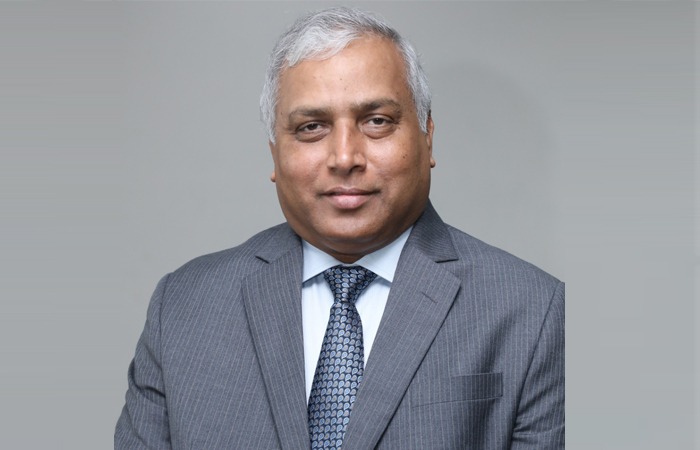
Commenting on the partnership, Jyotirmay Gayen said, “We currently operate two hotels and are in the process of growing our portfolio across multiple locations. Our biggest challenges lie in managing rates, inventory and listings across different OTA platforms. Over the past year since we’ve partnered with STAAH, we’ve seen a huge shift as our operations have become more integrated. We’re clocking a three-fold increase in our OTA revenue and are much more visible and accessible to travellers making their bookings online.”

STAAH’s Channel Manager enabled JPW Resorts to streamline multi-property operations through automated inventory updates, dynamic rate management, and real-time performance analytics. The platform also supports seamless integration with existing hotel management systems while reducing manual errors and improving operational efficiency.

Shoaib Ali said, “For a multi-property group like JPW Resorts, operational excellence across different categories of hotels and steadily growing revenue are always the two main asks. Our Channel Manager transforms these challenges into opportunities for them in the simplest, easiest manner, allowing them to freely focus on their growth journey.”

Headquartered in New Zealand, STAAH currently supports more than 20,000 accommodation providers across 90 countries through its suite of hospitality technology solutions, including channel management, booking engines, reputation management, websites, vouchers, and Global Distribution Systems (GDS).

STAAH operates across New Zealand, Australia, India, UAE, Malaysia, Philippines, Thailand, Indonesia, Vietnam, the UK, and Europe, helping hotels, motels, and vacation rentals optimize online bookings and revenue growth.

The company is also part of The Access Group, one of the UK’s leading business management software providers, serving over 128,000 organizations globally with cloud-based and AI-powered enterprise solutions.


CANTABIL Unveils SS26 Campaign ‘Take the Reins’ Celebrating Individuality

New Delhi, May 08: Cantabil Retail India Limited, one of the country’s leading apparel manufacturers, has unveiled its Spring Summer 2026 collection, “Take the Reins,” a campaign that celebrates individuality, confidence, and self-expression through contemporary fashion. Designed for the modern consumer, the collection brings together versatile silhouettes, breathable fabrics, vibrant summer palettes, and elevated craftsmanship across menswear, women’s wear, and kids’ wear categories.

CANTABIL Unveils SS26 Campaign ‘Take the Reins’ Celebrating Individuality

Built around the idea of self-direction and effortless fashion, the SS26 collection reflects the evolving mindset of today’s consumers—where style is not just about clothing, but a powerful expression of identity, intent, and confidence. Through contemporary silhouettes, breathable fabrics, elevated occasion wear, and versatile everyday essentials, the collection captures the spirit of modern summer dressing.

The collection features a thoughtfully curated colour palette inspired by the changing moods of summer, including vibrant tropical hues, earthy neutrals, soft pastels, elegant ivory tones, and refreshing nudes. From statement occasion wear and ceremonial styles to relaxed vacation-ready fits and refined formalwear, the range blends comfort with sophistication across categories for men, women, and kids.

Crafted using premium linen blends, pure 2-ply cottons, cotton-stretch fabrics, bamboo blends, rayons, structured TR, and innovative polyamide fabrics, the collection prioritizes ease of movement, breathability, and all-day comfort. Design details include timeless checks, bold back prints, tropical florals, contemporary abstracts, sequins, embroidery, stripes, and textured finishes that bring versatility and freshness to the season.

Speaking about the campaign, Deepak Bansal, Director, Cantabil Retail Pvt. Ltd., said

“The SS26 campaign’s tagline ‘Take the Reins’ perfectly captures the spirit of confidence and individuality that defines this collection. Through this campaign, we wanted to encourage consumers to embrace fashion as a reflection of their personality and self-expression. The collection combines comfort, craftsmanship, and contemporary aesthetics to create styles that empower people to lead with confidence in every aspect of their lives.”

The SS26 collection is divided into three key style narratives:

Vacay Escape brings together breezy linens, playful prints, oversized silhouettes, tropical shirts, relaxed denim, and effortless dresses inspired by sun-soaked getaways and easy summer living.

Signatured Formals reimagines modern power dressing through wrinkle-free shirts, tailored trousers, textured blazers, travel suits, and breathable fabrics designed for today’s professionals.

Ceremonial Glamour celebrates festive elegance with tailored suits, bandhgalas, embroidered ethnic ensembles, reversible waistcoats, sequined detailing, and sophisticated accessories crafted for memorable occasions.

With “Take the Reins,” CANTABIL continues to strengthen its positioning as a contemporary fashion destination that seamlessly blends style, comfort, versatility, and individuality for the modern Indian consumer.

Maharashtra’s Pollution Control Chief Takes India’s Environmental Governance Case to Europe

Business Wire India

Siddhesh Kadam, Chairman of the Maharashtra Pollution Control Board (MPCB) and a Shiv Sena leader within Maharashtra’s Mahayuti ruling alliance, appeared before a high-profile international panel at the Plastic Recycling Show Europe 2026 (PRSE 2026) in Amsterdam on 6 May, becoming the only serving Indian government official on the panel and the first Maharashtra regulator to address this global forum.


The panel, titled ‘Importance of Traceability for Global Plastic Trade,’ brought together regulators, recycling industry leaders, and policymakers from across Europe and Asia at what is widely recognised as the continent’s pre-eminent plastic industry event. For Mr. Kadam, the appearance was both a platform and a responsibility, to represent India’s regulatory position at a moment when global plastic governance is in active and consequential flux.


Central to Mr. Kadam’s address was a fact that surprised several European delegates: India’s national plastic packaging traceability system is already operational. Since 1 July 2025, every plastic packaging unit produced or sold in India must carry a machine-readable QR code or barcode linked in real time to the manufacturer’s registration on the Central Pollution Control Board’s EPR portal, a mandate that covers over twenty million tonnes of plastic annually, with no exemptions by industry sector or company size. Cross-referencing with GST registration data ensures the system has teeth.


The European Union’s comparable mechanism, the Digital Product Passport under the Ecodesign for Sustainable Products Regulation, is projected to extend to plastics and packaging only around 2028 to 2030. India’s system is live today, at a national scale no single European country can match. Mr. Kadam placed this fact before the Amsterdam audience without triumphalism, framing it instead as the basis for a bilateral technical conversation between India and Europe on aligning their respective traceability architectures.


“India is not asking to be written into the global plastic conversation. It is already in it with a framework, with enforcement data, and with the scale that makes its participation indispensable to any solution that actually works.”


— Siddhesh Kadam, Chairman, MPCB, at PRSE 2026, Amsterdam


1 Jul 2025

National QR traceability — live

20M+ T

Plastic covered by the mandate

30%→60%

Recycled content target, rigid packs

~$982M

India EPR credit market, 2024


On Maharashtra’s enforcement record, between June 2024 and January 2025, MPCB flying squads conducted over fifteen thousand retail inspections across the state’s thirty-six districts, seized fourteen and a half tonnes of illegal single-use plastic, and imposed penalties on nine hundred retailers, a ground-level compliance exercise that gave his international audience a concrete measure of regulatory intent.


He also offered European delegates an unfamiliar perspective on India’s circular economy infrastructure: the four million informal waste workers, ragpickers, kabadiwalas, and scrap aggregators who recover approximately eighty percent of urban plastic in Indian cities, contributing nearly seventy percent of all PET recycling, at near-zero public expenditure. He noted that India’s 2025 EPR amendments have begun formally integrating this workforce into the verified supply chain, enabling EPR credits to flow through recyclers who can document their sourcing from informal collectors. The argument drew a pointed response from European panellists accustomed to framing informality as a governance gap rather than a cost-effective circularity model.


“Four million Indians collect, sort and channel plastic every single day — without a deposit-return scheme, without a government subsidy, without a fleet of collection trucks. Europe spends billions to do what they do organically. That is not a problem. That is a lesson.”


Siddhesh Kadam, Chairman, MPCB, at PRSE 2026, Amsterdam


Mr. Kadam also addressed the crisis gripping European plastic recycling, nearly one million tonnes of operational capacity lost between 2023 and 2025, with plant closures rising by fifty percent in the first half of 2025 alone, despite industry investment of five billion euros in the preceding three years. He attributed the collapse not to a failure of capital or technology but to an enforceable traceability gap: the inability of regulators to reliably distinguish verified recycled material from cheaper, mislabelled virgin plastic imports had made the market for genuine recyclates commercially untenable.


On the European Commission’s planned 2026 import controls, new customs codes to distinguish virgin from recycled plastic, and expanded audits of overseas processing facilities, Mr. Kadam offered India’s position directly: traceability-based import requirements are legitimate regulatory instruments, provided they are applied on consistent terms to all market participants. India supports the principle; it reserves judgment on the implementation. He further proposed that MPCB and India’s CPCB are ready to engage with European counterparts on technical alignment between India’s QR architecture and the EU’s Digital Product Passport, noting that the two frameworks are built on compatible international standards and that interoperability is achievable with political commitment on both sides.


Speaking on the United Nations negotiations towards a global legally binding treaty on plastic pollution, Mr. Kadam called for the adoption of a universal plastic traceability data standard as a core treaty instrument, a single data language that would allow regulators across jurisdictions to verify material provenance and recycled content along the full supply chain. The proposal found visible traction among European delegates, several of whom engaged Mr. Kadam in further discussion on the sidelines of the session.


“The global plastic crisis will not be resolved by one continent’s regulations or one country’s ambition. It will be resolved when the major economies agree on a common language for traceability — and then enforce it. India is ready to help write that language.”


Siddhesh Kadam, Chairman, MPCB, at PRSE 2026, Amsterdam
 

Mr. Kadam’s participation at PRSE 2026 represents a significant step in India’s engagement with the international environmental governance agenda at a practitioner level. His presence on the panel as a serving regulator responsible for enforcing plastic waste rules across a jurisdiction of one hundred and thirty million people, gave India’s position a specificity and credibility that is often absent from high-level diplomatic statements on environmental matters. Officials in Mumbai indicated that follow-up bilateral conversations with European regulatory counterparts are now being explored.


Philip Morris International’s Moira Gilchrist Positions Human Judgment as a Critical Leadership Advantage Amid Rapid AI Adoption at Wall Street Journal Forum

Business Wire India

Philip Morris International’s (PMI) (NYSE:PM) Chief Global Communications Officer, Moira Gilchrist, joined global thought leaders at The Wall Street Journal’s Future of Everything conference in New York to examine why human cognition—judgment, context, creativity, and ethical reasoning—is becoming the most valuable asset in an age of artificial intelligence.


The AI boom is putting a premium on distinctly human capabilities,” said Gilchrist, who took part in the session “Cognition: The New Currency – Why Human Judgment Matters More Than Ever.” Speaking to attendees, she emphasized that, “As knowledge is getting democratized, human judgment, intuition, and creativity become the true differentiators that leaders need to nurture across all levels of their organizations.”


Philip Morris International is today a different company, built with a singular objective: achieving a smoke-free future. It has evolved its product portfolio, reskilled its workforce, and adopted new ways of working to expand access to better alternatives for legal-age adults who would otherwise continue to smoke. This underscores an increasingly important reality for PMI and for companies more broadly: in a world where AI automates routine knowledge work, long-term resilience and competitive advantage will depend not only on science and technology, but also on distinctly human capabilities—judgment, intuition, and adaptability.


The discussion at the Future of Everything conference further explored how AI is reshaping work and leadership—and why organizations that intentionally protect and encourage human judgment will be best positioned for long-term resilience. Earlier this year in Davos, Philip Morris International called for global dialogue following the release of its white paper, Human Cognition: The Next Frontier?, which argues that cognition should be treated as a scarce and strategic resource as AI automates routine knowledge work.


Gilchrist outlined a set of accelerating cognitive risks—cognitive atrophy, attention erosion, the cognitive divide, and trust challenges—that will determine whether society harnesses AI as a force for progress or becomes overwhelmed by it. She emphasized the risk of a growing cognitive divide between those whose roles cultivate judgment and those increasingly exposed to automation. As AI accelerates, Philip Morris International continues to advocate for leadership models that keep human judgment at the center of trust, ethics, and long-term value creation.


Philip Morris International: A Global Smoke-Free Champion


Philip Morris International is a leading international consumer goods company, actively delivering a smoke-free future and evolving its portfolio for the long term to include products outside of the tobacco and nicotine sector. The company’s current product portfolio primarily consists of cigarettes and smoke-free products, including heat-not-burn, nicotine pouch and e-vapor products. Our smoke-free products are available for sale in over 105 markets, and as of December 31, 2025, PMI estimates they were used by over 43 million legal-age consumers around the world, many of whom have moved away from cigarettes or significantly reduced their consumption. The smoke-free business accounted for 43% of PMI’s first-quarter 2026 total net revenues. Since 2008, PMI has invested over $16 billion to develop, scientifically substantiate and commercialize innovative smoke-free products for adults who would otherwise continue to smoke, with the goal of completely ending the sale of cigarettes. This includes the building of world-class scientific assessment capabilities, notably in the areas of pre-clinical systems toxicology, clinical and behavioral research, as well as post-market studies. Following a robust science-based review, the U.S. Food and Drug Administration has authorized the marketing of Swedish Match’s General snus and ZYN nicotine pouches and versions of PMI’s IQOS devices and consumables – the first-ever such authorizations in their respective categories. Versions of IQOS devices and consumables and General snus also obtained the first-ever Modified Risk Tobacco Product authorizations from the FDA. With a strong foundation and significant expertise in life sciences, PMI has a long-term ambition to expand into wellness areas. References to “PMI”, “we”, “our” and “us” mean Philip Morris International Inc., and its subsidiaries. For more information, please visit www.pmi.com and www.pmiscience.com.


UrbanWrk to Open Exclusive Bangalore Workspace Built for a Global Aviation Engineering Major, Marking Its Bengaluru Debut

Business Wire India

UrbanWrk, India’s premium managed workspaces brand, today confirmed the delivery of a 12,000 sq ft dedicated workspace in Bangalore. The client is a globally renowned aviation interiors and aerospace engineering major, supplying products to the world’s leading commercial aircraft manufacturers. Located at Primeco Towers, Bannerghatta Road, the office will be operational from May 2026 and marks UrbanWrk’s debut in Bengaluru.

The client opened its India branch in June 2024 at UrbanWrk, Nandan Pro Biz, Pune. As the team grew, it partnered with UrbanWrk to build a larger 23,000 sq ft office at the UrbanWrk flagship – MontClaire on Baner-Pashan Link Road. The Bangalore office is the next chapter – and the first beyond their Pune base.

“The best way to enter a new city is when a client you have already built for asks you to come with them,” said Harsh Mehta, COO & Founder, UrbanWrk. “That’s a client telling you that your model delivered real value, and choosing to carry that forward as they grow, which is exactly how our Bangalore story began. Our South India expansion is well underway, and the fact that it is being led in part by existing clients choosing to grow with us is, for us, the strongest possible foundation to build on.”

UrbanWrk currently operates 12 premium managed workspaces across Mumbai, Pune, Delhi NCR, Hyderabad, and Kolkata, with a total footprint of over 8 lakh sq ft. With Bangalore now operational and new centres in Hyderabad and Kochi on the way, the network continues to expand rapidly across India’s key business hubs.

The company’s clients include Capgemini, Toyota, Bosch, GE, Schneider Electric, Daimler, Air India, IndiGo, Tata Motors, GoDaddy and Ola among others.

KAYTUS Launches All-QLC Flash Storage at AI EXPO 2026 for 10,000-GPU Clusters

Business Wire India

At AI EXPO KOREA 2026, KAYTUS officially launched its All-QLC Flash Storage Solution, engineered to deliver high performance, massive scalability, and cost efficiency for 10,000-GPU clusters. The solution addresses data-delivery bottlenecks in ultra-large-scale AI training, helping maximize GPU resource utilization.


This press release features multimedia. View the full release here: https://www.businesswire.com/news/home/20260508313130/en/


Based on the KR2280 and KR1180 server platforms, the solution is deeply integrated with industry-leading AI-native parallel file systems to eliminate data silos inherent in traditional tiered storage. Purpose-built for read-intensive AI workloads, it overcomes the horizontal scaling limitations of massive clusters. Verified test-data shows that, at exabyte-scale deployment, the solution delivers 10 TB/s aggregate bandwidth and 100 million IOPS. In addition, it reduces five-year TCO by 70% compared with traditional TLC-based solutions, accelerating model innovation for AI cloud providers and intelligent computing centers.


Limitations in Traditional AI Storage Architectures.


The explosive growth of AI is fundamentally transforming enterprise computing and storage requirements. Large-scale AI model training features highly read-intensive workloads that require tens of thousands of GPUs to concurrently access exabyte-scale datasets with sub-millisecond latency. Traditional storage architectures now face three major challenges:


  • Separated Data Silos: Traditional ETL processes require data to be moved from object storage to parallel file systems before training, resulting in time-consuming physical data migration. IDC research indicates that data teams spend 81% of their time on data preparation, slowing business iteration.
  • Workload and Media Mismatch: More than 90% of AI training involves high-frequency concurrent reads. In contrast, traditional TLC flash solutions provide excessive write endurance that is unnecessary for these read-intensive workloads, driving up procurement, space, and power costs for exabyte-scale clusters and resulting in inefficient resource utilization.
  • Scalability Bottlenecks: Traditional file systems were not designed to handle the I/O burst workloads generated by 10,000-GPU clusters. As clusters scale, metadata lock contention and communication overhead introduce latency spikes and degraded overall performance.


KAYTUS Solution: All-QLC Flash Storage for Delivering High Performance, Scalability, and Cost Efficiency.


The next-generation KAYTUS All- QLC Flash Storage Server Solution is purpose-built to unlock the full potential of read-intensive AI training workloads. By tightly integrating flagship compute nodes with industry-leading AI-native parallel file systems, the solution harnesses advanced hardware–software co-design to deliver breakthrough performance, seamless scalability, and superior cost efficiency for ultra-large-scale AI computing environments.


Architectural Innovation: Overcoming AI Training Efficiency Bottlenecks.


The KAYTUS solution establishes a unified namespace with native multi-protocol access across file, object, and block storage. By leveraging high-capacity QLC flash pools and NVMe-oF fully shared interconnects, it redefines the unified data plane for AI storage, effectively eliminating the data silos inherent in traditional tiered architectures. Data can now flow on demand to GPU nodes without cross-system migration, enabling sub-millisecond access, and significantly improving AI training data retrieval efficiency.


  • Hardware Optimization: Engineered for read-intensive workloads, the solution features a PCIe 5.0 direct-connect architecture that doubles single-node I/O bandwidth compared to the previous generation. Combined with NUMA-balanced optimization, it effectively eliminates internal throughput bottlenecks.
  • Software Synergy: The solution integrates NFS over RDMA and native GPU Direct Storage technology, enabling direct data paths from QLC flash to GPU memory. By leveraging a disaggregated architecture that decouples protocol processing from storage states, it eliminates east-west traffic and achieves fully linear scaling of bandwidth and throughput, from petabyte to exabyte scale.


10,000-GPU Cluster Benchmarks: Exceptional Performance, Scalability, and Cost Efficiency


In benchmark testing in an exabyte-scale storage environment for a 10,000-GPU data center, the solution—powered by KR2280 and KR1180 nodes and optimized with industry-leading AI-native parallel file systems—demonstrated its capability to scale seamlessly to support computing clusters of up to 10,000 GPUs.


  • Extreme Performance at Scale: The system delivers 10 TB/s sustained aggregate read bandwidth and 100 million random-read IOPS, enabling concurrent access for tens of thousands of GPUs. Performance scales linearly as additional nodes are added, while GPU utilization remains consistently above 95%, with no storage-side lock contention or queuing, effectively eliminating GPU data starvation.
  • Superior Cost Efficiency: Compared with traditional TLC all-flash solutions, the solution reduces five-year TCO by 70%, cuts power and cooling costs by more than 75%, helping enterprises avoid overpaying for unnecessary extra write endurance.


Metric (1 EB Capacity)

TLC SSD Solution

QLC SSD Solution

Difference

CAPEX

1.0

0.39

65% ↓

Power Cost

1.0

0.29

75% ↓

5-Year TCO

1.0

0.36

70% ↓

(Note: Based on 15.36T TLC vs 61.44T QLC drive units)


KAYTUS All-Flash Portfolio: From High Density to Massive Capacity.


KAYTUS offers a comprehensive QLC product portfolio supporting single-drive capacities of up to 122.88 TB.


  • KR1180 (1U10) — High-Density Excellence: Delivers 1 PB of capacity and 140 GB/s bandwidth in a 1U chassis, featuring optimized air cooling and 18% latency improvement under GPU workloads.
  • KR2280 (2U24) — Versatile Flagship: Supports 24 QLC drives and seven PCIe 5.0 slots. It is compatible with both Intel and AMD platforms and offers liquid-cooling options for high-efficiency data centers.
  • KR4266 (4U60) — Big Data Massive Storage: Offers industry-leading physical density with up to 7 PB per unit, delivering 260 GB/s sequential read bandwidth and 20 million IOPS.


About KAYTUS


KAYTUS is a leading provider of AI infrastructure and liquid cooling solutions, delivering a diverse range of innovative, open, and eco-friendly products for cloud, AI, edge computing, and other emerging applications. With a customer-centric approach, KAYTUS is agile and responsive to user needs through its adaptable business model. Discover more at KAYTUS.com and follow us on LinkedIn and X


Amit Shah Arrives in Kolkata for Crucial BJP Legislature Party Meeting Amid West Bengal CM Race

Kolkata, May 8 (BNP): Union Home Minister Amit Shah arrived in Kolkata on Friday to chair a crucial Bharatiya Janata Party (BJP) Legislature Party meeting for the selection of the Chief Minister in West Bengal following the party’s historic victory in the Assembly elections.

Amit Shah has been appointed as the Central Observer for the election of the BJP legislative party leader, while Odisha Chief Minister Mohan Charan Majhi has been named as the co-observer for the process. The high-level meeting is expected to finalise the BJP’s choice for the top post in the State.

Senior BJP leaders Suvendu Adhikari and Agnimitra Paul have emerged as frontrunners in the race for the Chief Minister’s position, although the party leadership has not made any official announcement so far.

The political developments come after the BJP secured a landslide mandate in the West Bengal Assembly elections, winning 207 seats in the 294-member House, while the Trinamool Congress managed to secure 80 seats. The victory marks the first time the BJP is set to form a government in West Bengal. Political analysts also noted that Prime Minister Narendra Modi has become the first sitting Prime Minister after Jawaharlal Nehru under whose leadership the BJP has won power in the State.

West Bengal Governor R N Ravi dissolved the State Legislative Assembly on Thursday following the election results. The dissolution came amid heightened political activity and intense discussions over government formation in the State.

Meanwhile, political tensions escalated after Chandranath Rath, personal assistant to BJP leader and Chief Ministerial hopeful Suvendu Adhikari, was shot dead by unidentified bike-borne assailants at Madhyamgram in North 24 Parganas district late on Wednesday night. Rath sustained multiple bullet injuries to the head, chest, and abdomen and was declared dead after being rushed to a hospital.

The body of Chandranath Rath was later taken to his hometown in Purba Medinipur district. West Bengal Police have reportedly recovered the motorcycle believed to have been used by the assailants during the attack. The vehicle has been brought to Madhyamgram Police Station for investigation.

In another major development, outgoing Chief Minister Mamata Banerjee reportedly refused to visit Raj Bhavan to tender her resignation after the election defeat, stating that she had not accepted the loss. According to the Election Commission of India, Mamata Banerjee lost the Bhabanipur Assembly seat to BJP leader Suvendu Adhikari by a margin of over 15,000 votes.

The BJP Legislature Party meeting chaired by Amit Shah is expected to play a decisive role in shaping the party’s leadership and future governance strategy in West Bengal.

TVK Eyes Alliance Expansion in Tamil Nadu; Focus on CPI(M), CPI and VCK Ahead of Elections!

Chennai, May 8 (BNP): Tamilaga Vettri Kazhagam (TVK), led by actor-turned-politician Vijay, has intensified efforts to build a broader political alliance in Tamil Nadu, with focus reportedly shifting towards parties such as the CPI(M), CPI, and Viduthalai Chiruthaigal Katchi (VCK) ahead of the upcoming elections.

TVK Eyes Alliance Expansion in Tamil Nadu; Focus on CPI(M), CPI and VCK Ahead of Elections!

Political observers believe TVK is exploring possibilities of forging a strong coalition aimed at expanding its influence across the State and strengthening its electoral prospects. Sources indicate that discussions and informal engagements are underway with Left parties and VCK as TVK seeks to position itself as a major alternative force in Tamil Nadu politics.

The move comes amid increasing political activity in the State, with parties recalibrating their strategies and alliances in preparation for future electoral battles. Analysts say an alliance involving TVK and parties such as CPI(M), CPI, and VCK could potentially attract sections of youth, minority, and socially progressive voters.

Although no official announcement regarding a formal alliance has been made so far, speculation has intensified following recent political developments and statements from leaders associated with various opposition groups.

TVK chief Vijay has repeatedly emphasized issues related to governance, social justice, youth empowerment, and transparency, themes that are also central to the political positioning of Left parties and VCK. Political circles are closely watching how alliance negotiations evolve in the coming months.

Global Chess League Returns to India for Season 4

India May 08:  The Global Chess League (GCL), a joint initiative of Tech Mahindra and FIDE, today announced that Season 4 will be hosted in India, a country where chess is not just played, but lived, followed, and now, celebrated like never before. 

This is not just a return. It is a response.

Across previous seasons, India has delivered packed arenas, electric fan zones, and a surge of digital engagement that has reshaped how chess connects with audiences. What was once quiet and individual is now fast, immersive, and shared by millions.

The Global Chess League has already changed the format of the game, franchise teams, mixed-gender lineups, rapid-fire matches. But more importantly, it has changed the experience. It has turned chess into a spectacle. Into a team sport. Into something fans do not just watch but feel. And there is no better stage than India.

With a new generation of grandmasters rising, global titles within reach, and fans showing up in numbers never seen before, India has emerged as one of the most powerful forces shaping the future of the game. A country long defined by its sporting passion is now embracing chess in a whole new way.

Gourav Rakshit, Commissioner, Tech Mahindra Global Chess League, said, “The Global Chess League has played a pivotal role in transforming chess into a more dynamic and spectator-friendly sport. India’s passion for the game and its rapidly growing chess ecosystem make it a natural destination for the league. We look forward to another exciting season that brings together the world’s best players and a global fanbase.” 

Season 4 will once again bring together the world’s leading players in a team-based format that blends elite competition with high-intensity storytelling.

Arkady Dvorkovich, President, FIDE, said, “India continues to play a defining role in the global growth of chess, both through its exceptional talent and the passion of its fans. The Global Chess League has introduced a new energy to the sport by combining world-class competition with an engaging team format that appeals to new and existing audiences alike. We are excited to bring Season 4 to India and look forward to celebrating the game with millions of fans who are helping shape the future of chess worldwide.”  

The city will be revealed soon. For now, one thing is clear: India is ready. The game is evolving. And the world is watching.

HGH India unveils PreSense, Home Fashion Trends Forecast 2026-27

HGH India unveils PreSense, Home Fashion Trends Forecast 2026-27

India, May 08: In recent years, Indian homes are becoming more than a place to live. They are becoming expressions of lifestyle, design sense, values and beliefs of their residents. Consumers today are as much driven by their sense of fashion for their homes, as for their apparel and wardrobes. To fulfil this need, HGH IndiaIndia’s leading trade show for home textiles, home décor, home furniture, houseware & gifts has forecasted Home Fashion Trends for 202627 under the theme PreSense.  

This Trend Forecast acts as a direction for product designers, interior designers, retailers, brands and manufacturers for developing their next season’s collections. Home trends today are shaping product development, consumer preferences, and retail strategies with greater precision and foresight. PreSense Trends 202627 will help manufacturers, brands and retailers deliver the right products to the design-conscious consumers, fulfilling the need for deeper insights and well-defined trend directions within the home and lifestyle space. HGH India has forecasted its well-researched home fashion trends for the 19th time in a row helping its exhibitors and trade visitors to create products in line with expected demand. 

PreSense is built on a simple observation: as the world grows more virtual, the human instinct to touch, feel, and sense grows sharper. The Forecast maps how India‘s consumers are redefining what a home looks, feels, and means, through four distinctive themes: Manchala Mind, SunWoven, Kala Sangam, and Colour Wave. Each theme articulates a specific intersection of colour, material, pattern, and emotion, drawing from Indian cultural roots, global influences, and contemporary values.

PreSense Trends 202627, are orecasted by Texzone Information Services Pvt. Ltd., organisers of HGH India, well-versed with global and India markets, consumer behaviour, trade practices, trend forecasting, design research, and merchandising strategy for textiles, fashionhome and lifestyle industries.

“Trend forecasting, for us, is providing a strategic direction to the industry and trade focussed on home and lifestyle segments. PreSense is designed to give clarity to brands, designers, and retailers across the home ecosystem to create offerings that are in-time, relevant, and apt for the Indian market,” said Mr. Arun Roongta, Managing Director, Texzone Information Services Pvt. Ltd.

The Trends Pavilion at HGH India 2026 will bring PreSense to life through carefully selected products, visual merchandising references, and experiential zones that translate the Forecast into tangible design and display language, giving visitors a direct, tactile experience of the products, materials, colours, and moods set to define Indian homes in the coming year.