Odisha Excels in Urban Water Infrastructure Under AMRUT 2.0

Odisha has distinguished itself in India under the AMRUT 2.0 program, showcasing excellence in urban water management and infrastructure development. The recognition reflects the state’s dedication to improving water supply, sanitation, and sustainable urban living across its cities.

Reliable and Accessible Water Supply

The state’s achievements under AMRUT 2.0 are driven by effective project execution, timely delivery, and expanded tap water services for households in urban areas. Cities have experienced a significant improvement in both the coverage and reliability of piped water, ensuring residents have consistent access to safe drinking water.

Modern Treatment Facilities and Enhanced Systems

Odisha has focused on upgrading water treatment plants and distribution systems. The operationalization of advanced treatment facilities, combined with better monitoring and maintenance practices, has improved water quality and reduced losses. These measures ensure urban residents benefit from efficient and high-quality water services.

A Model for Sustainable Urban Growth

The state’s success reflects a broader commitment to sustainable urban development and citizen-focused governance. By combining technology, operational efficiency, and strategic planning, Odisha is creating a framework that other regions can emulate.

Through continued efforts under AMRUT 2.0, Odisha demonstrates how focused infrastructure development and effective implementation can enhance urban living standards, promote sustainability, and ensure access to clean water for all.

Two-Wheeler Makers Close FY26 Strong Amid Rural Recovery and Premium Demand

India’s two-wheeler industry wrapped up the fiscal year 2025-26 on a high note, buoyed by a revival in rural markets and a growing appetite for premium models. Manufacturers reported robust sales across motorcycles, scooters, and high-end bikes, signaling renewed consumer confidence and shifting preferences.

Rural Markets Drive Growth

A key factor in the industry’s strong performance has been the resurgence in rural demand. After a period of muted consumption, improved monsoon patterns, higher farm incomes, and targeted financing schemes have encouraged rural consumers to invest in personal mobility. Entry-level motorcycles, especially those priced below ₹80,000, saw healthy uptake, supporting sales volumes for brands catering to tier-2 and tier-3 towns.

Premium Segment Sees Surge

While rural recovery drove volume growth, urban markets contributed through heightened demand for premium two-wheelers. Scooters and motorcycles with advanced features, stylish designs, and superior fuel efficiency gained traction among young professionals and aspirational buyers. Electric two-wheelers are also slowly finding a foothold, with government incentives and rising environmental awareness nudging consumers toward sustainable options.

Strategic Moves by Manufacturers

Two-wheeler companies leveraged the favorable market environment with aggressive product launches, extended dealer networks, and targeted financing offers. OEMs invested in marketing campaigns highlighting safety, style, and efficiency, while expanding digital sales platforms to tap into tech-savvy buyers. Collaborations with fintech companies for easy loan approvals also played a crucial role in boosting rural demand.

Industry Outlook

Industry analysts expect the momentum to continue into FY27. Rural income growth, urban aspirational demand, and rising adoption of premium and electric models are likely to drive further expansion. Manufacturers are also focusing on after-sales service improvements, localized supply chains, and innovation in design and technology to sustain growth in a competitive landscape.

The combination of robust rural recovery and premium demand not only reinforces India’s position as one of the largest two-wheeler markets in the world but also highlights the evolving dynamics of consumer behavior. The sector’s ability to adapt and innovate will determine how it capitalizes on these trends in the years ahead.

India’s Defence Exports Hit Record Rs 38,424 Crore in 2025-26

India’s defence exports surged to an all-time high of Rs 38,424 crore in 2025-26, marking an impressive 62.7% increase compared to the previous fiscal, according to the latest data from the Ministry of Defence.

This record growth reflects India’s expanding footprint in the global defence market, driven by a combination of indigenous manufacturing, strategic international partnerships, and a strong push for self-reliance under the “Make in India” initiative. Advanced fighter jets, naval vessels, missile systems, and defence electronics were among the key exports contributing to this surge.

Officials highlight that the rise in exports not only strengthens India’s defence industry but also enhances strategic ties with partner nations. Several deals signed over the past year, including long-term agreements with Southeast Asia, the Middle East, and Africa, have played a crucial role in this growth.

The increase in defence exports also has significant economic implications. By promoting domestic manufacturing and boosting foreign revenue, the sector is creating high-value jobs, fostering technological innovation, and reinforcing India’s position as a reliable supplier in the global defence market.

As India continues to focus on advanced indigenous capabilities and global collaborations, defence exports are expected to remain a key driver of both economic growth and strategic influence in the coming years.

India Powers Ahead as a Global Renewable Energy Leader

India has emerged as the third-largest renewable energy market in the world in 2025, according to the latest report by the International Renewable Energy Agency (IRENA). The country’s rapid expansion in solar, wind, and other clean energy sectors reflects a sustained commitment to reducing carbon emissions and meeting growing energy demand.

The report highlights India’s remarkable capacity additions over the past year, with solar and wind installations leading the growth. Government policies, investment incentives, and private sector participation have all contributed to this acceleration, making India a key player in the global clean energy transition.

Experts note that India’s renewable energy surge is not only an environmental achievement but also a strategic economic move. Expanding renewable infrastructure supports energy security, creates jobs, and positions the country as a hub for sustainable technology development.

With ambitious targets set for 2030, India’s renewable energy journey demonstrates how policy, innovation, and investment can combine to transform the energy landscape. The nation’s success serves as an inspiration for emerging economies seeking to balance growth with sustainability.

Sweet Surge: India’s Sugar Output Grows 9% This Season

India’s sugar production has seen a significant boost this season, rising 9% to reach 272.31 lakh tons as of March 31, 2026, according to data from the Indian Sugar Mills Association (ISMA). This increase reflects favorable crop conditions and higher yields across key sugar-producing states.

The latest figures indicate a steady recovery in output compared to the previous year, driven by improved cane availability, timely harvesting, and supportive weather conditions. Maharashtra, Uttar Pradesh, Karnataka, and Tamil Nadu remain the largest contributors to India’s sugar production, collectively accounting for a major portion of the total output.

Higher production is expected to ease pressure on domestic supply and could support steady prices in the coming months. The industry has also been focusing on enhancing efficiency and adopting modern milling techniques to maximize sugar recovery from sugarcane.

With India being one of the world’s largest sugar producers, the rise in production this season strengthens its position in global markets while also meeting domestic demand. The government and industry bodies continue to monitor output and market trends to ensure balanced supply and pricing stability.

ISM 2.0: India’s Ambitious Leap to Become a Global Semiconductor Powerhouse

India is accelerating its push to become a key player in the global semiconductor industry with the launch of India Semiconductor Mission (ISM) 2.0, an upgraded plan to expand the country’s chip ecosystem.

While the initial ISM 1.0 focused on attracting investments and building foundational infrastructure for chip fabrication, assembly, and testing, the new phase lays out a broader roadmap. It aims to strengthen domestic capabilities across the entire semiconductor value chain — from research and design to manufacturing and supply chain resilience.

Key Focus Areas of ISM 2.0

  • Research and Development: Supporting innovation in chip technologies and materials.
  • Design and Intellectual Property: Promoting indigenous chip design and reducing reliance on foreign IP.
  • Supply Chain Resilience: Boosting production of essential inputs, equipment, and chemicals for semiconductor manufacturing.
  • Domestic Manufacturing: Expanding high-value production beyond assembly and packaging.
  • Skill Development: Training engineers and technicians to support a growing semiconductor ecosystem.

The government has approved a substantial budget allocation for this next phase, signaling strong commitment to building a robust and self-reliant semiconductor sector.

Strategic Importance

Semiconductors underpin modern technology, powering everything from smartphones and data centers to electric vehicles and AI systems. By broadening the focus from ISM 1.0, India aims not just to participate in global supply chains but to become a contributor to high-value segments, strengthening technological sovereignty and creating job opportunities.

Looking Ahead

ISM 2.0 represents a transformative step in India’s semiconductor journey. With its expanded scope and strategic focus, the country is positioning itself as a competitive, innovation-driven hub that can play a significant role in the global chip industry in the years to come.

TECNO SPARK 50 5G With a Massive 6500mAh Battery Goes on Sale Today

Business Wire India

The TECNO SPARK 50 5G goes on sale today across India. The 4GB+128GB version is priced at Rs. 16,999, while the 6GB+128GB model is available at Rs. 18,999. The device can be purchased immediately on Flipkart or through physical retail stores nationwide, with no-cost EMI options available for up to 8 months.


TECNO Spark 50 5G is built for anyone tired of constantly looking for a charger or worrying about accidental damage. Backed by a massive 6500mAh battery, it easily lasts through a full day of heavy use. On top of that, military-grade drop protection and a solid splash and dust rating mean it easily handles daily tumbles and sudden rain showers.


The design pulls inspiration from natural tones, offering style without sacrificing durability. It comes in four distinct colors: Fantasy Purple, Mint Green, Champagne Gold, and Ink Black. In hand, the 120Hz display makes scrolling through feeds and switching between apps feel smooth and responsive.


To prevent dropped connections, TECNO Spark 50 5G uses smart antenna technology to hold a signal even in tricky, low-coverage spots. It also comes packed with handy features to make daily tasks a bit easier, including segment-first active noise cancellation, a helpful assistant for WhatsApp, and quick AI tools to clean up photos or help draft text.

UPI Records 22.64 Billion Transactions in March, Shows Robust Growth

India’s digital payments ecosystem reached a new milestone in March 2026, with the Unified Payments Interface (UPI) processing 22.64 billion transactions. This represents a significant increase from February and highlights the growing adoption of real-time digital payments across the country.

The surge in transactions reflects steady growth in both consumer and merchant usage. Compared to February, which saw around 20.39 billion transactions, March recorded an 11% month-on-month rise. On a year-on-year basis, UPI transactions grew approximately 24%, indicating strong long-term momentum.

In terms of transaction value, UPI also posted impressive numbers. Total transactions in March amounted to ₹29.53 lakh crore, up from ₹26.84 lakh crore in February, marking a 10% month-on-month increase and nearly 19% growth year-on-year. On average, the platform handled around 730 million transactions per day, with an average daily transaction value of about ₹95,243 crore.

The strong performance in March coincided with festive periods and increased economic activity as the financial year ended, contributing to higher spending and digital payments. UPI’s reach is expanding beyond India, with services now live in several international markets, reflecting its growing influence in global digital payments.

As India continues its transition toward a cashless economy, UPI remains central to this shift, offering speed, convenience, and financial inclusion for millions of users and businesses nationwide.

Wild, Captive, to Wild: Working to Help Save New England’s Only Native Rabbit

KINGSTON, R.I. Apr 03: he elusive native New England cottontail rabbit is the subject of lore and literature. But over the last century, their numbers declined precipitously in our region due to development, landscape change, and the introduction of an invasive rabbit.

Now researchers at the University of Rhode Island are using a two-pronged approach to improve the New England cottontail’s prospects, combining genetic and behavioral approaches at two very different sites: busy Roger Williams Park Zoo in Providence and the aptly named Patience Island, off of Warwick.

Breeding programs coupled with translocation form an increasingly important method for conserving imperiled species; the approach has been used in the United States to help conserve pygmy and Riparian brush rabbits, but U.S. islands have rarely been used to produce animals for translocation.

T.J. McGreevy, Jr. in URI’s Department of Natural Resources Science is hoping that islands will help preserve the New England cottontail here.

McGreevey recently finished his 14th season of field trapping the New England cottontail on Patience Island; now his state wildlife biologist collaborators will release the rabbits in New Hampshire and Maine this spring. Each winter they move approximately 30 rabbits off island to the mainland; last winter it was 41.

He’s working with URI colleague Justin Richard; they hope their combined efforts will give the native rabbit a better future, preserving its numbers here for centuries to come.

Richard is working with staff and students at Roger Williams Park Zoo while McGreevy has been coordinating efforts with state and federal wildlife biologists to establish multiple islands as breeding colonies to translocate rabbits to dwindling mainland sites. McGreevy is working with Richard to inform breeding programs at the Roger Williams Park and Queens (N.Y.) zoos to produce individuals that will ultimately be better able to survive and reproduce in the wild. These efforts will be critical to repopulate restored habitats for the species.

They are also sharing their work with the public this spring.

“Our partnerships with the zoos are a great opportunity for us to share the story of New England cottontail conservation with local audiences,” says McGreevy.
Twenty-four undergraduate URI research assistants are working on a project on rabbit mate preference (to maximize breeding success) with Roger Williams Park Zoo. They’ll be at the zoo during April school vacation week, talking with interested guests about the research URI is doing to support the breeding program.

McGreevy and Richard’s work has also been recognized with a grant from the National Science Foundation, in partnership with Allen Family Philanthropies, that supports conservation collaboration; they are using this to further research into this native New England rabbit. The funding allows state biologists, U.S. Fish and Wildlife Service biologists, zoo personnel, and academics to coordinate their efforts to conserve New England cottontails.
Genetic focus
Each summer, McGreevy hosts URI students in his lab studying rabbit genetics and other wildlife studies. During the winter, he can be found checking traps and cottontail numbers on Patience, a small island just off Prudence Island. The off-the-grid island’s name is a fitting descriptor for McGreevy’s work as he waits for the cottontail numbers to rise there. A summer tourist destination it is not — no electricity, rampant poison ivy, lots of ticks.

But for a cottontail rabbit, it’s perfect.

The island’s dense overgrowth of vines, brush, and briar-filled thickets is the ideal environment for the New England cottontail to find food and protection from predators.
McGreevy works with breeding programs in northern New England as other nearby states have banded together to help save the imperiled cottontail.

The New England cottontail thrived on abandoned farms that transitioned to young forest in the 1960s, providing them with an ideal habitat. Changes in the surrounding forest and the rise in development have meant a loss of habitat for the rabbit and a partitioning of what has remained.

And then there’s its rabbit competition: over 200,000 eastern cottontails were initially brought to New England in the early 1900s. First introduced in Connecticut and New York, the rabbit rapidly populated the region. While originally introduced for hunters, the rabbit has also suffered from the cachet of catching — for hunters, it’s more impressive to hold and show off a deer instead of a rabbit — and so they spread.

“Eastern rabbits are adaptable; that’s part of the problem,” says McGreevy.

The genetically diverse and disease resistant eastern cottontail can flourish in all kinds of habitats. It’s the one you see hopping across your front yard or when walking in the park. McGreevy has even seen the rabbit hopping about downtown at WaterFire in Providence. It can tolerate being out in open areas while the native New England cottontail prefers dense areas.

It can be hard to make the case for a disappearing species when people feel like they are seeing them all over the place, McGreevy comments.

McGreevy says we will not be able to eradicate the eastern cottontail, but hopefully the native New England cottontail can also retain a home here. He’s excited for new support for their project to help URI’s team reach more citizens interested in preserving our New England cottontail and other wildlife for generations to come.

“The public education and programs are needed,” he says. 



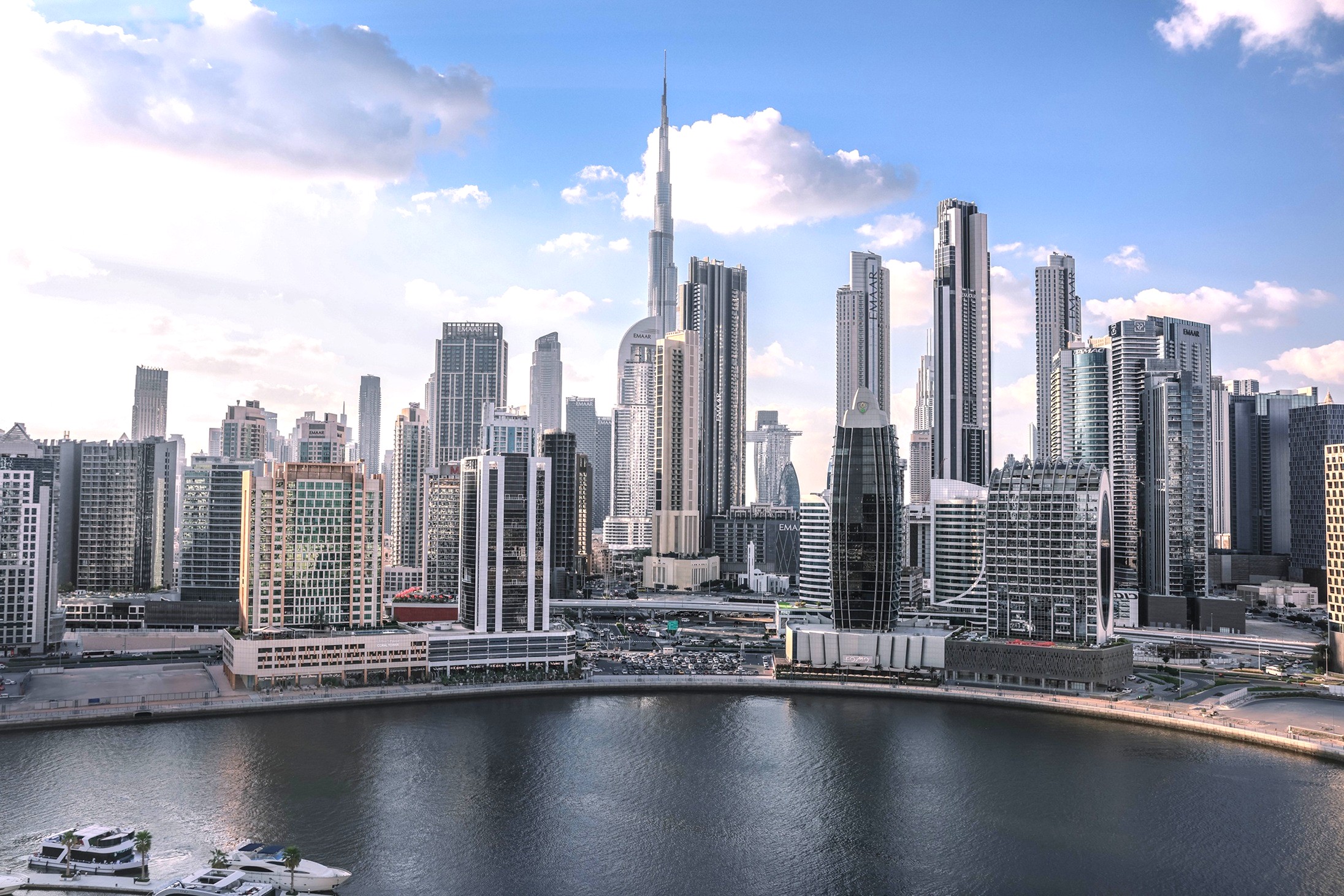
Dubai property market sales hit AED176.7B in Q1 2026

fäm Properties analysis shows transactions rose 23.4% YoY in value, 5.5% in volume to 47,996 deals as off-plan growth continued in March


Dubai, UAE, 3rd April, 2026: The Dubai real estate market recorded 47,996 sales transactions worth AED176.7 billion in Q1 2026, a 5.5% year-on-year increase in volume and a 23.4% rise in value, as the property sector showed strong resilience in March.


A market report issued by fäm Properties today reveals that the off-plan segment dominated in Q1, accounting for 70% of sales transaction volume and 71% of total value, reflecting Dubai’s ongoing pipeline of new launches from major developers.

Dubai property market sales hit AED176.7B in Q1 2026

Data from DXBinteract showed that the off-plan market remained strong in March, with 10,303 sales transactions amounting to AED31.2 billion, representing YoY increases of 5.4% in volume and 8.9% in value.

“The market continues to show clear resilience even against a backdrop of regional uncertainty,” said Firas Al Msaddi, CEO of fäm Properties. “The investor confidence we’re seeing now is built on strong fundamentals, transparency and long-term growth drivers that remain firmly in place.”

Apartments led the way in Q1, with 36,428 sales transactions worth AED75.2 billion, a 10.5% increase in value. Villa sales transactions were up 17.9% in volume YoY to 8,261 deals amounting to AED59.1 billion, while commercial sales transactions, including offices and shops, soared by 69.1% to AED10.2 billion in value, despite a marginal 0.6% fall in volume to 2,048.

Meanwhile, sales transactions for plots rose 3.2% in volume YoY to 1,193, and by 14.3% in value to AED31.9 billion. The volume of Q1 mortgage transactions increased by 7.5% to 11,829.

In the primary market, the median price for villas climbed 35.3% YoY to AED4.1 million, while off-plan apartments were up by 3.1% YoY to AED1.4 million. Meanwhile, plots fell 23.6%, likely reflecting a shift in buyer preferences towards ready property.

A similar trend was seen in the resale market, where median prices for villas climbed 16.2% to AED4.3 million over 2025, and are now 35.1% above 2014 levels. Apartment resale prices rose 6.3% YoY to AED4.3 million, while plot resale prices dropped by 38.3% to AED4.8 million.

Mortgage transactions totalled 11,829 in Q1, up 7.5% year-on-year, with an overall value of AED59.8 billion, a 46% increase. In the resale segment, cash transactions accounted for 67% of activity, compared to 33% for mortgage-backed purchases.

The most expensive properties sold during Q1 went for AED 422 million at Aman Residences Tower 2, while the most expensive villa was sold for AED350 million at Jumeirah First. Led by Al Barsha South Fourth, the highest transaction volumes were concentrated in emerging communities attracting buyers with competitive pricing and new off-plan launches. 

Top 5 Performing Areas by Volume in Q1

Area

Transactions

Value AED

Al Barsha South Fourth

3,162

4.0B

Dubai South

2,889

5.4B

Al Yelayiss 1

2,885

12.9B

Wadi Al Safa 5

2,694

4.5B

Wadi Al Safa 3

2,273

5.3B


Apartment Average Prices in Top 5 Areas

Area

Avg. Price

Price/sqft

Dubai Creek Harbour

2,940,888

2,559

Dubai Islands

2,677,091

2,782

Business Bay

2,265,000

2,595

Nad Al Sheba First

1,405,000

3,567

Dubai South

1,290,000

1,533


Villa Average Prices in Top 5 Areas

Area

Avg. Price

Price/sqft

Me’Aisem Second

15,831,888

1,784

Me’Aisem First

12,213,000

2,016

Al Yelayiss 5

7,890,888

1,482

Nad Al Sheba First

6,906,000

2,301

Dubai South

4,250,000

1,327


Best Selling Projects in Q1 2026 

Primary Market Apartments


Project

Volume

Value

Median Price

Binghatti Vintage

539

412.4M

699.0K

Maybach 6 – Tower B

403

689.6M

1.4M

Sierra By Iman

338

483.2M

1.3M

Binghatti Cullinan

326

393.0M

880.0K

Samana Boulevard Heights

281

250.6M

757.8K


Primary Market Villas

Project

Volume

Value

Median Price

DAMAC Islands 2 – Bahamas 2

376

1.2B

2.8M

DAMAC Islands 2 – Cuba

371

1.2B

2.9M

DAMAC Islands 2 – Bahamas 1

357

1.2B

2.9M

DAMAC Islands 2 – Tahiti 2

331

1.1B

2.9M

DAMAC Islands 2 – Bermuda

323

1.0B

2.9M


Resale Apartments 

Project

Volume

Value

Median Price

Peninsula Four

62

151.7M

2.2M

The Holland Gardens

54

81.1M

1.5M

Peninsula Three

48

87.9M

1.8M

Ashjar

47

94.8M

2.0M

The Neighbourhood C1

46

92.8M

1.9M


Resale Villas 

Project

Volume

Value

Median Price

Rukan 3

46

65.4M

1.2M

Jumeirah Village Triangle

41

203.2M

5.0M

The Valley-Nara

36

111.8M

2.9M

The Valley-Orania

34

103.1M

2.8M

Aura

33

176.5M

5.2M