Balram Singh Yadav, Managing Director, Godrej Agrovet Limited

 Balram Singh Yadav, Managing Director, Godrej Agrovet Limited

Empowering Farmers, Sustainable Production and Resilient Agri-Economy – Imperative in our Journey to Viksit Bharat

“The budget proposals showcase a comprehensive strategy to strengthen India’s agricultural sector, positioning it as a key driver in our journey towards Viksit Bharat. By addressing critical growth levers such as high-yielding, climate-resilient seeds, boosting cotton productivity, and achieving self-sufficiency in pulses, the budget lays a robust foundation for a resilient agri-economy.

The enhanced loan limit under the Modified Interest Subvention Scheme—from ₹3 lakh to ₹5 lakh—for Kisan Credit Card loans will provide vital financial support to small fisheries and dairy farmers, empowering them to scale operations. India’s position as the second-largest global producer of fish and aquaculture is further bolstered by the reduction in basic customs duty on a key input material for feed, strengthening competitiveness and sustainability in the sector.

The budget’s strategic push for self-reliance in pulses and edible oils, coupled with the new integrated program for fruits and vegetables, ensures both nutritional security and agricultural sustainability. With targeted initiatives like crop diversification and sustainable marine sector development, these measures not only enhance productivity but also reinforce the central role of farmers in driving India’s growth story.”

Budget 2025: Tax Cuts, Make in India, and Growth Focus

Dr. Anish Shah

by Dr. Anish Shah, Group CEO & MD, Mahindra Group on the Union Budget 2025

“We commend the 2025 Union Budget for its continued support of robust consumption growth through changes in the tax structure, effectively placing more disposable income in the hands of the Indian consumer. This will encourage private sector capex to move in a positive direction.

The theme of “Make in India for the world” remains a key focus in this budget, with efforts to reduce India’s manufacturing costs poised to significantly enhance the country’s global competitiveness. In addition to providing an immediate stimulus for demand and growth, the budget emphasizes long-term growth through substantial infrastructure investments and a strong focus on innovation.

Lastly, the theme of inclusive development, with a strong emphasis on MSMEs, agriculture, and skilling, aims to create a resilient ecosystem that will drive economic growth and help achieve the Viksit Bharat Goals by 2047.”

Budget 2025: Growth, Investment & Tax Cuts – NSE CEO

Shri. Ashishkumar

Shri Ashishkumar Chauhan, MD and CEO of NSE

The budget builds on India’s growth momentum with strong development measures, continued fiscal prudence, increased capex, and reduced tax burden. An increase in disposable income enhances consumption growth and provides further wealth-creation opportunities to Indian households through the markets. More and more people will join the pool of current 11 crore unique investors and will become stakeholders and beneficiaries of India’s growth journey thereby supporting a virtuous cycle of economic growth, capital formation, and job creation. Through a slew of social welfare measures on employment, education, healthcare, and women empowerment, and with special support to youth, farmers, MSMEs, and startups – the budget focuses on India’s most important resource – its people.

Budget 2025: Growth, Fiscal Prudence & Rural Focus

 Mr. BK Goenka, Chairman, Welspun World

Quote 1

This is an all-round budget that prioritizes boosting the rural economy, streamlining processes, enhancing ease of doing business, and fostering a competitive spirit among states, while also extending crucial support to the middle class.

Despite the revenue foregone, the government’s steadfast commitment to fiscal consolidation, with the deficit at 4.4% of GDP, is both commendable and vital for our macroeconomic stability.

Quote 2

The budget strikes a fine balance between supporting growth and maintaining fiscal prudence. The reduction in the fiscal deficit and market borrowings enhances India’s long-term debt sustainability while also helping lower borrowing costs.

A notable shift in government expenditure towards capital investment over subsidies signals a strong commitment to productive growth. The revamping of income tax slabs, along with targeted schemes for rural areas and agriculture, will provide broad-based support to consumption.

The budget gives a demand boost in the short run by way of revamping the income tax slabs and at the same time sets India on a stronger medium-term growth trajectory by addressing critical issues to further enhance ease of doing business in the country – be it with regards to import and use of capital goods, streamlining duties and tariffs, support to MSMEs and startups, focus on skill development, polices announced for the farm sector, the center of excellence in AI for education, and promoting competition among states.

The support to the nuclear power sector is a critical step in ensuring India’s energy security and meeting our climate commitments. Broadband connectivity to all government secondary schools and the setting up of 50,000 Atal tinkering labs will help create a strong pipeline of future-ready nation builders.

With a strong focus on Garib, Youth, Annadata, and Nari, coupled with transformative reforms, this budget is a significant step towards realizing the vision of Viksit Bharat and securing India’s long-term economic resilience.

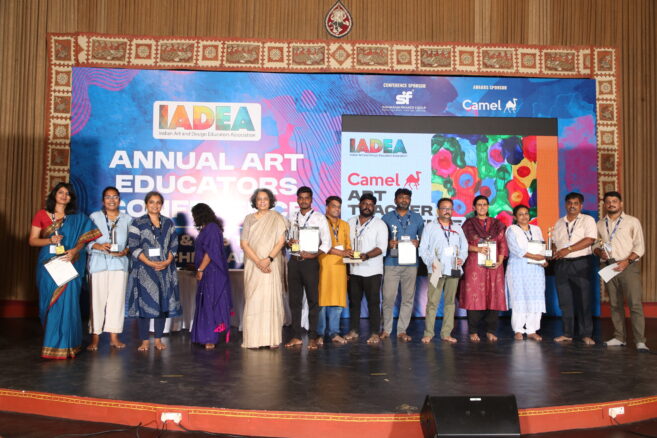
2025 Camlin Art Teacher Excellence Awards presented at IADEA’s Annual Art Educators Conference

Winners All at the 6th IADEA Conference

February 03, 2025, Chennai: The Indian Art and Design Educators Association (IADEA) held its Sixth Annual Art Educators Conference at Kalakshetra Auditorium Hall on 31st January and 1st February 2025 here in Chennai. The conference had over 80 art educators from Chennai, Madurai, Coimbatore, Erode, Ranipet, Jaipur, Delhi, Ajmer, and Bengaluru, attending the two-day event. Several global and national experts came together to discuss current and future narratives encompassing art education for and alongside 100 school art teachers. The two days were punctuated with a number of interactive sessions and workshops anchored on diverse topics. In her keynote speech Dr. Jyotsna Tiwari, HOD, Art and Aesthetics of NCERT, Delhi,highlighted the integration of art in education: the vision of NEP 2020 and the way forward.

Sara Vetteth, Founder of IADEA said, “In the future, every career will demand visually literate professionals—those who can research, think critically and communicate fluently using images and words. No matter the medium – whether it be mark-making with pencil, working with fiber, manipulating clay or image capture with a camera phone, the theme for this year’s conference is – how do we rethink the art class to make it useful for every learner? By guiding students through lines of enquiry and the design cycle, art educators can foster deeper exploration and creative problem-solving.”

On Day one, there was a delightful session on decoding the vocabulary of Warli, by renowned Warli artist & educator, Mayur Vayeda, followed by Dr. Alka Hingorani, one of the founders of “Learn Through Stories Foundation” and art educator Nivedita Deshmukh explored freedom and learning in art education. Italian Book designer and visual artist, Valentina Abenavoli took the participants through a fascinating session on exploring art through book making. Melissa Nolas, founder, Childrens Photography Archive, London, and Gayatri Nair, founding trustee, of Chennai Photo Biennale hosted the session on discovering photography’s place in an art class. The session highlighted the use of photography as a medium to encourage students of varying abilities to develop their language, vocabulary, and storytelling skills.

The inaugural day concluded with the awarding of the 2025 Camlin Art Teacher Excellence Awards to ten art educators. Awarded across five categories, the accolade celebrates the impact of art lessons and its significance in a student’s learning journey.

Mr. Satish Veerappa, Managing Director, Kokuyo Camlin Ltd said “The Art Teacher plays a very important role in the growth of a child. In this way, art teachers contribute immensely to the creative force of a nation. The values of inventiveness, creativity and passion that The Camlin Art Teacher Excellence Award celebrates are the same values that are necessary to build the start-ups and enterprises of the future. Behind every child who grows up to be innovative, resourceful, process oriented, collaborative and confident is an art teacher who showed them the way. Camlin admires and respects your contribution to art and the nurturing of artistic talent.”

Day two of the conference began with a speaker session by Lina Vincent, Curator and Educator from Goa, who spoke about her collaborative exhibition which uses plants in various ways to investigate pressing global issues. Siddhi Gupta, Faculty member at Srishti Manipal Institute of Art, Design and Technology, led the participants through an interactive workshop using visual thinking to reflect on what it means for an artist to be an educator. Chennai-based photographer Mr. Sunder Ramu led teachers through a guided workshop on using phone photography in the classroom as a medium to express thoughts, moods and unique perspectives. After lunch, the participants were taken on a special curator-led tour of selected Chennai photo biennale photography exhibits at Lalit Kala Academy and Egmore Museum. The tour was led by Gayatri Nair, Co-founder and Director of Education at CPB prism and Varun Gupta, Biennale Director at CPB.

List of Award winners

· Best use of Elements of Art

Winner– Deepti Karthik, Sarvam The Organic School, Coimbatore, Tamil Nadu

Runner-up- Vijayaraghavan Srinivasan, KC High School Chennai

· Collaboration in the Art Room

Winner– Dinesh Kumar, Balsam Academy, Ranipet,

Runner up– R Subramanian and Aishwarya C, AMM School, Chennai

· Innovation in the Art Room

Winner– Vijayaraghavan Srinivasan, KC High School Chennai

Runner up Prem Nazir, Lakshmi School, Madurai

· Instilling Creative Confidence

Winner– Arun Kumar, Chettinad Sarvalokaa Education International School, Chennai

Runner-up Gayathri Vasu, Independent Art Educator, Chennai

· Promoting Artistic Practice

Winner– Amrutha Anand, Independent Art Educator, Chennai

Runner up -Vimal Sivaraman, Rak’s Pallikkoodam School of Excellence, Coimbatore

Budget 2025 Reforms to Boost Healthcare Accessibility and Pharmaceutical Growth

Ms. Shivani Wagh,

Ms. Shivani Wagh, Joint MD, Supriya Lifescience Ltd.

The Union Budget for 2025, with the scrapping of customs duties on 36 life-saving drugs, among others, is a move that is much needed by the pharmaceutical industry, especially for their critical cancer treatments. This will enable essential medicines to reach patients at lower prices while improving access to advanced healthcare solutions. The continued government boost for bulk drug concessions shall further strengthen domestic Active Pharmaceutical Ingredients (API) manufacturing and, therefore, repair dependency on imports in a step toward making India a leading pharmaceutical manufacturer in the world.

At SupriyaLifescience, we see these reforms as a step in the right direction. By creating a more self-reliant pharmaceutical ecosystem, the budget enables companies like ours to scale up production capacities, promote innovation, and ensure the delivery of high-quality and life-saving medicines to those most in need. The emphasis on affordability and accessibility strikes an accord with our direction toward the delivery of essential pharmaceutical solutions in the resolution of the healthcare challenge in India.

Further than pharmaceuticals, the commitment of the government vis-a-vis health infrastructure—Rs 98,311 crore allotted to the sector, increased medical seats, and setting up 200 cancer centers—is certainly a strong message sent on the launch pad of long-term sustainability of health care. These efforts will undoubtedly assist in improving patient care while they shall be laying a much better platform for medical research and innovations.

Overall, Budget 2025 depicts an approach of balanced stimulation of growth. Such steps are welcomed by us at Supriya Lifescience Ltd. towards focusing on supporting the healthcare journey ahead for pharmaceutical solutions for India.

Bengaluru researchers meaningful intervention for cancer

Bengaluru February 3rd, 2025: As we observe World Cancer Day here is a meaningful intervention by Bengaluru doctors. Two friends came together seven years ago to turn their dreams into reality, sparking their research into oral cancer screening. After years of hard work, they have achieved a breakthrough, receiving a prestigious grant for their efforts. Dr Narayana Subramaniam, a head and neck surgical oncologist, and Hardik Pandya, an IISc engineer-scientist, have secured a Rs 20.6 crore ($2.4 million) U-01 grant from the US National Institutes of Health. Partnering with GE Healthcare, their project to develop a rapid, low-cost oral cancer screening platform stood out among competitive global entries.

The duo has developed a ‘pan-cancer diagnostic platform’ prototype that utilizes advanced imaging technology to examine cells from the human body for the detection of cancers, with the primary focus initially being on ‘oral cancer’. The goal is to make cancer diagnostics more accessible, efficient, and affordable, particularly in underserved regions like Tier 2 and Tier 3 cities, where access to pathology services and specialists is limited. The platform images and analyzes cells, providing an accurate and efficient way to detect cancer.

Capture

Subramaniam explained that current cancer diagnostics require patients often to travel to hospitals multiple times for tests. This process delays diagnosis by days or weeks, creating a significant barrier, particularly for economically disadvantaged patients. “In smaller towns and rural areas, where biopsies often need to be sent to metropolitan centers for analysis due to a lack of local facilities or pathologists, this technology could allow digital imaging to be done on-site.”

Pandya said, “This prototype will digitize the images locally, so only the images need to be transmitted over the internet for analysis. This could reduce the turnaround time for diagnosis and be used for the detection of cancers. At the end of the day, it’s an efficient, accurate way of looking at cells from the human body. With the resources provided by this grant, we aim to build out the platform further, helping patients and doctors in many other ways.”

Highlighting the accessibility gap, Pandya shared how their portable scanner integrates advanced imaging and artificial intelligence (AI) to streamline cancer screening. “The technology allows ASHA workers or primary physicians to collect and analyze cell samples onsite, minimizing reliance on specialized pathologists. The AI assists in identifying atypical cells and ensures only necessary cases are referred for further analysis, reducing costs and delays,” he explained.

The duo emphasized affordability as a cornerstone of their research. While conventional slide scanners cost upwards of Rs 30 lakh, their goal is to develop a portable device priced below Rs 1 lakh. “We aim to design an indigenous solution using 3D-printed hardware and locally sourced components to bring down manufacturing costs,” said Pandya.

Our technology combines cytology and histology features, making it versatile for primary and tertiary care. The AI not only aids in screening but also ensures pathologists retain the final decision-making authority.

The team hopes to complete validation and move towards mass production within five years, envisioning a transformative impact on oral cancer care in India. Subramaniam shared, “India is the oral cancer capital of the world. With this platform, we aim to improve survival rates and reduce treatment costs by diagnosing cancer earlier and integrating patients into the healthcare system seamlessly.”

The friends further said that if the present model gets clicked in the market, they have further plans to expand into other areas of cancer like cervical and breast. The mission is to create a solution that is not only cutting-edge but also accessible to the masses. Pandya said, “The emphasis is on ‘affordable care’ that can reach people in need, rather than limiting the technology to premium services in urban areas or private institutions.”

Quote Box:

Dr Narayanaya Subramaniam Head & Neck Cancer specialist

“I always call Hardik ‘Willy Wonka’ because his lab at IISc is like a treasure trove of prototypes and ideas. Since I met him, I’ve been pulling him toward cancer research, specifically head and neck cancers, which make up 99% of what I care about. Hardik is incredibly passionate and technically brilliant. If he’d chosen to focus on making money, he could’ve done so easily in many other fields. But his commitment to social impact is what drives us both. Over the past seven years, we’ve faced countless failures in securing large grants, but we’ve persisted because we share the same vision for affordable care.”

Capture2

Hardik Pandya, engineer-scientist, IISc

“Collaboration is crucial. When it comes to healthcare innovation, interdisciplinary research is the way forward. Engineers, scientists, and doctors need to work together, but true collaboration happens only when each discipline values the other. In healthcare, doctors should lead proposals because they’re the end users. They understand the challenges and needs better than anyone else. Institutes like IISc and programs like MD-PhD are steps in the right direction, bridging gaps and enabling meaningful collaborations that can truly impact society.”

Ageas Federal Welcomes 100 Percent FDI in Insurance, Supports Financial Inclusion & Growth

Mr. Jude Gomes,

By Mr. Jude Gomes, MD & CEO, Ageas Federal Life Insurance

“Ageas Federal Life Insurance has already experienced the positive impact of enhanced foreign investment, having been one of the first Indian insurers to embrace the 74% FDI limit. This move has driven innovation, operational efficiency, and customer-centric solutions within the industry. The government’s decision to increase the FDI limit in the insurance sector to 100% is a landmark reform that will significantly strengthen the industry by attracting fresh capital, global expertise, and cutting-edge innovation. This move aligns seamlessly with the vision of ‘Insurance for All’ by 2047, as it will enhance financial inclusion and drive deeper insurance penetration across both urban and rural India. Additionally, it will provide insurers with greater financial flexibility to expand their reach, address the evolving needs of policyholders, and contribute to the country’s overall economic growth.

Furthermore, the revamped Central KYC Registry is a welcome step toward strengthening data security and ensuring a seamless, trusted experience for customers. By prioritizing transparency and ease of doing business, the government is laying a strong foundation for a more resilient and digitally empowered financial ecosystem. At Ageas Federal Life Insurance, we wholeheartedly welcome these progressive reforms and look forward to leveraging these opportunities to expand our reach and further our mission of securing a fearless future for individuals across India.”

StarAgri Group Poised to Support Agricultural and MSME Growth with Tech-Driven Solutions

Mr. Amith Agarwal, CEO & Whole Time Director, Star Agriwarehousing and Collateral Management 

The recognition of agriculture as the first engine of growth and MSMEs as the second growth engine in the Union Budget 2025 reflects the government’s strategic vision for India’s economic development.

The comprehensive reforms announced, particularly the Prime Minister Dhan Dhanya Krishi Yojana, demonstrate a holistic approach to agricultural transformation through enhanced irrigation, credit access, and skill development across 100 agri districts, benefiting 1.7 crore farmers, while initiatives like the National Mission on High Yielding Seeds and Cotton Productivity Mission create a robust framework for sustainable agricultural growth.

As part of the StarAgri Group, we are well-positioned to support this proposed reform through our technology led integrated agricultural value-chain services such as procurement, trade facilitation, warehousing, collateral management, financing solutions, digital marketplace and technology based value added services, to farmers, traders, millers, processors and corporates. With our network of 2,189 warehouses which enables us to create and benefit from a networking effect and our technology driven integrated platform offering key services to the agricultural sector, we remain committed to redefining the agricultural landscape, providing transparency, efficiency, and security to all stakeholders involved.”

Start-up Funding, Tax Relief, and AI expansion

Mr. Vishwas Patel

Vishwas Patel, JMD Infibeam Avenues and Chairman of Payment Council of India

“The Union Budget presents a positive trajectory for the Indian economy, with strategic measures aimed at enhancing consumption, fostering innovation, and accelerating digital transformation. One of the most impactful provisions is the tax relief up to Rs 12 lakh, which significantly increases disposable income for individuals. This is expected to stimulate household consumption, driving demand across various sectors. With higher consumer spending, the digital payments ecosystem is poised for exponential growth, further strengthening India’s financial technology landscape. Additionally, introducing a Rs 10,000 crore ‘Fund of Funds’ for startups marks a major step towards bolstering entrepreneurial growth. This initiative will unlock new funding avenues, providing crucial capital to early-stage ventures and reinforcing India’s startup ecosystem as a global innovation hub. Furthermore, establishing three Centres of Excellence in Artificial Intelligence (AI) aligns with India’s ambitions of becoming a leader in AI-driven economic transformation. These centers will play a crucial role in advancing research, innovation, and AI-driven solutions, contributing to long-term economic competitiveness.”