Ram Raheja Shares Perspective on RBI MPC’s Decision to Keep Repo Rate Unchanged

Perspective by Mr. Ram Raheja, Managing Director, S Raheja on RBI MPC unchanged repo rate

“The RBIs decision to hold rates at 5.25% reinforces policy consistency at a time when global uncertainty and rising crude prices could have warranted a more reactive stance. Instead, it reflects confidence in the underlying strength of the Indian economy. With GDP projected at 6.9% in Q1 FY27 and private sector investment continuing to hold, the fundamentals remain intact. At this point, the repo rate is no longer the primary driver of demand in the luxury housing market—it’s simply a signal of stability. Credit growth and sustained greenfield FDI interest further indicate that the growth story is not just cyclical, but structural. In Mumbai, luxury homebuyers are increasingly making decisions independent of short-term rate movements. They are driven by long-term value, design, and trust. A stable macro environment doesn’t create demand—it validates it..” –  MrRam RahejaManaging DirectorS Raheja


DLF Mall of India strengthens its premium portfolio with the launch of TAG Heuer boutique

DLF Mall of India strengthens its premium portfolio with the launch of TAG Heuer boutique

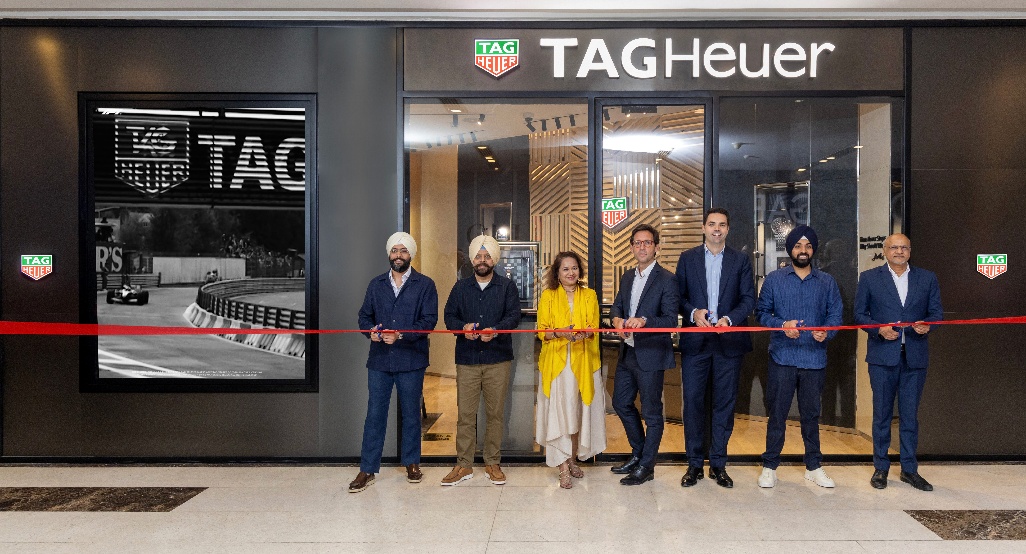
New Delhi, India Apr 08:  DLF Mall of IndiaIndia’s largest destination led retail mall, has further elevated its premium brand mix with the addition of globally renowned watchmaker TAG Heuer. Marking the brand’s first franchise boutique in India, launched in partnership with Kapoor Watch Company, the opening reflects DLF’s continued focus on building a future forward retail ecosystem and strengthening its positioning as a destination hub for premium and aspirational brands.

India’s luxury and premium retail landscape continues to witness strong momentum, driven by rising affluence, accelerated premiumisation and a clear shift towards aspiration led consumption. Categories such as fine watchmaking are emerging as key growth drivers, with consumers increasingly seeking brands that represent legacy, craftsmanship and innovation, complemented by immersive and experience led retail formats. The introduction of TAG Heuer at DLF Mall of India aligns with these evolving consumer trends, further elevating the mall’s curated product mix and strengthening its standing as a go to destination for all its patrons. 

Commenting on the launchMs. Pushpa Bector, Senior Executive Director & Business Head, DLF Retail, said “At DLF Malls, our focus is on continuously evolving our retail mix to stay ahead of consumer aspirations and global trends. The introduction of TAG Heuer at DLF Mall of India further strengthens our premium portfolio, while adding greater depth to our watch and accessories category. As we continue to refine our brand and product mix, our aim is to create a destination that offers not just leading global brands, but a differentiated and future ready retail experience for our consumers.” 

Highlighting the significance of the partnership, Mr. Prateik Kapoor, Director of Kapoor Watch Company said “Our long-standing partnership with TAG Heuer has been built on a shared commitment to bringing world-class watchmaking to discerning consumers in India. We are proud to further strengthen this association by launching TAG Heuer’s first franchise boutique in India in partnership with the brand. Partnering with DLF Mall of India allows us to present TAG Heuer’s iconic collections in a setting that reflects the brand’s spirit of innovation and precision, while deepening our engagement with watch enthusiasts across the country. As India’s luxury watch market continues to evolve, we look forward to building on this partnership and expanding our presence across key markets in the years ahead.”

Marking the brand’s expansion in India, Mr. Guillaume Boilot, Managing Director MEIAT – TAG Heuer from TAG Heuer added “This is a landmark moment for TAG Heuer. We are officially expanding our footprint in India with the opening of our first franchise boutique at DLF Mall of India. This market is central to our growth, and this new space allows us to connect directly with a new generation of luxury consumers that values both heritage and performance. We’re excited to invite our community to this new boutique

The TAG Heuer boutique spans approximately 517 sq. ft. and features a curated selection of the brand’s iconic collections, including Carrera, Monaco, Aquaracer, Formula 1 and Link. Designed with a contemporary aesthetic, the space offers an elevated retail experience, bringing together innovation, design and Swiss watchmaking excellence for the Indian consumer.

Store Details:
TAG Heuer Boutique
DLF Mall of India, Noida
Floor: Ground Floor

Timings: 11:00 AM – 10:00 PM

PM Modi to Inaugurate Pachpadra Refinery in Rajasthan, Boosting Jobs and Regional Growth

Rajasthan, Apr 8: Prime Minister Narendra Modi will visit Balotra, Rajasthan, on April 21, 2026, to inaugurate the Pachpadra Refinery, one of the country’s most modern refining facilities.

The refinery is a joint project between HPCL and the Rajasthan government. It can process nine million tonnes of crude oil annually and includes a two-million-tonne petrochemical complex. The project is designed as a Zero Liquid Effluent Discharge plant, ensuring no liquid waste is released during refining.

Chief Minister Shanti Dhariwal said the refinery will boost the region’s economy, create jobs, and improve connectivity between Balotra and Pachpadra. About 7.5 million tonnes of crude will be imported from Arab nations, while 1.5 million tonnes will come from domestic sources.

The refinery was built at an estimated cost of ₹80,000 crore and is expected to support large-scale industrial growth and employment in western Rajasthan.

This visit will be Prime Minister Modi’s second trip to Rajasthan in the past two months, following his February 28 visit to Ajmer, where he launched multiple development projects.

AI‑Enabled Surveillance Now Active at 1,874 Railway Stations to Boost Passenger Safety

New Delhi, Apr 8: In a major step toward enhancing passenger safety across the nation, 1,874 railway stations in India have been equipped with AI‑powered video surveillance systems, officials announced on Wednesday. The upgraded system uses advanced technology to monitor activity in real time and support faster responses to potential threats or emergencies.

The new video cover initiative integrates artificial intelligence (AI) with existing CCTV networks to automatically detect unusual behavior, unattended objects, crowd build‑ups, and other safety risks. By analyzing video feeds intelligently, the system can alert authorities promptly, helping railway staff and security personnel act swiftly to protect passengers and infrastructure.

Railway officials say the AI‑enabled cameras are already starting to make a difference in reducing blind spots and improving overall vigilance at stations. The technology is designed to complement existing security arrangements and support human teams rather than replace them, strengthening the railways’ ability to ensure safe and secure journeys for millions of travellers every day.

In addition to surveillance upgrades, the Railways are also training staff to make the most of the new system — from recognizing alerts to coordinating with local law enforcement when needed. This focus on both technology and training reflects a broader commitment to passenger care and risk management across India’s vast rail network.

Passengers can expect quieter, more comfortable travel experiences as technology plays a bigger role in safeguarding their journeys. The Railway Ministry said it will continue rolling out AI‑based systems to more stations over time, aiming for a smarter, safer, and more secure rail network.

India Achieves Milestone as Prototype Fast Breeder Reactor Reaches Criticality

New Delhi, April 8: India has marked a major advancement in its civil nuclear energy program as the Prototype Fast Breeder Reactor (PFBR) at Kalpakkam, Tamil Nadu, successfully reached first criticality on April 6, 2026. This milestone reflects the country’s growing technological expertise and its ability to develop advanced nuclear reactors indigenously.

The 500-megawatt electrical PFBR, designed and constructed entirely by Indian institutions, is a sodium-cooled fast breeder reactor developed by BHAVINI (Bharatiya Nabhikiya Vidyut Nigam Ltd.) and the Indira Gandhi Centre for Atomic Research (IGCAR) under the Department of Atomic Energy. Attaining criticality means the reactor has achieved a controlled, self-sustaining nuclear chain reaction — a key step toward full power operations and electricity generation.

Prime Minister Narendra Modi congratulated the scientists and engineers, calling it a “defining moment” in India’s nuclear journey. He highlighted that fast breeder reactors like the PFBR not only produce energy efficiently but also generate more nuclear fuel than they consume, setting the stage for utilizing India’s vast thorium reserves in the future.

Unlike conventional reactors that primarily use uranium, fast breeder reactors are designed to extend nuclear fuel resources, making them crucial for long-term energy security. This positions India among a select group of countries with advanced capabilities in fast breeder technology.

The PFBR’s success underscores India’s indigenous engineering and scientific strength and contributes to the nation’s goal of sustainable, low-carbon energy production. As the reactor moves toward commercial operation, it is expected to enhance India’s nuclear capacity and support the growing energy demands of the country.

The achievement at Kalpakkam is a testament to India’s innovation in clean energy and reaffirms the nation’s strategic progress in advancing homegrown nuclear technology.

HPE Takes Licence to Patents Offered Through the Sisvel Wi-Fi Multimode Pool

Business Wire India

Hewlett Packard Enterprise (HPE) has become the latest company to take a licence to the patents offered through the recently launched Sisvel Wi-Fi Multimode pool. It joins Sony Group Corporation, Huawei, Panasonic, Philips and ZTE as a licensee of the programme. The latter four are also licensors, along with KPN, Mitsubishi Electric, Orange, Aegis 11 SA (a Sisvel affiliate), SK Telecom and Wilus.


HPE is a major presence in the global WLAN market and is a leading manufacturer of both consumer and enterprise routers. The deal with Sisvel was reached on an amicable basis.


The Sisvel Wi-Fi Multimode pool is the successor programme to the Sisvel Wi-Fi 6 patent pool. Over a three-year period, this closed agreements with nearly 40 companies, including Acer, Netgear, Cisco and HP.


Covering Wi-Fi 7 as well as 6, the Multimode programme offers an efficient way to access essential Wi-Fi rights for years to come.


“We are delighted to welcome Hewlett Packard Enterprise as the latest licensee of the Sisvel Wi-Fi Multimode pool,” says Legal and Licensing Counsel Meagan Leslie, who led the negotiation for Sisvel. “We are grateful to the HPE team for the constructive way in which they engaged with us throughout. It was a tough negotiation but one that produced a positive outcome for all the parties concerned.”


“HPE becoming a Wi-Fi Multimode pool licensee is a major validation for the programme,” says Sisvel Chief IP Officer Heath Hoglund. “That the deal was reached amicably is not only a testament to the professionalism and skill of everyone concerned in the negotiation but also a testament to the value of what the pool offers over an extended timeframe. I am confident that we will be welcoming further licensees in the near future.”


About Sisvel


Sisvel is driven by a belief in the importance of collaboration, ingenuity and efficiency to bridge the needs of patent owners and those who wish to access their technologies. In a complex and constantly evolving marketplace, our guiding principle is to create a level playing field through the development and implementation of flexible, accessible, commercialisation solutions.


Sisvel | We Power Innovation


NoBrokerHood: The Millennial Operating System for Community Living

Business Wire India

NoBrokerHood is reflecting a broader shift in urban community living, as platform data indicates increasing adoption of app-first solutions across gated societies. From on-demand services and digital payments to structured communication and in-app marketplaces, residential communities are moving toward more streamlined, technology-led management systems driven by convenience, speed, and transparency.

The urban Indian millennial doesn’t call a plumber. They book one. They don’t walk to the society office for a maintenance receipt. They download it. They don’t argue about parking in a WhatsApp group. They rise and resolve via app. This shift from effort-heavy, people-dependent living to instant, app-first convenience is quietly reshaping how gated communities operate across Indian cities. And platforms like NoBrokerHood are being built precisely around these behaviors.

Fix it now, not tomorrow

Speed of service remains a defining expectation for urban residents. When a tap leaks or a switch stops working, the instinct isn’t to ask neighbours for a contact, it’s to open the app and book a professional. This shift points to a broader transition from fragmented, contact-based service models to structured, on-demand fulfilment systems that mirror the responsiveness seen in other digital services.


The data backs this up. Across service categories, same-day resolution rates are remarkably high- 93% for cleaning requests, 89% for plumbing, 85% for appliance repairs, 84% for carpentry, and 83% for electrical work. Even painting, which by nature requires planning and multiple sessions, sees over 80% of requests addressed on the same day, with the actual work scheduled around the resident’s convenience. The old model of waiting two days for a plumber to show up is being replaced by a system that mirrors the responsiveness millennials are used to from food delivery and ride-hailing apps.

The society marketplace boom

Marketplace activity within residential communities has expanded significantly over the past year. Listings under “Items for Sale” have grown 120% year-on-year, with automobile-related listings increasing by 176%, electronics and appliances by 105%, and furniture by 93%.


The composition of listings reflects evolving consumption patterns within communities. Categories such as children’s furniture, gardening tools, gaming equipment, gym and sports gear, and home furniture indicate life-stage transitions and lifestyle upgrades among residents.


In parallel, property rentals, flatmate searches, and buy/sell listings have become prominent on community boards. Parking-for-sale and parking-for-rent listings have also emerged as one of the most active categories, addressing a persistent operational challenge in residential complexes through structured digital discovery.


Taken together, these trends suggest that residential communities are increasingly functioning as micro-markets, with digital platforms facilitating transactions that were previously informal or inefficient.

Pay in three days, not twenty-five

Payment cycles within housing societies are also becoming more compressed. Approximately 75% of maintenance dues are now settled within the first three days of the month, compared with extended collection timelines under manual systems.

This shift is being driven by the removal of friction in the payment process. Features such as UPI integration, auto-pay options, automated reminders, and access to invoices, NOCs, and payment records have simplified transactions for residents. The entire financial relationship between residents and society is now self-serve.

For housing societies, this has translated into improved cash flow visibility, reduced follow-ups, and lower administrative overhead. The digitisation of financial interactions is effectively standardising processes that were previously dependent on manual coordination.

This concentration of engaged, high-intent users within gated communities hasn’t gone unnoticed by brands either. With thousands of digitally active households transacting, browsing, and engaging on a single platform, community apps have become attractive surfaces for hyper-local brand placements, from home services and appliance brands to insurance and financial products. For residents, the ads are contextually relevant. For brands, the audience is pre-qualified by location, lifestyle, and spending behaviour. What started as a utility platform is quietly becoming a high-value advertising channel.

From WhatsApp chaos to structured participation

Transparency isn’t a feature, it’s the foundation.

Community communication is also becoming more structured with the shift to dedicated digital platforms. Traditional messaging channels often led to fragmented discussions, low visibility of important information, and limited participation.


The introduction of in-app forums, notice boards, and polling mechanisms has resulted in a more than 50% increase in participation in polls and community reviews. Residents are able to engage with information and decisions asynchronously, without the constraints of real-time communication.


For managing committees, this has led to operational efficiencies, including fewer physical meetings, reduced follow-ups, and improved transparency in decision-making. The availability of documented, accessible communication has also contributed to a reduction in disputes arising from information gaps.

The right targeting

The aggregation of digitally active residents within gated communities has also created a targeted channel for brands. Platforms such as NoBrokerHood provide hyperlocal access to residents, families, and homeowners, segments that typically represent high-intent, consumption-ready audiences.

It enables hyperlocal targeting within gated societies, giving companies direct access to high-intent users- residents, families, and homeowners who are active decision-makers.

By bridging digital and physical touchpoints, the platform allows brands to connect with affluent, urban households in a trusted environment. Backed by a network of 25,000+ societies, it combines scale with precision targeting making it a powerful channel for hyperlocal, high-conversion campaigns.

This makes it especially valuable for quick commerce, ecommerce, and D2C brands looking to drive timely and relevant engagement. With contextual and utility-driven ad placements embedded into everyday community interactions, brand messaging feels natural and impactful rather than intrusive.

Commenting on this trend, Amit Agarwal, cofounder and CEO of NoBroker, said, “A home isn’t just a physical space anymore — it’s an interface. The way a family manages their visitors, pays their maintenance, books a service, or connects with their neighbours has fundamentally shifted. NoBrokerHood is now the default layer through which over 30 lakh families run their daily lives — and when average users per flat grows from 1.4 to 1.9, it tells you something important: this is no longer one person managing admin. The whole family is on it.


That’s what makes NoBrokerHood an operating system, not just an app. And for brands that want to reach urban India’s most valuable families — not through a feed they’re scrolling past, but inside the rhythms of their daily home life — that’s a fundamentally different kind of relevance.”

Built for how people already behave

What makes this shift significant is that these platforms aren’t teaching residents new behaviours. They’re mirroring behaviours that millennials already practise everywhere else in their digital lives — ordering food, splitting bills, booking cabs, tracking deliveries. The expectation is simple: if I can do everything else from my phone, why should managing my home be any different? Community living platforms that understand this aren’t just solving operational problems for housing societies. They’re becoming the default operating system for how urban India lives together.

The numbers reflect this momentum. NoBrokerHood now operates across 25,000+ societies, and the average users per flat has grown from 1.4 to 1.9, meaning it’s no longer just one household member managing things on the app. Multiple residents per home are actively engaged, a clear signal that the platform has moved from a nice-to-have to a household default. Community living platforms that understand this aren’t just solving operational problems for housing societies. They’re becoming the default operating system for how urban India lives together.

Himanshu Vashisht, a resident of Mahaveer Ranches which uses NoBrokerHood, says, “Our society has 400+ flats and most residents are young working professionals. They don’t have time to attend meetings or read notice boards. Since we moved to NoBrokerHood, poll participation has increased, maintenance collections happen in the first week, and we barely get parking complaints anymore. The app does what ten committee meetings couldn’t.”


Critical Manufacturing to Demonstrate MES-Powered Industrial Operations Platform for AI-Driven Manufacturing at Hannover Messe 2026

PORTO, Portugal, 08.04.2026 – Critical Manufacturing, the Industrial Operations Platform company that unites execution, connectivity, analytics and trusted AI, will exhibit at Hannover Messe 2026, demonstrating how manufacturers can transform production complexity into confident, intelligent operations.

Critical Manufacturing to Demonstrate MES-Powered Industrial Operations Platform for AI-Driven Manufacturing at Hannover Messe 2026

At the event, the company will showcase more than MES. As the execution core, the Manufacturing Execution System (MES) is the foundation of a broader Industrial Operations Platform where execution, data, and intelligence are continuously connected. This creates a closed feedback loop in which data captured on the shopfloor is transformed into insights and actions that are fed back into operations in real time. 

A connected platform for complex manufacturing

As manufacturing environments become more complex, companies across industries such as industrial equipment, semiconductors, electronics, and medical devices are under increasing pressure to manage variability, maintain strict quality standards, and respond quickly to operational changes. Critical Manufacturing addresses these challenges with a a unified system that captures and contextualizes production data at the source, creating the trusted operational foundation needed for visibility, analytics, and continuous improvement.

At Hannover Messe, visitors will see how this foundation powers the Critical Manufacturing Industrial Operations Platform, which combines MES with a built-in Enterprise Data Platform and a growing native ecosystem of applications. Together, these capabilities enable manufacturers to connect machines, processes, and operational data across the factory while extending insight and intelligence across plants and enterprise systems. More importantly, it enables a continuous feedback loop between data and execution, where insights generated from the data platform can directly trigger and optimize actions within MES.

Critical Manufacturing to Demonstrate MES-Powered Industrial Operations Platform for AI-Driven Manufacturing at Hannover Messe 2026

From coffee to copilots: experience the platform in action

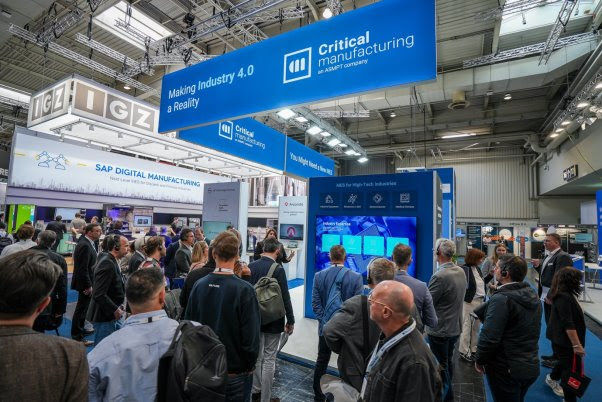
Live demonstrations at the booth will bring this vision to life through a connected journey. Visitors will see how MES coordinates shopfloor execution, experiencing a coffee machine scenario that highlights execution and connectivity, while the Enterprise Data Platform structures and organizes manufacturing data across systems and sites. Built on the operational layer, applications and analytics tools provide teams with the visibility needed to monitor performance, identify trends, and respond more quickly to operational challenges. Additionally, visitors will experience AI Copilots within the MES environment, allowing users to ask questions about manufacturing data in natural language and instantly generate charts, dashboards, and insights that make operational decision-making faster and more intuitive. From execution to intelligence, visitors will discover how Critical Manufacturing goes beyond MES providing a unique and connected Industrial Operations Platform.

Extending the partner ecosystem

The journey at the booth extends into the partner area to explore Critical Manufacturing’s global partner ecosystem, including FrontWell, Athena, Regenesia, LTTS and Manufacture Next. These partners deliver and integrate the Industrial Operations Platform worldwide. This space also features Twinzo, a digital twin application that integrates seamlessly with Critical Manufacturing MES, reinforcing the value of connectivity and real-time operational insight.

“Our industry has reached a point where execution, data, and analytics can no longer operate in isolation,” said Francisco Almada Lobo, CEO and Co-founder of Critical Manufacturing. “Manufacturers need a system that connects what happens on the shopfloor with the intelligence needed to improve performance across the organization. MES provides that operational backbone by capturing and contextualizing production data at its source. At Hannover Messe, we are demonstrating how this platform enables manufacturers to turn operational data into actionable intelligence that drives better decisions and continuous improvement.”

Ask Jeff: conversations on the future of manufacturing

Visitors will also have the opportunity to join the “Ask Jeff” area on April 20 and 21st, where Jeff Winter will attend as a Strategic Advisor to Critical Manufacturing. During those days, attendees can engage in informal conversations about manufacturing leadership, digital transformation, and the evolving role of software platforms in modern production environments.

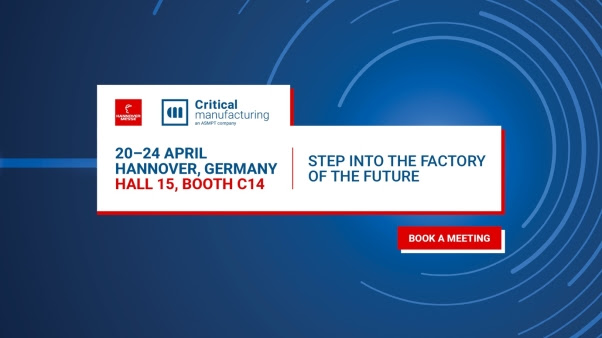
Visit Critical Manufacturing at Hall 15, Booth C14 to experience the platform in action. Attendees can claim a complimentary Hannover Messe ticket through the company’s event page and book a meeting or live demonstration with Critical Manufacturing experts to explore how MES-driven operations help manufacturers connect systems, gain clearer operational insight, and improve performance across their factories.

To book a meeting or demo in advance, visit: https://www.criticalmanufacturing.com/campaign/hannover-messe-2026/

Veolia celebrates 25 years at Hoskote in Bangalore: a world-class hub for advanced water technologies and global innovation

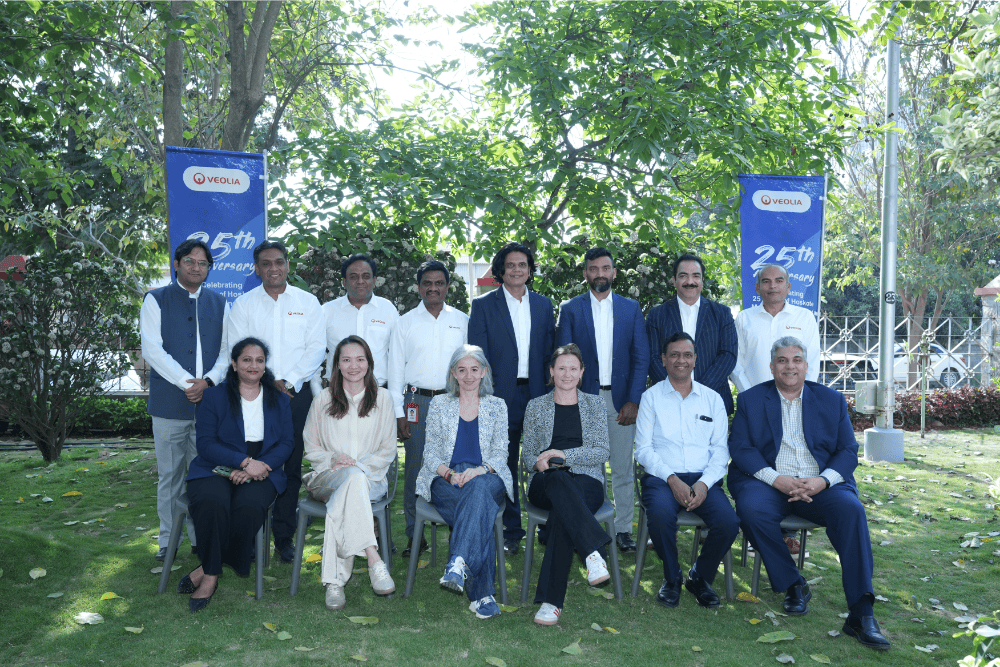
Veolia celebrated a landmark moment in its India journey on 1st April with the inauguration of its new Customer Experience Center at the company’s Hoskote plant in Bangalore, a world-class hub for membrane manufacturing, specialty chemicals and advanced water technologies. The event also marked the 25th anniversary of the Hoskote manufacturing and technology facility and the launch of a solar panel decarbonization initiative — underscoring Veolia’s long-term commitment to India as a global hub for water technology, innovation, and sustainable operations.

Veolia celebrates 25 years at Hoskote in Bangalore: a world-class hub for advanced water technologies and global innovation

Anne Le Guennec, CEO of Veolia’s water technologies activities, said: “India holds a unique place in Veolia’s global strategy, not only as a dynamic market, but as a true center of excellence for engineering, digital innovation and manufacturing. Today’s milestones at Hoskote reflect 25 years of dedication, talent and ambition, in line with our GreenUp strategic program. Water is at the heart of environmental security, and as India faces growing water challenges, we are committed to delivering the technologies and solutions that will help cities and industries become more resilient, more efficient and more sustainable.”

The Hoskote plant: a quarter century of innovation

Established in 2001, the Hoskote plant has evolved into a world-class hub for membrane manufacturing, specialty chemicals and technology development, exporting to more than 20 countries. Its co-located Technology Center stands as a unique asset for global innovation, having generated over 100 patents. Located in a region renowned for its strong engineering expertise and talent pool, the site is driven by a highly skilled team of engineers and scientists developing innovative water solutions that advance environmental security for communities and industries worldwide.

As part of Veolia’s GreenUp strategy and its broader commitment to ecological transformation, the Hoskote plant has also inaugurated a new solar panel installation, marking a significant step in its decarbonization journey. The installation is expected to avoid more than 600 tonnes of CO2 equivalent per year, a tangible demonstration of Veolia’s determination to reduce the carbon footprint of its own operations while guiding customers towards the same goal: transforming sustainability pledges into measurable results.

Inauguration of the Veolia Customer Experience Center

The newly inaugurated Customer Experience Center at Hoskote is designed to bring Veolia’s technological capabilities, innovations and customer solutions to life in an immersive, interactive environment. It will serve as a hub for collaboration, knowledge exchange and joint innovation with customers across South Asia and beyond.

The center brings together an interactive technology showcase spotlighting Veolia’s smart water solutions with live demonstrations of remote monitoring, data analytics and digital systems. Visitors can engage directly with industry experts, explore service and support capabilities — from onsite engineering to remote inspection, auditing and operator training — and experience firsthand the innovations that are shaping the future of water management. A dedicated training facility accommodating up to 50 participants further cements the center’s role as a place for learning and capability-building.

Veolia in India: a track record of excellence in water technologies

As the largest industrial water company in South Asia, Veolia has delivered more than 500 projects for municipalities and industries across the region, spanning drinking water, sewage treatment and zero liquid discharge (ZLD). Recent municipal contracts in Mumbai — including the Bandra wastewater treatment project, one of India’s largest greenfield sewage treatment plants using advanced membrane bioreactor technology, and the Bhandup drinking water plant upgrade integrating smart clarifier technology and real-time monitoring — further demonstrate Veolia’s growing footprint in India’s urban water infrastructure.

Irshaad Hakim, Executive Vice President of Veolia’s water technologies activities in Asia Pacific, said: “South Asia faces a pivotal moment in its pursuit of water security. The magnitude of the challenge, from declining groundwater to undertreated municipal wastewater, demands bold, scalable solutions. Veolia’s track record in India proves that we have both the expertise and commitment to make a lasting difference. Our goal is clear: to deliver performance and sustainability while supporting safe, healthy communities across the region.”

IPL 2026: Delhi Capitals Aim Hat-Trick at Kotla; Gujarat Titans Boosted by Shubman Gill’s Return

New Delhi, April 8, 2026:
The stage is set for an exciting clash in IPL 2026 as Delhi Capitals (DC) take on Gujarat Titans (GT) at the iconic Arun Jaitley Stadium. Riding high on momentum, Delhi Capitals will look to secure a hat-trick of victories and turn their home ground into a stronghold.

IPL 2026: Delhi Capitals Aim Hat-Trick at Kotla; Gujarat Titans Boosted by Shubman Gill’s Return

Delhi’s confidence is soaring after a convincing win over Mumbai Indians. Skipper Axar Patel has already set the tone, urging his side to “make Kotla our fortress,” signaling a strong intent to dominate at home this season. On the other hand, Gujarat Titans receive a timely boost with the return of captain Shubman Gill, who had been sidelined due to neck muscle spasms. His comeback is expected to significantly strengthen both leadership and batting at the top order.

Confirming the development, Sai Sudharsan stated that Gill has fully recovered and looked in excellent touch during practice sessions, even clearing the stands with ease. His return restores Gujarat’s regular opening combination and provides much-needed stability to a side currently struggling in the tournament.

The Titans, placed near the bottom of the IPL 2026 points table after a narrow defeat to Rajasthan Royals, will be eager to break their losing streak and revive their campaign.
With Delhi aiming to extend their winning run and Gujarat desperate for a turnaround, today’s encounter promises to be a high-intensity battle with significant early-season implications.