Archives December 2025

5 Warning Signs of Chronic Constipation Parents Often Miss

“Most people understand constipation as a condition when one isn’t passing stools as often as usual. However, parents must remember that constipation isn’t just about the frequency of stools, but also how easy or difficult it is for your child to pass them,”

Dr.Parijat-ram-tripathi11

explains Dr Parijat Ram Tripathi, Consultant Pediatric Gastroenterologist and Hepatologist, Ankura Hospital for Women and Children. He further says that in the present day, with a changing diet and lifestyle, roughly 30% Indian kids suffer from constipation. 

Bowel habits vary widely between children; thus, parents may sometimes not realize when their child’s constipation is worsening and when they need a specialist. Dr. Parijat discusses with us five red flags of constipation that should alert any parent. Identifying early signs can help a parent take timely steps for constipation in their child, saving them from discomfort, complications, and prolonged suffering.

  • Standing and passing stools: “Many younger children, especially those who aren’t fully toilet trained, may pass stools in a standing position. In most cases, parents assume this is just another habit,” Dr. Parijat explains. He reinforces that if a child repeatedly passes stool in a standing position, it should alert parents to possible underlying constipation, and they must consult an expert.
  • Child avoids stools altogether: In some cases, a child may avoid passing stools altogether because of painful motions. Subtle signs can include an older child running away when taken to the potty, or a visible display of discomfort when trying to pass stools.
  • Leakage of stools: Dr. Parijat urges parents to carefully check their child’s diaper or underpants for leakage of stools. Small amounts of stool leaked in the diaper or underpants are indicative of accumulated stool that the child isn’t able to pass.
  • Hard stools: The child passing stool doesn’t rule out constipation completely. If the stools are hard or passed in small quantities multiple times, the child may still be constipated. Parents often mistake the passage of any stool as a sign that there is no constipation, which shouldn’t be the case.
  • Blood in stools: “Prolonged hard stools may result in anal fissures which may cause blood in the stools, a red flag that parents should never ignore,” Dr Parijat warns. 

Apart from the above signs, a bloated or firm tummy in smaller babies, loss of appetite, pellet-like stools, or the baby crying while passing stools are some other signs that are suggestive of constipation.

Diet and Constipation

Diet plays a crucial role in causing constipation. After six months of age, complementary feeding starts for babies. However, if the baby continues to be more dependent on milk and less on solids, then constipation can result. 

“Higher intake of carbohydrates and fats in the form of junk food, combined with low fibre in the diet, is a major reason why constipation has increased in the past few years,” Dr. Parijat says. He advises that fruits, vegetables, millets, and other fibre-rich foods should be a regular part of a child’s diet for a healthy gut, and parents should introduce them in an age-appropriate manner from the start. Hydration, he says, is equally important and children should be encouraged to drink plenty of water. Apart from diet, he encourages parents to start toilet training on time for developing regular bowel habits. 

He further adds that in some cases, the cause for constipation may be an underlying medical issue, which is why a thorough and timely checkup by a pediatric gastroenterologist is advised. 

“Constipation is common, yet challenging for the child. If left unaddressed, it can linger for months or years and cause significant discomfort. With early attention, simple dietary changes, and timely expert care, parents can help their child overcome it with ease,” Dr Parijat concludes.

Essensai067 Welcomes Festive Season with Christmas & New Year Cheer

Essensai067 Welcomes the Festive Season with Christmas and New Year Celebrations in Bengaluru  

Bengaluru, Dec 11: Essensai067, Bengaluru’s cultural and lifestyle destination, has kicked off the festive season with a month-long celebration that began on November 30. Rooted in community, connection, and conscious celebration, the line-up features Essensai Lights Up, the Essensai Christmas Fest on December 20–21, and a soulful New Year’s Eve experience on December 31.
Essensai 067 - 3
 
The campus has been transformed for the season with a 30-foot Christmas tree, Christmas Miracle installations, hot chocolate booths, and interactive activities that create simple, joyful moments for visitors throughout December.
 
The two-day Essensai Christmas Fest brings a neighbourhood-carnival charm with artisanal pop-ups, kids’ activity zones, Santa walkthroughs, street performances, outdoor movie screenings, and curated festive corners offering a full-day experience for families and friends.
 
Essensai067’s New Year’s Eve celebration introduces a mindful alternative to the city’s loud, high-energy gatherings. This year’s theme, Grace In Motion, pays tribute to women’s achievements in 2025, including India’s historic Women’s Cricket World Cup win. Guests can expect a soothing welcome with herbal drinks, an ambience set by soft jazz and indie instrumentals, and a headline performance by The Womaniaz, the renowned all-women band. Candle-lit seating, mindful dining options across Essensai’s restaurants, and a serene, noise-free countdown shape an intimate and meaningful transition into 2026.
 
With its thoughtfully curated festive experiences, Essensai067 reinforces its commitment to mindful celebration   offering Bengaluru a soulful, community-driven, and emotionally grounding way to mark the season.

IIT Mandi Marks Gita Jayanti with Cultural-Spiritual Initiatives

Dec 11: The Indian Institute of Technology Mandi celebrated Gita Jayanti with great enthusiasm through ‘Gitanushilanam 2025’, organised by the IKSMHA Centre (Indian Knowledge System and Mental Health Applications) in collaboration with Learn Gita Live Gita, an online platform dedicated to the scientific study of the Bhagavad Gita.  At IIT Mandi, the IKSMHA Centre strives to make use of ancient wisdom of Bhagavad Gita in addressing issues such as mental well-being, science of consciousness, and sustainability.Image 1 (2)

This year, more than 5,000 students from over 25 schools and colleges across Mandi and neighbouring regions participated in a month-long series of Bhagavad Gita based competitions. Under the mentorship of IIT Mandi faculty and students, the participants were introduced to the science and philosophy of the Gita. Students enthusiastically engaged in shloka recitation, essay writing, artmaking, and quiz competitions, culminating in the grand prize distribution ceremony during the Gitanushilanam celebrations.

A central highlight of the event was the chorus recitation of the Bhagavad Gita, paying homage to the sacred dialogue between Lord Krishna and Arjuna on the battlefield of Kurukshetra. The collective chanting created an atmosphere of devotion and introspection, leaving a profound impact on the audience.

Prof. Laxmidhar Behera, Director, IIT Mandi, expressed heartfelt gratitude to the teachers of all participating schools, the students, performers, and the dedicated volunteers whose collective efforts made the event meaningful. He described the Bhagavad Gita as “the soul of India  the very essence that makes India what it is.” Emphasising its transformative power, he noted that pressing societal challenges in Himachal Pradeshsuch as drug abuse, rising suicide cases, and mental health distress can be effectively addressed when the wisdom of the Gita reaches every hand and every household. He thanked the young children for embracing this guiding light so sincerely and highlighted that the third consecutive celebration of Gitanushilanam at IIT Mandi has been a grand success, reflecting the institute’s commitment to nurturing values-based education alongside academic excellence.

Ms. Soumya Sambasivan, DIG (Deputy Inspector General of Police), Dharamshala Range, highlighted the Gita’s role in emotional development and moral leadership among today’s youth. She shared,

“It was an honour to experience the same spirit of contemplation that Swami Vivekananda embraced. Returning to the IIT Mandi campus feels truly special. I encourage students to walk the path of devotion and respect for their teachers, as these values strengthen character and help overcome life’s challenges.”

Mr. Lalit Kumar Awasthi, Vice-Chancellor, Sardar Patel University, Mandi, appreciated IIT Mandi’s efforts in introducing spiritual learning to young students. He remarked,

“It is heartening to see IIT Mandi offering children the opportunity to learn the Bhagavad Gita from an early age. Having recited the Gita twice myself, I firmly believe that embracing its teachings can bring meaningful transformation in one’s life.”

The event featured a vibrant array of cultural performances, including Natti Folk Dance, Mandav Nagri Nrutya, Yoga Dance, and a captivating Shadow Drama based on Gita teachings. The celebrations concluded with an engaging Mega Quiz conducted by the Honourable Director, encouraging active participation and joyful learning. Winners received copies of the Bhagavad Gita along with prizes, inspiring them to apply its teachings in their daily lives.

Event organisers expressed that the purpose of Gitanushilanam is to help young minds experience the Gita not merely as a scripture, but as a living science (way of life) one that nurtures clarity of thought, emotional resilience, righteous action, and ethical leadership.

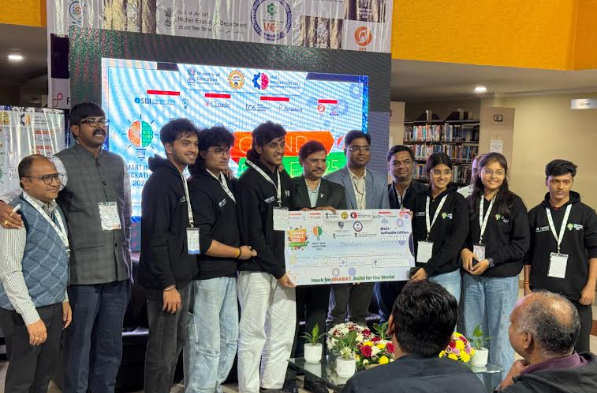
SIH 2025 Winners Unveil Breakthrough Digital Innovations at Vardhaman College

Winners of Smart India Hackathon (SIH) 2025 Grand Finale held at Vardhaman College of Engineering showcase Breakthrough Digital Innovations

prize

Hyderabad, Dec 10: The 36-hour-long, Grand Finale of the Smart India Hackathon (SIH) 2025 – Software Edition, one of the world’s largest innovation hackathons, concluded at Vardhaman College of Engineering (VCE), Hyderabad, where 24 of India’s top student teams showcased impactful digital innovations aimed at solving national challenges.

VCE was selected among 60 nodal centres nationwide—and five in Telangana—for India’s largest innovation drive

Organised by the Ministry of Education’s Innovation Cell (MIC) and AICTE, the 36-hour hackathon brought together some of the brightest young minds from premier institutions across 12 states, as stated in a press note issued in the city today.

Finalist teams developed solutions for problem statements focusing on AI-driven timetable generation aligned to NEP 2020, digital mental health ecosystems, centralised student activity record management, personalised career advisory systems, and a next-generation academia–industry interface titled ‘Prashikshan.’ These problem statements were given by Jammu and Kashmir State Government.

After multiple rounds of evaluation, five outstanding teams were declared winners, each awarded ₹1,50,000 by the Ministry of Education. The include Eklavya – MIT Academy of Engineering, Pune, Maharashtra; Gap Bridgers – Indian Institute of Information Technology (IIIT), Nagpur, Maharashtra; Hack Hounds – Dr. Mahalingam College of Engineering and Technology, Coimbatore, Tamil Nadu; Team Pioneers – Kalasalingam Academy of Research and Education, Tamil Nadu and Teen Titans – Bharatiya Vidya Bhavan’s Sardar Patel Institute of Technology, Mumbai, Maharashtra

Dr. Nikhil Kant, Deputy Director, AICTE gave away the cash prizes and praised the ingenuity demonstrated by the participants, stating, “The quality of work produced here reflects the future of India’s tech talent. These students are not just solving problems; they are building the foundations of India’s digital decade.”

Dr. Sachin Agarwal, Director – GenAI, PepsiCo, who served as an evaluator, added, “The solutions presented at VCE demonstrate remarkable potential for real-world deployment. It is inspiring to see young innovators approach national challenges with such clarity, rigor, and technical strength.”

Principal Prof. JVR Ravindra highlighted the significance of hosting the event, saying, “SIH 2025 has showcased what young engineers can achieve when provided the right platform and mentorship. VCE is proud to contribute to India’s innovation ecosystem.”

One of the winning team members shared, “This platform pushed us to refine our idea, respond to real-time feedback, and validate the impact of our solution.”

Evaluators from TCS, Wipro, Verizon, Arena Business Solutions, Teckybot, and Vidyardhi Pvt. Ltd. commended the participants for their technical maturity and problem-centric approach.

Thomas Cook India and SOTC Travel Unveil Winter Travel Trends 2025

Mumbai, December 12, 2025: Winter travel is witnessing growing interest from Indian travellers showcasing a mix of winter adventures, cultural/festive celebrations and exceptional experiences. Thomas Cook (India) Limited, India’s leading omnichannel travel services company, and its group company, SOTC Travel, announced their Winter travel trends 2025, unveiling evolving traveller preferences for the winter/end-of-year season.

A notable highlight this year is the extension of winter holiday travel timelines – till March—providing travellers with an expanded window to explore winter destinations and experiences. Alongside Europe’s alpine routes, Northern Lights and iconic Christmas markets, Indians are showing strong interest in global cultural calendars including the Rio Carnival in February and snow festivals across Japan, South Korea and China in January–February. This evolution reflects how diverse traveller segments—from families and couples to millennials, Gen Z and professionals—are making travel a year-round pursuit, with winter 2025 offering a rich blend of adventure, culture, wellness and luxury. We are also witnessing a growing interest towards closer-to-home destinations with easy visa/visa-free processes and improved connectivity.

Key Winter travel trends

· Soft adventure & Outdoor winter activities: Skiing, snowshoeing, Tobogganing/sledding, snowmobiling, husky/reindeer safaris across Europe’s Alpine regions of Switzerland, France, Austria and Germany, witnessing Northern Lights in Scandinavia and Russia’s Murmansk

· Direct connectivity, no-visa or easy visas and attractive pricing inspiring travel to short haul destinations like Vietnam, Thailand, Philippines, Indonesia, Singapore, Malaysia, Dubai, Abu Dhabi, Oman, Morocco and long haul favourites like Australia, New Zealand

· India and Indian subcontinent’s Andamans, Kerala, Rajasthan, Goa, North East and Sri Lanka

· Winter wellness experiences like thermotherapy and cold plunges, ice bathing in Sweden’s Uppsala and Fjällnora; Norway’s Tjuvholmen and Svalbard, renowned Swiss spa town of Bad Zurzach, Japanese onsen, Korean jjimjilbang, mineral mud baths in New Zealand & Vietnam, wellness retreats in Bali & Thailand; Himalayan spa retreats and Ayurvedic centers in Kerala

· Distinctive stays: eco-friendly glamping in geodesic domes amidst the Swiss Alps; stargazing through glass igloos in Lapland; châteaux/palaces in France, Italy and Austria; traditional mountain lodges in Scandinavia/Georgia; wooden cabins in Himachal Pradesh and Uttarakhand, havelis and luxury tents in Rajasthan

· Event/Cultural calendars: Harbin International Ice and Snow Festival in China, the Sapporo Snow Festival in Japan, Hwacheon Sancheoneo Ice Festival in South Korea, Winter Lights Festival in Reykjavík, Amsterdam Light Festival, New Year’s Eve fireworks celebrations in Sydney Australia, USA’s Las Vegas, San Francisco and California; Christmas markets/ winter wonderland in Europe’s Switzerland, France, Austria, UK and Scandinavia; Rann Utsav in Gujarat, Hornbill festival in Nagaland, Bikaner Camel Festival in Rajasthan

· Wildlife safaris are gaining interest: reverse migration season in Kenya and South Africa; wildlife spotting and trekking in Australia and New Zealand; India’s national parks and sanctuaries like Ranthambore National Park, Periyar National Park and Kaziranga National Park opening up for the winter season

· Cruises continue to be the flavor of the season: domestic and international sailings – Resort World Cruise sailings in Singapore, Disney Cruise Line in Australia & New Zealand, MSC sailings in Dubai-Abu Dhabi; river cruising in Egypt

Mr. Rajeev Kale, President & Country Head – Holidays, MICE, Visa, Thomas Cook (India) Limited, said, “Winter travel is shaping up as a season of discovery for Indian travellers. With the introduction of new air routes, improved direct connectivity and attractive early-booker pricing, we are seeing strong demand across diverse segments—from multigenerational families and couples to millennials and working professionals. While Europe’s alpine adventures and Scandinavia’s Northern Lights remain timeless favourites, there is rising interest in closer-to-home destinations across South East Asia, Central Asia and India, driven by easy visa access and direct/improved connectivity. From a domestic front, Andamans, Himachal Pradesh, Uttarakhand, Kashmir, Kerala, Rajasthan, Goa and North East continue to be the top destinations. What excites us most is the appetite for unique experiences—whether it’s winter wellness in Japan and Scandinavia, distinctive stays from igloos to palaces, vibrant cultural festivals, or wildlife safaris and luxury cruises in Antarctica.”

Mr. S D Nandakumar, President & Country Head – Holidays & Corporate Tours – SOTC Travel, said, “Travel is increasingly becoming a year-round pursuit, and Winter 2025 reflects this evolution with a rich blend of adventure, culture and wellness. Europe’s winter wonderland and iconic Christmas markets continue to inspire festive travel, while unique experiences like witnessing the Aurora Borealis across Scandinavia and Russia are gaining traction. Cruising too has emerged as a strong favourite—whether international sailings across Singapore, Australia and Abu Dhabi, or river cruises in Egypt. This growing appetite underscores how Indian travellers are seeking distinctive experiences across destinations and formats, making winter travel more diverse and dynamic than ever. What’s especially encouraging is the rising interest from India’s Tier 2 and Tier 3 cities, along with strong growth in the MICE segment, signaling a broader shift in travel aspirations across the country.”

From Chaos to Confidence – Future-Proofing Pune & PCMC’s Real Estate Story

Anil Pharande

By Anil Pharande, Chairman – Pharande Spaces

Pune and its sister city Pimpri-Chinchwad (PCMC) in the West have solidified their position as real estate growth powerhouses, with more than 90,000 homes sold each year. In 2025, these markets infused more than Rs. 5,550 crore in stamp duty revenue into the state government coffers – a strong testimony to the confidence homebuyers and investors have in these twin property dynamos.

Pune and PCMC appeal to people from all walks of life. They have a generous stock of affordable housing and a wide range of homes across other price bands, from budget-friendly options to luxury developments. The IT corridors around Hinjewadi, Magarpatta and Kharadi continue to draw in talent and investments. This continuously drives up demand for homes. End-user demand from families, young professionals, and retirees remains the backbone of these markets, maintaining a stability that many other major cities can only dream of.

Infrastructure Investment Equals Long-Term Value

The story about infrastructure in these two cities is just as interesting. Transformative connectivity projects have fuelled Pune’s and PCMC’s real estate booms. The Pune Metro has been running since 2017 and now covers more than 100 km. The Phase 1A extensions are almost done. On November 26, 2025, the Union Cabinet approved the second phase of the expansion and added Lines 4 and 4A, which will run 31.636 km and have 28 new stations.

Pune’s Rs. 1.30 lakh crore Comprehensive Mobility Plan (CMP) – a 30-year plan – includes ring roads, bypasses, grade separators, and flyovers that work together to fight traffic jams. This is real progress towards making the city more modern and efficient. Likewise, PCMC’s Transit-Orientated Development (TOD) project around 11 metro stations aims to create livelier, more commutable neighbourhoods.

Real estate

Hard Realities

However, we cannot ignore the reality that explosive growth has outpaced infrastructure problems. The problem is not in these markets’ fundamentals, which are still strong, but in ensuring that these plans are coordinated and carried out efficiently to keep up with Pune and PCMC’s rapid growth.

Consider the number of cars on the roads of these twin cities today – Pune now has more than 35 lakh registered four-wheelers, and 2.5 to 3 lakh more are added each year. The Pune RTO registered 3 lakh new vehicles in 2024, and the PCMC added 1.2 lakh. PCMC now has almost one car for every person. There are 21.45 lakh cars in a population of about 30 lakh. Unfortunately, our roads have not kept up; only 4% of PCMC’s 2,300 km of roads have been improved to handle real-time traffic.

Despite a massive amount of capital being spent, the average speed in both these cities is still only 18 km/h. The Pune Ring Road, which will be a key solution for reducing traffic woes, officially began construction in December 2024. However, the completion date has been pushed back to 2030. This 168.94 km project was supposed to be finished years ago.

Population pressure makes things even more complicated. The number of people living in PCMC went from 17 lakh in 2011 to 30 lakh today, and it is expected to reach 96 lakh by 2041. This sudden increase puts a lot of stress on public services, sewage systems, and the water supply. Even though people in newly merged areas pay higher property taxes, they still don’t have basic services.

Regulatory bottlenecks have resulted in a huge backlog of pending residential projects. Over 100 major housing projects worth Rs. 30,000+ crore in PCMC are stuck because they have not been given environmental clearance yet. These kinds of delays raise construction costs and push back possession dates, which hurts buyer confidence and keeps new supply from coming on the market when demand is still strong.

In the past, PCMC was a deacon of scientific city planning, cluster-based zoning, and superior infrastructure. But in recent years, things have started to go wrong. While beautification projects look nice, it seems we are putting looks ahead of important improvements like widening roads, managing traffic, and better parking. There are plans for development, but they are not always followed through on. PCMC’s most recent development plan, which was only recently in draft form after a ten-year delay, received more than 18,500 objections from citizens.

This shows that there are real problems with planning and execution.

Real estate

Building on Past Successes – The Way Forward

The good news is that recognising these problems has led to real action. Using data-driven methods and feedback from citizens, PCMC has chosen 25 busy intersections to focus on. The focus is now on changing road layouts and adding grade separators and signal-free corridors.

Anti-encroachment drives are tackling illegal shops and temporary buildings that obstruct traffic. These measures do show that PCMC is trying to get back into a proactive, scientific planning track that used to make it a model for urban development.

The ambitious goals of the CMP and the Rs. 9,858 crore set aside for Pune Metro Phase 2 show that the Maharashtra government is serious about its plans. The CMP framework is a major step towards greater collaboration between the Pune Municipal Corporation, PCMC, traffic police, and transportation authorities.

All stakeholders must be on board to ensure that these projects align with the master plan. The expansion of PCMC’s cluster-based development strategy through transit-oriented development could transform metro corridors into self-sustaining urban ecosystems.

Action is the Magic Word

The opportunity for real estate developers, investors and city planning authorities is waiting to be addressed. Pune and PCMC’s underlying strengths – strong end-user and investor demand, a wide range of market segments, a dynamic IT sector, and relatively low prices – are still intact. The 1.45 lakh property registrations in 2025 (the most in four years) show that buyers are still loyal to their cities despite the traffic chaos, regulatory delays, and various financial market upheavals.

However, the infrastructure story must go from plans on paper to on-ground action. We must uphold our promises to fix the execution gaps causing urban chaos and take coordinated, time-limited actions. Making Pune and PCMC future-ready depends on strong political leadership and will.

There is too much at stake. The real estate developer fraternity is ready to work together with the city planning authorities to usher Pune and PCMC into their next phase of growth. However, there must be a unanimous consensus on one fundamental fact, namely that growth at the cost of liveability is ultimately meaningless and will result in a degraded market that benefits no one.

Anil Pharande is Chairman of Pharande Spaces, a leading real estate construction and development firm famous for its township projects in Greater Pune and beyond. Pharande Promoters & Builders, the flagship company of Pharande Spaces and an ISO 9001-2000 certified company, is a pioneer of townships in the region. With the recent inclusion of Puneville Commercial into one of its most iconic townships, Pharande Spaces taken a major step towards addressing Pune’s current and future requirements for fully integrated residential-commercial convenience. 

National Milk Day 2025: Seminar on Dairy Innovation & Entrepreneurship

Hyderabad, Dec 10: The Federation of Telangana Chambers of Commerce & Industry (FTCCI), in collaboration with the Indian Dairy Association – Telangana Local Chapter, will be organising a full-day seminar titled “Innovations and Opportunities in Dairy Entrepreneurship: From Farm to Market” on 12th December 2025 at the KLN Prasad Auditorium, Federation House, Red Hills, Hyderabad.

The event is being organised as part of National Milk Day 2025 celebrations commemorating the birth anniversary of Dr Verghese Kurien, widely regarded as the Father of India’s White Revolution.

The National Milk Day seminar will be graced by distinguished dignitaries including Chief Guest Sri Vakiti Srihari, Honourable Minister for Animal Husbandry, Dairy Development & Fisheries, Government of Telangana; Guest of Honour Sri Ilamparithi K., IAS, Special Chief Secretary, Department of Animal Husbandry & Dairy Development, Government of Telangana; Special Guest Sri Gutha Amith Reddy, Chairman, Telangana Dairy Development Co-operative Federation Ltd.; and Keynote Speaker Sri Ch. Rajeshwara Rao, Chairman, Indian Dairy Association – Telangana Local Center. Senior FTCCI leadership comprising President Sri R. Ravi Kumar, Senior Vice President Sri K. K. Maheshwari, Vice President Sri Srinivas Garimella and Sri S. Chandra Mohan, Chairman of FTCCI’s Agro & Food Processing Committee, will preside over the programme.

The one-day seminar features four comprehensive technical sessions with participation from experts representing academia, industry, dairy cooperatives and financial institutions. The sessions will focus on Dairy Farming and Production, Processing and Value Addition, Dairy Technology and Digital Transformation, and Financial Support. The objective is to create a knowledge-sharing platform that supports dairy startups, FPOs, cooperatives and entrepreneurs in expanding their enterprises and exploring new business opportunities.

The seminar is especially relevant for dairy entrepreneurs and startups, farmers and FPOs, cooperatives and processors, food technologists and researchers, financial institutions and investors, policy-makers, government officials, students and aspiring dairy entrepreneurs.

The Queen of Hard Techno Comes to India: Why Sara Landry’s Sunburn Festival 2025 Headline Is a Cultural Shift

The World’s #1 Hard Techno DJ, Sara Landry isn’t just arriving at Sunburn Festival 2025, she’s arriving at a moment when India’s electronic music landscape is hungry for evolution. Globally hailed as the Queen of Hard TechnoLandry has redefined the genre with her explosive sets, occult-inspired aesthetic and fiercely independent artistic identity. Her headlining debut at Sunburn Festival marks the first time a pioneering hard-techno artist of her scale takes centre stage at the festival, signalling a bold expansion of what India’s largest dance music gathering represents.

image002

Landry’s inclusion isn’t simply about sound; it’s about the cultural recalibration happening within India’s nightlife and festival circuit. Hard techno, once niche and underground, has been steadily rising with Gen Z audiences who gravitate toward high-BPM, high-intensity sonic experiences. Sara, with her unapologetic style, community-driven ethos and massive global following, embodies the current shift in dance culture, one that celebrates individuality, darkness, energy and freedom. Her Sunburn Festival 2025 set is poised to introduce a new wave of electronic music exploration, bridging the gap between India’s commercial EDM history and the global techno future.

For the Sunburn Festival, this isn’t just a headliner, it’s a statement. By placing Sara Landry alongside global heavyweights David Guetta, Axwell and Above & Beyond, the festival signals its intent to expand its sonic universe and embrace both the mainstream and the cutting edge. With its high-octane lineup, blockbuster production and a city ready to celebrate at full volume, Sunburn Festival 2025 is set to be India’s most definitive electronic music event of the year, one that audiences will talk about long after the final beat drops.

Sunburn Festival 2025 hits Mumbai from December 19th to 21st at Infinity Bay, Sewri,  bringing together the biggest names, the wildest crowds and the most unforgettable vibes. Book your tickets now on BookMyShow, India’s leading entertainment destination and be part of India’s biggest music festival.

Putting workers’ rights at the heart of corporate accountability

Amsterdam, Dec 10: Standards to illuminate how organizations respond to disclosure expectations on crucial labor rights issues across the value chain are being updated, with a global consultation now underway.

harlord

Launched on International Human Rights Day, this public comment period will conclude GRI’s review of all labor-related disclosures and is open until 9 March 2026. Following approval by the Global Sustainability Standards Board (GSSB), feedback is sought on updates to four Topic Standards that span workers’ rights and protections:

  • Workers in Business Relationships (GRI 414)
  • Forced Labor (GRI 409)
  • Child Labor (GRI 408)
  • Freedom of Association and Collective Bargaining (GRI 407)

The revamp responds to persistent challenges in labor markets worldwide – including worker poverty, rising informal work, entrenched gender inequalities, and slow progress in ending child and forced labor. They also reflect growing demands for organizations to tackle negative impacts on workers in their value chains.

The exposure drafts increase coverage on labor rights and working conditions, including due diligence processes, incident reporting, grievance mechanisms, and engagement with worker representatives. New disclosures are proposed on policies and assessments that span an organization’s activities and business relationships, with stronger requirements for incidents reporting, prevention, and remediation actions.

Harold Pauwels, GRI Standards Director, said:

“Respect for workers’ rights is non-negotiable for any organization that claims to do business responsibly. Our revised Standards aim to set clearer expectations for how companies identify their labor-related impacts and risks, involve workers, and make improvements in their own operations and across value chains. We encourage all stakeholders to share their views through the public comment, so the final Standards are ambitious, effective, and fully grounded in international best practices.”

Global Policy Shifts Raise Volatility: Rupee Weakens, FIIs Pull Back, Gold Shines

By:- Mr. Nachiketa Sawrikar Fund Manager, Artha Bharat Global Multiplier Fund

Last month, the expectation was that the U.S. Federal Reserve would hold off on cutting interest rates in December and instead move in January. However, once the Fed signaled that a December rate cut was likely, market sentiment unexpectedly turned negative. Investors now face considerable uncertainty about the policy path in 2026, particularly with a new Fed Chair set to take over in May 2026. As a result, the 10-year U.S. Treasury yield rose from 4.00% to 4.20% last month.

The higher interest rate environment and shifting policy expectations have tightened financial conditions, weighed on asset valuations, and increased volatility across rate-sensitive sectors. Expectations were also that the India–U.S. trade deal would have been signed by now, but delays on that front have added to uncertainty. All of this is putting additional pressure on the rupee dollar exchange rate.

Consequently, we expect FII inflows into India to be negatively affected, which could further weigh on equity valuations and impact debt markets. In contrast, gold prices in India are likely to remain positively supported by these macroeconomic developments. In the long term, India’s higher growth rate will be positive but in the short term, the above factors would be dominant.