Archives January 2026

India’s Insurance Market Poised to Outperform Global Peers on Strong Growth Outlook: Swiss Re

Mumbai, Jan 20:  India’s insurance sector is entering a phase of sustained mid-term expansion, underpinned by strong economic fundamentals, rising consumer demand and supportive regulatory reforms, according to a new Swiss Re Institute analysis titled “India’s economic and insurance market outlook 2026–2030: resilient and rising amid global shifts.”

Swiss Re forecasts India’s insurance premiums to grow at an annual real rate of 6.9% between 2026 and 2030, making it the fastest-growing major insurance market globally. This growth is expected to significantly outpace China (around 4%), the US (2%), and Western Europe (about 2%) over the same period.

Strong economic tailwinds support insurance expansion

India is projected to maintain an average real GDP growth of 6.5% over the next five years, supported by robust private consumption, continued public infrastructure investment and improving private capital expenditure. Fiscal measures such as GST simplification and personal income tax concessions are boosting demand, particularly among lower- and middle-income households. The impact of global trade disruptions, including US tariffs, is expected to remain limited, given that goods exports to the US account for only about 2% of India’s GDP.

Amitabha Ray, Market Head for India at Swiss Re, said:

“India is a clear bright spot for insurance growth in the mid-term, with strong opportunities emerging across health and motor insurance. Forward-looking regulatory reforms, digital innovation and an increasingly consumer-centric product mix will support expansion. Insurance will play a vital role as a financial shock absorber for Indian households and businesses facing rising climate, health and longevity risks.”

Regulation and innovation driving the next growth phase

The forecast marks a strong rebound from 3.1% growth in 2025, following adjustments to new regulations. Reforms led by the Insurance Regulatory and Development Authority of India (IRDAI), along with broader government initiatives, are improving transparency and reshaping the sector for long-term growth. Key measures include a higher foreign direct investment (FDI) limit, modernisation of distribution channels and GST reforms, which are expected to attract capital, expand access and stimulate insurance adoption.

Life insurance premiums are projected to grow 6.8% annually over 2026–2030, driven by expanding distribution, rising demand for retirement solutions and steady credit growth. India remains the second-largest life insurance market among emerging economies.

While non-life insurance faces near-term pressures from regulatory changes and medical inflation, growth is expected to recover in the medium term. Health insurance premiums are forecast to grow 7.2% annually, while motor insurance is expected to expand by 7.5%, supported by increased vehicle penetration.

Mahesh H Puttaiah, Head of Insurance Market Analysis at Swiss Re Institute, noted:

“India’s large consumer base, stable inflation and fiscal prudence provide resilience against global uncertainty. These strengths will translate into sustained insurance premium growth, positioning India for a very positive mid-term outlook.”

Rising natural catastrophe risk highlights protection gap

Swiss Re estimates that USD 26–29 trillion in property assets are exposed to natural catastrophe risks across India, with several high-growth regions overlapping with multi-peril hotspots. As asset concentration increases, large-scale disasters could have a material impact on national economic growth.

Addressing this risk will require wider insurance and reinsurance coverage, alongside investments in early warning systems, climate-resilient infrastructure and stricter enforcement of building codes—particularly in rapidly urbanising and coastal regions.

Parvinder Singh, Head of Client Underwriting India at Swiss Re, said:

“Amid rising catastrophe risks and global uncertainty, disciplined underwriting and sustainable insurance solutions are essential to narrowing India’s protection gap and ensuring long-term stability for communities and businesses.”

Insurance market growth outlook (real terms)

  • India: 6.9% (2026–2030)

  • Emerging Asia (ex-China): 6.1%

  • China: 3.9%

  • North America: 1.8%

  • Western Europe: 2.1%

A Republic Day Retreat Steeped in Royalty at Fairmont Jaipur

This Republic Day, Fairmont Jaipur invites guests to transform the long weekend into an unforgettable royal retreat with A Grand Palace Escape, a thoughtfully curated stay inspired by the heritage, culture, and warmth of Rajasthan.
Set against the majestic Aravalli Hills, Fairmont Jaipur brings together the spirit of the nation with the grace of royal hospitality, offering families and travellers an opportunity to pause, reconnect, and celebrate India’s rich legacy in a setting that echoes timeless grandeur.
Spa at Fairmont Jaipur resize
Designed for indulgent getaways and meaningful moments, the experience blends cultural nuances with contemporary luxury. Guests can enjoy curated breakfast and dinner experiences, signature high tea rituals, and relaxed evenings with happy hours, all while soaking in the calm elegance of the palace-inspired property.
As a special Republic Day gesture, the offer extends 30% savings on a second room, making it ideal for families travelling together. Adding to the indulgence, guests receive a spa credit of INR 2,000 (once per stay) at Ruhab Spa, inviting moments of relaxation and rejuvenation.
In tribute to the nation’s heroes, Fairmont Jaipur also extends a heartfelt gesture of gratitude with 25% savings for army veterans and their families, reinforcing the brand’s commitment to honouring those who serve.
From heritage-inspired experiences to heartfelt hospitality, A Grand Palace Escape reflects Fairmont Jaipur’s philosophy of making every stay meaningful, where celebrations are not just observed, but truly felt.
What’s Included
  • 30% savings on a second room (ideal for families)
  • Spa credit of INR 2,000 per stay
  • Curated breakfast and dinner experiences
  • High tea with signature Fairmont rituals
  • Happy hours (1+1 on select beverages)
  • 25% savings for army veterans and their families

Bengaluru Runs for Earth: MAHE Bengaluru to Host Sustainability Themed Marathon on January 25

Bengaluru, Jan 20: Manipal Academy of Higher Education (MAHE), an Institution of Eminence Deemed to be University, Bengaluru Campus, is set to host the first-ever MAHETHON 2026. Branded as “Bengaluru’s biggest running festival,” this flagship sporting event will take place on Sunday, January 25, 2026. The run will start and finish at the MAHE Bengaluru Campus in Yelahanka and will follow an AIMS-certified route, ensuring international measurement standards.

MAHETHON - 2026

MAHETHON 2026, powered by Axis Bank, brings together fitness, sustainability, and community spirit. Designed as an inclusive platform, it welcomes runners of all levels, from seasoned athletes to first-time participants. Celebrating the theme “Run Green. Breathe Free” and the tagline “Bengaluru Runs for Earth,” the event highlights MAHE Bengaluru’s commitment to eco-friendly, sustainable practices.  It showcases the campus’s green initiatives, including biodiversity conservation and sustainable mobility, while encouraging participants to embrace healthier, eco-friendly lifestyles.

Elaborating on the vision behind this flagship event, Dr. Madhu Veeraraghavan, Pro Vice Chancellor of MLHS, MAHE Manipal, and MAHE Bengaluru Campus, said,

 “MAHETHON 2026 is more than a sporting event; it is a movement that reflects our collective spirit of resilience and progress. We see this marathon as a bridge connecting the academic community with the vibrant energy of Bengaluru. By bringing together thousands of runners under the banner of health, sustainability, and ecology, we are taking a meaningful step toward building a fitter, more conscious, and ecologically aware society.”

Further reinforcing its pan-India commitment to health and sustainability, MAHE, Manipal, will host the 8th edition of the Manipal Marathon on Sunday, 08 February 2026, at KMC Greens, Manipal. Recognised as one of India’s largest student-organised community fitness events, Manipal Marathon, together with Mahethon, underscores MAHE’s nationwide efforts to promote fitness as a shared social responsibility.

Race Categories and Highlights: MAHETHON 2026 features multiple race categories and highlights to suit all age groups and fitness levels:

    • Half Marathon (21.1K): The flagship race for endurance runners.
  • 10K Run & 10K Forces Run: Open to the general public and armed/police forces.
  • 5K Run: Ideal for fitness enthusiasts.
  • 3K Fun Run: Designed for children and beginners to enjoy running.

“MAHETHON 2026 promises to be a celebration of community, camaraderie, and well-being, ensuring every participant enjoys a safe, supported, and seamless race-day experience,” said Dr. Raghavendra Prabhu P, Additional Registrar, MAHE Bengaluru, who is spearheading the event.

Niyo’s Vinay Bagri Calls for Budget 2026 Focus on Efficient, Transparent Global Spending

By:-  Vinay Bagri, CEO & Co-Founder, Niyo

“As Indians spend more money beyond borders for travel, education and work, we believe the focus in Budget 2026 should shift from just transaction limits to spending efficiency. While LRS limits often dominate the conversation, the bigger issue for consumers is the silent cost of foreign exchange markups that inflate overseas expenses. Simplifying international payment processes, reducing TCS on legitimate foreign transactions, and continuing to encourage digital banking innovation will go a long way in making global spending more transparent and accessible. A stable policy environment and close collaboration between regulators and fintechs can help empower Indian travellers and support responsible growth across the cross-border fintech ecosystem.”

IIM Sambalpur Partners with National SC-ST Hub to Promote Grassroots Entrepreneurship

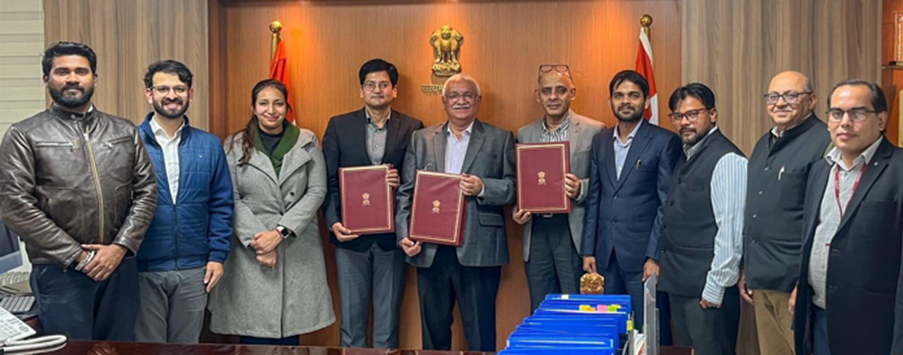
Sambalpur, Jan 20: IIM Sambalpur, one of India’s premier management institutions, hosted the 6-day Business Accelerator Program for SC-ST entrepreneurs in collaboration with the National SC-ST Hub, Ministry of MSME, GOI, from 19th to 24th January, 2026. The objective of this programme is to strengthen the entrepreneurship ecosystem by building capacity and upskilling SC-ST entrepreneurs with essential business, financial, and digital skills, in alignment with the vision of Viksit Bharat 2047 and the United Nations Sustainable Development Goals.

Image 1 (4)

The event was graced by Prof. Mahadeo Jaiswal, Director, IIM Sambalpur, Mr. Sambit Tripathy, Ex- IRS, CMD, Livelihood Alternatives, as the Chief Guest, Dr. Anupam Gayen, Zonal Head, NSIC, as the Guest of Honour, Ms. Nibedita Nayak, Former Chairperson, Odisha State Social Welfare Board, as the Keynote Speaker. 

The programme consists of 12 days of training, including 6 days of on-campus sessions at IIM Sambalpur and 6 days of online learning, followed by 6 months of handholding support for participating entrepreneurs. The first cohort of the Business Accelerator Programme included 25 participants from Odisha, Andhra Pradesh, Telangana, and Maharashtra. The second cohort of the Business Accelerator Program will commence in February 2026, offering a 72-hour hybrid learning experience through virtual weekend sessions and a 6-day on-campus module at IIM Sambalpur.

Speaking on the occasion, Prof. Mahadeo Jaiswal, Director, IIM Sambalpur,

“IIM Sambalpur’s vision is to nurture responsible leaders with an entrepreneurial mind-set. Entrepreneurship is not just about creating wealth for oneself; it is about creating value for society, the nation, and the planet. India’s vision of Viksit Bharat cannot be achieved by building only large corporations; we must nurture responsible entrepreneurs at the grassroots who innovate without harming the environment or displacing communities. Aligned with National Education Policy 2020, entrepreneurship must focus on knowledge creation, innovation, and responsible wealth generation through modern technology.”

Addressing the gathering the Chief Guest, Mr. Sambit Tripathy, Ex- IRS, CMD, Livelihood Alternatives, added,

“Developing robust business plans, refining ideas, and building capacity, along with understanding the fundamentals of what we produce, consume, and how we communicate, are essential to excel in entrepreneurship.”

 The Guest of Honour, Ms. Nibedita Nayak, Former Chairperson, Odisha State Social Welfare Board, highlighted,

IIM Sambalpur stands at the confluence of knowledge, aspiration, and nation-building, and I congratulate IIM Sambalpur for introducing a programme that is not merely an academic initiative but a national milestone. Today, SC-ST entrepreneurship matters more than ever because inclusive growth is no longer a choice; it is an economic necessity.”

Through this initiative, IIM Sambalpur once again highlighted its commitment to fostering inclusive, sustainable, and innovation-driven entrepreneurship by supporting SC-ST entrepreneurs in scaling their ventures, generating local employment, and contributing to India’s grassroots economic development.

Mumbai Climate Week Flags off  Community-Led, Gender-Responsive Climate Planning as the Future of Local Climate Action

Mumbai, Jan 20: Mumbai Climate Week (MCW) today underscored the critical importance of community-led and gender-responsive climate action with the launch of a pioneering district-level climate planning initiative in Raigad, Maharashtra. The three-year pilot project aims to embed gender justice, indigenous knowledge, and grassroots leadership into climate governance, setting a replicable model for districts across the state and beyond.

MCW X TISS

The initiative was formally launched during the two-day national seminar, “Pathways to Gender-Responsive Local Climate Action and Justice: Localizing SDGs, Decolonizing Governance, Indigenizing Knowledge,” held as part of the 90th-year Navati celebrations of the Tata Institute of Social Sciences (TISS). The seminar also served as a curtain-raiser to Mumbai Climate Week 2026, scheduled from February 17–19, 2026.

The project is being led by TISS in partnership with the Maharashtra State Climate Action Cell (SCAC), Asar Social Impact Advisors, Waatavaran Foundation, and the Policy & Development Advisory Group, with support from the University of Toronto India Foundation. Together, the partners highlighted the urgent need to localise climate action by centring communities most affected by climate change.

The Raigad Climate Action Planning initiative was inaugurated by Shri Abhijit Ghorpade, Director, State Climate Action Cell, and aims to strengthen district-, village-, and Panchayat-level climate planning processes in alignment with Maharashtra’s SAPCC 2.0.

Speaking at the inauguration, Shri Shishir Joshi, Founder, Mumbai Climate Week, said:

“Climate action in India cannot succeed if it remains confined to policy rooms and global summits. Real solutions will emerge from districts, villages, and communities—especially from women and indigenous groups who experience climate impacts first-hand. The Raigad initiative reflects the spirit of Mumbai Climate Week: localising climate action, democratising decision-making, and building models that are just, inclusive, and scalable.”

Echoing this emphasis on inclusion, Prof. M. Mariappan, Officiating Vice Chancellor, TISS, said:

“Women play a critical role in building resilience and shaping adaptation efforts, often drawing on deep community knowledge and care practices. Climate action planning must therefore centre community voices while also addressing structural inequalities. TISS remains deeply committed to just and inclusive approaches to such planning.”

Mumbai Climate Week 2026 will continue to amplify such locally rooted climate solutions, creating a platform where policymakers, practitioners, researchers, and communities can collectively shape the next phase of India’s climate journey.

Climate change is not only an environmental challenge but also a social and economic one, disproportionately affecting women, tribal populations, and marginalised communities. By prioritising participatory planning, this initiative moves beyond top-down climate frameworks and reimagines governance through lived experiences and indigenous knowledge systems.

The seminar highlighted the need to integrate climate justice into development planning, ensuring that climate action plans are not only technically sound but also socially equitable.

Key Highlights of the Seminar:

  • Launch of the Raigad Climate Action Planning Project: Training Village Development Committees and integrating SDGs into Panchayat Development Plans.
  • Conference of Panchayats – COP of the Global South: A counter-narrative to global COPs, featuring Gram Sevaks and local leaders discussing decentralised climate governance.
  • Documentary Screening: “Climate Resilience: Life as Told by Women” (58 mins), showcasing women-led climate adaptation practices in Kerala’s coastal regions.

“Young chefs are torchbearers of India’s culinary heritage,” says Shri Gajendra Singh Shekhawat

Symbiosis School of Culinary Arts and Nutritional Sciences, Pune emerged as the Winner of the maiden PHDCCI National Young Chef Competition (NYCC) 2025-26, while teams from Maharashtra State IHMCT and IHM Pusa, New Delhi were declared the 1st Runner-Up and 2nd Runner-Up respectively, at the Grand Finale held on 19 January 2026 at the Institute of Hotel Management, Pusa, New Delhi. The award for the Best Bhaja Dish was conferred upon the team from Chef’s Kitchen Institute of Culinary Arts and Hotel Management, Kolhapur.

Pic2

The Grand Finale witnessed participation from 10 leading hospitality institutions representing all four zones of the country, including Asian Christian Culinary & Agricultural Science Institute, Hosur; Chef’s Kitchen Institute of Culinary Arts and Hotel Management, Kolhapur; Culinary Academy of India, Hyderabad; IHM Bhubaneswar; IHM Kolkata; IHM Kufri; IHM Pusa, New Delhi; IHM Hyderabad; Maharashtra State IHMCT, Pune; and Symbiosis School of Culinary Arts and Nutritional Sciences, Pune, underscoring the pan-India character of the competition.

The finalists were evaluated by an eminent jury comprising Chef Nand Lal Sharma, Deputy General Manager, Himachal Pradesh Tourism Development Corporation; Chef Debjeet Majumdar, Consultant Chef & Co-Founder, Passion 4 Hospitality; Chef Nitin Shende, Professor – Food Production, GIHMCT Nagpur; Chef Srinivas V, Executive Chef, Travel Food Services; and Chef M. Prabu, Joint Registrar, Dr. M.G.R. Educational and Research Institute, under the chairmanship of Chef Anil Grover, Certified WorldChefs Judge.

Gracing the occasion as the Chief Guest, Shri Gajendra Singh Shekhawat, Hon’ble Minister of Tourism and Culture, Government of India, said,

“Indian cuisine is among our most powerful cultural assets and a vital pillar of tourism-led growth. Our food traditions reflect the diversity, wisdom and lived heritage of our regions and our young chefs are the torchbearers of this legacy. He noted that rapid urbanisation and changing consumption patterns present Indian chefs with a unique opportunity to lead innovation in value-added, nutritionally balanced, and ready-to-eat food solutions rooted in India’s traditional knowledge systems. Platforms like NYCC are essential in nurturing chefs who are deeply rooted in tradition, yet globally confident and capable of representing India’s culinary excellence on the world stage.”

Organised by PHDCCI in partnership with the Ministry of Tourism, Government of IndiaIndian Federation of Culinary Associations (IFCA); and Tourism & Hospitality Skill Council (THSC), the National Young Chef Competition marked the culmination of a six-month nationwide culinary journey celebrating India’s rich gastronomic heritage while creating a focused national platform for Indian cuisine.

Welcoming the delegates, Mr. Anil Parashar, Chair – Tourism & Hospitality Committee, PHDCCI, said,

“NYCC was envisioned not merely as a competition, but as a national movement to restore pride in Indian cuisine among young professionals. By providing a credible, national platform, we are encouraging students to rediscover their regional food traditions and reinterpret them with contemporary relevance. The overwhelming response from institutions across India validates the relevance and timing of this initiative.”

The Steering Committee of NYCC comprised Chef Manjit Gill, President, IFCA; Chef Anil Grover, Certified WorldChefs Judge; Chef Sudhir Sibal, Founder Member, IFCA; Mr. Rajan Bahadur, CEO, Tourism & Hospitality Skill Council; Prof. Kamal Kant Pant, Principal, IHM Pusa; and Mr. Amarjit Singh Ahuja, Director – Procurement, Le Meridien New Delhi.

Delivering the theme address, Chef Manjit Gill, President, IFCA and Chair of the NYCC Steering Committee, said,

“Indian cuisine is not merely a collection of recipes; it is a philosophy shaped by history, science and cultural memory. Before innovation comes understanding. NYCC encourages young chefs to respect the roots of Indian cooking and then reinterpret them with honesty, skill and responsibility. This is how we safeguard our culinary identity while preparing chefs for global kitchens.”

Mr. Rajan Sehgal, Co-Chair – Tourism & Hospitality Committee, PHDCCI, stated,

“NYCC is a strong example of what collaboration between industry, academia and government can achieve. When young talent is supported through mentorship, national exposure and fair evaluation, it results in confident, employable and future-ready professionals.”

The Grand Finale followed an intense live cook-off format, challenging participants to prepare a traditional Bhojan comprising a bhaja preparation, main dish, vegetable preparation, pulses preparation, curd preparation, rice or bread preparation and a sweet dish within two and a half hours, with evaluation based on technique, authenticity, innovation, sustainability and presentation. 

Presenting a brief on the NYCC journey and outlining the vision ahead, Ms. Shalini S Sharma, Assistant Secretary General, PHDCCI, said,

“From the curtain raiser to four zonal rounds across North, East, West and South India, NYCC has engaged over 100 hospitality institutions nationwide. Our vision is to scale NYCC into a sustained national platform that identifies talent, provides structured mentorship, industry integration and positions young Indian chefs confidently on global culinary platforms.

Proposing the formal vote of thanks, Ms. Meena Bhatia, Co-Chair – Tourism & Hospitality Committee, PHDCCI, said,

“The successful culmination of the first edition of NYCC reflects the collective commitment of government, industry, academia and our young chefs. PHDCCI remains firmly committed to institutionalizing NYCC as a flagship national initiative and expanding its impact in the years ahead.” 

NYCC was supported by leading industry partners including TATA Consumer ProductsLee Kum KeeNestle ProfessionalCremica Food IndustriesVenus IndustriesHospitality & Kitchen Solutions (HAKS),Hilton, Roseate hotels and resortsWagh Bakri Tea GroupWelbilt IndiaMcCain FoodsChefs Unlimited, Le-meridian, New Delhi and Purchasing Professional Forum India (PPFI), whose continued engagement underscores strong industry confidence in the initiative.

Equirus sole advisor to Kalpataru Projects on Vindhyachal Expressway sale to ActisHealth makes wealth in the stock market too

Mumbai, Jan 20 — Mid-market specialist investment banking firm Equirus Capital announced the successful completion of the 100% stake sale of Vindhyachal Expressway, an 89-km, four-lane operational highway asset of Kalpataru Projects International Limited (KPIL), to leading global private equity investor Actis. Equirus acted as the sole financial advisor to Kalpataru Projects on the transaction.

The divestment marks the 11th successful road M&A transaction advised by Equirus, further reinforcing its leadership in infrastructure monetisation and capital recycling mandates, particularly for mid-market companies. The transaction highlights Equirus’ deep expertise in yield-oriented infrastructure assets, with a strong track record in road sector advisory.

“This transaction underscores our differentiated capabilities in yield-oriented infrastructure assets and road M&A, where value creation is driven by cash-flow durability, risk allocation, and long-term return optimisation. Leveraging deep sector expertise and rigorous process management, we led the transaction end-to-end — from structuring and asset positioning to negotiations and closure,” said Vijay Agrawal, Managing Director and Sector Lead – Infrastructure and Real Estate, Equirus Capital.

As per Kalpataru Projects’ disclosure to stock exchanges, the transaction values the Vindhyachal Expressway asset at an estimated enterprise value of approximately ₹775 crore, subject to closing adjustments. The company also confirmed that “All necessary approvals and conditions precedent for the transaction have been successfully completed,” with the sale expected to be finalised before the long stop date of January 31, 2026.

Brokerages tracking Kalpataru Projects have viewed the transaction positively, noting, “The divestment is financially positive for KPIL, as the asset contributes just ~0.43% of FY24 consolidated revenue while unlocking meaningful capital. The proceeds can strengthen the balance sheet and support redeployment into core EPC segments and growth opportunities, improving capital efficiency without impacting operating scale.”

“This is another example of a win-win deal that we have been able to seal providing Kalpataru Power with strategic capital recycling while giving Actis ownership of a high-quality, stable-yield road asset aligned with its long-term investment strategy,” Mr. Agrawal added.

Vindhyachal Expressway operates under a build-operate-transfer (BOT) concession with a residual concession period of over 20 years. As of March 31, 2024, the asset reported revenue of ₹85.07 crore and a net worth of ₹144.55 crore. The project stretch is located on NH-7 from Rewa to the Madhya Pradesh–Uttar Pradesh border, with traffic largely driven by inter-state commercial vehicle movement.

According to credit rating agency Crisil that rates VEPL Rs 284 crore of bank loans, “Commercial vehicles form a sizeable portion of traffic on the project stretch,” adding that the concession agreement allows for extension of the concession period by up to 20% in case of traffic shortfall, subject to approvals. Crisil further noted that traffic grew at a 6% CAGR between FY2018 and FY2024, while toll collections increased 12.7% year-on-year to ₹70.6 crore in the first nine months of FY2025, supported by inflation-linked toll hikes. The asset is also undergoing major maintenance, with ₹109 crore planned over FY2025–FY2026.

Equirus sole advisor to Kalpataru Projects on Vindhyachal Expressway sale to ActisHealth makes wealth in the stock market too

Mumbai, Jan 20 — Mid-market specialist investment banking firm Equirus Capital announced the successful completion of the 100% stake sale of Vindhyachal Expressway, an 89-km, four-lane operational highway asset of Kalpataru Projects International Limited (KPIL), to leading global private equity investor Actis. Equirus acted as the sole financial advisor to Kalpataru Projects on the transaction.

The divestment marks the 11th successful road M&A transaction advised by Equirus, further reinforcing its leadership in infrastructure monetisation and capital recycling mandates, particularly for mid-market companies. The transaction highlights Equirus’ deep expertise in yield-oriented infrastructure assets, with a strong track record in road sector advisory.

“This transaction underscores our differentiated capabilities in yield-oriented infrastructure assets and road M&A, where value creation is driven by cash-flow durability, risk allocation, and long-term return optimisation. Leveraging deep sector expertise and rigorous process management, we led the transaction end-to-end — from structuring and asset positioning to negotiations and closure,” said Vijay Agrawal, Managing Director and Sector Lead – Infrastructure and Real Estate, Equirus Capital.

As per Kalpataru Projects’ disclosure to stock exchanges, the transaction values the Vindhyachal Expressway asset at an estimated enterprise value of approximately ₹775 crore, subject to closing adjustments. The company also confirmed that “All necessary approvals and conditions precedent for the transaction have been successfully completed,” with the sale expected to be finalised before the long stop date of January 31, 2026.

Brokerages tracking Kalpataru Projects have viewed the transaction positively, noting, “The divestment is financially positive for KPIL, as the asset contributes just ~0.43% of FY24 consolidated revenue while unlocking meaningful capital. The proceeds can strengthen the balance sheet and support redeployment into core EPC segments and growth opportunities, improving capital efficiency without impacting operating scale.”

“This is another example of a win-win deal that we have been able to seal providing Kalpataru Power with strategic capital recycling while giving Actis ownership of a high-quality, stable-yield road asset aligned with its long-term investment strategy,” Mr. Agrawal added.

Vindhyachal Expressway operates under a build-operate-transfer (BOT) concession with a residual concession period of over 20 years. As of March 31, 2024, the asset reported revenue of ₹85.07 crore and a net worth of ₹144.55 crore. The project stretch is located on NH-7 from Rewa to the Madhya Pradesh–Uttar Pradesh border, with traffic largely driven by inter-state commercial vehicle movement.

According to credit rating agency Crisil that rates VEPL Rs 284 crore of bank loans, “Commercial vehicles form a sizeable portion of traffic on the project stretch,” adding that the concession agreement allows for extension of the concession period by up to 20% in case of traffic shortfall, subject to approvals. Crisil further noted that traffic grew at a 6% CAGR between FY2018 and FY2024, while toll collections increased 12.7% year-on-year to ₹70.6 crore in the first nine months of FY2025, supported by inflation-linked toll hikes. The asset is also undergoing major maintenance, with ₹109 crore planned over FY2025–FY2026.

Skilling Rural Youth Is Key to Strengthening India’s Households and Future Workforce


Jan 20: Skilling Rural Youth Is Key to Strengthening India’s Households and Future Workforce New Delhi, 19th January 2026: For millions of rural youths, the transition from education to employment is critical and challenging. Many aspire to white-collar jobs, often unaware that skilled blue-collar and technical roles can offer stable, dignified, long-term careers. Limited access to training and pathways into work pushes many into insecure livelihoods, leaving households dependent on climate-sensitive incomes. Strengthening skilling ecosystems is therefore essential—not only for employment, but for reliable off-farm income that builds household stability.

On the occasion of National Youth Day, this challenge takes on renewed urgency. As India works to harness its demographic dividend and realise the vision of Viksit Bharat, equipping rural and semi-urban youth with relevant, market-linked skills is critical for inclusive growth, reducing distress migration, and strengthening local economies. Beyond livelihoods, meaningful employment builds a sense of agency and confidence – enabling young people to become active contributors and positive role models in their families and communities.

For over a decade, Ambuja Foundation has worked to strengthen rural livelihoods through its Skill & Entrepreneurship Development Institutes (SEDI), creating pathways from education to employment for young people in underserved regions. Operating through a network of SEDI centres across 13 states, SEDI equips rural youth—many from agricultural households and limited local job markets—with practical, job-ready skills across 42 accredited courses in sectors such as retail, healthcare, construction, and emerging industries. To date, the programme has trained over 1,34,000 youth, supported by personalised counselling and strong industry linkages, with 77% of graduates securing wage employment or starting their own enterprises. By enabling dependable off-farm livelihoods, SEDI helps diversify household incomes and reduce vulnerability to climate and economic shocks.

The past year marked a significant milestone, with the SEDI network expanding from 35 to 51 centres, enabled by strong partnerships with corporate, institutional, and technical partners. Fifteen new centres were established across strategic locations in Maharashtra, Rajasthan, Uttar Pradesh, Himachal Pradesh, Uttarakhand, Andhra Pradesh, Gujarat, Delhi, and Chhattisgarh—allowing deeper outreach and more diversified training aligned with local employment opportunities.

Programme outcomes during 2024–25 reflect the strength of this approach. 97,000 youth secured employment, with an 82% retention rate, indicating sustained workforce engagement. Average monthly salaries rose by 10% to ₹14,090, while the programme continued to support dual livelihood pathways—60% of graduates entering wage employment and 40% pursuing self-employment—strengthening household income stability.

Responding to changing skill demands, Ambuja Foundation also expanded its Future Skills programme, introducing artificial intelligence (AI) training across six locations to prepare rural youth—many first-generation learners—for participation in the digital economy. In parallel, new courses such as Solar Technician training across seven centres are opening pathways into India’s growing renewable energy sector.

Beyond training, initiatives like Kaushal Niwas, a transit hostel in Jaipur, have eased the transition into work—particularly for young women—by providing safe, temporary accommodation during interviews and early employment. Since its inception, over 1,800 trainees have used Kaushal Niwas as a stepping stone into the workforce. SEDI Alumni Chapters have further strengthened post-placement support, connecting over 3,000 alumni through mentorship, peer learning, and relocation guidance.

Ravi Nayse, COO (Skills), Ambuja Foundation, said, “For many rural youth, the barrier is not a lack of aspiration, but limited access to quality training, exposure, and pathways into work. Our focus has been on building skilling ecosystems that align industry demand with local realities. When rural youth secure stable employment or build viable enterprises, the impact extends well beyond individual incomes—it provides households with dependable off-farm earnings and helps families better withstand economic and climate-related shocks.”

As India marks National Youth Day, the experience from the ground reinforces a clear message: the vision of Viksit Bharat will be shaped not only by growth in cities, but by the opportunities created for young people in rural India—strengthening households, communities, and the broader economy. Ambuja Foundation reiterates the importance of continued collaboration across government, corporate industry, and civil society to ensure that rural youth are equipped to shape and contribute to India’s future growth.