Archives February 2026

Hon’ble Dr Justice (Retd.) Sanjaya Kumar Mishra, President of GSTAT, inaugurates the GSTAT Summit in Hyderabad

GSTAT is designed to provide a transparent, efficient and fully digital platform for GST appeals, says President, GSTAT


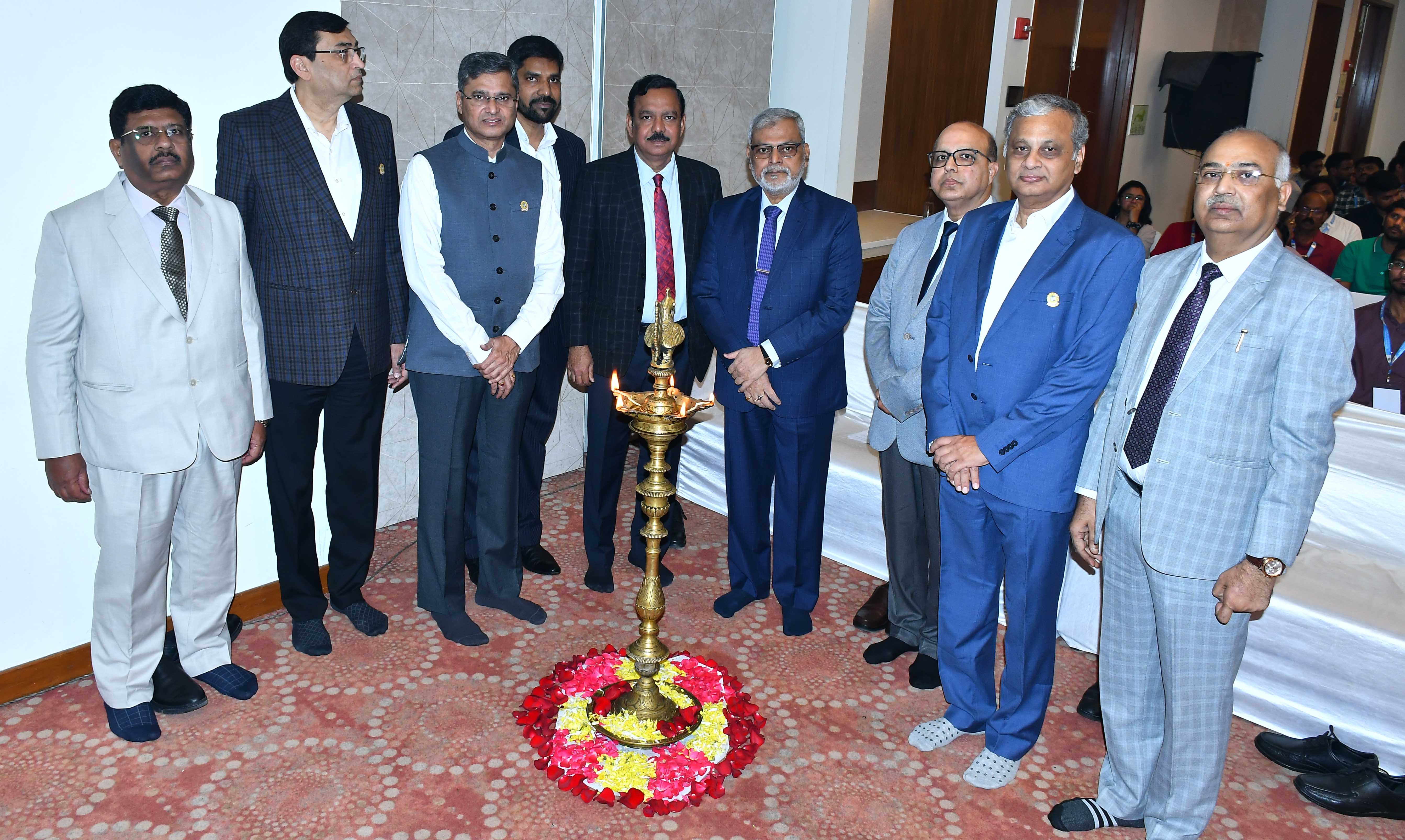
Hyderabad, Feb 21,: Hon’ble Dr Justice (Retd.) Sanjaya Kumar Mishra, President of the Goods and Services Tax Appellate Tribunal (GSTAT), inaugurated a half-day Summit on GST Appellate Tribunal in the city on Saturday.

 Addressing the gathering as Chief Guest, he observed that multiple lakh appeals are expected to be filed before June 30, 2026, the notified cut-off date for filing appeals before GSTAT.

 Creating awareness about the newly operational tribunal, Justice Mishra said that GSTAT is a specialised appellate body that hears disputes related to GST and functions as the second appellate authority in the GST dispute resolution mechanism.

 The operationalisation of GSTAT marks a transformative step in India’s indirect tax dispute resolution framework. It is designed to provide a transparent, efficient, and fully digital platform for addressing GST-related appeals, he said.

 He further urged taxpayers and practitioners not to wait until the last moment to file appeals.

 With a significant number of appeals expected before the June 30, 2026 deadline, I strongly advise taxpayers and professionals to file well in advance. Early filing will ensure smoother processing and avoid unnecessary hardship, he said.

 Explaining the appellate framework, he stated that under the GST Act, if a taxpayer is aggrieved by an order passed by a GST Officer, an appeal can first be filed before the First Appellate Authority. If still dissatisfied, the taxpayer can approach GSTAT.

 Prior to GSTAT becoming operational, taxpayers had to approach High Courts directly after the first appeal, which led to delays and increased litigation costs.

 Justice Mishra noted that GSTAT will handle tax demand disputes, Input Tax Credit (ITC) issues, refund claims, penalties, classification disputes, and interpretation of GST provisions. The tribunal offers a structured technical and judicial forum, speeds up dispute resolution, and reduces the burden on High Courts.

 He informed that the system is transparent, paperless, and fully online, with appeals to be filed electronically through the designated GST portal.

 Interacting with the media on the sidelines of the summit, Justice Mishra observed that the proposed simplification under GST 2.0 could potentially reduce litigation in the long run.

 He earlier inaugurated the summit in the presence of several luminaries from the GST regime, R Ravi Kumar, KK Maheshwari, Srinivas Garimella, and the office bearers of the FTCCI

 The operationalisation of the GST Appellate Tribunal marks a defining moment for the business and professional community. A structured and specialised appellate forum like GSTAT strengthens confidence in the GST framework by ensuring timely and expert resolution of disputes. As industry stakeholders, we welcome this development and encourage businesses and tax professionals to understand the procedures thoroughly and make proactive use of the system. FTCCI remains committed to creating platforms that bridge policymakers, administrators, and industry for a more transparent and efficient tax ecosystem, said R Ravi Kumar, President of FTCCI giving his welcome address

 The summit was organised by the Federation of Telangana Chambers of Commerce and Industry (FTCCI) at Hyatt Place, Banjara Hills.

 Titled “GSTAT: Navigating the New Era of GST Litigation,” the summit was conducted in the backdrop of the formation and operationalisation of GSTAT.

 Members of GSTAT from Telangana and Andhra Pradesh participated in the programme, along with senior officials and experts from GSTN and the State GST Department.

 In his opening remarks, Mohd. Irshad Ahmed, Chair, GST & Customs Committee, FTCCI, said that the summit was organised at a crucial juncture in the GST framework.

 “With GSTAT becoming operational, it marks a significant step in strengthening the GST dispute resolution mechanism. The programme aims to equip professionals and businesses with clarity and practical insights into the functioning and procedures of the newly formed appellate body,” he said.

 The half-day summit featured technical sessions on the structure and functioning of GSTAT, a practical walkthrough of the GSTAT e-filing system by experts from GSTN/NIC, and a panel discussion involving senior tax practitioners, legal experts, and departmental officials on emerging challenges and best practices in GST litigation.

 Over 250 participants attended the summit, including Chartered Accountants, Company Secretaries, Cost Accountants, Advocates, tax practitioners, business executives handling GST matters, and finance professionals.

Pax Silica: The New Global Order Built on Chips, Trust and India

By Ashok Chandak, President : IESA and SEMI India.

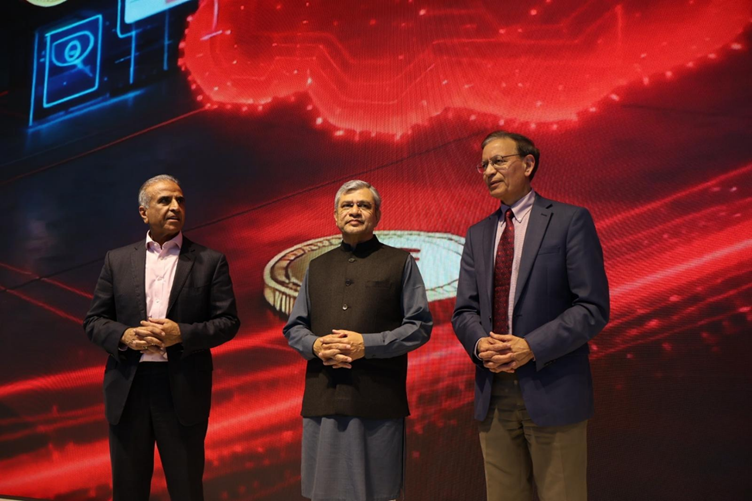
Pax Silica represents a new strategic framework for the world where cooperation in semiconductors, critical minerals and AI infrastructure , potentially replaces conflict over technology. In the 20th century, global stability was shaped by energy and oil; in the 21st century it will be shaped by silicon, data and trusted supply chains. Pax Silica aims to build a resilient, democratic and diversified technology ecosystem so that no single geography can disrupt the global flow of chips and compute. India formally signed the Pax Silica declaration during AI Impact Summit at the hands of Hon’ble Union Minister Sh. Ashvini Vaishnaw.

For India, this is a transformational opportunity. We are moving from being a large consumer of electronics to becoming a global design and manufacturing partner. With our strong semiconductor design talent, growing fabrication and packaging ecosystem, and large domestic demand, India can serve as the trusted bridge between East and West in this emerging alliance. Pax Silica also strengthens India’s digital sovereignty by ensuring secure access to semiconductors and AI infrastructure, which are now critical to defence, telecom, mobility and economic growth.

The message is clear: the future of technology will be built on trusted partnerships. Pax Silica gives India an opportunity to convert talent leadership into technology and manufacturing leadership.”

  • “Pax Silica isn’t just a trade deal; it’s the Declaration of Independence for the global technology supply chain. It ensures that the ‘brains’ of our future—the chips and the AI—are built on a foundation of trust, not coercion.”
  • “For India, Pax Silica is the Silicon Shield. It protects our digital sovereignty and ensures that no single nation can ‘switch off’ India’s growth by choking our chip supply.”
  • “We are moving from ‘Make in India’ to ‘Design and Innovate in India – Create in India.’ This alliance will turn our engineering talent into a global workforce that powers everything from smartphones to satellite systems.”
  • “This isn’t just about high-tech factories; it’s about a million new high-value jobs.  

Perfios Launches ‘KScan AI’: Empowers BFSI with AI-powered Business Intelligence and Risk Assessment of 30 Million Indian MSMEs

Bengaluru, Feb 21st: Perfios.ai, India’s leading B2B SaaS TechFin, today announced the launch of KScan AI, an innovative artificial intelligence-powered platform for fast, contextual KYC (Know Your Customer), KYB (Know Your Business), and extensive entity and individual due diligence. It is an intelligence infrastructure layer purpose-built for MSME discovery, risk evaluation, and compliance automation.

KScan AI equips the Banking, Financial Services, and Insurance (BFSI) sector with AI-powered deep understanding of all the parties involved while taking decisions related to onboarding, underwriting, GTM optimization, risk assessment; specifically for India’s vast network of Micro, Small, and Medium Enterprises (MSMEs). The platform offers unparalleled access to data on over 30 million Indian businesses, transforming complex information into actionable insights using cutting-edge AI.

The Indian MSME sector, while a critical economic engine, presents a significant hurdle for lending institutions for accurate risk assessment and credit evaluation due to fragmented data and intricate business structures. KScan AI directly addresses these challenges, empowering the BFSI sector with the only platform of its kind that aggregates data from over 900 distinct official sources, delivering an unparalleled, comprehensive view of the Indian business landscape.

The Gross Non-Performing Asset (NPA) ratio for MSME loans improved, declining from 4.5% in March 2024 to 3.6% by March 2025. This is a positive indicator for the lending industry and application of KScan will enable lenders to have faster due diligence and enables lenders to lend more at lower risks.

  • Early pilot tests of KScan AI have showcased significant operational improvements and risk mitigation capabilities for banks and Non-Banking Financial Companies (NBFCs):
  • Enhanced Lead Generation: Pilot participants reported generating 10x more MSME lending leads, while achieving up to 5x lower customer acquisition cost.
  • Streamlined Due Diligence: KScan AI facilitated approximately 1.8 lakh due diligences in one year, enabling financial institutions to confidently lend to the right companies and individuals.
  • Robust Risk Screening: The platform conducted 2 lakh litigation checks and performed 6 million sanction screenings within a year, significantly bolstering efforts to curb anti-money laundering activities.

“Our mission has always been to simplify and enhance financial decision-making through cutting-edge data-driven innovation. Kscan AI represents a monumental leap forward in how financial institutions engage with and understand India’s 30 million+ MSME ecosystem. By harnessing the power of cutting-edge AI and an unparalleled data lake, we are not just providing data; we are delivering actionable intelligence that drives smarter lending decisions”, said B Krishna Chaitanya, Chief Product Officer, Perfios. 

KScan AI is built upon the robust KScan data lake, exposed via Perfios’ Model Context Protocol (MCP) tools. This architecture ensures that AI agent responses remain grounded and accurate, while also providing unparalleled flexibility for users to configure their own agents or integrate custom models according to specific policy requirements.

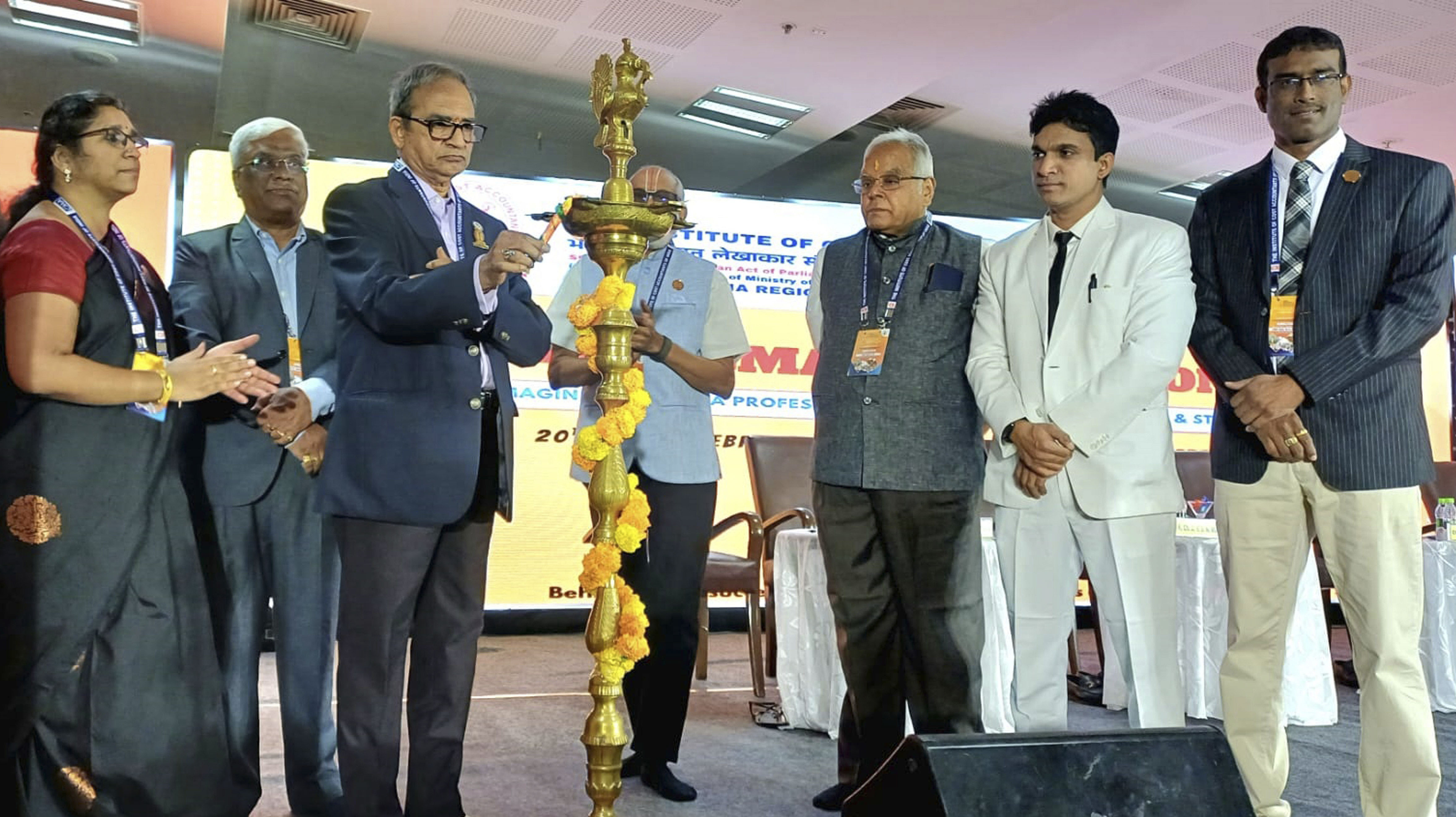
The Institute of Cost Accountants of India, kicks of its prestigious Convention – 2026, with the theme ‘Reimagining the CMA Profession’

Hyderabad, Feb 21st: The prestigious two-day Regional Cost and Management Accountants’ Convention (RCMAC 2026), hosted by the Southern India Regional Council of The Institute of Cost Accountants of India (ICMAI), a statutory body under an Act of Parliament functioning under the jurisdiction of the Ministry of Corporate Affairs, was formally inaugurated by Chief Guest CMA Dr. A. S. Durga Prasad, Chairman, NCC and Former President, ICMAI. today at Leonia Resorts, Shamirpet. CMA Dr. K.Ch.A.V.S.N. Murthy, Central Council Member, ICMAI; CMA Vijay Kiran Agastya, Chairman – SIRC of ICMAI; CMA KVN Lavanya, Treasurer – SIRC; and CMA Khaja Jalal Uddin, Chairman – ICMAI Hyderabad Chapter, graced the occasion. CMA A.N. Raman, Former President – SAFA, delivered the keynote address.

RCMAC 2026 has brought together over 500 delegates, including industry leaders, academicians, policymakers, and CMA professionals from across India and abroad. Anchored around the theme “Reimagining the CMA Profession: Driving Sustainable Value & Strategic Impact,” the convention focuses on strengthening the CMA’s role at the intersection of performance excellence, responsible growth, and future-ready leadership.

Addressing the gathering, CMA Dr. A. S. Durga Prasad underscored the importance of integrated cost leadership, execution discipline, and data-driven decision-making in strengthening enterprise performance and nation-building infrastructure. He said, we are not in a period of incremental change, we are in the midst of a very structural transformation that is going on across the globe. The geo-politics and the economic crisis are reminding us of the trade barriers, therefore the Boards are redrawing their strategies. Inside enterprises, the signals are very clear and risk is no longer a linear item, it is interconnected with multiple parameters. The CMA should look to have complete digital fluency or ESG literacy or he will risk a strategic marginalisation, the day is not very far off. India stands very optimistic, is optimism alone sufficient, we need to have the right architecture to get to that optimism. CMAs, as risk enterprise integrators or value architects will shape India’s growth architecture. That architecture will be shaped, if we don’t step in, without us. This is not a routine moment, it is a strategic intersection point. We have remained in the functional line for too long, we need to move to the role of leadership, for this from reporting to foresight, from cost control to value architecture and from compliance to governance design, from functional excellence to enterprise influence, is what we need to look forward to. Let us help the Indian enterprise compete not merely on scale but on credibility. Let us ensure, excellence in performance is not a slogan but it results in a system and future of CMA professionals will not be defined by a legacy we had in the past, but defined by the relevance we have today. Relevance will be earned through integration, integrity and insight.    

CMA A.N. Raman said, post covid the profession started witnessing digitisation along with AI becoming a major force behind getting insights of the basic data.  

CMA TCA Srinivas Prasad highlighted the evolving role of CMAs as strategic business partners and called upon professionals to lead in critical areas such as ESG, governance, and value engineering, reinforcing the profession’s commitment to sustainable and responsible growth. He said, we are talking about value creation, which is the need of the hour, this convention will make us future ready. The focus will be on sustainable and responsible growth, which will ultimately depend on people. We are trained to give the best in challenging circumstances and are geared to do it.

The convention is being conducted under the leadership of CMA Vijay Kiran Agastya, Chairman – SIRC, who stated that RCMAC 2026 is envisioned as a platform for action-oriented knowledge sharing to equip CMA professionals to lead enterprise transformation through value engineering, digital performance management, and sustainable growth initiatives. He said, this is a conversation about strategic value addition, value creation has become the mandate today. The focus of this Convention is from a spread sheet to strategy.  

CMA KVN Lavanya said, the focus of a Cost Accountant was on what would happen tomorrow, purely on the future and internal efficiencies on how managers look at operations. The focus has to be on supply chain management, where we contribute and we have a very crucial role in Viksit Bharat. We need to see tomorrows costs today and tomorrows aberrations today and suggest to the management. Unless we have these forecasting techniques, we will not be in a position to do due justice to our roles. Our curriculum has also changed from traditional subjects to subjects with industrial impact, such that students are on the job right from day one. We need to rise up to the occasion and ensure we add value wherever we are.

The two-day convention will feature technical sessions, panel discussions, keynote addresses, and expert deliberations on emerging trends in industry, finance, governance, and management, including Sustainable & Responsible Growth, Integrated Performance Excellence, and Reimagining the CMA Profession. 

Kinko Optical Co., Ltd. Selects Beneq C2R™ to Scale High-Performance AR Waveguides for XR Glasses

Business Wire India

Kinko Optical Co., LTD. (Kinko), a leading Asian original design manufacturer (ODM), has adopted Beneq’s C2R™ plasma-enhanced spatial ALD system. This move positions Kinko for high-volume production of high-index, low-loss gap-filling optical coatings on diffractive waveguides for its partners.


This press release features multimedia. View the full release here: https://www.businesswire.com/news/home/20260219074885/en/


Beneq C2R™ - the world’s fastest commercial ALD system at up to 2000 nm deposition per hour

Beneq C2R™ – the world’s fastest commercial ALD system at up to 2000 nm deposition per hour


The eXtended Reality (XR) sector is growing rapidly, fueled by demand for immersive AR experiences in consumer electronics such as XR glasses. In recent years, major investments and innovations have come from leading global technology companies and original equipment manufacturers (OEMs). At the core of XR glasses are AR waveguides, essential for seamlessly overlaying digital images onto the real world. For optimal performance, advanced surface relief gratings (SRG+) and nano-imprint lithography (NIL) are the leading platforms, meeting performance, production, and cost requirements for consumer applications.


However, the complex 3D nanostructures created by these technologies present significant challenges for traditional coating methods, which often fail to achieve the necessary performance. Advanced optical coatings are therefore critical to improving efficiency, brightness, and durability while enabling scalable, high-performance manufacturing. Beneq’s C2R™ meets these needs, delivering uncompromising performance and allowing manufacturers to meet the stringent standards of next-generation AR devices.


“With over 45 years in precision optics, Kinko has led the way in adopting advanced technologies to enable high-performance optical components for global tech partners,” said Angus Wu, CTO of Kinko Optical Co., Ltd. “We recognized early the potential of ALD for its coating quality, exceptional conformality, and ability to deliver high-index, low-loss materials essential for advanced optics. With Beneq’s C2R™, we now achieve performance without compromise, combining unmatched deposition speed with low-temperature processing for true high-volume production while maintaining precision on complex structures. This enables us to accelerate AR waveguide commercialization and power the next generation of XR glasses with immersive, seamless consumer experiences.”


“With Beneq’s C2R™, we now achieve performance without compromise. This enables us to accelerate AR waveguide commercialization and power the next generation of XR glasses.” – Dr. Angus Wu, CTO, Kinko Optical


C2R™ features an innovative rotary spatial ALD design that separates precursors in space, achieving up to 100 times faster deposition rates than conventional ALD – up to 2000 nm/h – while maintaining exceptional uniformity and precision. It supports a range of high-index materials, including Al₂O₃, TiO₂, Ta₂O₅, HfO₂, and multilayer stacks, with tunable refractive indices up to ~2.61 (at 448 nm for TiO₂) and low optical loss of ~3 dB/cm.


Other key benefits include low-temperature processing (as low as 100°C) for compatibility with polymer substrates, conformal gap filling on complex gratings, and zero-stress coatings with tunable stress control from 1000 MPa to –200 MPa. In-situ broadband monitoring ensures real-time optimization, enabling the fabrication of thicker multilayer structures without compromising quality. These capabilities align with industry trends toward energy-efficient, sustainable manufacturing and regulatory compliance in optical innovations.


The collaboration positions the AR ecosystem for broader applications beyond XR glasses, including heads-up displays in vehicles and enterprise training tools, accelerating both commercialization and market adoption.


About Kinko


Kinko was founded in June 1980 in Wuqi District, Taichung City. As a professional manufacturer of optical components and optical lens units, the company operates four production divisions: glass lens polishing, plastic lens injection, molded glass pressing, and precision mold processing. The wide range of optical lenses produced by Kinko has earned global brand recognition and is distributed worldwide. Its products are used in digital single-lens reflex (DSLR) cameras, mobile phones, IoT (Internet of Things) devices, automotive systems, gaming, surveillance, VR/AR/MR, and thermographic cameras. Kinko continues to focus on developing high-quality, value-added optical lenses.


About Beneq


Beneq pioneered industrial Atomic Layer Deposition (ALD) with the introduction of the first commercial ALD equipment in 1984. Today, Beneq advances ALD technology adoption and validation with a portfolio that includes Transform®, Transform® 300, and Prodigy™ for specialty semiconductor device fabrication; TFS 200 and TFS 500 for R&D; and innovative spatial ALD platforms such as the C2R™, and Genesis for roll-to-roll processing. Beneq’s systems support process innovation from lab to fab, enabling integration of ALD in advanced manufacturing. Headquartered in Espoo, Finland, Beneq operates globally to help customers scale ALD solutions for the future of semiconductors, optics, and functional coatings.


Antara Senior Care announces the launch of its Second Senior Care Home in Chennai

Antara Senior Care announces the launch of its Second Senior Care Home in Chennai

Chennai, Feb 20: Antara Senior Care, the only fully integrated senior care ecosystem in India, has announced the launch of its second senior care home in Chennai. The 72-bed facility is located along the Old Mahabalipuram Road (OMR) corridor in the heart of the city. Together with a Care Home on the arterial ECR, it expands access to long- and short-term assisted living services for seniors in the region.

Nearly 14% of Tamil Nadu’s population is now aged 60 and above—the second-highest proportion of seniors in the country after Kerala. In urban centres, one in every seven residents is a senior citizen, many of whom either live alone or only with their spouse. This demographic trend underlines the need for specialised ageing-friendly care in a region that’s also one of the fastest-growing senior care markets.

Mr. Ishaan Khanna, CEO, Antara Assisted Care Services, said,

“Tamil Nadu’s ageing profile is already far more advanced than the rest of India’s. It has one of the highest shares of seniors living alone at 6.8%, nearly double the national average of 3.6%, with women being disproportionately affected. This is creating deep social, emotional and health vulnerabilities as loneliness and isolation present an elevated health risk. Additionally, seniors constitute a higher proportion of post-acute patients needing long-term care. All these factors compelled us to bring Antara Care Homes’ ‘Expert Senior Care, Apno Jaisi’ to the heart of Chennai in OMR.”

Antara Care Homes’ network expansion also improves access to senior-first transition care services in a city often called ‘The Health Capital of India’. Located in the medical hub of Chennai, close to leading hospitals and key medical infrastructure, the OMR Antara Care Home offers excellent connectivity via both road and air.

Mr. Ishaan Khanna added.

“Our increasing presence in Chennai reflects not just rising demand for long-term assisted living, but the city’s growing role as a hub for transition care. Blending healthcare with lifecare empowers seniors to age with dignity and provides invaluable peace of mind for caregivers and family members.”

India is at the cusp of a profound demographic and healthcare shift. According to the JLL-ASLI report, the country’s elderly population is poised to more than double from 156.7 million in 2024 to an estimated 346 million by 2050. During this time, UNFPA data projects that the population of people aged 80+ in India will grow at a rate of 279% by 2050. By 2046, the rising senior population is expected to outnumber children for the first time in the nation’s history.

Changing demographics mean it is becoming important for families to choose senior-friendly environments with robust clinical care protocols. Chennai has a rapidly ageing population, improved lifespan and a tertiary healthcare ecosystem that’s among the strongest in India.

Antara Care Homes are built with care, independence and safety at their core. They bring together clinical care, kitchens offering home-style nutritionally planned meals, end-to-end services including laundry and housekeeping. All services, clinical and non-clinical, are delivered by our staff trained on geriatric care modules approved by the Government of India’s Healthcare Sector Skills Council (HSSC). The facilities feature ramps, extra-wide corridors and doorways, grab rails, raised seating, rounded walls and furniture, anti-skid flooring, panic buttons, luxe lighting, generous balconies, open terraces and gardens to boost mental health. The suite-style rooms have been designed for couples and single occupancy. They open into common areas promoting natural interaction among residents; activity room doubles up as family room. Backed by a clinic, nurses’ stations on each floor and a physiotherapy room, our rooms can evolve to accommodate growing care needs.

Zscaler together with Bharti Airtel, Announce Launch of AI & Cyber Threat Research Center to Advance Cyber Resilience and Trusted AI Adoption

New Delhi, India Feb 21: Zscaler, Inc., the leader in cloud security, in partnership with Bharti Airtel (Airtel), one of India’s largest telecommunication service providers, today announced the launch of the AI & Cyber Threat Research Center India. This multi-stakeholder initiative is dedicated to advancing national cyber resilience, protecting sectors, industries and assets that are essential to India’s economic and national security, such as telecommunications, banking, and energy, as well as digital users, and accelerating trusted AI adoption across India’s rapidly expanding digital ecosystem. 

India has long been a key hub for Zscaler’s technology innovation and cyber research, with a significant share of Zscaler’s research talent based in the country. The research center will serve as an expansion of Zscaler’s operations into a national platform for collaboration between the private sector, public sector, academia and the government. The center is designed “In India, For India,” with the goal of strengthening the nation’s cyber defenses and building a future-ready talent pipeline to support India’s progress toward Viksit Bharat and a peaceful, secure, and digitally self-reliant future. 

India is in the midst of a generational digital transformation, building systems not at enterprise scale, but at population scale across critical sectors dramatically expanding the national attack surface. At the same time, the threat landscape is evolving at machine speed, with nation state and financially motivated attackers increasingly leveraging AI to probe, target, and weaponize vulnerabilities in minutes. Zscaler’s research arm, ThreatLabz India, has observed millions of infiltrations attempts each month, including notable campaigns such as: 

  • Nation-state cyber espionage activity using the theme of regional geopolitical tensions, which attempted to target multiple Indian entities. 
  • A surge in attempts to infiltrate India’s private and public sectors, with 1.2 million intrusion attempts originating from 20,000 sources targeting 58 Indian digital entities; and 
  • An increase in zero-day exploit attempts aimed at multiple industries in India. 

As threats grow in sophistication, traditional perimeter-based security models are no longer adequate, and disruptions to essential services can threaten national economic stability making secure-by-design foundations and a modern architectural shift imperative to protect national digital systems in an increasingly borderless, AI-enabled environment. 

The objectives of the AI & Cyber Threat Research Center – India are anchored in four strategic pillars: 

  • Protect: Deliver real-time, actionable intelligence to strengthen India’s national cyber resilience and digital-first businesses. 
  • Remediate: Partner directly with government agencies to neutralize and prevent cyber-attacks. 
  • Facilitate: Drive the adoption of modern security frameworks, specifically focusing on AI-driven defenses and Zero Trust architecture. 
  • Build: Strengthen the cybersecurity talent pipeline through specialized AI and Zero Trust certifications to bridge the national skills gap.  

As founding members, Zscaler and Airtel will combine the former’s global intelligence with the latter’s local operational reach to create a stronger, faster research-to-response loop for India. Zscaler will deploy a specialized threat research team focused on India. This team will leverage the Zscaler Zero Trust Exchange™ platform, which processes over 500 billion daily transactions, to extract threat intelligence to secure India’s public and private sectors. Airtel will contribute deep visibility into IoT and mobile traffic, collaborating with Zscaler to monitor networks and develop new solutions, enabling faster identification of suspicious activity and more effective coordination with ecosystem stakeholders. Looking ahead, additional members from India’s critical public and private sectors will be invited to join the center to expand collaboration and strengthen cyber resilience across India. 

“At Airtel, our commitment has been to safeguard our customers and the nation’s digital fabric. This partnership with Zscaler marks a significant extension of this commitment that will combine the power of our AI capabilities and deep scale for cybersecurity research to protect the country’s expanding digital ecosystem,” said Gopal Vittal, Executive Vice-Chairman, Bharti Airtel. “We will focus on addressing challenges unique to our market to build a safer, more resilient digital India where every citizen and enterprise can connect and thrive with confidence. Our research-backed preventive mechanism will also encourage peaceful and secure engagements on digital platforms.” 

“India is building digital systems at an unmatched population scale. You cannot secure this level of ambition with legacy firewalls and VPNs that were never designed for a hyper-connected world. It demands a modern Zero Trust architecture that is secure-by-design,” said Jay Chaudhry, CEO, Chairman, and Founder, Zscaler. “With the AI & Cyber Threat Research Center – India, we will bring the full power of the world’s largest security cloud to protect the nation’s public and private sectors. By combining actionable intelligence from over 500 billion daily transactions with local expertise, we aren’t just building readiness; we are empowering a new generation of defenders to stay ahead of the adversary.” 

From Burnout to Alignment: Why Inner Healing Is Gaining Attention in Uncertain Times

BLACK MOUNTAIN, N.C., Feb. 21 — Burnout, uncertainty, and a growing sense of disconnection have fueled a surge in spiritual curiosity — particularly practices that promise inner alignment rather than external fixes. In The Akashic Way: Living Through the Lens of the Akashic Records, three-time Emmy Award-winning director and advanced Akashic Records practitioner Mary Madeiras explores why so many people are searching inward for clarity, affirmation, and healing.

After decades spent shaping stories for millions of viewers, Madeiras now invites readers into a different kind of narrative — one rooted in the Akashic Records, a quantum divine field believed to contain the energetic imprint of every soul’s journey through time. Rather than offering another roadmap for self-improvement, The Akashic Way reframes healing as an act of remembering and reconnecting with the deeper truth of who we are and why we are here.

“We can actually access our own journey — our own soul’s imprint — for every incarnation,” Madeiras explained.

Drawing from her own Akashic experiences and client sessions, Madeiras shows how working within the Records consistently creates alignment — emotionally, spiritually, and energetically. “It’s like having a conversation with the higher, divine aspect of yourself,” she said. “And when we’re aligned, the world becomes more aligned.” The result, she believes, is clarity, affirmation, and self-empowerment — tools urgently needed in a fragmented, fast-moving world.

The Akashic Way touches upon the many challenges that pull people away from connecting with their intuition and inner love — relationship struggles, traumas, unresolved patterns, and health issues. Madeiras shows how anyone can access this deeper guidance to create meaningful change and awaken that inner love. Her personal Akashic exchanges — woven with messages for humanity — offer readers the opportunity to reflect on their life’s purpose. The wisdom from the Akashic Realm is a profound tool for rediscovering purpose, trusting intuition, and learning to live through love and intention.

As Madeiras writes, “I titled this book The Akashic Way because I believe that living life through the Akashic Records is a path back to ourselves — a way to remember who we are, why we chose to come here, and what we are here to do. When we view our life through our own Akashic lens, we experience self-empowerment in the most profound way.”

The Akashic Way: Living Through the Lens of the Akashic Records

Publisher: Precocity Press

ISBN-13: 979-8993115092 (Paperback)

ISBN-13: 979-8993115047 (Kindle)

Archon Group Builds Grand Temple in Kakarai as Tribute to Faith and Community

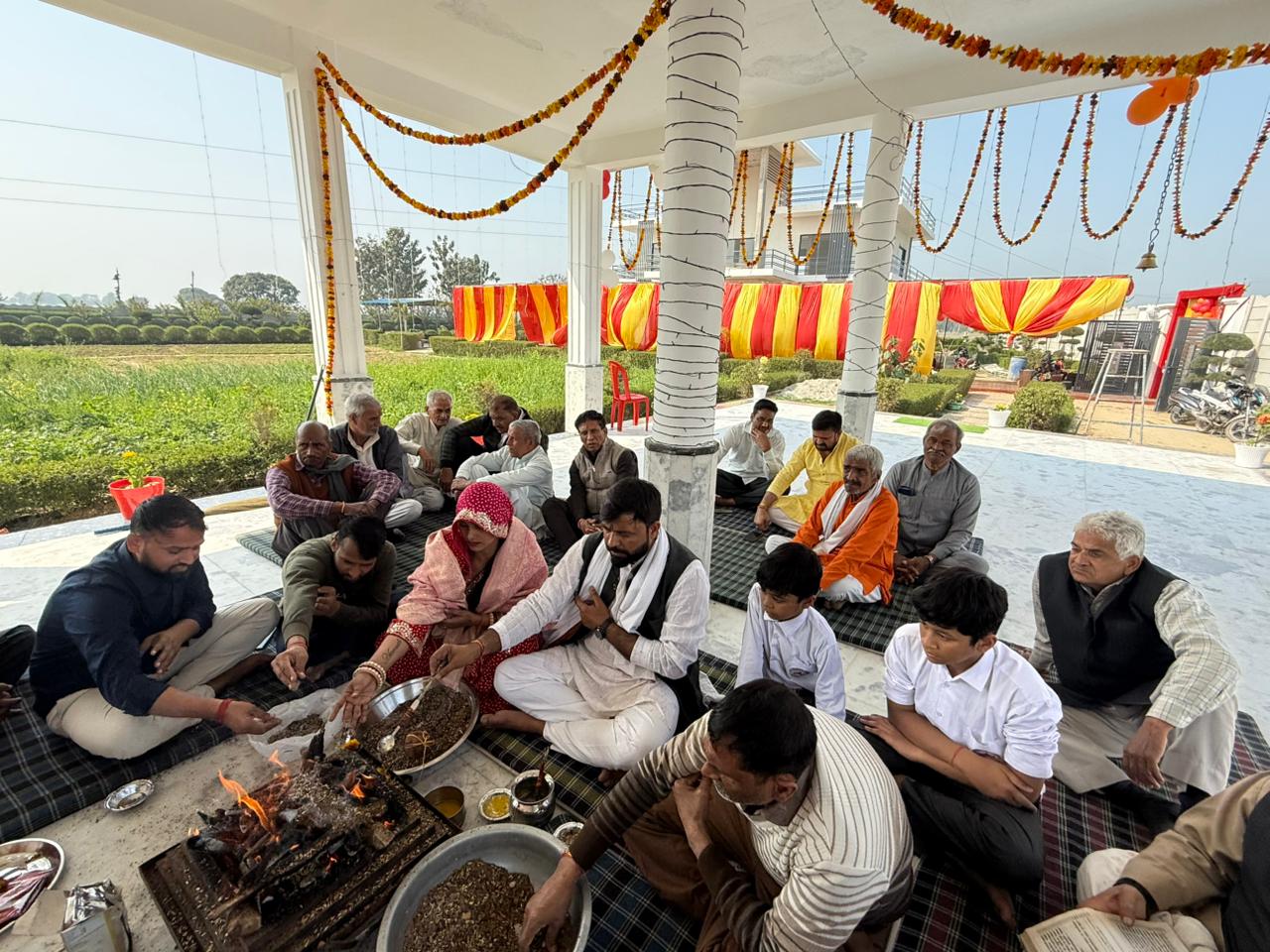
Feb 21: Bulandshahr: In a gesture rooted in social responsibility and deep spiritual devotion, Kapil Sharma, founder of Archon Group, along with his father Momraj Sharma, has constructed a grand new temple at Shankar Farm on the Jadol Canal in Gram Panchayat Kakarai, Bulandshahr.

The temple was officially inaugurated on February 20 through a traditional pran pratishtha (idol consecration) ceremony in accordance with the Vedic ritual. The event was attended by hundreds of followers of Kakarai and surrounding towns to observe the most impressive ceremony that consisted of mantras, havan and other religious rituals that gave the whole region a spiritual experience.

The new temple has idols of the Shiva family, Radha- Krishna, Ram- Lakshman, Maa Sita, Maa Durga and Lord Hanuman. Before the consecration, there was a colorful Kalash Yatra and a big procession, which was implemented throughout the village, and the women attended it in large numbers, contributing to the devotion.

A native of Bulandshahr (currently a renowned industrialist with his location being Ahmedabad) Kapil Sharma spoke of the temple as a simple form of paying a debt of gratitude to the town of his birth. The initiative also indicates how committed the family is towards spiritual values but also community development and social harmony.

After the rituals, a community feast (bhandara) was arranged, during which the villagers and the devotees attended the feast in huge numbers. The people in Kakarai praised the work done by Kapil Sharma and Momraj Sharma labeling the temple as an eternal beacon of beliefs, community and cultural identity

The locals assume that the temple shall be a spiritual and cultural center to the generations to come as a way of boosting the principles of devotion, unity and social accountability in the area.

From Supplier to Strategic Partner: How EU Buyers Are Rethinking Artisan Rug Relationships

A Quiet Shift in the European Buying Mindset

Jaipur, Feb 21: Across Europe’s design and interiors landscape, a subtle but meaningful shift is taking place. Buyers are moving away from short-term sourcing models and toward long-term partnerships with rug manufacturers who work closely with artisan communities. The change is less about cost efficiency and more about continuity, trust, and shared responsibility.

This evolution reflects a broader rethinking of value. Rugs are no longer viewed as interchangeable products. They are increasingly seen as outcomes of skill, culture, and collaboration.

Why Transactional Sourcing Is Losing Relevance

For years, global sourcing in the rug industry was driven by speed and scale. Today, EU buyers are questioning that approach. Inconsistencies in quality, limited transparency, and a growing emphasis on ethical accountability have made transactional relationships less viable.

Instead, buyers are prioritising manufacturers who offer stability, clarity of process, and a long-term commitment to artisan ecosystems. The focus is shifting from suppliers who fulfil orders to partners who understand evolving design sensibilities and global expectations.

Partnership Through Process

For Man Made Rugs, this shift mirrors how the brand has always approached global relationships. By working directly with artisan communities, the company places emphasis on consistent collaboration, skill development, and production practices that can evolve without losing authenticity.

“European buyers today want to work with partners who think beyond a single season,” says Nirmit Khanna, Founder of Man Made Rugs. “They want alignment in values, design thinking, and long-term intent. That is what transforms a supplier relationship into a strategic one.”

Transparency as a Foundation, Not a Requirement

One of the defining aspects of this new partnership model is transparency. EU buyers are increasingly engaging in deeper conversations around sourcing, working conditions, timelines, and scalability. This openness is not driven by regulation alone, but by a desire for reliability and mutual respect.

Manufacturers who work with artisan communities are uniquely positioned here. Their processes are inherently human-led, making accountability and traceability a natural extension of how work is done rather than an added layer.

Jaipur and the Strength of Continuity

Jaipur’s long-standing relationship with rug-making offers a compelling case for this new approach. The city’s production networks are built on continuity rather than constant churn. Skills are passed down, relationships are maintained, and quality is refined over time.

“What EU buyers increasingly value is consistency,” Khanna notes. “When you work with the same artisan communities year after year, you are able to deliver that consistency, both in craftsmanship and in communication.”

Designing the Future Together

As EU buyers rethink how they engage with rug manufacturers, the idea of partnership is taking on new meaning. Design development is becoming more collaborative. Forecasting more transparent. Expectations more clearly shared.

This shift benefits both sides. Buyers gain reliability and depth. Manufacturers gain stability and the ability to invest further in artisan communities without compromising on design or delivery.

From Jaipur to Europe, the rug is no longer just a product moving across borders. It is the result of a long-term conversation, built on trust, shared values, and the belief that the strongest partnerships are the ones designed to last.