Archives February 2026

Union Budget 2026 Strengthens Growth, MSMEs, and Domestic Manufacturing: Dr. Pawan Goenka

Dr. Pawan Goenka, Chairman, IN-SPACe & SCALE Committee, Government of India, on the Union Budget 2026:

“The Union Budget 2026 reinforces the foundations for sustained economic growth. Its wide-ranging reforms—spanning manufacturing, infrastructure, and the creation of Champion MSMEs—reflect a clear focus on scale and resilience through stable policy and institutional support. Simplification of tax processes, decriminalisation of compliance provisions, and GST rationalisation will enhance predictability, ease adherence, and encourage entrepreneurship. The proposal to establish dedicated Rare Earth Corridors in mineral-rich states is a timely move to secure critical materials, strengthen domestic value chains, and reduce strategic dependencies. Coupled with targeted customs duty exemptions to support domestic manufacturing and supply-chain integration, these measures create a competitive, resilient economy where businesses can invest confidently and plan for the long term.”

Sharan Bansal Hails Union Budget 2026 for Capital-Led Growth and Infrastructure Boost

bansal

Mr. Sharan Bansal, Director, Skipper Limited

“The Union Budget 2026 gives renewed focus on the government having capital-led growth and developing long-term national infrastructure. The Budget raises capital expenditure to ₹12.2 trillion for FY2026-27, up from ₹11.2 trillion in the previous year, reinforcing infrastructure investment as a key growth driver. The unambiguous difference between revenue spending and capital expenditure, as well as long-term commitments to the development of assets, gives infrastructure developers and manufacturers long-term visibility.

The Budget focuses on the capital formation, monitoring of outcomes and medium-term fiscal planning, which provides a stable policy environment in the energy transition in India. The fiscal deficit is targeted at 4.3 % of GDP for FY2026-27, underscoring continued fiscal stability alongside investment push. The emphasis to productive capital spending and accountability will facilitate grid modernisation, a field that is well aligned with the ability of Skipper to supply power equipment, grid enabling systems and advanced engineering solutions.”

Saurabh Mukherjea Sees Union Budget 2026 as Structurally Positive, Urges Fiscal Discipline

Saurabh Mukherjea, Co-Founder & CIO, Marcellus Investment Managers

“The Union Budget 2026–27 is directionally positive for India’s long-term economic health, even though markets have reacted nervously in the short term. The increase in Securities Transaction Tax on F&O trading is a necessary corrective. Over the past few years, speculative derivatives trading activity has destroyed large amounts of household capital, and this move should help redirect savings towards consumption and productive investment. Equally important is the government’s decision to set up a high-level committee to review the banking and financial system, which could accelerate PSU bank privatisation and unlock greater participation from global and domestic private capital.

The key concern, however, is the rise in capital expenditure at a time when tax revenues are undershooting. Funding higher capex through increased borrowing risks tightening financial conditions by pushing up bond yields and the economy’s cost of capital. Overall, the Budget takes important structural steps in the right direction, but its effectiveness will ultimately depend on maintaining fiscal discipline while pursuing growth.”

India’s New University Townships and NID Expansion Set to Bridge Education-Industry Gap

Fr. Nelson A. D’Silva, S.J., Acting Director – XLRI Delhi-NCR
The plan to develop five University Townships along India’s major industrial and logistics corridors is a transformative step toward bridging the gap between education and industry. These townships are not mere clusters of buildings; they are integrated ecosystems where universities, research hubs, and skill centers coexist with residential spaces.

By colocating academia and industry, we create a living laboratory where learning is informed by real-world industrial challenges. The introduction of a ‘challenge route’ to guide States is particularly innovative—it encourages the creation of high-performance hubs rather than just additional infrastructure. This initiative ensures that graduates are ready to step directly from campus into leadership roles in India’s emerging sectors.

 Mr. Kanwal Jeet Jawa, President – DESDS (DJIME)
Placing University Townships adjacent to industrial and logistics hubs is a pragmatic approach to skill development. True mastery comes from learning in proximity to real-world operations, not in isolation. By integrating universities, skill centers, and research labs with industrial corridors, we establish a continuous pipeline of professionals attuned to India’s industry needs from day one.

The ‘challenge route’ is a forward-thinking measure, compelling States to focus on building sustainable ecosystems rather than just opening institutes. Students and mentors living and working near industrial hubs ensures a workforce that is genuinely industry-ready, transforming India from a nation of job seekers into a nation of skilled practitioners and innovators.

Mr. Avik Chattopadhyay, Chairperson, XADM & Founder, INDEA
The establishment of a new NID in Eastern India is a landmark move toward democratizing access to world-class design education. For too long, top-tier design opportunities were limited by geography; this initiative invites talent from every corner of the country to contribute to a nationwide creative renaissance.

Beyond addressing regional imbalances, this initiative fuels India’s growing demand for visual content—from digital media to immersive experiences. By linking education directly to enterprise via the new standing committee, we shift from producing mere stylists to nurturing problem solvers capable of driving Atmanirbhar innovation. This is about cultivating design as a national capability—transforming students into founders, creators, and value generators for tomorrow.

Pathikrit Dasgupta, Co-Founder,SabPaisa

By prioritizing AI and digital innovation, Finance Minister Nirmala Sitharaman has outlined a roadmap for the next phase of India’s fintech revolution. At SabPaisa, we interpret this mandate as a call to action to make financial technologies more accessible than ever. We are committed to translating this national vision into practical solutions—building AI-ready, partner-first platforms that remove operational bottlenecks and drive tangible business value. This is a growth-oriented budget, and it fuels our resolve to empower Indian enterprises.

MSME India Network Helps Startups Scale with System-Led Teams

From Founder-Led to System-Led: How MSME India Network Is Helping Startups Build Self-Running Teams

In the early days of a startup, speed is everything. Founders hire fast, make quick decisions, solve problems in real time, and rely on instinct to build culture. This approach works—until the business begins to scale.

Between 15 and 30 employees, many startups hit an invisible wall. Execution slows, roles blur, managers are promoted before they are ready, feedback becomes emotional, and hiring turns inconsistent. The founder, once again, becomes the default problem solver.

This moment is rarely a strategy failure. It is a people systems failure.

According to Shailesh Kantak, leadership and people systems coach and Founder of MSME India Network (MINT), this stage defines whether a startup scales or stalls.

“Most founders don’t fail due to lack of ambition,” he says. “They get stuck because the business continues to depend on personal control instead of repeatable people systems.”

The Real Bottleneck Isn’t Funding—It’s Team Design

Startups thrive on intensity, but intensity cannot replace clarity forever. As teams grow, informal coordination stops working. What businesses need next is simple, human-centred structure.

Effective people systems are not about corporate bureaucracy. They are about clarity—clear roles, expectations, rhythms, and leadership habits—that allow founders to move from constant firefighting to strategic direction.

Some core people systems that determine whether a startup scales smoothly include:

  • Structured hiring that evaluates skill and attitude, not just speed

  • Clear role definitions to prevent confusion and silent resentment

  • Performance rhythms such as weekly check-ins and monthly reviews

  • Respectful, consistent feedback practices

  • Intentionally designed culture practices

“When these systems are missing, even great teams underperform,” Kantak explains. “And founders start feeling like the only dependable person in the room.”

MSME India Network: Building Teams That Don’t Depend on the Founder

The MSME India Network (MINT) is a learning and implementation community built for Indian startup founders and MSME owners who want to scale without becoming bottlenecks themselves.

At its core is one powerful belief: the business should not wait for the founder.

MINT helps founders escape what it calls the Founder’s Trap—a cycle where every decision, follow-up, and escalation flows back to the founder, eventually limiting growth and draining energy. The community’s mission is to build leadership capability and people systems that enable sustainable scale.

By 2030, MINT aims to support over 25,000 MSME founders, helping them build stable, values-driven, execution-strong organisations.

How the Community Works

MINT is not a passive content platform. It is designed around participation, reflection, and real-world implementation.

Members typically experience:

Founder clarity sessions
Founders begin by strengthening personal and leadership clarity, enabling better decision-making and steadier leadership behaviour. As Kantak notes, “If the founder is unclear, the team will always feel unclear.”

Practical people systems frameworks
Members learn simple, actionable frameworks covering the entire team lifecycle—from attracting talent and hiring with structure to nurturing culture, learning, and ownership.

Ready-to-use tools and playbooks
Job description templates, interview scorecards, role clarity sheets, feedback frameworks, performance check-in guides, and dashboards remove the need to start from scratch.

Action-driven community formats
Hackathons, bootcamps, and guided sprints help founders implement one system at a time, supported by peer accountability.

One founder from a services startup summed up the shift simply:
“I stopped chasing my team for updates because the weekly rhythm did it for me.”

Why This Matters Now

While startup ecosystems often focus on funding, product, and growth, people systems are still treated as a later-stage concern. In reality, they are a growth lever from day one.

Talent retention is fragile. High performers rarely leave abruptly—they disengage first. “Good people don’t leave loudly,” says Kantak. “They leave quietly—first in effort, then in resignation.”

Early investment in people systems allows startups to grow without breaking culture, quality, or founder health.

Built on Ground-Level Experience

Shailesh Kantak brings deep operational credibility to MINT. He is also the Founder and CEO of Flexi Ventures Pvt. Ltd., an HR consulting and talent acquisition firm established in 2014. Over the years, he has worked closely with leadership teams across industries, solving people challenges inside growing businesses.

That experience shapes MINT’s approach—practical, founder-friendly, and rooted in what works in Indian startup environments.

“Founders don’t need motivation,” Kantak says. “They need a clear path, systems that reduce dependence, and a community that holds them accountable to implementation.”

The Bigger Vision

MINT is building a movement to strengthen Indian startups and MSMEs from the inside out—through leadership behaviour, team capability, and repeatable people systems.

When people systems are strong, execution becomes predictable. Culture becomes intentional. Teams become dependable. And founders finally gain the space to think, build, and lead.

As Kantak puts it: “The goal is not to work less. The goal is to stop being the system.”

Label Shivani Nirupam’s Shivani Nirupam Applauds Union Budget 2026–27 Boost for Textile Growth and Exports

Shivani Nirupam, Founder of Label Shivani Nirupam
“The Union Budget 2026-27 is a resounding win for India’s textile sector, with Rs 5,272 crore allocation a 19% jump, fueling self-reliance and growth. The five-part integrated programme shines: National Fibre Scheme for silk, wool, jute, and man-made fibres; cluster modernisation via Textile Expansion Scheme; dedicated Handloom/Handicraft support; Tex-Eco for sustainability; and Samarth 2.0 skilling. Mega parks, PLI boosts, and MSME funds will supercharge exports, jobs, and innovation. As an expert, I see this as a blueprint to hit Rs 1.5 lakh crore exports by 2030, empowering 45 million workers.  Bravo, time to weave global dominance!”

HDFC AMC’s Navneet Munot Hails Budget’s Policy Continuity, Reform Momentum and Investor Confidence

Navneet Munot Photograph

Mr. Navneet Munot, MD & CEO, HDFC AMC LTD.

“Amidst heightened geopolitical volatility, the Union Budget offers a reassuring sense of direction, continuity and policy credibility. The glide path towards a lower debt-to-GDP ratio, alongside sustained emphasis on infrastructure creation—digital, physical and social—augur well for preserving India’s growth momentum over the medium to long term. Continued simplification of the tax architecture strengthens the investment climate by enhancing transparency and predictability.

The revision in the buyback tax framework enables corporates to return surplus capital more efficiently.

Equally noteworthy is that “Reforms Train” keeps chugging along instead of halting at merely one station i.e. Budget day.

With the event now behind us, market attention will shift to incremental macroeconomic cues, corporate earnings and flow dynamics. From a long-term investor perspective, policy consistency, prudence in numbers and persistence in reforms remain the important anchors for value creation.”

Messe Frankfurt Trade Fairs India Partners with BusinessLive Trade Fairs to Expand Media Expo

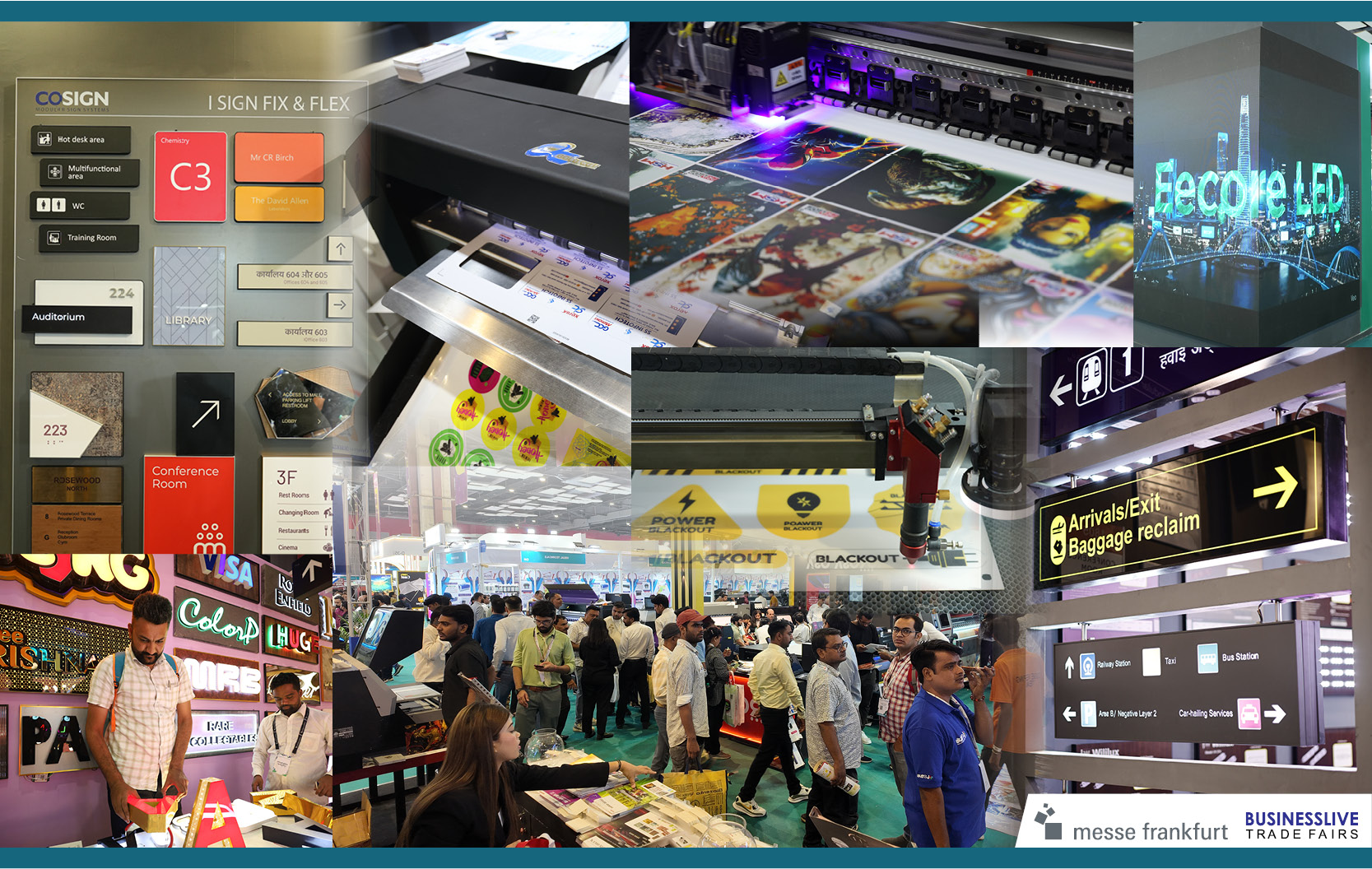
Mumbai, Maharashtra, Feb 02: Under this collaboration  between Messe Frankfurt Trade Fairs India and BusinessLive Trade  Fairs, Sign India Expo will evolve into Media Expo marking the launch of  Media Expo Kochi and Media Expo Hyderabad while Sign India Expo  Chennai transitions under the existing Media Expo Chennai banner. This  move significantly expands the overall Media Expo footprint, increasing  its presence from three cities to a total of five cities: Chennai,  Hyderabad, Kochi, Mumbai and New Delhi.

Media Expo26_3

Media Expo, which has delivered 56 successful editions across Mumbai, New Delhi and  Chennai, will now become the primary exhibition platform in the three southern markets of  Kochi, Hyderabad and Chennai, transitioning from the long-established Sign India Expo.  This move will ensure focused regional engagement while offering the industry consistent  and unified platforms across these South Indian markets. The collaboration will be  implemented beginning with Media Expo Chennai, scheduled for later this year at Chennai  Trade Centre, Chennai, Tamil Nadu.  

Sign India Expo is backed by a legacy of 70+ editions across India with a particularly deep  presence in the Southern markets like Bengaluru, Chennai, Kochi and Hyderabad. This  collaboration brings together two of the most recognised exhibition brands from the industry  to create a unified and impactful industry trade fair platform. 

This partnership will leverage the region’s strong business potential and create a broader and  wider exhibition platform. The combination of their expertise, the organisers aim to expand  exhibitor participation and enhance the overall product showcase across the product  segments like: printing, signage, digital signage, advertising solutions for out-of-home (OOH) 

and digital out-of-home (DOOH), retail displays and branding solutions, large-format and industrial printing, fabrication equipment and materials, POP-POSM, LED screens, printing  equipment, sign substrates, inks, advanced 3D and laser printing solutions and much more. 

By leveraging BusinessLive Trade Fairs established presence in South Indian markets, this  alliance enables Media Expo to strengthen its positioning as a central platform for the printing,  signage, branding and advertising solutions segment. For the industry, this partnership will  deliver increased opportunities by strengthening participation and market reach through the  platform, bringing together exhibitors, visitors, associations and professionals from across the  printing, signage, branding and OOH-DOOH ecosystem. By consolidating participation and 

aligning market engagement, this pivotal step will strongly drive buyer-seller connections  across South India’s key commercial hubs. 

Commenting on the collaboration, Mr Raj Manek, Executive Director & Board Member, Messe  Frankfurt Asia Holdings Ltd, said:

“South India continues to be one of the most dynamic and  opportunity driven regions for the printing and signage industry. This collaboration with  BusinessLive Trade Fairs allows us to expand Media Expo’s footprint while offering the  industry a stronger, more centralised platform that supports long-term growth and meaningful  engagement.” 

Likewise, Mr Siva Prasad Palnati, Director, BusinessLive Trade Fairs, added:

“Sign India  Expo has built a strong and trusted presence across South India over the years. Partnering  with Messe Frankfurt Trade Fairs enables us to elevate that legacy by combining regional  strength with global exhibition expertise, creating region-specific platforms with Media Expo  brand that will serve the industry and its evolving needs better.” 

The growth outlook is underscored by industry estimates, with India’s printing and signage  market projected to grow from USD 1,074.5 million in 2025 to USD 3,494.3 million by 2034  as per IMARC Group, while the OOH and DOOH market is expected to expand from USD  519.93 million in 2025 to USD 656.13 million by 2030 according to Mordor Intelligence. 

Complementary strengths, deep market understanding and being established exhibition  brands, the partnership between Messe Frankfurt Trade Fairs India and BusinessLive Trade  Fairs marks a strategic move towards building a more cohesive and future-ready printing and  signage industry ecosystem in South India. 

Industry Leaders Applaud Union Budget 2026’s Growth, MSME, Skilling & Innovation Push

Industry Leaders Welcome Union Budget 2026, Highlight Focus on Growth, MSMEs, Skilling, Healthcare and Innovation

New Delhi, Feb 2: Industry leaders across healthcare, MSMEs, education, manufacturing, mobility, financial services, and creative industries have broadly welcomed the Union Budget 2026, calling it a balanced and forward-looking roadmap that reinforces India’s long-term growth ambitions while maintaining fiscal discipline.

The Budget’s emphasis on capital-led growth, MSME financing, skilling, healthcare infrastructure, green mobility, and innovation-driven development has been widely acknowledged as a strong signal of policy continuity and confidence.

Strengthening Agriculture, Food Systems and Rural Livelihoods

Mr. Sasikumar Kallanai, Co-founder & CEO, TenderCuts, noted that the Budget’s focus on agriculture and allied sectors such as fisheries and animal husbandry will strengthen India’s protein ecosystem. Measures supporting Fish FPOs, women-led groups, veterinary infrastructure, and AI-led AgriStack integration are expected to improve traceability, supply consistency, and income stability for producers.

Consumer Confidence and Discretionary Spending

Mr. Paul Alukkas, Managing Director, Jos Alukkas, said the Budget reinforces confidence by targeting ~7% growth while continuing fiscal consolidation. Rationalisation of TDS and lower TCS on overseas education expenses are expected to improve disposable incomes, supporting discretionary spending, especially in tier-2, tier-3, and rural markets.

Green Mobility and Manufacturing Push

Mr. Nemin Vora, CEO, Odysse Electric, welcomed the government’s focus on local EV component manufacturing and middle-class purchasing power. Enhanced MSME credit guarantees and green mobility incentives were seen as critical enablers of India’s Atmanirbhar mobility ecosystem.

Financial Inclusion and MSME Credit

Mr. Vivek Singh, CEO, Home Credit India, highlighted the ₹10,000 crore SME Growth Fund and ₹2,000 crore micro-enterprise risk capital top-up as vital steps to strengthen community-level financing, job creation, and sustained consumption. Infrastructure spending and MSME compliance support through Corporate Mitras are expected to improve borrower resilience.

Manufacturing, Housing and Infrastructure Growth

Mr. Manoj Tulsian, CEO & Joint MD, Greenply Industries, said continued public capex and infrastructure focus will boost housing demand in non-metro regions, benefiting organized manufacturers and skilled workers. He also welcomed reforms that simplify compliance and strengthen MSME clusters.

Cooperative and Digital Economy Reforms

Shri Prabhat Chaturvedi, CEO, NUCFDC, termed the Budget a continuation of India’s long-term development vision. Cooperative-focused tax measures, MSME funding support, and the proposed high-level banking committee were described as important steps toward safer, more inclusive credit expansion and global competitiveness.

Mental Health and Neurodevelopmental Care

Mr. Jaishankar Natarajan, CEO & Director, India Autism Center, welcomed the announcement of a second NIMHANS, calling it a meaningful shift toward expanding mental health and neuroscience infrastructure. He highlighted the importance of skilled caregiving alongside institutional capacity.

Infrastructure and Energy Transition

Mr. Sharan Bansal, Director, Skipper Limited, said the increase in capital expenditure to ₹12.2 lakh crore reinforces infrastructure-led growth and provides long-term visibility for manufacturers in power and grid systems, while maintaining fiscal stability.

Research, Innovation and Education

Mr. Vikram Aditya Sahoo, Director – Research & Innovation, SAI International Education Group, welcomed enhanced funding for research infrastructure, biopharma clinical trials, AYUSH research, and carbon capture technologies, calling them transformative for education and innovation-led growth.

Entrepreneurship and MSME Ecosystem

Dr. Sunil Shukla, Director General, EDII, said the recognition of MSMEs as ‘Champion Enterprises’ and support for women-led initiatives such as SHE-Marts will enable sustainable enterprise ownership and job creation.

Biopharma and Healthcare Manufacturing

Dr. K. Anand Kumar, MD, Indian Immunologicals Ltd, described the ₹10,000 crore BioPharma SHAKTI initiative as a defining moment that can elevate India from a volume-driven vaccine supplier to an innovation-led global biopharma hub.

MSME Growth Beyond Metros

Dr. Irfan Khan, Chairman, EBG Group, highlighted reforms in TReDS, invoice discounting, and compliance support as critical for manufacturers in tier-2 and tier-3 towns, enabling decentralised and sustainable industrial growth.

Skilling, AI and Youth Empowerment

Mr. Rahul Attuluri, CEO & Co-Founder, NxtWave, and Mr. Karun Tadepalli, Co-Founder & CEO, byteXL, described the Budget as “Yuva Shakti–driven,” applauding its focus on AI, employability, education-to-employment pathways, and digital infrastructure.

Creative Economy and AVGC Sector

Mr. Rajiv Chilaka, Founder & CEO, Green Gold Animation, said the AVGC Content Creator Labs initiative will build a strong talent pipeline, boost regional creators, and position India as a global hub for animation and gaming.

Grassroots Finance and Rural Growth

Mr. Murty LVLN, CEO, Dvara KGFS, said the Budget reinforces the importance of strengthening rural incomes and last-mile finance through AgriStack, infrastructure investments, and MSME credit reforms.

Banking and Debt Market Reforms

Mr. Chandan Churiwal, CEO & Whole-Time Director, Assets Care & Reconstruction Enterprise Ltd. (ACRE), described the Budget as mature and fiscally prudent, noting that maintaining the fiscal deficit at 4.3% while introducing sectoral reforms and proposing a high-level banking review committee will strengthen debt markets and accelerate consolidation.
Leela Ambience Gurugram Unveils Eco-Friendly Forest View Dining

The Leela Ambience Gurugram Launches Forest View Deck: An Elevated Sustainable Dining Experience Overlooking a 1,000-Acre Forest

Gurugram, Feb 02: The Leela Ambience Gurugram Hotel & Residences, synonymous with luxury and refinement, unveils Forest View Deck, a unique farm-to-fork dining destination rooted in sustainability and mindful indulgence. Nestled poolside with private cabana-style seating, the deck offers panoramic views of a sprawling 1,000-acre forest, providing guests a tranquil escape where they can unwind and dine amidst nature.

At the heart of Forest View Deck’s culinary philosophy is a commitment to season-led menus and responsibly sourced ingredients, drawn from the hotel’s own Leela Farm and The Green House. The 3.5-acre organic Leela Farm cultivates vegetables, fruits, and select dairy products without chemical intervention, while the hydroponic glasshouse at the deck grows nutrient-rich lettuces, tomatoes, and aromatic herbs using eco-friendly, soil-free methods. Together, these initiatives ensure fresh, high-quality ingredients while minimizing environmental impact.

Abhishek Gupta, Executive Chef at The Leela Ambience Gurugram, shares:

“At Forest View Deck, our cuisine begins with the season and ends with responsibility. From root to fruit, we celebrate Indian produce through sustainable, zero-waste gastronomy. Everything grown in our farm and glasshouse shapes a menu that honours nature, supports farmers, and shows that flavour and care must always go hand in hand.”

The dining experience emphasizes connection to nature and ingredients, with a menu that evolves across the four seasons to highlight produce at its peak. Complementing the food is a beverage selection that mirrors the same focus on freshness, balance, and seasonality.

Designed as an open-air retreat, Forest View Deck blends comfort with the surrounding landscape, offering a space for guests to slow down, savour thoughtfully prepared food, and enjoy a truly immersive culinary journey.